


 Скачать презентацию Depression Hits texas Chapter 22 Section 1
6e32ad9ef2652e167cee5281eb14d16c.ppt
- Количество слайдов: 19
 Depression Hits texas Chapter 22 Section 1
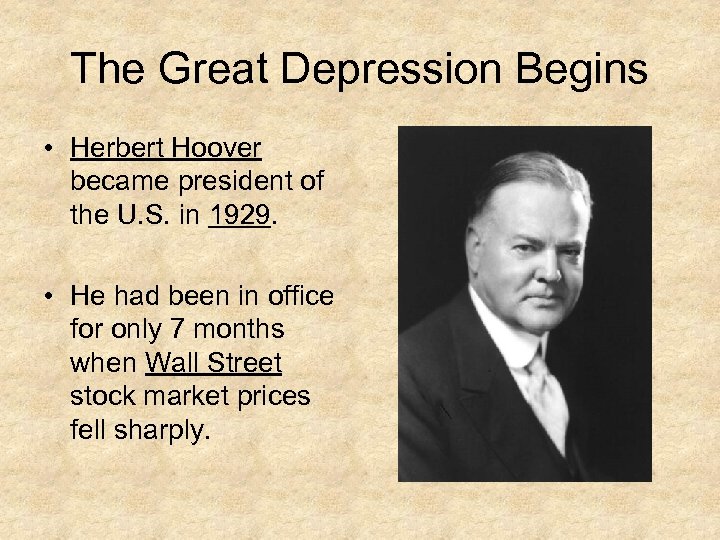 The Great Depression Begins • Herbert Hoover became president of the U. S. in 1929. • He had been in office for only 7 months when Wall Street stock market prices fell sharply.
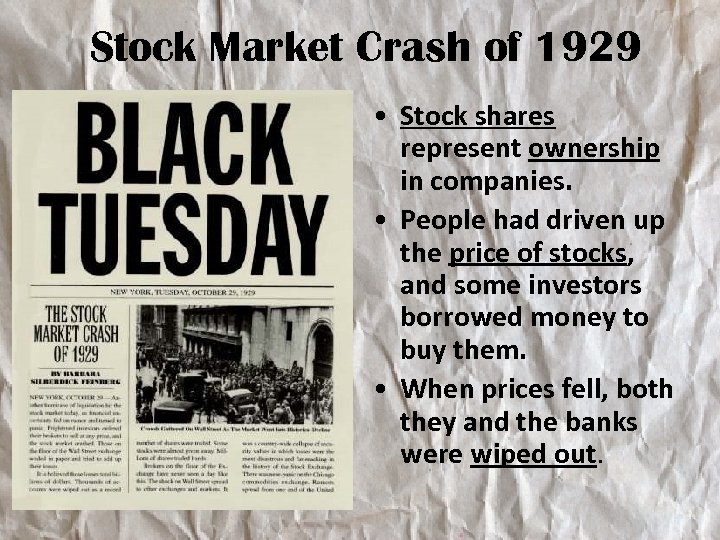 Stock Market Crash of 1929 • Stock shares represent ownership in companies. • People had driven up the price of stocks, and some investors borrowed money to buy them. • When prices fell, both they and the banks were wiped out.
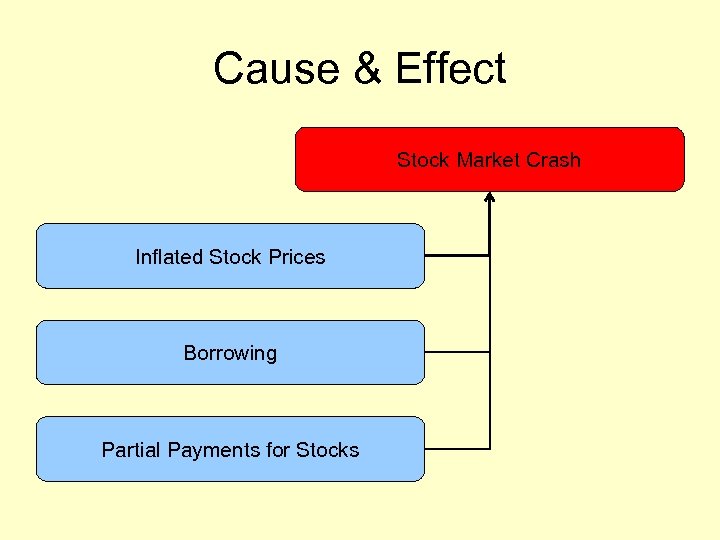 Cause & Effect Stock Market Crash Inflated Stock Prices Borrowing Partial Payments for Stocks
 Bad News Continues… • Factories closed • Widespread unemployment – loss of jobs • Texas farmers’ income suffered – Prices of agriculture products dropped • East Texas timber workers were laid off – people could not afford new houses
 Depth of Depression • President Hoover greatly underestimated the severity, or depth, of the Great Depression. – Called on local churches and charities to increase aid to the poor – Asked people to hire unemployed neighbors to do odd jobs
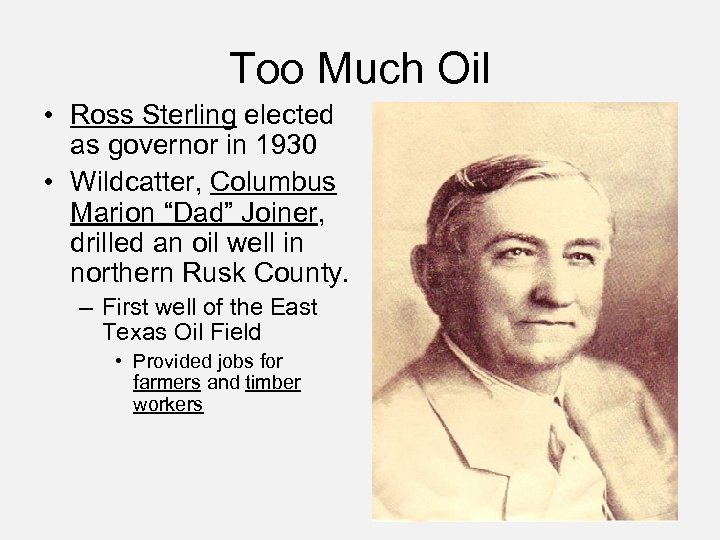 Too Much Oil • Ross Sterling elected as governor in 1930 • Wildcatter, Columbus Marion “Dad” Joiner, drilled an oil well in northern Rusk County. – First well of the East Texas Oil Field • Provided jobs for farmers and timber workers
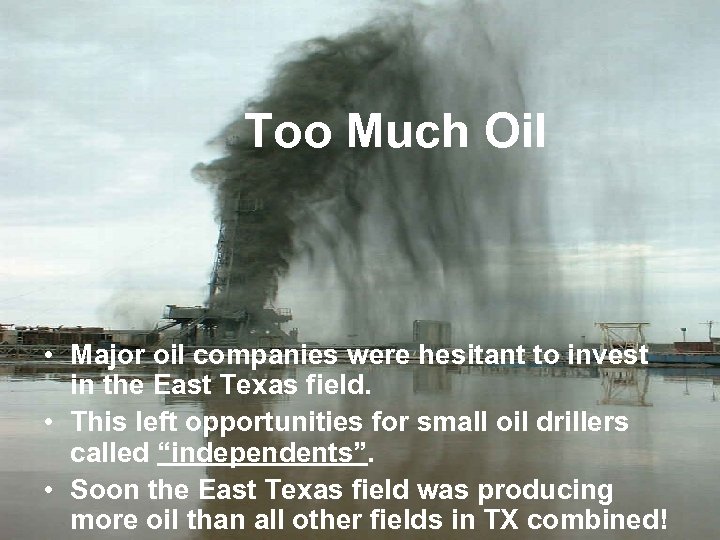 Too Much Oil • Major oil companies were hesitant to invest in the East Texas field. • This left opportunities for small oil drillers called “independents”. • Soon the East Texas field was producing more oil than all other fields in TX combined!
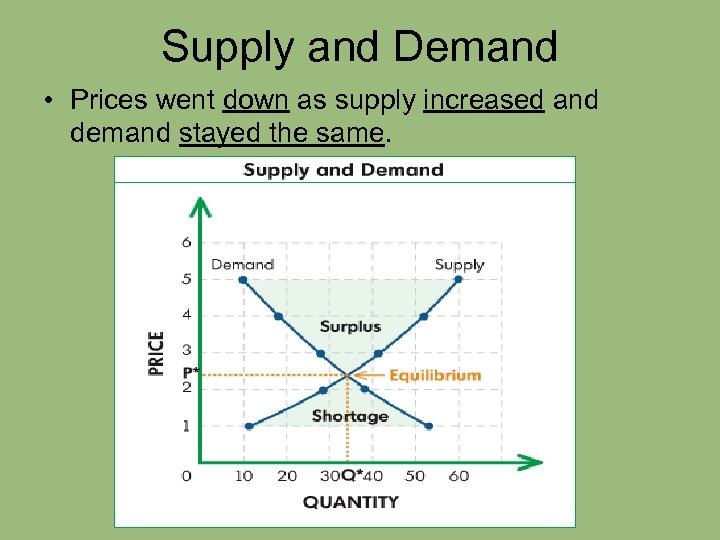 Supply and Demand • Prices went down as supply increased and demand stayed the same.
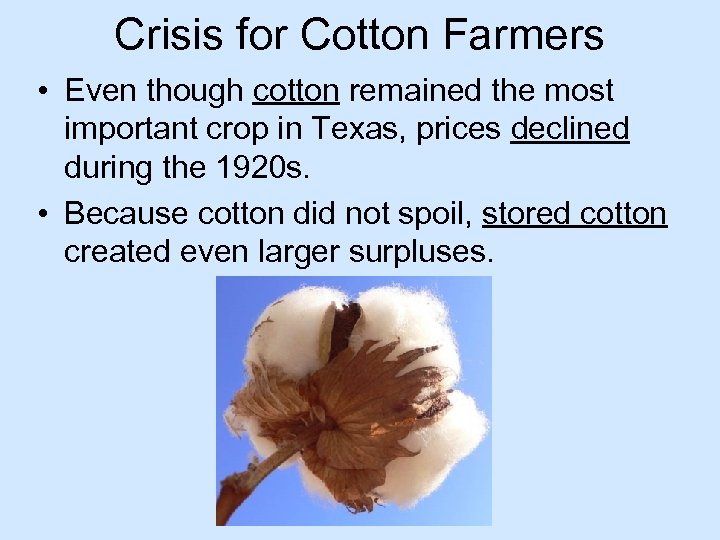 Crisis for Cotton Farmers • Even though cotton remained the most important crop in Texas, prices declined during the 1920 s. • Because cotton did not spoil, stored cotton created even larger surpluses.
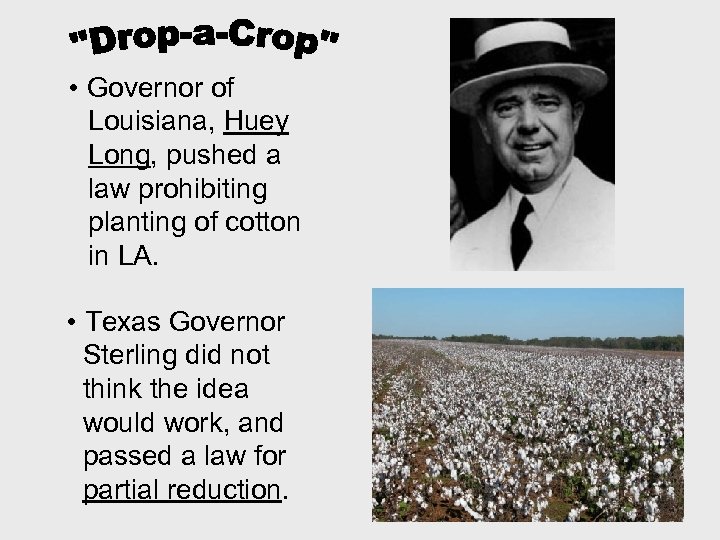 • Governor of Louisiana, Huey Long, pushed a law prohibiting planting of cotton in LA. • Texas Governor Sterling did not think the idea would work, and passed a law for partial reduction.
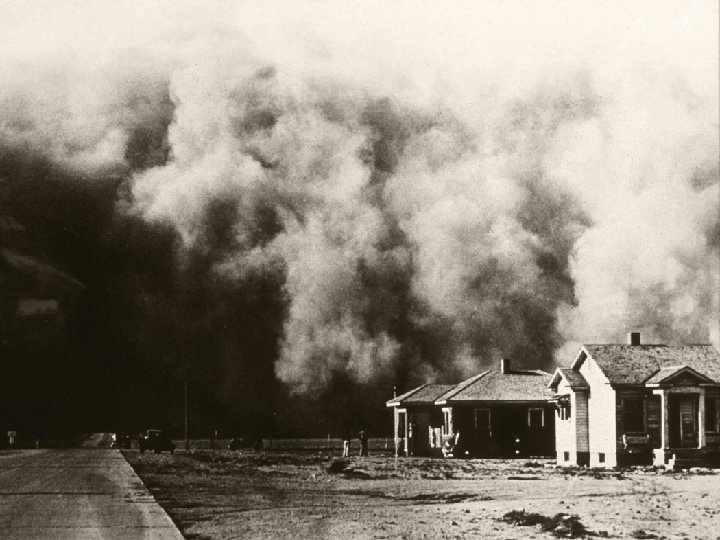
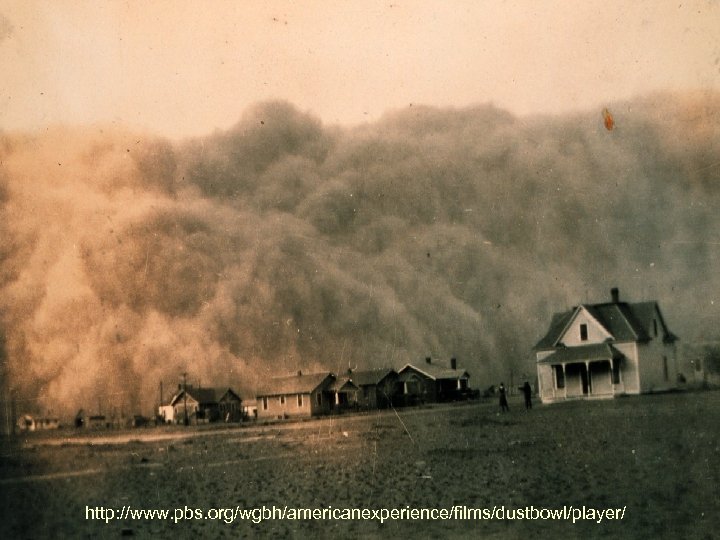
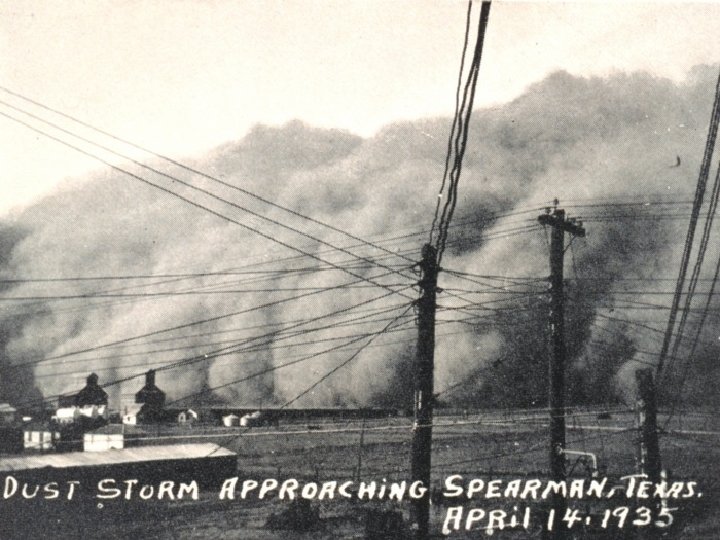
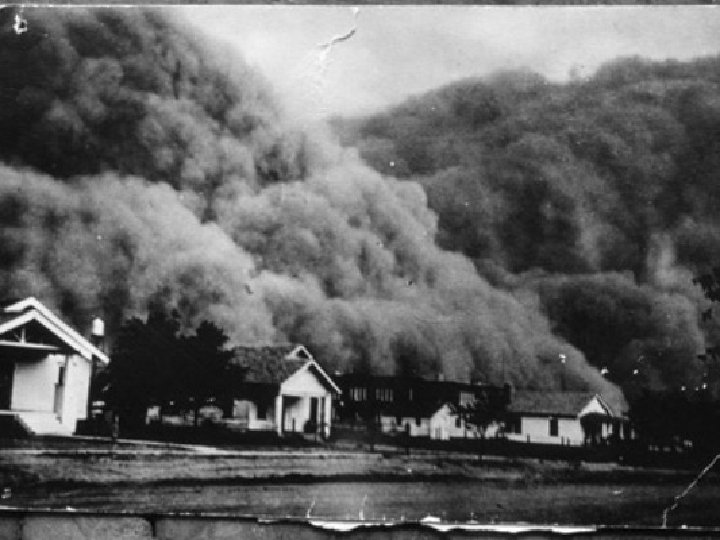
 Dust Storms Blanket the High Plains • When farmers plowed grasses under, there was nothing left to hold the soil when winds blew. • A severe drought occurred in the 1930 s. • Soil blew away as the residents of the Plains watched.
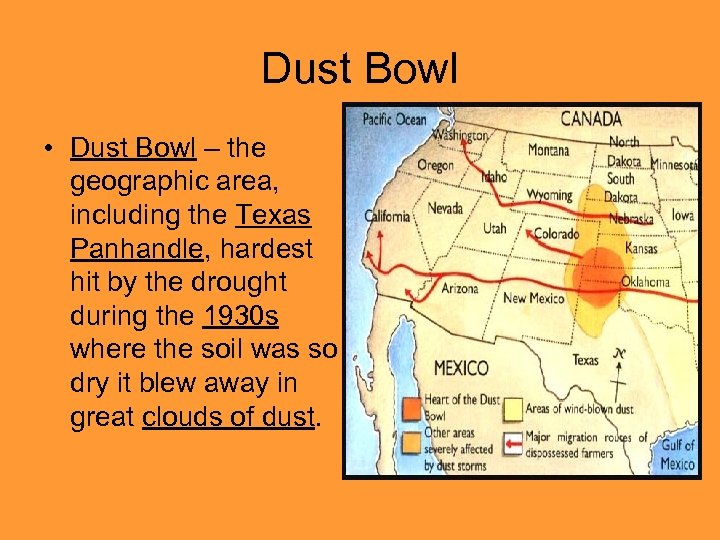 Dust Bowl • Dust Bowl – the geographic area, including the Texas Panhandle, hardest hit by the drought during the 1930 s where the soil was so dry it blew away in great clouds of dust.
 http: //www. pbs. org/wgbh/americanexperience/films/dustbowl/player/
 Difficult Times • The Dust Bowl made life harder for people during this time period: – Motorists often could not see 20 feet down the street – People became ill from lung diseases – Farmers lost soil when wind blew – Many families lost their farms because of the difficult economic times
 Texans Look for Answers • Texans looked to themselves and each other for answers to growing economic problems. – As banks failed, merchants printed coupons that could be used as money – Universities allowed professors to eat in the university dining halls – Churches paid their preachers with eggs, chickens, vegetables, and firewood.