


 Скачать презентацию Department of Natural and Environmental Resources Puerto Rico
60ef32d7274ed16bcf54b4fc3afc82f8.ppt
- Количество слайдов: 29
 Department of Natural and Environmental Resources Puerto Rico Coastal Zone Management Program Earth Observation Support for Sustainable Tourism in Small Island States March 9 -11, 2011, Puerto Rico
 Puerto Rico Coastal Zone Management Program Mission: The Puerto Rico Coastal Management Program (PRCZMP) is a partnership led by the Department of Natural and Environmental Resources (DNER) to promote the protection, conservation, and sustainable development of Puerto Rico’s coastal zone and coastal resources.
 Puerto Rico Coastal Zone Management Program Goals and Objectives: § Develop guides for public and private development on the coastal zone; § Conduct active management of coastal resources; § Foster scientific research, education, stakeholders and resource users participation as means of promoting sustainable development of our coastal resources
 Puerto Rico Coastal Zone Management Program Key Priorities: • Increase knowledge about trends of resource abundance and distribution. • Increase understanding of interspecies and species-habitat relationships. • Contribute to increase knowledge about climate change, sea level rise and their impact on terrestrial, coastal, marine natural and socioeconomic systems. • Effectively address human use patterns that may affect resource sustainability and biodiversity • Protect coastal wetlands and coral reef systems from key stressors. • Conduct coastal communities vulnerability assessments and develop adaptation strategies to current hazards and climate change.
 PRCZMP jurisdiction
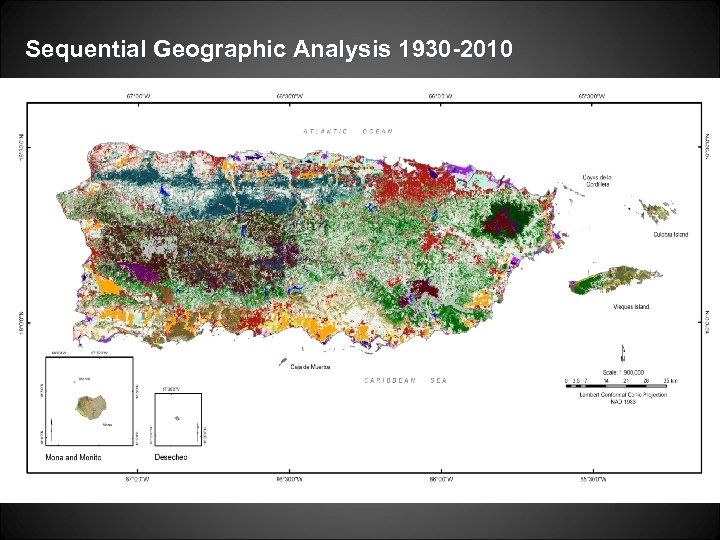 Sequential Geographic Analysis 1930 -2010
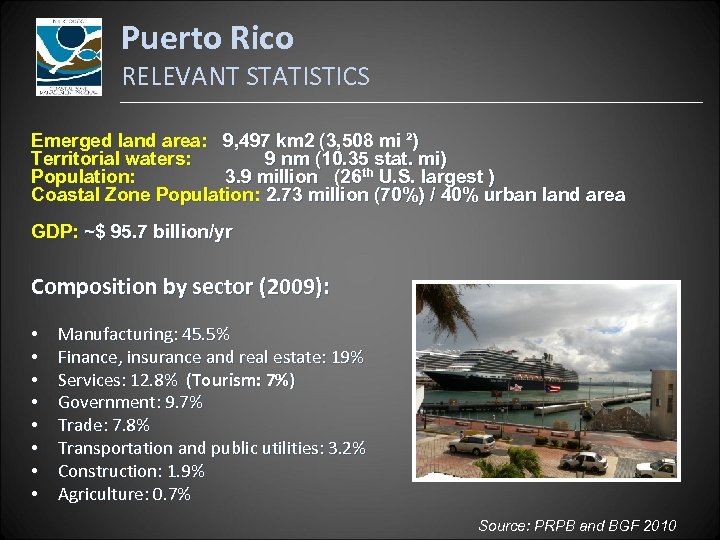 Puerto Rico RELEVANT STATISTICS Emerged land area: 9, 497 km 2 (3, 508 mi ²) Territorial waters: 9 nm (10. 35 stat. mi) Population: 3. 9 million (26 th U. S. largest ) Coastal Zone Population: 2. 73 million (70%) / 40% urban land area GDP: ~$ 95. 7 billion/yr Composition by sector (2009): • • Manufacturing: 45. 5% Finance, insurance and real estate: 19% Services: 12. 8% (Tourism: 7%) Government: 9. 7% Trade: 7. 8% Transportation and public utilities: 3. 2% Construction: 1. 9% Agriculture: 0. 7% Source: PRPB and BGF 2010
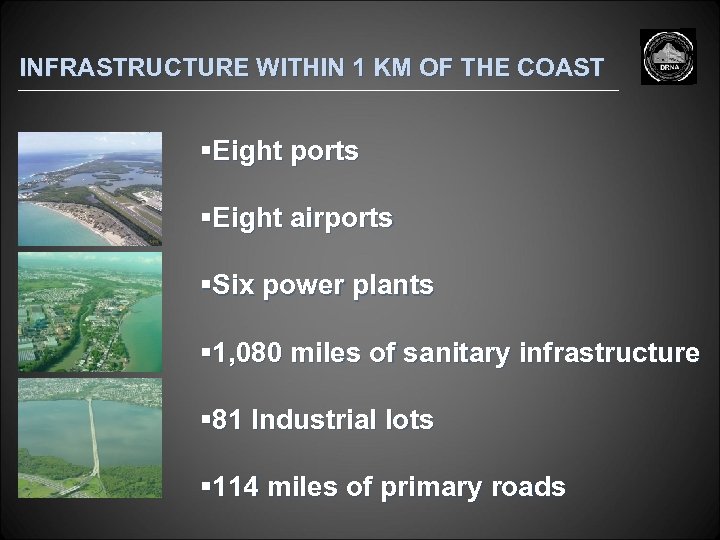 INFRASTRUCTURE WITHIN 1 KM OF THE COAST §Eight ports §Eight airports §Six power plants § 1, 080 miles of sanitary infrastructure § 81 Industrial lots § 114 miles of primary roads

 Major Coral Reef Stressors • • • Climate Change Land-based Sources of Pollution Fisheries Impact Disease Recreational Overuse Lack of Awareness
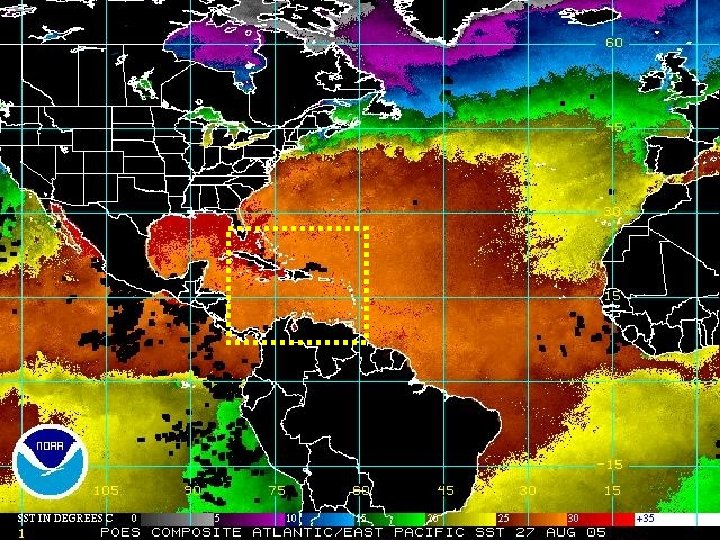
 Climate Change impacts on wetlands • Changes in temperature, rainfall, sea level rise and salinization would have an impact on plant species of tidal freshwater wetlands and migratory bird habitats. Plant species along rivers might be able to migrate to more inland areas. • The ability of wetlands to migrate inland to areas of decreasing tidal inundation along undeveloped shores is a way coastal wetlands can persist in spite of rising seas (Ross et al. , 2000). • In many areas coastal development just above the extreme high tide line has limited or eliminated opportunities for wetland migration, a phenomenon that has been labeled “coastal squeeze” (Twilley, 2007). • As human development and climate change progress coastal resources and infrastructure become more vulnerable.
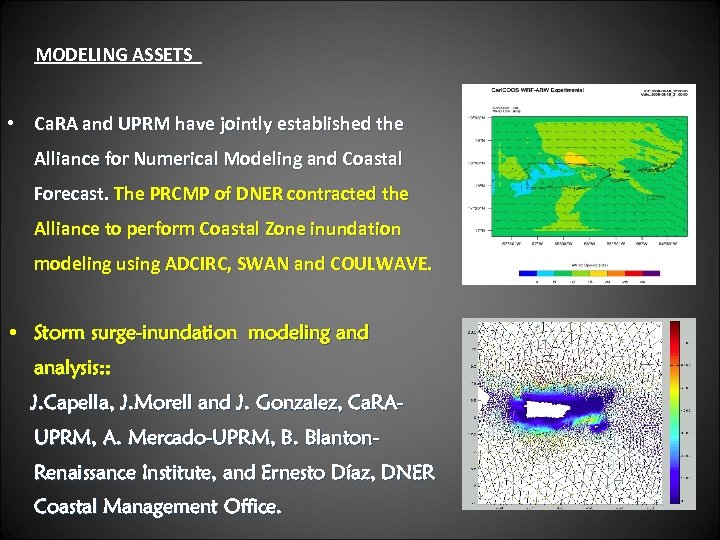 MODELING ASSETS • Ca. RA and UPRM have jointly established the Alliance for Numerical Modeling and Coastal Forecast. The PRCMP of DNER contracted the Alliance to perform Coastal Zone inundation modeling using ADCIRC, SWAN and COULWAVE. • Storm surge-inundation modeling and analysis: : J. Capella, J. Morell and J. Gonzalez, Ca. RAUPRM, A. Mercado-UPRM, B. Blanton. Renaissance Institute, and Ernesto Díaz, DNER Coastal Management Office.
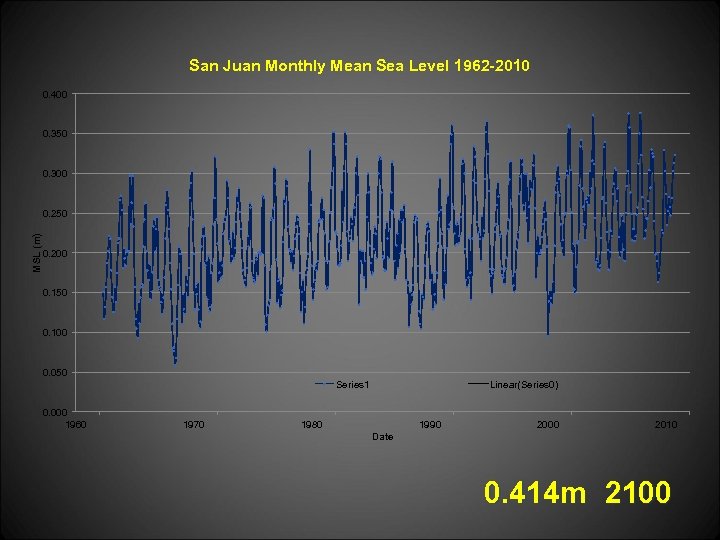 San Juan Monthly Mean Sea Level 1962 -2010 0. 400 0. 350 0. 300 MSL (m) 0. 250 0. 200 0. 150 0. 100 0. 050 Series 1 0. 000 1960 1970 Linear(Series 0) 1980 1990 2000 2010 Date 0. 414 m 2100
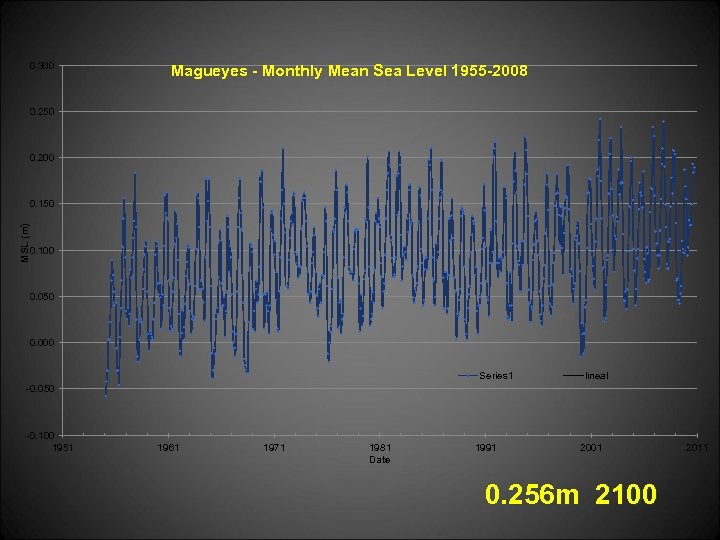 0. 300 Magueyes - Monthly Mean Sea Level 1955 -2008 0. 250 0. 200 MSL (m) 0. 150 0. 100 0. 050 0. 000 Series 1 lineal -0. 050 -0. 100 1951 1961 1971 1981 Date 1991 2001 0. 256 m 2100 2011
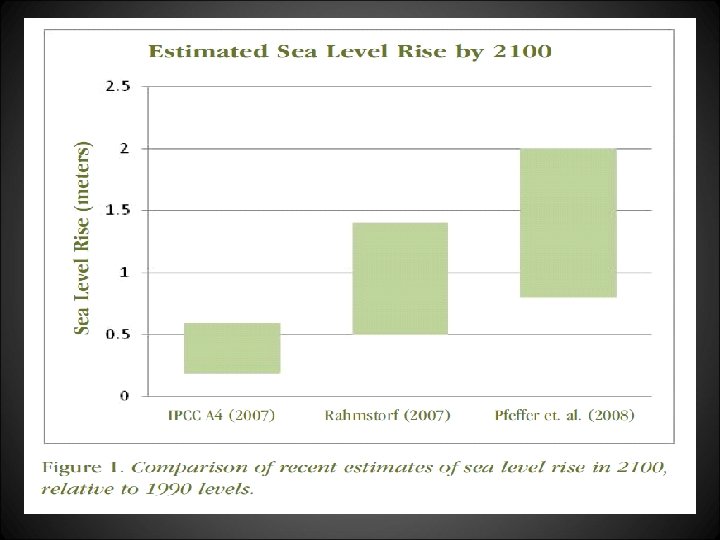
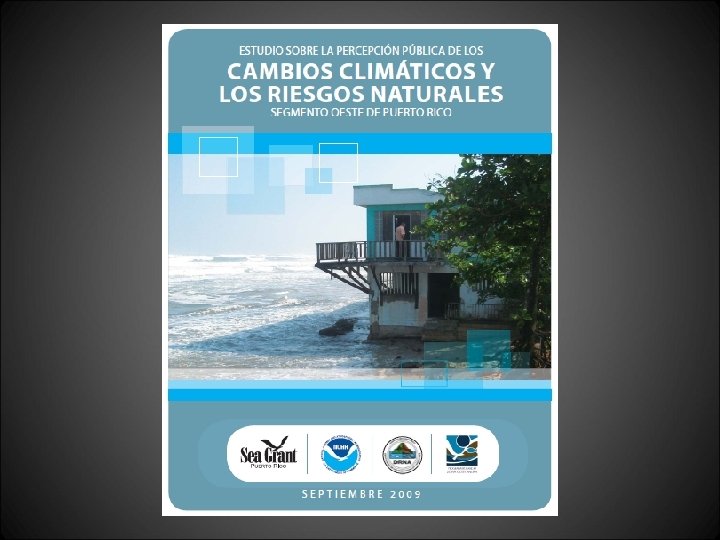
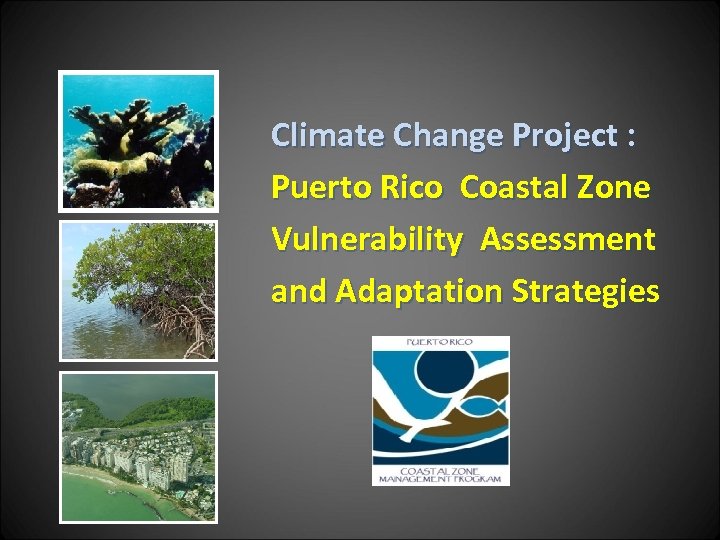 Climate Change Project : Puerto Rico Coastal Zone Vulnerability Assessment and Adaptation Strategies
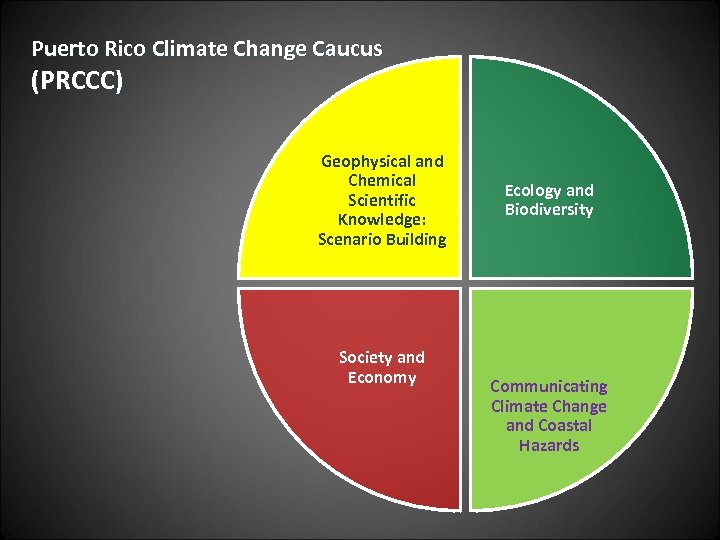 Puerto Rico Climate Change Caucus (PRCCC) Geophysical and Chemical Scientific Knowledge: Scenario Building Society and Economy Ecology and Biodiversity Communicating Climate Change and Coastal Hazards
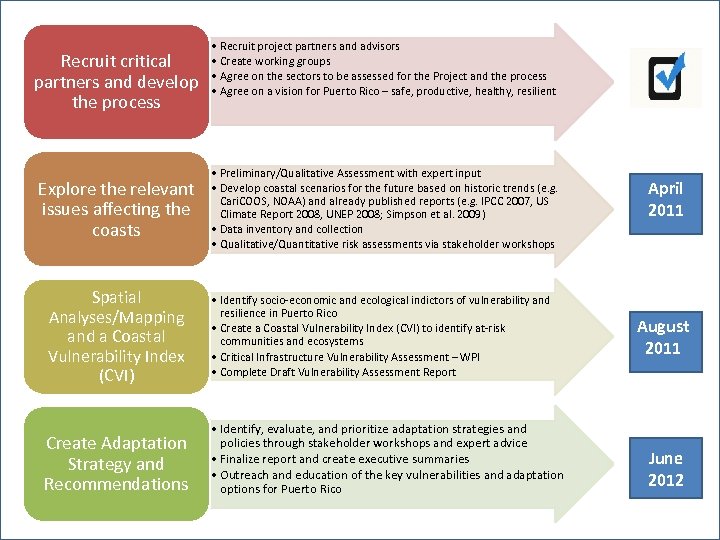 Recruit critical partners and develop the process Explore the relevant issues affecting the coasts • Recruit project partners and advisors • Create working groups • Agree on the sectors to be assessed for the Project and the process • Agree on a vision for Puerto Rico – safe, productive, healthy, resilient • Preliminary/Qualitative Assessment with expert input • Develop coastal scenarios for the future based on historic trends (e. g. Cari. COOS, NOAA) and already published reports (e. g. IPCC 2007, US Climate Report 2008, UNEP 2008; Simpson et al. 2009) • Data inventory and collection • Qualitative/Quantitative risk assessments via stakeholder workshops Spatial Analyses/Mapping and a Coastal Vulnerability Index (CVI) • Identify socio-economic and ecological indictors of vulnerability and resilience in Puerto Rico • Create a Coastal Vulnerability Index (CVI) to identify at-risk communities and ecosystems • Critical Infrastructure Vulnerability Assessment – WPI • Complete Draft Vulnerability Assessment Report Create Adaptation Strategy and Recommendations • Identify, evaluate, and prioritize adaptation strategies and policies through stakeholder workshops and expert advice • Finalize report and create executive summaries • Outreach and education of the key vulnerabilities and adaptation options for Puerto Rico 3/16/2018 April 2011 August 2011 June 2012 21
 Geophysical and Chemical Scientific Knowledge: Scenario Building Israel Matos Dr. Martiza Barreto Dr. Jorge Capella Dr. Miguel Canals Dr. Jorge Corredor Melissa Melendez Dr. Rafael Mendez Tejeda Dr. Fernando Gilbes-Santaella Dr. Julio Morell Plan. Lyzaida Rodriguez Juan González Prof. Aurelio Mercado
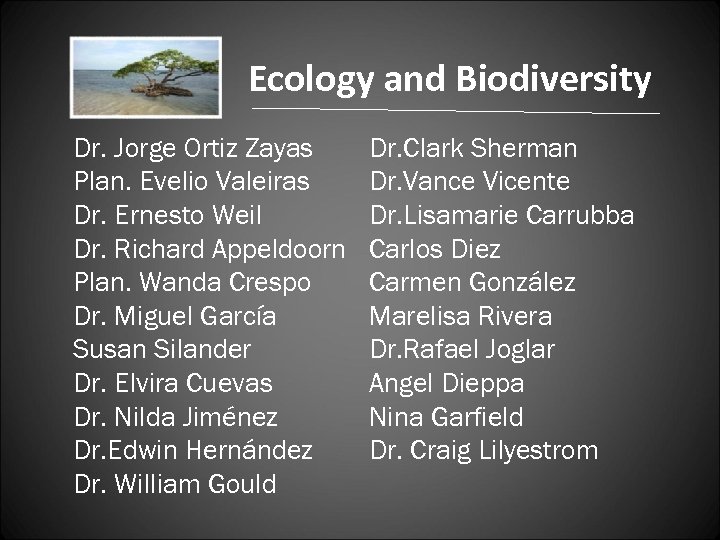 Ecology and Biodiversity Dr. Jorge Ortiz Zayas Plan. Evelio Valeiras Dr. Ernesto Weil Dr. Richard Appeldoorn Plan. Wanda Crespo Dr. Miguel García Susan Silander Dr. Elvira Cuevas Dr. Nilda Jiménez Dr. Edwin Hernández Dr. William Gould Dr. Clark Sherman Dr. Vance Vicente Dr. Lisamarie Carrubba Carlos Diez Carmen González Marelisa Rivera Dr. Rafael Joglar Angel Dieppa Nina Garfield Dr. Craig Lilyestrom
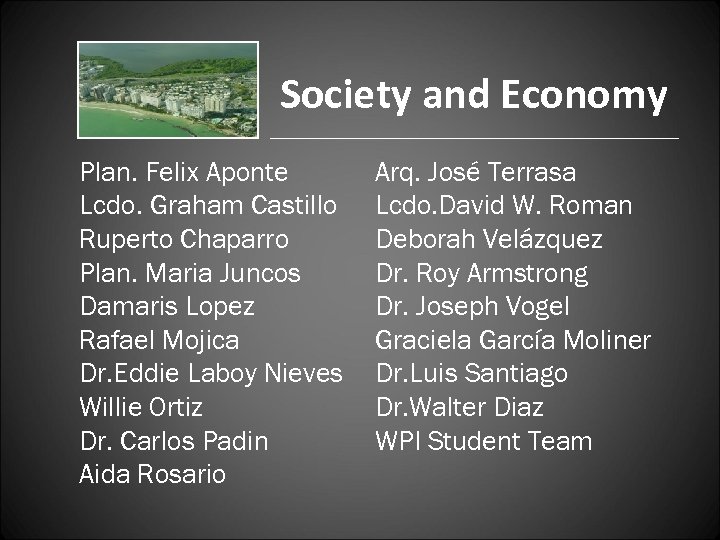 Society and Economy Plan. Felix Aponte Lcdo. Graham Castillo Ruperto Chaparro Plan. Maria Juncos Damaris Lopez Rafael Mojica Dr. Eddie Laboy Nieves Willie Ortiz Dr. Carlos Padin Aida Rosario Arq. José Terrasa Lcdo. David W. Roman Deborah Velázquez Dr. Roy Armstrong Dr. Joseph Vogel Graciela García Moliner Dr. Luis Santiago Dr. Walter Diaz WPI Student Team
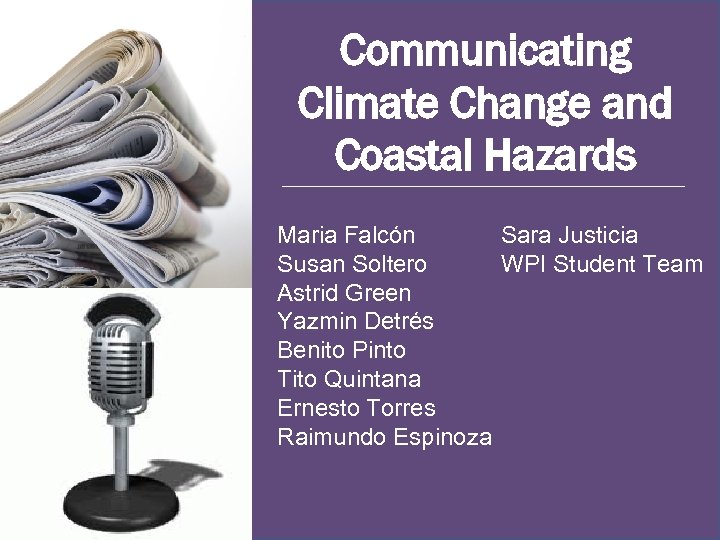 Communicating Climate Change and Coastal Hazards Maria Falcón Sara Justicia Susan Soltero WPI Student Team Astrid Green Yazmin Detrés Benito Pinto Tito Quintana Ernesto Torres Raimundo Espinoza 3/16/2018 25
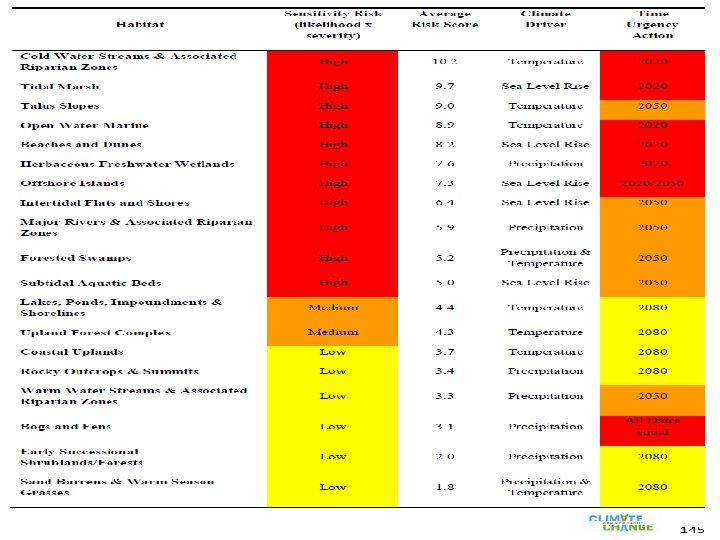
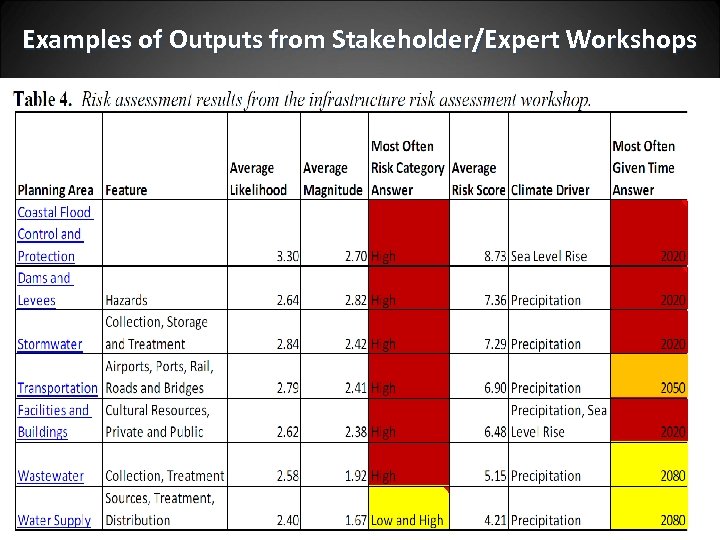 Examples of Outputs from Stakeholder/Expert Workshops 3/16/2018 26
 3/16/2018 27
 • Steering Committee of the “Geophysical and Chemical Scientific Knowledge: Scenario Building” met in January to discuss historic trends and climate projections for Puerto Rico and the Caribbean Basin. • New Cari. COOS storm surge + sea level rise mapping will be completed for the Coastal Adaptation Project (Modeling a 1 meter sea level rise with a category 2 hurricane). • Partnering with Dr. Jaime Collazo of North Carolina State University and Dr. Katherine Hayhoe of Texas Tech University will enable us to use statistical downscaling of AOGCMs for the Caribbean Basin, Puerto Rico and the USVI. • A qualitative/descriptive vulnerability assessment will be completed for all the agreed upon sectors by May 2011. • Stakeholder risk assessment workshops will be conducted in Spring/Summer 2011.
 • A Coastal Vulnerability Index (CVI) for Puerto Rico will be developed by the PRCCC with DNER taking the lead in conjunction with Sea Grant Puerto Rico, University of Delaware, ITTF and Ca. RA. • The index will use social, ecological and socioeconomic indicators to assess vulnerability of the 44 coastal municipalities. • Adaptation strategies will be developed by the PRCCC based on vulnerability levels and multisectoral consultations. • Resulting strategies will be submitted to Policy makers with broad scientific, planning, and stakeholders support.
 QUESTIONS? . . . NEXT STEPS…