


 Скачать презентацию DEPARTMENT OF INTERNATIONAL HEALTH UNIVERSITY OF COPENHAGEN Peter
09dd611272ee9f86387a2df653dad957.ppt
- Количество слайдов: 29
 DEPARTMENT OF INTERNATIONAL HEALTH UNIVERSITY OF COPENHAGEN Peter Kjær Jensen Assistant Professor
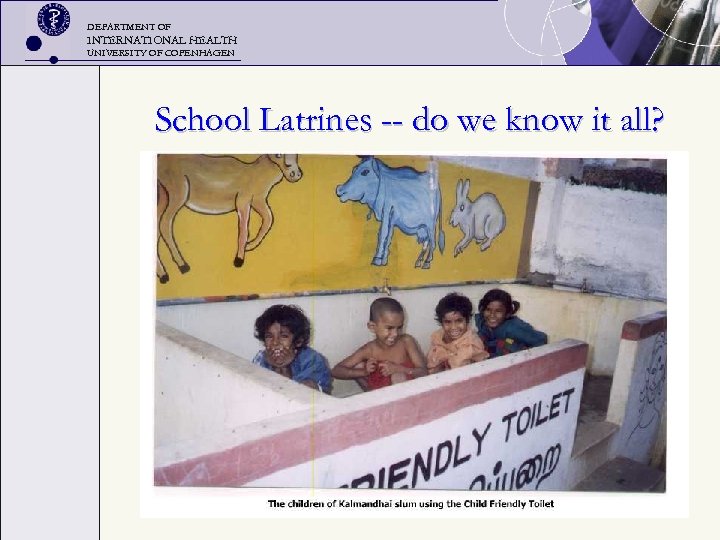 DEPARTMENT OF INTERNATIONAL HEALTH UNIVERSITY OF COPENHAGEN School Latrines -- do we know it all?
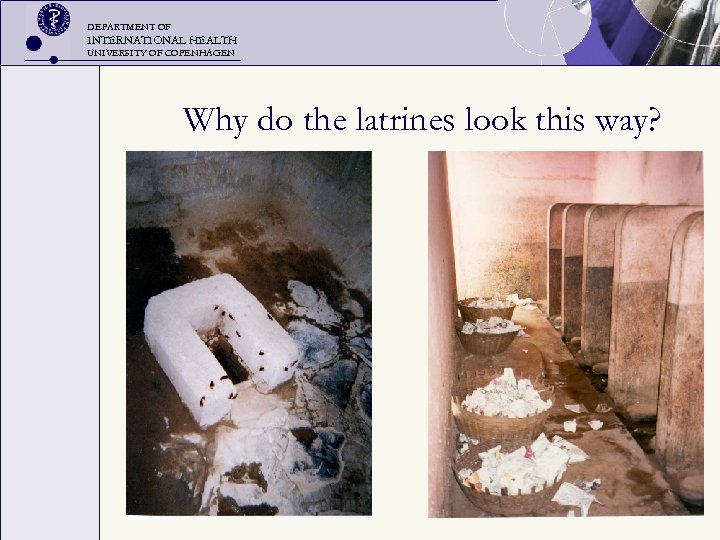 DEPARTMENT OF INTERNATIONAL HEALTH UNIVERSITY OF COPENHAGEN Why do the latrines look this way?
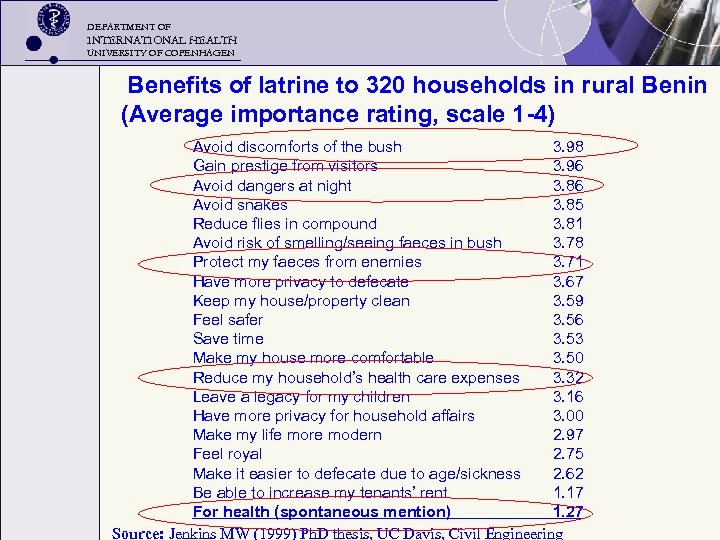 DEPARTMENT OF INTERNATIONAL HEALTH UNIVERSITY OF COPENHAGEN Benefits of latrine to 320 households in rural Benin (Average importance rating, scale 1 -4) Avoid discomforts of the bush 3. 98 Gain prestige from visitors 3. 96 Avoid dangers at night 3. 86 Avoid snakes 3. 85 Reduce flies in compound 3. 81 Avoid risk of smelling/seeing faeces in bush 3. 78 Protect my faeces from enemies 3. 71 Have more privacy to defecate 3. 67 Keep my house/property clean 3. 59 Feel safer 3. 56 Save time 3. 53 Make my house more comfortable 3. 50 Reduce my household’s health care expenses 3. 32 Leave a legacy for my children 3. 16 Have more privacy for household affairs 3. 00 Make my life more modern 2. 97 Feel royal 2. 75 Make it easier to defecate due to age/sickness 2. 62 Be able to increase my tenants’ rent 1. 17 For health (spontaneous mention) 1. 27 Source: Jenkins MW (1999) Ph. D thesis, UC Davis, Civil Engineering
 DEPARTMENT OF INTERNATIONAL HEALTH UNIVERSITY OF COPENHAGEN Importance of making multidisiplinary research An Vietnames example
 DEPARTMENT OF INTERNATIONAL HEALTH UNIVERSITY OF COPENHAGEN Rationale behind the study • 80 % of rural people have helminth infection in north Vietnam • Approx 1 billion have Ascaris infection in Asia • At risk: Children and farm workers • Effect: School, productivity, and general health • Possible cause: Use of unsafe human excreta in the agriculture (or that is what we think)
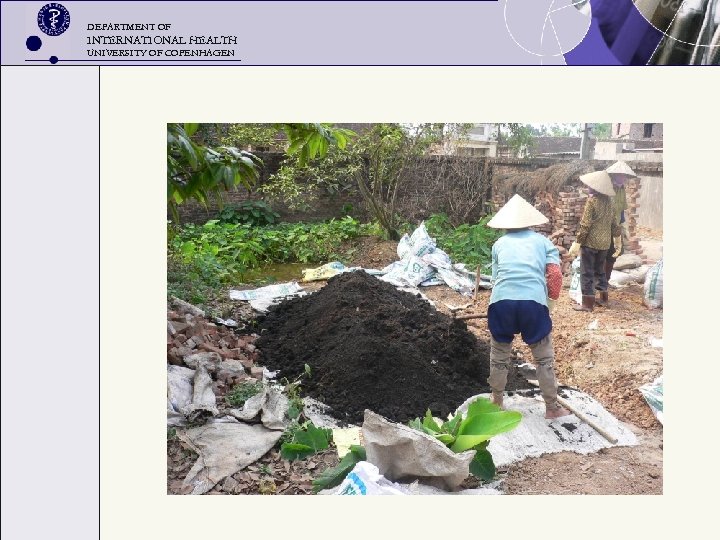
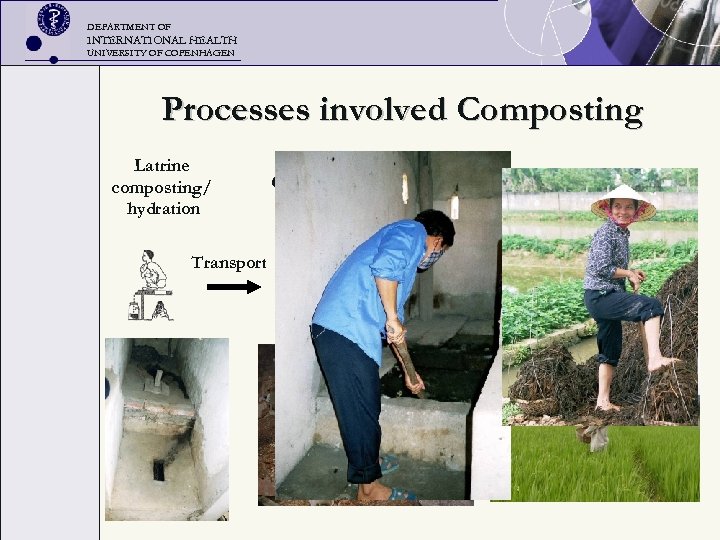 DEPARTMENT OF INTERNATIONAL HEALTH UNIVERSITY OF COPENHAGEN Processes involved Composting Latrine composting/ hydration Transport Garden Composting cold/hot Transport Application to the field
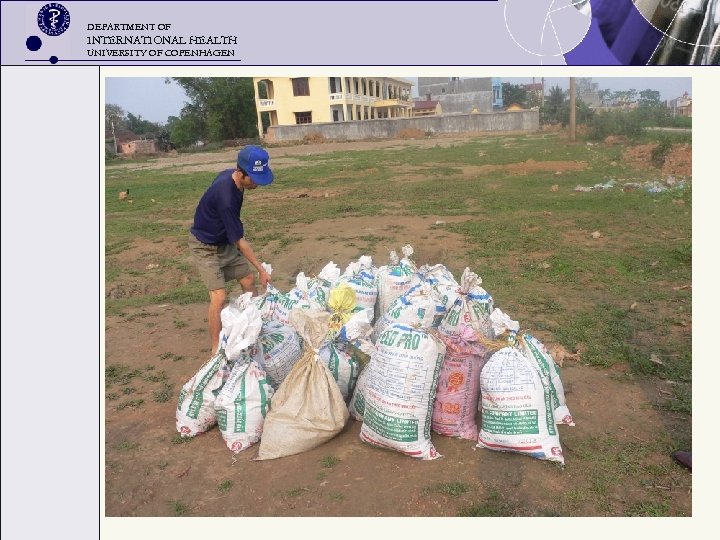
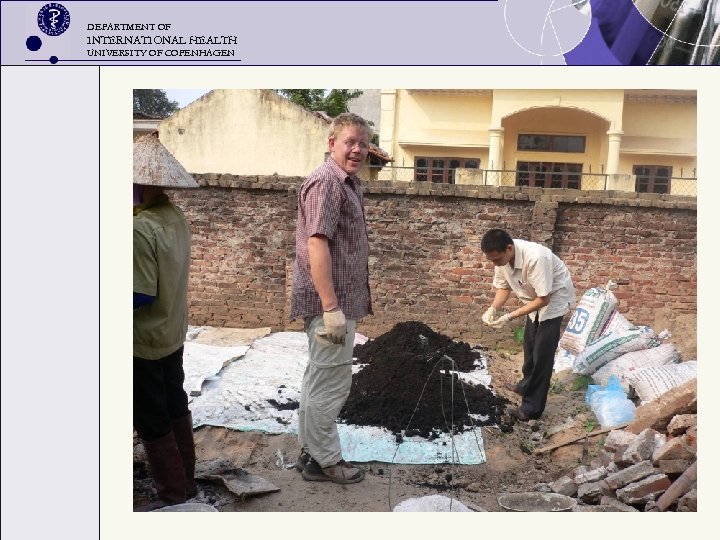
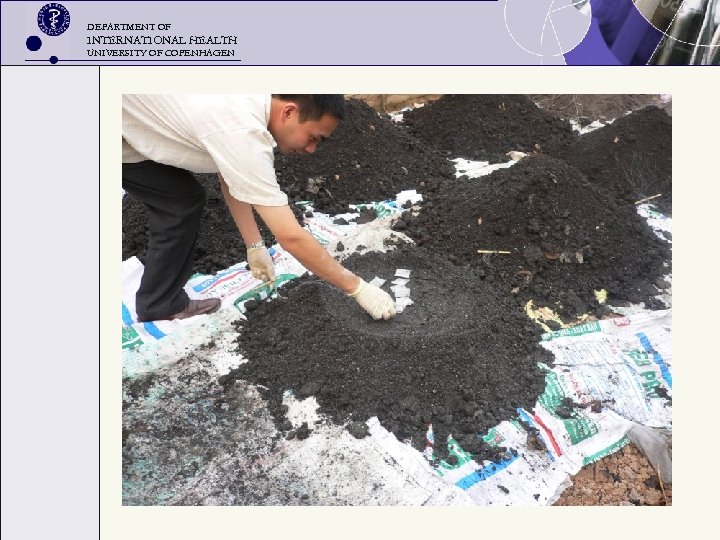
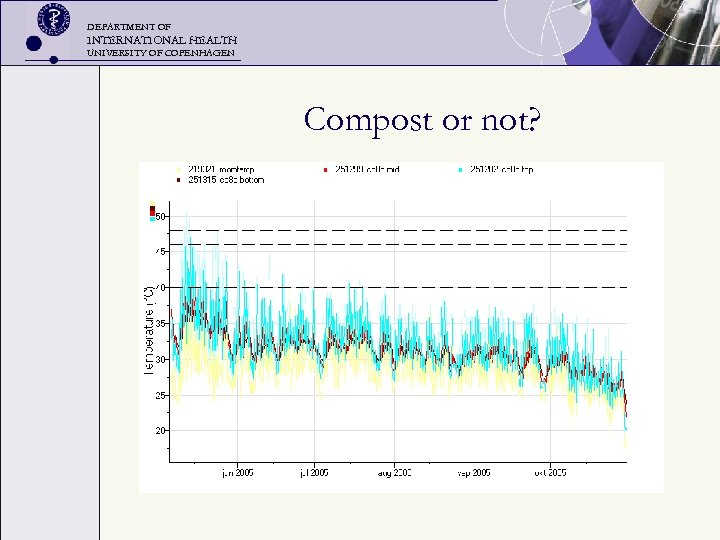
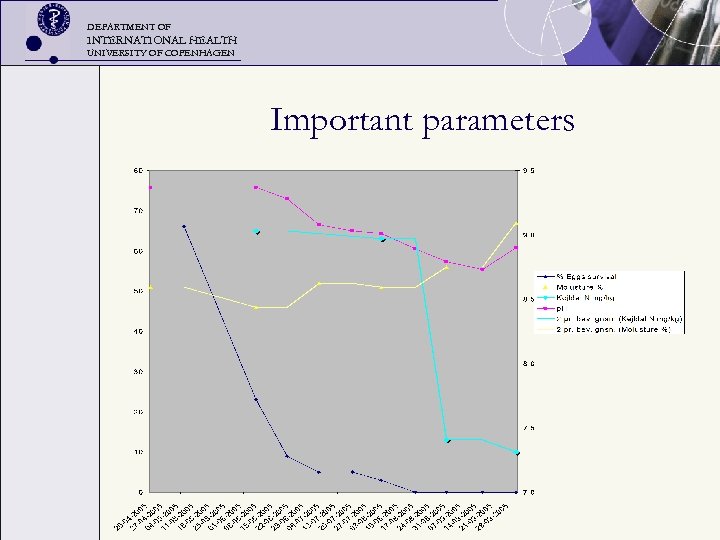
 DEPARTMENT OF INTERNATIONAL HEALTH UNIVERSITY OF COPENHAGEN What have we done • Reviewed the sanitation legislation. - (a little late) • 512 household interviews inc. In IEC and non IEC communes. Conducted 12 focus group discussions and (many) key informant interviews. • Composted 1 ton of human excreta, with inserted helminths eggs, to measure the survival acc. Temp, p. H, moisture, and NPK. • Followed 15 latrines in the filling process.
 DEPARTMENT OF INTERNATIONAL HEALTH UNIVERSITY OF COPENHAGEN
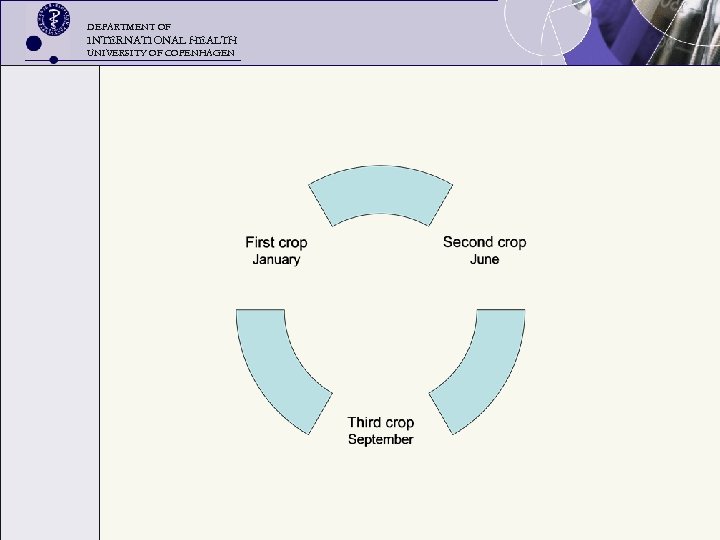
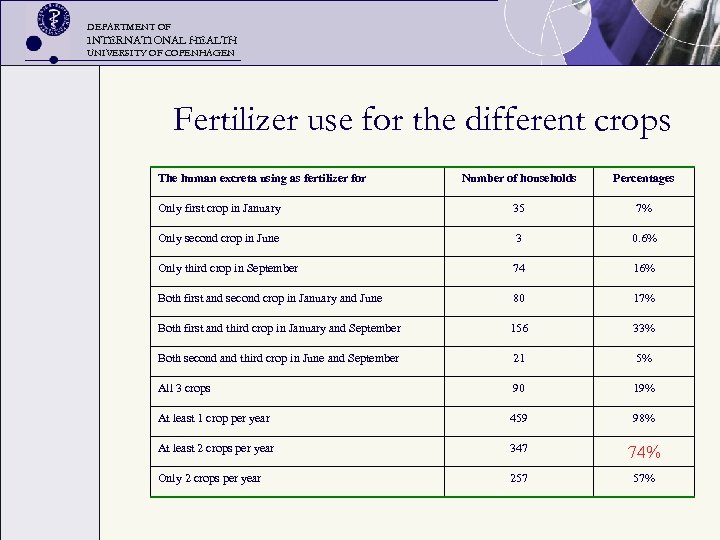 DEPARTMENT OF INTERNATIONAL HEALTH UNIVERSITY OF COPENHAGEN Fertilizer use for the different crops The human excreta using as fertilizer for Number of households Percentages Only first crop in January 35 7% Only second crop in June 3 0. 6% Only third crop in September 74 16% Both first and second crop in January and June 80 17% Both first and third crop in January and September 156 33% Both second and third crop in June and September 21 5% All 3 crops 90 19% At least 1 crop per year 459 98% At least 2 crops per year 347 74% Only 2 crops per year 257 57%
 DEPARTMENT OF INTERNATIONAL HEALTH UNIVERSITY OF COPENHAGEN
 DEPARTMENT OF INTERNATIONAL HEALTH UNIVERSITY OF COPENHAGEN
 DEPARTMENT OF INTERNATIONAL HEALTH UNIVERSITY OF COPENHAGEN
 DEPARTMENT OF INTERNATIONAL HEALTH UNIVERSITY OF COPENHAGEN
 DEPARTMENT OF INTERNATIONAL HEALTH UNIVERSITY OF COPENHAGEN Compost or not?
 DEPARTMENT OF INTERNATIONAL HEALTH UNIVERSITY OF COPENHAGEN Important parameters
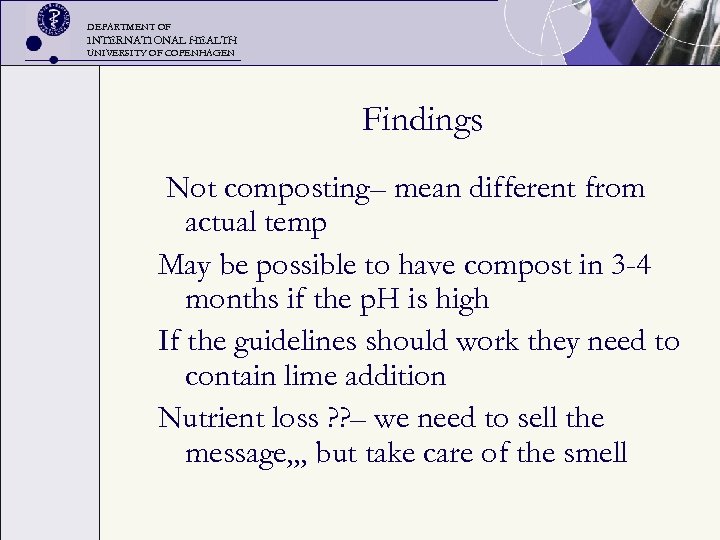 DEPARTMENT OF INTERNATIONAL HEALTH UNIVERSITY OF COPENHAGEN Findings Not composting– mean different from actual temp May be possible to have compost in 3 -4 months if the p. H is high If the guidelines should work they need to contain lime addition Nutrient loss ? ? – we need to sell the message, , , but take care of the smell
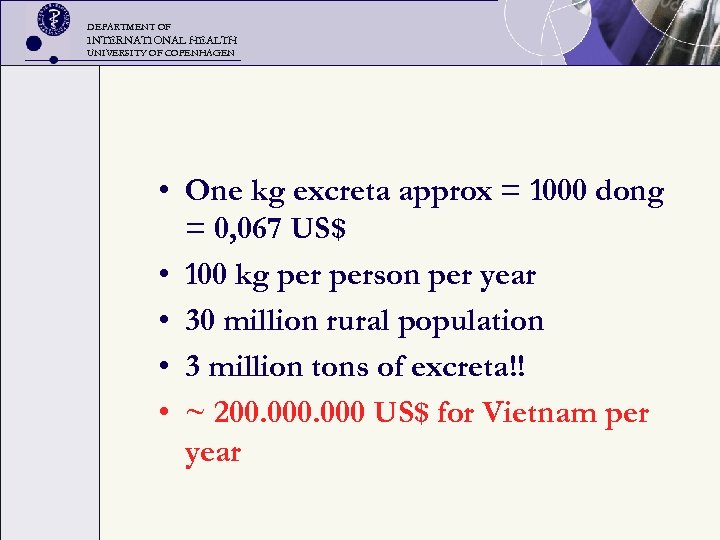 DEPARTMENT OF INTERNATIONAL HEALTH UNIVERSITY OF COPENHAGEN • One kg excreta approx = 1000 dong = 0, 067 US$ • 100 kg person per year • 30 million rural population • 3 million tons of excreta!! • ~ 200. 000 US$ for Vietnam per year
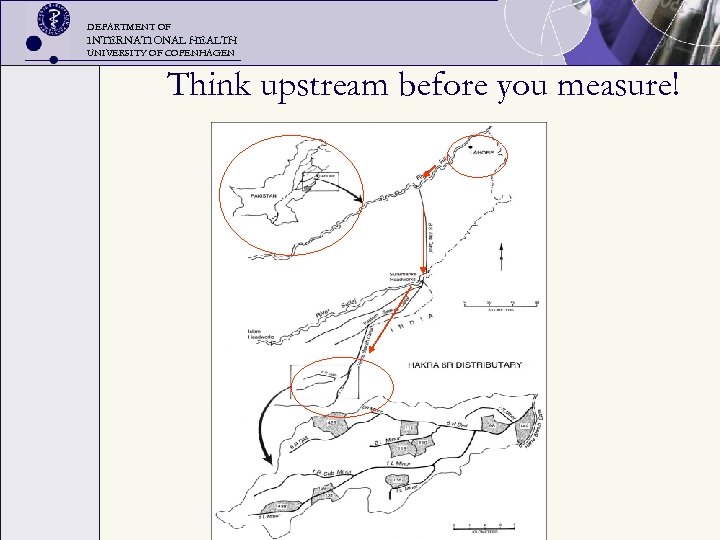 DEPARTMENT OF INTERNATIONAL HEALTH UNIVERSITY OF COPENHAGEN Think upstream before you measure!
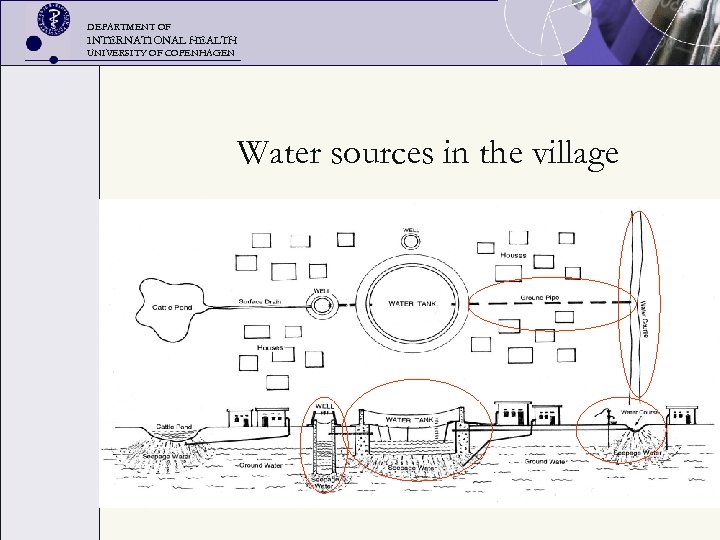 DEPARTMENT OF INTERNATIONAL HEALTH UNIVERSITY OF COPENHAGEN Water sources in the village
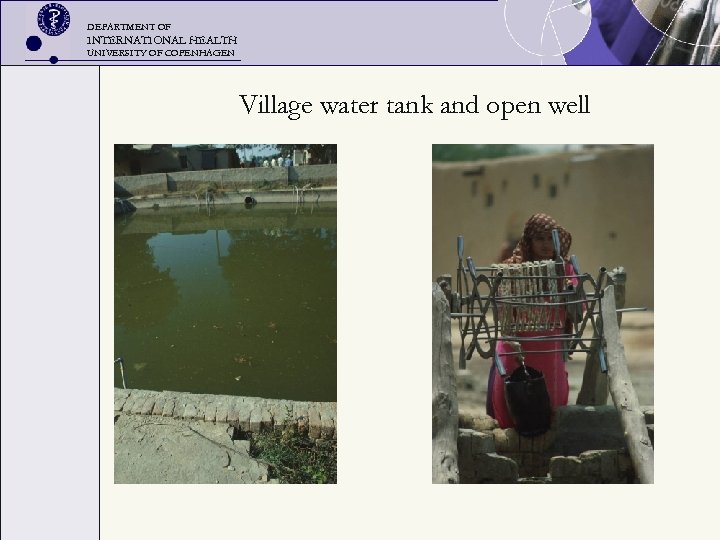 DEPARTMENT OF INTERNATIONAL HEALTH UNIVERSITY OF COPENHAGEN Village water tank and open well
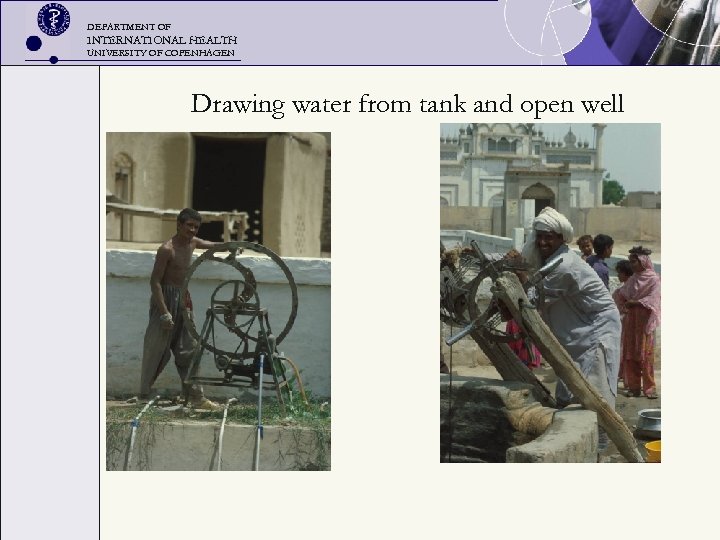 DEPARTMENT OF INTERNATIONAL HEALTH UNIVERSITY OF COPENHAGEN Drawing water from tank and open well
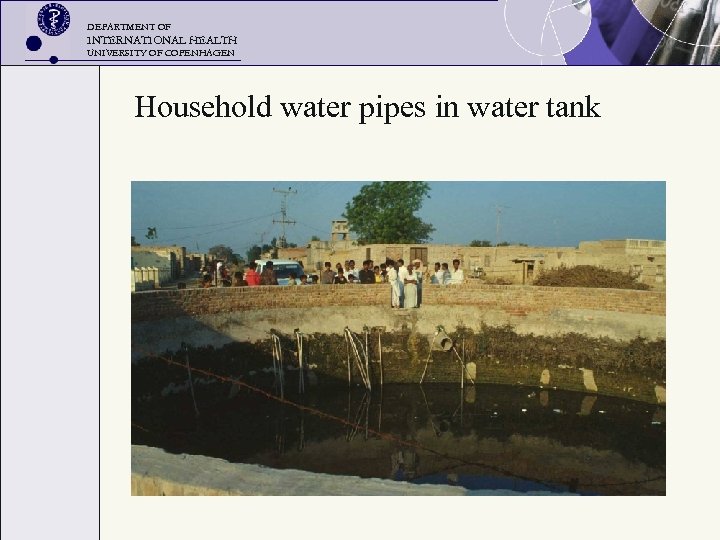 DEPARTMENT OF INTERNATIONAL HEALTH UNIVERSITY OF COPENHAGEN Household water pipes in water tank
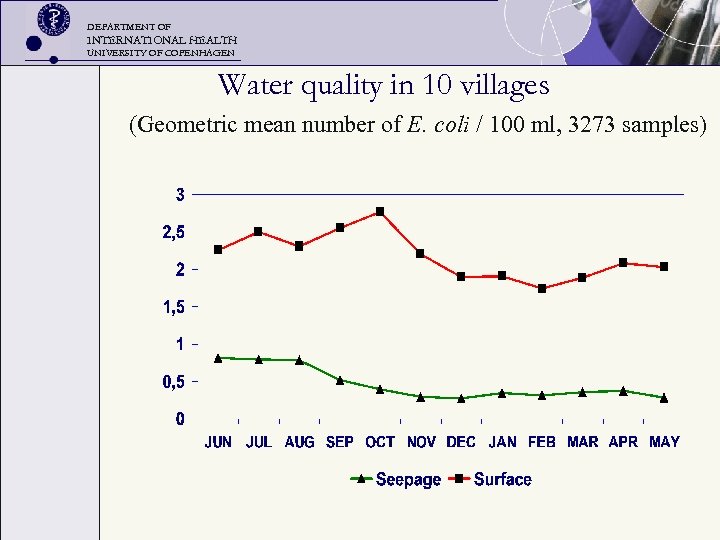 DEPARTMENT OF INTERNATIONAL HEALTH UNIVERSITY OF COPENHAGEN Water quality in 10 villages (Geometric mean number of E. coli / 100 ml, 3273 samples)
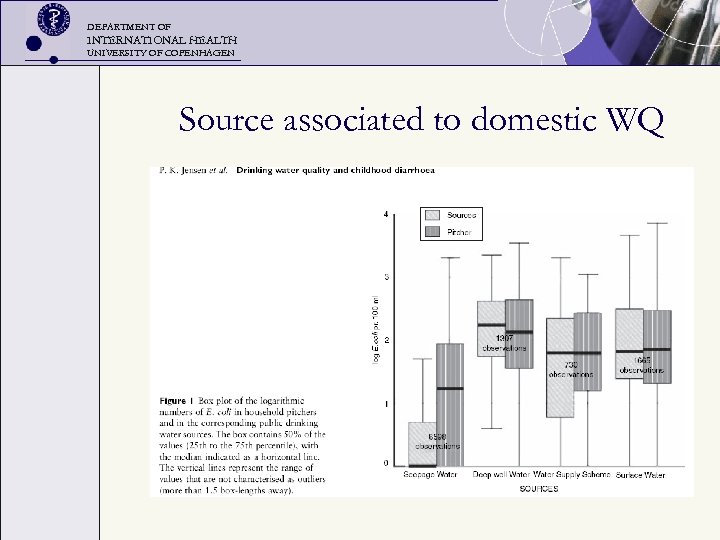 DEPARTMENT OF INTERNATIONAL HEALTH UNIVERSITY OF COPENHAGEN Source associated to domestic WQ
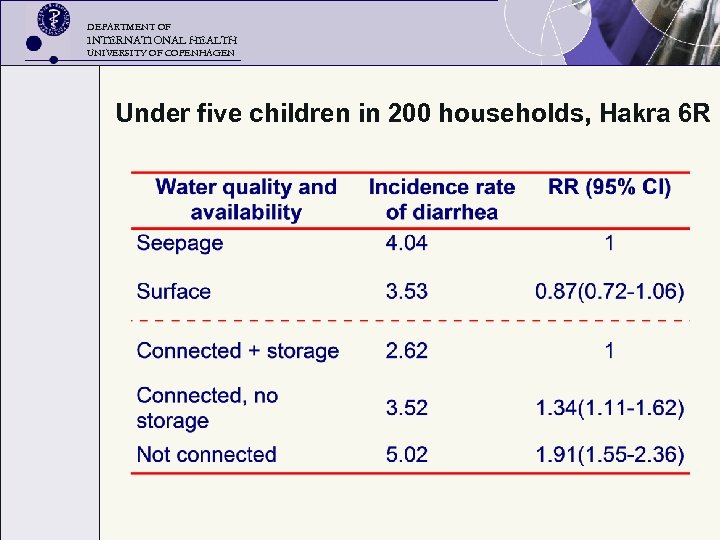 DEPARTMENT OF INTERNATIONAL HEALTH UNIVERSITY OF COPENHAGEN Under five children in 200 households, Hakra 6 R
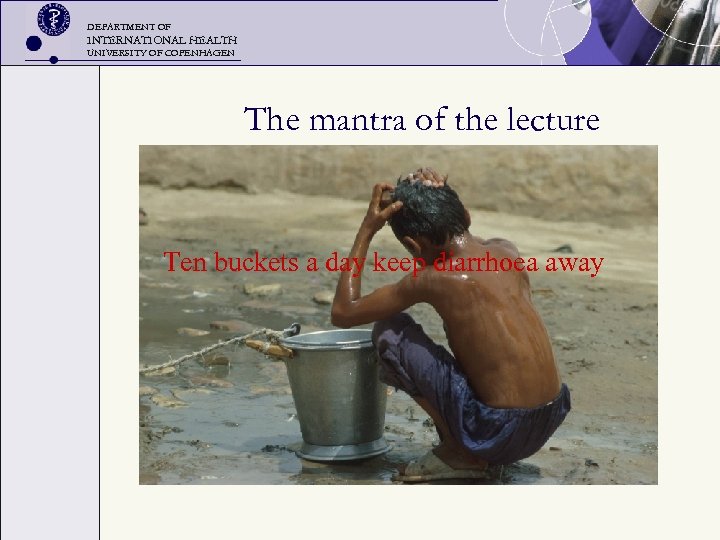 DEPARTMENT OF INTERNATIONAL HEALTH UNIVERSITY OF COPENHAGEN The mantra of the lecture Ten buckets a day keep diarrhoea away
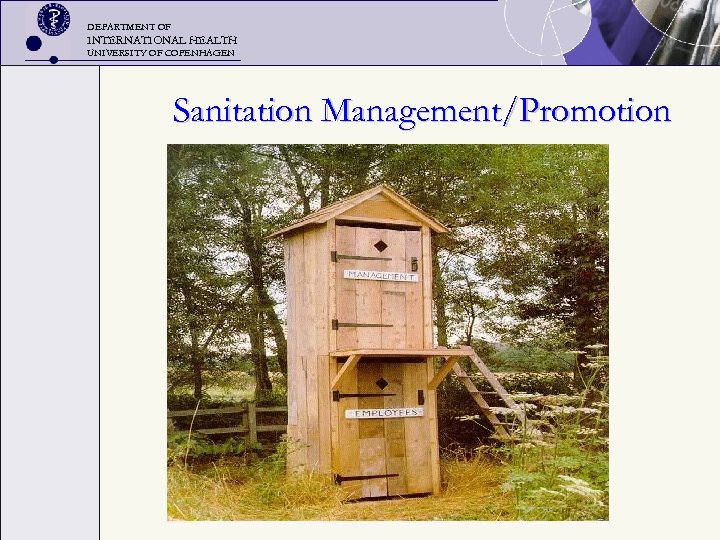 DEPARTMENT OF INTERNATIONAL HEALTH UNIVERSITY OF COPENHAGEN Sanitation Management/Promotion
 DEPARTMENT OF INTERNATIONAL HEALTH UNIVERSITY OF COPENHAGEN Louis VIII