


 Скачать презентацию DEPARTMENT OF FOREIGN AFFAIRS PARLIAMENTARY ADHOC COMMITTEE ON
d6a9139ec131e4cf2224c680a9d92a8c.ppt
- Количество слайдов: 53
 DEPARTMENT OF FOREIGN AFFAIRS PARLIAMENTARY ADHOC COMMITTEE ON INTENATIONAL RELATIONS ® PRESENTATION: 31 MAY 2004 1
 OUTLINE OF PRESENTATION ® Introduction ® Priorities 2004/05 ® Finance Issues ® Human Resources Issues
 INTRODUCTION ®A draft set of priorities were presented to the January and May 2004 Lekgotla by the Minister ® Priorities have been intergrated into the Business Plans of the various Business Units at Head Office and Missions ® Priorities seek to ensure focus on specific areas and a targeted use of resources in a given year
 PRIORITIES 2004/2005 ® Facilitate the reform of the Global governance systems ® Consolidate the African Agenda ® Promote South-South Co-operation ® Enhance Political and Economic Relations ® Facilitate Human Resources Development ® Provide efficient and effective support services ® Other immediate priorities
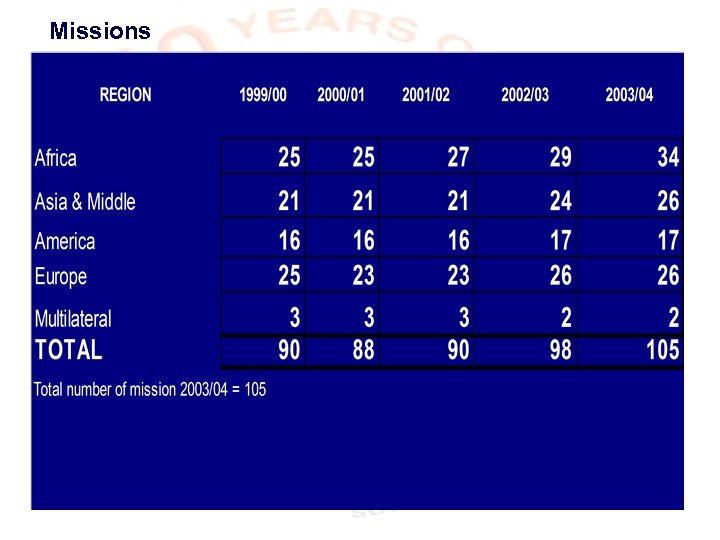 Missions
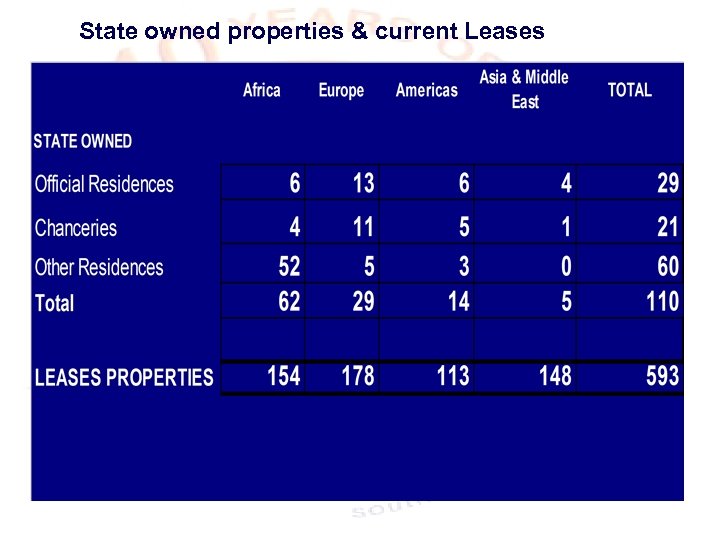 State owned properties & current Leases
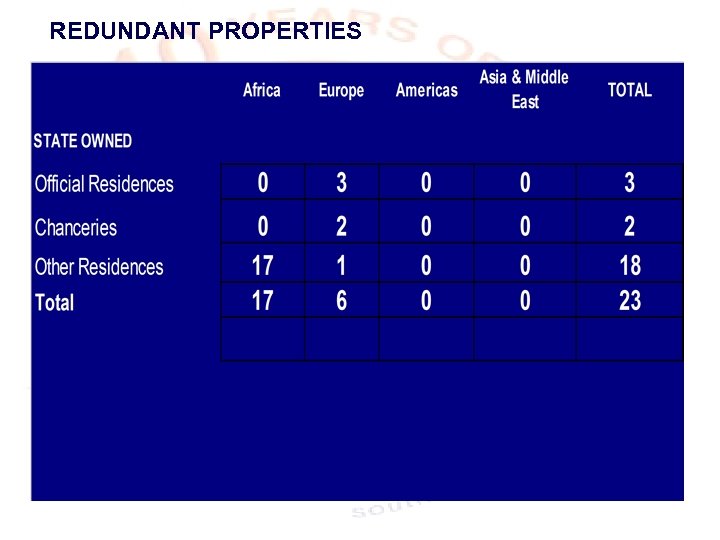 REDUNDANT PROPERTIES
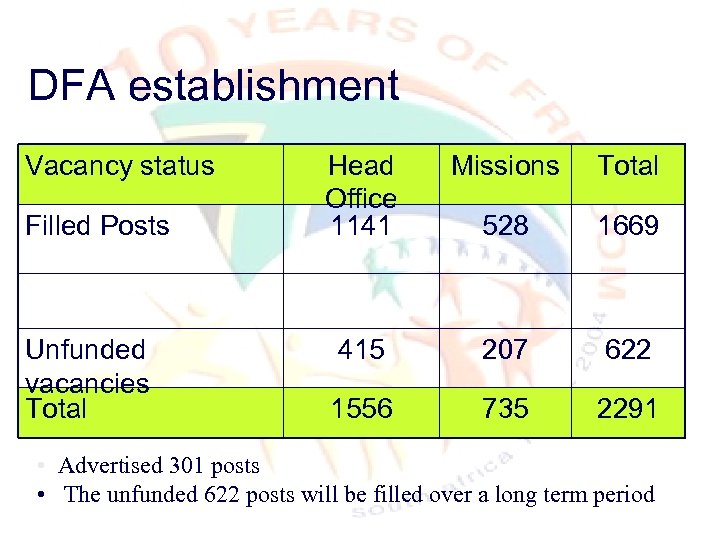 DFA establishment Vacancy status Filled Posts Unfunded vacancies Total Head Office 1141 Missions Total 528 1669 415 207 622 1556 735 2291 • Advertised 301 posts • The unfunded 622 posts will be filled over a long term period
 FINANCE
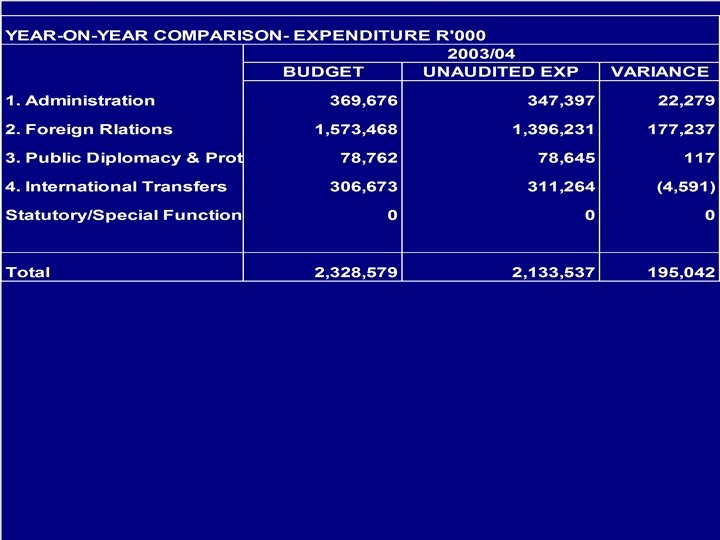
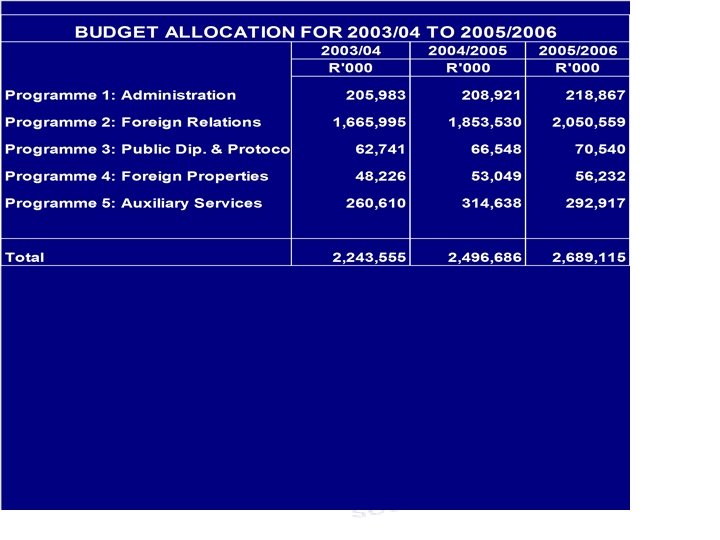
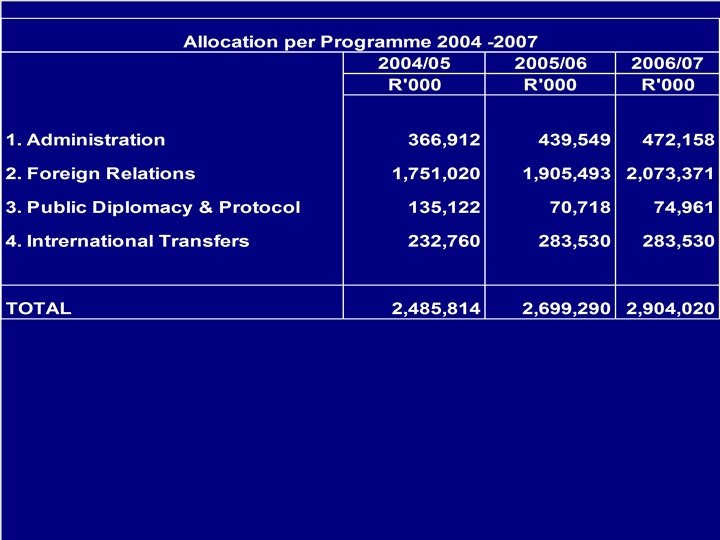
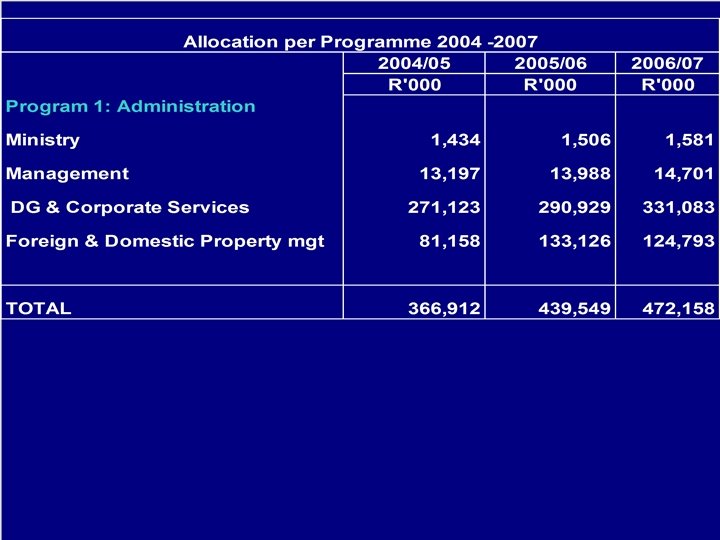
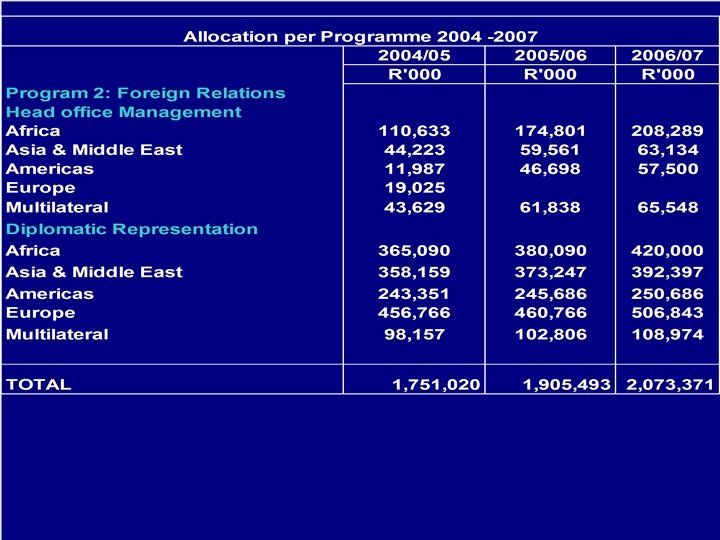
 DEPARTMENT’S PROGRAMME STRUCTURE ® Programme 1: Administration To conduct the overall policy development, execution and management of the Department. ® To provide secure, economic housing and office accommodation to all staff members abroad, and the maintenance thereof ® ® Programme ® 2: Foreign relations To promote relations with countries, and to participate in international organisations and institutions, in pursuit of South Africa’s national values and international relations objectives.
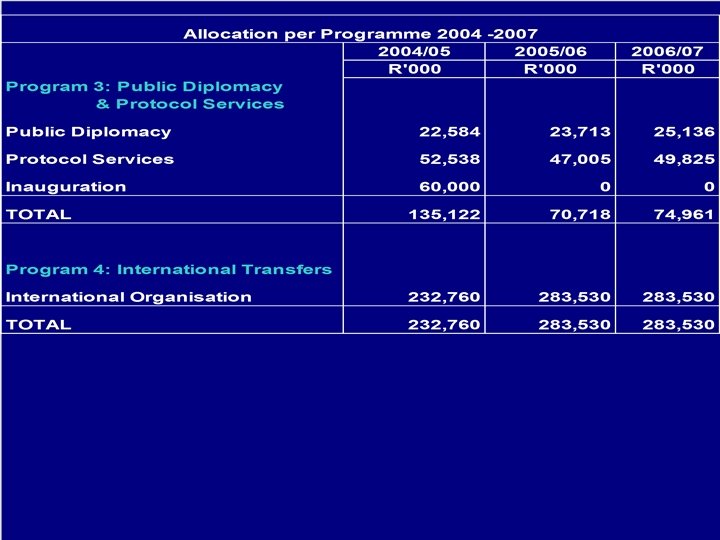
 DEPARTMENT’S PROGRAMME STRUCTURE ® Programme ® To promote South Africa’s Foreign Policy Objectives, project a positive image of South Africa and Africa, and provide State Protocol services. ® Programme ® 3: Public Diplomacy and Protocol 4: International Transfers To provide for the payment of membership fees to international organisations and transfer payments.
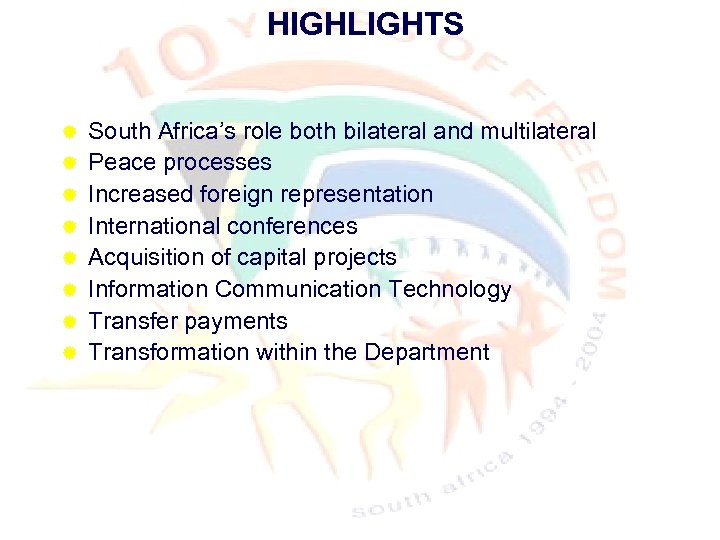 HIGHLIGHTS ® ® ® ® South Africa’s role both bilateral and multilateral Peace processes Increased foreign representation International conferences Acquisition of capital projects Information Communication Technology Transfer payments Transformation within the Department
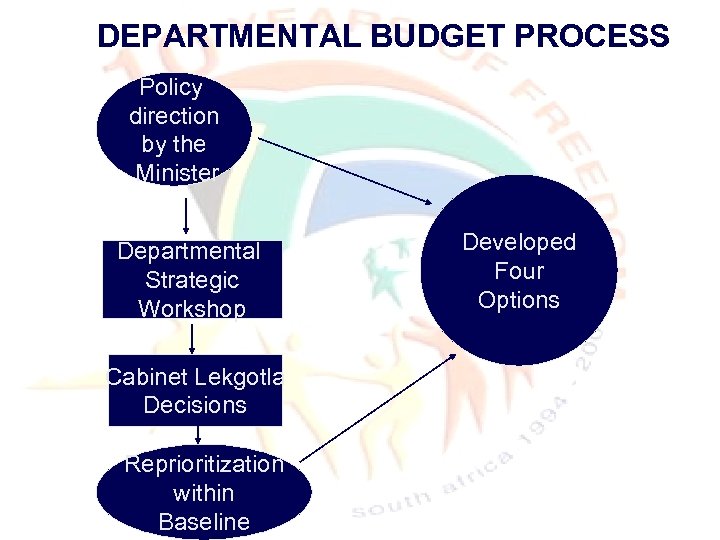 DEPARTMENTAL BUDGET PROCESS Policy direction by the Minister Departmental Strategic Workshop Cabinet Lekgotla Decisions Reprioritization within Baseline Developed Four Options
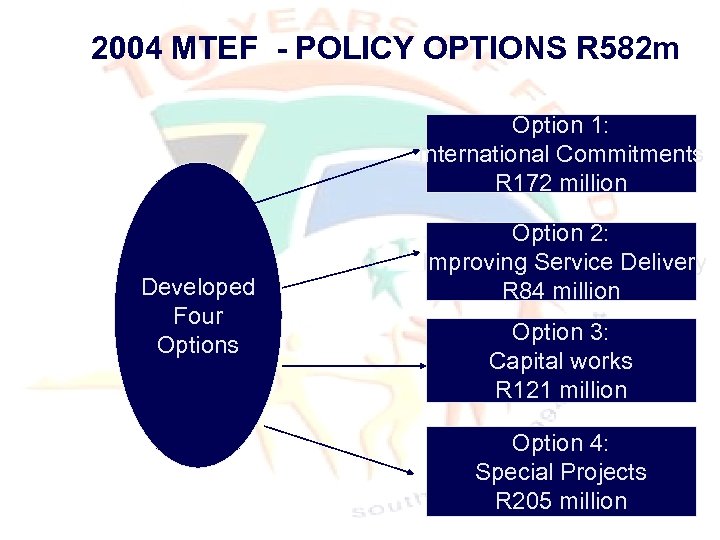 2004 MTEF - POLICY OPTIONS R 582 m Option 1: International Commitments R 172 million Developed Four Options Option 2: Improving Service Delivery R 84 million Option 3: Capital works R 121 million Option 4: Special Projects R 205 million
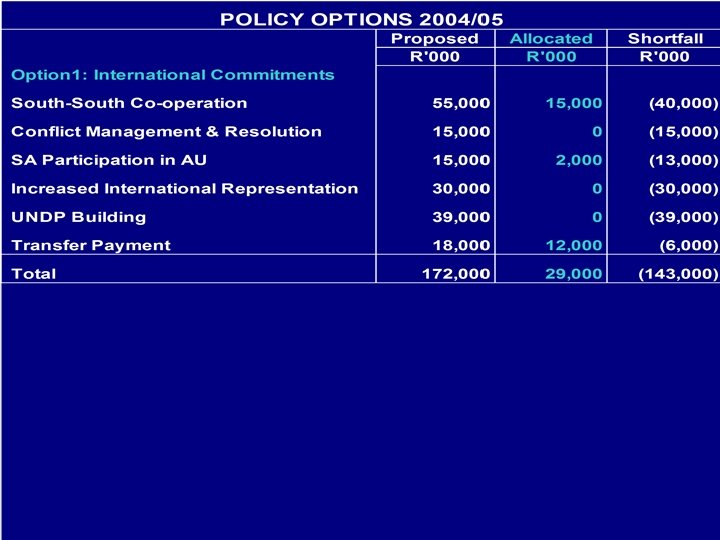
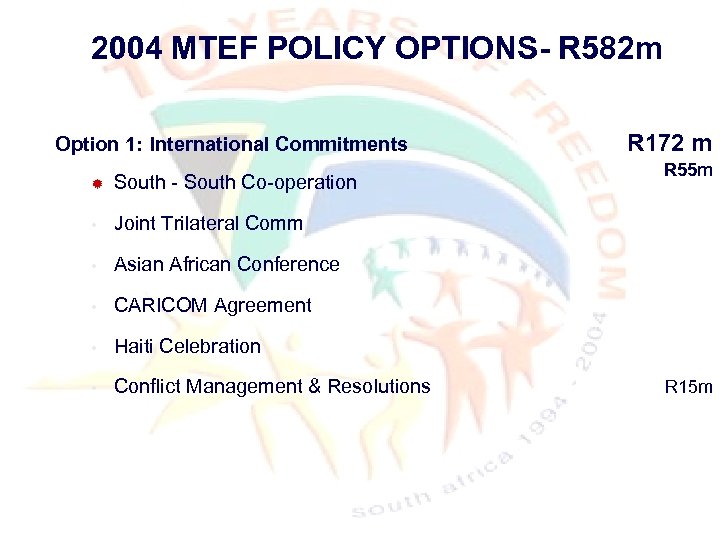 2004 MTEF POLICY OPTIONS- R 582 m Option 1: International Commitments ® South - South Co-operation • Asian African Conference • CARICOM Agreement • Haiti Celebration • Conflict Management & Resolutions R 55 m Joint Trilateral Comm • R 172 m R 15 m
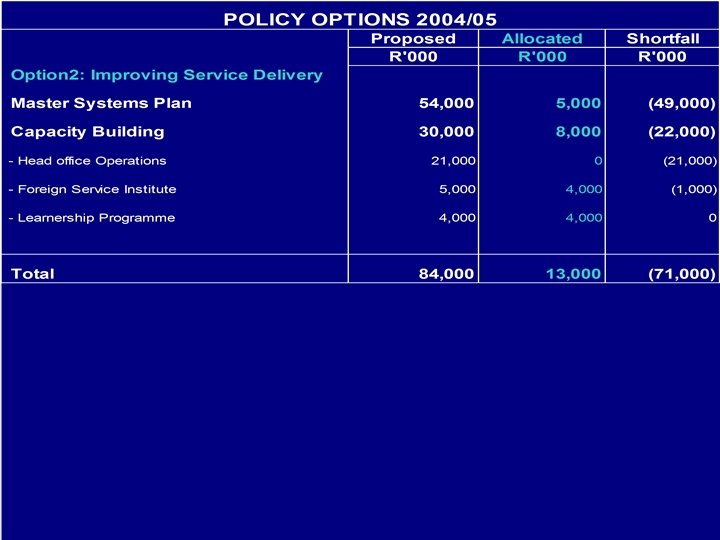
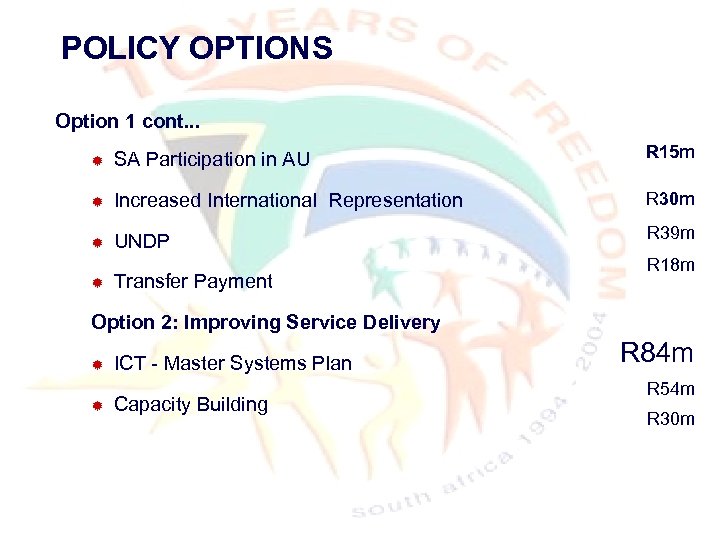 POLICY OPTIONS Option 1 cont. . . ® SA Participation in AU R 15 m ® Increased International Representation R 30 m ® UNDP R 39 m ® Transfer Payment R 18 m Option 2: Improving Service Delivery ® ® ICT - Master Systems Plan Capacity Building R 84 m R 54 m R 30 m
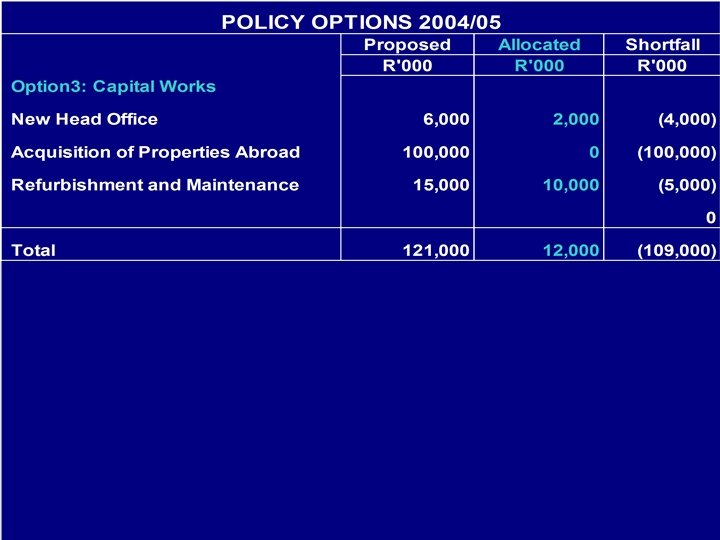
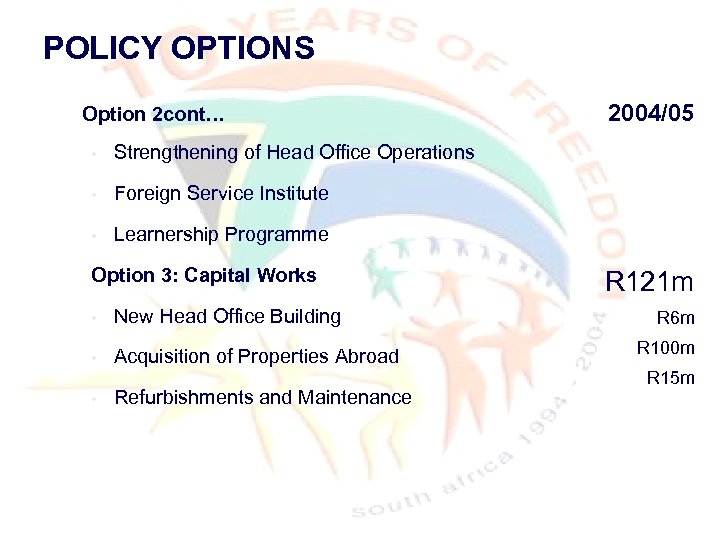 POLICY OPTIONS Option 2 cont… • Strengthening of Head Office Operations • Foreign Service Institute • 2004/05 Learnership Programme Option 3: Capital Works • New Head Office Building • Acquisition of Properties Abroad • Refurbishments and Maintenance R 121 m R 6 m R 100 m R 15 m
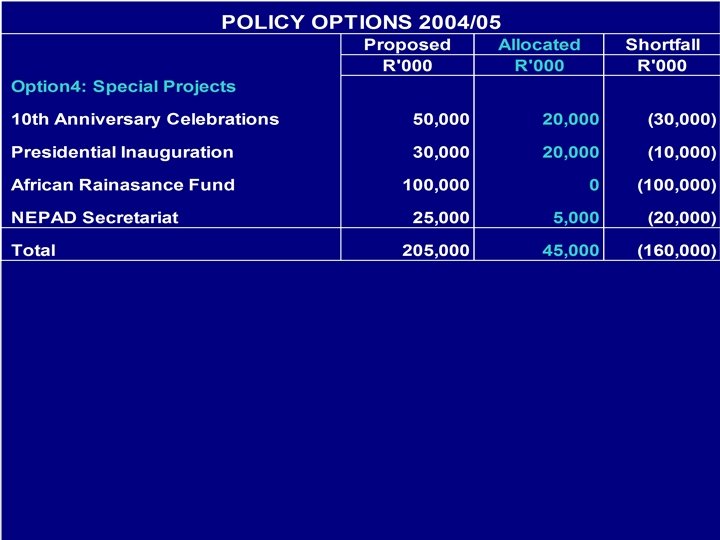
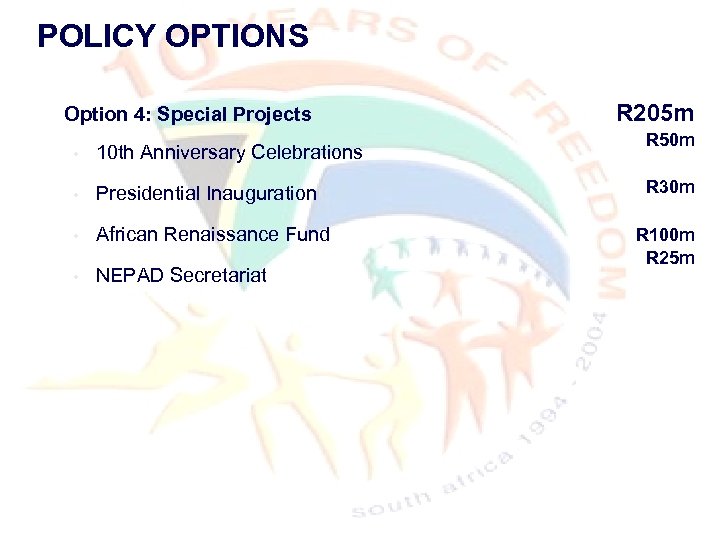 POLICY OPTIONS Option 4: Special Projects • 10 th Anniversary Celebrations • Presidential Inauguration • African Renaissance Fund • NEPAD Secretariat R 205 m R 50 m R 30 m R 100 m R 25 m
 CHALLENGES ® Increased role of South Africa in the International arena ® Peace initiatives in the region and continent ® NEPAD ® AU ® Exchange rate provision
 CHALLENGES Cont. ® Head Office Building ® Master Systems Plan( MSP) ® Properties Abroad ® CARICOM Agreement ® UNDP Building ® African Renaissance Fund
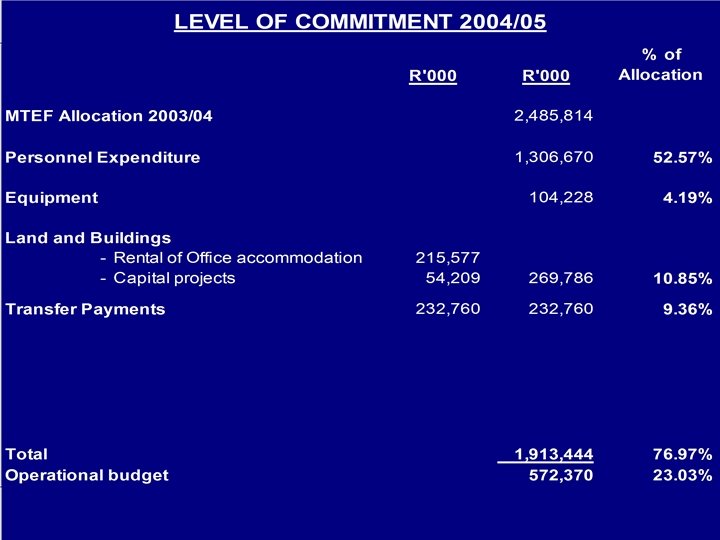
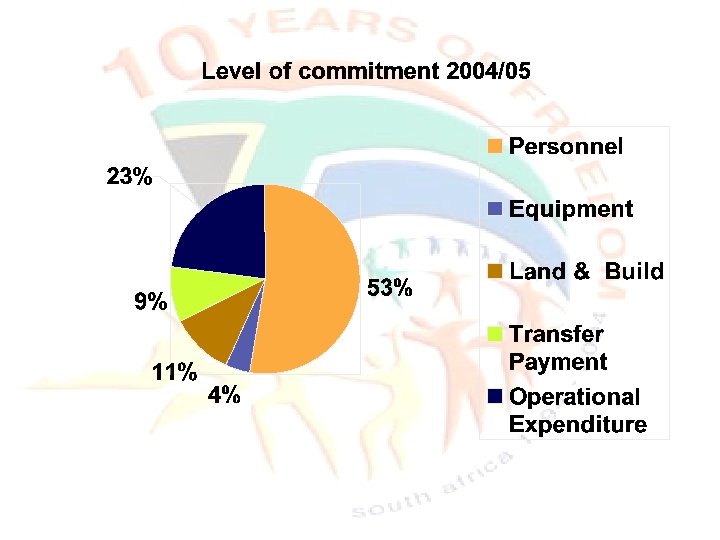
 Financial System for the Missions 35
 Key business drivers ® Meet financial reporting requirements. ® Comply with the requirements of PFMA. Phased approach ® Phase I – consolidation and reporting. ® Phase II – install a PFMA compliant financial system in all the missions. ® Phase III – install the business cycle management processes.
 What is PHASE 1 ? ? ? Phase 1 is the development and implementation of a excel spreadsheet format Financial Management solution for DFA that will entail basically the following: g Missions capture their monthly financial data (expenses/receipts/budgets/journals/exchange rates) per currency on the templates provided. g Missions send the templates to Head Office (can be automated by date) via secure email for timeous collection & consolidation of monthly financial transactions (repository).
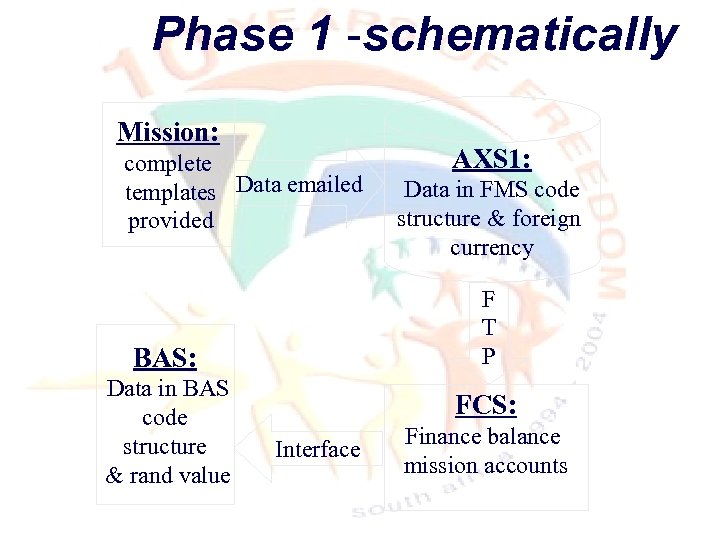 Phase 1 -schematically Mission: complete templates Data emailed provided Data in FMS code structure & foreign currency F T P BAS: Data in BAS code structure & rand value AXS 1: FCS: Interface Finance balance mission accounts
 PROGRESS g Phase 1 implemented as from 1 December 2003 g Phase 2 to be completed in June 2005 g Phase 3 to be completed in October 2005
 HUMAN RESOURCES
 Human Resources issues ® ® ® DFA establishment Highlights for 2003/4 Employment Equity profile Organisational HR programme for 2004/5 Organisational people challenges 41
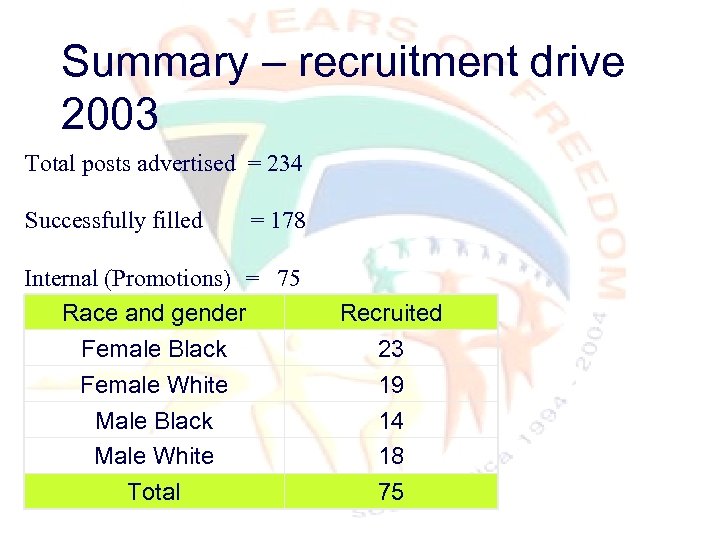 Summary – recruitment drive 2003 Total posts advertised = 234 Successfully filled = 178 Internal (Promotions) = 75 Race and gender Female Black Female White Male Black Male White Total Recruited 23 19 14 18 75
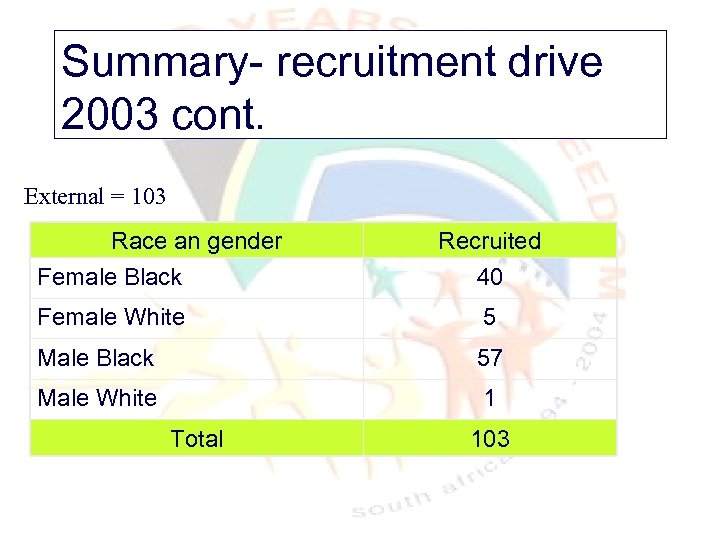 Summary- recruitment drive 2003 cont. External = 103 Race an gender Female Black Recruited 40 Female White 5 Male Black 57 Male White 1 Total 103
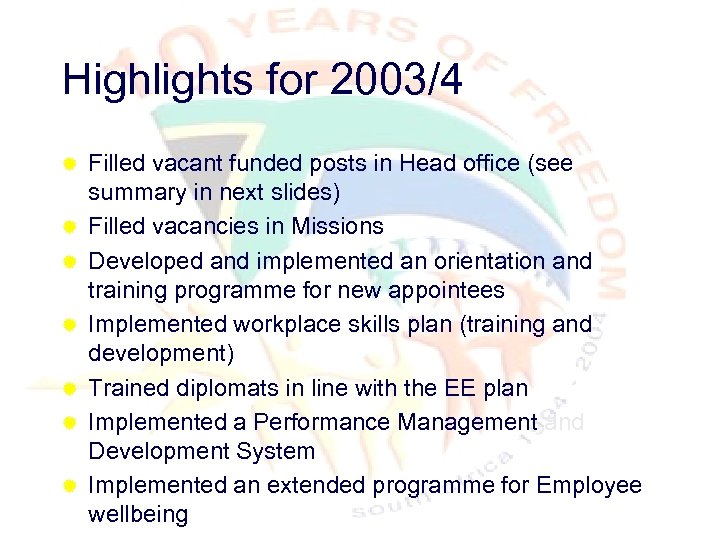 Highlights for 2003/4 ® ® ® ® Filled vacant funded posts in Head office (see summary in next slides) Filled vacancies in Missions Developed and implemented an orientation and training programme for new appointees Implemented workplace skills plan (training and development) Trained diplomats in line with the EE plan Implemented a Performance Management and Development System Implemented an extended programme for Employee wellbeing
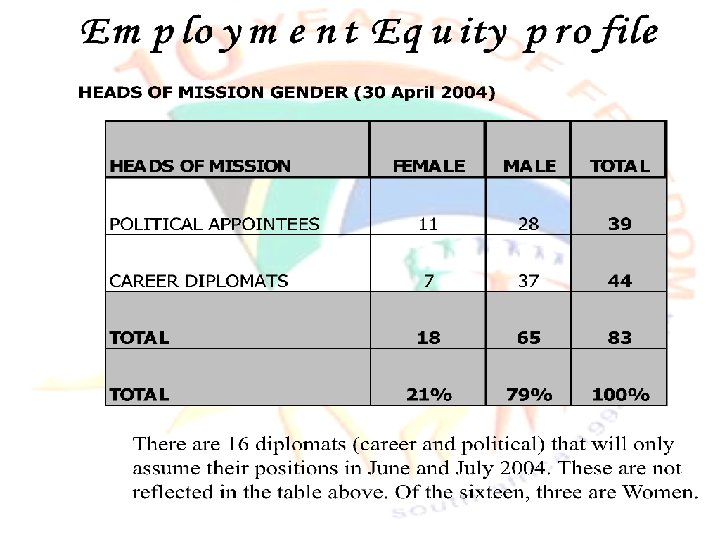
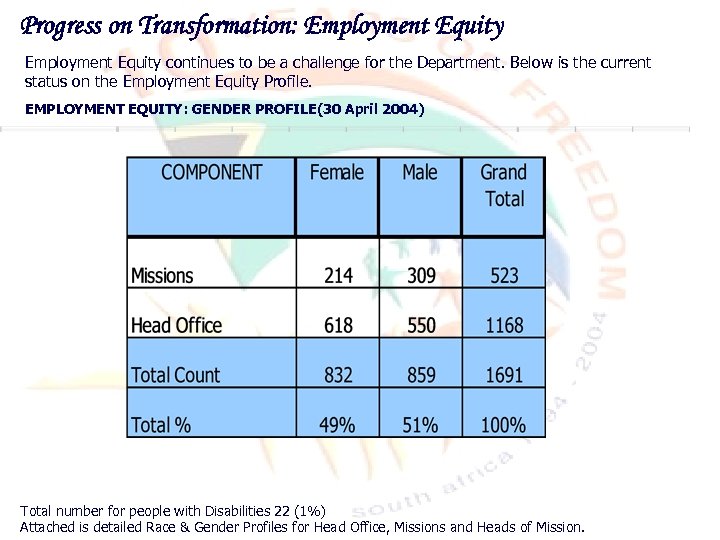 Progress on Transformation: Employment Equity continues to be a challenge for the Department. Below is the current status on the Employment Equity Profile. EMPLOYMENT EQUITY: GENDER PROFILE(30 April 2004) Total number for people with Disabilities 22 (1%) Attached is detailed Race & Gender Profiles for Head Office, Missions and Heads of Mission.
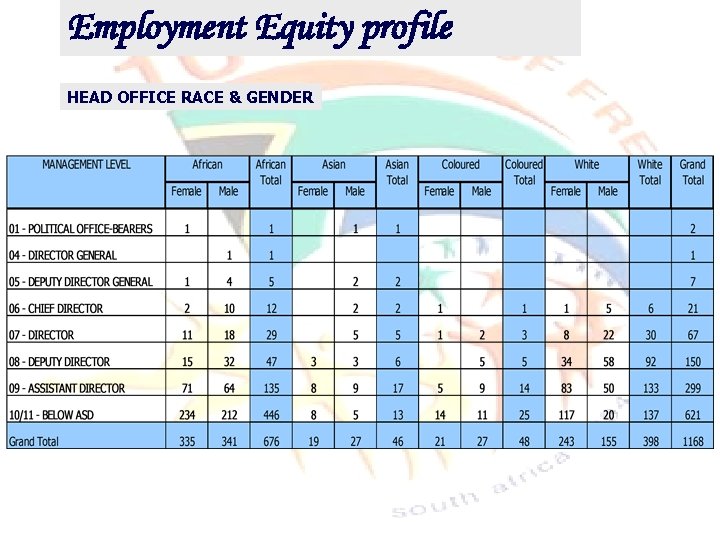 Employment Equity profile HEAD OFFICE RACE & GENDER
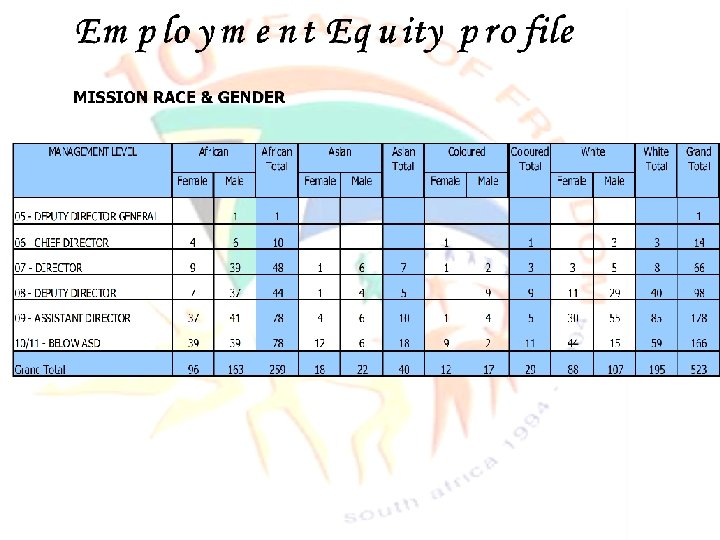
 Programme for 2004/5 ® ® ® ® Filling funded vacancies Develop job profiles for all jobs Conduct skills audit, which will result in personal profiles and personal development plans Implement Learnerships Speed up the implementation of transformation, including the development and implementation of the new EE plan with special focus on gender and disability issues Implement the Career and Succession Management framework Conclude the repositioning of the FSI Train and develop diplomats
 TRANSFORMATION OF FSI • The Department engaged in the Benchmark exercise • Five countries were visited: Switzerland, France, The Netherlands, Cuba & India • Observations were made regarding: - Access - Governance - Training delivery models - Short courses - Foreign language training
 TRANSFORMATION OF FSI Cont. . . • Task Team has been proposed to take the process forward • Resources for the process have been allocated in the 2004/05 Financial year
 Challenges facing the Department ®A representative pool of skilled diplomats ® Attracting skilled individuals from the designated groups, especially Women and people with disabilities ® Retaining senior women managers ® Creating an organisational culture that values diversity and encourages optimal performance ® Breaking silos across Branches.
 END
END