 Скачать презентацию Department of Communication Systems Engineering Ben-Gurion University of
aaf5931c0aa777e7f60a94ad0b2ab168.ppt
- Количество слайдов: 29



Department of Communication Systems Engineering Ben-Gurion University of the Negev Simplici. TI RF Network for M 2 M Connection Presenters: Assaf Matalon Guy Mishol Kobi Mamo Sharon Hophy Supervisor: Advisor: Prof. Michael Segal Ofer Melman
Layout Motivation and Project’s Goal IEEE 802. 15. 4 and Simplici. TI RF Network for M 2 M Connection Development Tools Two Separate Networks One United Network Summary Demonstration 1
Introduction This project is carried out in collaboration with Larotec LTD. Larotec is a provider of specialized endto-end solutions for the machine-tomachine market. Currently, the communication between all parts of the network is cellular based. 2
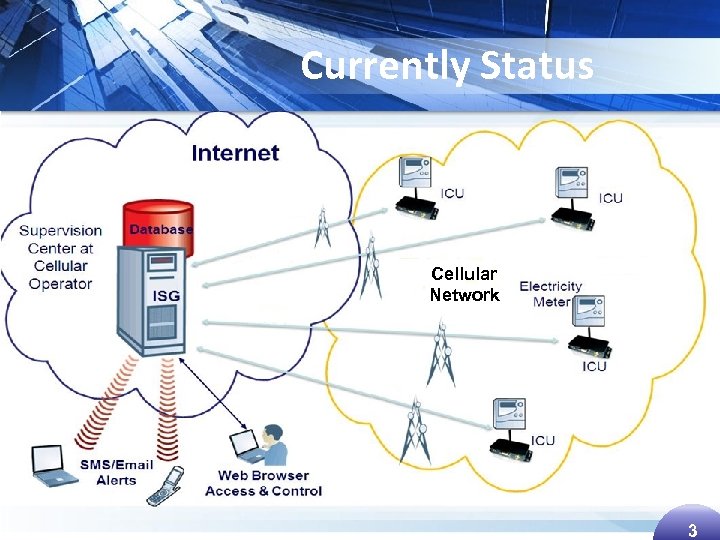
Currently Status Cellular Network 3
Motivation Communication based on a cellular network is considered to be expensive. Cellular modem is more expensive comparing to other communication devices. Using the cellular modem decreases dramatically the battery life time of the end device. 4
Project’s Goal The project’s goal is to implement a Simplici. TI network which will replace the current cellular network. Simplici. TI’s network and devices are cheaper and the battery life time is much longer than in the cellular based devices. 5
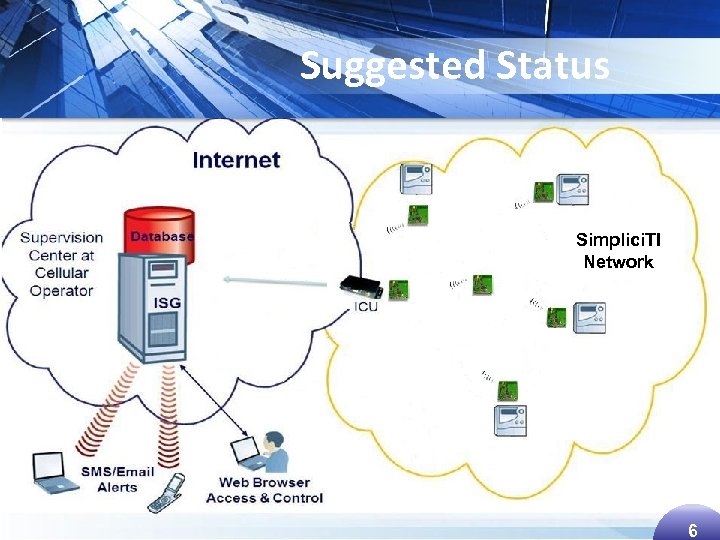
Suggested Status Simplici. TI Network 6
Layout Motivation and Project’s Goal IEEE 802. 15. 4 and Simplici. TI RF Network for M 2 M Connection Development Tools Two Separate Networks One United Network Summary Demonstration 7
IEEE 802. 15. 4 is a communication protocol that uses small, low-power digital radios for wireless Personal Area Networks. It is intended to be simpler and less expensive than other WPANs, such as Bluetooth. It is targeted at radio-frequency (RF) applications that require a low data rate, long battery life, and secure networking. 8
IEEE 802. 15. 4 Features Range: 5 -500 Meters, depending on the RF environment and the power output consumption required for a given application. Frequencies: 2. 4 GHz global, 915 MHz Americas or 868 MHz Europe Data Rate: The data rate is 250 kbps at 2. 4 GHz, 40 kbps at 915 MHz and 20 kbps at 868 MHz. Optimized for low duty-cycle applications (<0. 1%) CSMA-CA channel access Yields high throughput and low latency Low power (battery life multi-month to years) Addressing space of up to: 18, 450, 000, 000 devices (64 bit IEEE address) 65, 535 networks 9
Simplici. TI • The Simplici. TI network protocol from Texas Instruments Incorporated (TI) is a proprietary low-power radio frequency (RF) protocol targeting simple, small RF networks (less than 100 nodes). • Simplici. TI network protocol was designed for easy implementation with minimal microcontroller resource requirements. • Simplici. TI network protocol supports a wide range of applications including alarm and security, automated meter reading, home automation and active RFID. 10
Layout Motivation and Project’s Goal IEEE 802. 15. 4 and Simplici. TI RF Network for M 2 M Connection Development Tools Two Separate Networks One United Network Summary Demonstration 11
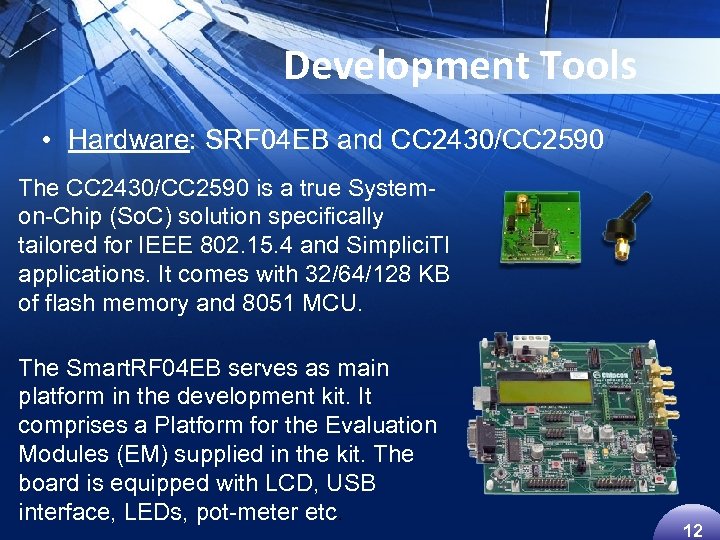
Development Tools • Hardware: SRF 04 EB and CC 2430/CC 2590 The CC 2430/CC 2590 is a true Systemon-Chip (So. C) solution specifically tailored for IEEE 802. 15. 4 and Simplici. TI applications. It comes with 32/64/128 KB of flash memory and 8051 MCU. The Smart. RF 04 EB serves as main platform in the development kit. It comprises a Platform for the Evaluation Modules (EM) supplied in the kit. The board is equipped with LCD, USB interface, LEDs, pot-meter etc. 12
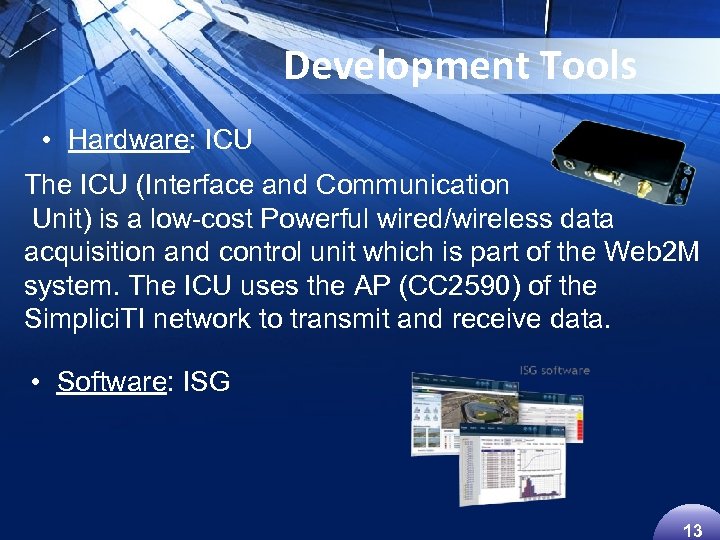
Development Tools • Hardware: ICU The ICU (Interface and Communication Unit) is a low-cost Powerful wired/wireless data acquisition and control unit which is part of the Web 2 M system. The ICU uses the AP (CC 2590) of the Simplici. TI network to transmit and receive data. • Software: ISG 13
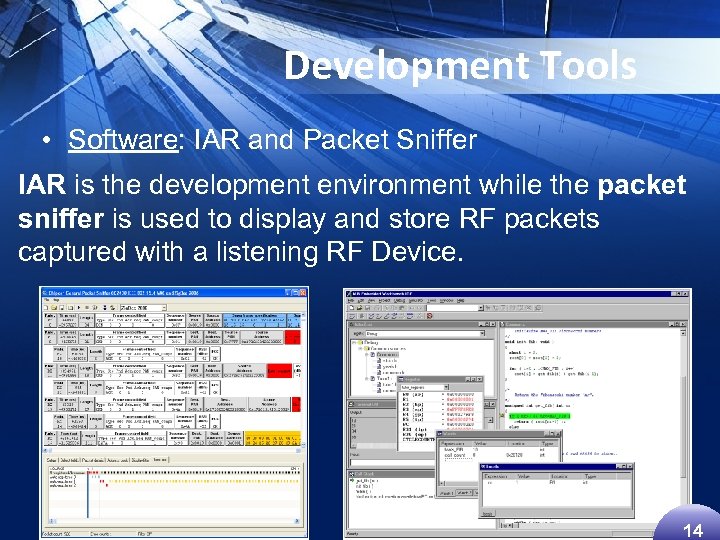
Development Tools • Software: IAR and Packet Sniffer IAR is the development environment while the packet sniffer is used to display and store RF packets captured with a listening RF Device. 14
Layout Motivation and Project’s Goal IEEE 802. 15. 4 and Simplici. TI RF Network for M 2 M Connection Development Tools Two Separate Networks One United Network Summary Demonstration 15
Two Separate Networks We divided the implementation of the project into two sub-networks: 1. Basic Network - This network is between the routers and the end devices. 2. Routers Network - This network is between the routers and the access point. 16
Basic Network The main part of this network is to send data from the end devices to the routers, and data from the routers to the end devices. The network is designed as a simple star network. Each basic network may contain up to 40 End devices. 17
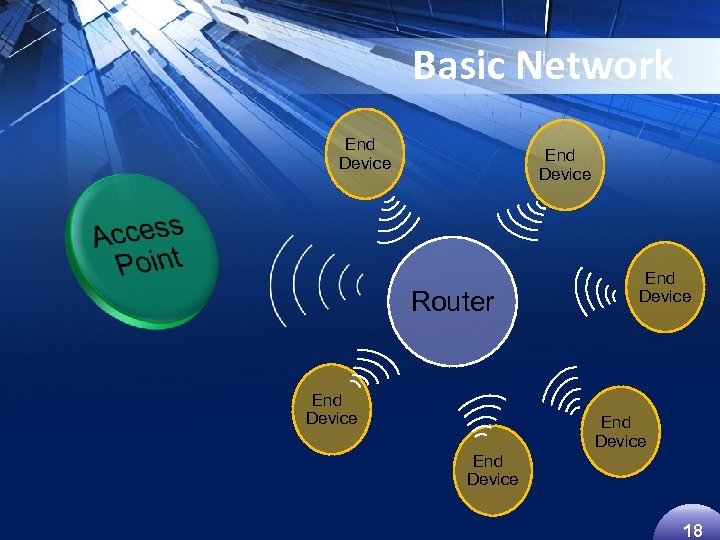
Basic Network End Device Router End Device 18
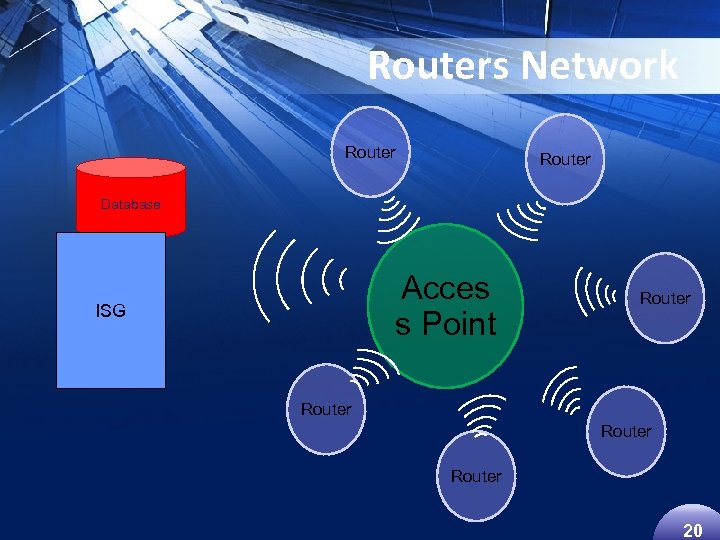
Routers Network The main part of this network is to send data from the access point to the routers, and data from the routers to the access point. This network is designed as a simple router (repeater) star network. Each basic network contains up to 20 routers. 19
Routers Network Router Database Acces s Point ISG Router 20
Layout Motivation and Project’s Goal IEEE 802. 15. 4 and Simplici. TI RF Network for M 2 M Connection Development Tools Two Separate Networks One United Network Summary Demonstration 21
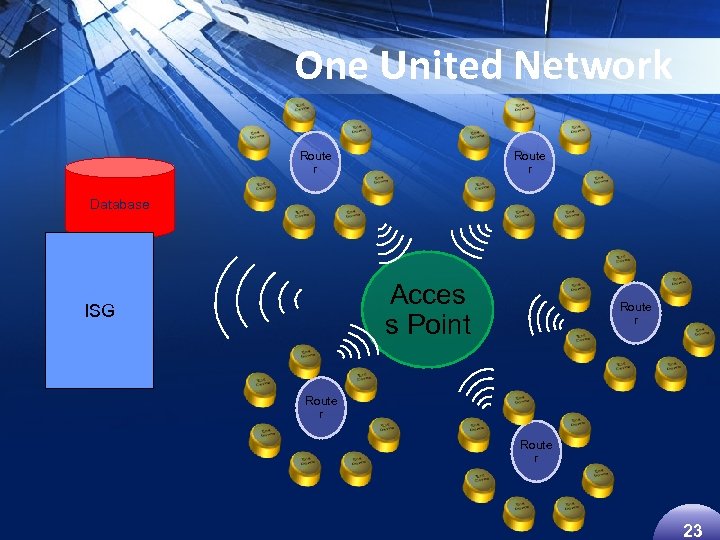
One United Network After we have implemented each sub-network, we integrated them to form one complete network. The Network information flow is between the end devices up to the ACCESS POINT (upstream). The other direction (downstream) from the Access Point to the end devices is for configuration, maintenance and programming features. 22
One United Network Route r Database Acces s Point ISG Route r 23
Layout Motivation and Project’s Goal IEEE 802. 15. 4 and Simplici. TI RF Network for M 2 M Connection Development Tools Two Separate Networks One United Network Summary Demonstration 24
Summary Each basic network is functioning correctly and has been checked in several scenarios. Also, the united network is at its fundamental stages and was checked in some basic scenarios. Currently, We are at the final stage of making the united network full functioning in all scenarios and hand over the final code version to Larotec for a complete system integration. 25
Layout Motivation and Project’s Goal IEEE 802. 15. 4 and Simplici. TI RF Network for M 2 M Connection Development Tools Two Separate Networks One United Network Summary Demonstration 26
Demonstration • This is Larotecs live system web where we can perform online monitor and manage all income and outcome data. http: //web 2 m. larotec. com/vmiserver/wplnew/Cixi_Login. Screen. aspx? &Group. Name=Cixi& Group. Msg=Ningbo%20 Cixi%20 Power&Culture=e n-GB 27
Questions Thank you for listening! ? 28
Скачать презентацию Department of Communication Systems Engineering Ben-Gurion University of
aaf5931c0aa777e7f60a94ad0b2ab168.ppt