


 Скачать презентацию DEPARTMENT of AGRICULTURE MEGHALAYA WORKSHOP on AGRICULTURE STRATEGIES
b24ec628bcdd65bf118a0fa14ebba16c.ppt
- Количество слайдов: 23
 DEPARTMENT of AGRICULTURE MEGHALAYA WORKSHOP on AGRICULTURE STRATEGIES, POLICIES and PRACTICES GUWAHATI 30 th September – 1 st October 2010
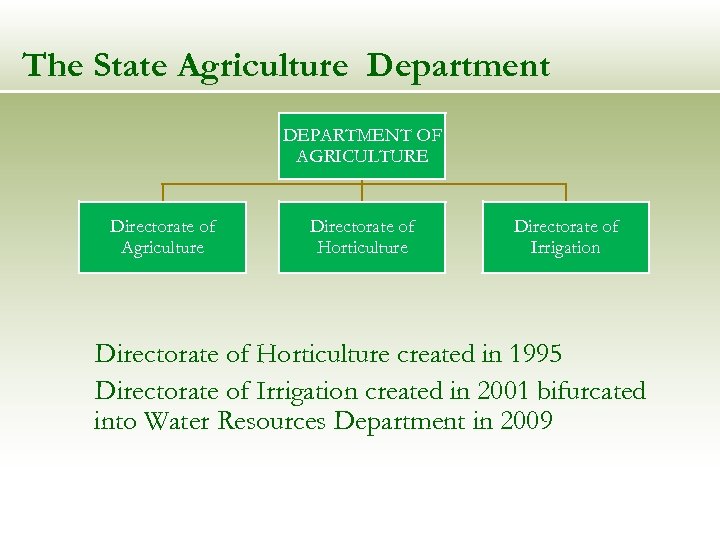 The State Agriculture Department DEPARTMENT OF AGRICULTURE Directorate of Agriculture Directorate of Horticulture Directorate of Irrigation Directorate of Horticulture created in 1995 Directorate of Irrigation created in 2001 bifurcated into Water Resources Department in 2009
 Progress of Agriculture Sector • Ratio of cultivated area to geographical area of the State is about 15% during 2008 -09 • Gross Cropped area of 3. 37 lakh hectares with net cropped area of 2. 84 lakh hectares and area sown more than once is 0. 53 lakh hectares during 2008 -09 • Cropping Intensity stagnating at 125%, still below all India Average of 130. 5% Source: Statistical Abstract 2009, Directorate of Economics & Statistics
 Policy Objectives (Agriculture sub-sector) • Shift to “Cluster Approach” – actual needs of farmers, concentration of resources, perceptible impact • Bridging (narrowing) gap between demand (4, 20, 000 MT) and supply (2, 00, 077 MT) of Rice • Water Management • Watershed-based development • Agri-Entrepreneurship - capacity building
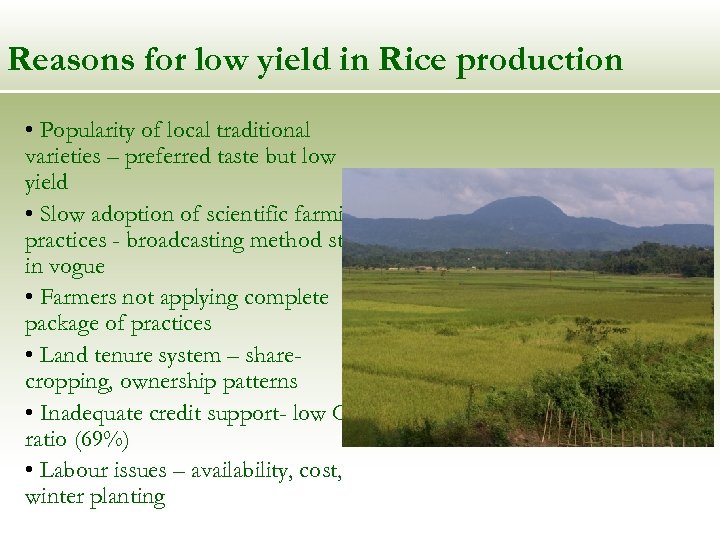 Reasons for low yield in Rice production • Popularity of local traditional varieties – preferred taste but low yield • Slow adoption of scientific farming practices - broadcasting method still in vogue • Farmers not applying complete package of practices • Land tenure system – sharecropping, ownership patterns • Inadequate credit support- low CD ratio (69%) • Labour issues – availability, cost, winter planting
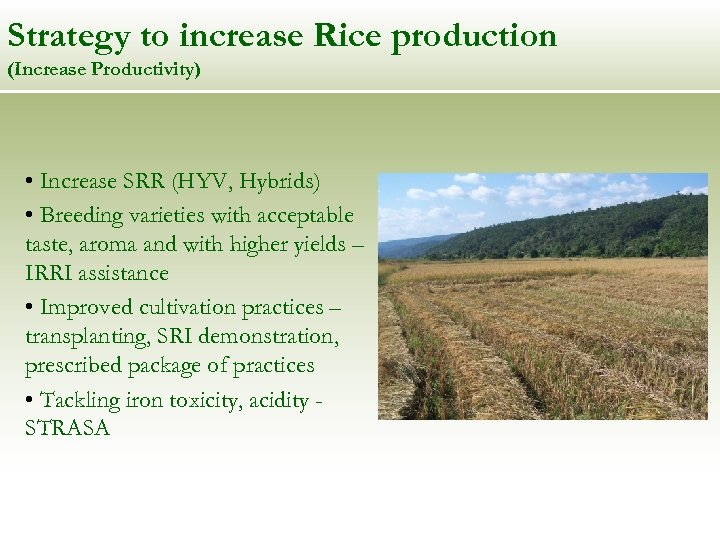 Strategy to increase Rice production (Increase Productivity) • Increase SRR (HYV, Hybrids) • Breeding varieties with acceptable taste, aroma and with higher yields – IRRI assistance • Improved cultivation practices – transplanting, SRI demonstration, prescribed package of practices • Tackling iron toxicity, acidity STRASA
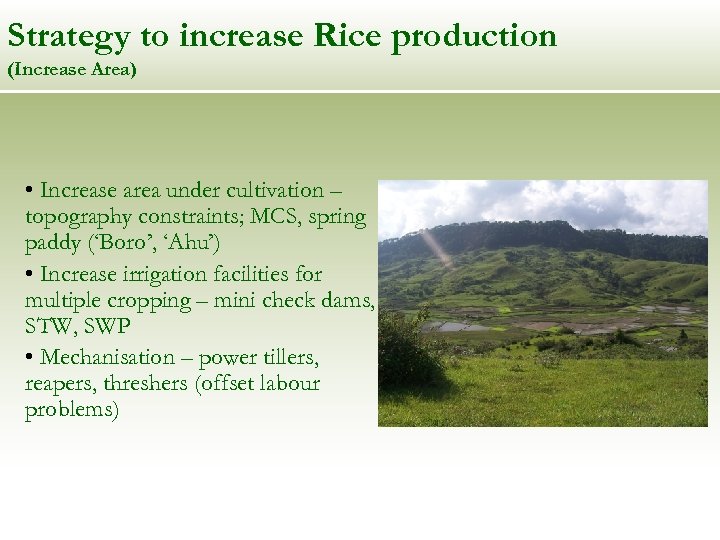 Strategy to increase Rice production (Increase Area) • Increase area under cultivation – topography constraints; MCS, spring paddy (‘Boro’, ‘Ahu’) • Increase irrigation facilities for multiple cropping – mini check dams, STW, SWP • Mechanisation – power tillers, reapers, threshers (offset labour problems)
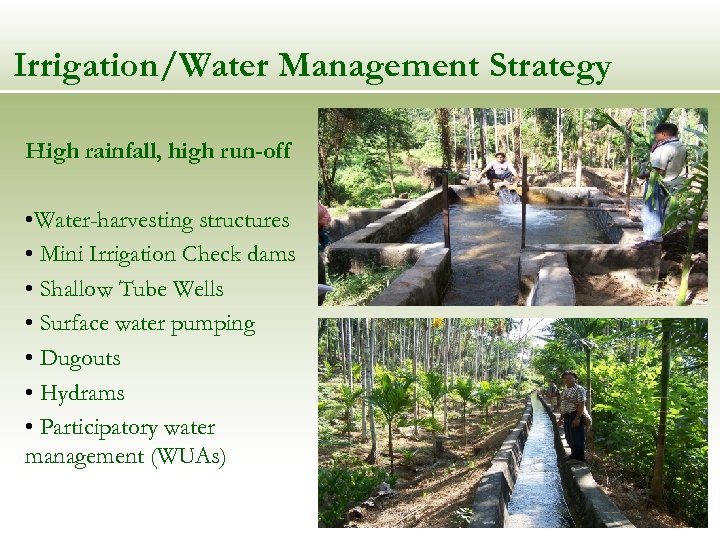 Irrigation/Water Management Strategy High rainfall, high run-off • Water-harvesting structures • Mini Irrigation Check dams • Shallow Tube Wells • Surface water pumping • Dugouts • Hydrams • Participatory water management (WUAs)
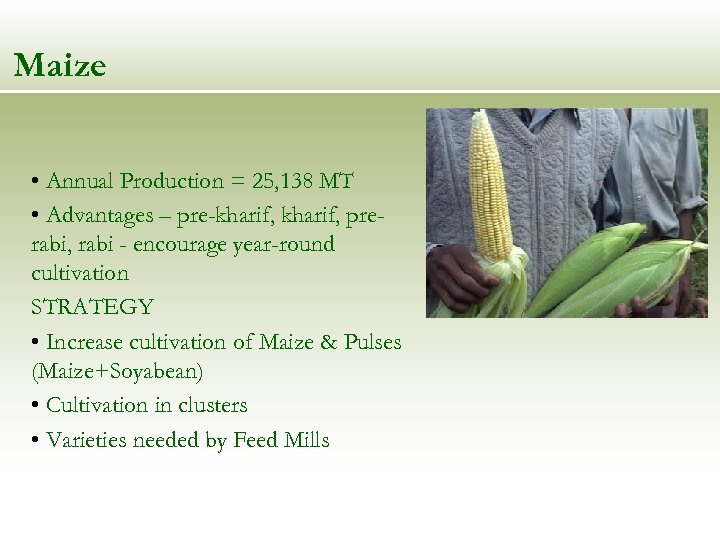 Maize • Annual Production = 25, 138 MT • Advantages – pre-kharif, prerabi, rabi - encourage year-round cultivation STRATEGY • Increase cultivation of Maize & Pulses (Maize+Soyabean) • Cultivation in clusters • Varieties needed by Feed Mills
 Micro Watersheds under NWDPRA • 32 Watersheds during 9 th Plan; 78 Watersheds during 10 th Plan; 78 Watersheds during 11 th Plan • Ideal focal points for convergence – BRGF, NREGA, Development Departments • Need-based micro-plans – unique to each watershed • Watershed committees are registered societies – easier access to funds (FI, MPLADS, SRWP, RKVY, MMA) • Base for integrated farming system – livestock, fodder, crops, aquaculture • Water-traps along water courses – irrigation • 1 st tier agricultural development - subsequent tiers can be dovetailed
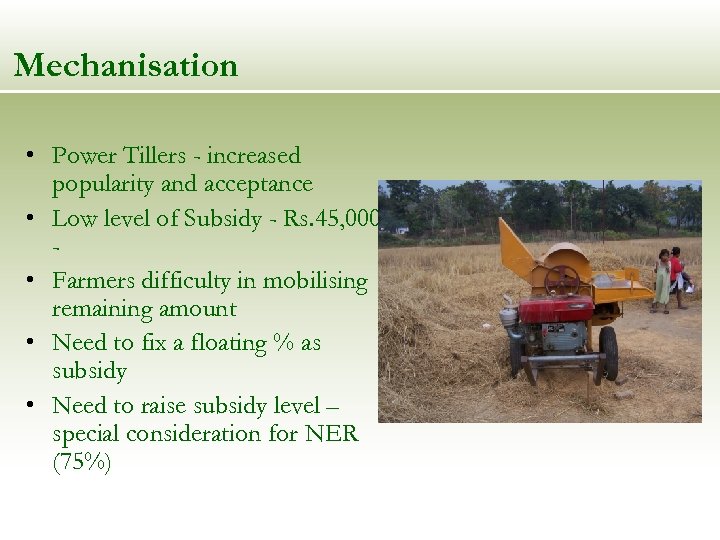 Mechanisation • Power Tillers - increased popularity and acceptance • Low level of Subsidy - Rs. 45, 000/ • Farmers difficulty in mobilising remaining amount • Need to fix a floating % as subsidy • Need to raise subsidy level – special consideration for NER (75%)
 TREYSEFA Training of Rural Educated Youth for Self Employment in Farm-based Activities • Foster agricultural entrepreneurship • Selection Criteria – Matriculate, possession of own or family land • Subjects taught – agriculture, horticulture, animal husbandry, fisheries, accounting, civil engineering, group formation, mechanisation, soil/water conservation • Duration - 5 Months; Stipend - Rs. 500 per month; Seed Money Rs. 10, 000/ • Year of inception - 2003 -04 ; Youth trained – 400 • Success stories – formation of crop-growers association; rentals of machineries; integrated activity
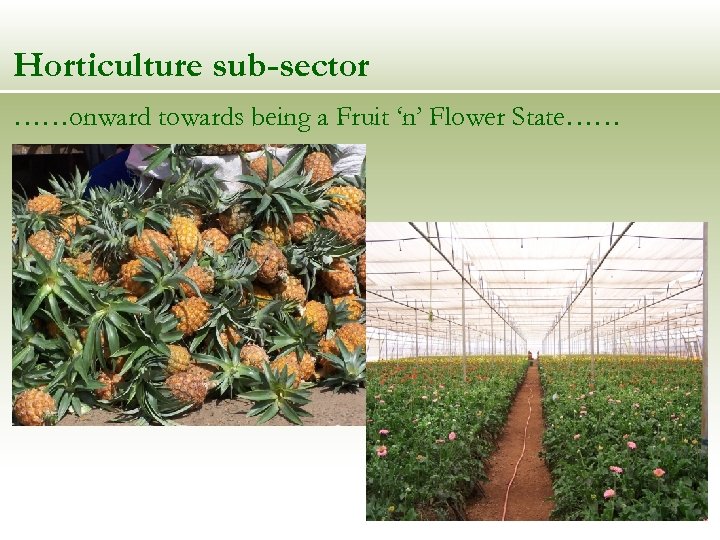 Horticulture sub-sector ……onward towards being a Fruit ‘n’ Flower State……
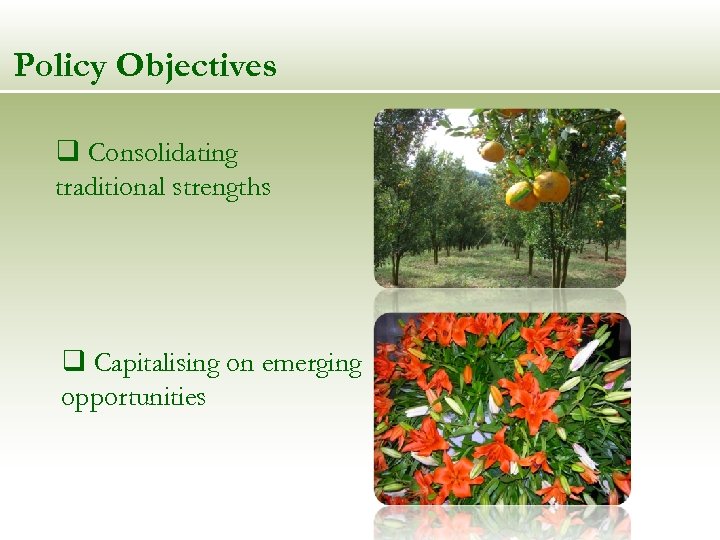 Policy Objectives q Consolidating traditional strengths q Capitalising on emerging opportunities
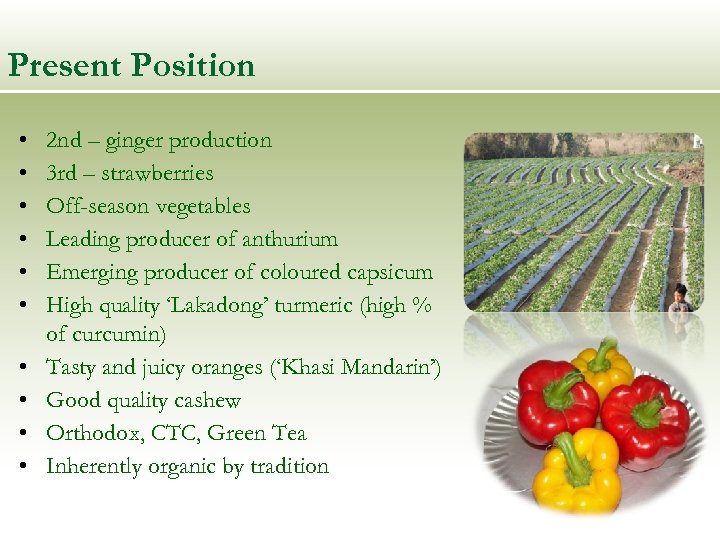 Present Position • • • 2 nd – ginger production 3 rd – strawberries Off-season vegetables Leading producer of anthurium Emerging producer of coloured capsicum High quality ‘Lakadong’ turmeric (high % of curcumin) Tasty and juicy oranges (‘Khasi Mandarin’) Good quality cashew Orthodox, CTC, Green Tea Inherently organic by tradition
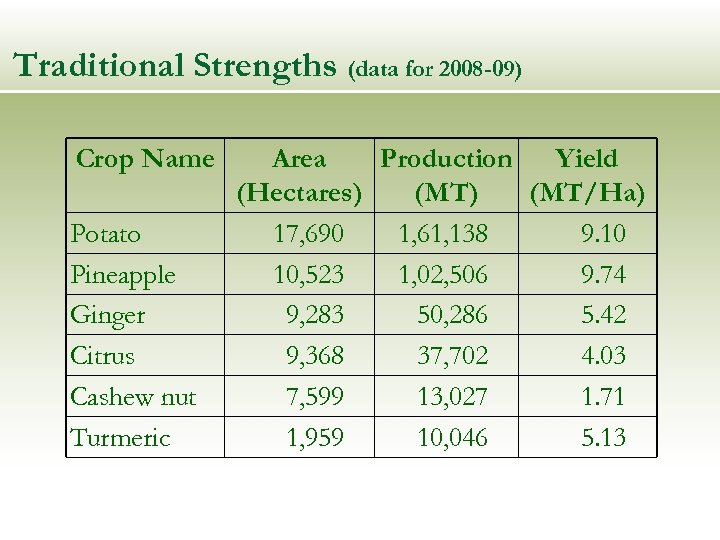 Traditional Strengths (data for 2008 -09) Crop Name Potato Pineapple Ginger Citrus Cashew nut Turmeric Area Production Yield (Hectares) (MT/Ha) 17, 690 1, 61, 138 9. 10 10, 523 1, 02, 506 9. 74 9, 283 50, 286 5. 42 9, 368 37, 702 4. 03 7, 599 13, 027 1. 71 1, 959 10, 046 5. 13
 Bottlenecks and Drawbacks • • Planting material – poor quality, high cost of imports Post harvest losses Handling losses – rail, air Un-organised marketing – fluctuating price, multi-tiered middle-men • High transport costs • High cost of packaging material • Processing facilities – rudimentary, low volumes
 Thrust Areas • Upgrading Departmental Farms - quality planting material (QPM), private nurseries • Tissue Culture Laboratory – large scale QPM production • Post Harvest Management - Cold Chains (pre-coolers, cold rooms, reefers) • Marketing – regulated markets, farmers markets, Border Haats, Look-East, Look-South, Israeli colloboration • Agro-Processing and Value Addition • Low volume high value crops
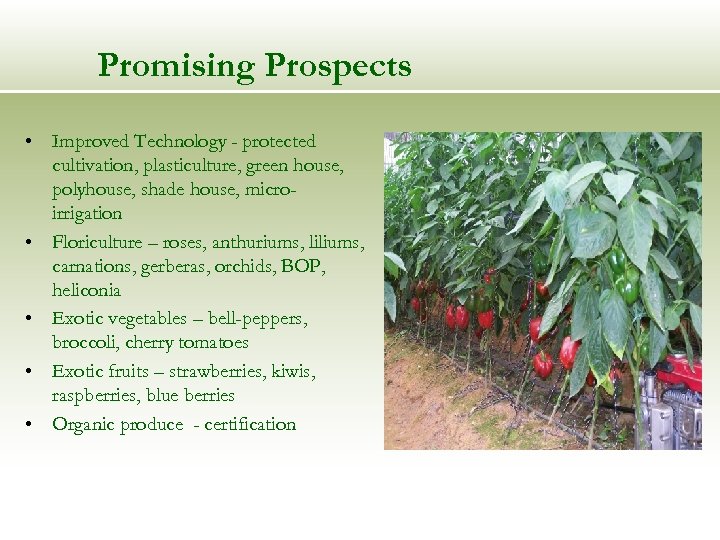 Promising Prospects • Improved Technology - protected cultivation, plasticulture, green house, polyhouse, shade house, microirrigation • Floriculture – roses, anthuriums, liliums, carnations, gerberas, orchids, BOP, heliconia • Exotic vegetables – bell-peppers, broccoli, cherry tomatoes • Exotic fruits – strawberries, kiwis, raspberries, blue berries • Organic produce - certification
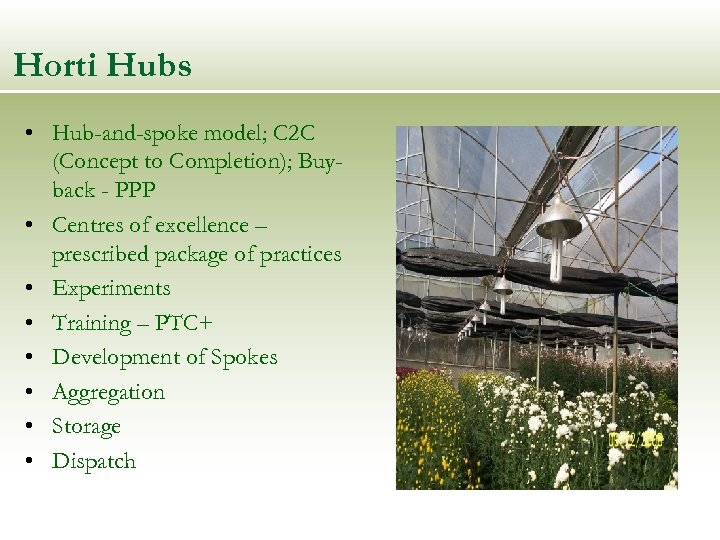 Horti Hubs • Hub-and-spoke model; C 2 C (Concept to Completion); Buyback - PPP • Centres of excellence – prescribed package of practices • Experiments • Training – PTC+ • Development of Spokes • Aggregation • Storage • Dispatch
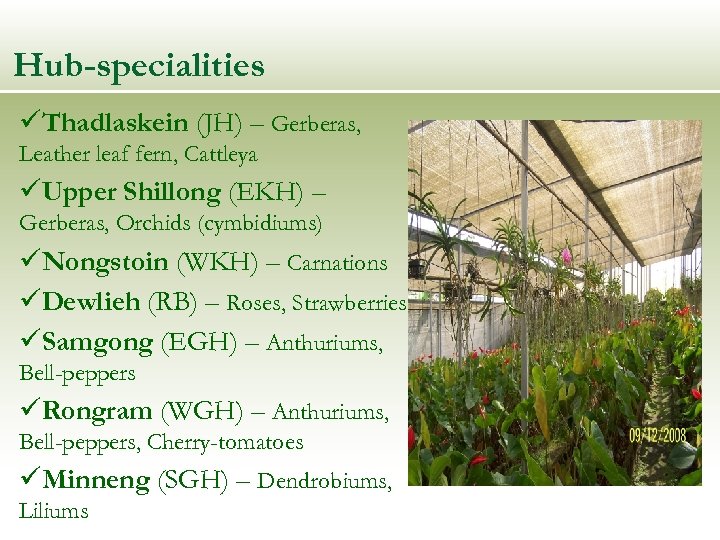 Hub-specialities üThadlaskein (JH) – Gerberas, Leather leaf fern, Cattleya üUpper Shillong (EKH) – Gerberas, Orchids (cymbidiums) üNongstoin (WKH) – Carnations üDewlieh (RB) – Roses, Strawberries üSamgong (EGH) – Anthuriums, Bell-peppers üRongram (WGH) – Anthuriums, Bell-peppers, Cherry-tomatoes üMinneng (SGH) – Dendrobiums, Liliums
 GOI issues Technology Mission on Horticulture • Cost norms for protected cultivation – unrealistic, low • Need for projectised proposals • Proposal passed by SLSC modified at the Ministry level • RKVY pattern of sanction Subsidies • Transport • Packaging Material Due Diligence • Approved rates • Approved Firms/Suppliers
 THANK YOU