


 Скачать презентацию Demographic indicators of cultural consumption Research Methods Festival
0921eb391ddd1b6fb9df1654d9fa2d27.ppt
- Количество слайдов: 28
 Demographic indicators of cultural consumption Research Methods Festival, Oxford 01 July 2008 Orian Brook, Paul Boyle & Robin Flowerdew, University of St Andrews
 © Simon Jay Price Background
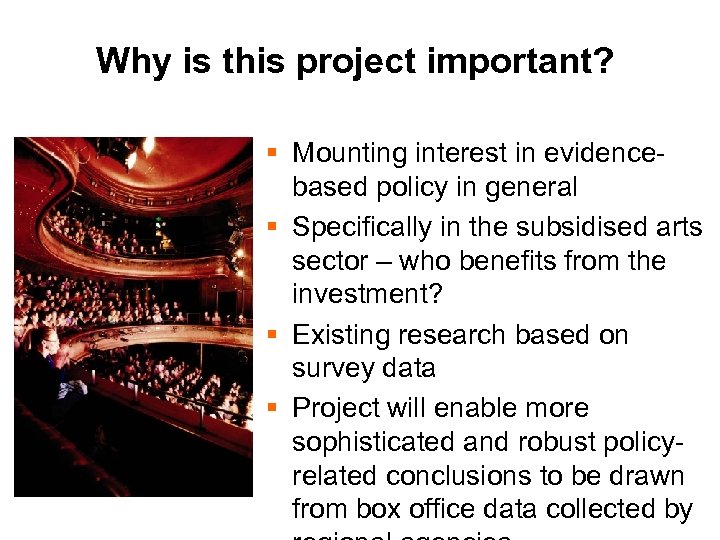 Why is this project important? § Mounting interest in evidencebased policy in general § Specifically in the subsidised arts sector – who benefits from the investment? § Existing research based on survey data § Project will enable more sophisticated and robust policyrelated conclusions to be drawn from box office data collected by
 Theorising Cultural Consumption § Social inequality and patterns of cultural taste and consumption are the subject of a large and complex debate § Related to social class, education, ethnicity, income? § Arts Council has targets to increase participation in culture by three priority groups: lower Socio. Economic groups, Black and Minority Ethnic Groups, and Disabled People § We can see that there are relationships with all these factors, but how to compare their significance?
 Problem of self-reported arts attendance § Cultural consumption closely tied to personal identity § Often engaged in to claim a social status § Reporting of cultural attendance in surveys problematic § respondents may answer according to their identity rather than their visits § Can work positively and negatively § People may claim attendance at certain cultural events that accord with their self image § Deny attendance at certain artforms if they do not represent who they are
 Geography of arts attendance § Previous research supposes that all demographic groups have equal opportunities to attend § But we know that communities are concentrated in different areas, with different characteristics including cultural provision § How does take-up of culture compare to provision – geographically and demographically?
 Administrative data § Growing awareness of the value of administrative data § Avoids issue of claimed cultural attendance § Enables more detailed analysis of attendance § Different geographical contexts § Changes over time § Impact of policy change and provision § Drawbacks include § Data represent purchasers not attenders § Proportions of data capture vary § Not all venues are included § However, much of this can be accounted for
 Research Questions § What are the best geodemographic and socioeconomic predictors of arts attendance? Do they vary across: § Art forms (e. g. theatre versus dance, highbrow vs popular)? § Venue locations (Urban Centre vs edge of City) § Geographical areas? (regions, and areas within London) § Availability of venues/performances? § Do some geodemographic classifications give better discrimination than others when analysing arts attendees?
 Research
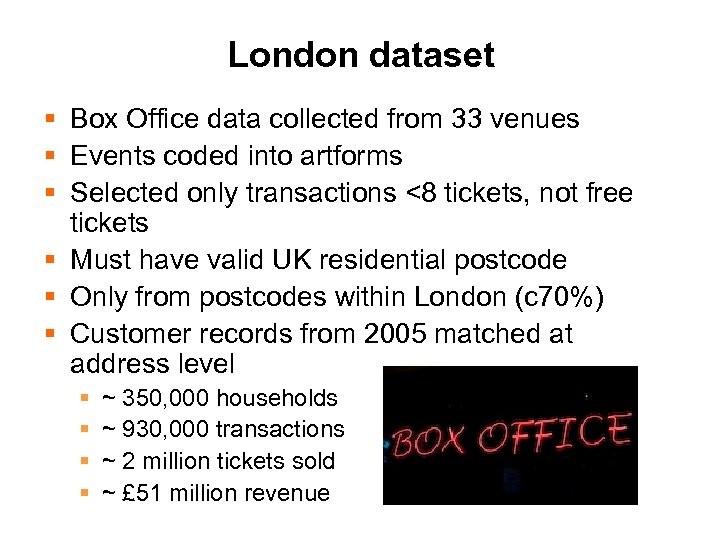 London dataset § Box Office data collected from 33 venues § Events coded into artforms § Selected only transactions <8 tickets, not free tickets § Must have valid UK residential postcode § Only from postcodes within London (c 70%) § Customer records from 2005 matched at address level § § ~ 350, 000 households ~ 930, 000 transactions ~ 2 million tickets sold ~ £ 51 million revenue
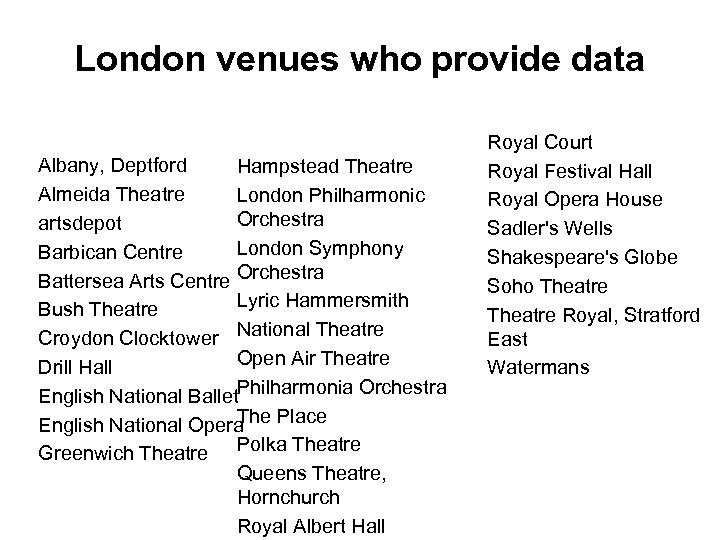 London venues who provide data Albany, Deptford Hampstead Theatre Almeida Theatre London Philharmonic Orchestra artsdepot London Symphony Barbican Centre Battersea Arts Centre Orchestra Lyric Hammersmith Bush Theatre Croydon Clocktower National Theatre Open Air Theatre Drill Hall English National Ballet. Philharmonia Orchestra The Place English National Opera Greenwich Theatre Polka Theatre Queens Theatre, Hornchurch Royal Albert Hall Royal Court Royal Festival Hall Royal Opera House Sadler's Wells Shakespeare's Globe Soho Theatre Royal, Stratford East Watermans
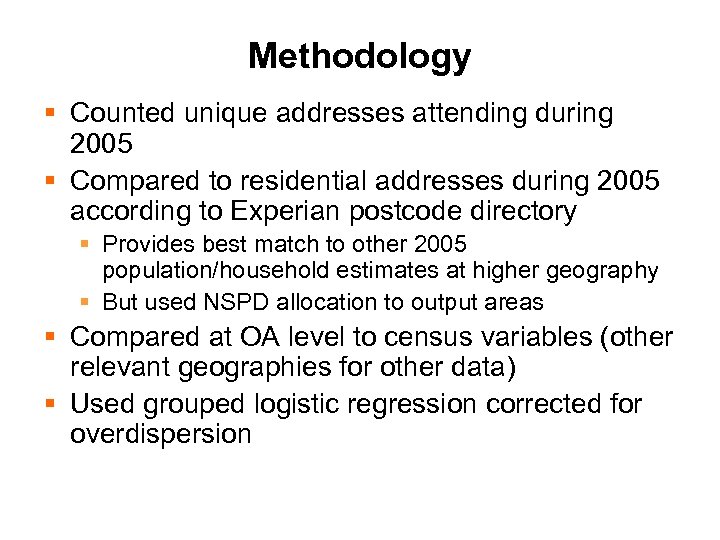 Methodology § Counted unique addresses attending during 2005 § Compared to residential addresses during 2005 according to Experian postcode directory § Provides best match to other 2005 population/household estimates at higher geography § But used NSPD allocation to output areas § Compared at OA level to census variables (other relevant geographies for other data) § Used grouped logistic regression corrected for overdispersion
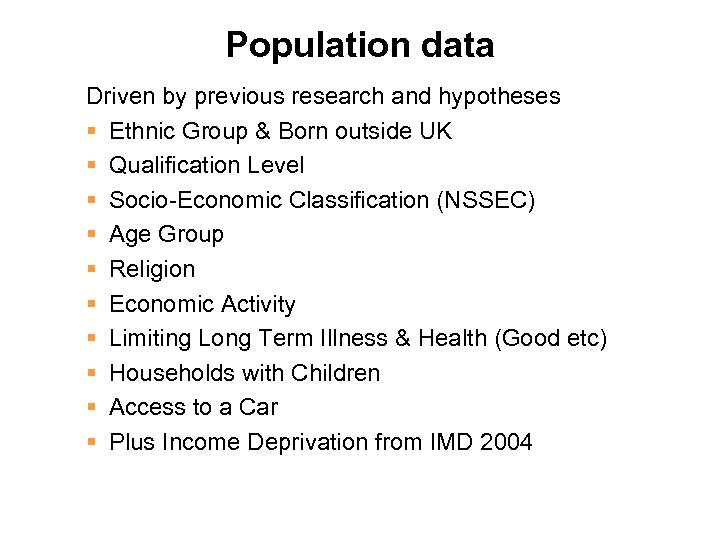 Population data Driven by previous research and hypotheses § Ethnic Group & Born outside UK § Qualification Level § Socio-Economic Classification (NSSEC) § Age Group § Religion § Economic Activity § Limiting Long Term Illness & Health (Good etc) § Households with Children § Access to a Car § Plus Income Deprivation from IMD 2004
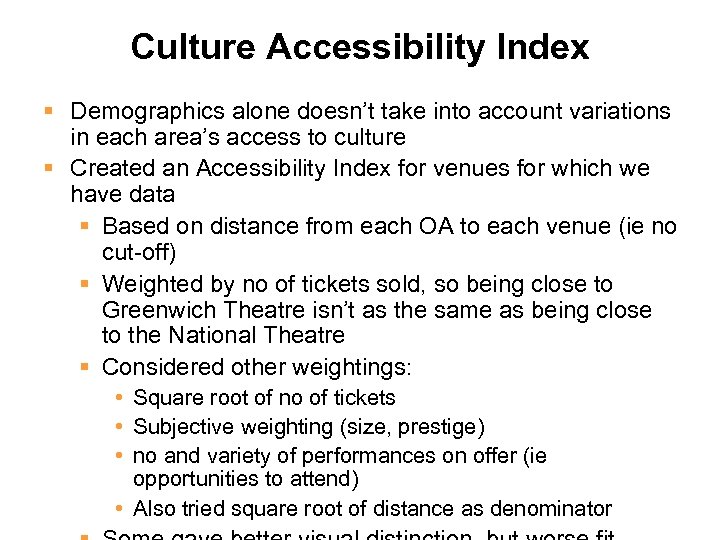 Culture Accessibility Index § Demographics alone doesn’t take into account variations in each area’s access to culture § Created an Accessibility Index for venues for which we have data § Based on distance from each OA to each venue (ie no cut-off) § Weighted by no of tickets sold, so being close to Greenwich Theatre isn’t as the same as being close to the National Theatre § Considered other weightings: • Square root of no of tickets • Subjective weighting (size, prestige) • no and variety of performances on offer (ie opportunities to attend) • Also tried square root of distance as denominator
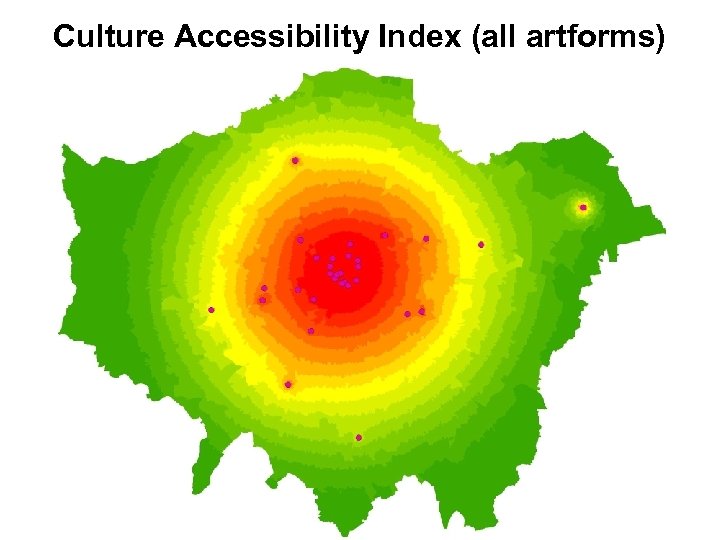 Culture Accessibility Index (all artforms)
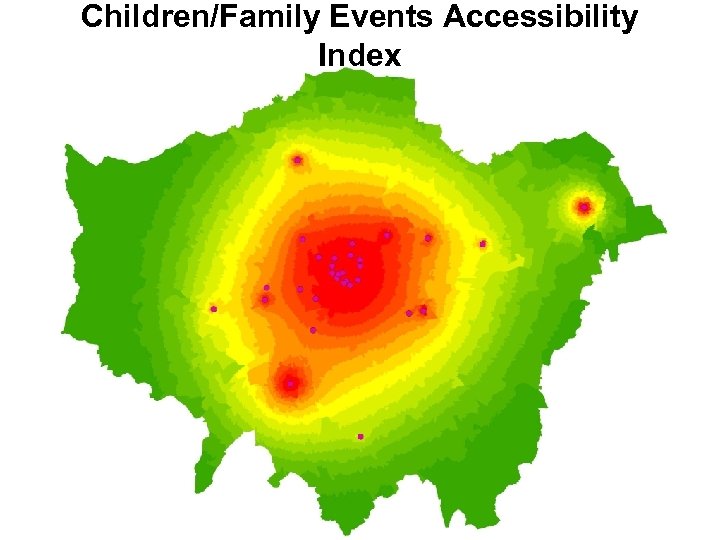 Children/Family Events Accessibility Index
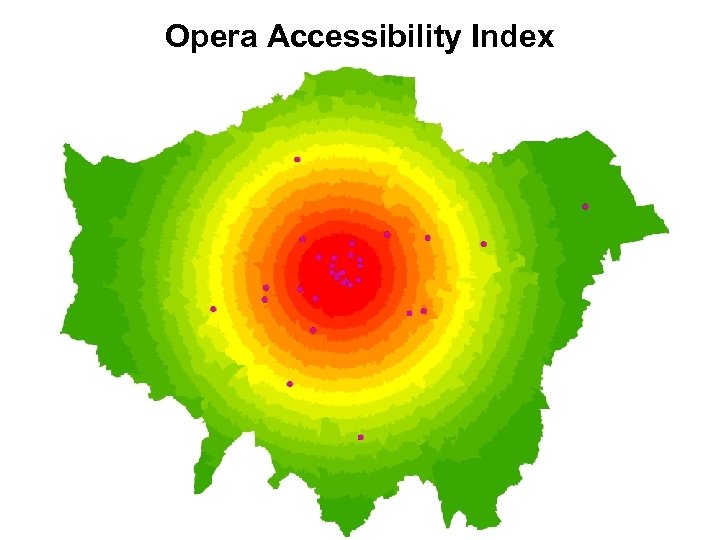 Opera Accessibility Index
 Commuting Index § Hypothesis: commuting to an area of high Cultural Accessibility improves chances of attending, compared to working in area of low CA (although in surveys people deny this) § Commuting varies by ethnic group § Created a Commuting Index § Downloaded commuting data matrix from CIDER § Calculated % of adults in an OA that commute to each other OA § Multiplied the % by the Culture Accessibility Index for the destination OA & summed these for the OA of origin
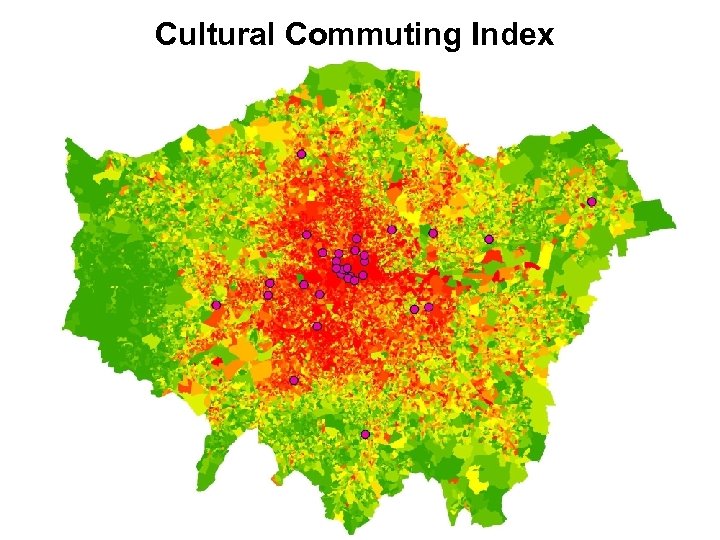 Cultural Commuting Index
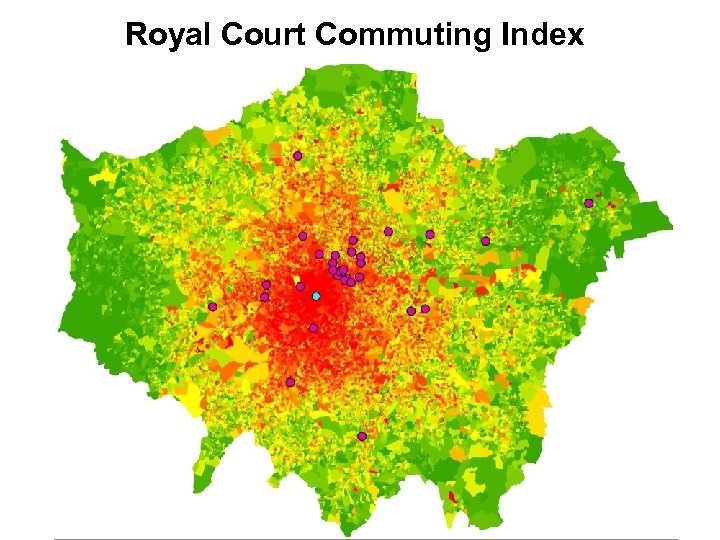 Royal Court Commuting Index
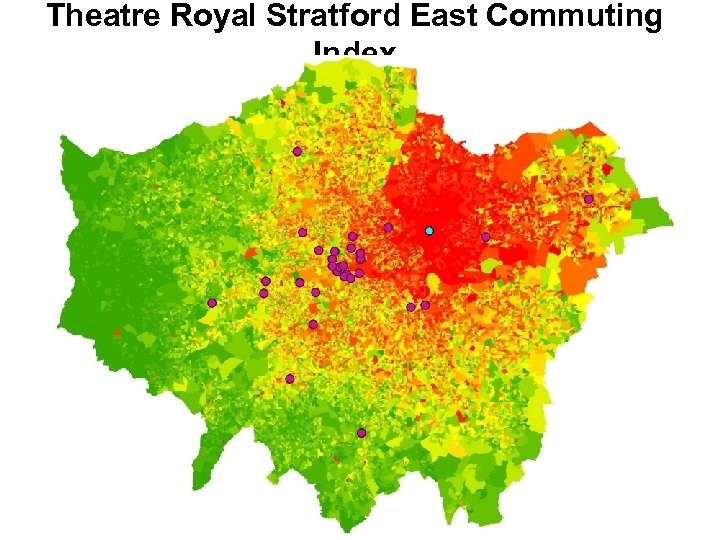 Theatre Royal Stratford East Commuting Index
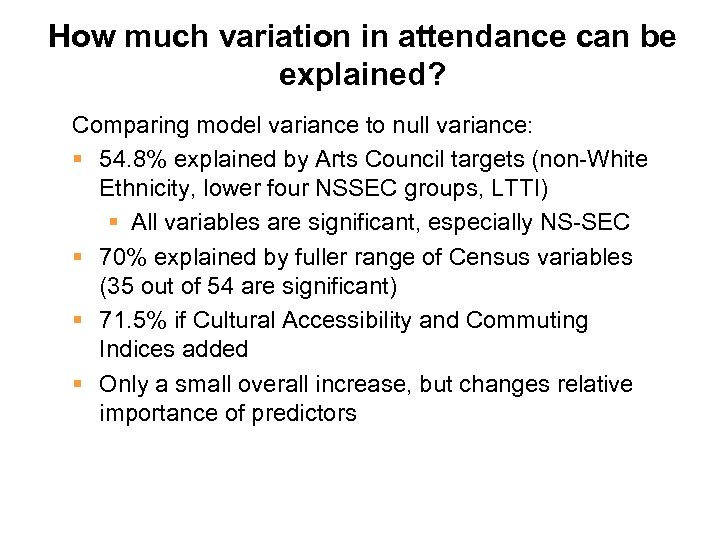 How much variation in attendance can be explained? Comparing model variance to null variance: § 54. 8% explained by Arts Council targets (non-White Ethnicity, lower four NSSEC groups, LTTI) § All variables are significant, especially NS-SEC § 70% explained by fuller range of Census variables (35 out of 54 are significant) § 71. 5% if Cultural Accessibility and Commuting Indices added § Only a small overall increase, but changes relative importance of predictors
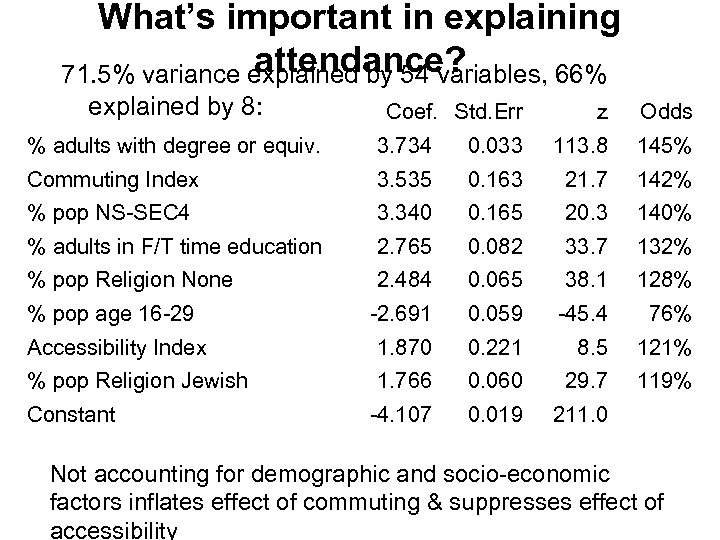 What’s important in explaining attendance? 71. 5% variance explained by 54 variables, 66% explained by 8: Coef. Std. Err z Odds % adults with degree or equiv. 3. 734 0. 033 113. 8 145% Commuting Index 3. 535 0. 163 21. 7 142% % pop NS-SEC 4 3. 340 0. 165 20. 3 140% % adults in F/T time education 2. 765 0. 082 33. 7 132% % pop Religion None 2. 484 0. 065 38. 1 128% % pop age 16 -29 -2. 691 0. 059 -45. 4 76% Accessibility Index 1. 870 0. 221 8. 5 121% % pop Religion Jewish 1. 766 0. 060 29. 7 119% -4. 107 0. 019 211. 0 Constant Not accounting for demographic and socio-economic factors inflates effect of commuting & suppresses effect of accessibility
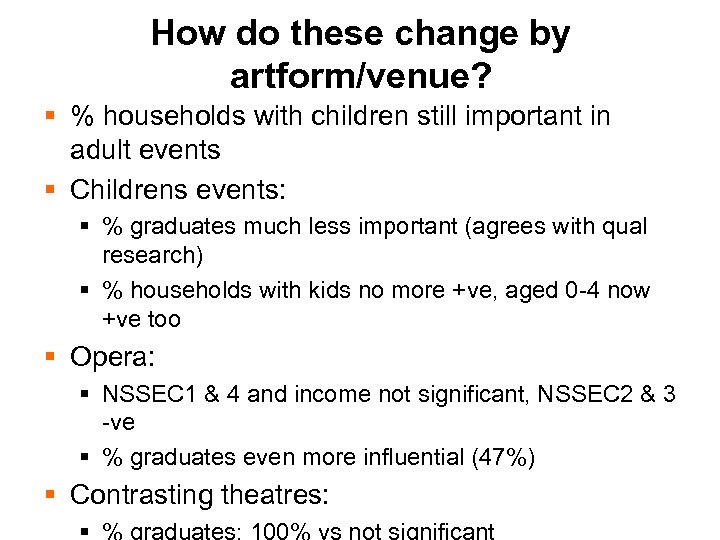 How do these change by artform/venue? § % households with children still important in adult events § Childrens events: § % graduates much less important (agrees with qual research) § % households with kids no more +ve, aged 0 -4 now +ve too § Opera: § NSSEC 1 & 4 and income not significant, NSSEC 2 & 3 -ve § % graduates even more influential (47%) § Contrasting theatres: § % graduates: 100% vs not significant
 Compared to Manchester § Similar data collected for Manchester § Same methodology (using 27 km radius from Manchester) § Full model explains 73. 4% of variance § Commuting and degree-level qualification still important, but not as strong –odds of attending increase 23% for a 10% increase in graduates § Other explanatory variables somewhat different: § only z score over 10 is commuting index § NS-SEC categories all significant, and effects are stronger
 Comparing Existing Classifications and Indices Variance explained compared to null model Psuedo R 2 are not all directly comparable § Townsend deprivation (OA) – 2. 6% § Area Classification Subgroups (categorical) – 22. 9% § Indices of Multiple Deprivation 2004 (LSOA) – 47. 4% § Mosaic – 58. 6% § So new model is better than any existing classification § % graduates alone is stronger than all except
 Future Plans § Further analysis of artforms and venues § Further User Fellowship: § Flow modelling § Cross-classified multilevel modelling § Latent class analysis
 orian. brook@standrews. ac. uk