


 Скачать презентацию DEMAND What is demand Demand effects
b5d3f843ad5f2bc2777853bd17dca60b.ppt
- Количество слайдов: 37
 DEMAND
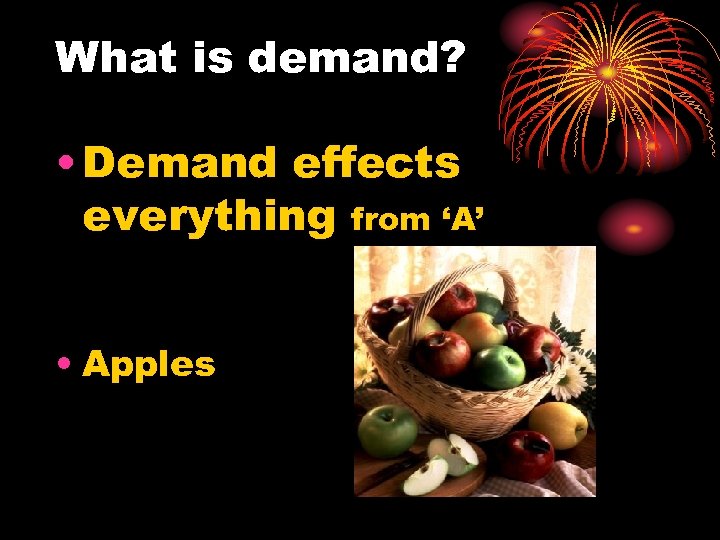 What is demand? • Demand effects everything from ‘A’ • Apples
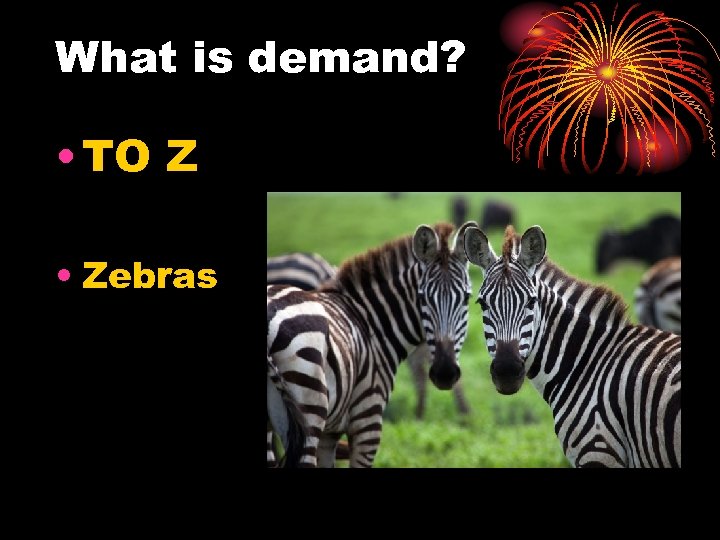 What is demand? • TO Z • Zebras
 • Demand is one side of the wellknown economic “equation” of supply and demand. • An economic phenomenon
 • Demand does not reflect what households want or need. • Demand reflects only what households are WILLING and ABLE to pay for.
 DEMAND REFERS TO THE QUANTITES OF A GOOD THAT CONSUMERS ARE WILLLING AND ABLE TO PURCHASE AT VARIOUS PRICES DURING A GIVEN PERIOD OF TIME
 LAW of DEMAND HUMAN NATURE
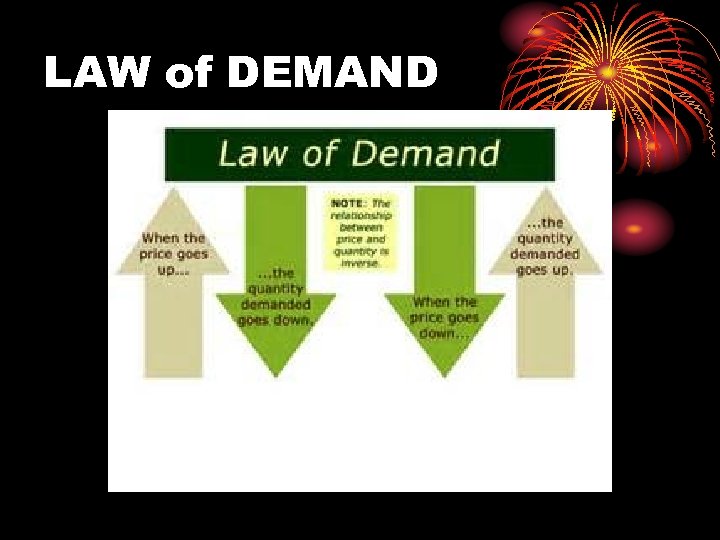
 LAW of DEMAND • As the prices of a good rises, the quantity demanded by consumers fall • As the price of a good decreases the quantity demanded rises
 LAW of DEMAND
 Demand • There are THREE economic concepts that explain the Law of Demand these concepts account for the inverse relationship that changes in the price of goods/services have on the quantity demanded: • Income/ Purchasing Power Effect • Substitution Effect • Diminishing Marginal Utility
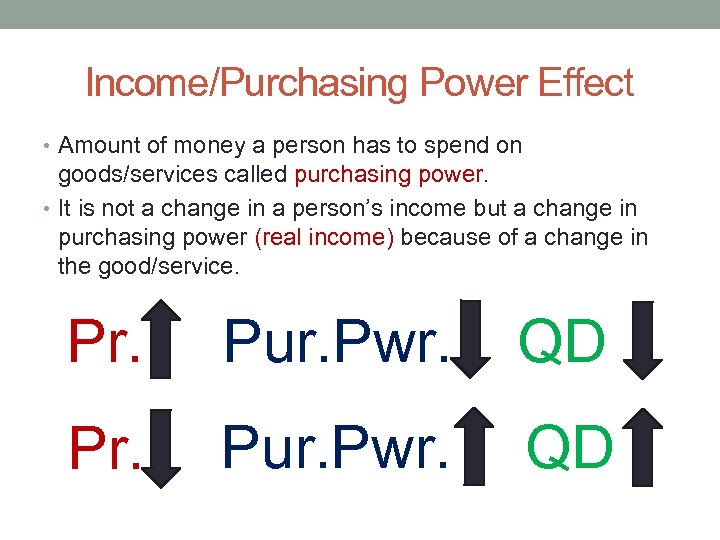 Income/Purchasing Power Effect • Amount of money a person has to spend on goods/services called purchasing power. • It is not a change in a person’s income but a change in purchasing power (real income) because of a change in the good/service. Pr. Pur. Pwr. QD
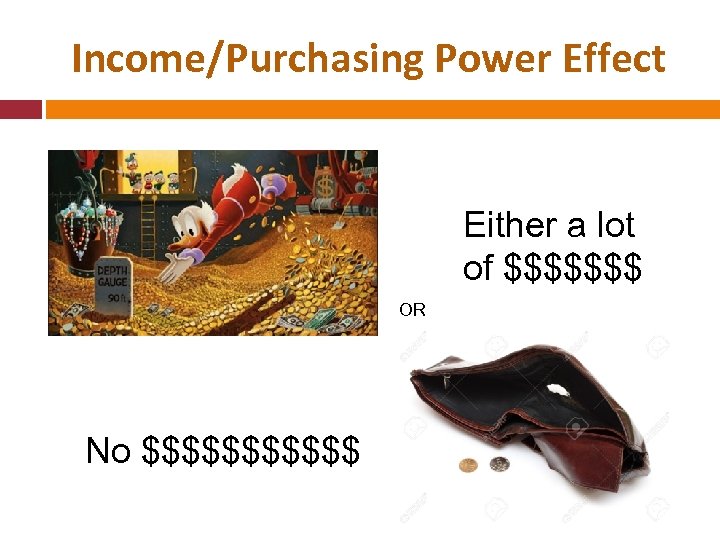 Income/Purchasing Power Effect Either a lot of $$$$$$$ OR No $$$$$$
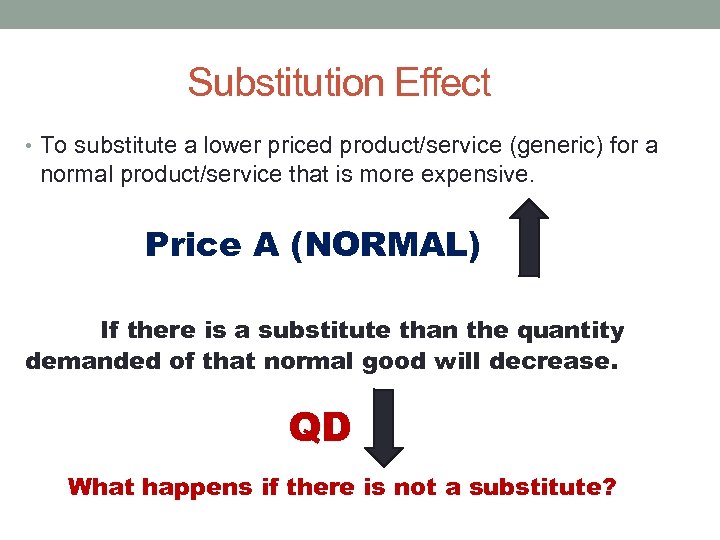 Substitution Effect • To substitute a lower priced product/service (generic) for a normal product/service that is more expensive. Price A (NORMAL) If there is a substitute than the quantity demanded of that normal good will decrease. QD What happens if there is not a substitute?
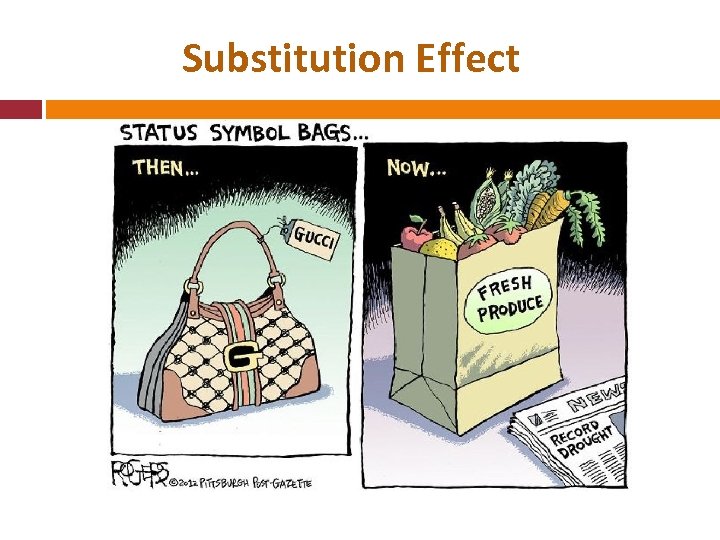 Substitution Effect
 Diminishing Marginal Utility • What is UTILITY? • The usefulness of a good/service or the satisfaction one gets from that good/service. D. M. U . • As the price of a good/service decreases, the quantity demanded increases, but for each successive decrease in price, the quantity demanded will increase but at a smaller rate. • You will get to a point where the quantity demanded will reach zero- at that point you have no more utility for that good/service.
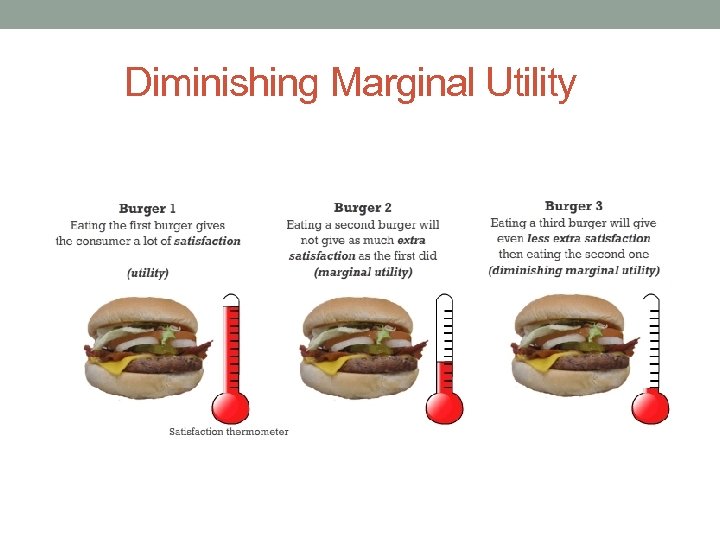 Diminishing Marginal Utility
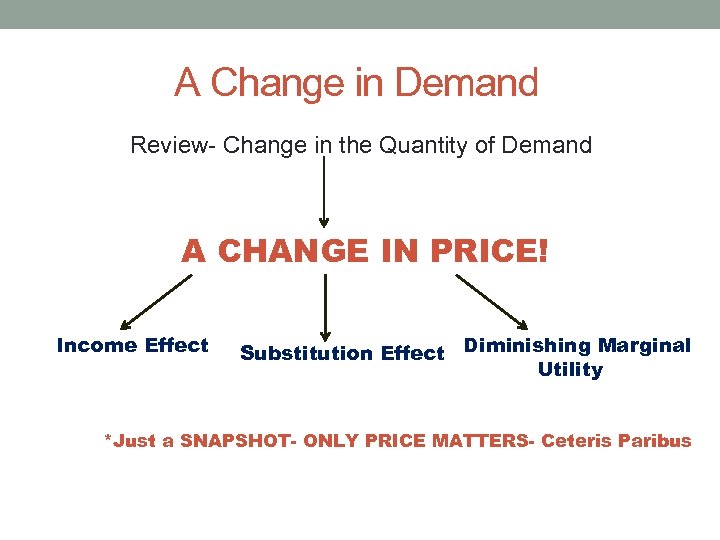 A Change in Demand Review- Change in the Quantity of Demand A CHANGE IN PRICE! Income Effect Substitution Effect Diminishing Marginal Utility *Just a SNAPSHOT- ONLY PRICE MATTERS- Ceteris Paribus
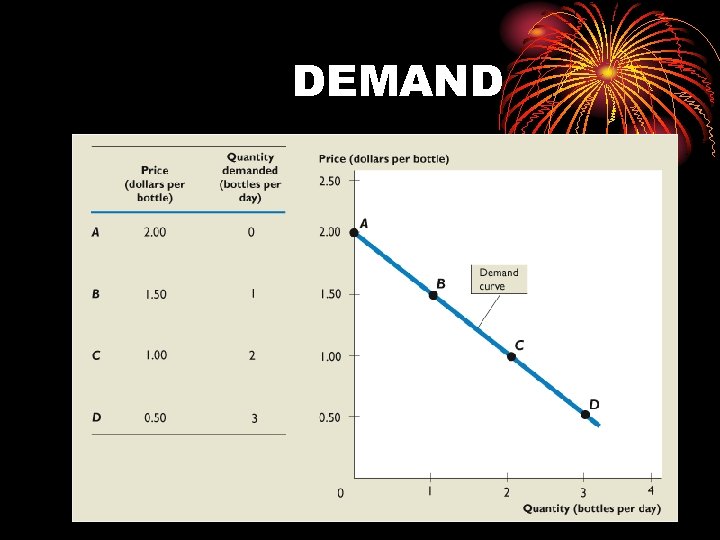
 QUANTITY DEMANDED • The amount consumed/purchased of a G/S at a specific price at a given time
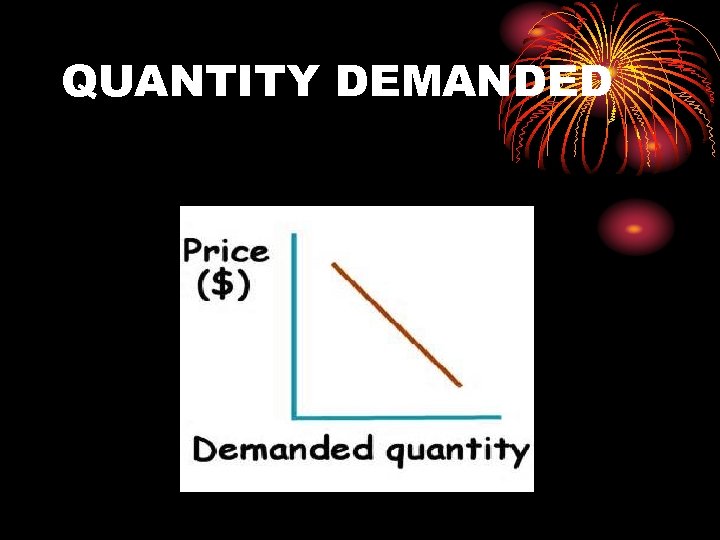 QUANTITY DEMANDED
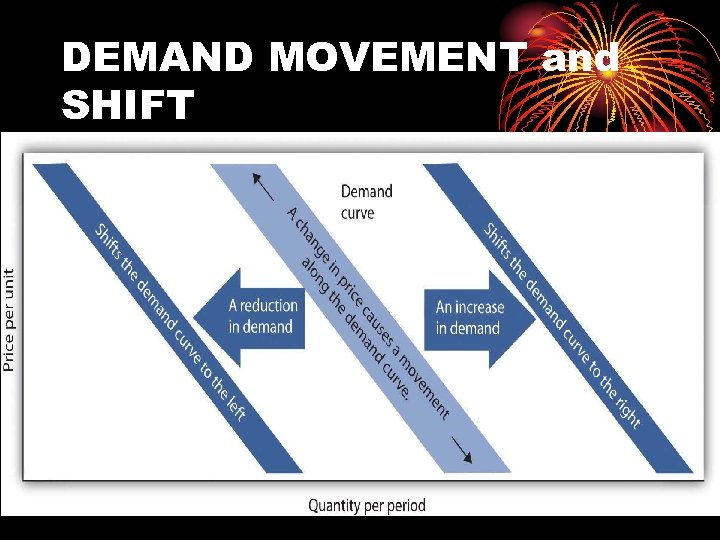
 CHANGE IN PRICE IS MOVEMENT ALONG THE CURVE
 DEMAND
 DEMAND Demand schedule This is a numerical representation of the inverse relationship between specific relative prices and quantity demanded. Demand curve This is a graphic representation of the demand schedule. A negatively sloped line showing the inverse relationship between relative price and quantity demanded.
 DEMAND CHANGE IN PRICE IS MOVEMENT ALONG THE CURVE
 Determinants of Demand SHIFT HAPPENS
 Determinants of Demand A SHIFT IN A DEMAND CURVE MEANS THAT AT EVERY PRICE, CONSUMERS BUY A DIFFERENT QUANTITY THEN BEFORE
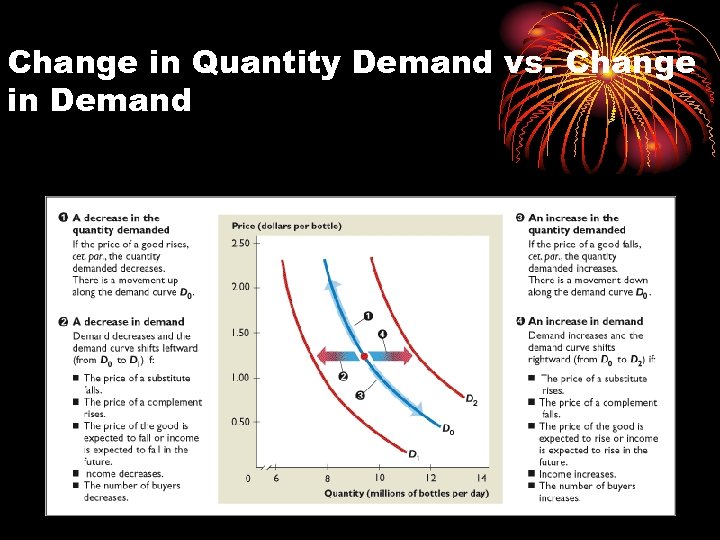
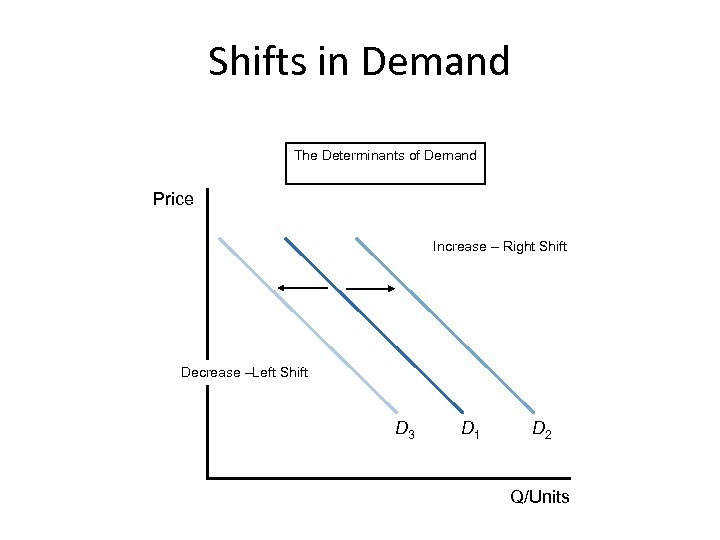 Shifts in Demand The Determinants of Demand Price Increase – Right Shift Decrease –Left Shift D 3 D 1 D 2 Q/Units
 A Change in Demand • A change in the quantity that people plan to buy when any influence other than the price of the good changes. • There is a new demand schedule and a new demand curve. • This shift in the demand curve causes an overall change in the level (quantity) of demand at each and every price.
 Determinants of Demand FACTORS THAT SHIFT THE DEMAND CURVE • Change in consumer tastes and preferences • Change in the number of buyers/population • Change in consumer incomes (↑ or ↓) • Change in the prices of complementary and substitute goods—Relative Goods • Change in consumer expectations (future)
 DEMAND • Taste and preferences of consumers • Related goods prices • (complements and substitutes) • Income of buyers* • Buyers • (number of /population: increase/decrease) • Expectations for the future
 Understanding Shifts of the Demand Curve • Increase = right, Decrease = left • M. E. R. I. T. shifts demand • Market size (number of consumers) • Expectations • Related prices (complements, substitutes) • Income (normal, inferior) • Tastes
 *Types of Goods • Inferior • Normal • Superior
 *Types of Goods • Inferior –tap water • Normal –bottled water • Superior –sparkling water
 A SHIFT IN A DEMAND CURVE MEANS THAT AT EVERY PRICE, CONSUMERS BUY A DIFFERENT QUANTITY THEN BEFORE
 Change in Quantity Demand vs. Change in Demand
 Change in Quantity Demand vs. Change in Demand q When you draw a shift of the demand, be careful to draw the arrows in the horizontal direction. q Follow the text by always describing shifts of demand supply curves as “rightward” or “leftward. ” Do not say that the curves shift “up” or “down” or “inward” or “outward. ”
 CHANGE IN PRICE IS MOVEMENT ALONG THE CURVE A SHIFT IN A DEMAND CURVE MEANS THAT AT EVERY PRICE, CONSUMERS BUY A DIFFERENT QUANTITY THEN BEFORE
 DEMAND MOVEMENT and SHIFT