


 Скачать презентацию Demand Response Update April 2011 1 Strategic
15161955d558d9cc43e7521d3aadd800.ppt
- Количество слайдов: 13
 Demand Response Update April, 2011 1
 Strategic Perspective “I think a lot about the lack of electrical capacity in the region. In other words, about how we can be sure to meet the peak energy needs of our customers. ” Jim Lobdell, VP Power Operations and Resource Strategy [1] Demand Response § Aligns with PGE’s Strategic Direction; helping to provide exceptional customer service, promote economic growth, and exhibit corporate responsibility. § Provides an alternative to peak capacity generation construction and associated transmission needs and environmental impacts. § Enhances the value of the Smart Grid and Smart Meter interval data provided to customers by empowering a response to market based rates 2 [1] PGE, News. Line, July 2010, 3 Questions featuring Jim Lobdell
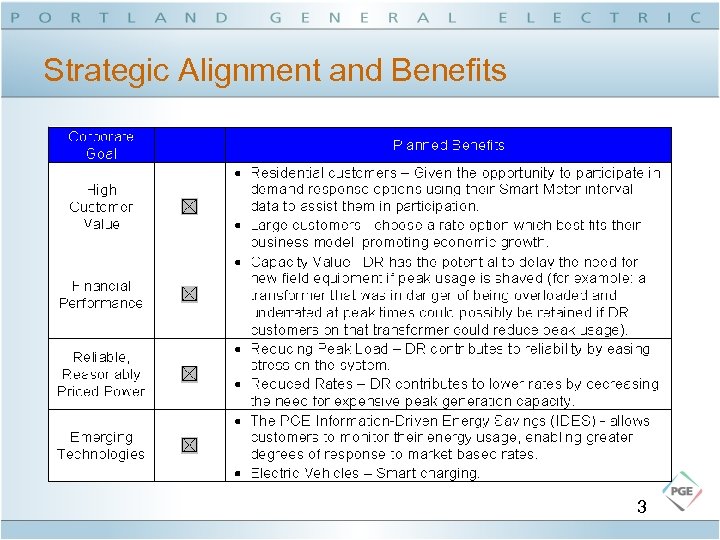 Strategic Alignment and Benefits 3
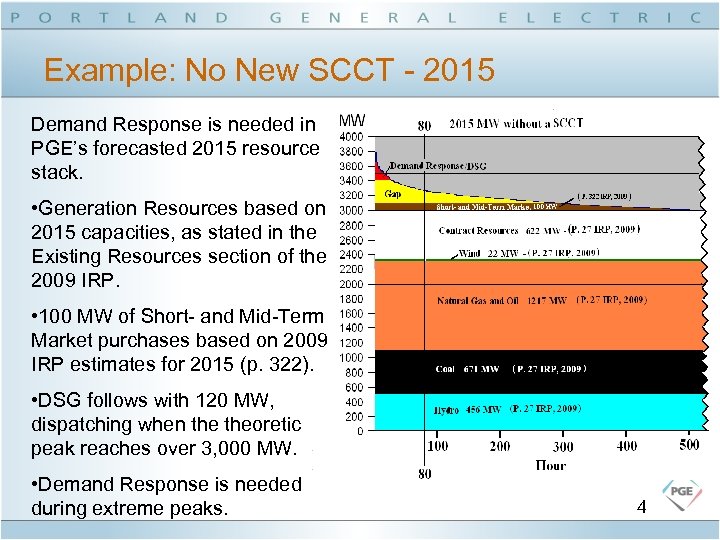 Example: No New SCCT - 2015 Demand Response is needed in PGE’s forecasted 2015 resource stack. • Generation Resources based on 2015 capacities, as stated in the Existing Resources section of the 2009 IRP. • 100 MW of Short- and Mid-Term Market purchases based on 2009 IRP estimates for 2015 (p. 322). • DSG follows with 120 MW, dispatching when theoretic peak reaches over 3, 000 MW. • Demand Response is needed during extreme peaks. 4
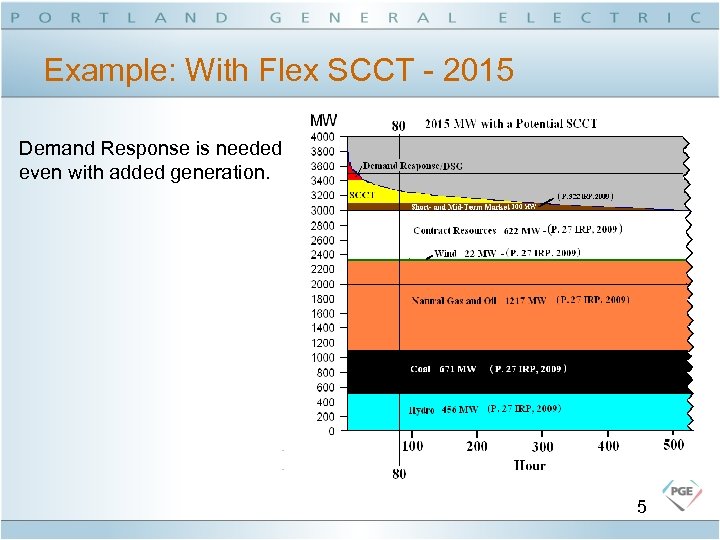 Example: With Flex SCCT - 2015 Demand Response is needed even with added generation. 5
 Existing Pricing Demand Response § Time of Use – • # of Customers • 1800 Residential Customers • 300 Small Business • Direction • Smart Meters improved cost effectiveness (no one-off meters or associated meter read) • Electric Vehicles are a natural fit – Increased marketing targeting EV purchasers – Program growth based primarily on EV sales projections 6
 Existing Direct Load Control § Energy Partner SM– Schedule 77 • Pilot • 2 Customers • 10 MW within 4 hours notice • Direction • Tighten the participation requirements • Grow the program for process driven customers • MW cap raised 7
 Future Pricing Programs § Critical Peak Pricing Pilot – Flex Rate Program SM • # of Customers – 1000 Residential • Objectives • Test take rate for PGE customers • Utilize existing PGE systems to implement a CPP program by Nov. , 2011 • Measure and evaluate • Direction • Potential for adding an enabling technology for year 2 of the pilot • Possible CPP pricing program after the pilot 8
 Future Direct Load Control § Residential Pilot – Water Heater Direct Load Control • Salem Smart Grid project area only pilot • Customers must be on the test feeders involved with the project • Less than 100 • Water heaters will respond to radio signal • PGE will dispatch the radio signal using a transactive control based on price signals from the Smart Grid project. • August of 2012 -2014 § Automated Demand Response • 3 rd party provides PGE a turn-key DR resource • 50 MW within 5 years • 30+ k. W customers • Status • RFP in 2009 • Contracting RFP winner • Regulatory approval pending • Potential to have 5 MW online in December 9
 Limiting Resource Impacts § Web Management – Energy metering web portals, such as the PGE IDES system, will allow customers to access online their interval energy usage data; this data will help them respond to market based pricing in ways that benefit both PGE and the customer. § Corporate Communications – Communications to new customers to grow the participation numbers and to encourage existing customers to try new programs. § TCC – Customer service representatives (CSRs) could require additional call time to promote Demand Response. In addition to call time, CSRs will require training. § Billing – Larger Demand Response programs may request additional billing requirements beyond the basic bill that many customers now receive. § IT – IT resources will be required to automate Demand Response 10 processes.
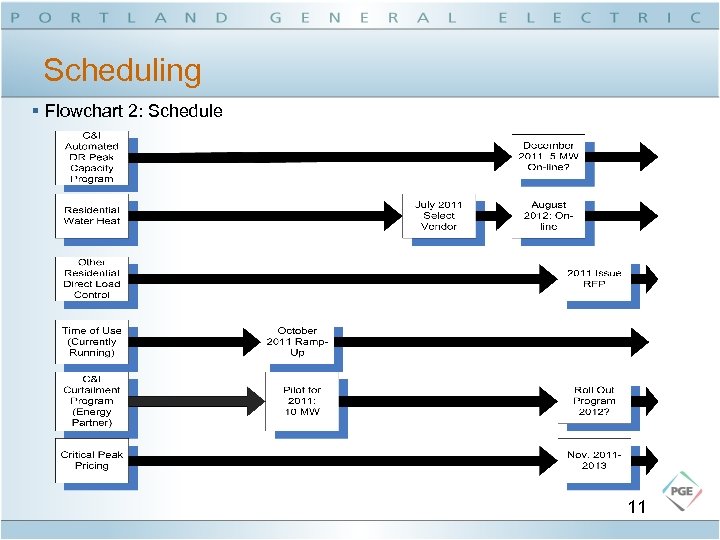 Scheduling § Flowchart 2: Schedule 11
 Conclusion § DR meets the needs for the top 80 peaking hours of the year. § DR aids PGE in using resources as cost efficiently as possible. § DR improves customer satisfaction by empowering customers to use their interval data as a tool to control their energy costs. § Technologies (such as the Smart Meter) exist and are emerging that enable the DR component of the Smart Grid. 12
 §Questions? 13