 Скачать презентацию Demand Demand desire want plan and ability to buy
6e812720b523395f2f62f4f1e6ef527f.ppt
- Количество слайдов: 68



Demand • Demand: desire/want/plan and ability to buy • Demand refers to the whole demand curve • Demand schedule: a table which shows the quantity demanded of a good at different prices at a certain time. • Demand curve is a graphical representation of the demand schedule. • Quantity demanded: the amount the consumer plans to buy at a particular price CE : demand supply 1
Demand • Individual demand curve/schedule • Market demand: horizontal summation of the individual demand curves/schedules. CE : demand supply 2
The Demand Curve and the Law of Demand The demand curve for a good is a graphical presentation of the demand schedule. It shows the quantity demanded for a good at different prices. It is downward sloping. CE : demand supply 3
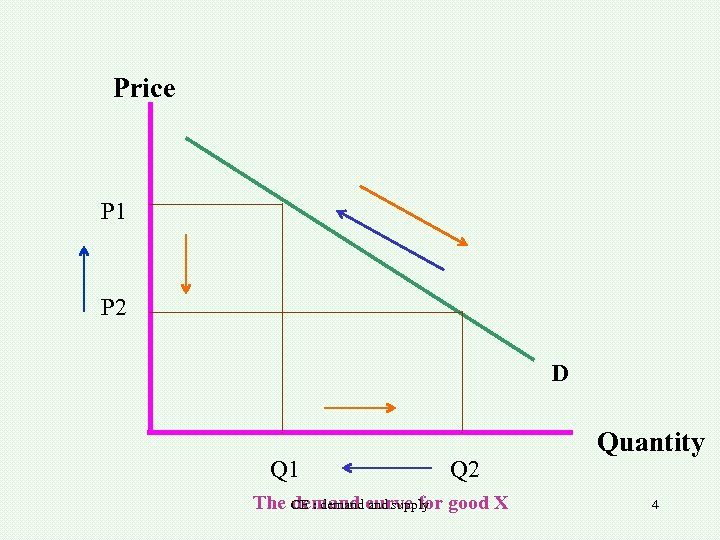
Price P 1 P 2 D Q 1 Q 2 The CE : demand curve for good X demand supply Quantity 4
The Law of Demand • The law of demand states that the quantity demanded of a good decreases as the price of the good increases, vice versa, other things constant. • The demand curve is downward sloping. • The law of demand is represented by a movement along the demand curve. CE : demand supply 5
Factors Affecting the Demand for a Good • • The price of the good The income of the consumer The price of other related goods The change in preference/fashion Expectation of future price The size of the population Derived demand ( factors of production ) Other possible factors CE : demand supply 6
Price of the good: Change in quantity demanded • The higher the price, the lower the quantity demanded will be, vice versa, other things constant. ( The law of demand ) • It is represented by a movement along the demand curve CE : demand supply 7
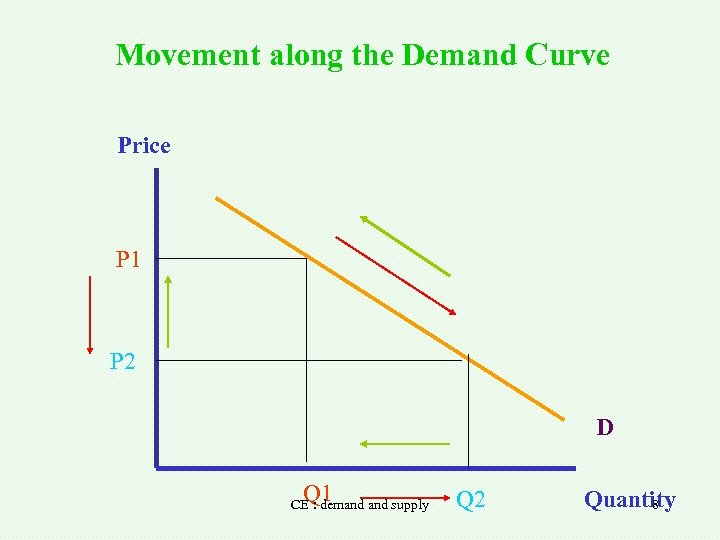
Movement along the Demand Curve Price P 1 P 2 D Q 1 CE : demand supply Q 2 Quantity 8
Shift of the Demand Curve: Change in Demand • The income of the consumer: Normal and inferior good When the income of a consumer increases, the quantity demanded of a good increases at each price level. The good is called a normal good ( Positive income effect ) For some goods, when income increases, the quantity demanded decreases at each price level. These goods are called inferior goods. ( Negative income effect ) CE : demand supply 9
Shift of the Demand Curve • The price of other goods Substitute goods ( Good X and Good Y ) When the price of good X increases, the demand for good Y increases. Complements ( Good X and Good Y ) When the price of good X increases, the demand for Good Y decreases. CE : demand supply 10
Shift of the Demand Curve • The change in preference/fashion The demand for a good increases when it becomes fashionable to consume the good. CE : demand supply 11
Shift of the Demand Curve • Expectation of future price When consumers expect the price of a good to increase in the future, they will consume more of it now. CE : demand supply 12
Shift of the Demand Curve • The size of the population An increase in the size of population will increase the demand for goods. CE : demand supply 13
Shift of the Demand Curve • Derived demand ( the demand for factors of production ) ( 衍生 需求 ) When the demand for a good increases, the demand for the factor inputs will increase. For instance, when the demand for medical services increases, the demand for doctors and nurses also increases. CE : demand supply 14
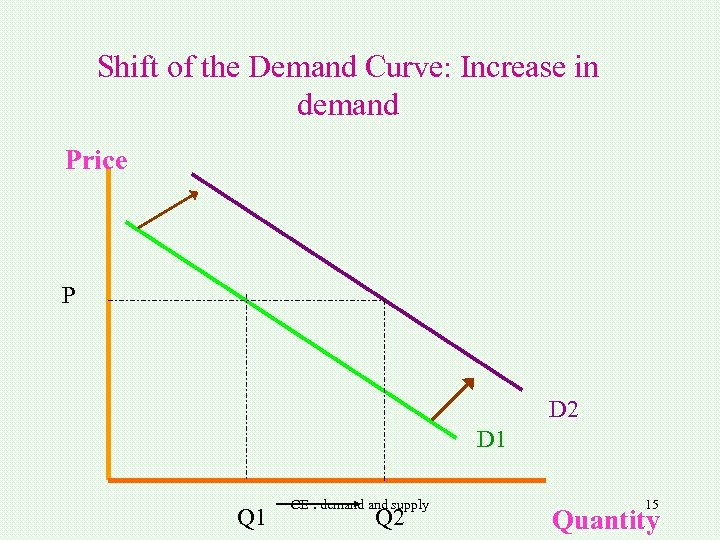
Shift of the Demand Curve: Increase in demand Price P D 2 D 1 Q 1 CE : demand supply Q 2 15 Quantity
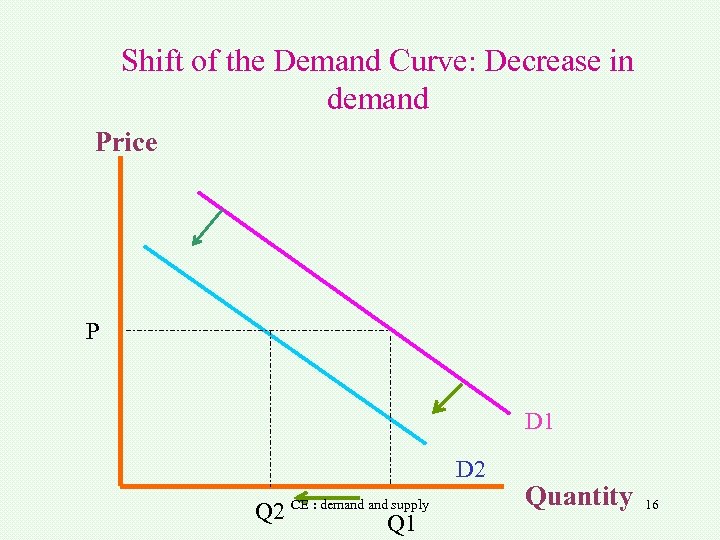
Shift of the Demand Curve: Decrease in demand Price P D 1 D 2 supply Q 2 CE : demand and. Q 1 Quantity 16
Shift of the Demand Curve • Increase in demand • Decrease in demand When the demand for a good increases, the a good decreases, the demand curve for the good shifts to the right. good shifts to the left. M o r e of the good is L e s s of the good is demanded at each price level. CE : demand supply 17
Supply • Supply: desire/want/plan and ability to sell • Supply refers to the whole supply curve. • Supply schedule: a table which shows the quantity supplied of a good at different prices, at a certain time. • Supply curve is a graphical representation of the supply schedule. • Quantity supplied: the amount the consumer plans to sell at a particular price CE : demand supply 18
Supply • Individual supply curve/schedule • Market supply: horizontal summation of the individual supply curves/schedules. CE : demand supply 19
The Supply Curve The supply curve of a good is a graphical presentation of the supply schedule. It shows the quantity supplied of a good at different prices. It is upward sloping. CE : demand supply 20
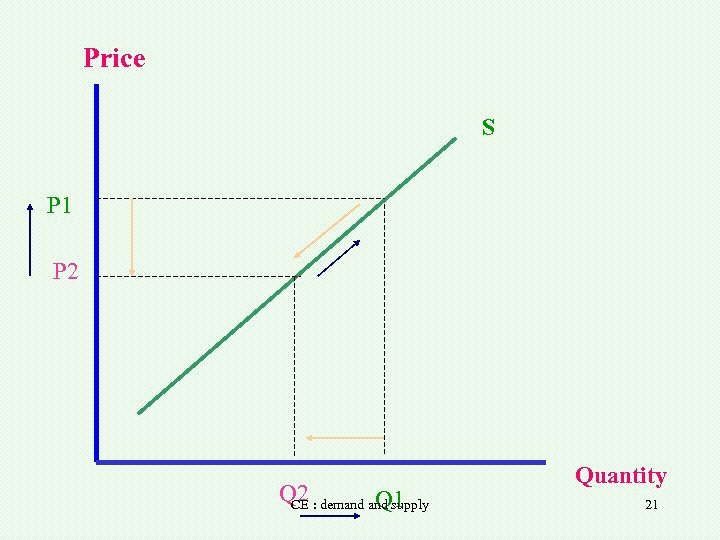
Price S P 1 P 2 Q 2 : demand supply Q 1 CE Quantity 21
Factors affecting the Supply of a Good • • The price of the good Price of other goods Price of factor input/Production cost State of technology Per unit sales tax Per unit subsidy Number of sellers Other possible factors. CE : demand supply 22
The Price of the Good: Change in Quantity Supplied • The higher the price, the higher the quantity supplied will be, vice versa, other things constant. • It is represented by a movement along the supply curve CE : demand supply 23
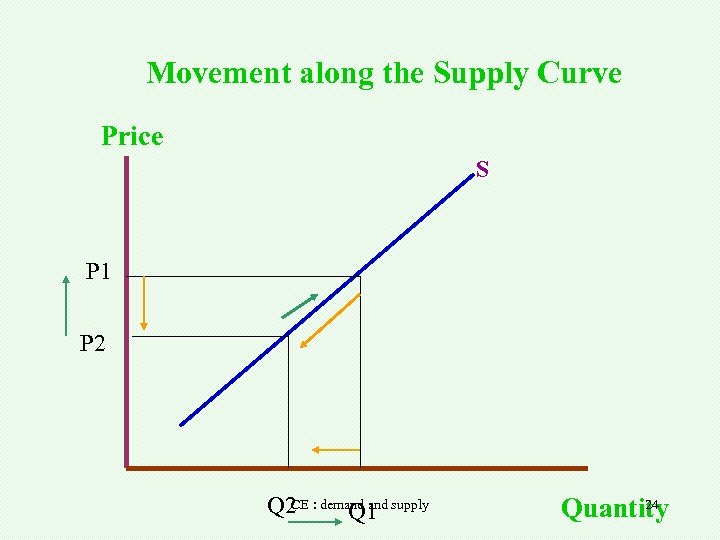
Movement along the Supply Curve Price S P 1 P 2 CE Q 2 : demand supply Q 1 24 Quantity
Shift of the Supply Curve: Change in Supply • Price of other goods • Competitive supply ( Good X and Good Y ) When the price of Good X increases, the supply of Good Y decreases. • Joint supply ( Good X and Good Y ) When the price of Good X increases, the supply of Good Y also increases. CE : demand supply 25
Shift of the Supply Curve: Change in Supply • Price of factor input/Production cost An increase in the cost of production will lead to a decrease in the supply of the good. CE : demand supply 26
Shift of the Supply Curve: Change in Supply • State of technology An improvement in the state of technology will lead to an increase in the supply of a good. CE : demand supply 27
Shift of the Supply Curve: Change in Supply • Per unit sales tax (t) The imposition of a per unit sales tax ‘t’ leads to a decrease in the supply of the good. The vertical distance of the supply curves measures the per unit sales tax ‘t’. CE : demand supply 28
Shift of the Supply Curve: Change in Supply • Per unit subsidy (s) The imposition of a per unit subsidy ‘s’ leads to an increase in the supply of the good. The vertical distance of the supply curves measures the per unit subsidy ‘s’. CE : demand supply 29
Shift of the Supply Curve: Change in Supply • Number of sellers An increase in the number of sellers leads to an increase in the supply of the good. CE : demand supply 30
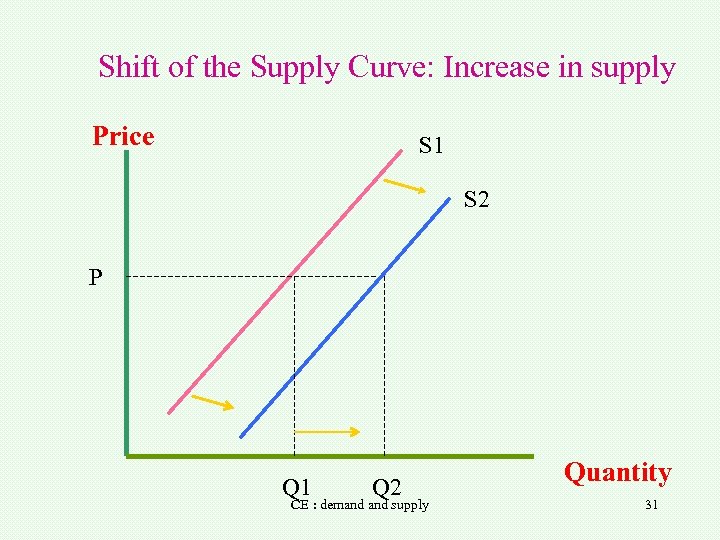
Shift of the Supply Curve: Increase in supply Price S 1 S 2 P Q 1 Q 2 CE : demand supply Quantity 31
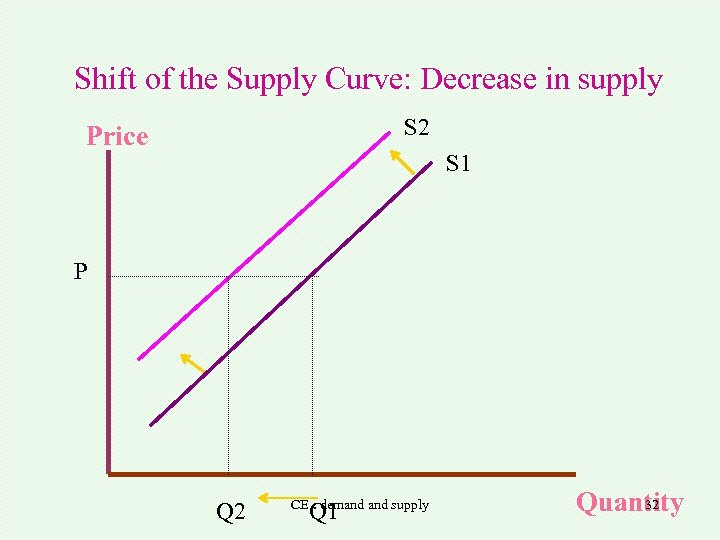
Shift of the Supply Curve: Decrease in supply S 2 Price S 1 P Q 2 CE : demand supply Q 1 32 Quantity
Shift of the Supply Curve • Increase in supply • Decrease in supply When the supply of a good increases, the good decreases, the supply curve of the good shifts to the right. good shifts to the left. More of the good is Less of the good is supplied at each price level. CE : demand supply 33
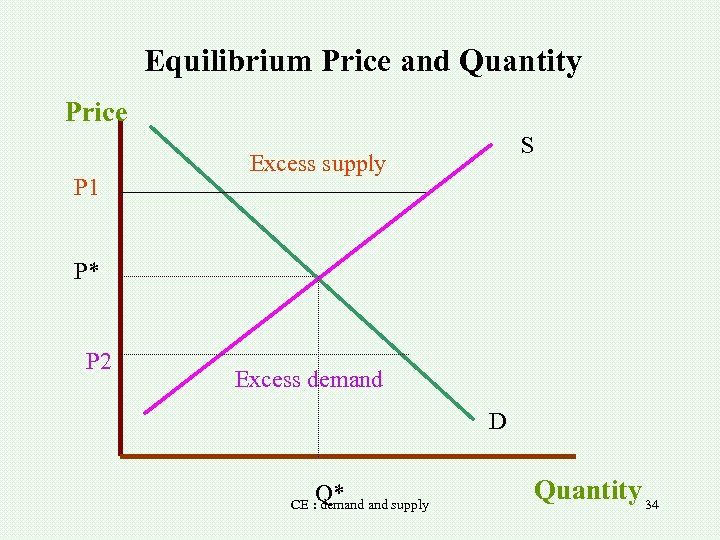
Equilibrium Price and Quantity Price P 1 S Excess supply P* P 2 Excess demand D Q* CE : demand supply Quantity 34
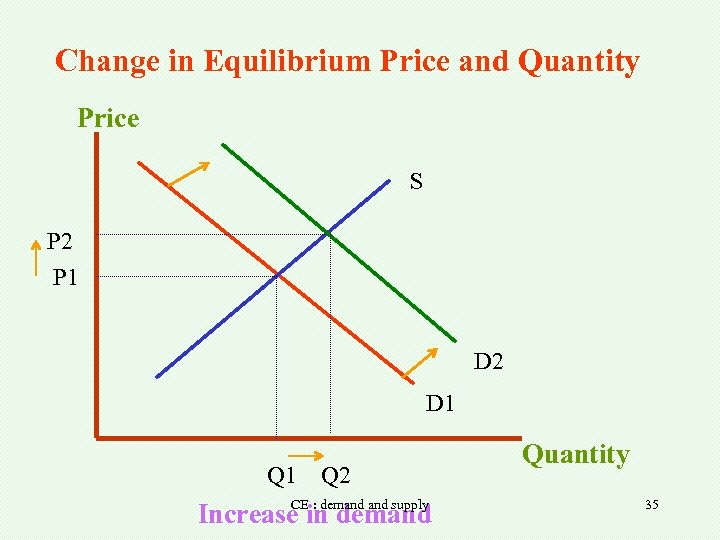
Change in Equilibrium Price and Quantity Price S P 2 P 1 D 2 D 1 Q 2 CE : demand supply Increase in demand Quantity 35
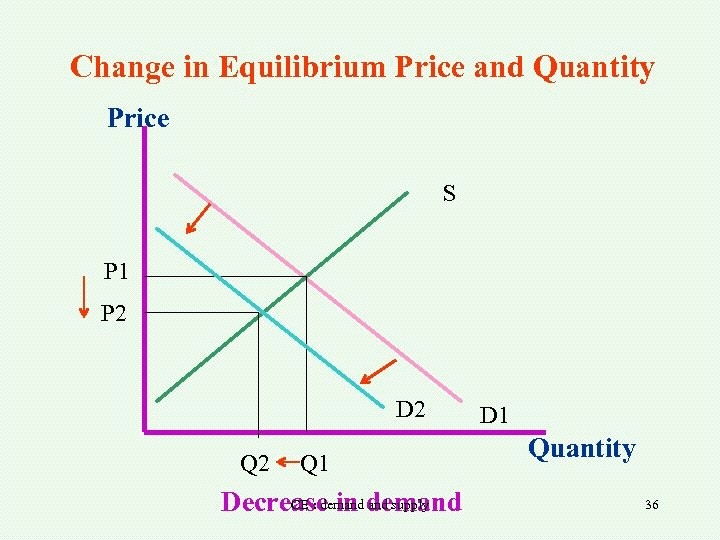
Change in Equilibrium Price and Quantity Price S P 1 P 2 D 2 Q 1 CE : demand supply Decrease in demand D 1 Quantity 36
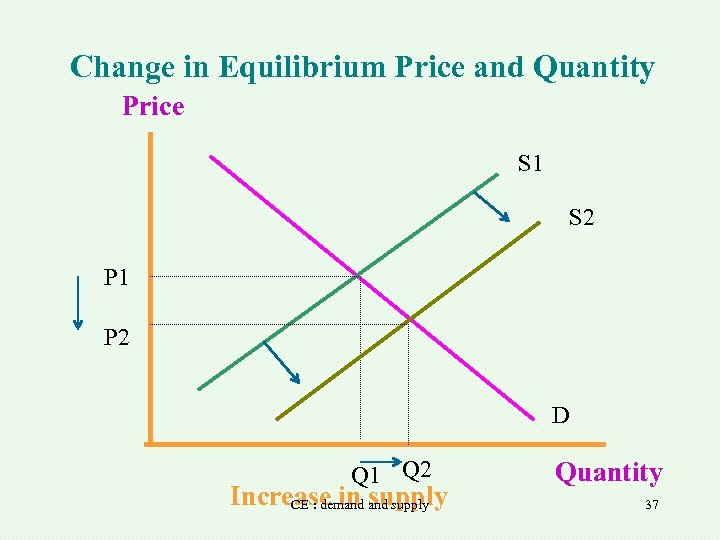
Change in Equilibrium Price and Quantity Price S 1 S 2 P 1 P 2 D Q 1 Q 2 Increase in and supply CE : demand supply Quantity 37
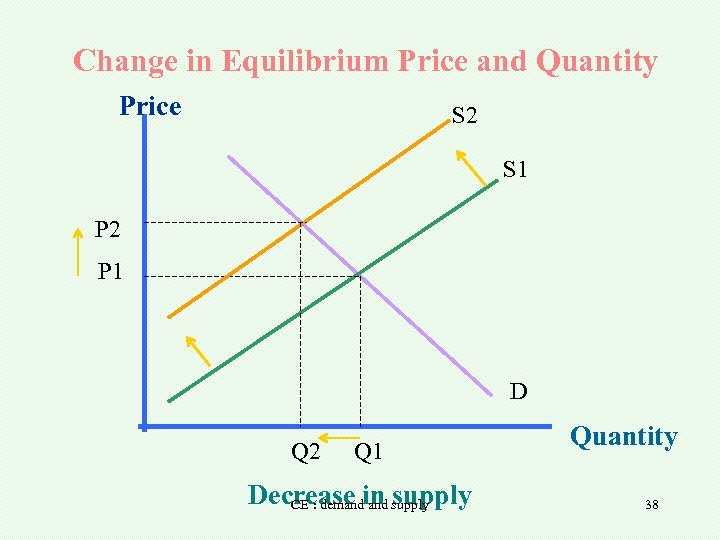
Change in Equilibrium Price and Quantity Price S 2 S 1 P 2 P 1 D Q 2 Q 1 Decrease in supply CE : demand supply Quantity 38
Change in Equilibrium Price and Quantity Question: What happen to the equilibrium price and quantity when both the demand supply change? CE : demand supply 39
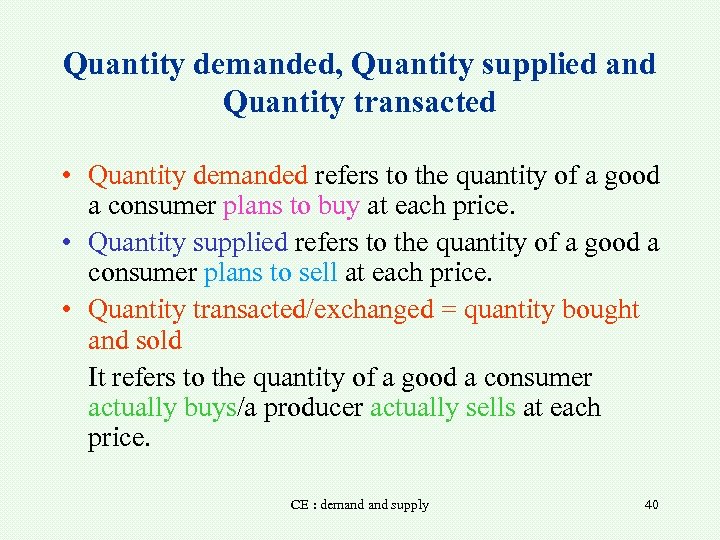
Quantity demanded, Quantity supplied and Quantity transacted • Quantity demanded refers to the quantity of a good a consumer plans to buy at each price. • Quantity supplied refers to the quantity of a good a consumer plans to sell at each price. • Quantity transacted/exchanged = quantity bought and sold It refers to the quantity of a good a consumer actually buys/a producer actually sells at each price. CE : demand supply 40
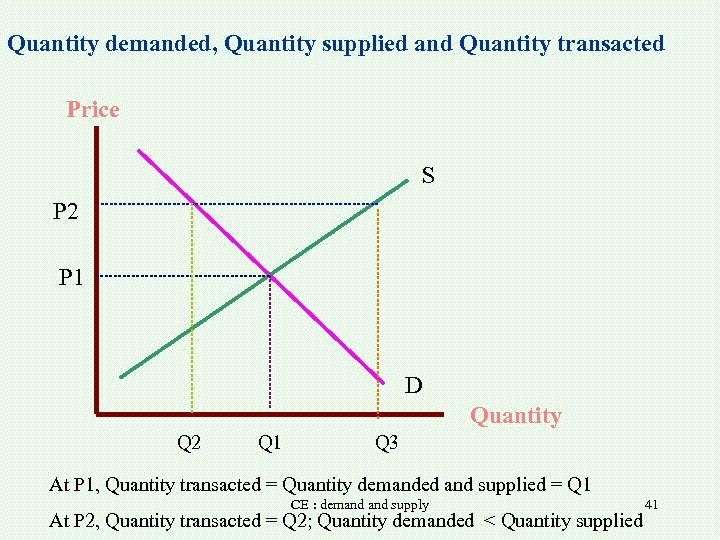
Quantity demanded, Quantity supplied and Quantity transacted Price S P 2 P 1 D Quantity Q 2 Q 1 Q 3 At P 1, Quantity transacted = Quantity demanded and supplied = Q 1 CE : demand supply At P 2, Quantity transacted = Q 2; Quantity demanded < Quantity supplied 41
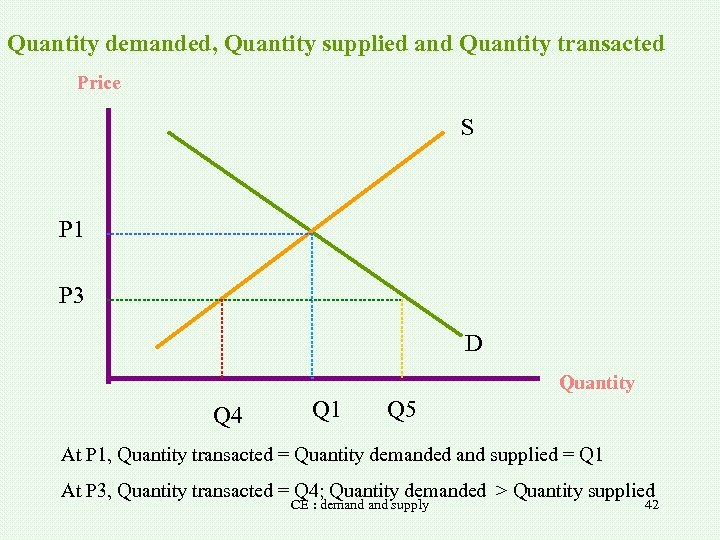
Quantity demanded, Quantity supplied and Quantity transacted Price S P 1 P 3 D Quantity Q 4 Q 1 Q 5 At P 1, Quantity transacted = Quantity demanded and supplied = Q 1 At P 3, Quantity transacted = Q 4; Quantity demanded > Quantity supplied CE : demand supply 42
Elasticity of demand Definition The price elasticity of demand measures the percentage change in quantity demanded in response to a percentage change in the price of a good. CE : demand supply 43
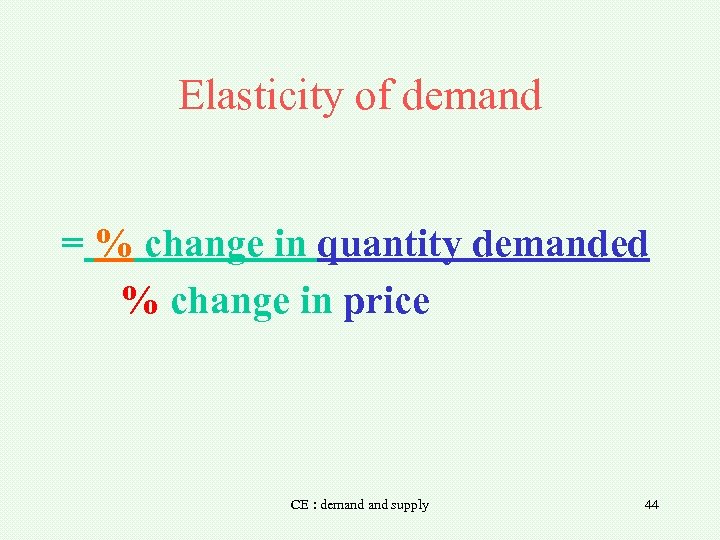
Elasticity of demand = % change in quantity demanded % change in price CE : demand supply 44
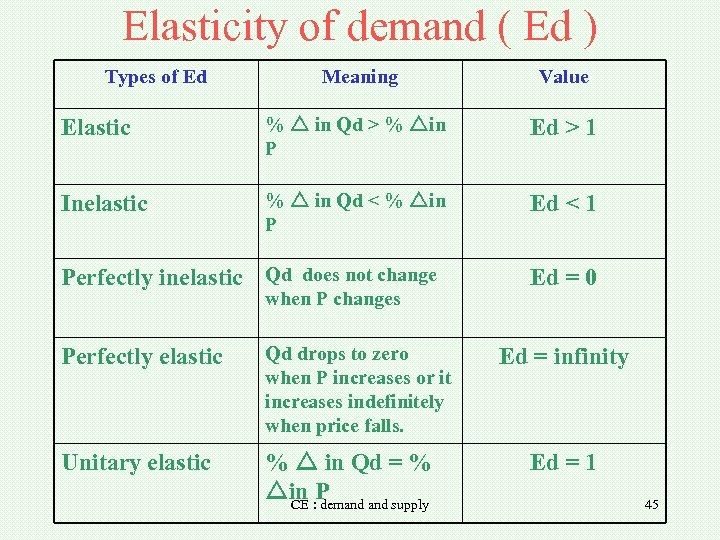
Elasticity of demand ( Ed ) Types of Ed Meaning Value Elastic % in Qd > % in P Ed > 1 Inelastic % in Qd < % in P Ed < 1 Perfectly inelastic Qd does not change when P changes Perfectly elastic Qd drops to zero when P increases or it increases indefinitely when price falls. Unitary elastic % in Qd = % in : P CE demand supply Ed = 0 Ed = infinity Ed = 1 45
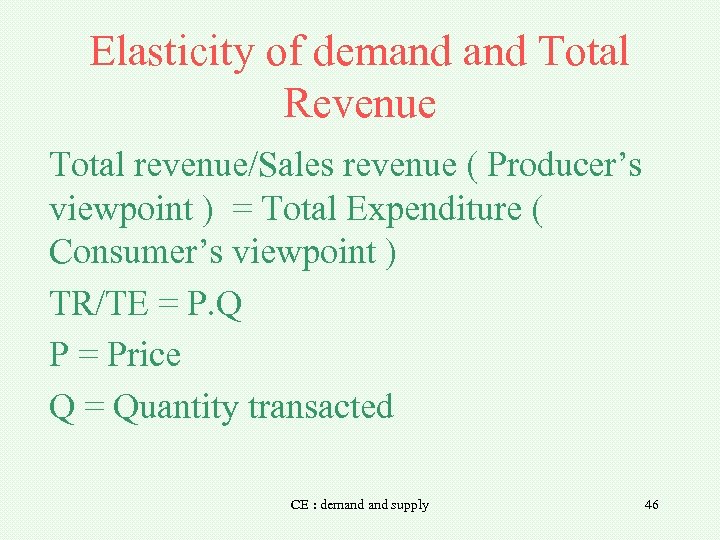
Elasticity of demand Total Revenue Total revenue/Sales revenue ( Producer’s viewpoint ) = Total Expenditure ( Consumer’s viewpoint ) TR/TE = P. Q P = Price Q = Quantity transacted CE : demand supply 46
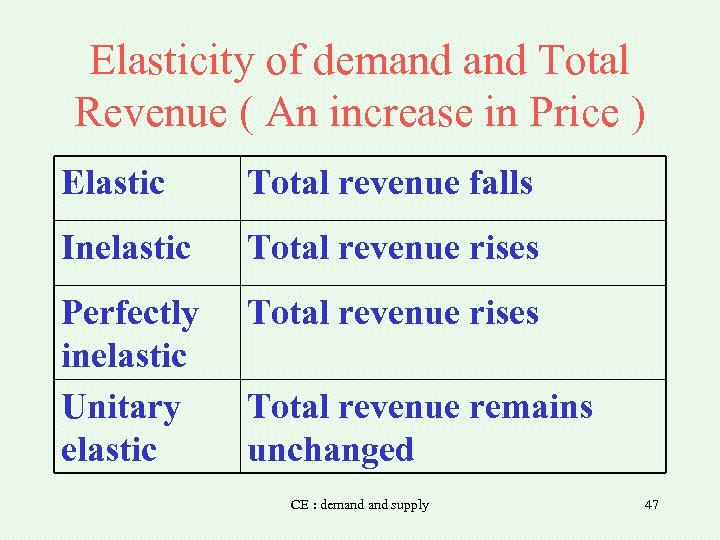
Elasticity of demand Total Revenue ( An increase in Price ) Elastic Total revenue falls Inelastic Total revenue rises Perfectly inelastic Unitary elastic Total revenue rises Total revenue remains unchanged CE : demand supply 47
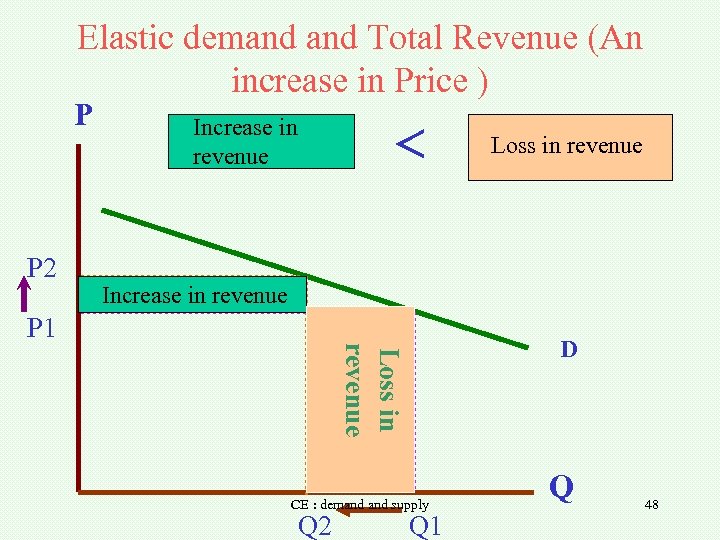
Elastic demand Total Revenue (An increase in Price ) P P 2 Increase in revenue < Loss in revenue Increase in revenue D Loss in revenue P 1 CE : demand supply Q 2 Q 1 Q 48
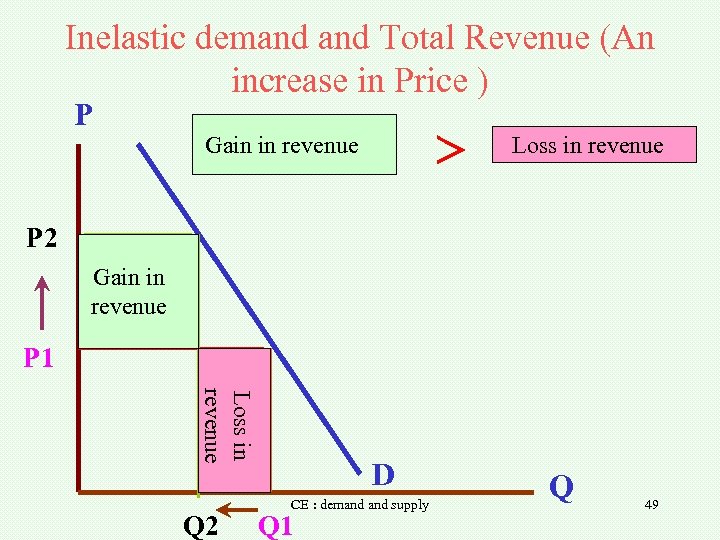
Inelastic demand Total Revenue (An increase in Price ) P > Gain in revenue Loss in revenue P 2 Gain in revenue P 1 Loss in revenue Q 2 D CE : demand supply Q 1 Q 49
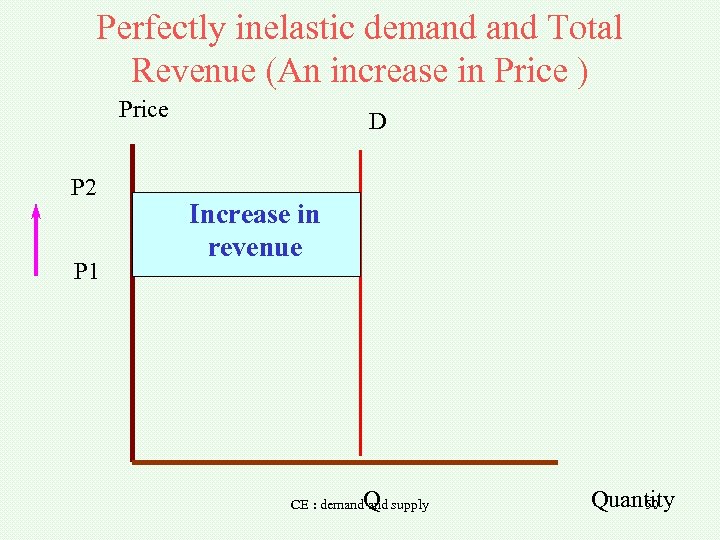
Perfectly inelastic demand Total Revenue (An increase in Price ) Price P 2 P 1 D Increase in revenue Q CE : demand supply Quantity 50
Maximum Price Control ( Price Ceiling ) Price ceiling: the maximum price paid for a good or service Objective: ‘to protect the buyers of a good or service such that they buy at a lower price” Examples: ØRent control ØRental for public housing units ØPrice of public medical services Effective Price ceiling: below the equilibrium price CE : demand supply 51
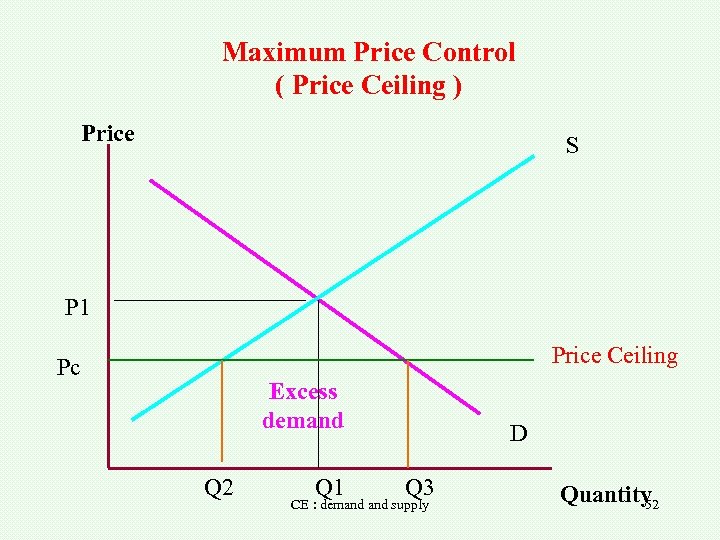
Maximum Price Control ( Price Ceiling ) Price S P 1 Price Ceiling Pc Excess demand Q 2 Q 1 D Q 3 CE : demand supply Quantity 52
Maximum Price Control ( Price Ceiling ) Cont’d Economic consequence: Excess demand v Excess demand: Methods of non-price allocation v v v v First come first served or queuing Drawing lots or lottery Age Gender Intelligence Ability, Speed Black market and etc. CE : demand supply 53
Minimum Price Control ( Price Floor ) Price floor: the minimum price paid for a good or service Objective: ‘to protect the sellers of a good or service” Examples: Øminimum wage paid to foreign domestic helpers in Hong Kong; Øminimum price on agricultural products in Europe Effective Price floor: above the equilibrium price CE : demand supply 54
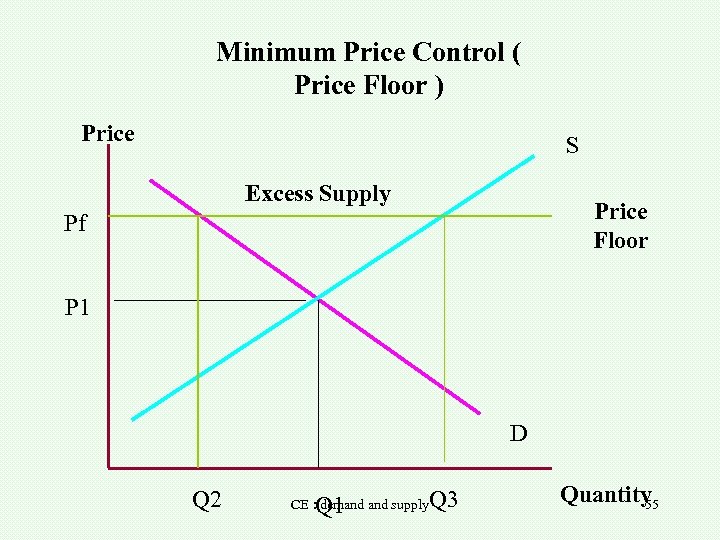
Minimum Price Control ( Price Floor ) Price S Excess Supply Price Floor Pf P 1 D Q 2 Q 1 CE : demand supply Q 3 Quantity 55
Minimum Price Control ( Price Floor ) Cont’d Economic consequence: Excess supply: Øunemployment ( minimum wage ) Øgovernment buys up excess supply of agricultural products CE : demand supply 56
Quota: Setting the maximum quantity of good sold in the market What happens to the supply curve? CE : demand supply 57
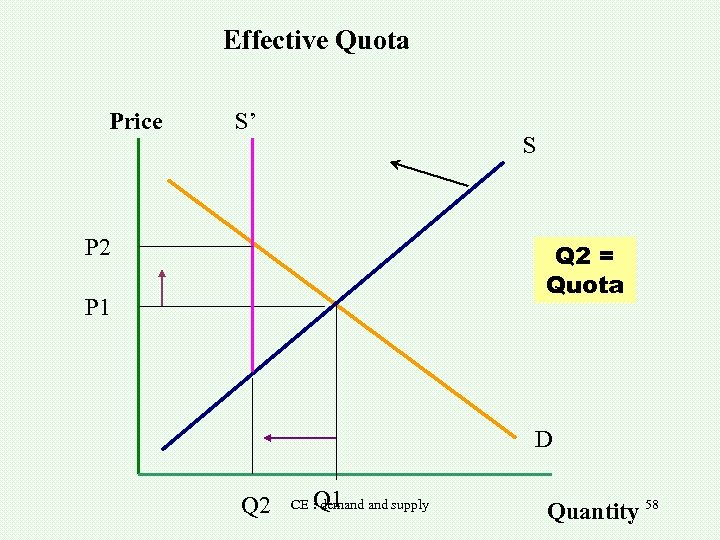
Effective Quota Price S’ S P 2 Q 2 = Quota P 1 D Q 2 Q 1 CE : demand supply Quantity 58
Effective Quota The imposition of an effective quota results in Ø a decrease in quantity transacted; and Ø an increase in price CE : demand supply 59
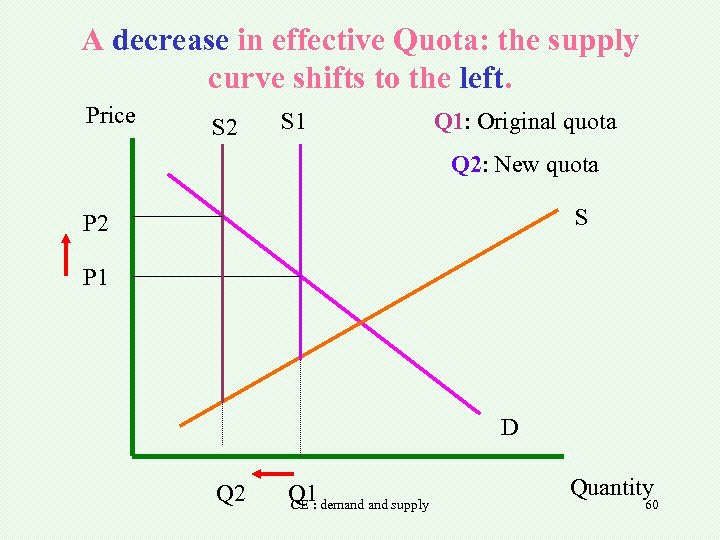
A decrease in effective Quota: the supply curve shifts to the left. Price S 2 S 1 Q 1: Original quota Q 2: New quota S P 2 P 1 D Q 2 Q 1 demand supply CE : Quantity 60
A decrease in effective quota means that the maximum quantity allowed is smaller. So the vertical supply curve shifts to the left. It results in: • a fall in quantity transacted and • a rise in price. CE : demand supply 61
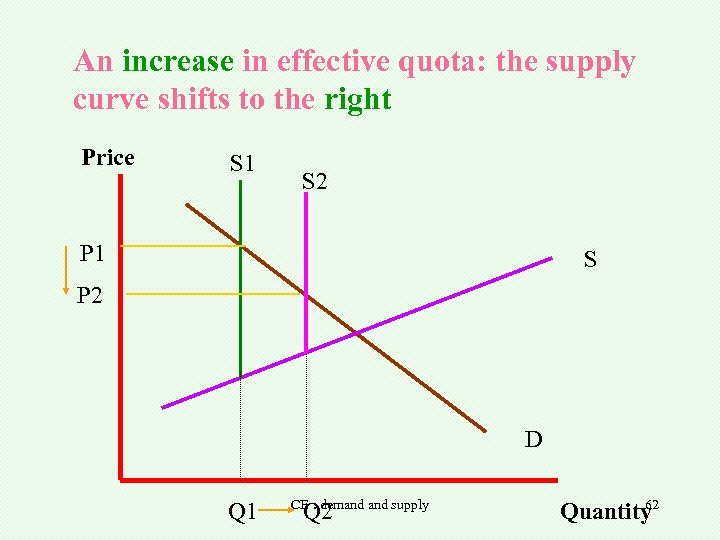
An increase in effective quota: the supply curve shifts to the right Price S 1 S 2 P 1 S P 2 D Q 1 CE : demand supply Q 2 62 Quantity
An increase in effective quota means that the maximum quantity allowed is larger. So the vertical supply curve shifts to the right. It results in: • a rise in quantity transacted and • a fall in price. CE : demand supply 63
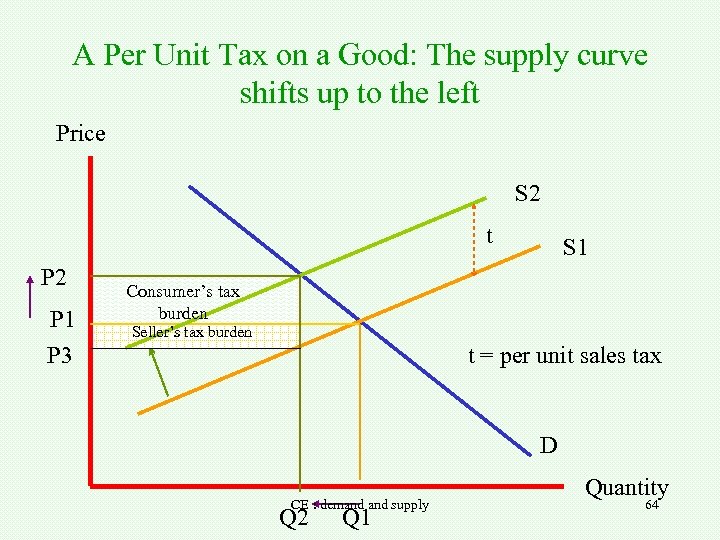
A Per Unit Tax on a Good: The supply curve shifts up to the left Price S 2 t P 2 P 1 P 3 S 1 Consumer’s tax burden Seller’s tax burden t = per unit sales tax D CE : demand supply Q 2 Q 1 Quantity 64
A Per Unit Tax on a Good: Who bears a higher tax burden? The consumers or the sellers ? Draw separate diagrams to show the sharing of the tax burden between the consumers and the sellers when: ØThe demand curve is perfectly price inelastic ØThe demand curve is perfectly price elastic ØThe supply curve is price elastic and ØThe supply curve is price inelastic. CE : demand supply 65
Consumer’s tax burden is larger if • The demand for the good is price inelastic • The supply of the good is price elastic CE : demand supply 66
Seller’s tax burden is larger if • The demand for the • The supply of the good is price elastic good is price inelastic CE : demand supply 67
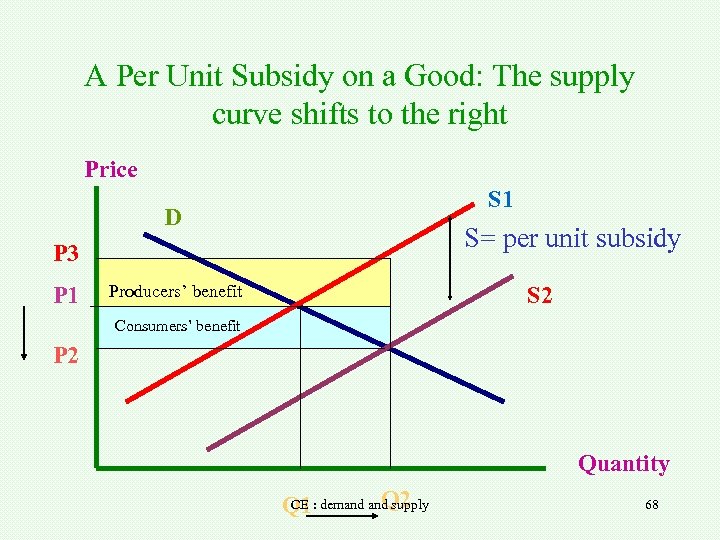
A Per Unit Subsidy on a Good: The supply curve shifts to the right Price S 1 D S= per unit subsidy P 3 P 1 Producers’ benefit S 2 Consumers’ benefit P 2 Quantity Q 2 CE Q 1: demand supply 68
Скачать презентацию Demand Demand desire want plan and ability to buy
6e812720b523395f2f62f4f1e6ef527f.ppt