


 Скачать презентацию DEMAND ANALYSIS n Demand Relationships n The Price
6bb44a98b473b0bc1224d4850e8e4762.ppt
- Количество слайдов: 49
 DEMAND ANALYSIS n Demand Relationships n The Price Elasticity of Demand n Arc and point price elasticity n Elasticity and revenue relationships n Why some products are inelastic and others are elastic n Income Elasticities n Cross Elasticities of Demand n Combined Effects of Elasticities
 Health Care & Cigarettes n Raising cigarette taxes reduces smoking n In Canada, over $4 for a pack of cigarettes reduced smoking 38% in a decade n But cigarette taxes also helps fund health care initiatives n The issue then, should we find a tax rate that maximizes tax revenues? n Or a tax rate that reduces smoking?
 Demand Analysis n An important contributor to firm risk arises from sudden shifts in demand for the product or service. n Demand analysis serves two managerial objectives: (1) it provides the insights necessary for effective management of demand, and (2) it aids in forecasting sales and revenues.
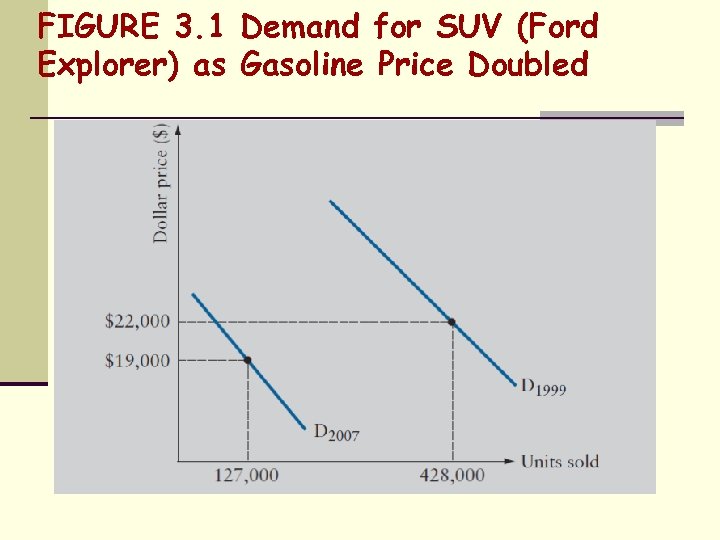 FIGURE 3. 1 Demand for SUV (Ford Explorer) as Gasoline Price Doubled
 Downward Slope to the Demand Curve n Economists presume consumers are maximizing their utility n This is used to derive a demand curve from utility maximization nincome effect -- as the price of a good declines, the consumer can purchase more of all goods since his or her real income increased. So as the price falls, we typically buy more.
 Downward Slope to the Demand Curve nsubstitution effect -- as the price declines, the good becomes relatively cheaper. A rational consumer maximizes satisfaction by reorganizing consumption until the marginal utility in each good per dollar is equal. We buy more.
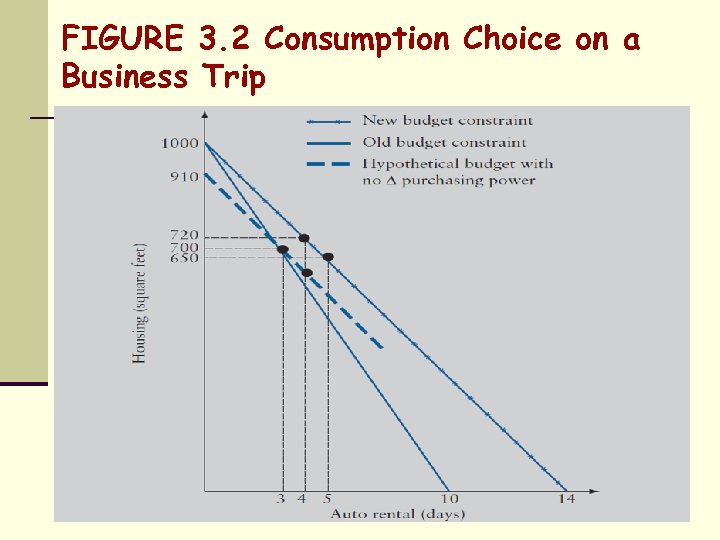 FIGURE 3. 2 Consumption Choice on a Business Trip
 Downward Slope to the Demand Curve ntargeting, switching, and positioning – marketing efforts such as loyalty programs affect demand.
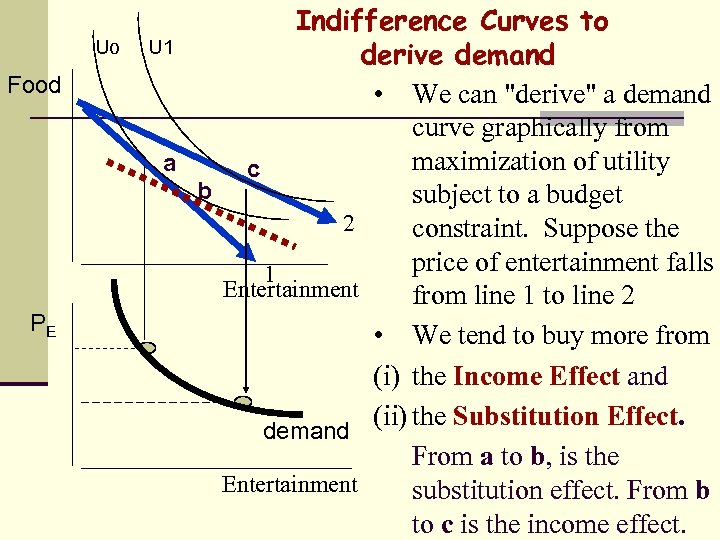 Uo Food PE Indifference Curves to U 1 derive demand • We can "derive" a demand curve graphically from maximization of utility a c b subject to a budget 2 constraint. Suppose the price of entertainment falls 1 Entertainment from line 1 to line 2 • We tend to buy more from (i) the Income Effect and (ii) the Substitution Effect. demand From a to b, is the Entertainment substitution effect. From b to c is the income effect.
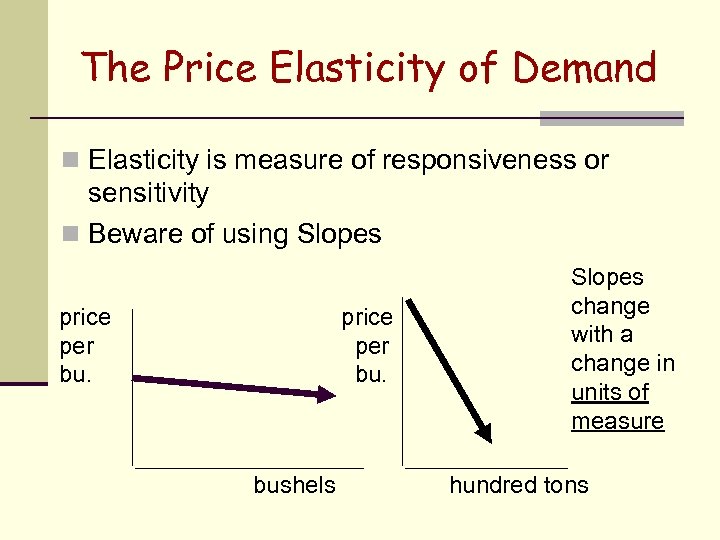 The Price Elasticity of Demand n Elasticity is measure of responsiveness or sensitivity n Beware of using Slopes price per bu. bushels Slopes change with a change in units of measure hundred tons
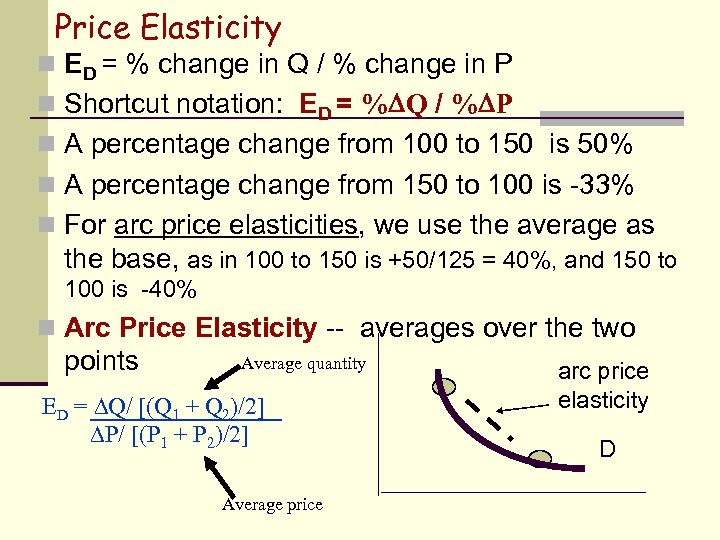 Price Elasticity n ED = % change in Q / % change in P n Shortcut notation: ED = % Q / % P n A percentage change from 100 to 150 is 50% n A percentage change from 150 to 100 is -33% n For arc price elasticities, we use the average as the base, as in 100 to 150 is +50/125 = 40%, and 150 to 100 is -40% n Arc Price Elasticity -- averages over the two points Average quantity ED = Q/ [(Q 1 + Q 2)/2] P/ [(P 1 + P 2)/2] Average price arc price elasticity D
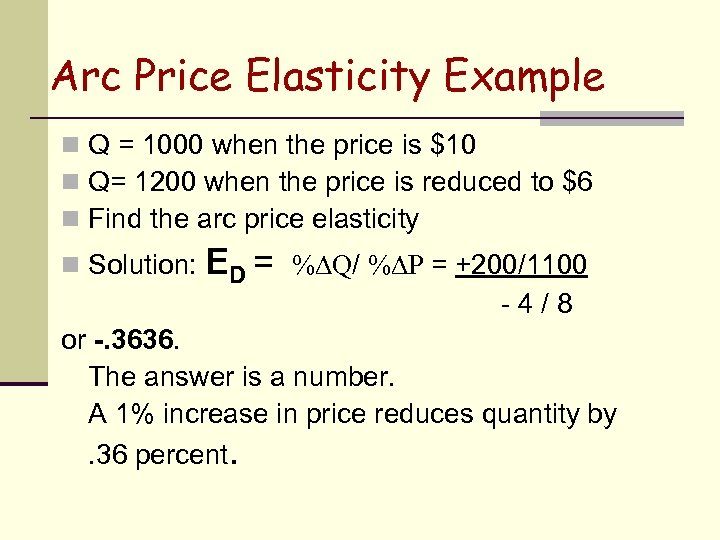 Arc Price Elasticity Example n Q = 1000 when the price is $10 n Q= 1200 when the price is reduced to $6 n Find the arc price elasticity n Solution: ED = % Q/ % P = +200/1100 -4/8 or -. 3636. The answer is a number. A 1% increase in price reduces quantity by. 36 percent.
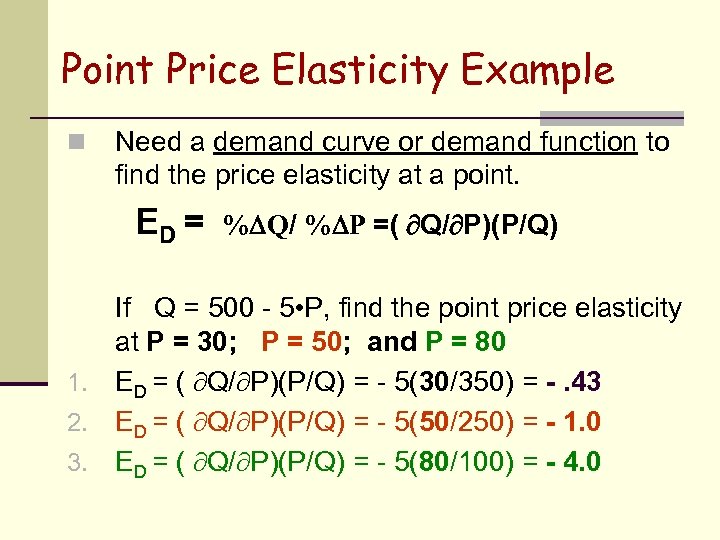 Point Price Elasticity Example n Need a demand curve or demand function to find the price elasticity at a point. ED = % Q/ % P =( Q/ P)(P/Q) If Q = 500 - 5 • P, find the point price elasticity at P = 30; P = 50; and P = 80 1. ED = ( Q/ P)(P/Q) = - 5(30/350) = -. 43 2. ED = ( Q/ P)(P/Q) = - 5(50/250) = - 1. 0 3. ED = ( Q/ P)(P/Q) = - 5(80/100) = - 4. 0
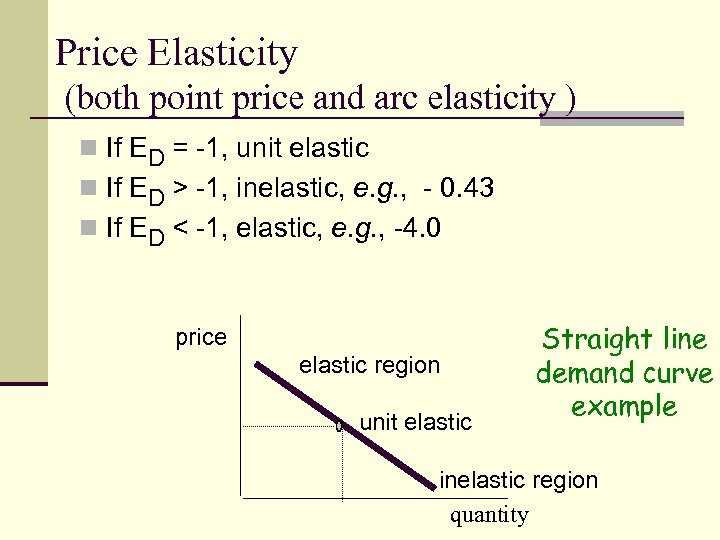 Price Elasticity (both point price and arc elasticity ) n If ED = -1, unit elastic n If ED > -1, inelastic, e. g. , - 0. 43 n If ED < -1, elastic, e. g. , -4. 0 price elastic region unit elastic Straight line demand curve example inelastic region quantity
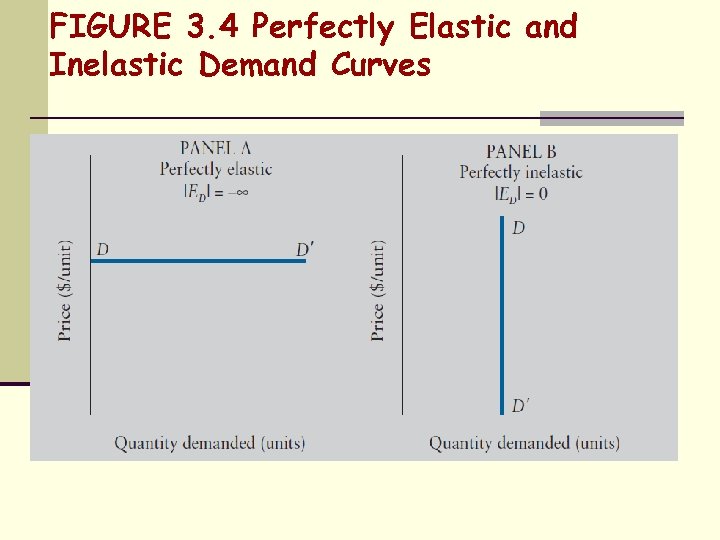 FIGURE 3. 4 Perfectly Elastic and Inelastic Demand Curves
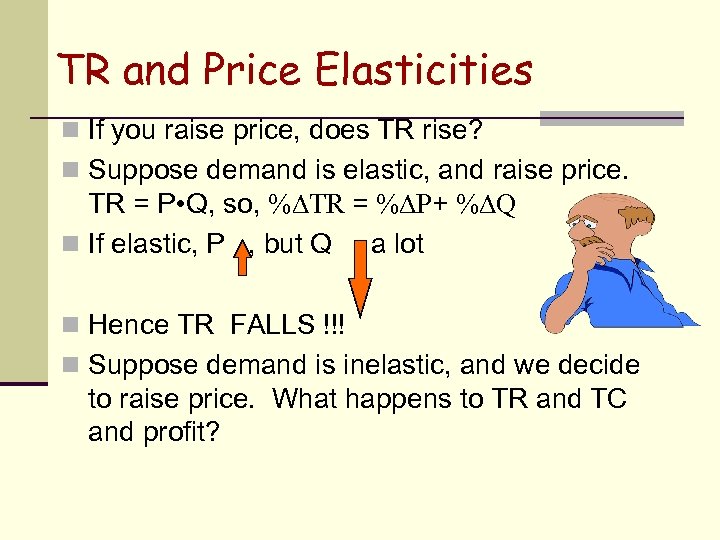 TR and Price Elasticities n If you raise price, does TR rise? n Suppose demand is elastic, and raise price. TR = P • Q, so, % TR = % P+ % Q n If elastic, P , but Q a lot n Hence TR FALLS !!! n Suppose demand is inelastic, and we decide to raise price. What happens to TR and TC and profit?
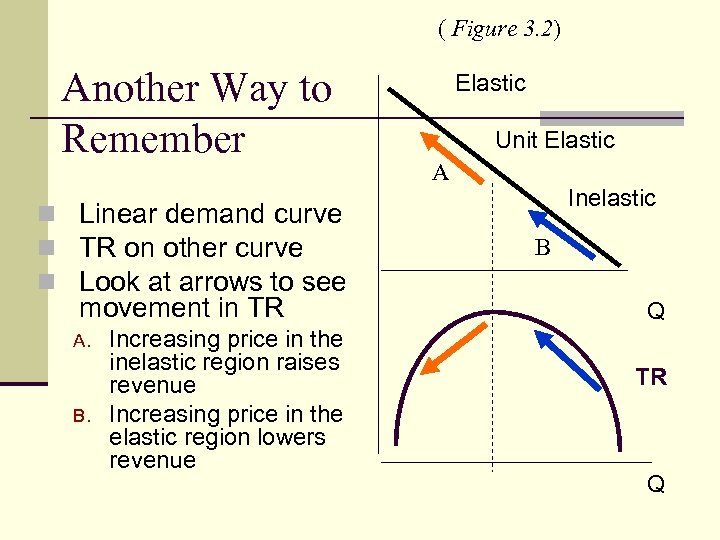 ( Figure 3. 2) Another Way to Remember n Linear demand curve n TR on other curve n Look at arrows to see movement in TR A. B. Increasing price in the inelastic region raises revenue Increasing price in the elastic region lowers revenue Elastic Unit Elastic A Inelastic B Q TR Q
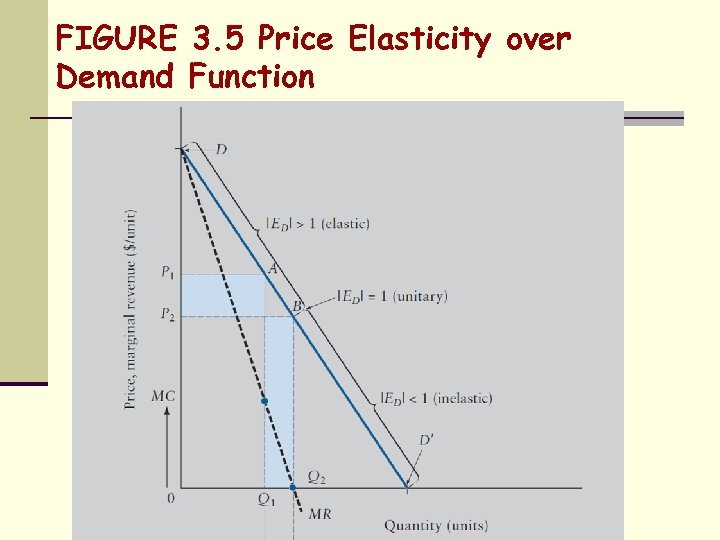 FIGURE 3. 5 Price Elasticity over Demand Function
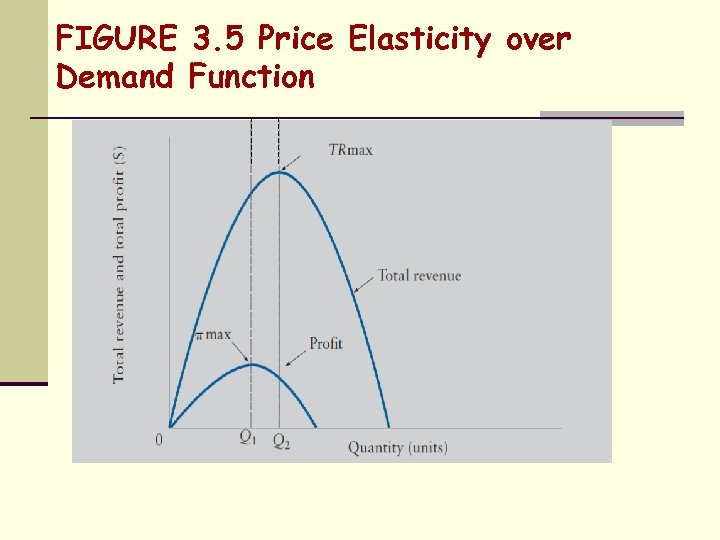 FIGURE 3. 5 Price Elasticity over Demand Function
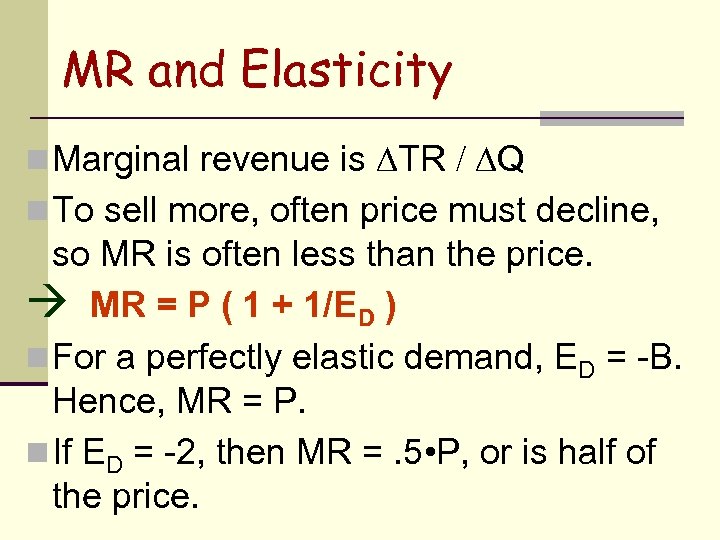 MR and Elasticity n Marginal revenue is TR / Q n To sell more, often price must decline, so MR is often less than the price. à MR = P ( 1 + 1/ED ) n For a perfectly elastic demand, ED = -B. Hence, MR = P. n If ED = -2, then MR =. 5 • P, or is half of the price.
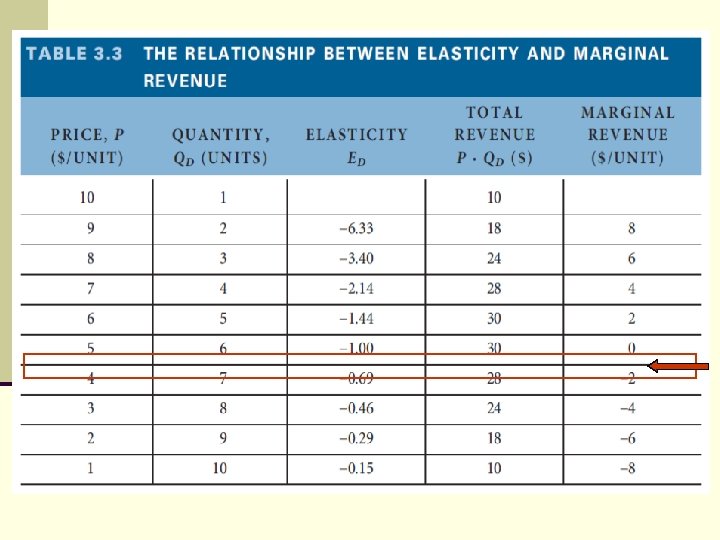
 1979 Deregulation of Airfares n Prices declined after deregulation n And passengers increased n Also total revenue increased n What does this imply about the price elasticity of air travel? n It must be that air travel was elastic, as a price decrease after deregulation led to greater total revenue for the airlines.
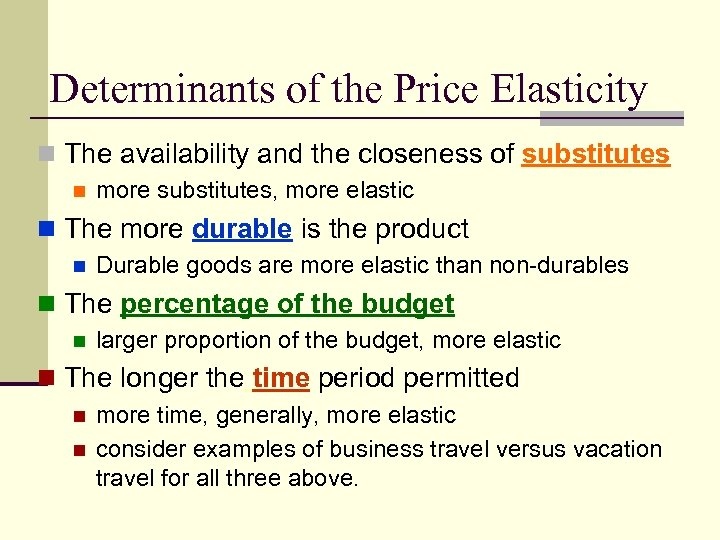 Determinants of the Price Elasticity n The availability and the closeness of substitutes n more substitutes, more elastic n The more durable is the product n Durable goods are more elastic than non-durables n The percentage of the budget n larger proportion of the budget, more elastic n The longer the time period permitted n n more time, generally, more elastic consider examples of business travel versus vacation travel for all three above.
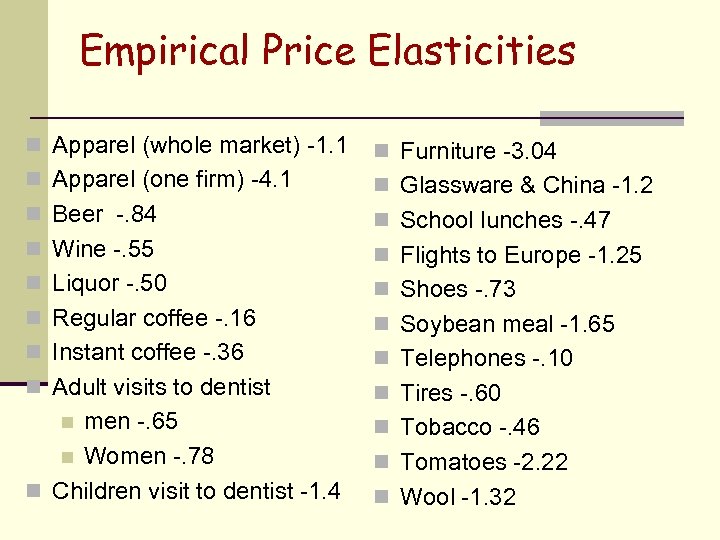 Empirical Price Elasticities n Apparel (whole market) -1. 1 n Furniture -3. 04 n Apparel (one firm) -4. 1 n Glassware & China -1. 2 n Beer -. 84 n School lunches -. 47 n Wine -. 55 n Flights to Europe -1. 25 n Liquor -. 50 n Shoes -. 73 n Regular coffee -. 16 n Soybean meal -1. 65 n Instant coffee -. 36 n Telephones -. 10 n Adult visits to dentist n Tires -. 60 men -. 65 n Women -. 78 n Children visit to dentist -1. 4 n Tobacco -. 46 n n Tomatoes -2. 22 n Wool -1. 32
 Free Trade and Price Elasticities n NAFTA (North American Free Trade Agreement) and Europe having a common currency in the Euro are examples of greater freedom in trade n What does that do to price elasticities? n With more substitutes, we expect that products become More Elastic n Consumers gain as firms are less able to raise their prices, but firm face stiffer competition
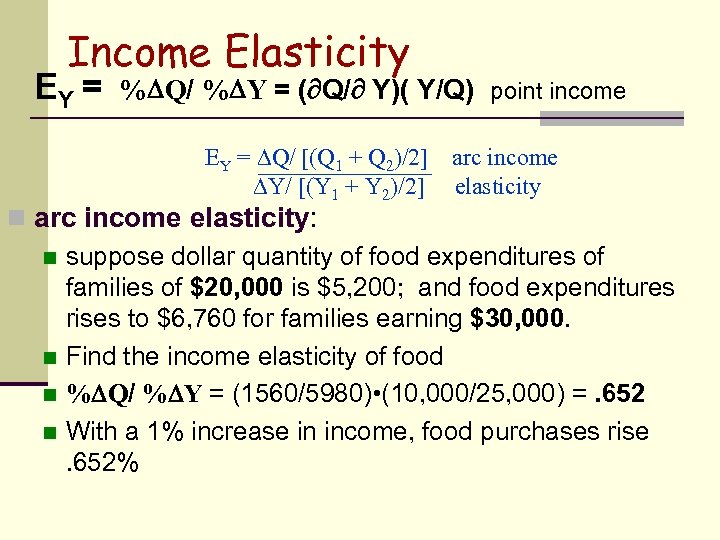 Income Elasticity EY = % Q/ % Y = ( Q/ Y)( Y/Q) point income EY = Q/ [(Q 1 + Q 2)/2] arc income Y/ [(Y 1 + Y 2)/2] elasticity n arc income elasticity: n suppose dollar quantity of food expenditures of families of $20, 000 is $5, 200; and food expenditures rises to $6, 760 for families earning $30, 000. n Find the income elasticity of food n % Q/ % Y = (1560/5980) • (10, 000/25, 000) =. 652 n With a 1% increase in income, food purchases rise. 652%
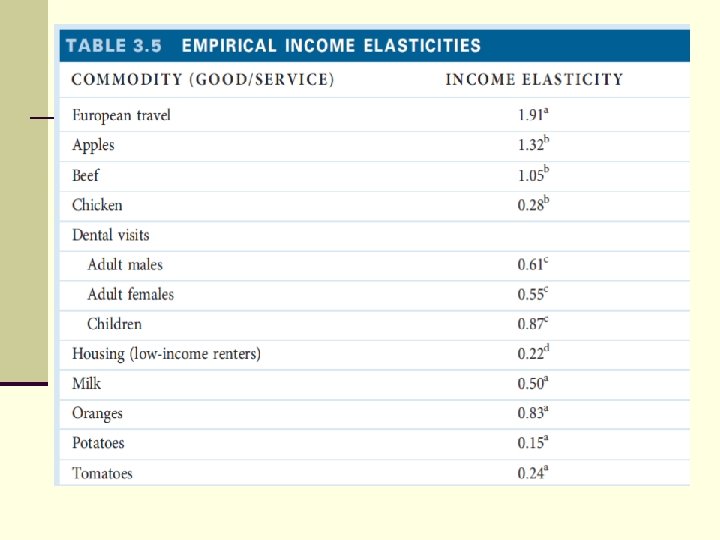
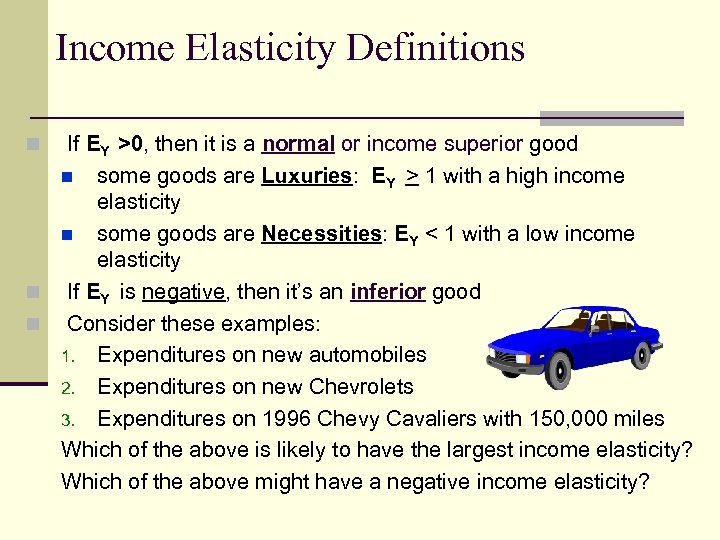 Income Elasticity Definitions If EY >0, then it is a normal or income superior good n some goods are Luxuries: EY > 1 with a high income elasticity n some goods are Necessities: EY < 1 with a low income elasticity n If EY is negative, then it’s an inferior good n Consider these examples: 1. Expenditures on new automobiles 2. Expenditures on new Chevrolets 3. Expenditures on 1996 Chevy Cavaliers with 150, 000 miles Which of the above is likely to have the largest income elasticity? Which of the above might have a negative income elasticity? n
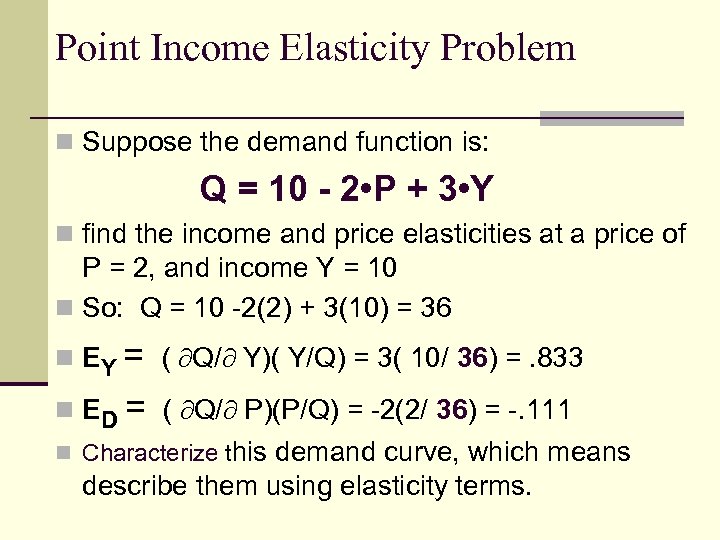 Point Income Elasticity Problem n Suppose the demand function is: Q = 10 - 2 • P + 3 • Y n find the income and price elasticities at a price of P = 2, and income Y = 10 n So: Q = 10 -2(2) + 3(10) = 36 n EY = ( Q/ Y)( Y/Q) = 3( 10/ 36) =. 833 n ED = ( Q/ P)(P/Q) = -2(2/ 36) = -. 111 n Characterize this demand curve, which means describe them using elasticity terms.
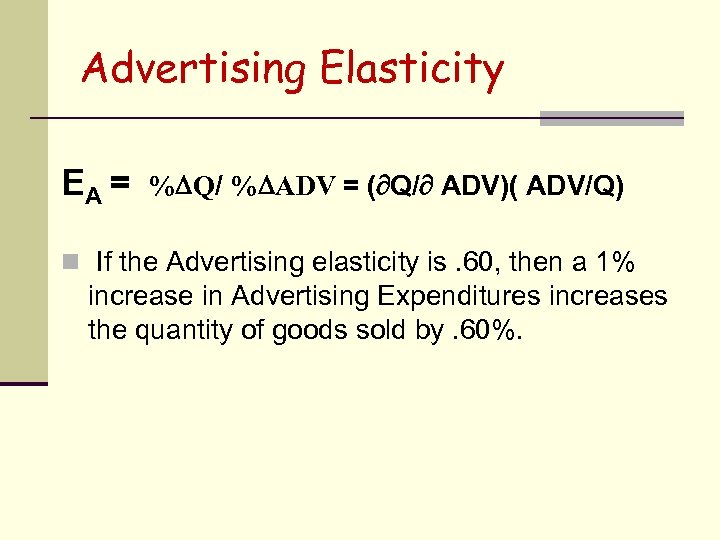 Advertising Elasticity EA = % Q/ % ADV = ( Q/ ADV)( ADV/Q) n If the Advertising elasticity is. 60, then a 1% increase in Advertising Expenditures increases the quantity of goods sold by. 60%.
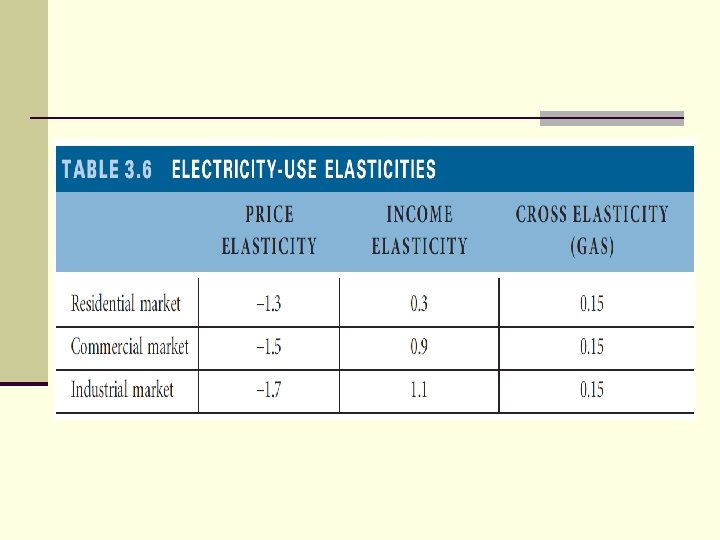
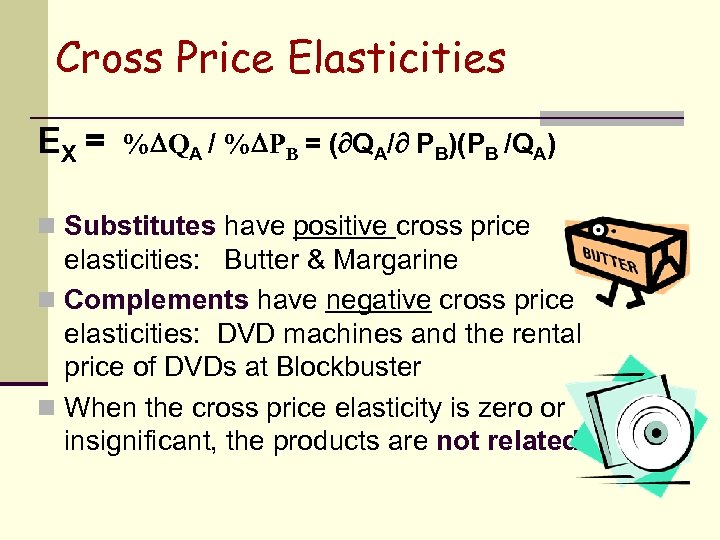 Cross Price Elasticities EX = % QA / % PB = ( QA/ PB)(PB /QA) n Substitutes have positive cross price elasticities: Butter & Margarine n Complements have negative cross price elasticities: DVD machines and the rental price of DVDs at Blockbuster n When the cross price elasticity is zero or insignificant, the products are not related
 Antitrust & Cross Price Elasticities n Whether a product is a monopoly or in a larger industry is dependent on the closeness of the substitutes n Du. Pont’s cellophane was at first viewed as a monopoly. Economists showed that the cross price elasticity with other products such as aluminum foil, waxed paper, and other flexible wrapping paper was Positive, the large, Du. Pont showed its cellophane was not a monopoly in this larger market.
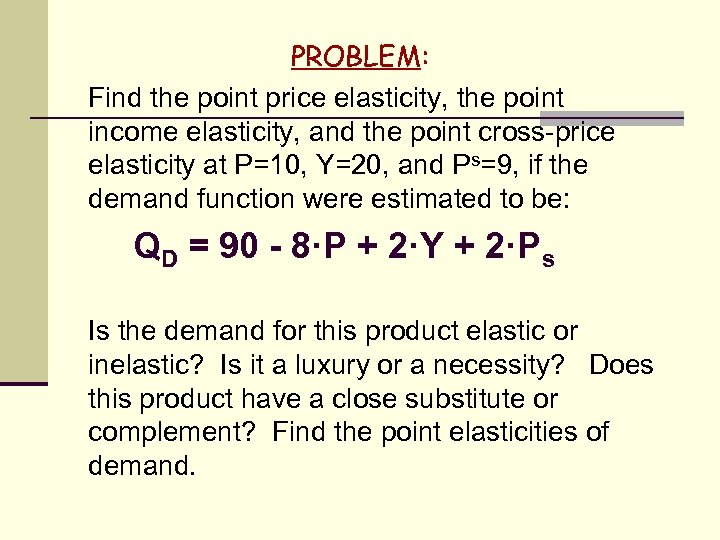 PROBLEM: Find the point price elasticity, the point income elasticity, and the point cross-price elasticity at P=10, Y=20, and Ps=9, if the demand function were estimated to be: QD = 90 - 8·P + 2·Y + 2·Ps Is the demand for this product elastic or inelastic? Is it a luxury or a necessity? Does this product have a close substitute or complement? Find the point elasticities of demand.
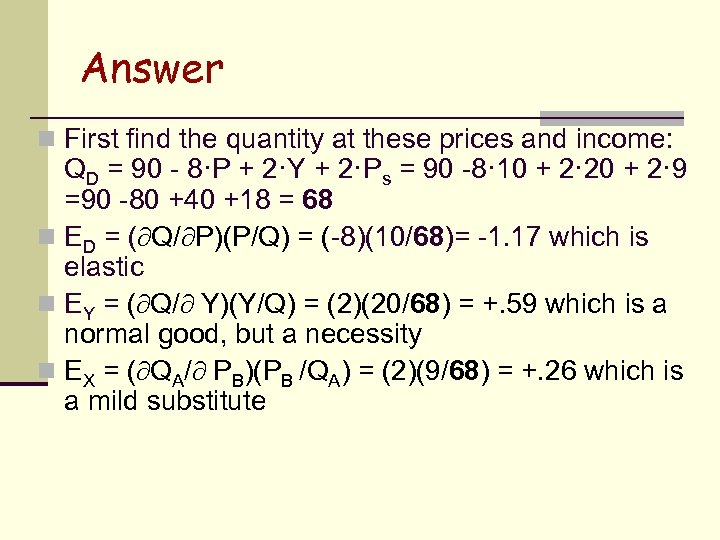 Answer n First find the quantity at these prices and income: QD = 90 - 8·P + 2·Y + 2·Ps = 90 -8· 10 + 2· 20 + 2· 9 =90 -80 +40 +18 = 68 n ED = ( Q/ P)(P/Q) = (-8)(10/68)= -1. 17 which is elastic n EY = ( Q/ Y)(Y/Q) = (2)(20/68) = +. 59 which is a normal good, but a necessity n EX = ( QA/ PB)(PB /QA) = (2)(9/68) = +. 26 which is a mild substitute
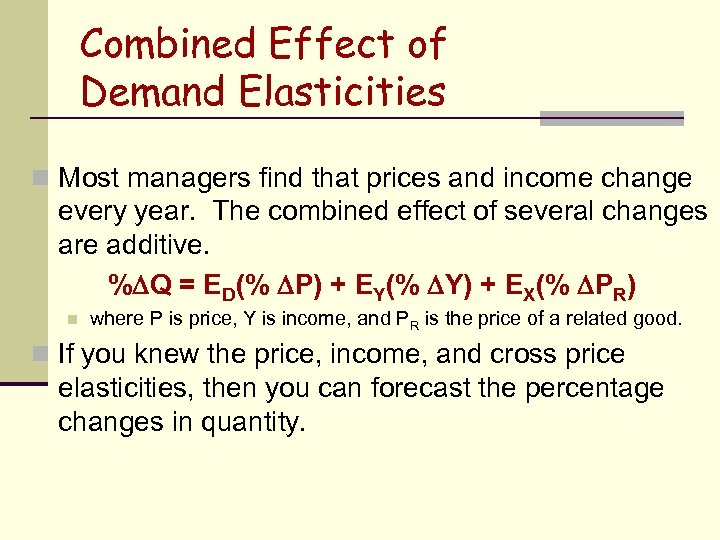 Combined Effect of Demand Elasticities n Most managers find that prices and income change every year. The combined effect of several changes are additive. % Q = ED(% P) + EY(% Y) + EX(% PR) n where P is price, Y is income, and PR is the price of a related good. n If you knew the price, income, and cross price elasticities, then you can forecast the percentage changes in quantity.
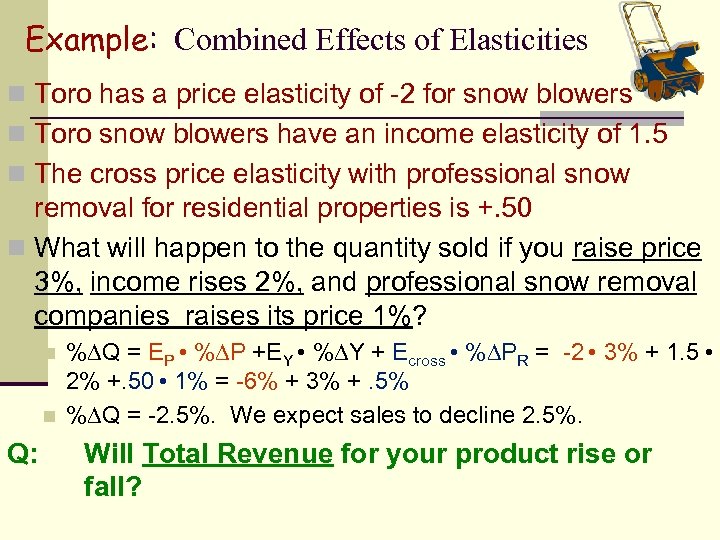 Example: Combined Effects of Elasticities n Toro has a price elasticity of -2 for snow blowers n Toro snow blowers have an income elasticity of 1. 5 n The cross price elasticity with professional snow removal for residential properties is +. 50 n What will happen to the quantity sold if you raise price 3%, income rises 2%, and professional snow removal companies raises its price 1%? n n Q: % Q = EP • % P +EY • % Y + Ecross • % PR = -2 • 3% + 1. 5 • 2% +. 50 • 1% = -6% + 3% +. 5% % Q = -2. 5%. We expect sales to decline 2. 5%. Will Total Revenue for your product rise or fall?
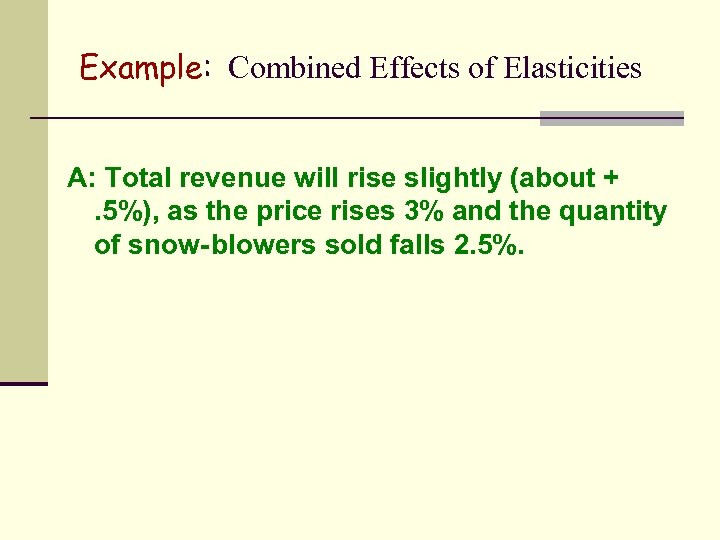 Example: Combined Effects of Elasticities A: Total revenue will rise slightly (about +. 5%), as the price rises 3% and the quantity of snow-blowers sold falls 2. 5%.
 Optimization Techniques
 Economic Optimization Process n Optimal Decisions n Best decision helps achieve objectives most efficiently. n Maximizing the Value of the Firm n Value maximization requires serving customers efficiently. n n What do customers want? How can customers best be served?
 Expressing Economic Relations n Tables and Equations n Simple graphs and tables are useful. n Complex relations require equations. n Total, Average, and Marginal Relations n Total increases when marginal is positive.
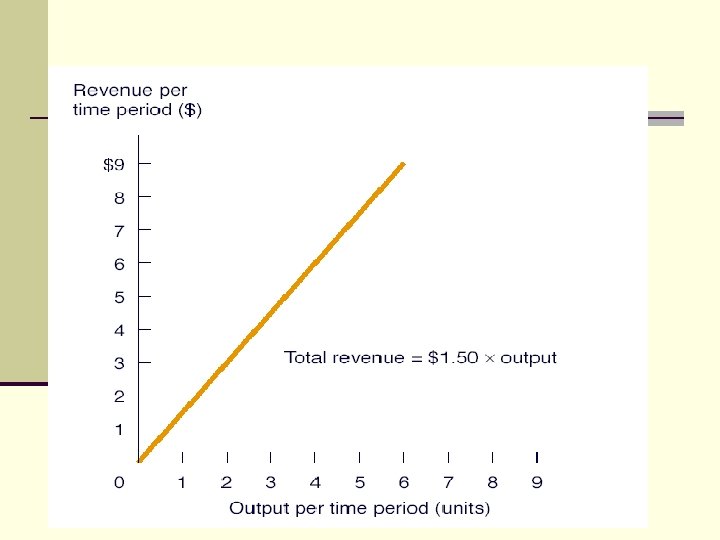 Revenue per time period ($) $9 8 7 6 5 4 3 Total revenue = $1. 50 ´ output 2 1 0 123456789 Output per time period (units)
 Maximization Occurs when Marginal Switches from Positive to Negative. n If marginal is above average, average is rising. n If marginal is below average, average is falling. n Graphing Total, Marginal, and Average Relations Deriving Totals from Marginal and Average Curves n Total is sum of marginal. n
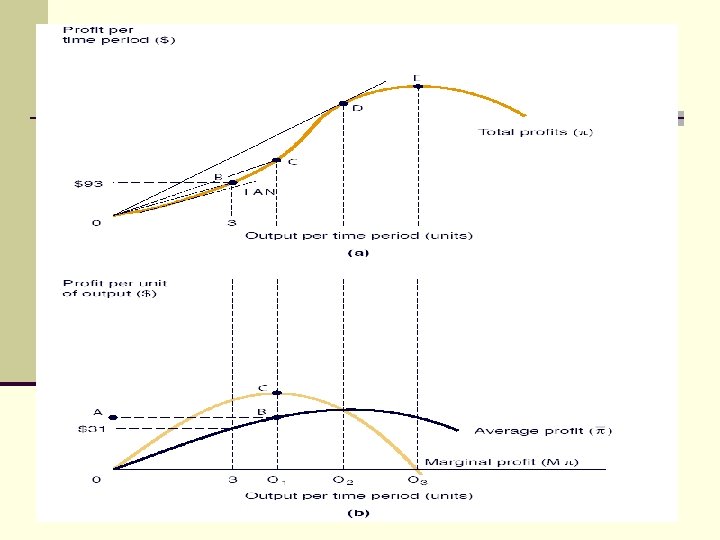
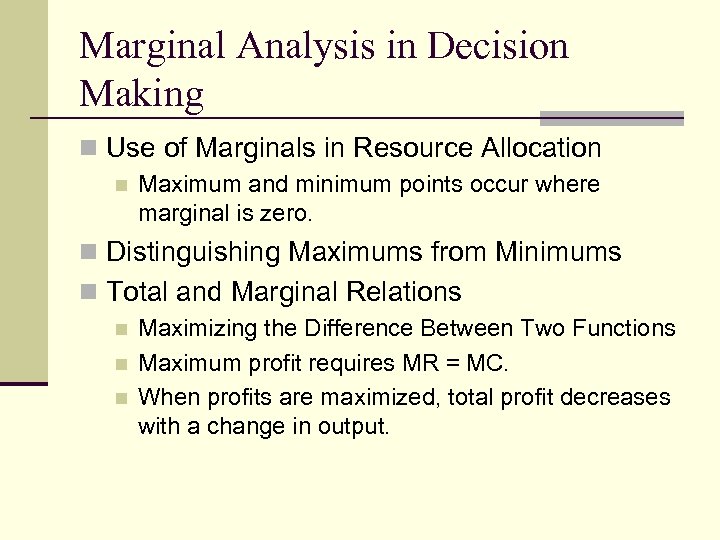 Marginal Analysis in Decision Making n Use of Marginals in Resource Allocation n Maximum and minimum points occur where marginal is zero. n Distinguishing Maximums from Minimums n Total and Marginal Relations n n n Maximizing the Difference Between Two Functions Maximum profit requires MR = MC. When profits are maximized, total profit decreases with a change in output.
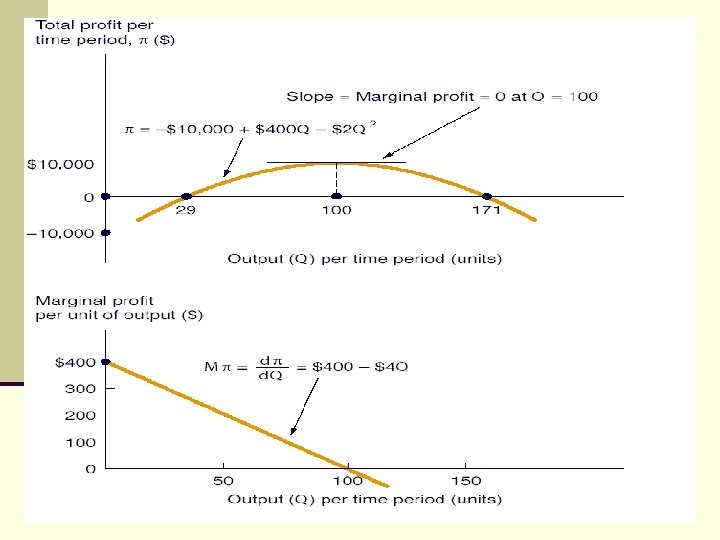
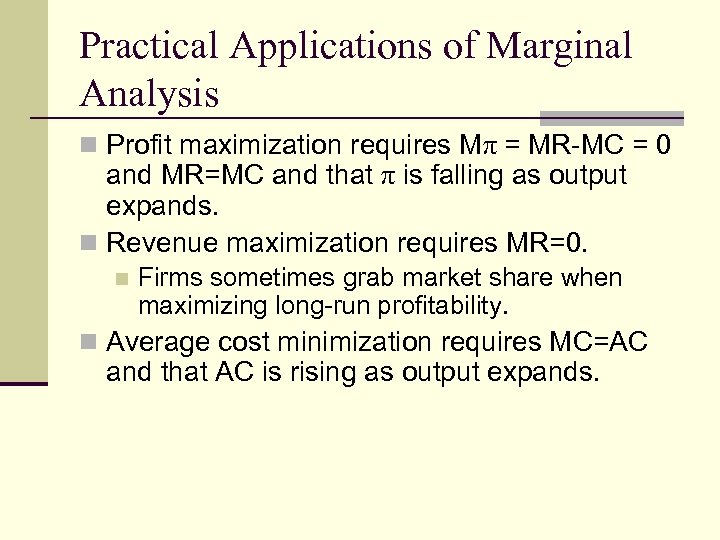 Practical Applications of Marginal Analysis n Profit maximization requires Mπ = MR-MC = 0 and MR=MC and that π is falling as output expands. n Revenue maximization requires MR=0. n Firms sometimes grab market share when maximizing long-run profitability. n Average cost minimization requires MC=AC and that AC is rising as output expands.
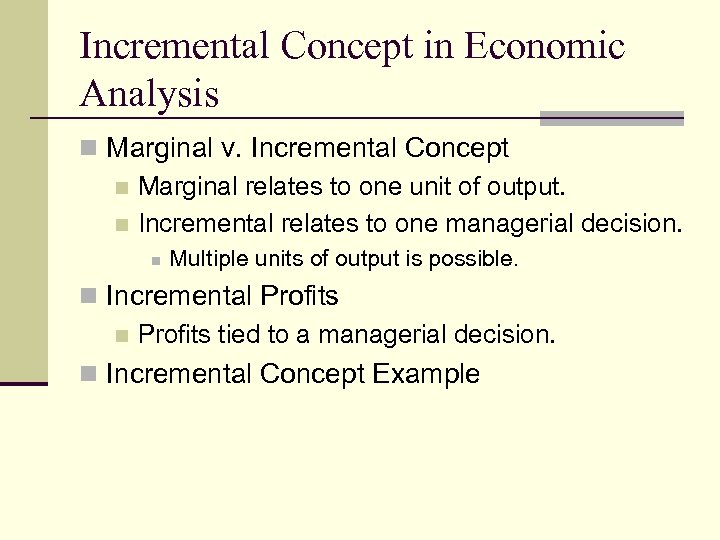 Incremental Concept in Economic Analysis n Marginal v. Incremental Concept n Marginal relates to one unit of output. n Incremental relates to one managerial decision. n Multiple units of output is possible. n Incremental Profits n Profits tied to a managerial decision. n Incremental Concept Example