


 Скачать презентацию Delivery of Rural Services NEPAL Namaste 1
f80fc1825ae3e1142081a483ab7f2e8a.ppt
- Количество слайдов: 33
 Delivery of Rural Services NEPAL Namaste ! 1
 Why Nepal rural services? • Limited ec. and social progress • Due to adverse physical constraints and communications difficulties, but also political instability and flawed policies --- > Ineffective inst. arrangements • Half population is poor, mostly rural • Services not provided to rural poor --- > Hence the focus of the study 2
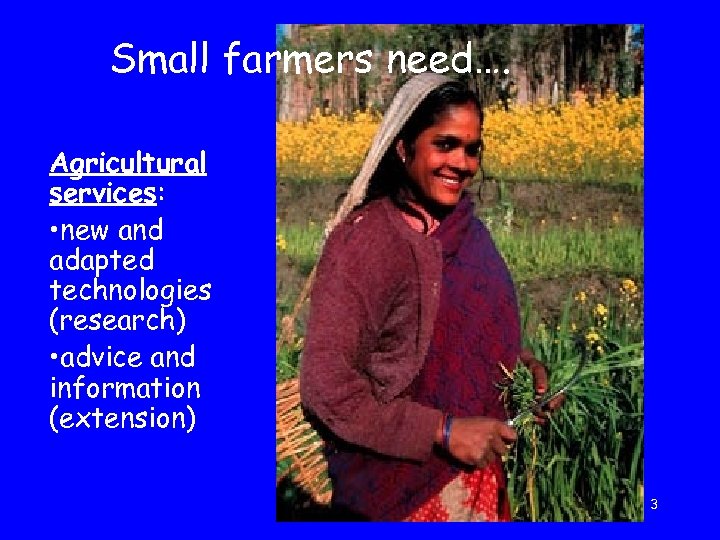 Small farmers need…. Agricultural services: • new and adapted technologies (research) • advice and information (extension) 3
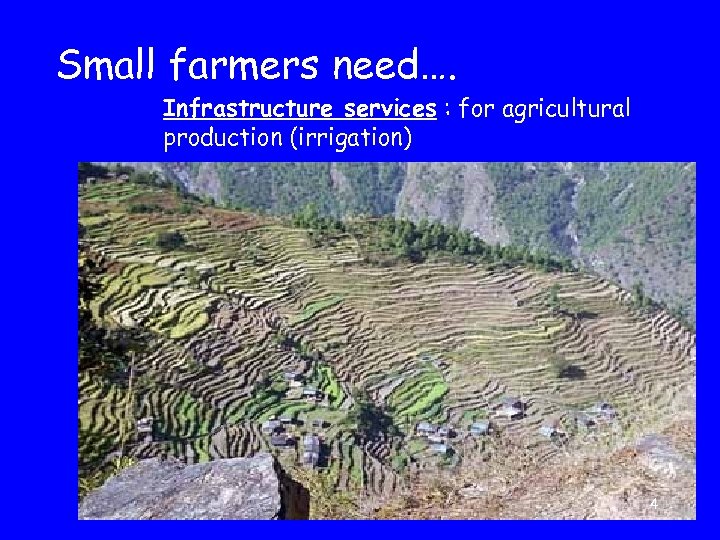 Small farmers need…. Infrastructure services : for agricultural production (irrigation) 4
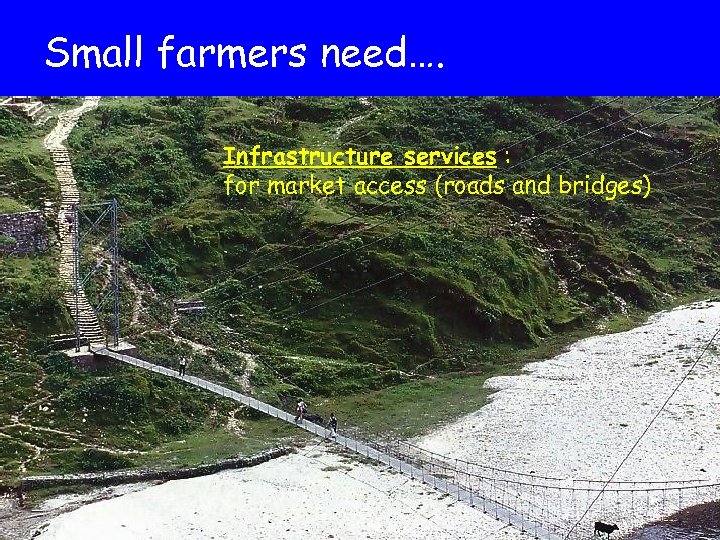 Small farmers need…. Infrastructure services : for market access (roads and bridges) 5
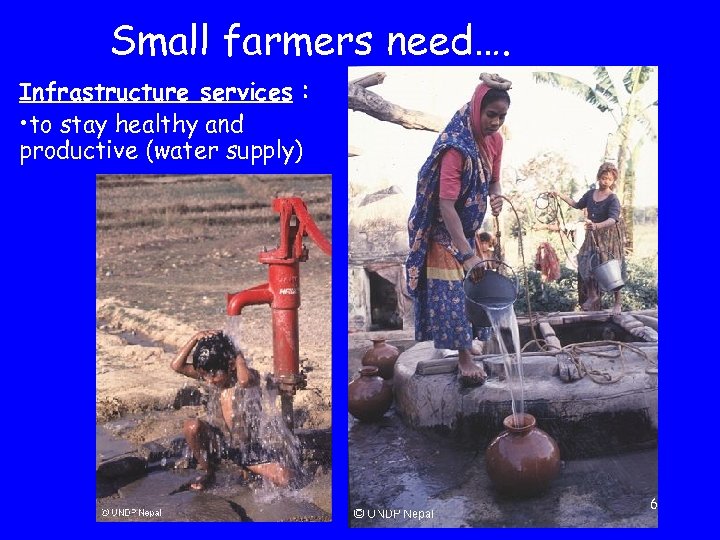 Small farmers need…. Infrastructure services : • to stay healthy and productive (water supply) 6
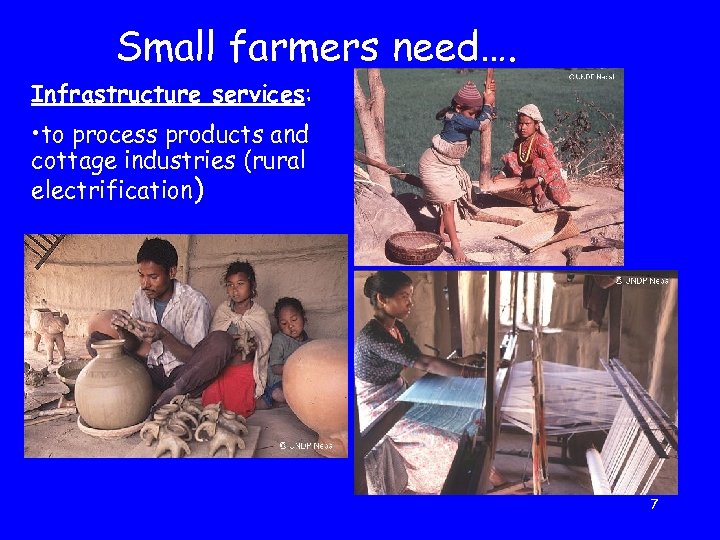 Small farmers need…. Infrastructure services: • to process products and cottage industries (rural electrification) 7
 Small farmers need. . . • Above priority sub-sectors are the focus of the study • Prepared 1999/2000 with a Nepali NGO (SAPPROS) • Focus on the Tarai region of Nepal • Under oversight of National Planning Commission • Recommendations were shared/discussed in both national and local level workshops • Donor community was involved 8
 Hypothesis/Objectives Hypothesis • service delivery works better when people are empowered Objectives • establish institutional features of best performing models (underlying correlation between efficiency vs. degree of participation) • determine policy conditions for models to work and be upscaled 9
 Conceptual framework • Provisioning and production of services • Polycentricity, co-production and competition • Public vs. private services • Subsidiarity • Social capital development 10
 Methodology • Case study approach: sample of 60 purposely selected case-studies • Define and classify services • Identify delivery actors and steps • Develop generic models • Assess performance (efficiency and process=farmer participation) 11
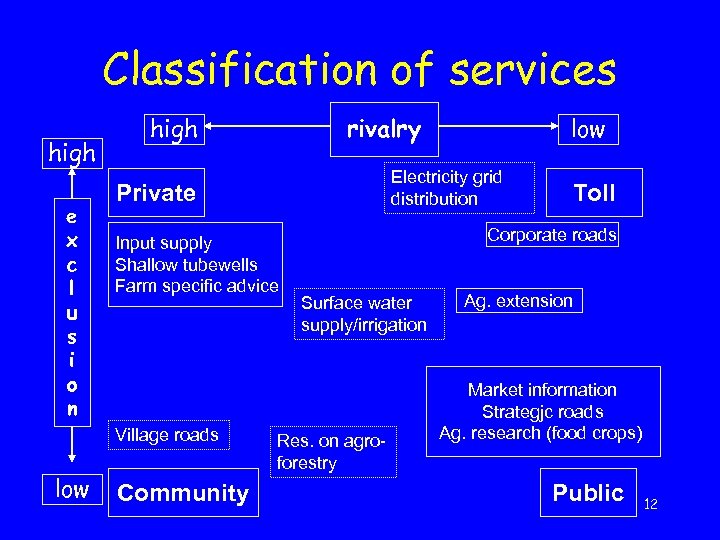 Classification of services high e x c l u s i o n high Input supply Shallow tubewells Farm specific advice Community low Electricity grid distribution Private Village roads low rivalry Toll Corporate roads Surface water supply/irrigation Res. on agroforestry Ag. extension Market information Strategjc roads Ag. research (food crops) Public 12
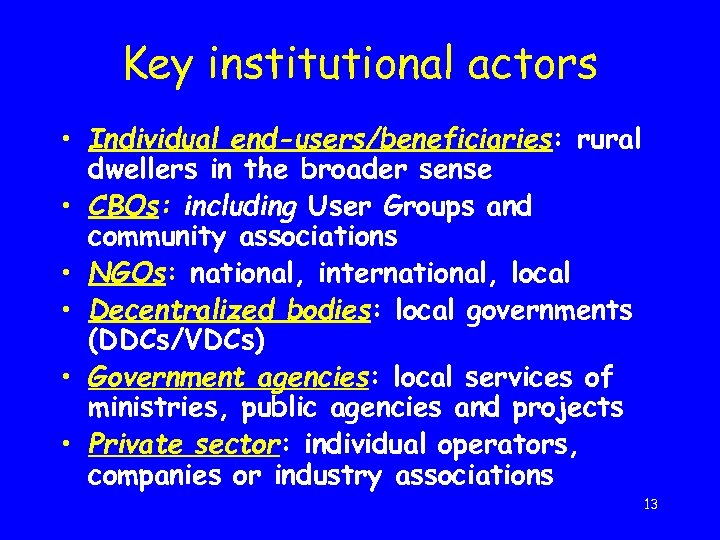 Key institutional actors • Individual end-users/beneficiaries: rural dwellers in the broader sense • CBOs: including User Groups and community associations • NGOs: national, international, local • Decentralized bodies: local governments (DDCs/VDCs) • Government agencies: local services of ministries, public agencies and projects • Private sector: individual operators, companies or industry associations 13
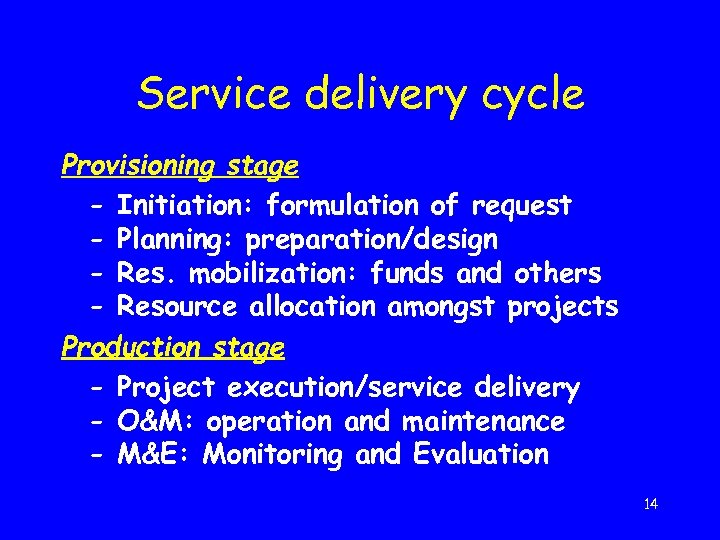 Service delivery cycle Provisioning stage - Initiation: formulation of request - Planning: preparation/design - Res. mobilization: funds and others - Resource allocation amongst projects Production stage - Project execution/service delivery - O&M: operation and maintenance - M&E: Monitoring and Evaluation 14
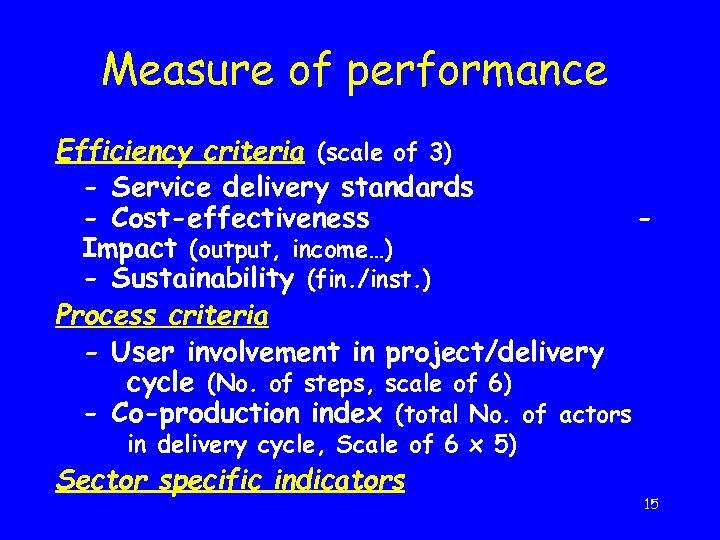 Measure of performance Efficiency criteria (scale of 3) - Service delivery standards - Cost-effectiveness Impact (output, income…) - Sustainability (fin. /inst. ) Process criteria - User involvement in project/delivery cycle (No. of steps, scale of 6) - Co-production index (total No. of actors in delivery cycle, Scale of 6 x 5) Sector specific indicators 15
 Generic models • • • Agency model Local government model NGO model CB 0 model Private sector model N. B. : actual models = hybrid 16
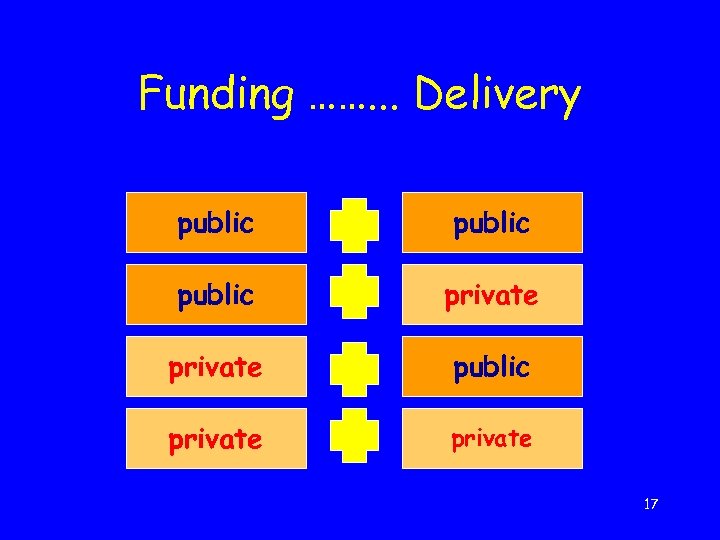 Funding ……. . . Delivery public private 17
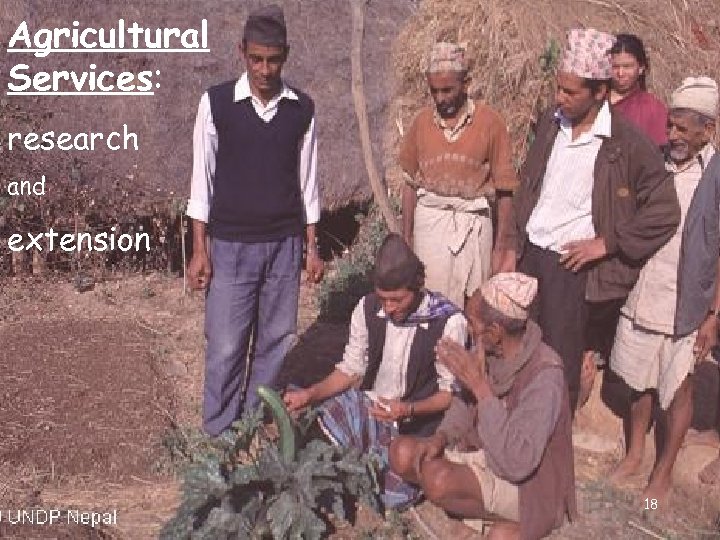 Agricultural Services: research and extension 18
 Agricultural research • in Nepal: - agricultural research is mostly applied and adaptive • in this study: – crop variety selection and improvement – breeder and foundation seed production 19
 Agricultural extension • Information about technology • Exposure to performance of technology (demonstrations) • Practical and cognitive skills • Identify problems and opportunities • Technical advice to solve problems • Market information: prices, demand 20
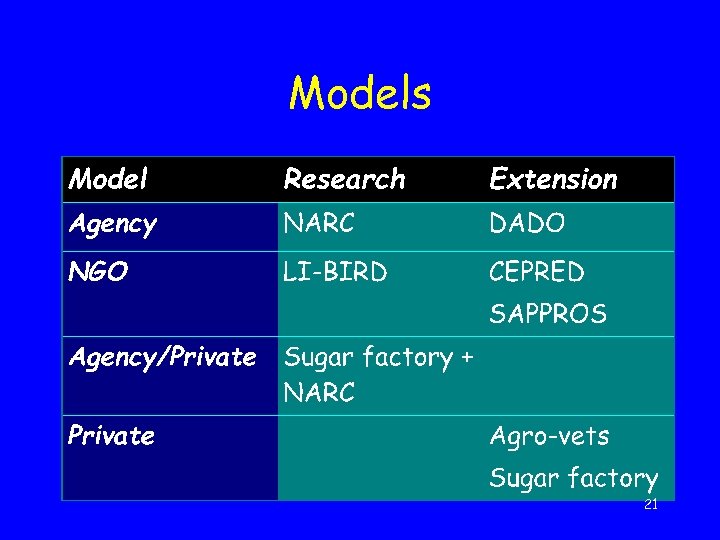 Models 21
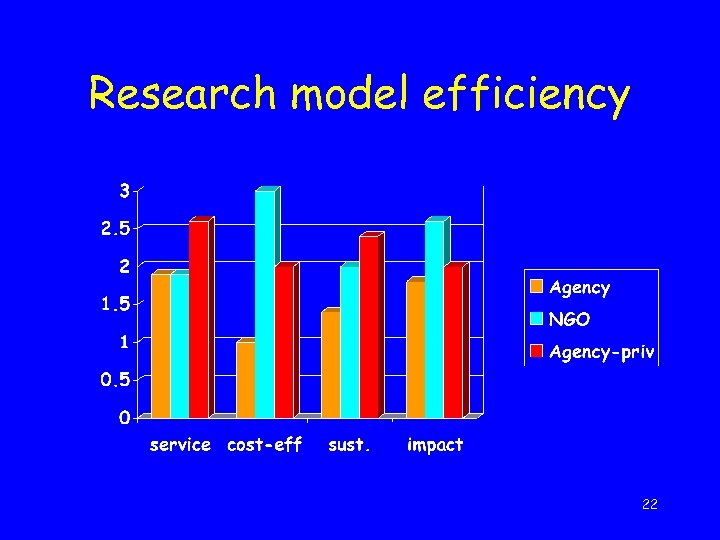 Research model efficiency 22
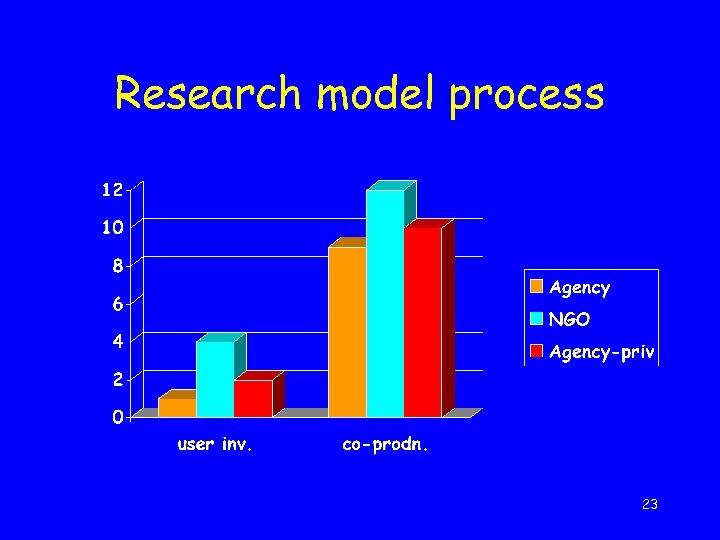 Research model process 23
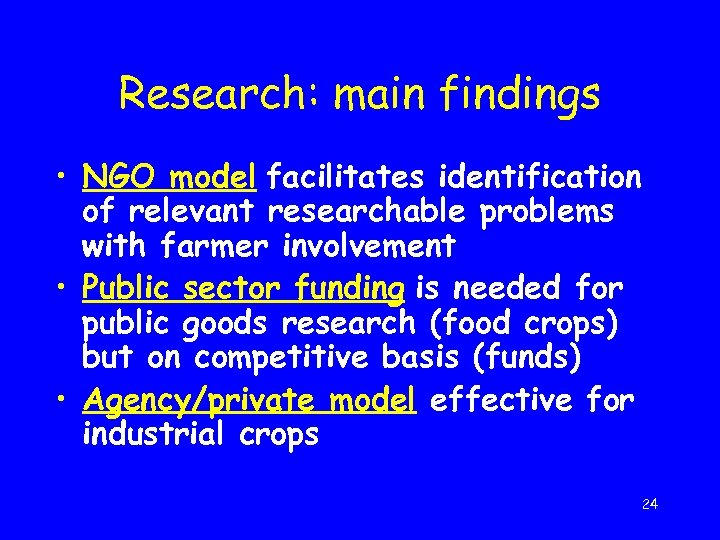 Research: main findings • NGO model facilitates identification of relevant researchable problems with farmer involvement • Public sector funding is needed for public goods research (food crops) but on competitive basis (funds) • Agency/private model effective for industrial crops 24
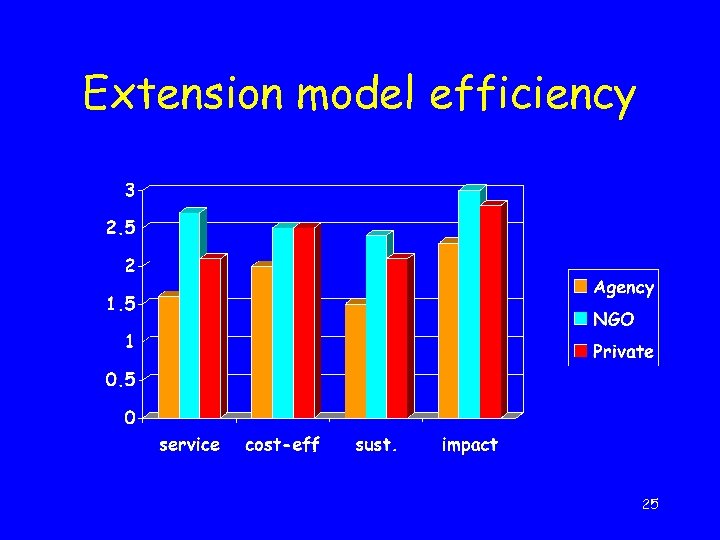 Extension model efficiency 25
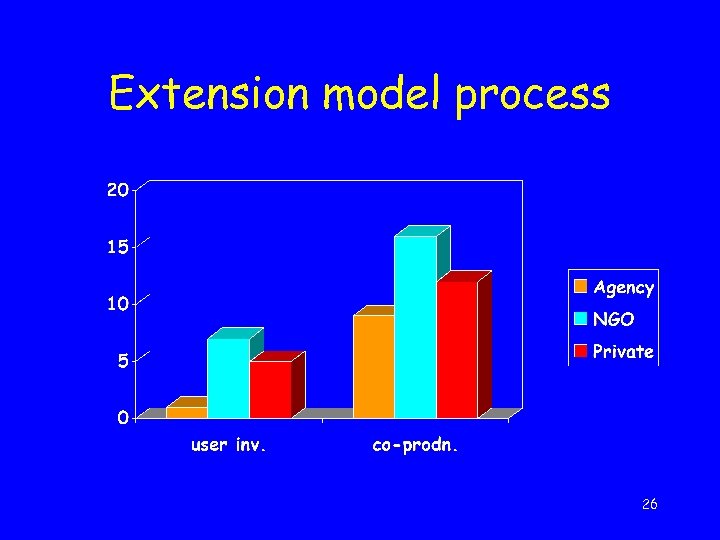 Extension model process 26
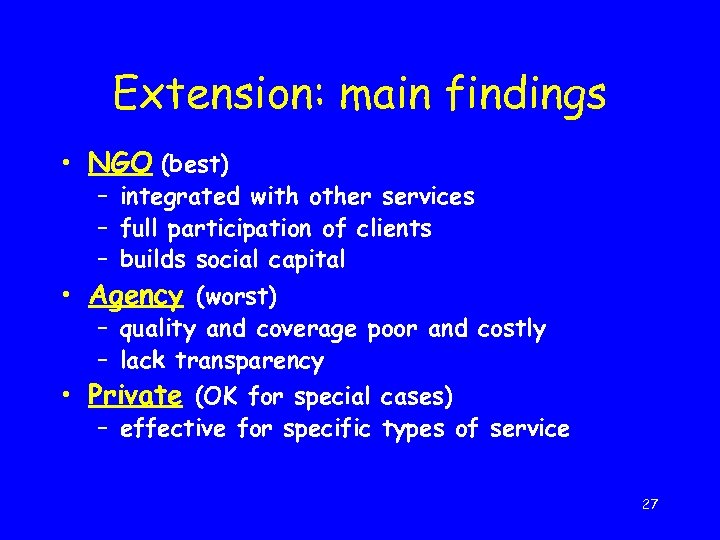 Extension: main findings • NGO (best) – integrated with other services – full participation of clients – builds social capital • Agency (worst) – quality and coverage poor and costly – lack transparency • Private (OK for special cases) – effective for specific types of service 27
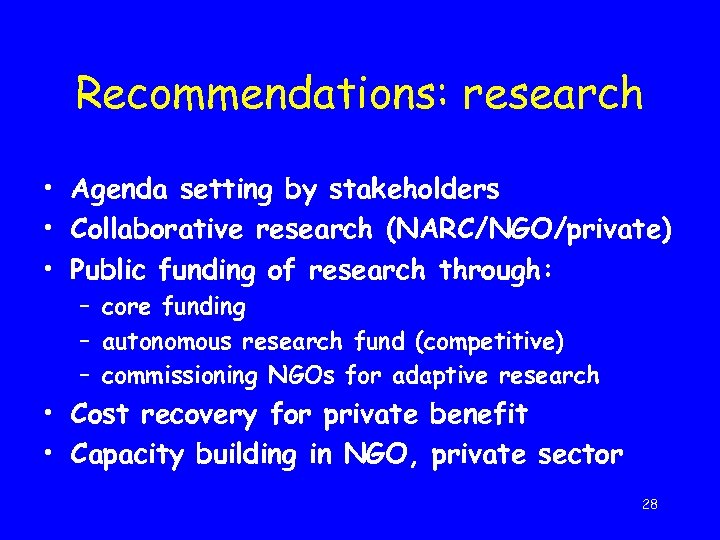 Recommendations: research • Agenda setting by stakeholders • Collaborative research (NARC/NGO/private) • Public funding of research through: – core funding – autonomous research fund (competitive) – commissioning NGOs for adaptive research • Cost recovery for private benefit • Capacity building in NGO, private sector 28
 Recommendations: extension • Private sector for private goods – capacity building – credit for agro-vets – regulations to assure quality • Private/NGO sector for public goods (subsistence crops) – experiment with contracting • Industrial commodities (sugar cane) – leave to private sector 29
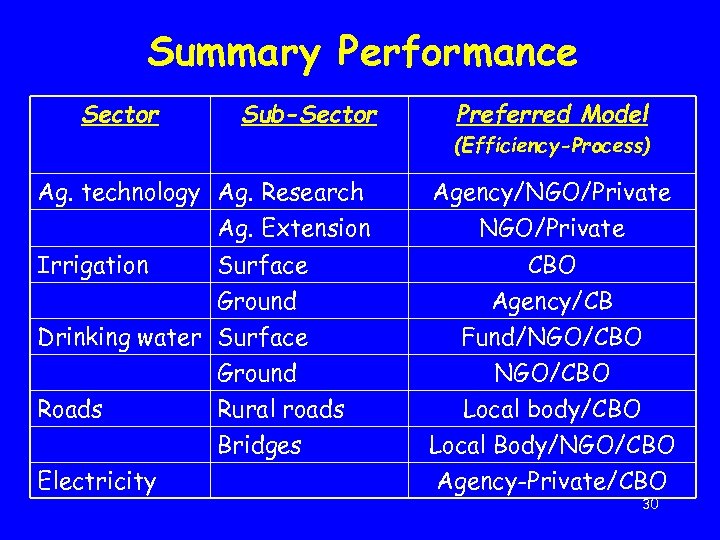 Summary Performance Sector Sub-Sector Preferred Model (Efficiency-Process) Ag. technology Ag. Research Ag. Extension Agency/NGO/Private Irrigation CBO Agency/CB Fund/NGO/CBO Local body/CBO Local Body/NGO/CBO Agency-Private/CBO Surface Ground Drinking water Surface Ground Roads Rural roads Bridges Electricity 30
 Summary findings • Strong correlation between efficiency and beneficiary involvement. • Pure agency model consistently rates lowest. Agency-managed projects are systematically larger/more complex + involve perverse subsidies + clear lack of accountability and transparency • Community-based arrangements rate higher. Not panacea ---> partnerships better. Lack of capacity and social capital need to be addressed. 31
 Key messages • Change paradigm: disengage agencies and get CBOs involved • Rely on NGOs and private sector for technical support in service delivery • Rely on local (vs. central) government for provisioning • Build social capital • Better governance/transparency • Arrangements to be sector-specific (sectoral funds) and tailored to local circumstances 32
 the end 33