 Скачать презентацию Defining Capacity of Airport Passenger Buildings Dr Richard
1dd0eb3ad2c11be88f56f836374bacbe.ppt
- Количество слайдов: 23



Defining Capacity of Airport Passenger Buildings Dr. Richard de Neufville Professor of Engineering Systems and Civil and Environmental Engineering Massachusetts Institute of Technology Airport Systems Planning & Design / Rd. N
Defining Capacity of Airport Passenger Buildings Objective: To Present and Explain Standards for Sizing Topics Q Q Q Q Concepts of Capacity Design Concept Levels of Service IATA Space Standards (New Version in 2004!) Dwell Time Flow Standards Summary Airport Systems Planning & Design / Rd. N
Concepts of Capacity I 1. Static: Storage Potential of Facility 2. Dynamic: Ability of Facility to Process Flows Q The Central Concept for the Design of Airport Passenger Buildings Q Passengers, bags, cargo always Queue for and Move through Services (e. g. : Check-in, inspections, waiting for departures, etc. ) Airport Systems Planning & Design / Rd. N
Concepts of Capacity II Dynamic Capacity can be: 1. Sustained: Maximum flow over a significant period i. e. , a morning arrival period 2. Maximum: Maximum flow for a brief period Dynamic Capacity is a Variable!!! Unlike Static Capacity, of a bottle Airport Systems Planning & Design / Rd. N
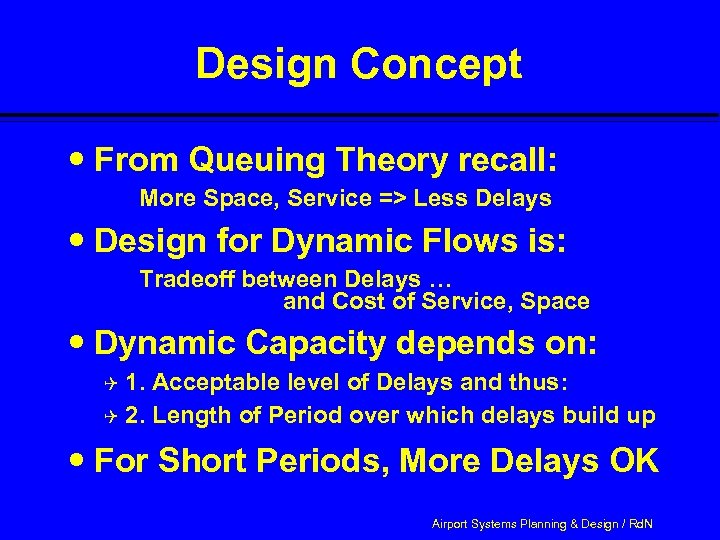
Design Concept From Queuing Theory recall: More Space, Service => Less Delays Design for Dynamic Flows is: Tradeoff between Delays … and Cost of Service, Space Dynamic Capacity depends on: 1. Acceptable level of Delays and thus: Q 2. Length of Period over which delays build up Q For Short Periods, More Delays OK Airport Systems Planning & Design / Rd. N
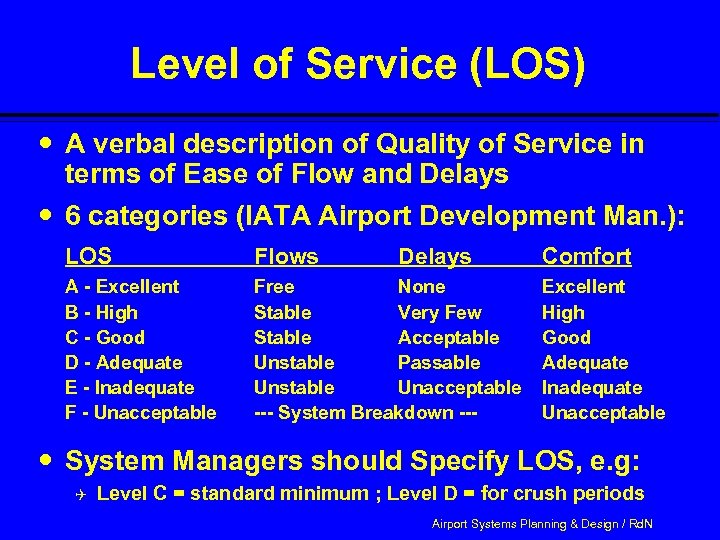
Level of Service (LOS) A verbal description of Quality of Service in terms of Ease of Flow and Delays 6 categories (IATA Airport Development Man. ): LOS Flows Delays A - Excellent B - High C - Good D - Adequate E - Inadequate F - Unacceptable Free None Stable Very Few Stable Acceptable Unstable Passable Unstable Unacceptable --- System Breakdown --- Comfort Excellent High Good Adequate Inadequate Unacceptable System Managers should Specify LOS, e. g: Q Level C = standard minimum ; Level D = for crush periods Airport Systems Planning & Design / Rd. N
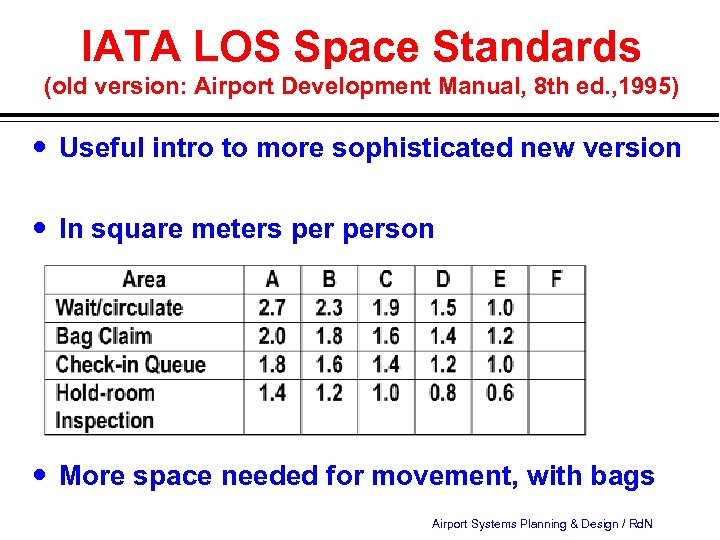
IATA LOS Space Standards (old version: Airport Development Manual, 8 th ed. , 1995) Useful intro to more sophisticated new version In square meters person More space needed for movement, with bags Airport Systems Planning & Design / Rd. N
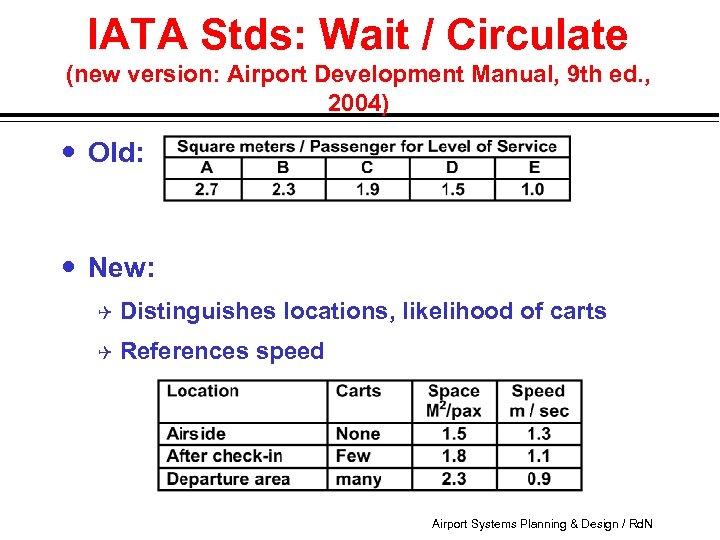
IATA Stds: Wait / Circulate (new version: Airport Development Manual, 9 th ed. , 2004) Old: New: Q Distinguishes locations, likelihood of carts Q References speed Airport Systems Planning & Design / Rd. N
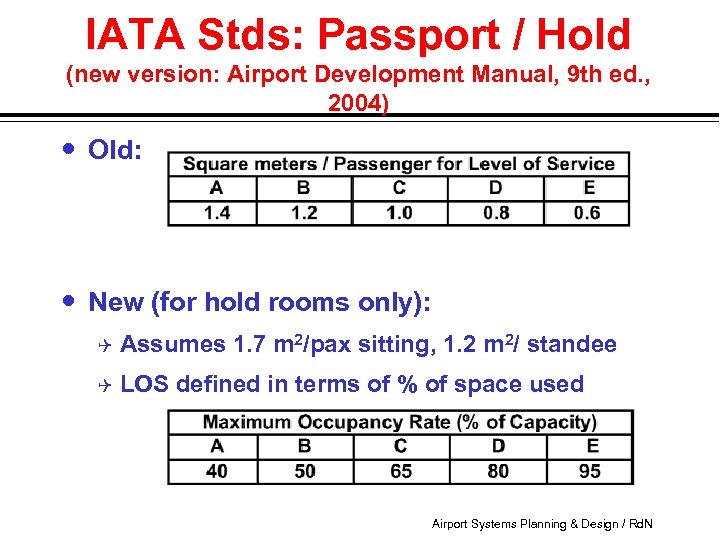
IATA Stds: Passport / Hold (new version: Airport Development Manual, 9 th ed. , 2004) Old: New (for hold rooms only): Q Assumes 1. 7 m 2/pax sitting, 1. 2 m 2/ standee Q LOS defined in terms of % of space used Airport Systems Planning & Design / Rd. N
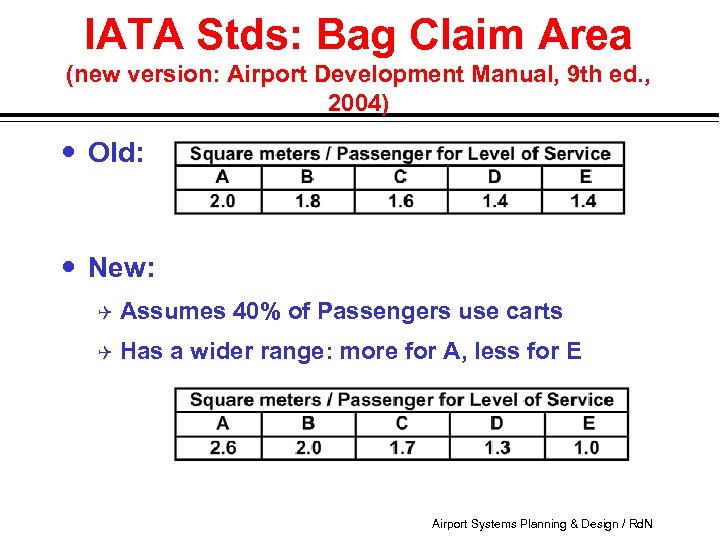
IATA Stds: Bag Claim Area (new version: Airport Development Manual, 9 th ed. , 2004) Old: New: Q Assumes 40% of Passengers use carts Q Has a wider range: more for A, less for E Airport Systems Planning & Design / Rd. N
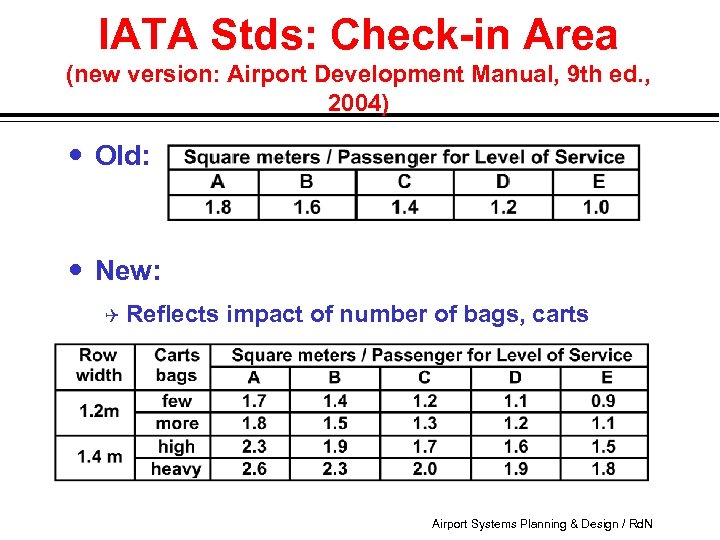
IATA Stds: Check-in Area (new version: Airport Development Manual, 9 th ed. , 2004) Old: New: Q Reflects impact of number of bags, carts Airport Systems Planning & Design / Rd. N
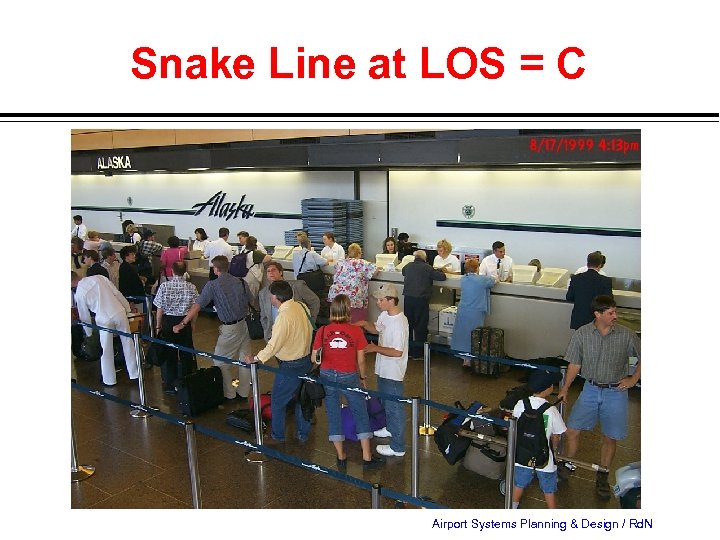
Snake Line at LOS = C Airport Systems Planning & Design / Rd. N
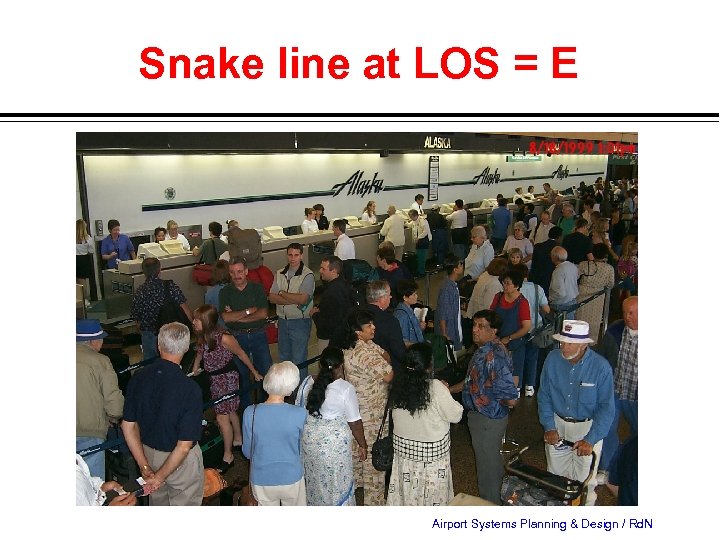
Snake line at LOS = E Airport Systems Planning & Design / Rd. N
Note: Kiosks change process Kiosks = automated check-in machines => CUSS (Common Use Self Service) if common Speeds up check-in Q Automated data entry (try to enter “de Neufville”) Less Staff, Less counter Space Q Old layouts obsolete: e. g. , Boston Internatl. Bldg Disperses Queues Q Latest standards do not apply easily… CUSS at Las Vegas, Tokyo, in Canada Airport Systems Planning & Design / Rd. N
Dwell Time Determines Capacity of any space or process A Central Concept: Source of Major Problems Is Average Time a body is in a space or process When a person leaves a space, Replacement can use it As people move faster Q Q Dwell time is shorter More replacements can use space in any period Airport Systems Planning & Design / Rd. N
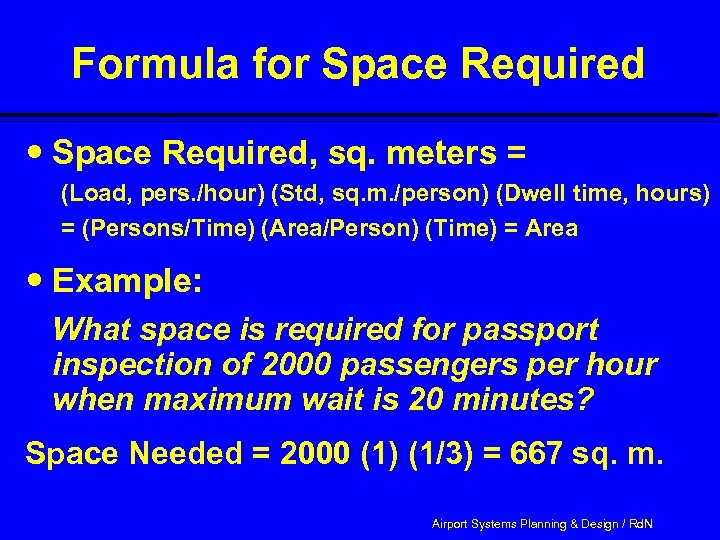
Formula for Space Required, sq. meters = (Load, pers. /hour) (Std, sq. m. /person) (Dwell time, hours) = (Persons/Time) (Area/Person) (Time) = Area Example: What space is required for passport inspection of 2000 passengers per hour when maximum wait is 20 minutes? Space Needed = 2000 (1) (1/3) = 667 sq. m. Airport Systems Planning & Design / Rd. N
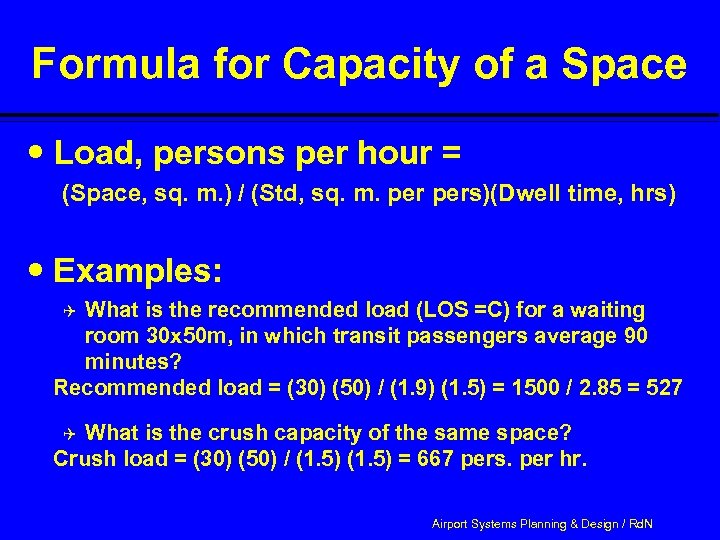
Formula for Capacity of a Space Load, persons per hour = (Space, sq. m. ) / (Std, sq. m. pers)(Dwell time, hrs) Examples: What is the recommended load (LOS =C) for a waiting room 30 x 50 m, in which transit passengers average 90 minutes? Recommended load = (30) (50) / (1. 9) (1. 5) = 1500 / 2. 85 = 527 Q What is the crush capacity of the same space? Crush load = (30) (50) / (1. 5) = 667 pers. per hr. Q Airport Systems Planning & Design / Rd. N
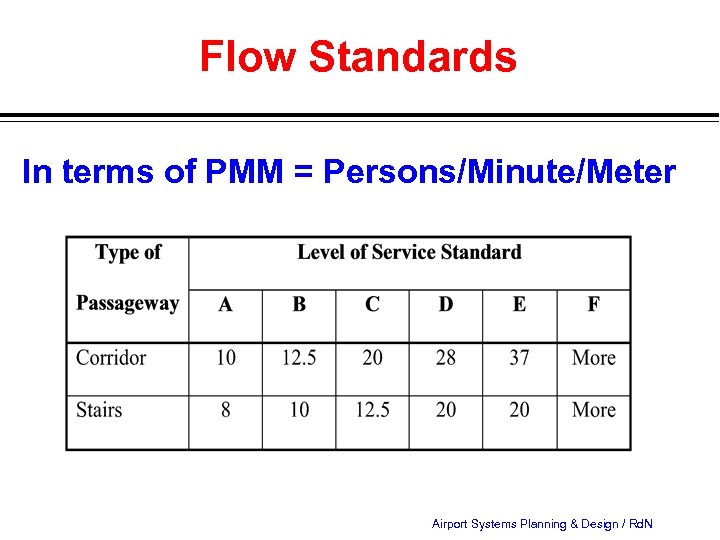
Flow Standards In terms of PMM = Persons/Minute/Meter Airport Systems Planning & Design / Rd. N
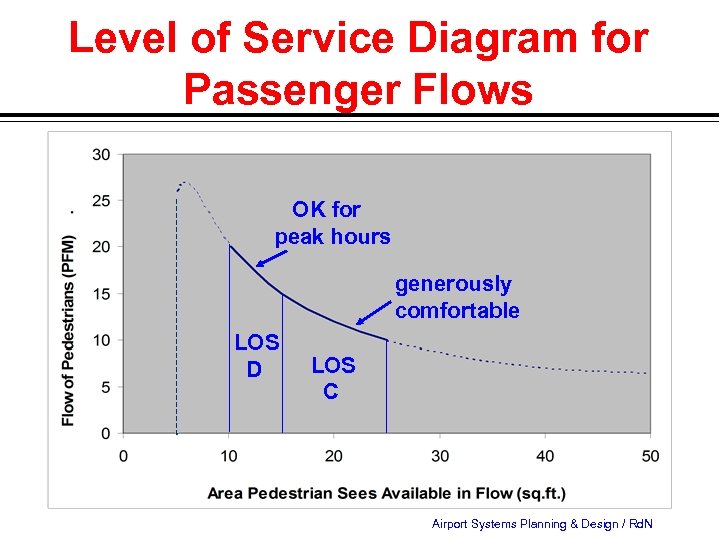
Level of Service Diagram for Passenger Flows OK for peak hours generously comfortable LOS D LOS C Airport Systems Planning & Design / Rd. N
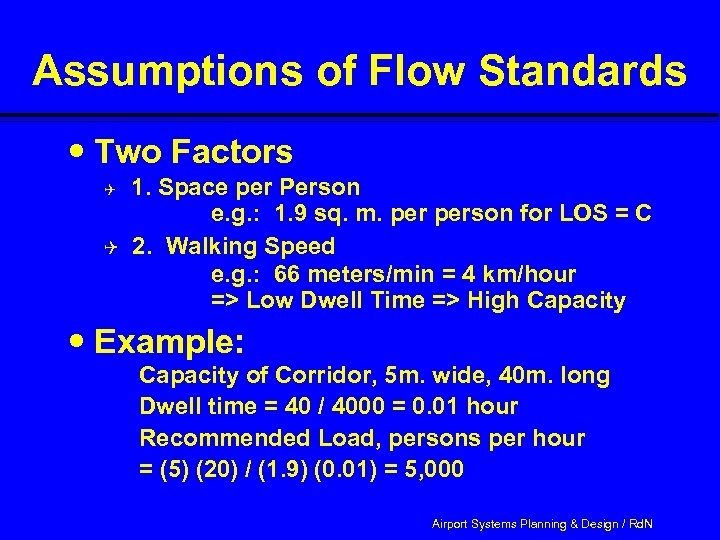
Assumptions of Flow Standards Two Factors Q Q 1. Space per Person e. g. : 1. 9 sq. m. person for LOS = C 2. Walking Speed e. g. : 66 meters/min = 4 km/hour => Low Dwell Time => High Capacity Example: Capacity of Corridor, 5 m. wide, 40 m. long Dwell time = 40 / 4000 = 0. 01 hour Recommended Load, persons per hour = (5) (20) / (1. 9) (0. 01) = 5, 000 Airport Systems Planning & Design / Rd. N
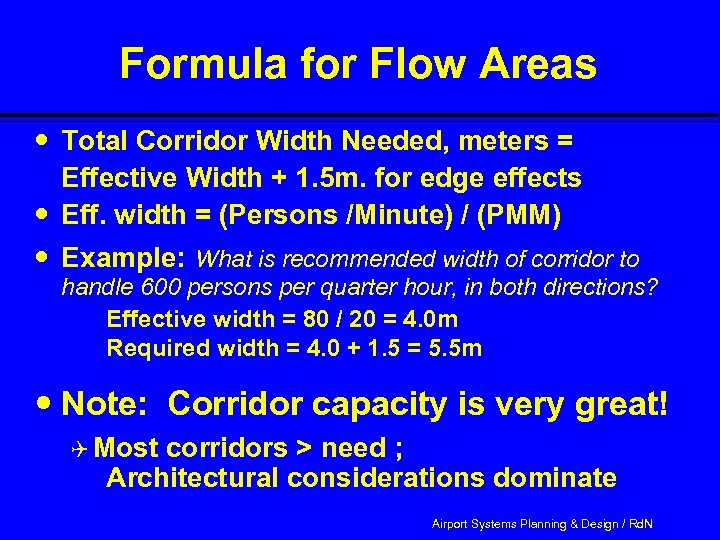
Formula for Flow Areas Total Corridor Width Needed, meters = Effective Width + 1. 5 m. for edge effects Eff. width = (Persons /Minute) / (PMM) Example: What is recommended width of corridor to handle 600 persons per quarter hour, in both directions? Effective width = 80 / 20 = 4. 0 m Required width = 4. 0 + 1. 5 = 5. 5 m Note: Corridor capacity is very great! Q Most corridors > need ; Architectural considerations dominate Airport Systems Planning & Design / Rd. N
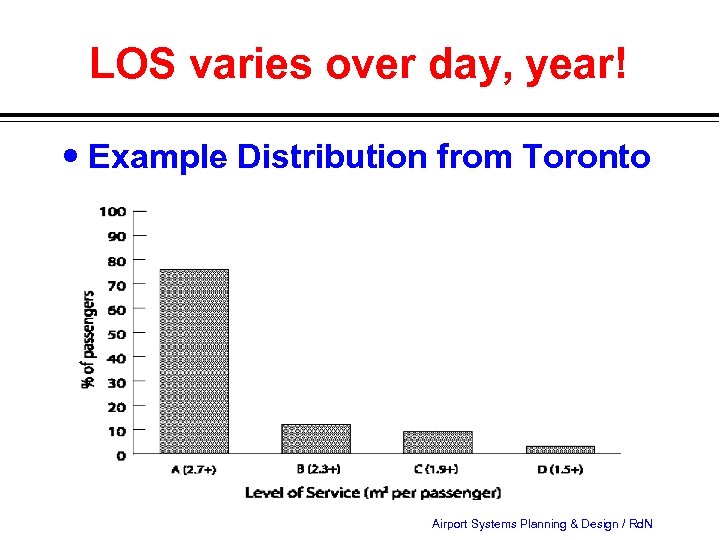
LOS varies over day, year! Example Distribution from Toronto Airport Systems Planning & Design / Rd. N
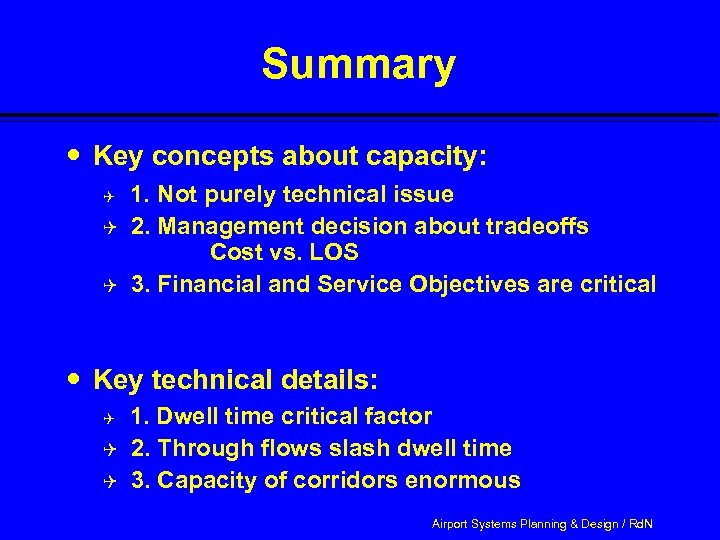
Summary Key concepts about capacity: Q Q Q 1. Not purely technical issue 2. Management decision about tradeoffs Cost vs. LOS 3. Financial and Service Objectives are critical Key technical details: Q Q Q 1. Dwell time critical factor 2. Through flows slash dwell time 3. Capacity of corridors enormous Airport Systems Planning & Design / Rd. N
Скачать презентацию Defining Capacity of Airport Passenger Buildings Dr Richard
1dd0eb3ad2c11be88f56f836374bacbe.ppt