


 Скачать презентацию Decision Support and Expert Systems in Medicine Lections
e9dbefabeecbbe94fefbe4c10dc00615.ppt
- Количество слайдов: 54
 Decision Support and Expert Systems in Medicine Lections № 5
 Main Questions l Decision Support Systems Basics. l Decision Support Systems in Medicine l Expert systems l Artificial neural network
 1. Decision Support Systems Basics Information systems definition l Decision support systems definition l l DSS Taxonomies l DSS Architecture l l Classifying DSS Benefits of DSS
 1. 1. Information system definition An Information System (IS) is the system of persons, data records and activities that process the data and information in a given organization, including manual processes or automated processes; The computer-based information systems are the field of study for Information technologies (IT)
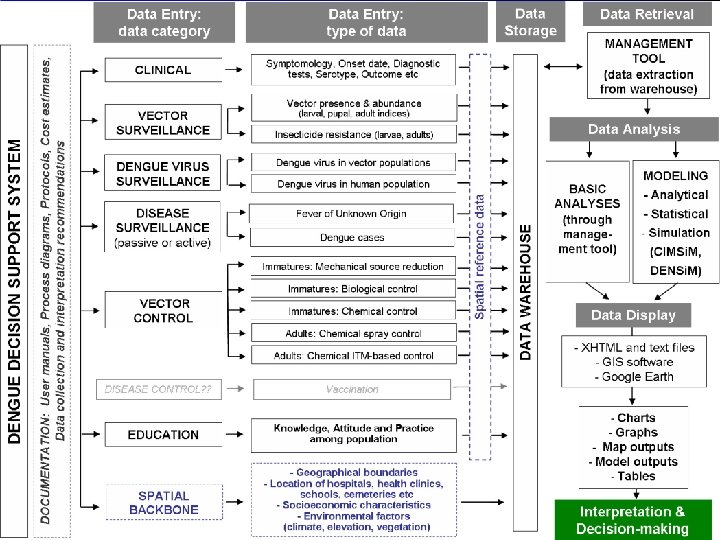
 1. 2. Decision support systems definition Decision support systems (DSS) are a class of computer-based information systems including knowledge based systems that support decision making activities. The term decision support system has been used in many different ways and has been defined in various ways depending upon the author's point of view:
 1. 2. Decision support systems definition l DSS it is a computer-based system that aids the process of decision making. – Finlay, P. N. (1994). Introducing decision support systems. l DSS it an interactive, flexible, and adaptable computer-based information system, system especially developed for supporting the solution of a non-structured management problem for improved decision making. It utilizes data, making provides an easy-to-use interface, and allows interface for the decision maker's own insights. – Turban, E. (1995). Decision support and expert systems: management support systems.
 1. 2. Decision support systems definition l DSS is a model-based set of procedures for processing data and judgments to assist a manager in his decision-making. – Little, J. D. C. (1970, April). "Models and Managers: The Concept of a Decision Calculus. l DSS is an extendible systems capable of supporting ad hoc data analysis and decision modeling, oriented toward future planning, and used at irregular, unplanned intervals. – Moore, J. H. , and M. G. Chang. (1980, Fall). "Design of Decision Support Systems. "
 1. 3. DSS Taxonomies Using the relationship with the user as the criterion can be differentiate passive, active, and cooperative DSS: – Haettenschwiler, P. (1999). Neues anwenderfreundliches Konzept der Entscheidungsunterstützung. A passive DSS is a system that aids the process of decision making, but that cannot bring out explicit decision suggestions or solutions. l An active DSS can bring out such decision suggestions or solutions. l
 1. 3. DSS Taxonomies l A cooperative DSS allows the decision maker (or its advisor) to modify, complete, or refine the decision suggestions provided by the system, before sending them back to the system for validation. The system again improves, completes, and refines the suggestions of the decision maker and sends them back to her for validation. The whole process then starts again, until a consolidated solution is generated.
 1. 3. DSS Taxonomies Using the mode of assistance as the criterion, differentiates communication-driven DSS, data-driven DSS, document-driven DSS, knowledge-driven DSS, and model-driven DSS: – Power, D. J. (2002). Decision support systems: concepts and resources for managers. l A communication-driven DSS supports more than one person working on a shared task; examples include integrated tools like Microsoft's Net. Meeting
 1. 3. DSS Taxonomies A data-driven DSS or data-oriented DSS emphasizes access to and manipulation of a time series of internal company data and, sometimes, external data. l A model-driven DSS emphasizes access to and manipulation of a statistical, financial, optimization, or simulation model. Modeldriven DSS use data and parameters provided by users to assist decision makers in analyzing a situation; they are not necessarily data intensive. l
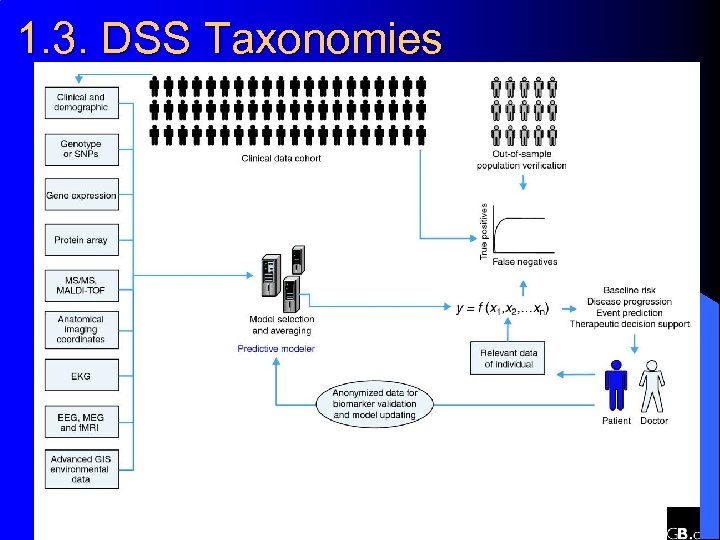
 1. 3. DSS Taxonomies A document-driven DSS manages, retrieves and manipulates unstructured information in a variety of electronic formats. l A knowledge-driven DSS provides specialized problem solving expertise stored as facts, rules, procedures, or in similar structures. l – Moust important for medical applications.
 1. 3. DSS Taxonomies
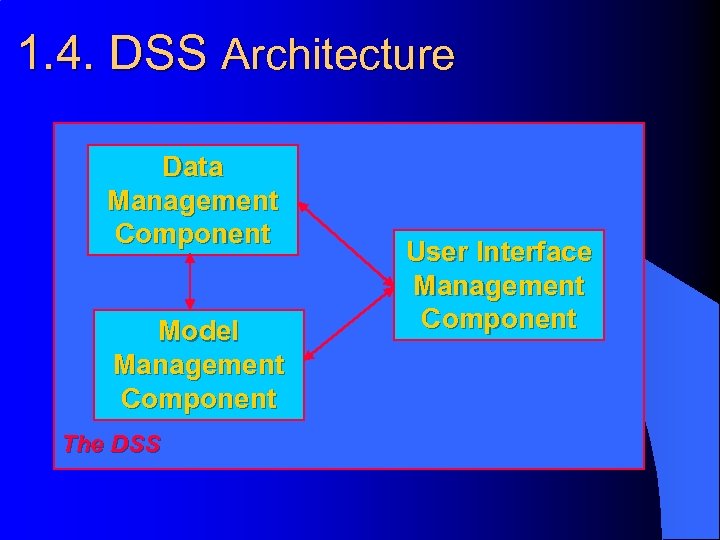 1. 4. DSS Architecture Data Management Component Model Management Component The DSS User Interface Management Component
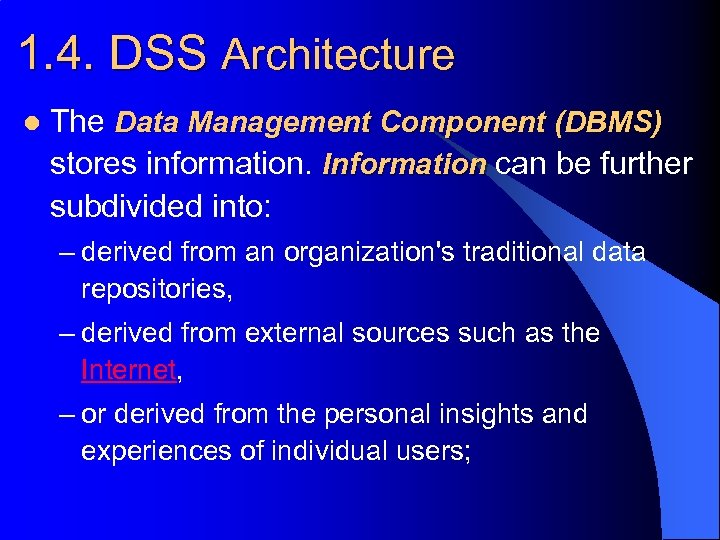 1. 4. DSS Architecture l The Data Management Component (DBMS) stores information. Information can be further subdivided into: – derived from an organization's traditional data repositories, – derived from external sources such as the Internet, – or derived from the personal insights and experiences of individual users;
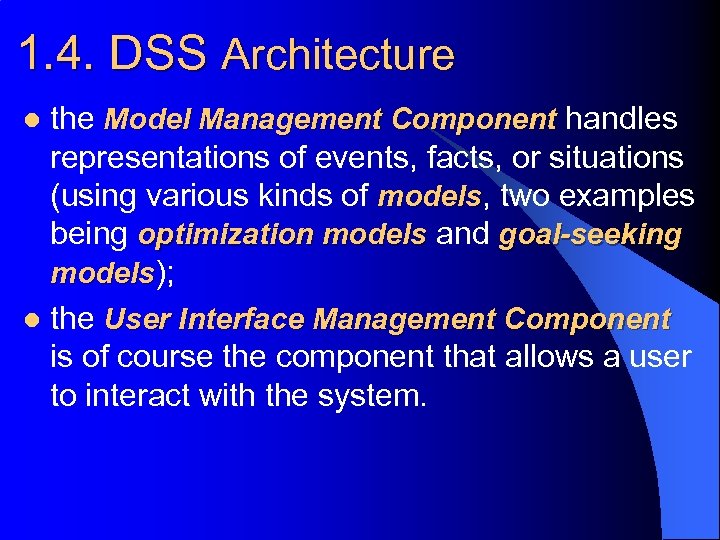 1. 4. DSS Architecture the Model Management Component handles representations of events, facts, or situations (using various kinds of models, two examples being optimization models and goal-seeking models); l the User Interface Management Component is of course the component that allows a user to interact with the system. l
 1. 5. Classifying DSS The DSS has been classified into the following six frameworks: l Text-oriented DSS; l Database-oriented DSS; l Spreadsheet-oriented DSS; l Solver-oriented DSS; l Rule-oriented DSS; l Compound DSS (hybrid system ). – Holsapple, C. W. , and A. B. Whinston. (1996). Decision Support Systems: A Knowledge-Based Approach.
 1. 6. Benefits of DSS 1. 2. 3. 4. 5. Improving Personal Efficiency Expediting Problem Solving Facilitating Interpersonal Communication Promoting Learning or Training Increasing Organizational Control
 2. Decision Support Systems in Medicine Digital dashboard l Clinical decision support system l Medical logic module. Arden syntax l
 2. 1. Digital dashboard A digital dashboard (enterprise dashboard or executive dashboard) is a business management tool used to visually ascertain the status (or "health") of a business enterprise via key business indicators. l Digital dashboards use visual, at-a-glance displays of data pulled from disparate business systems to provide warnings, action notices, next steps, and summaries of business conditions. l
 2. 1. Digital dashboard Some benefits to using digital dashboards include: l Visual presentation of performance measures l Elimination of duplicate data entry. l Ability to identify and correct negative trends. l Measure efficiencies/inefficiencies. l Ability to generate detailed reports showing new trends. l Increase overall revenues. l Ability to make more informed decisions based on collected BI (business intelligence) l Align strategies and organizational goals.
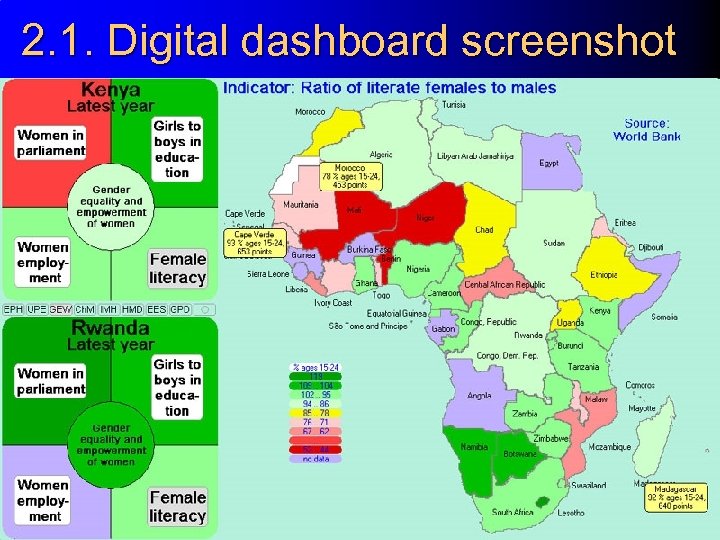 2. 1. Digital dashboard screenshot
 2. 2. Clinical decision support system Clinical (or diagnostic) decision diagnostic support systems (CDSS) are interactive computer programs, which are designed to assist physicians and other health professionals with decision making tasks. l "Clinical Decision Support systems link health observations with health knowledge to influence health choices by clinicians for improved health care". l – Dr. Robert Hayward of the Centre for Health Evidence
 2. 2. Clinical decision support system The basic components of a CDSS include: l a dynamic (medical) knowledge base l an inferencing mechanism (usually a set of rules derived from the experts and evidence-based medicine) and medicine implemented through medical logic modules based on a language such as Arden syntax It could be based on Expert systems or artificial neural networks or both (connectionist expert systems).
 2. 3. Medical logic module A medical logic module (MLM) is an independent unit in a health knowledge base that combines the knowledge required and the definition of the way it should be applied for a single health decision. An event monitor program in an electronic medical record (EMR) uses it, on occurrence of defined conditions. A grammar - the Arden syntax has been defined which would make MLMs swappable between different hardware and software platforms.
 2. 3. MLM. Arden syntax The Arden syntax is a grammar for describing medical conditions and recommendations, used in Medical algorithms. l MLM are written in Arden syntax, and are syntax called by a program - an event monitor when the condition they are written to help with occurs. l Arden syntax was formerly a standard under ASTM, and is now part of HL 7. ASTM HL 7 l
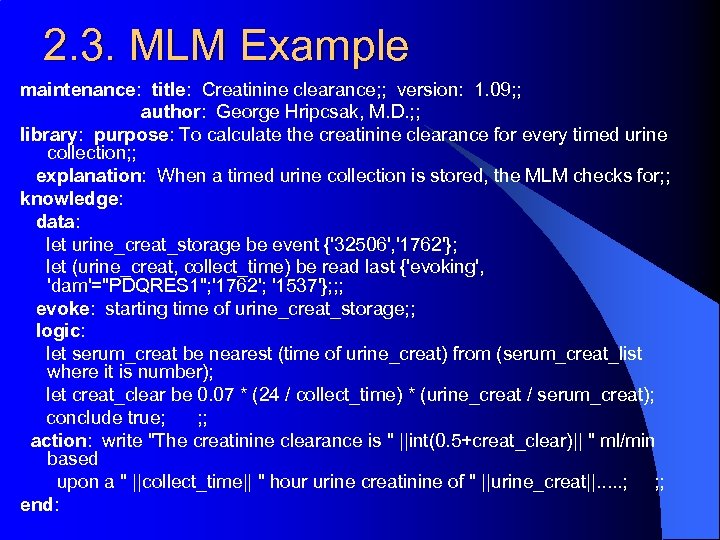 2. 3. MLM Example maintenance: title: Creatinine clearance; ; version: 1. 09; ; author: George Hripcsak, M. D. ; ; library: purpose: To calculate the creatinine clearance for every timed urine collection; ; explanation: When a timed urine collection is stored, the MLM checks for; ; knowledge: data: let urine_creat_storage be event {'32506', '1762'}; let (urine_creat, collect_time) be read last {'evoking', 'dam'="PDQRES 1"; '1762'; '1537'}; ; ; evoke: starting time of urine_creat_storage; ; logic: let serum_creat be nearest (time of urine_creat) from (serum_creat_list where it is number); let creat_clear be 0. 07 * (24 / collect_time) * (urine_creat / serum_creat); conclude true; ; ; action: write "The creatinine clearance is " ||int(0. 5+creat_clear)|| " ml/min based upon a " ||collect_time|| " hour urine creatinine of " ||urine_creat||. . . ; ; ; end:
 3. Expert systems definition l Architecture of the ES l ES Advantages and disadvantages l
 3. 1. Expert system definition An expert system, also known as a system knowledge based system, is a computer system program that contains the knowledge and analytical skills of one or more human experts, related to a specific subject. l This class of program was first developed by researchers in artificial intelligence during the 1960 s and 1970 s and applied commercially throughout the 1980 s. l
 3. 1. Expert system definition Expert systems provide expert-quality advice, diagnoses and recommendations advice on real world problems l Designed to perform function of a human expert l Examples: – Medical diagnosis - program takes place of a doctor; given a set of symptoms the system suggests a diagnosis and treatment l
 3. 1. Prominent medical ES CADUCEUS (expert system) - Blood-borne infectious bacteria. l Mycin - Diagnose infectious blood diseases and recommend antibiotics (by Stanford University) l STD Wizard - Expert system for recommending medical screening tests l Dendral - Analysis of mass spectra
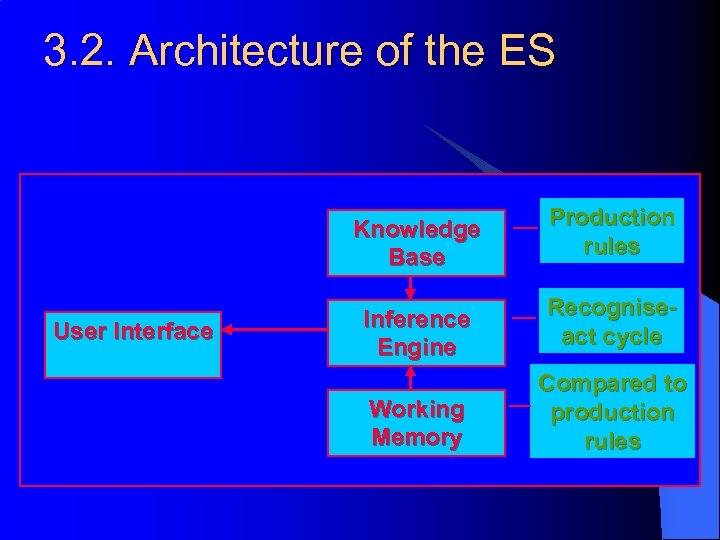 3. 2. Architecture of the ES Knowledge Base User Interface Production rules Inference Engine Recogniseact cycle Working Memory Compared to production rules
 3. 2. ES - Introduction to Rules l l l The knowledge base of an expert system is often rule based – the system has a list of rules which determine what should be done in different situations These rules are initially designed by human experts The rules are called production rules Each rule has two parts, the condition-action pair 1. Condition – what must be true for the rule to fire 2. Action – what happens when the condition is met Can also be thought of as IF-THEN rules
 3. 2. ES - Conditions example l Conditions are made up of two parts: – Objects – eg the weather – The objects’ value – eg sunny l l IF sunny(weather) THEN print “wear sunglasses” May also be an operator, such as greater than: – IF >30(temperature) THEN print “take some water” l Conditions may also be joined together using AND, OR, NOT: – IF sunny(weather) AND outdoors(x) print “take your sunglasses x”
 3. 2. ES - The Working Memory l The contents of the working memory are constantly compared to the production rules l When the contents match the condition of a rule, that rule is fired, and its action is executed l More than one production rule may match the working memory
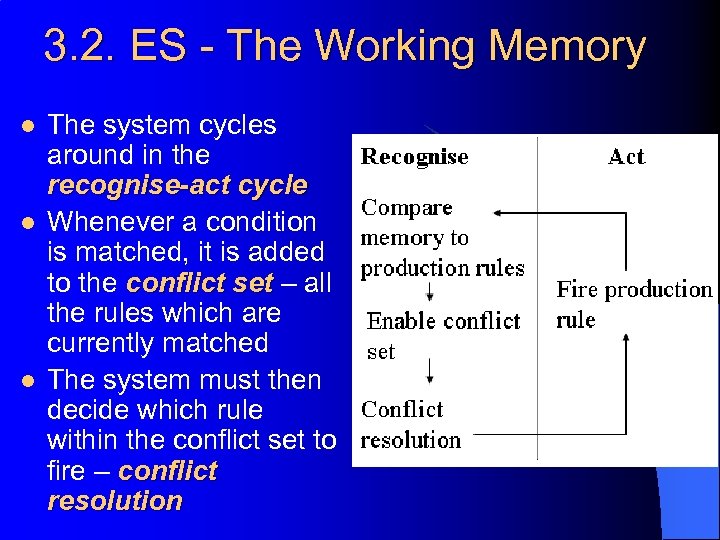 3. 2. ES - The Working Memory l l l The system cycles around in the recognise-act cycle Whenever a condition is matched, it is added to the conflict set – all the rules which are currently matched The system must then decide which rule within the conflict set to fire – conflict resolution
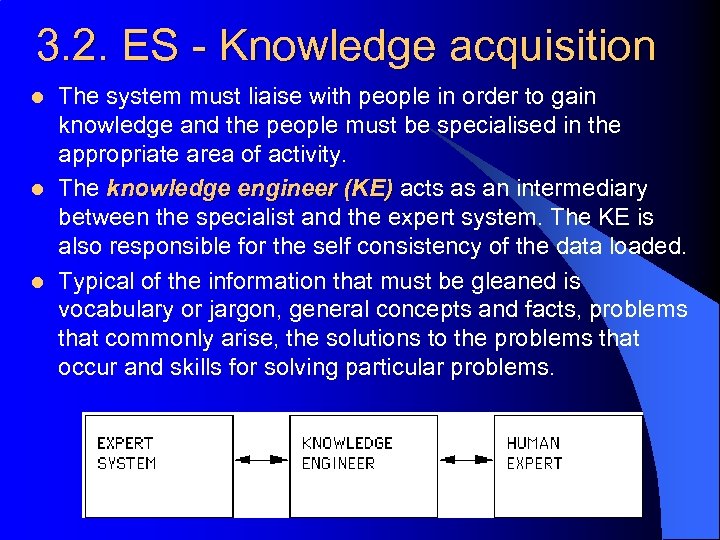 3. 2. ES - Knowledge acquisition l l l The system must liaise with people in order to gain knowledge and the people must be specialised in the appropriate area of activity. The knowledge engineer (KE) acts as an intermediary between the specialist and the expert system. The KE is also responsible for the self consistency of the data loaded. Typical of the information that must be gleaned is vocabulary or jargon, general concepts and facts, problems that commonly arise, the solutions to the problems that occur and skills for solving particular problems.
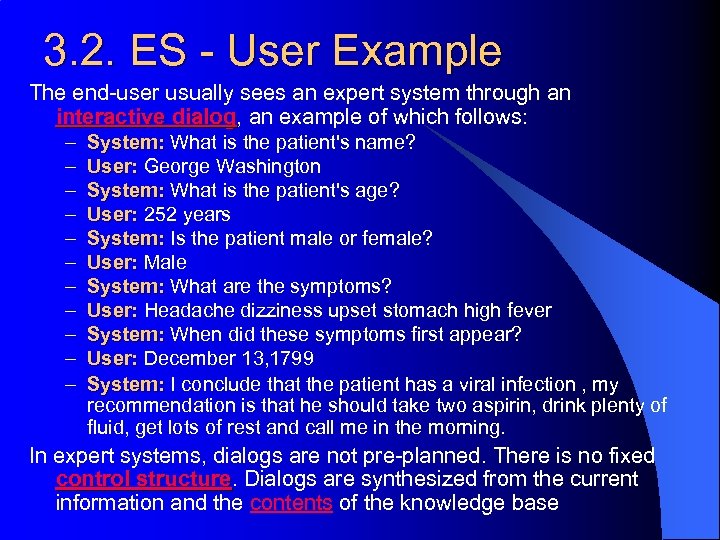 3. 2. ES - User Example The end-user usually sees an expert system through an interactive dialog, an example of which follows: dialog – – – System: What is the patient's name? User: George Washington System: What is the patient's age? User: 252 years System: Is the patient male or female? User: Male System: What are the symptoms? User: Headache dizziness upset stomach high fever System: When did these symptoms first appear? User: December 13, 1799 System: I conclude that the patient has a viral infection , my recommendation is that he should take two aspirin, drink plenty of fluid, get lots of rest and call me in the morning. In expert systems, dialogs are not pre-planned. There is no fixed control structure. Dialogs are synthesized from the current structure information and the contents of the knowledge base
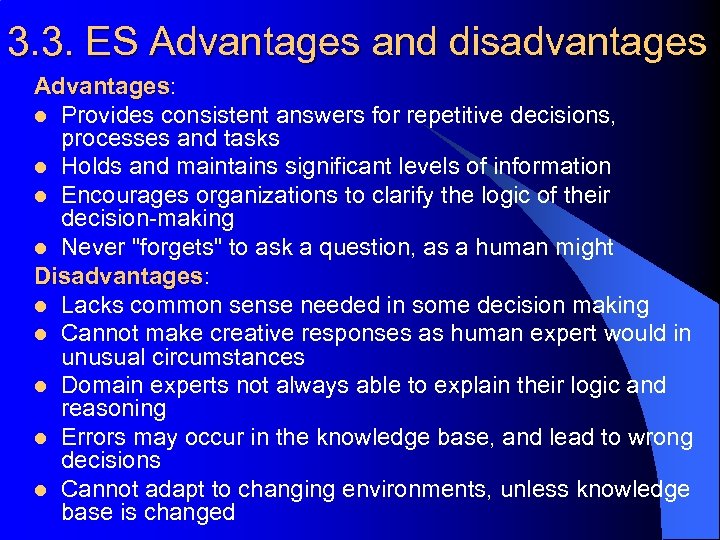 3. 3. ES Advantages and disadvantages Advantages: Advantages l Provides consistent answers for repetitive decisions, processes and tasks l Holds and maintains significant levels of information l Encourages organizations to clarify the logic of their decision-making l Never "forgets" to ask a question, as a human might Disadvantages: Disadvantages l Lacks common sense needed in some decision making l Cannot make creative responses as human expert would in unusual circumstances l Domain experts not always able to explain their logic and reasoning l Errors may occur in the knowledge base, and lead to wrong decisions l Cannot adapt to changing environments, unless knowledge base is changed
 4. Artificial neural network definition l Network model in artificial neural network l Learning of the ANN l An ANN Application l
 4. 1. Artificial neural network definition l An artificial neural network (ANN) is a mathematical model or computational model based on biological neural networks l It consists of an interconnected group of artificial neurons and processes information using a connectionist approach to computation l In most cases an ANN is an adaptive system that changes its structure based on external or internal information that flows through the network during the learning phase.
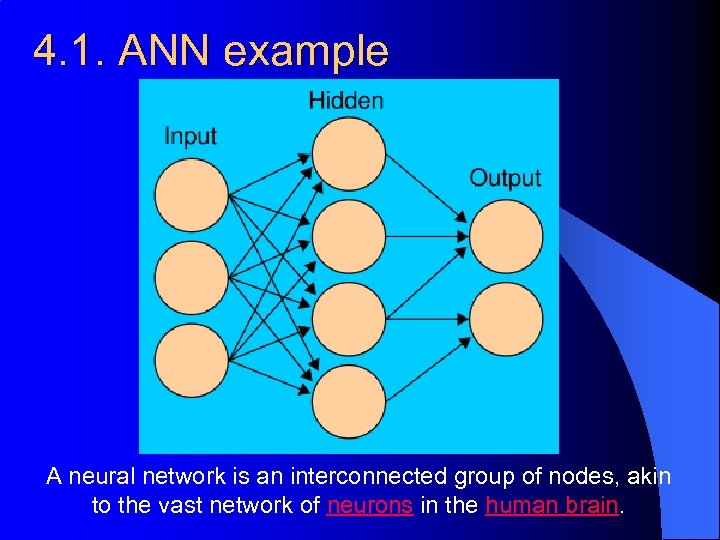 4. 1. ANN example A neural network is an interconnected group of nodes, akin to the vast network of neurons in the human brain.
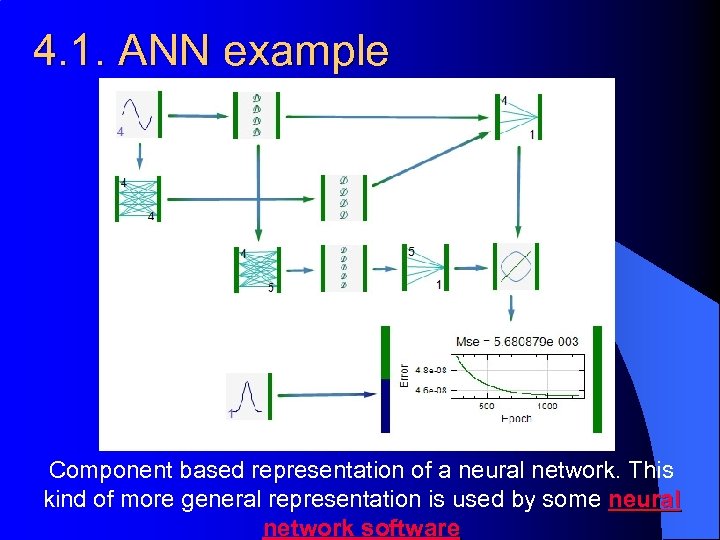 4. 1. ANN example Component based representation of a neural network. This kind of more general representation is used by some neural network software
 4. 1. ANN example l l l Currently, the term Artificial Neural Network (ANN) tends to refer mostly to neural network models employed in statistics, cognitive psychology and artificial intelligence Neural network models designed with emulation of the central nervous system (CNS) in mind are a subject of theoretical neuroscience (computational neuroscience). In modern software implementations of artificial neural networks the approach inspired by biology has more or less been abandoned for a more practical approach based on statistics and signal processing
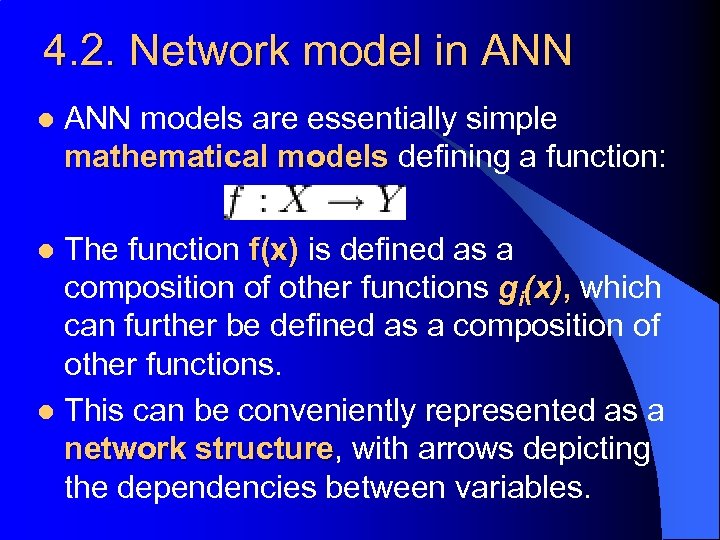 4. 2. Network model in ANN l ANN models are essentially simple mathematical models defining a function: The function f(x) is defined as a composition of other functions gi(x), which can further be defined as a composition of other functions. l This can be conveniently represented as a network structure, with arrows depicting structure the dependencies between variables. l
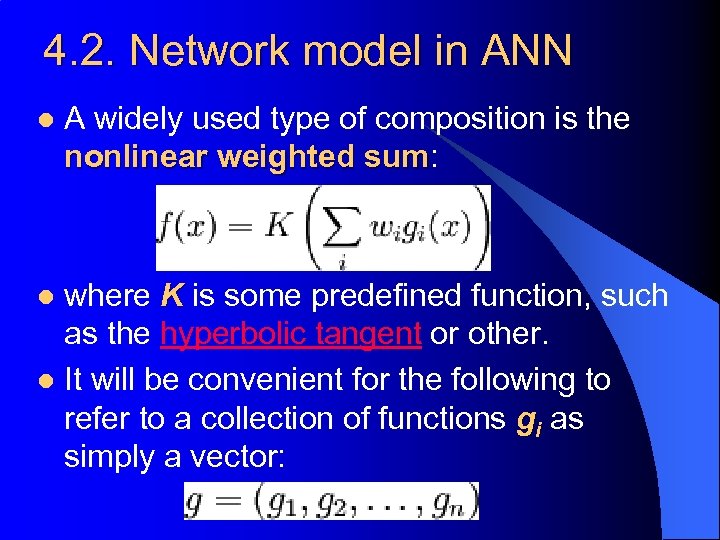 4. 2. Network model in ANN l A widely used type of composition is the nonlinear weighted sum: sum where K is some predefined function, such as the hyperbolic tangent or other. l It will be convenient for the following to refer to a collection of functions gi as simply a vector: l
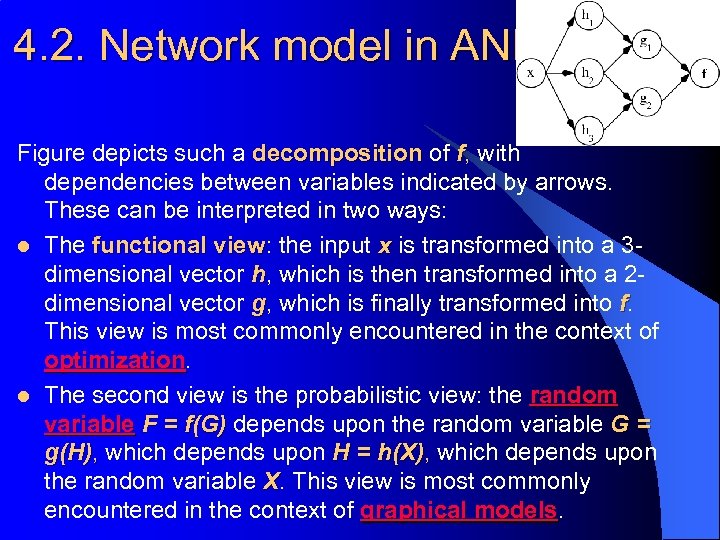 4. 2. Network model in ANN Figure depicts such a decomposition of f, with dependencies between variables indicated by arrows. These can be interpreted in two ways: l The functional view: the input x is transformed into a 3 view dimensional vector h, which is then transformed into a 2 dimensional vector g, which is finally transformed into f. This view is most commonly encountered in the context of optimization l The second view is the probabilistic view: the random variable F = f(G) depends upon the random variable G = g(H), which depends upon H = h(X), which depends upon the random variable X. This view is most commonly encountered in the context of graphical models
 4. 3. Learning of the ANN The most interest in ANN is the possibility of learning : l Given a specific task to solve, and a class of functions F, learning means using a set of observations, in order observations to find which solves the task in an optimal sense l This entails defining a cost function: l The cost function C is an important concept in learning, as it is a measure of how far away we are from an optimal solution to the problem that we want to solve. l Training a neural network model essentially means selecting one model from the set of allowed models that minimises the cost criterion.
 4. 4. An ANN Application The tasks to which artificial neural networks are applied tend to fall within the following broad categories: l Function approximation, or regression approximation analysis, including time series prediction analysis and modeling l Classification, including pattern and Classification sequence recognition, novelty detection recognition and sequential decision making. l Data processing, including filtering, processing clustering, blind source separation and compression.
 4. 4. An ANN Application areas include: l system identification and control (vehicle control, process control); l game-playing and decision making (backgammon, chess, racing); l pattern recognition (radar systems, face identification, object recognition and more); l sequence recognition (gesture, speech, handwritten text recognition); l medical diagnosis and visualization; visualization l financial applications (automated trading systems); l data mining (or knowledge discovery in databases, "KDD").
 Conclusion In this lecture was described next questions: l Decision Support Systems Basics. l Decision Support Systems in Medicine l Expert systems l Artificial neural network
 Literature l Electronic documentation on to the TDMU server: http: //www. tdmu. edu. te. ua