


 Скачать презентацию Death Dying Fiji National University CEU 305
fbc22a4c199c4f3897d268af8905a1ce.ppt
- Количество слайдов: 30
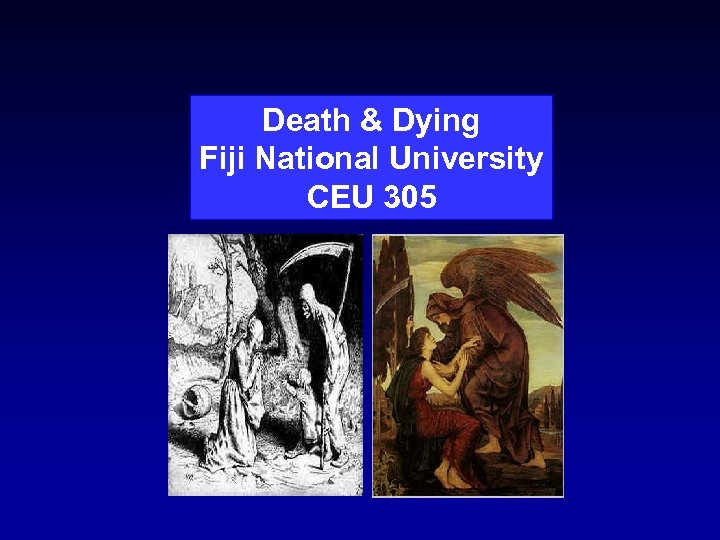 Death & Dying Fiji National University CEU 305
 “I don’t mind dying, I just don’t want to be there when it happens. ” Woody Allen
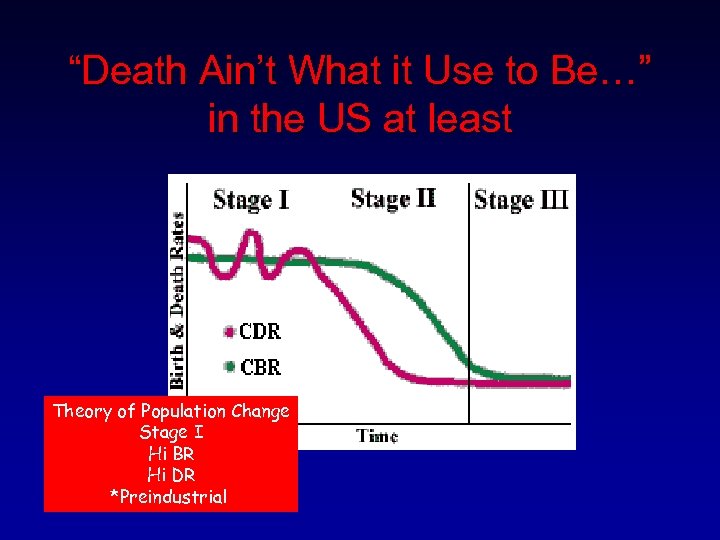 “Death Ain’t What it Use to Be…” in the US at least Theory of Population Change Stage I Hi BR Hi DR *Preindustrial
 DEATH • • The final stage of growth Experienced by everyone The young ignore its existence The old begin to think of their own
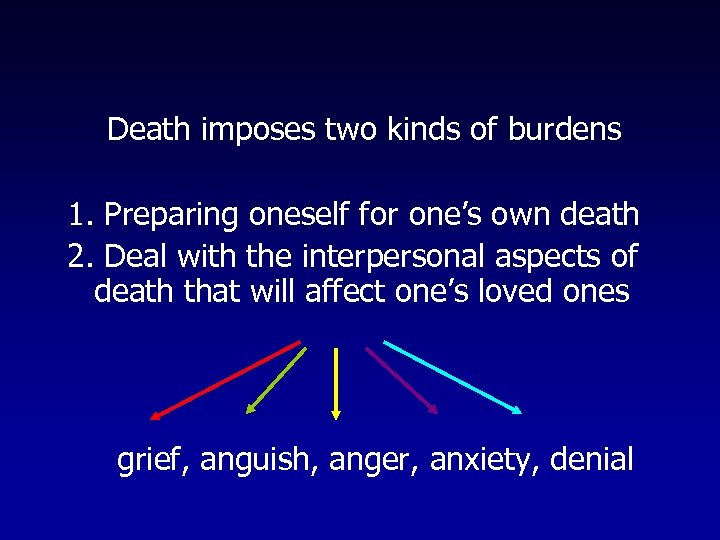 Death imposes two kinds of burdens 1. Preparing oneself for one’s own death 2. Deal with the interpersonal aspects of death that will affect one’s loved ones grief, anguish, anger, anxiety, denial
 Societal Meanings of Death • Modern American – Medical failure • More traditional societies – Natural part of life cycle
 US: Societal Changes – early 1900’s and now Early 1900’s…. • Focus was on “comfort” • Died of infection • Died at home • Family was caregiver • Death was short and sudden 2005…… • Focus is on “cure” • Die of chronic illness • Die in institutions • Institution staff are caregivers • Death is prolonged Circle of Life Community Coalition End of Life Toolkit
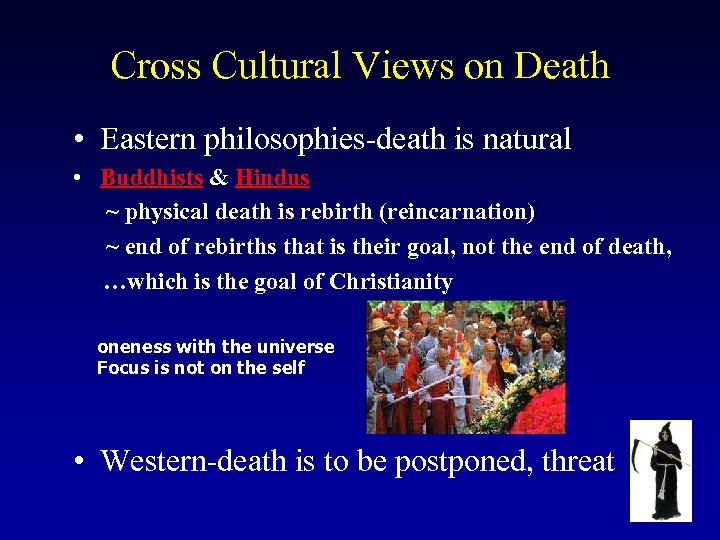 Cross Cultural Views on Death • Eastern philosophies-death is natural • Buddhists & Hindus ~ physical death is rebirth (reincarnation) ~ end of rebirths that is their goal, not the end of death, …which is the goal of Christianity oneness with the universe Focus is not on the self • Western-death is to be postponed, threat
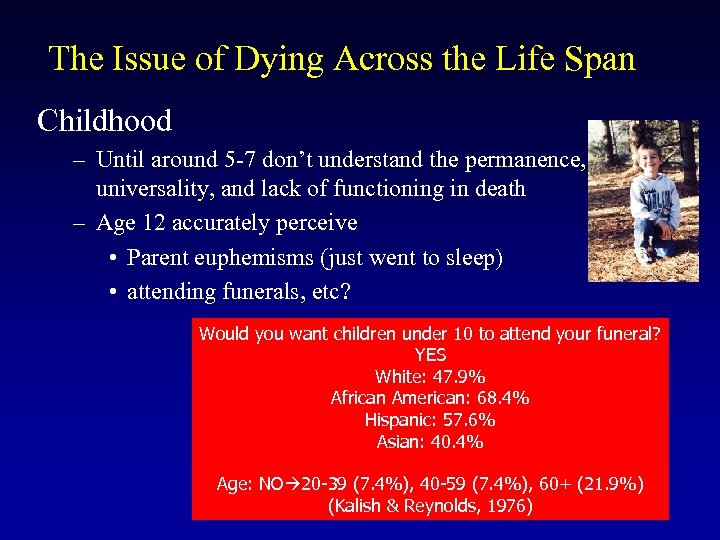 The Issue of Dying Across the Life Span Childhood – Until around 5 -7 don’t understand the permanence, universality, and lack of functioning in death – Age 12 accurately perceive • Parent euphemisms (just went to sleep) • attending funerals, etc? Would you want children under 10 to attend your funeral? YES White: 47. 9% African American: 68. 4% Hispanic: 57. 6% Asian: 40. 4% Age: NO 20 -39 (7. 4%), 40 -59 (7. 4%), 60+ (21. 9%) (Kalish & Reynolds, 1976)
 The Issue of Dying Across the Life Span Adolescence - More experienced with death and grief - Loss of sibling, friend or parent (survivor’s guilt) - Positive outcome includes greater appreciation for life
 The Issue of Dying Across the Life Span Adulthood Middle-aged • understand next in line to die • change in perception of time (lived vs amount left) * death of a parent * death of a child - violates the natural order • Transition to being the oldest generation
 Late Adulthood- Older adults • Least concerned with dying Loss of a partner Loss of child or grandchild **although think about death more In recent survey (AARP) -2, 000 Americans age 45 and older were questioned about their fear of dying. 30% of those 45 -49 expressed fear of dying 15 of those 75 and older expressed fear of dying More women overall (24%) than men overall (18% ) were afraid of dying
 Late Adulthood- Older adults (Cicerilli, 1999) N=388, Young & Old: think about death more Old: less afraid about death Old : more fearful vs Old : fear more pain & artificial life support (Cicerilli, 2002) Meaning of Death? 1) 2) 3) Eventually meeting with God or nonexistence Preparation to leave a legacy Limited time to do things
 WHY not afraid? • goals have been fulfilled • living longer than expected • coming to terms with finitude • dealing with the deaths of friends
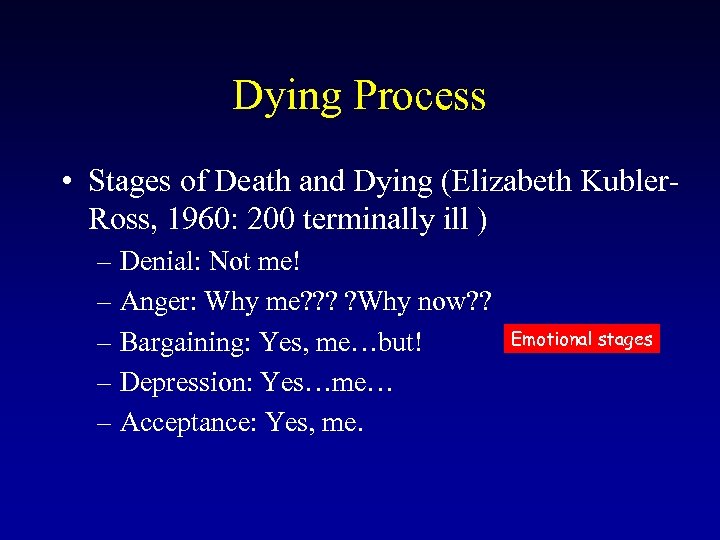 Dying Process • Stages of Death and Dying (Elizabeth Kubler. Ross, 1960: 200 terminally ill ) – Denial: Not me! – Anger: Why me? ? Why now? ? – Bargaining: Yes, me…but! – Depression: Yes…me… – Acceptance: Yes, me. Emotional stages
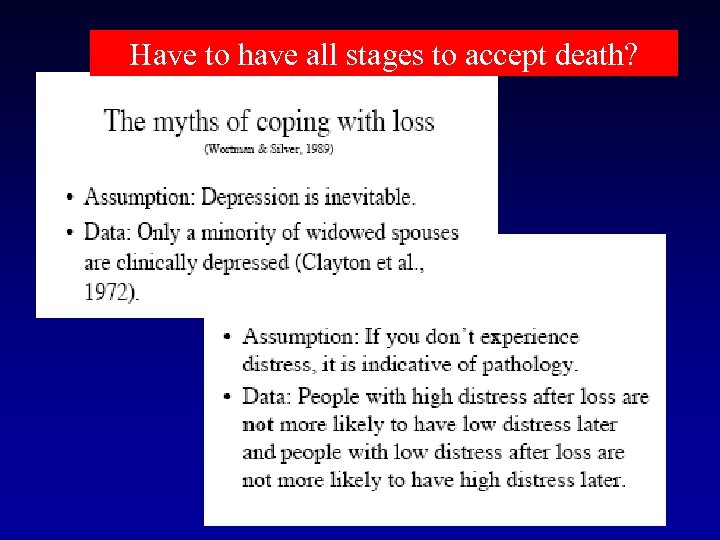 Have to have all stages to accept death?
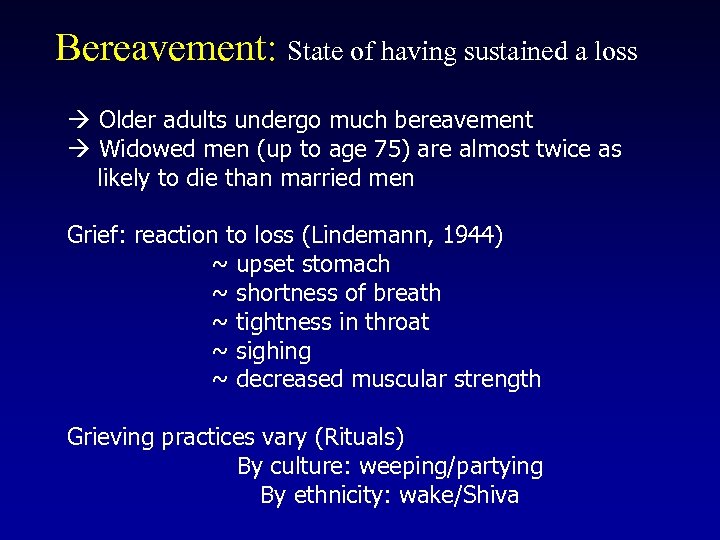 Bereavement: State of having sustained a loss Older adults undergo much bereavement Widowed men (up to age 75) are almost twice as likely to die than married men Grief: reaction to loss (Lindemann, 1944) ~ upset stomach ~ shortness of breath ~ tightness in throat ~ sighing ~ decreased muscular strength Grieving practices vary (Rituals) By culture: weeping/partying By ethnicity: wake/Shiva
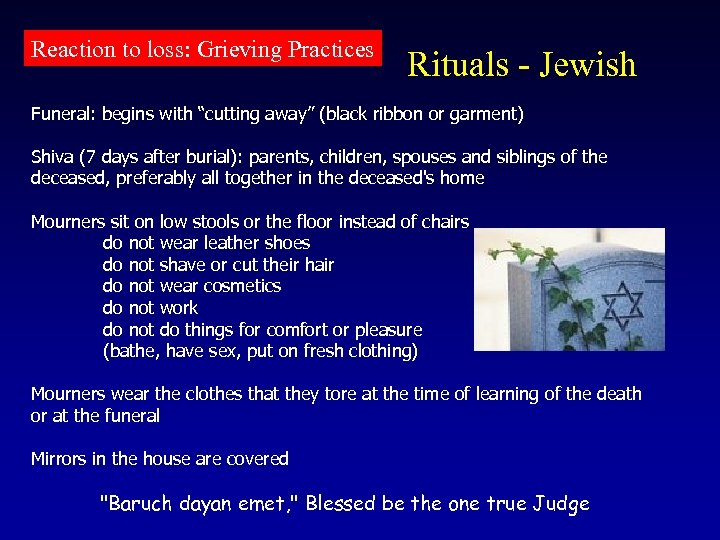 Reaction to loss: Grieving Practices Rituals - Jewish Funeral: begins with “cutting away” (black ribbon or garment) Shiva (7 days after burial): parents, children, spouses and siblings of the deceased, preferably all together in the deceased's home Mourners sit on low stools or the floor instead of chairs do not wear leather shoes do not shave or cut their hair do not wear cosmetics do not work do not do things for comfort or pleasure (bathe, have sex, put on fresh clothing) Mourners wear the clothes that they tore at the time of learning of the death or at the funeral Mirrors in the house are covered "Baruch dayan emet, " Blessed be the one true Judge
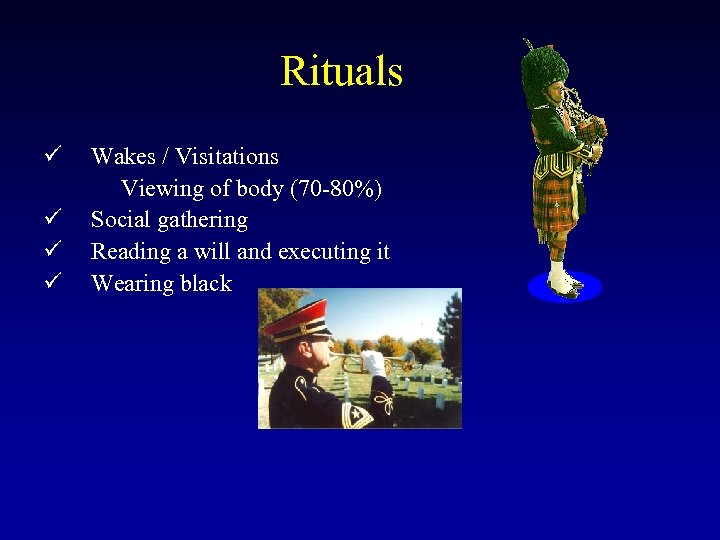 Rituals ü ü Wakes / Visitations Viewing of body (70 -80%) Social gathering Reading a will and executing it Wearing black
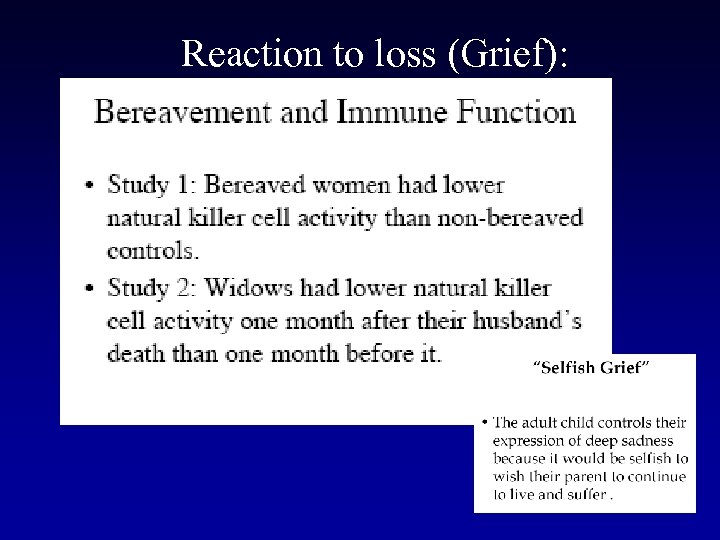 Reaction to loss (Grief):
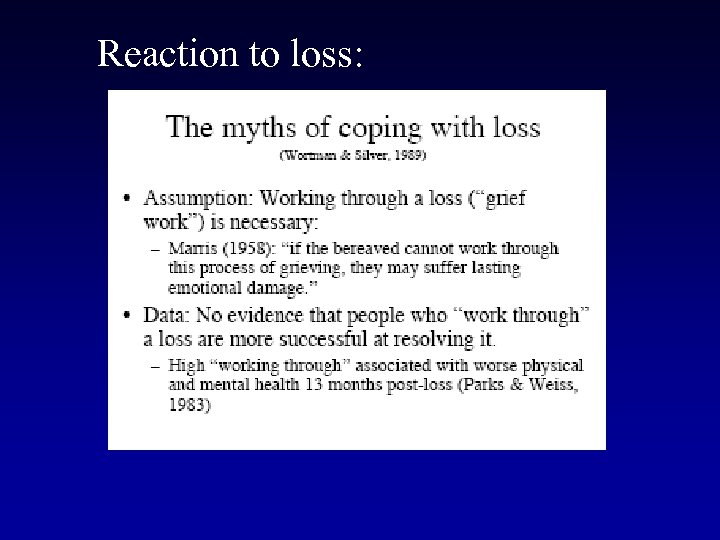 Reaction to loss:
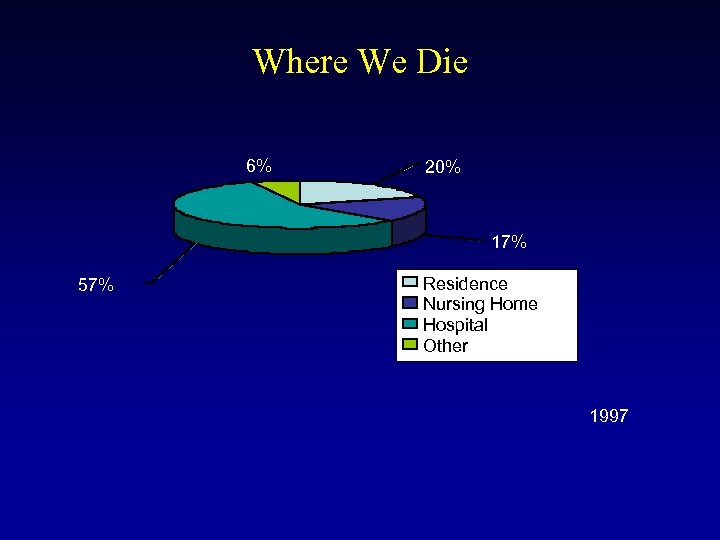 Where We Die 6% 20% 17% 57% Residence Nursing Home Hospital Other 1997
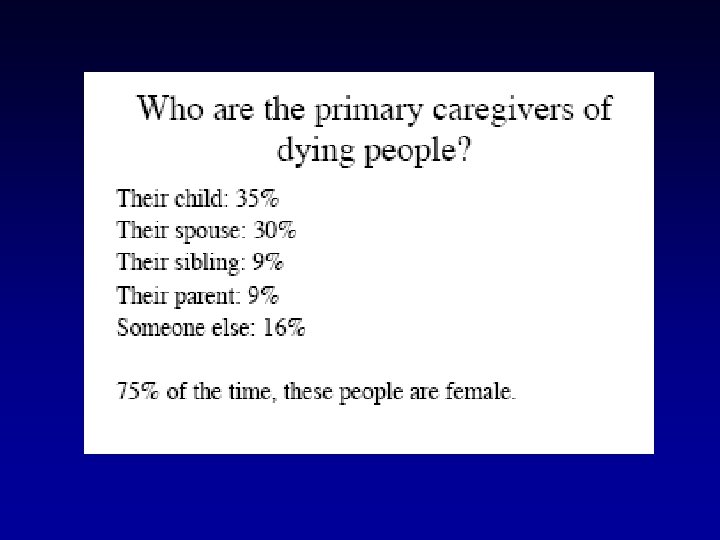
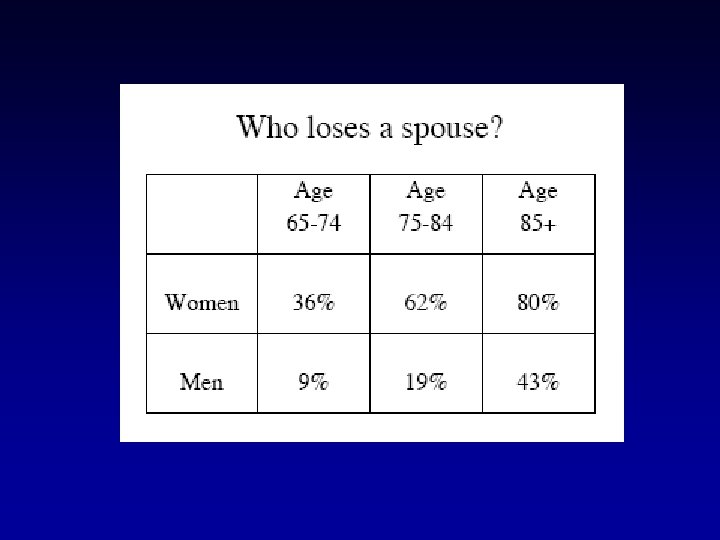
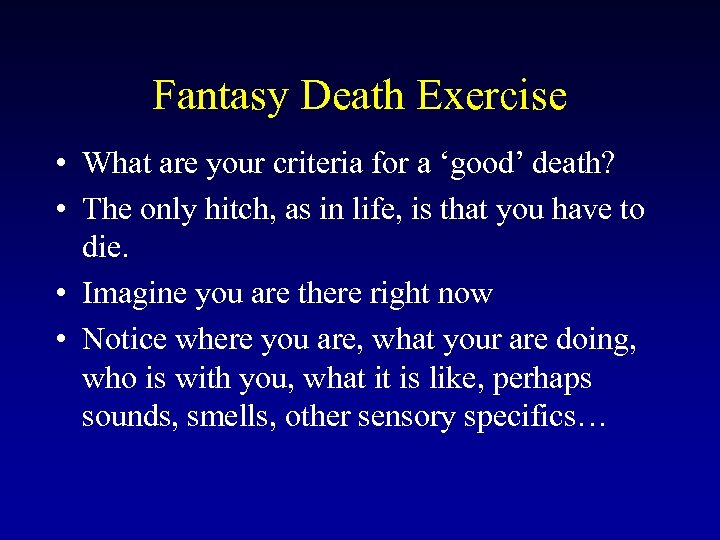 Fantasy Death Exercise • What are your criteria for a ‘good’ death? • The only hitch, as in life, is that you have to die. • Imagine you are there right now • Notice where you are, what your are doing, who is with you, what it is like, perhaps sounds, smells, other sensory specifics…
 Common Ideal Death Scenarios • Sudden death in sleep (Older Adults too) • Dying at home • Dying engaged in meaningful activity
 Themes for a ‘Good’ Death • • • Home Comfort Sense of completion (tasks accomplished) Saying goodbye Life-review Love