


 Скачать презентацию DC-NET and INDICATE Workshop 2001 -2011 ten years
a0383ffdb560fc003d45c2a6be889312.ppt
- Количество слайдов: 29
 DC-NET and INDICATE Workshop 2001 -2011, ten years of networking for digital cultural heritage Rossella Caffo Ministero per i beni e le attività culturali Istituto centrale per il catalogo unico delle biblioteche italiane (ICCU) Beijing, 26 th May 2011 Central Library of the Peking University
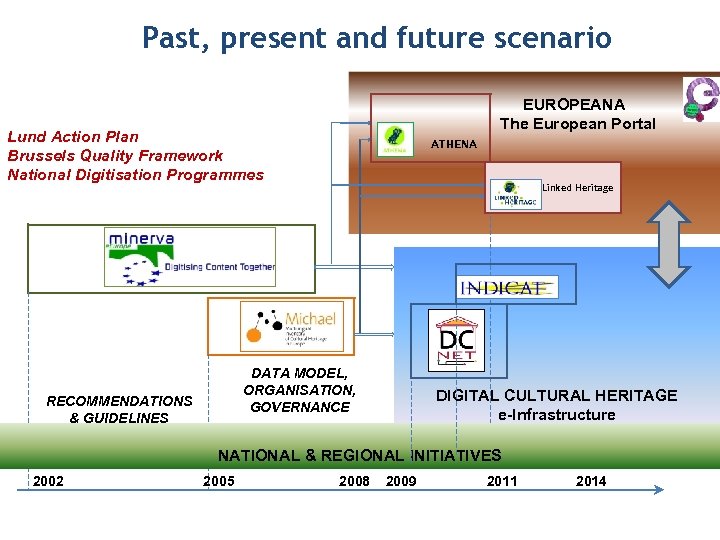 Past, present and future scenario EUROPEANA The European Portal Lund Action Plan Brussels Quality Framework National Digitisation Programmes ATHENA Linked Heritage DATA MODEL, ORGANISATION, GOVERNANCE RECOMMENDATIONS & GUIDELINES DIGITAL CULTURAL HERITAGE e-Infrastructure NATIONAL & REGIONAL INITIATIVES 2002 2005 2008 2009 2011 2014
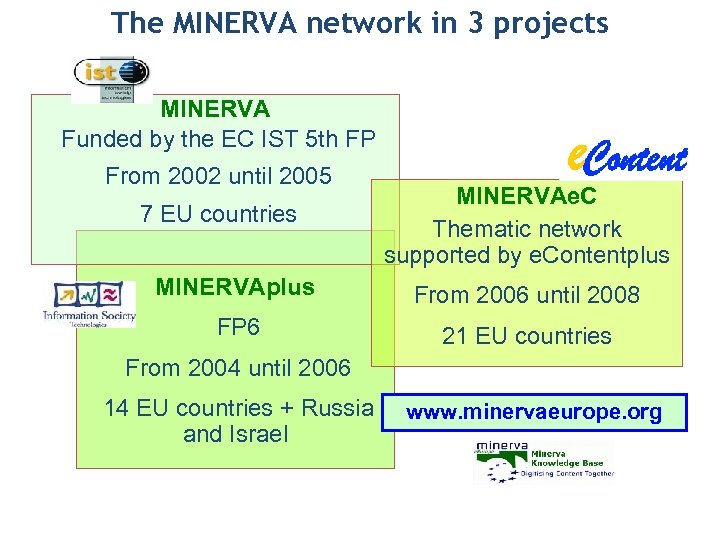 The MINERVA network in 3 projects MINERVA Funded by the EC IST 5 th FP From 2002 until 2005 7 EU countries MINERVAe. C Thematic network supported by e. Contentplus MINERVAplus From 2006 until 2008 FP 6 21 EU countries From 2004 until 2006 14 EU countries + Russia and Israel www. minervaeurope. org
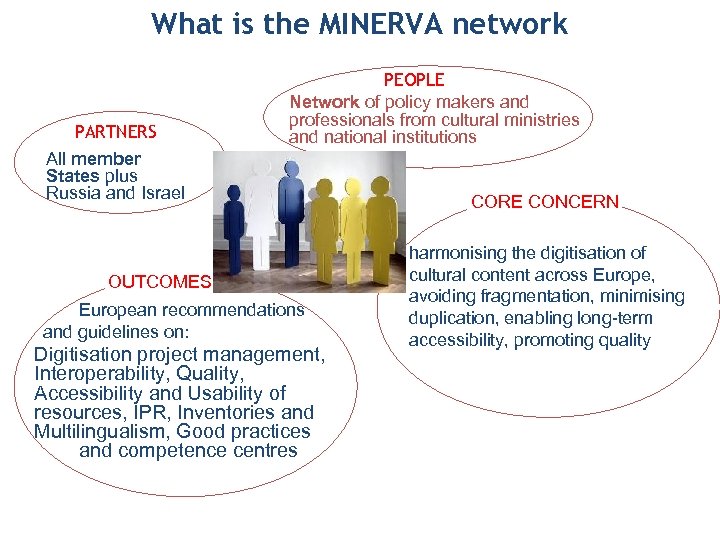 What is the MINERVA network PARTNERS All member States plus Russia and Israel PEOPLE Network of policy makers and professionals from cultural ministries and national institutions OUTCOMES European recommendations and guidelines on: Digitisation project management, Interoperability, Quality, Accessibility and Usability of resources, IPR, Inventories and Multilingualism, Good practices and competence centres CORE CONCERN harmonising the digitisation of cultural content across Europe, avoiding fragmentation, minimising duplication, enabling long-term accessibility, promoting quality
 MINERVA Keywords Cross-domain approach (ALM) Sharing good practices across Europe Network of hundreds of experts Tight liaison with the national digitisation programmes • Coordination among and within member States • Monitoring progress • Promotion of digitisation standards • •
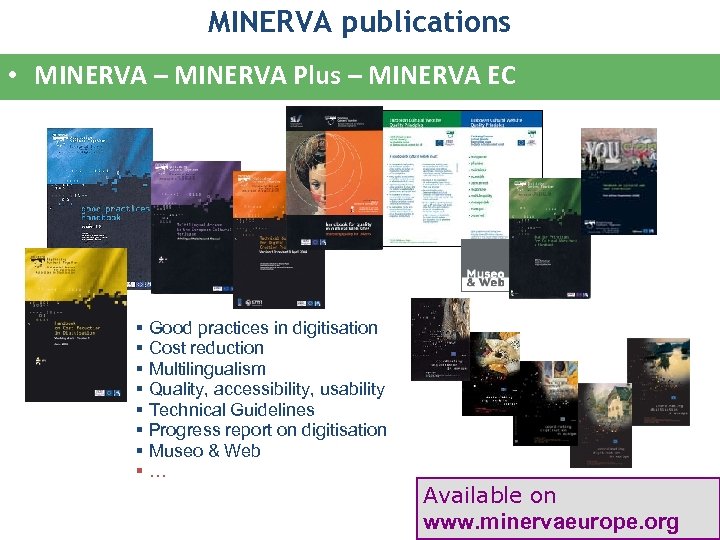 MINERVA publications • MINERVA – MINERVA Plus – MINERVA EC § Good practices in digitisation § Cost reduction § Multilingualism § Quality, accessibility, usability § Technical Guidelines § Progress report on digitisation § Museo & Web §… Available on www. minervaeurope. org
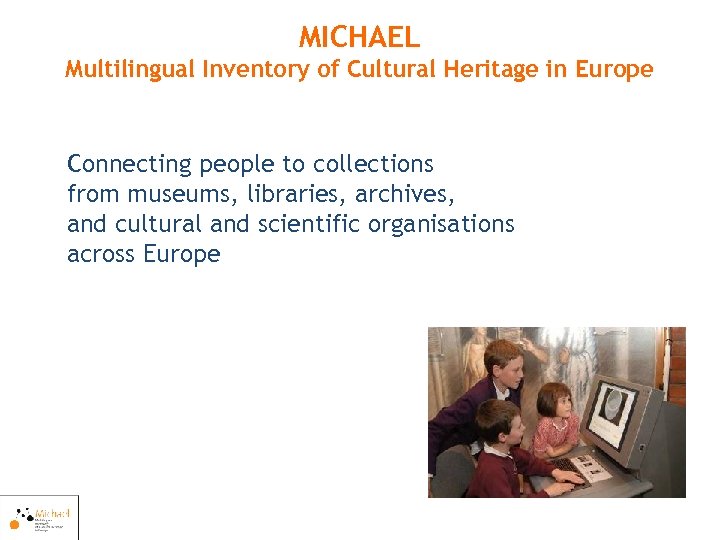 MICHAEL Multilingual Inventory of Cultural Heritage in Europe Connecting people to collections from museums, libraries, archives, and cultural and scientific organisations across Europe
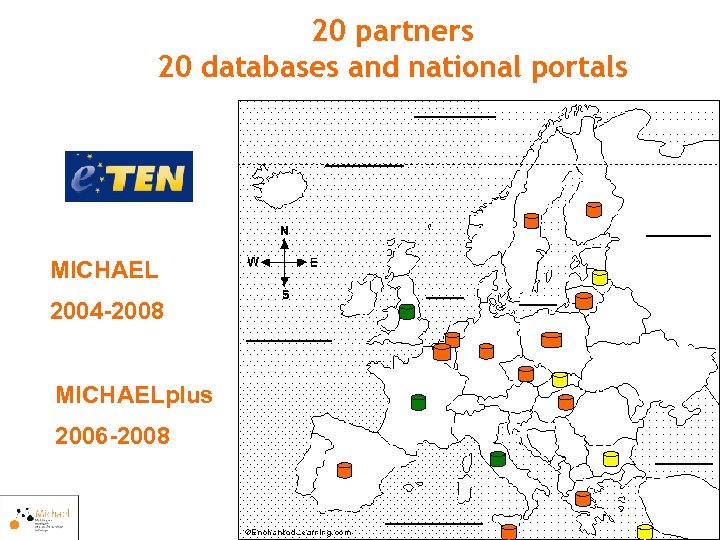 20 partners 20 databases and national portals MICHAEL 2004 -2008 MICHAELplus 2006 -2008
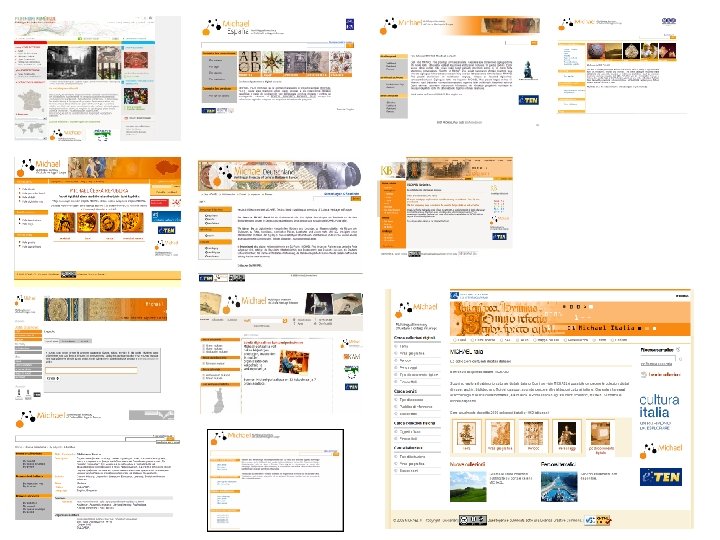
 1 network, 20 nodes Ø 20 national different portals with the same approach Ø Contributing data to the European portal MICHAEL Culture Ø Sharing of the software platform and standards Ø National and local campaigns for the census and cataloguing of the digital collections Ø Tight work with cultural institutions of every sector and national regional and local level
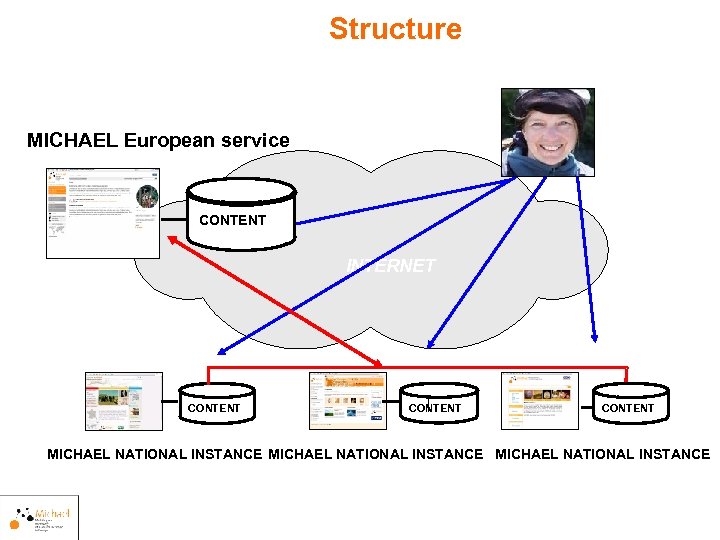 Structure MICHAEL European service CONTENT INTERNET CONTENT MICHAEL NATIONAL INSTANCE
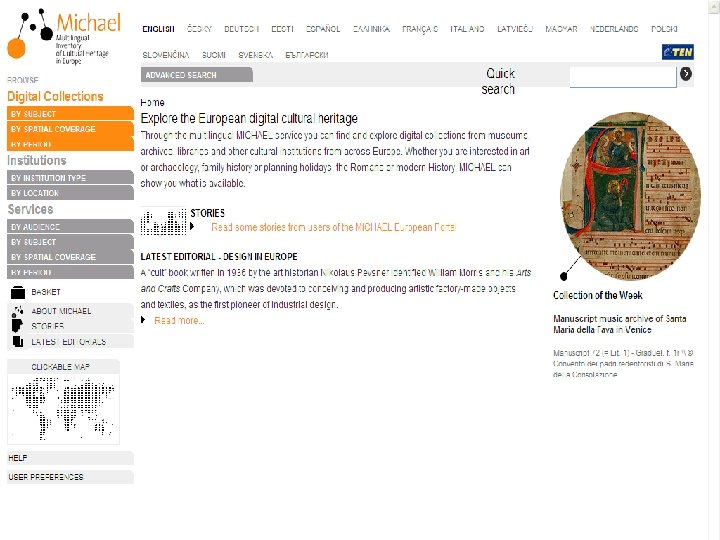
 Open standards Ø Open source software platform Ø Data model aligned to the Dublin Core metadata set and the emerging Dublin Core Collection Description Appl. Profile Ø XML data base Ø Metadata harvesting through OAI-PMH Ø Terminologies based on international standards Ø (ISO, UNESCO, Dublin Core, W 3 C…) Ø The records are published under Creative Commons ‘Attribution Non-commercial’ licence
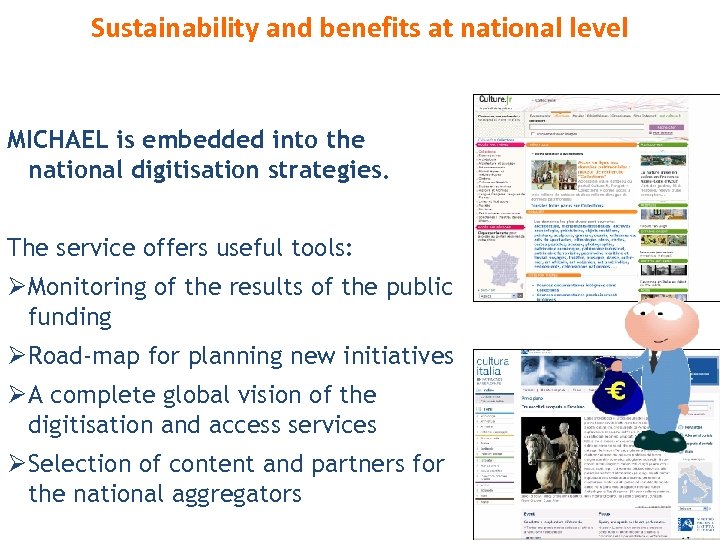 Sustainability and benefits at national level MICHAEL is embedded into the national digitisation strategies. The service offers useful tools: ØMonitoring of the results of the public funding ØRoad-map for planning new initiatives ØA complete global vision of the digitisation and access services ØSelection of content and partners for the national aggregators
 Sustainability of the European service The MICHAEL Culture international Association: a European cross-domain network AISBL - Association internationale sans but lucratif under the Belgian law – Member of the Europeana Foundation Board Members: institutions of every sector from all over Europe (ministries, public agencies, cultural institutions)
 ATHENA Access to cultural heritage networks across Europe A network of good practices financed by the e. Contentplus programme A 30 month project (2008 -2011) coordinated by Mi. BAC A result of the MINERVA project ATHENA involved: 20 EU Member States, Israel, Russia and Azerbaijian 130 museums and other important cultural institutions in Europe www. athenaeurope. org
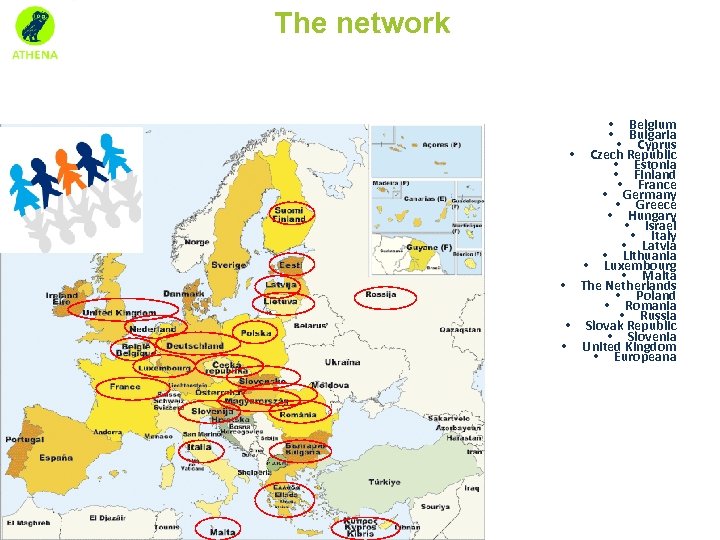 The network • Belgium • Bulgaria • Cyprus • Czech Republic • Estonia • Finland • France • Germany • Greece • Hungary • Israel • Italy • Latvia • Lithuania • Luxembourg • Malta • The Netherlands • Poland • Romania • Russia • Slovak Republic • Slovenia • United Kingdom • Europeana
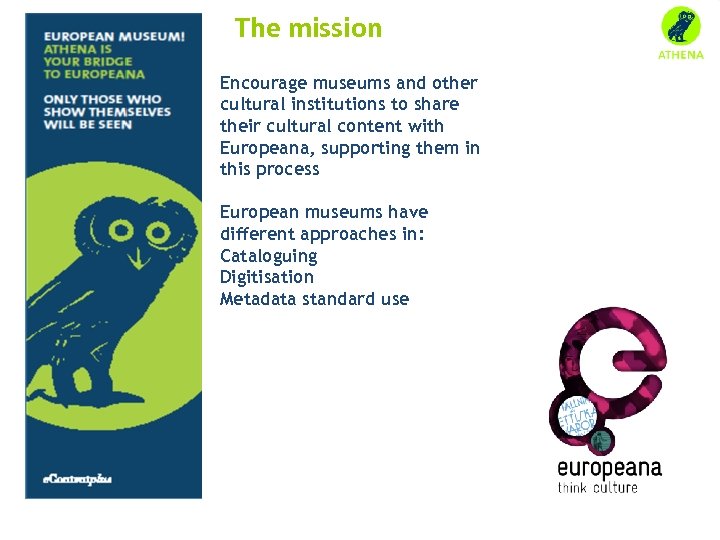 The mission Encourage museums and other cultural institutions to share their cultural content with Europeana, supporting them in this process European museums have different approaches in: Cataloguing Digitisation Metadata standard use
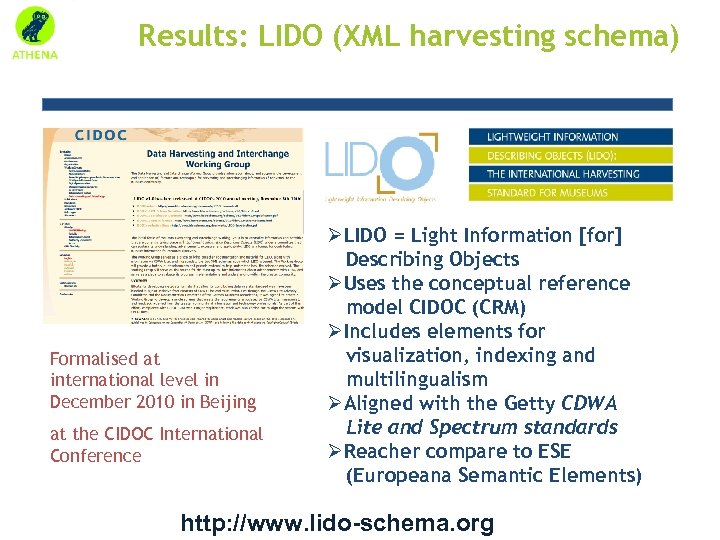 Results: LIDO (XML harvesting schema) Formalised at international level in December 2010 in Beijing at the CIDOC International Conference ØLIDO = Light Information [for] Describing Objects ØUses the conceptual reference model CIDOC (CRM) ØIncludes elements for visualization, indexing and multilingualism ØAligned with the Getty CDWA Lite and Spectrum standards ØReacher compare to ESE (Europeana Semantic Elements) http: //www. lido-schema. org
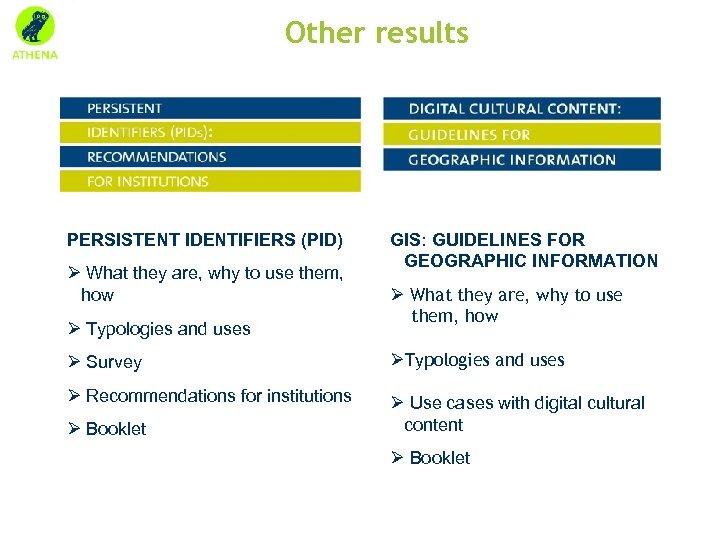 Other results PERSISTENT IDENTIFIERS (PID) Ø What they are, why to use them, how Ø Typologies and uses GIS: GUIDELINES FOR GEOGRAPHIC INFORMATION Ø What they are, why to use them, how Ø Survey ØTypologies and uses Ø Recommendations for institutions Ø Use cases with digital cultural content Ø Booklet
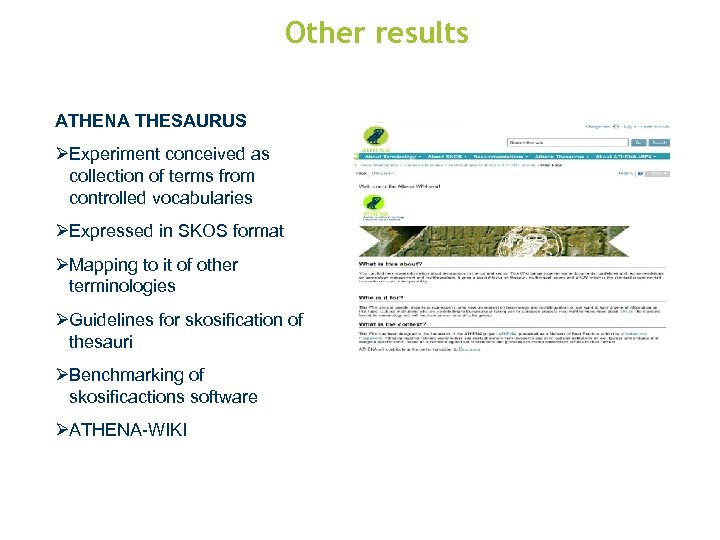 Other results ATHENA THESAURUS ØExperiment conceived as collection of terms from controlled vocabularies ØExpressed in SKOS format ØMapping to it of other terminologies ØGuidelines for skosification of thesauri ØBenchmarking of skosificactions software ØATHENA-WIKI
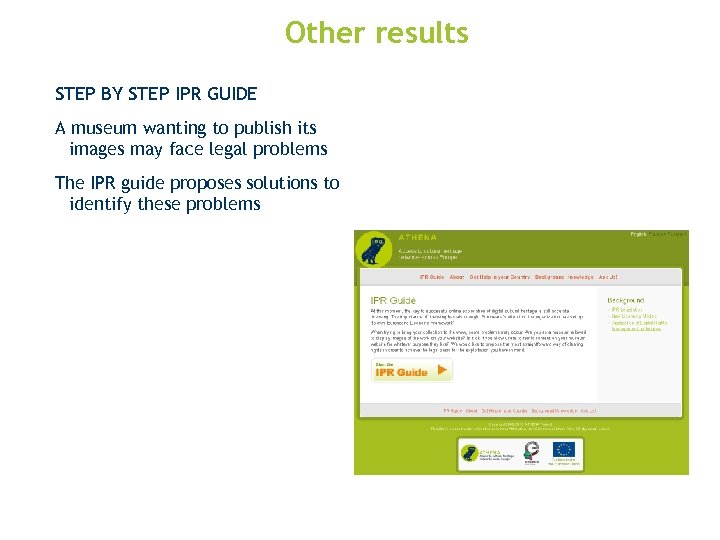 Other results STEP BY STEP IPR GUIDE A museum wanting to publish its images may face legal problems The IPR guide proposes solutions to identify these problems
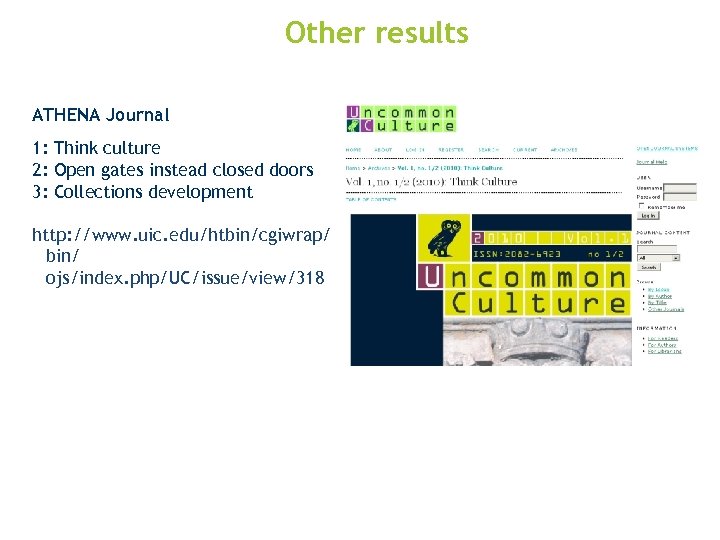 Other results ATHENA Journal 1: Think culture 2: Open gates instead closed doors 3: Collections development http: //www. uic. edu/htbin/cgiwrap/ bin/ ojs/index. php/UC/issue/view/318
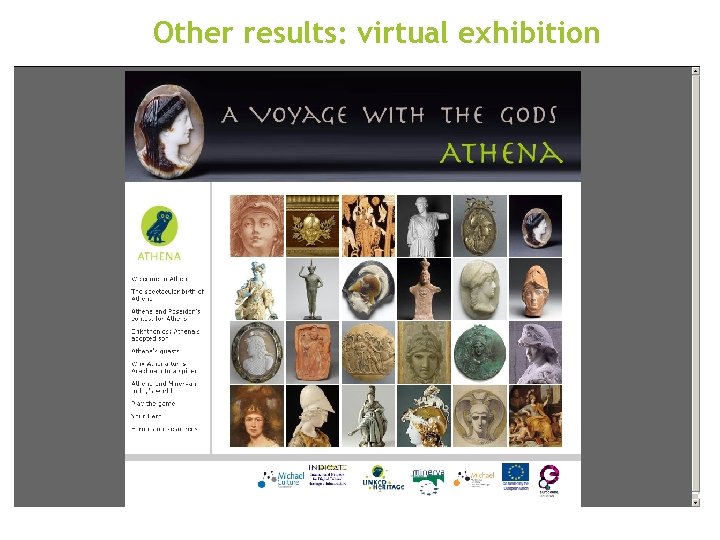 Other results: virtual exhibition
 Linked Heritage Best Practice Network Started on 1/4/2011 • To contribute large quantities of new content to Europeana – cross domain • To prepare for the enhancement of the quality of both new and existing Europeana content • To demonstrate improved search, retrieval and use of Europeana content • For the first time, the public sector participate together with the private sector to provide content to Europeana
 Main objectives 1. First and most important focus: to provide 3 million new content to Europeana 2. Five key areas of development and innovation: a) The use of linked data b) Persistent identifiers c) Metadata and standards (particularly for non-library sources) d) Multilingual and cross-domain combination of terminologies e) Engagement with the private sector (ONIX mapping)
 Thank you! Rossella Caffo rosa. caffo@beniculturali. it DC-NET and INDICATE Coordinator www. minervaeurope. org www. michae-culture. org www. athenaeurope. org www. linkedheritage. eu