 Скачать презентацию David Foster LCG Project 12 -March-02 Fabric Automation
d84123394cd011b0232826bd16fca276.ppt
- Количество слайдов: 17



David Foster LCG Project 12 -March-02 Fabric Automation The Challenge of LHC Scale Fabrics LHC Computing Grid Workshop David Foster 12 th March 2002
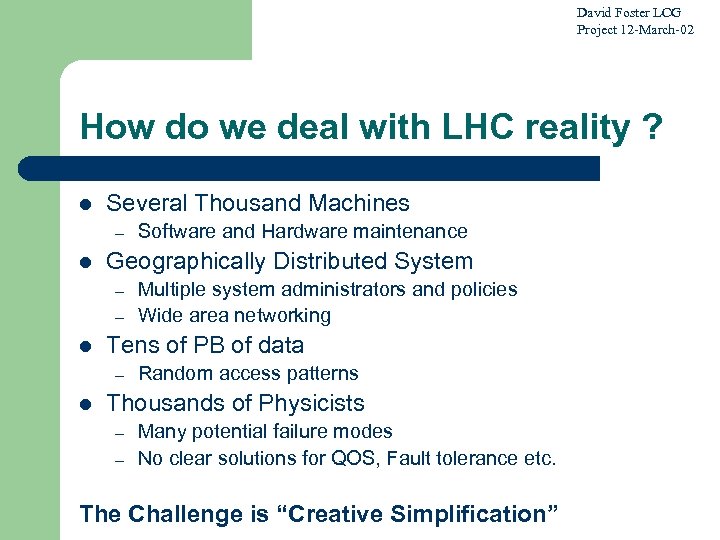
David Foster LCG Project 12 -March-02 How do we deal with LHC reality ? l Several Thousand Machines – l Geographically Distributed System – – l Multiple system administrators and policies Wide area networking Tens of PB of data – l Software and Hardware maintenance Random access patterns Thousands of Physicists – – Many potential failure modes No clear solutions for QOS, Fault tolerance etc. The Challenge is “Creative Simplification”
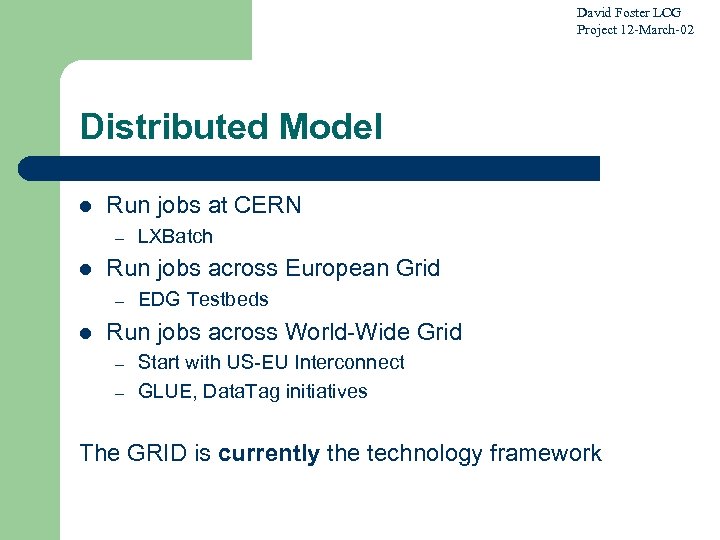
David Foster LCG Project 12 -March-02 Distributed Model l Run jobs at CERN – l Run jobs across European Grid – l LXBatch EDG Testbeds Run jobs across World-Wide Grid – – Start with US-EU Interconnect GLUE, Data. Tag initiatives The GRID is currently the technology framework
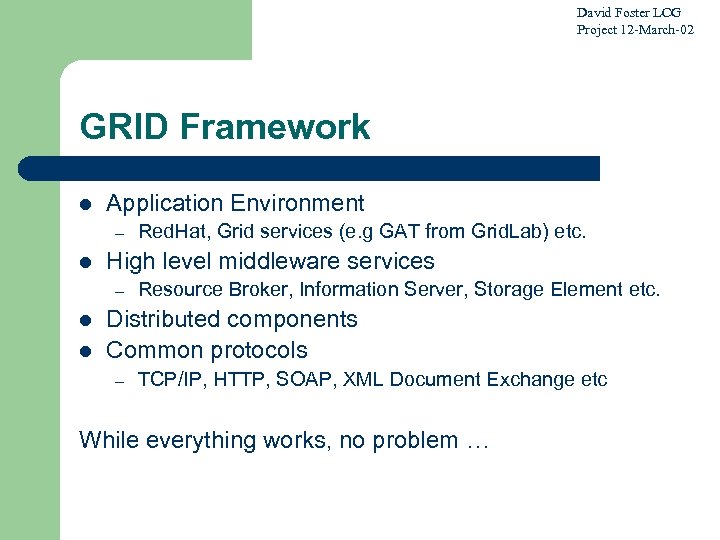
David Foster LCG Project 12 -March-02 GRID Framework l Application Environment – l High level middleware services – l l Red. Hat, Grid services (e. g GAT from Grid. Lab) etc. Resource Broker, Information Server, Storage Element etc. Distributed components Common protocols – TCP/IP, HTTP, SOAP, XML Document Exchange etc While everything works, no problem …
David Foster LCG Project 12 -March-02 LHC GRID System Requirements l Predictable Behaviour – l Change Management – l The dreaded “Certification” process Scalability – – l Understand failure modes (Disk, Server, Network) Understand how scalable the systems really are. Experience needed Cost Effectiveness
David Foster LCG Project 12 -March-02 Architectural Considerations l What does it take to make a predictable system ? – – Hardware, Fabric, Middleware, Applications Maximise automated corrective actions l l Must be part of the architectural design Must be part of the software implementation Must be part of the hardware selection The cost of failures must be understood so must not: – – – Cause panic Require expert assistance in every case “Bring down” the system
David Foster LCG Project 12 -March-02
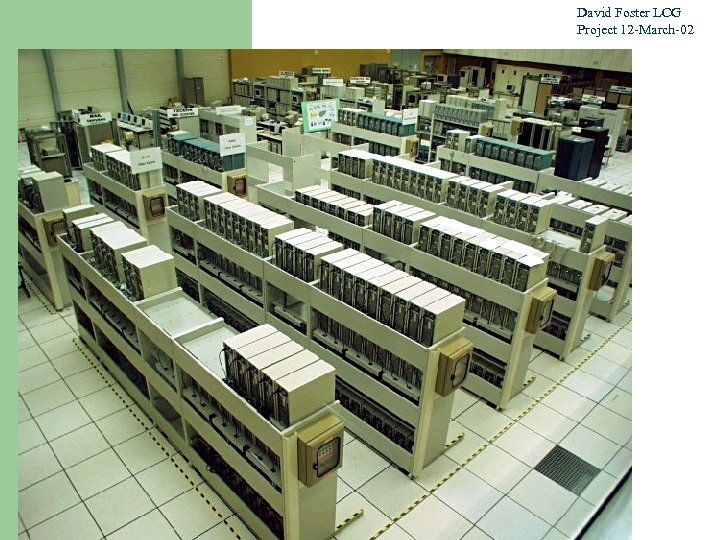
David Foster LCG Project 12 -March-02 Cost Effectiveness l Computer center organisation is important – Managing 20’ 000 machines l l l – Increased Automated Tasks l l – Physical Logistics “Locatability” Upgrade Strategies Even one manual intervention not tolerable Causal Analysis Human tasks must be kept Manageable
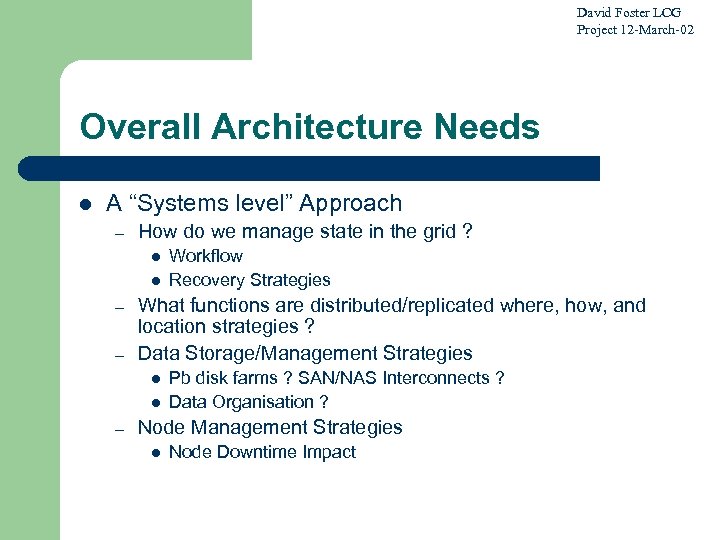
David Foster LCG Project 12 -March-02 Overall Architecture Needs l A “Systems level” Approach – How do we manage state in the grid ? l l – – What functions are distributed/replicated where, how, and location strategies ? Data Storage/Management Strategies l l – Workflow Recovery Strategies Pb disk farms ? SAN/NAS Interconnects ? Data Organisation ? Node Management Strategies l Node Downtime Impact
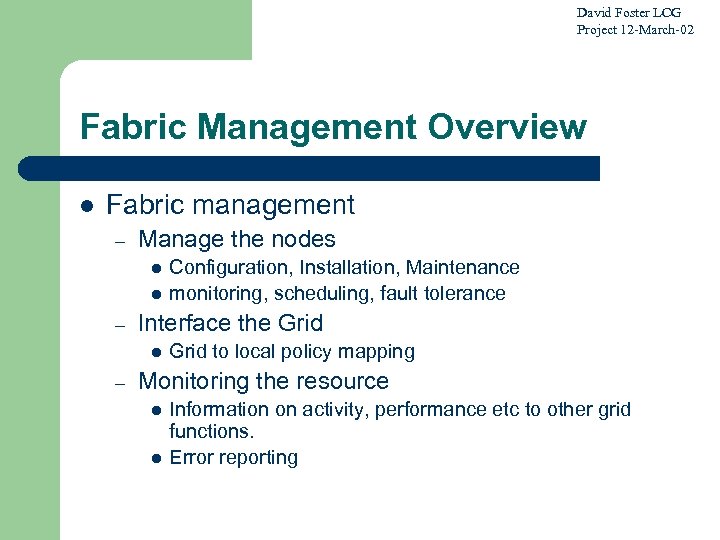
David Foster LCG Project 12 -March-02 Fabric Management Overview l Fabric management – Manage the nodes l l – Interface the Grid l – Configuration, Installation, Maintenance monitoring, scheduling, fault tolerance Grid to local policy mapping Monitoring the resource l l Information on activity, performance etc to other grid functions. Error reporting
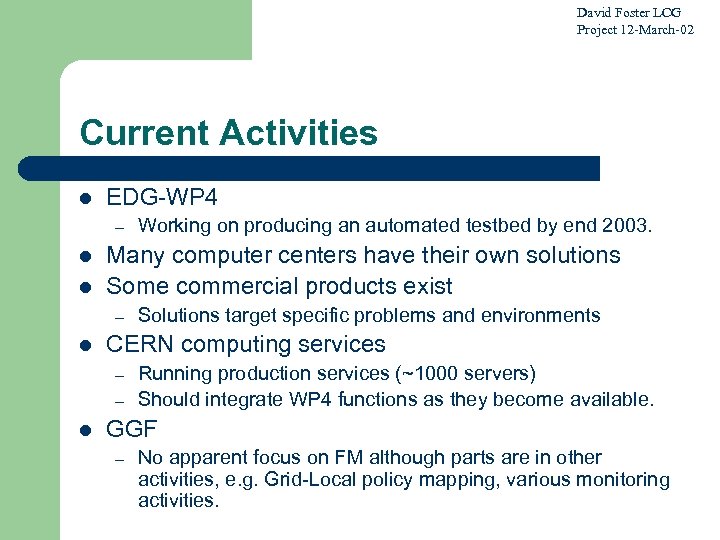
David Foster LCG Project 12 -March-02 Current Activities l EDG-WP 4 – l l Many computer centers have their own solutions Some commercial products exist – l Solutions target specific problems and environments CERN computing services – – l Working on producing an automated testbed by end 2003. Running production services (~1000 servers) Should integrate WP 4 functions as they become available. GGF – No apparent focus on FM although parts are in other activities, e. g. Grid-Local policy mapping, various monitoring activities.
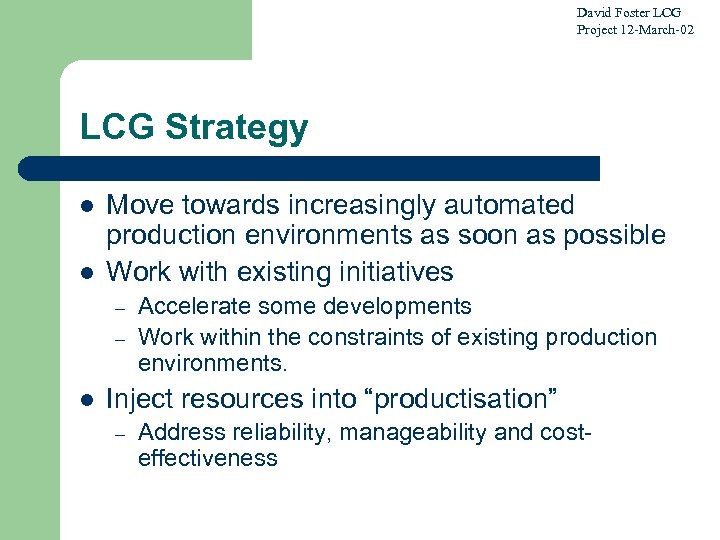
David Foster LCG Project 12 -March-02 LCG Strategy l l Move towards increasingly automated production environments as soon as possible Work with existing initiatives – – l Accelerate some developments Work within the constraints of existing production environments. Inject resources into “productisation” – Address reliability, manageability and costeffectiveness
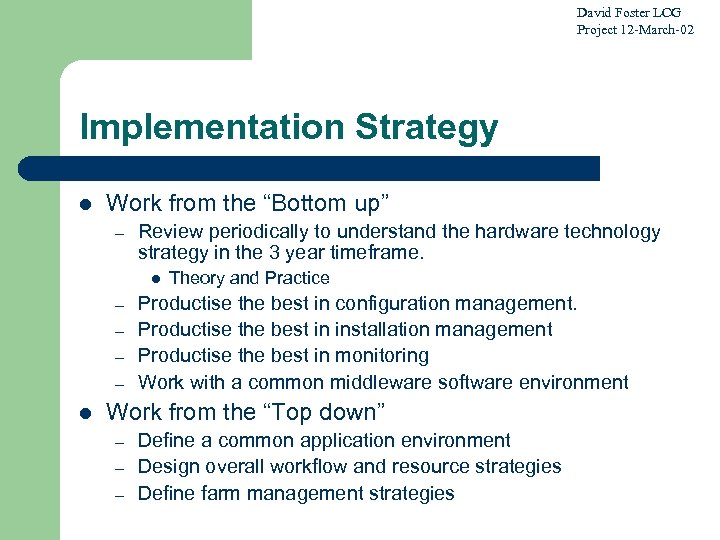
David Foster LCG Project 12 -March-02 Implementation Strategy l Work from the “Bottom up” – Review periodically to understand the hardware technology strategy in the 3 year timeframe. l – – l Theory and Practice Productise the best in configuration management. Productise the best in installation management Productise the best in monitoring Work with a common middleware software environment Work from the “Top down” – – – Define a common application environment Design overall workflow and resource strategies Define farm management strategies
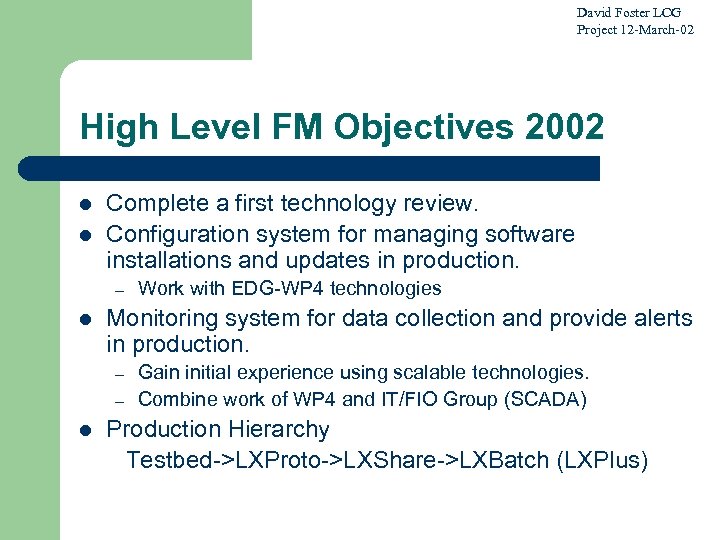
David Foster LCG Project 12 -March-02 High Level FM Objectives 2002 l l Complete a first technology review. Configuration system for managing software installations and updates in production. – l Monitoring system for data collection and provide alerts in production. – – l Work with EDG-WP 4 technologies Gain initial experience using scalable technologies. Combine work of WP 4 and IT/FIO Group (SCADA) Production Hierarchy Testbed->LXProto->LXShare->LXBatch (LXPlus)
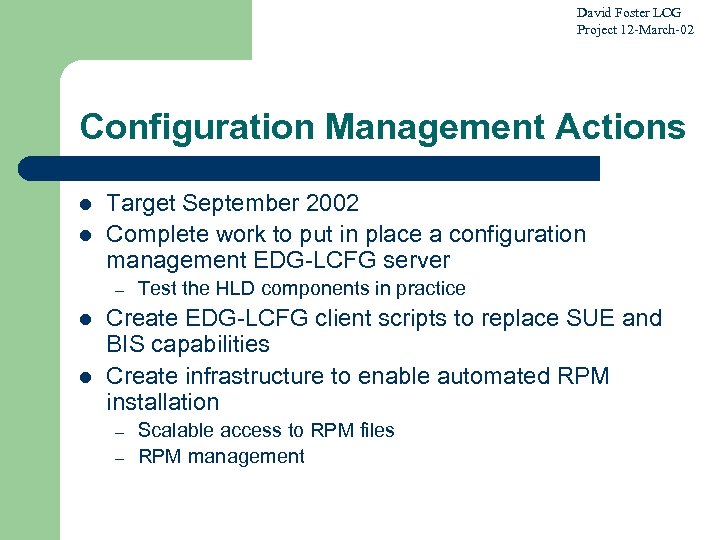
David Foster LCG Project 12 -March-02 Configuration Management Actions l l Target September 2002 Complete work to put in place a configuration management EDG-LCFG server – l l Test the HLD components in practice Create EDG-LCFG client scripts to replace SUE and BIS capabilities Create infrastructure to enable automated RPM installation – – Scalable access to RPM files RPM management
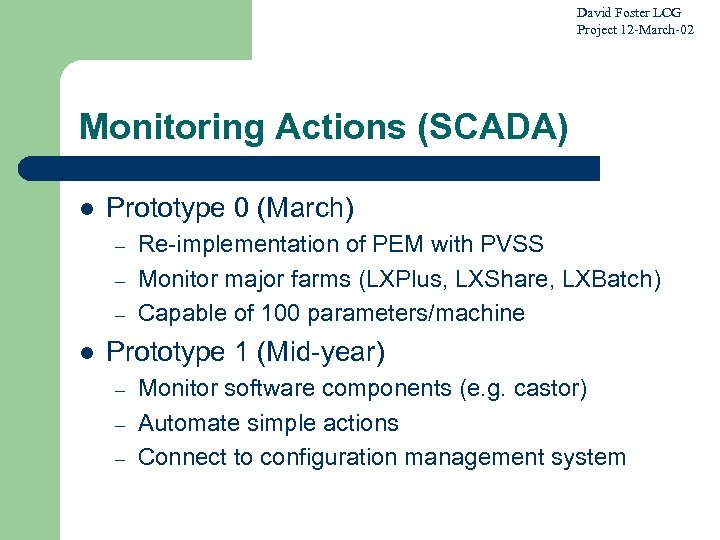
David Foster LCG Project 12 -March-02 Monitoring Actions (SCADA) l Prototype 0 (March) – – – l Re-implementation of PEM with PVSS Monitor major farms (LXPlus, LXShare, LXBatch) Capable of 100 parameters/machine Prototype 1 (Mid-year) – – – Monitor software components (e. g. castor) Automate simple actions Connect to configuration management system
David Foster LCG Project 12 -March-02 Conclusions l There is a consensus amongst everyone that production environments are important now. – Must evolve our understanding of what makes a predictable environment. Architectural, Development and Technology issues. – We will start taking developments into production in 2002. – – l Much is to be done and much work is still underway. Simplification is the key. Must track developments – – Web services and architectural evolution Commercial interest in providing solutions
Скачать презентацию David Foster LCG Project 12 -March-02 Fabric Automation
d84123394cd011b0232826bd16fca276.ppt