 Скачать презентацию Data Quality of New Birth Certificate Items Like
62d2e53e856bfe2cfffc59e0e0923323.ppt
- Количество слайдов: 20



Data Quality of New Birth Certificate Items: Like a Fine Wine, Does it Improve with Time? Marina O. Matthew, RHIA Pennsylvania Department of Health Bureau of Health Statistics and Research Joyce Martin, M. P. H. Division of Vital Statistics National Center for Health Statistics
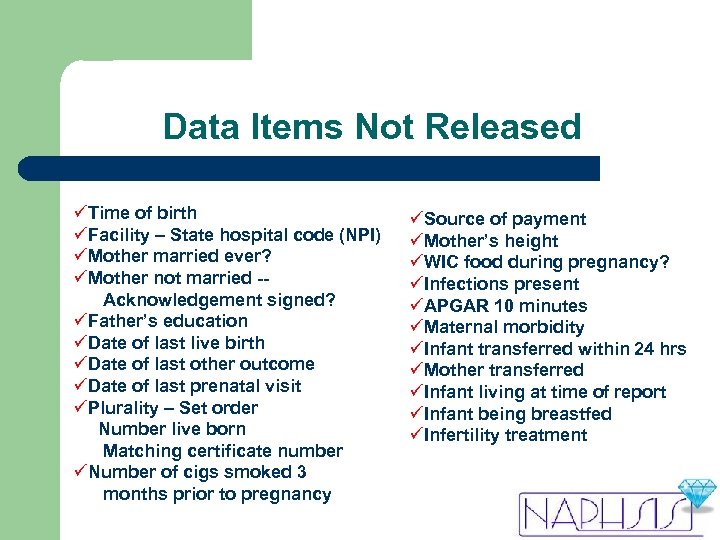
Data Items Not Released üTime of birth üFacility – State hospital code (NPI) üMother married ever? üMother not married -Acknowledgement signed? üFather’s education üDate of last live birth üDate of last other outcome üDate of last prenatal visit üPlurality – Set order Number live born Matching certificate number üNumber of cigs smoked 3 months prior to pregnancy üSource of payment üMother’s height üWIC food during pregnancy? üInfections present üAPGAR 10 minutes üMaternal morbidity üInfant transferred within 24 hrs üMother transferred üInfant living at time of report üInfant being breastfed üInfertility treatment
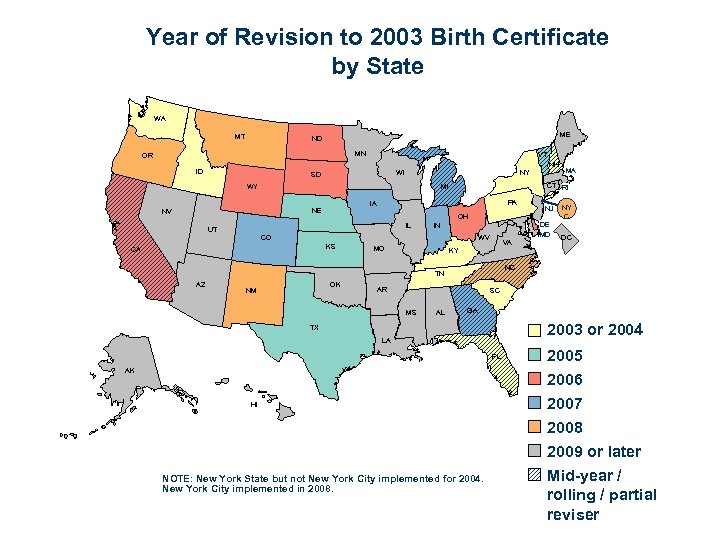
Year of Revision to 2003 Birth Certificate by State WA MT ME ND MN OR VT NH ID WI SD NY WY MI PA IA NE NV IL DE MD IN CO WV KS CA MO VA KY OK NM NY C DC NC TN AZ NJ OH UT MA CT RI AR SC MS AL GA 2003 or 2004 TX LA FL AK HI NOTE: New York State but not New York City implemented for 2004. New York City implemented in 2008. 2005 2006 2007 2008 2009 or later Mid-year / rolling / partial reviser
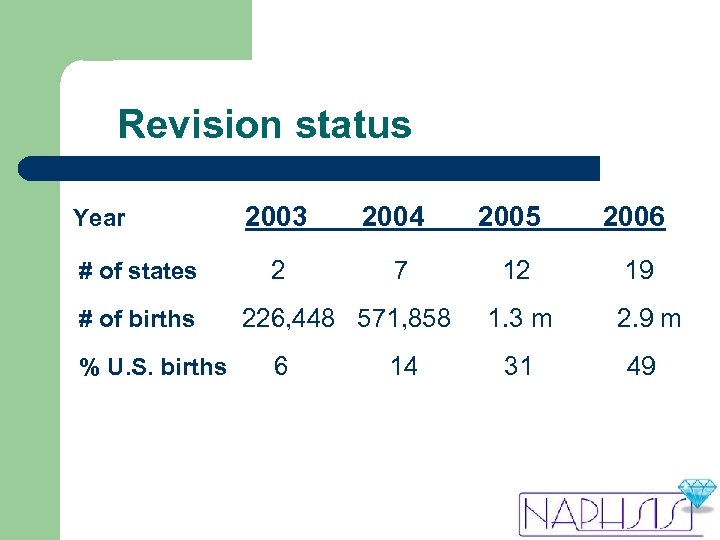
Revision status Year # of states # of births % U. S. births 2003 2 2004 7 226, 448 571, 858 6 14 2005 2006 12 19 1. 3 m 31 2. 9 m 49
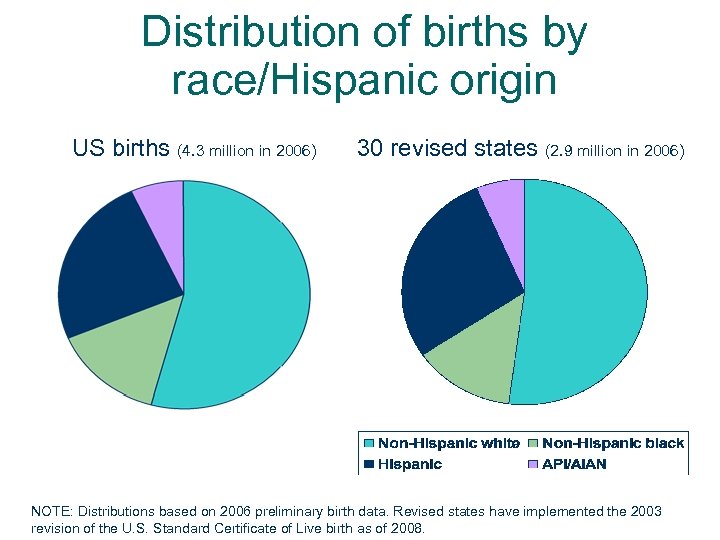
Distribution of births by race/Hispanic origin US births (4. 3 million in 2006) 30 revised states (2. 9 million in 2006) NOTE: Distributions based on 2006 preliminary birth data. Revised states have implemented the 2003 revision of the U. S. Standard Certificate of Live birth as of 2008.
Unknown Rates for New Items
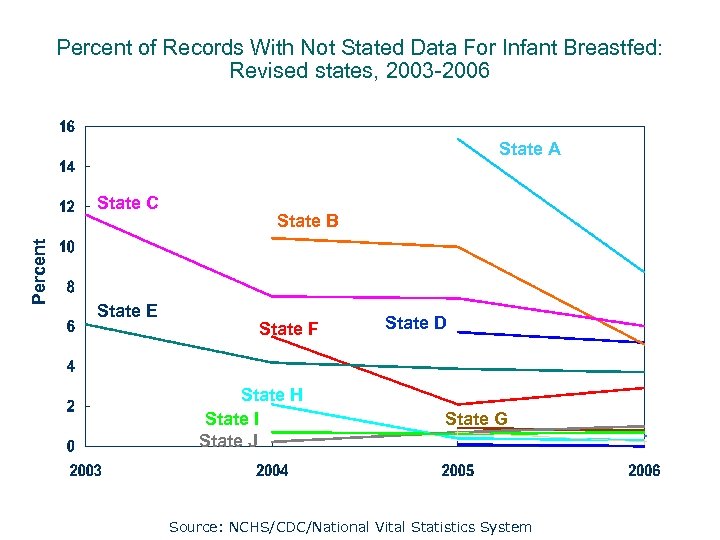
Percent of Records With Not Stated Data For Infant Breastfed: Revised states, 2003 -2006 State A Percent State C State E State B State F State H State I State J State D State G Source: NCHS/CDC/National Vital Statistics System
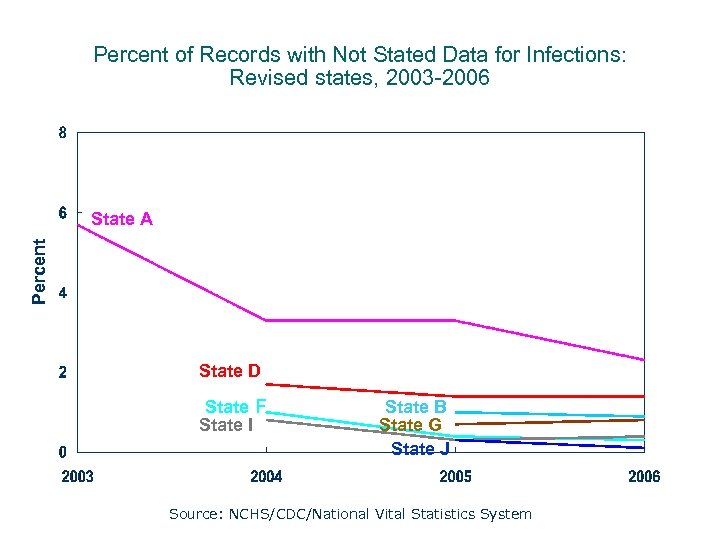
Percent of Records with Not Stated Data for Infections: Revised states, 2003 -2006 Percent State A State D State F State I State B State G State J Source: NCHS/CDC/National Vital Statistics System
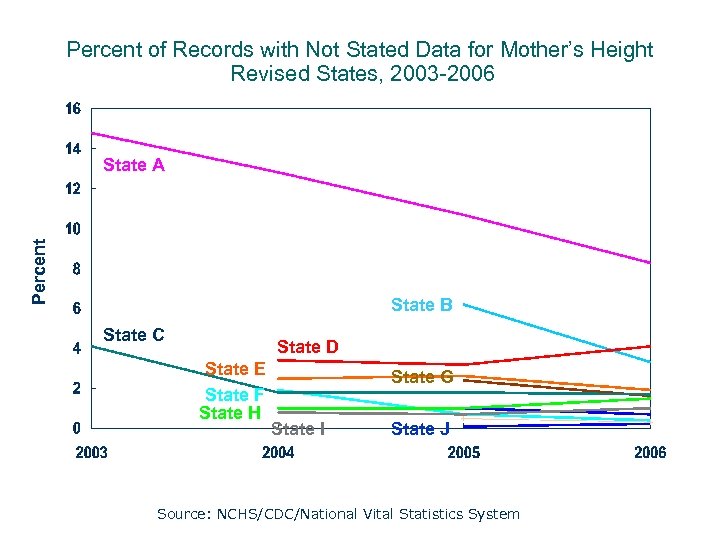
Percent of Records with Not Stated Data for Mother’s Height Revised States, 2003 -2006 Percent State A State B State C State D State E State F State H State G State I State J Source: NCHS/CDC/National Vital Statistics System
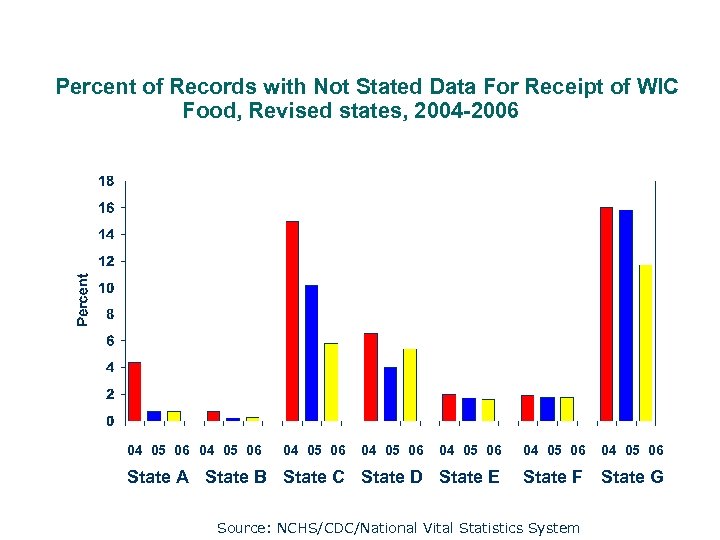
Percent of Records with Not Stated Data For Receipt of WIC Food, Revised states, 2004 -2006 04 05 06 04 05 06 State A State B State C State D State E State F State G Source: NCHS/CDC/National Vital Statistics System
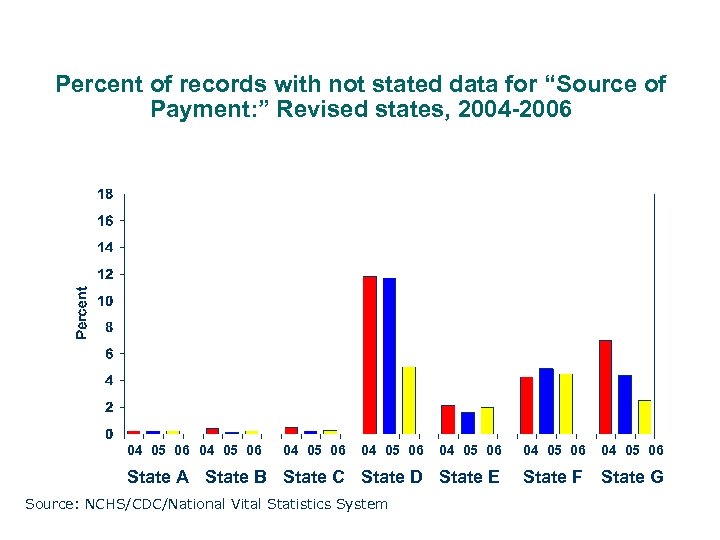
Percent of records with not stated data for “Source of Payment: ” Revised states, 2004 -2006 04 05 06 04 05 06 State A State B State C State D State E State F State G Source: NCHS/CDC/National Vital Statistics System
Timeliness and New Items
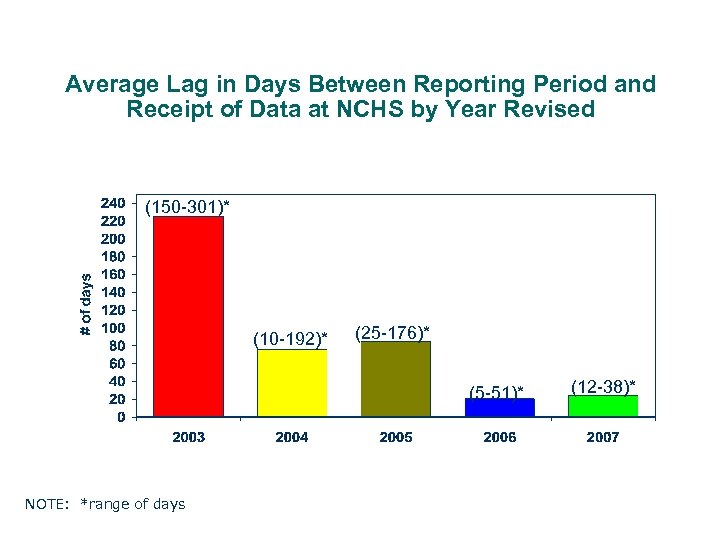
Average Lag in Days Between Reporting Period and Receipt of Data at NCHS by Year Revised (150 -301)* (10 -192)* (25 -176)* (5 -51)* NOTE: *range of days (12 -38)*
THE PENNSYLVANIA DATA VINEYARD
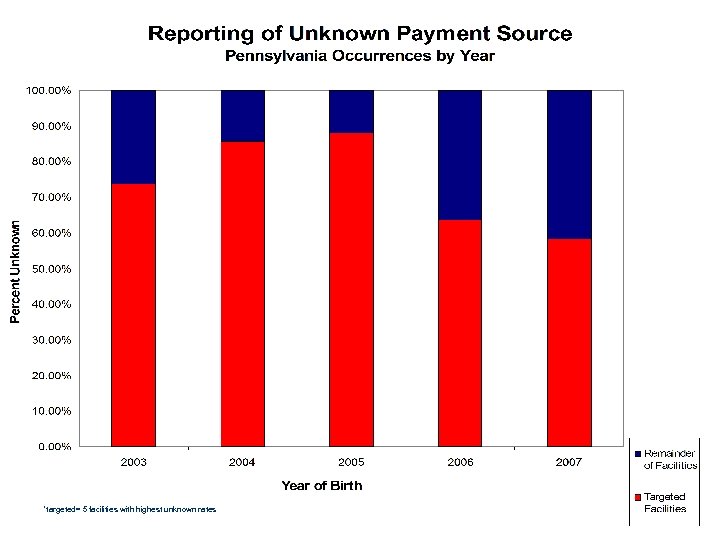
*targeted= 5 facilities with highest unknown rates
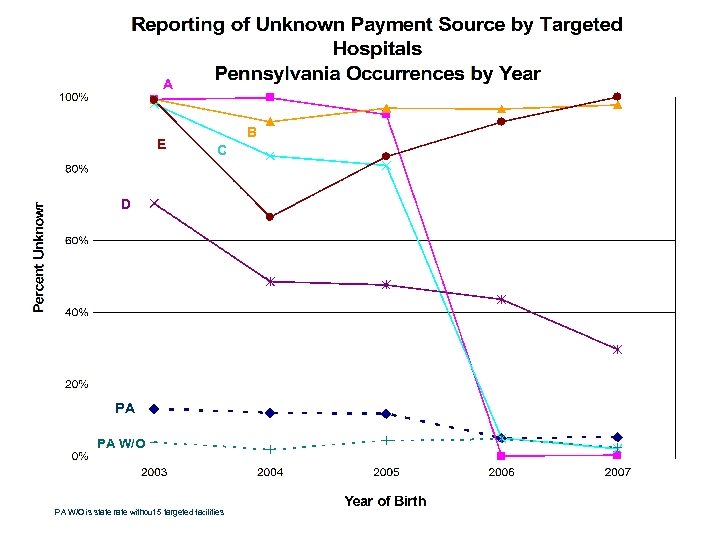
A E B C D PA PA W/O is state rate without 5 targeted facilities
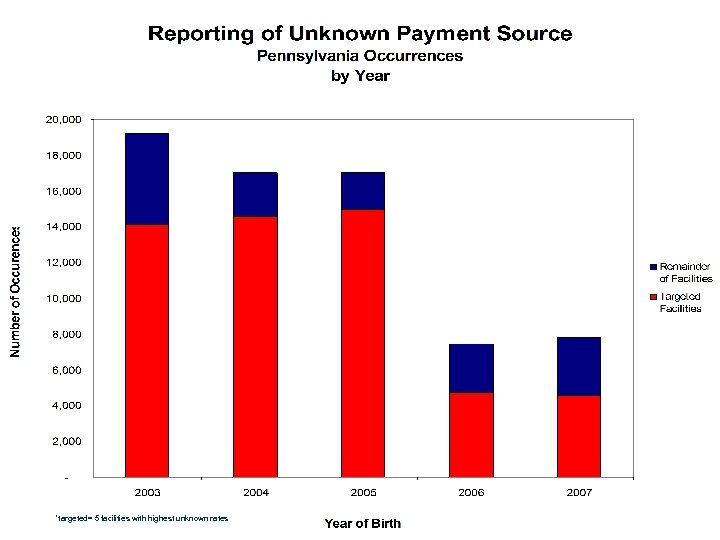
*targeted= 5 facilities with highest unknown rates
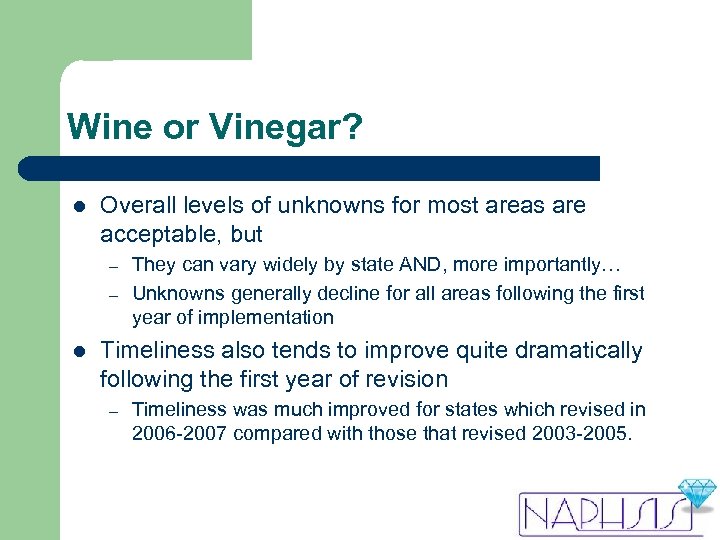
Wine or Vinegar? l Overall levels of unknowns for most areas are acceptable, but – – l They can vary widely by state AND, more importantly… Unknowns generally decline for all areas following the first year of implementation Timeliness also tends to improve quite dramatically following the first year of revision – Timeliness was much improved for states which revised in 2006 -2007 compared with those that revised 2003 -2005.
Improving the Vintage are l Look at individual facilities to see if there any major outliers and work with those facilities to improve the unknown rates. l Does it appear all facilities are having high unknowns in certain items? If so, – – – Can the birth clerk/registrar find the information in the records? Is there a problem with the wording of the item? Do you need to do more education on the item? l – Do facilities and parents understand the importance of the data? Is there a problem with the software if using an electronic birth certificate system?
For More Information: Marina O. Matthew, RHIA Director, Division of Statistical Registries Bureau of Health Statistics and Research 555 Walnut Street, 6 th Floor Harrisburg, PA 17101 (717) 783 -2548 mmatthew@state. pa. us Website: www. health. state. pa. us Joyce A. Martin, M. P. H. Lead Statistician Reproductive Statistics Branch Division of Vital Statistics National Center for Health Statistics (301) 458 -4362 JAMartin@cdc. gov
Скачать презентацию Data Quality of New Birth Certificate Items Like
62d2e53e856bfe2cfffc59e0e0923323.ppt