


 Скачать презентацию Data Led Experienced Tuned Developing an Effective
24ef059b5719d22484134edab598b1ce.ppt
- Количество слайдов: 18
 ‘Data Led, Experienced Tuned’ – Developing an Effective Local Skid Resistance Management Strategy 3 rd International Road Surface Friction Conference 2011 Paul Hillier, ARRB Group, Australia
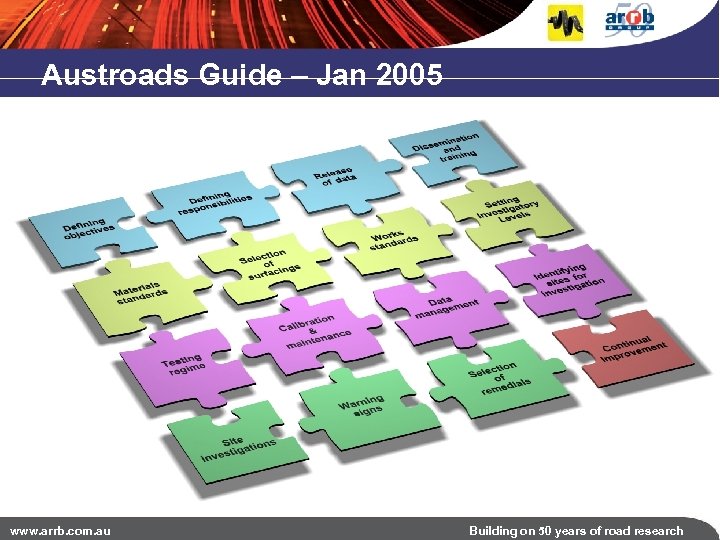
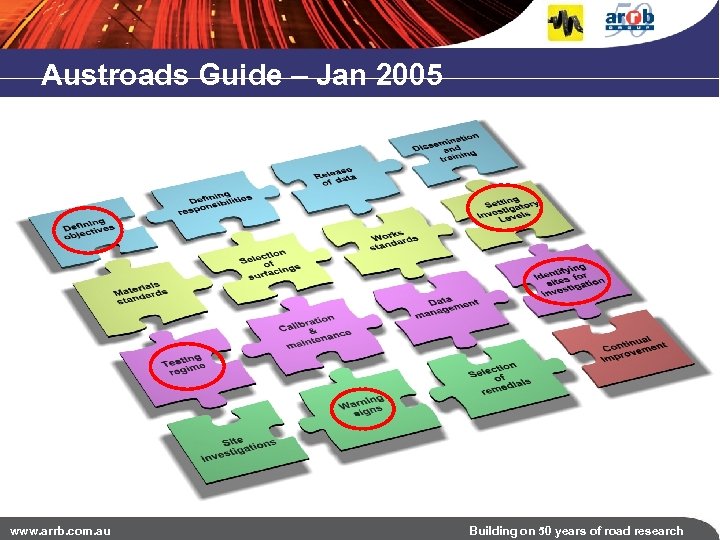
 Presentation outline • Introduction – the challenge faced • The value of data (e. g. Organisational Governance Model) • ‘Data mining’ • • Austroads Guide (Jan 2005) – strategy framework Where does data come in? Limitations of data Local experience as a fine tuning tool • Closing thoughts www. arrb. com. au Building on 50 years of road research
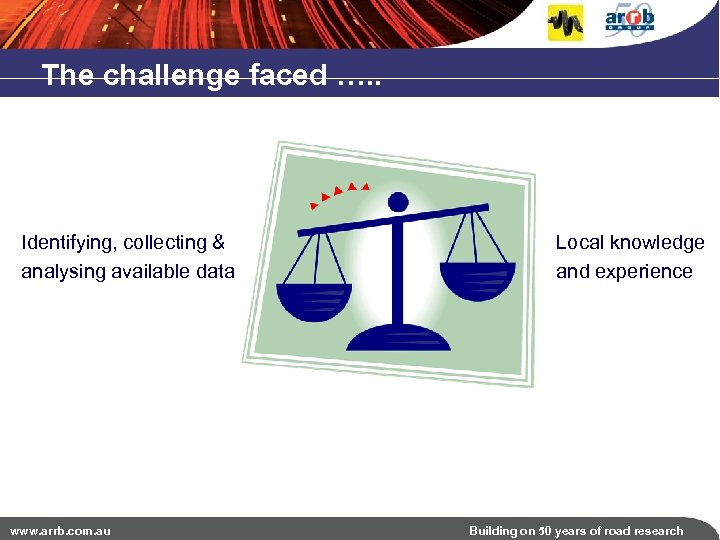 The challenge faced …. . Identifying, collecting & analysing available data www. arrb. com. au Local knowledge and experience Building on 50 years of road research
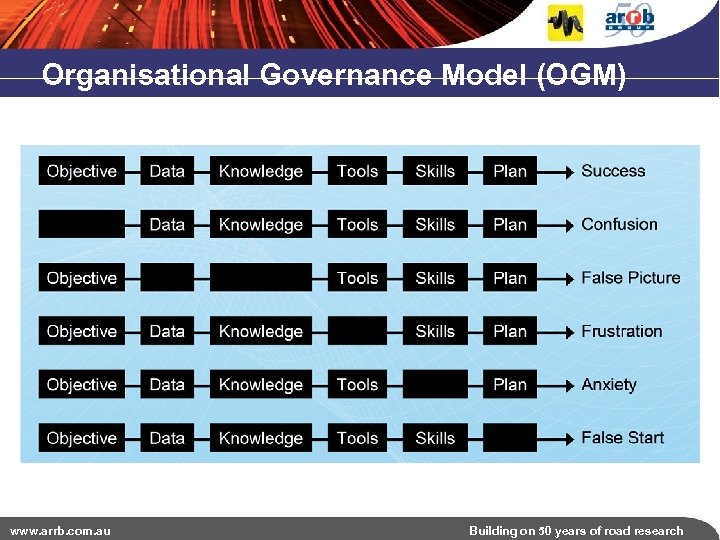 Organisational Governance Model (OGM) www. arrb. com. au Building on 50 years of road research
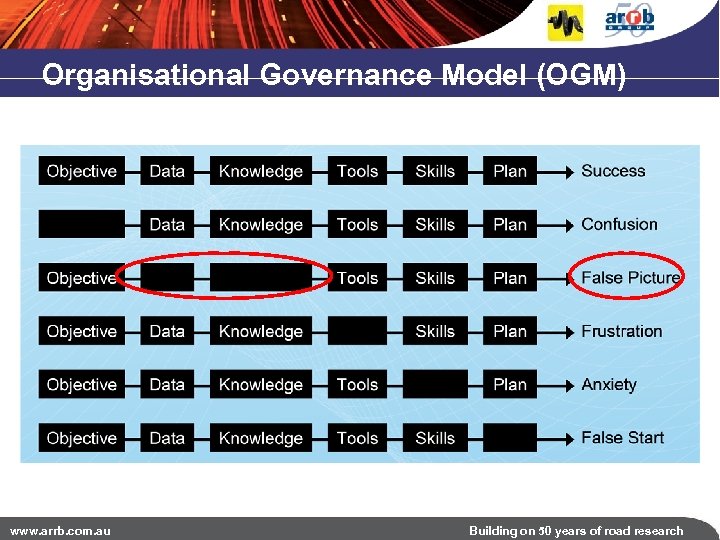 Organisational Governance Model (OGM) www. arrb. com. au Building on 50 years of road research
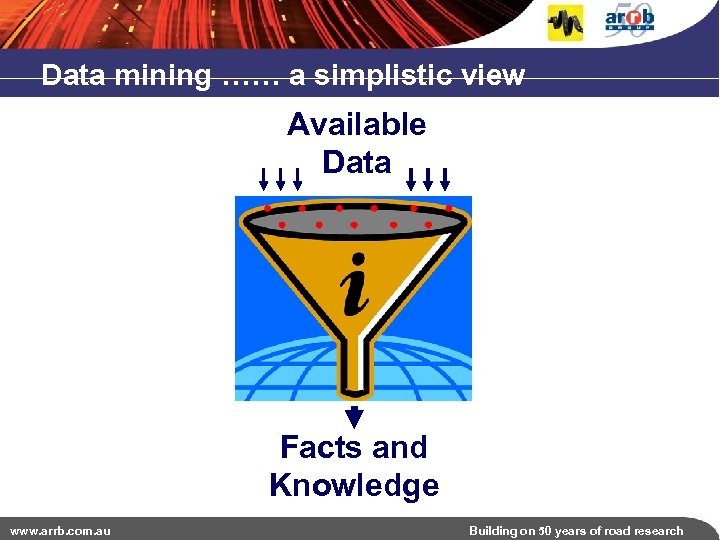 Data mining …… a simplistic view Available Data Facts and Knowledge www. arrb. com. au Building on 50 years of road research
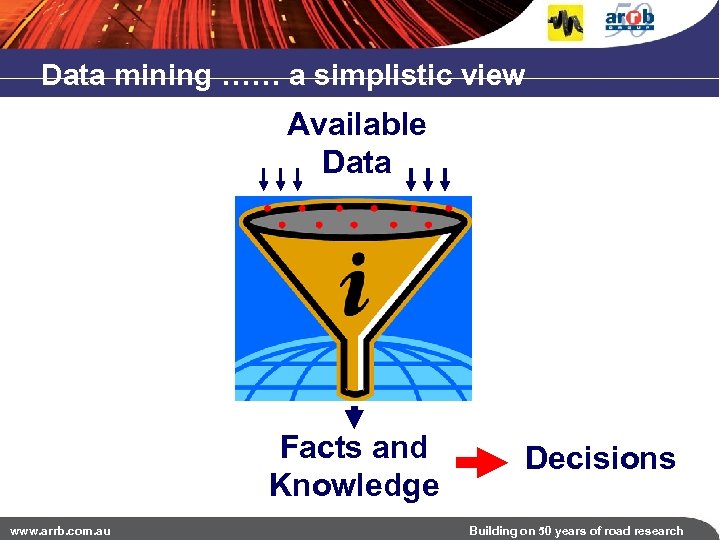 Data mining …… a simplistic view Available Data Facts and Knowledge www. arrb. com. au Decisions Building on 50 years of road research
 Data as our comfort blanket? • We are very comfortable as engineers making decisions on data • It makes sense……. • But what if we can’t afford to collect it? • Or fail to recognise that we do not have the full / current picture? • How do we integrate practical experience? • We’ll come back to this……. www. arrb. com. au Building on 50 years of road research
 Focus on Skid Resistance Strategies www. arrb. com. au Building on 50 years of road research
 Austroads Guide – Jan 2005 www. arrb. com. au Building on 50 years of road research
 Austroads Guide – Jan 2005 www. arrb. com. au Building on 50 years of road research
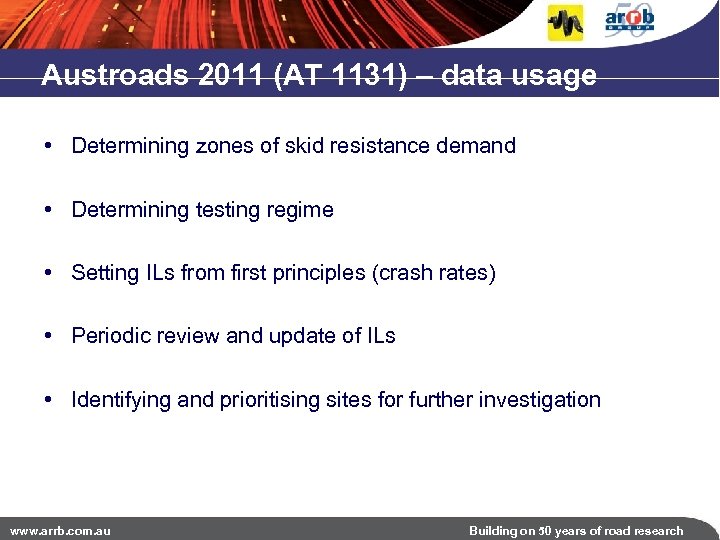 Austroads 2011 (AT 1131) – data usage • Determining zones of skid resistance demand • Determining testing regime • Setting ILs from first principles (crash rates) • Periodic review and update of ILs • Identifying and prioritising sites for further investigation www. arrb. com. au Building on 50 years of road research
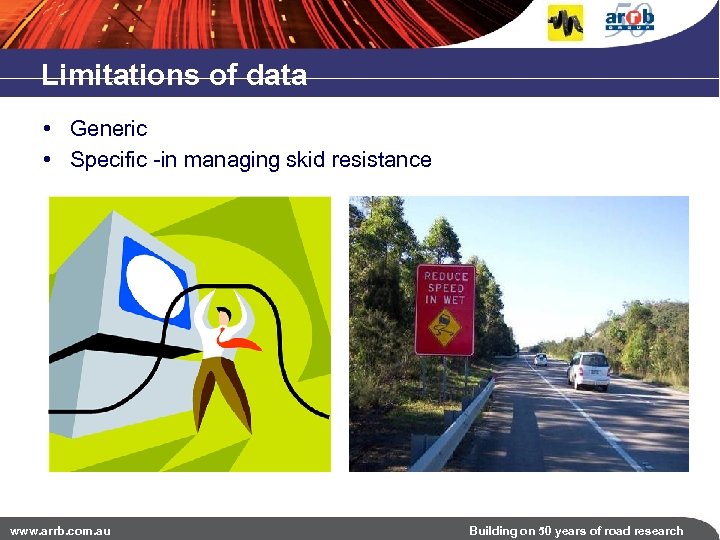 Limitations of data • Generic • Specific -in managing skid resistance www. arrb. com. au Building on 50 years of road research
 Generic limitations of data • Can include: – – – – – is not available (or limited availability) ‘ageing’ – network changes have occurred collected by a device out of calibration / maintenance collected by a device that is now superseded data appears (or is obviously) erroneous, skewed or unrepresentative data has processing / collation and/or display errors is too limited to permit patterns and trends to be identified gaps in data are significant data has been previously partially processed or filtered ‘raw’ data can no longer be processed as software etc not available – And what if we don’t recognise any shortfalls? – Danger of ‘rubbish in, rubbish out’? www. arrb. com. au Building on 50 years of road research
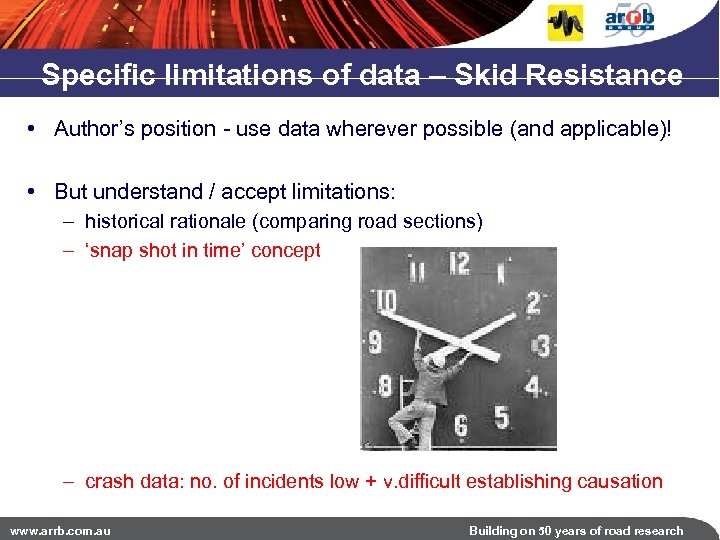 Specific limitations of data – Skid Resistance • Author’s position - use data wherever possible (and applicable)! • But understand / accept limitations: – historical rationale (comparing road sections) – ‘snap shot in time’ concept – crash data: no. of incidents low + v. difficult establishing causation www. arrb. com. au Building on 50 years of road research
 Importance of local experience as a fine tuning tool • Will help ensure that the strategy: – – is achievable within current resources meets local conditions and challenges will make a difference operationally meets corporate & operational objectives – ‘will fly’ (is implemented) – is ‘owned’ locally – will be continually improved www. arrb. com. au Building on 50 years of road research
 Closing Thoughts www. arrb. com. au Building on 50 years of road research
 Author’s experience (skid resistance) • Use data in forming strategy and making policy decisions • But, understand its possible limitations • Ignore local practical (delivery) experience at your peril • Involve a number of people – explain the corporate position and requirements, but also understand their local position • Get many views - collate them / analyse them • Vital for credibility, ownership and achievability • Don’t forget the roll out and training regime www. arrb. com. au Building on 50 years of road research