


 Скачать презентацию Darya Pismenyuk group 501 Academic supervisor Ph D
Письменюк. Презентация для защиты диплома.ppt
- Количество слайдов: 14
 Darya Pismenyuk, group 501 Academic supervisor: Ph. D, Prof. Irina V. Reznik HISTORICAL AND ETYMOLOGICAL PECULIARITIES OF THE WORDS DENOTING NATURAL OBJECTS IN MODERN ENGLISH LANGUAGE
 Aim of the work – to retrace the etymology of English words designating natural phenomena and objects of natural world and to discover their common features. Concrete tasks: to give the description of etymology as a branch of linguistics to trace the history of the English vocabulary to do the analysis of the word-stock in the view of structure, meaning and word nativeness Theoretical value and practical importance – establishing the interrelations between languages and linguistic groups; word etymology can throw light on the history of the speaking community on the whole.
 ETYMOLOGY Branch of linguistics Word’s biography reflecting the structural and semantic status of the word during different periods of language’s development Science which studies the origin and development of words, their forms and meanings
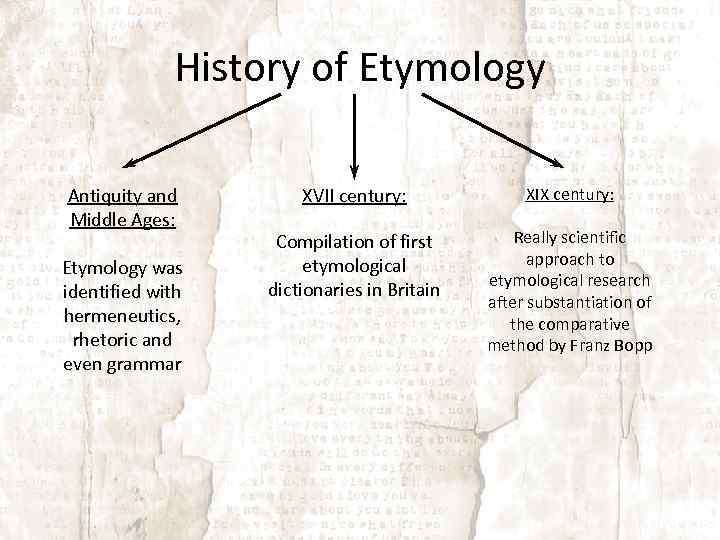 History of Etymology Antiquity and Middle Ages: Etymology was identified with hermeneutics, rhetoric and even grammar XVII century: XIX century: Compilation of first etymological dictionaries in Britain Really scientific approach to etymological research after substantiation of the comparative method by Franz Bopp
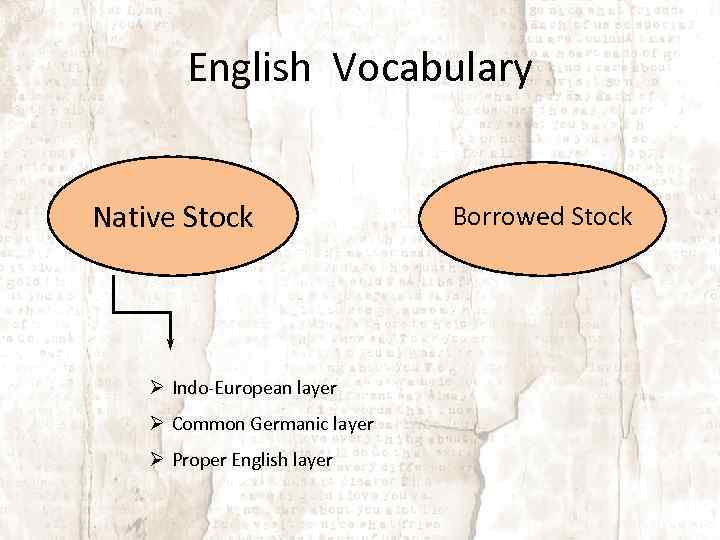 English Vocabulary Native Stock Indo-European layer Common Germanic layer Proper English layer Borrowed Stock
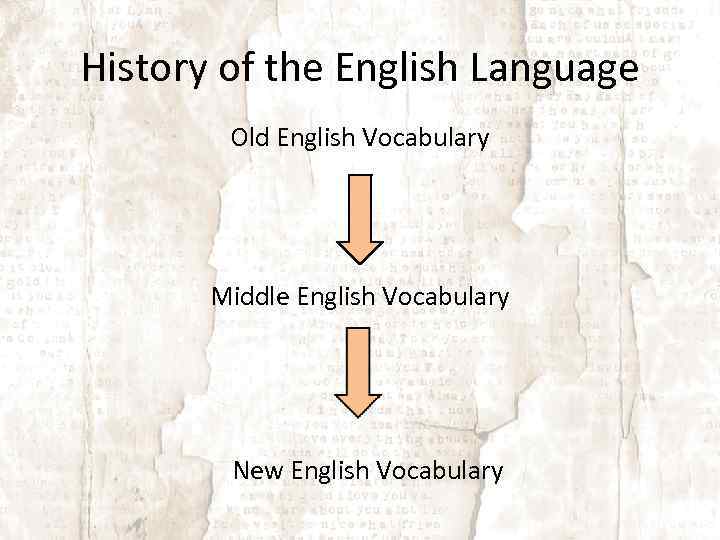 History of the English Language Old English Vocabulary Middle English Vocabulary New English Vocabulary
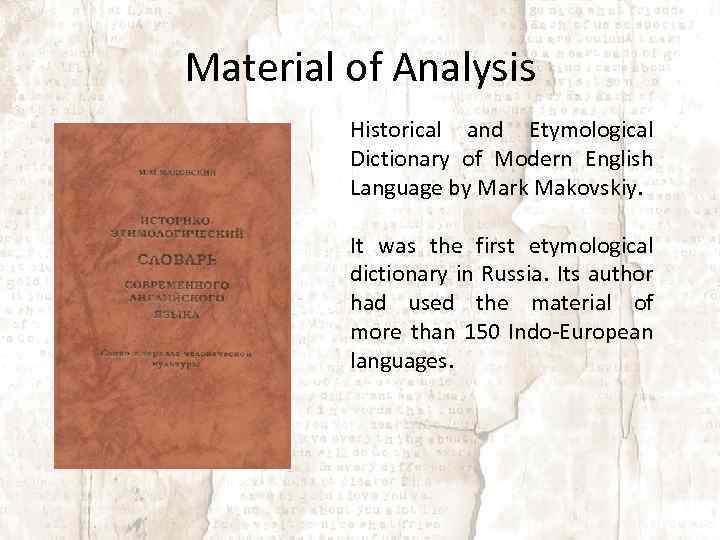 Material of Analysis Historical and Etymological Dictionary of Modern English Language by Mark Makovskiy. It was the first etymological dictionary in Russia. Its author had used the material of more than 150 Indo-European languages.
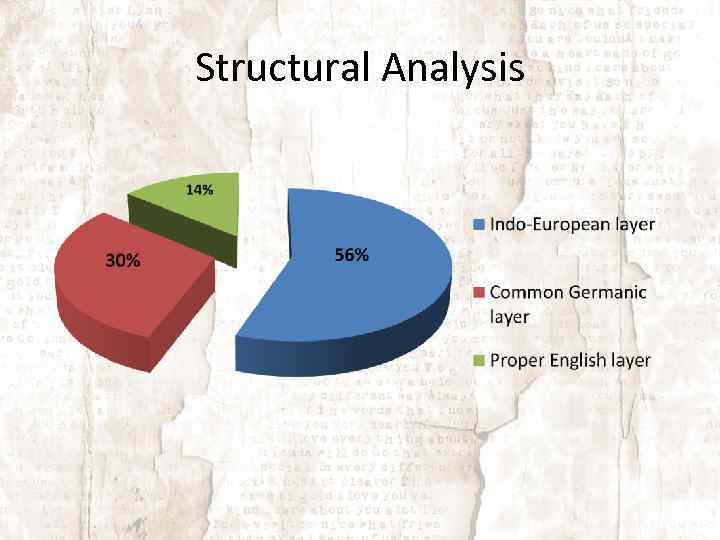 Structural Analysis
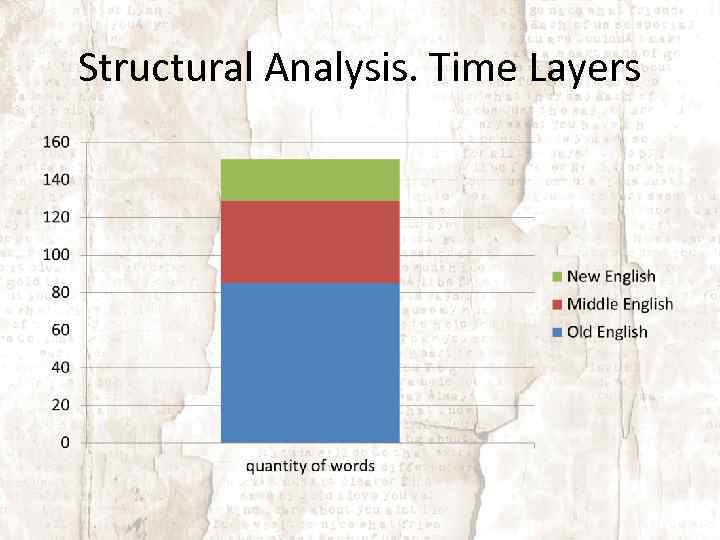 Structural Analysis. Time Layers
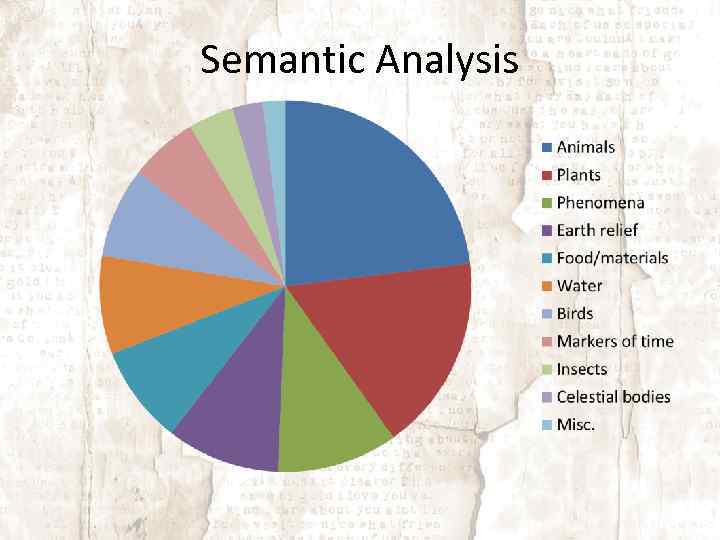 Semantic Analysis
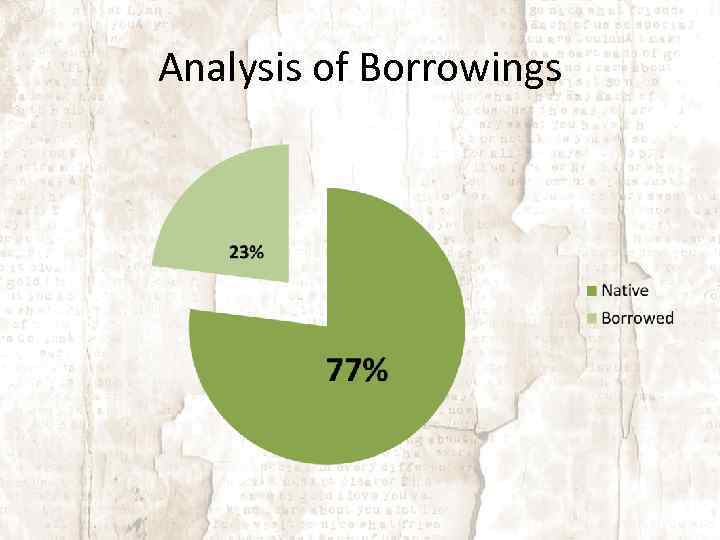 Analysis of Borrowings
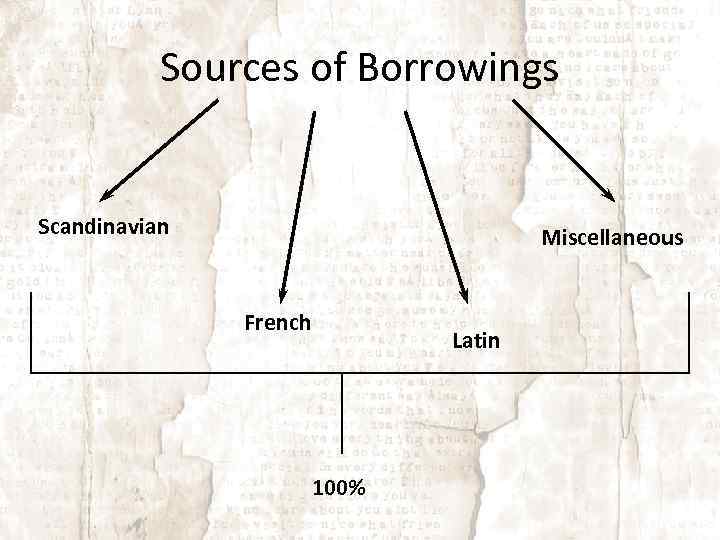 Sources of Borrowings Scandinavian Miscellaneous French Latin 100%
 CONCLUSION The word-stock under analysis (natural objects and phenomena) constitutes the oldest part of the English vocabulary, among these lexical elements the overwhelming majority are those which can be considered typical of the most languages of the Indo-European language family. At the same time among these words we can see predominantly native ones, the quantity of borrowings is little and they are connected only with very specific kinds of objects and phenomena.
 THANK YOU FOR YOUR ATTENTION!