Скачать презентацию Dairy Cattle Improvement Project TCP NEP 3105 D Preliminary Results
c4c9a85a750d68f08c4d5f54e867e231.ppt
- Количество слайдов: 39
 Dairy Cattle Improvement Project (TCP/NEP/3105 D): Preliminary Results, Lesson Learnt and Problems Encountered BS Shrestha, DMU SP Neopane, NPC NP Shrestha, NC
 Presentation- outline l l l Background DCIP – Introduction and Current Status Some Preliminary Results Lesson Learnt Problems Encountered Way forward
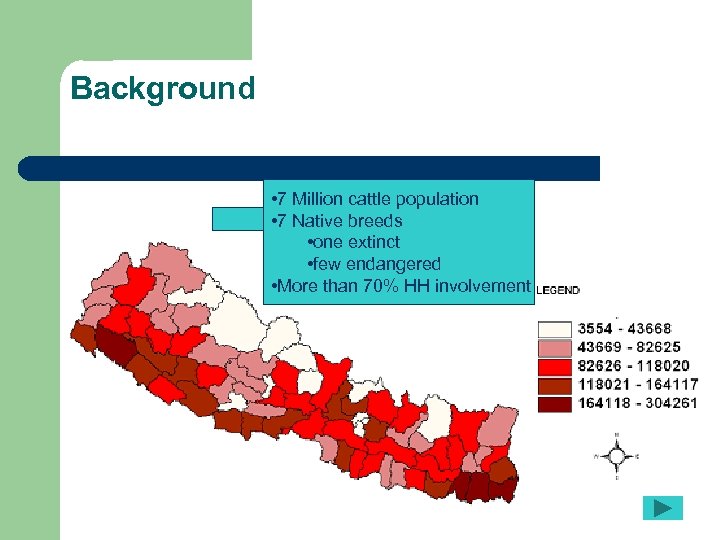 Background • 7 Million cattle population • 7 Native breeds • one extinct • few endangered • More than 70% HH involvement
 Background… Cattle Improvement initiatives l l l l Potential of indigenous cattle (lactation)-poor-other function important (draft, manure, religious) Breed replacement, cross breeding, or upgrading – the option of choice for improvement Introduction of some European cattle breed in Rana regimes – 150 yrs ago Importation of Red Sindhi, Sahiwal, Jersey, HF, Brown Swiss Importation of frozen semen and AI AI with warm semen Frozen semen production and utilization in country
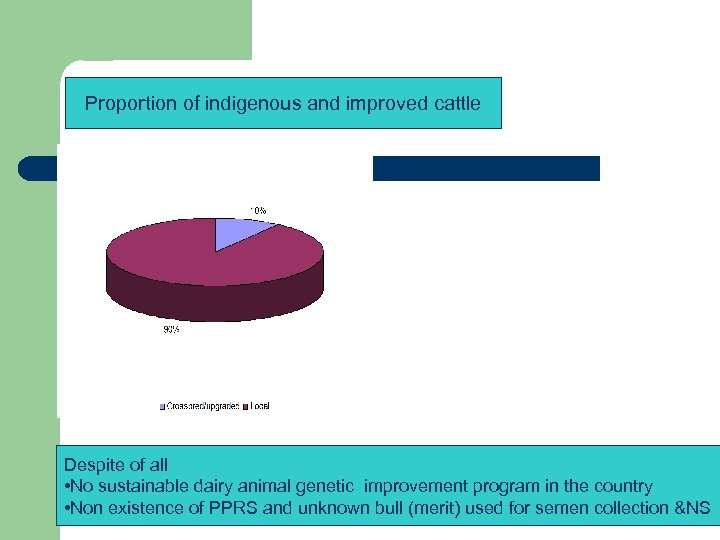 Proportion of indigenous and improved cattle Despite of all • No sustainable dairy animal genetic improvement program in the country • Non existence of PPRS and unknown bull (merit) used for semen collection &NS
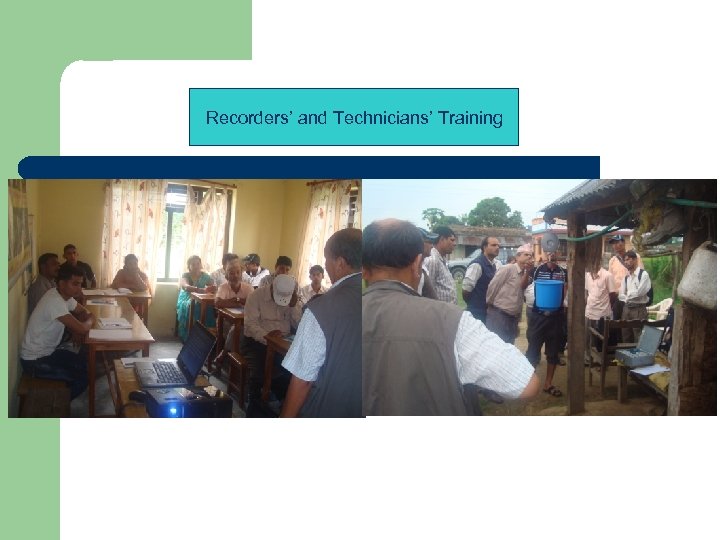
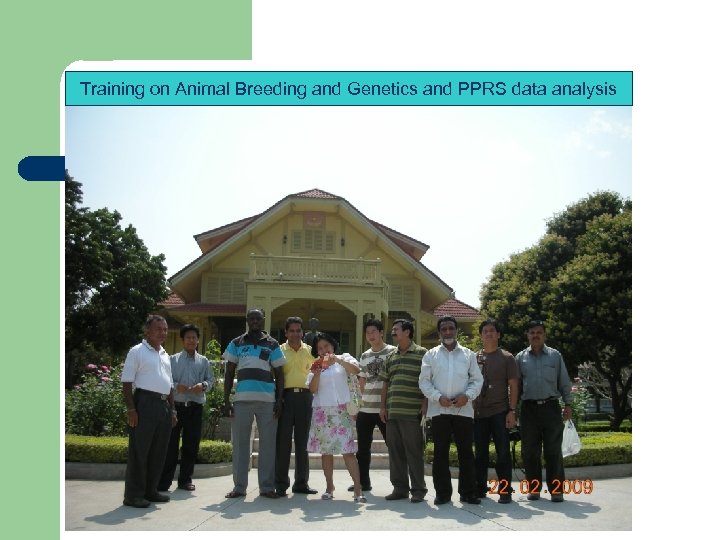
 DCIP- Introduction l l Joint Project of NARC and DLS supported by FAO Implemented Since July 2008 with the main objective of sustainable genetic improvement of dairy cattle in the country through: – – – Initiation of PPRS and Identification of potential bull mothers and production of bulls for AI and NS Capacity enhancement of trainers/extension workers through training on Feeding and management Supporting herd book establishment for Jersey and HF Identifying suitable breed/s for different eco-zones and mgmt system Developing strategies that will help private sector to undertake PPRS for sustainability and AI privatization
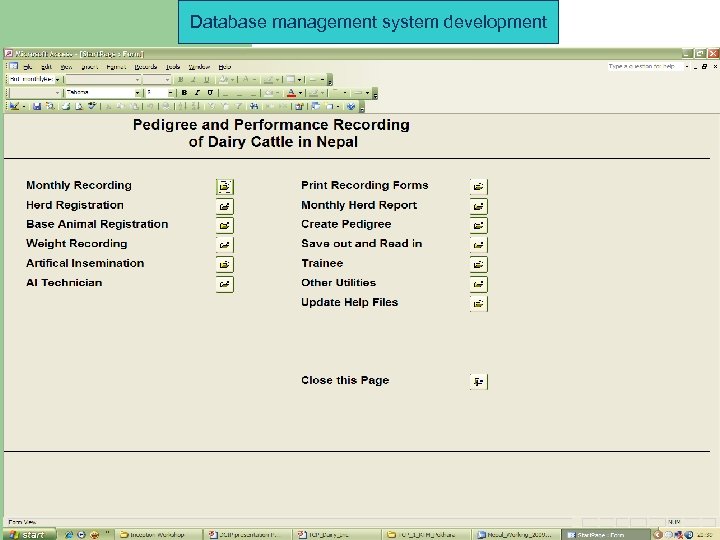
 DCIP- Implementation l l l Steering committee chaired by DG, DLS Project management committee (NPC, NPCC, NC) ICBG- Technical support for database management and analysis ICFM-Technical Support for capacity enhancement of trainers in feeding and management NC- Project Implementation Support and coordination with FAOR/Nepal Programme Officer, FAOR- project facilitation NLBC- semen and LN handling and distribution DMU- data management, analysis and information flow District supervisor and Technicians Recorders and farmers Overall coordination and technical support- LTO
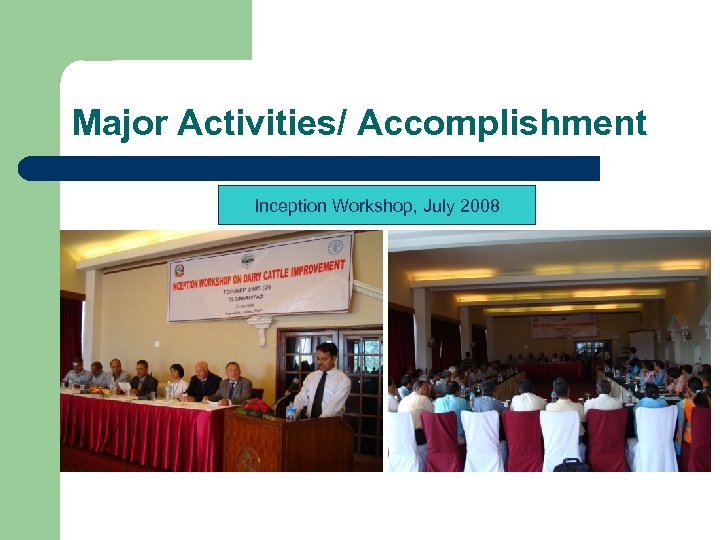 Major Activities/ Accomplishment Inception Workshop, July 2008
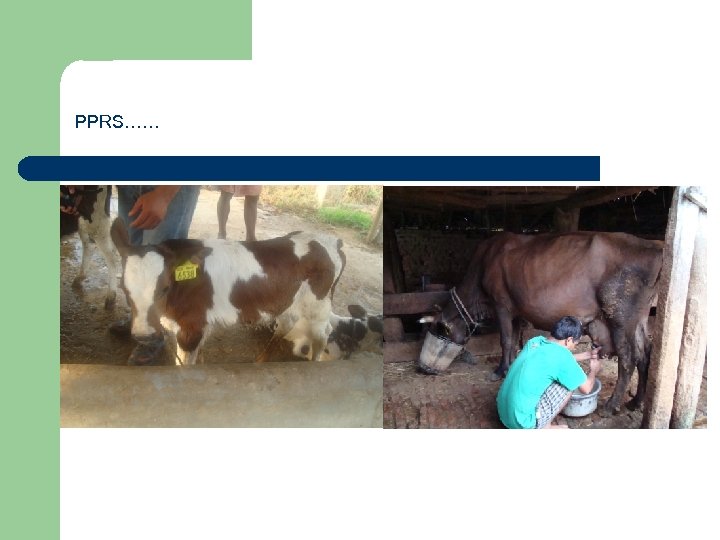
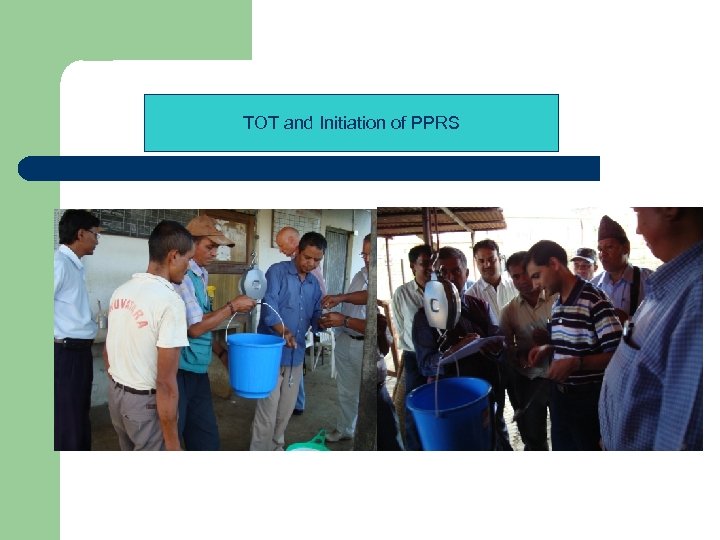 TOT and Initiation of PPRS
 PPRS……
 Recorders’ and Technicians’ Training
 Database management system development
 Training on Animal Breeding and Genetics and PPRS data analysis
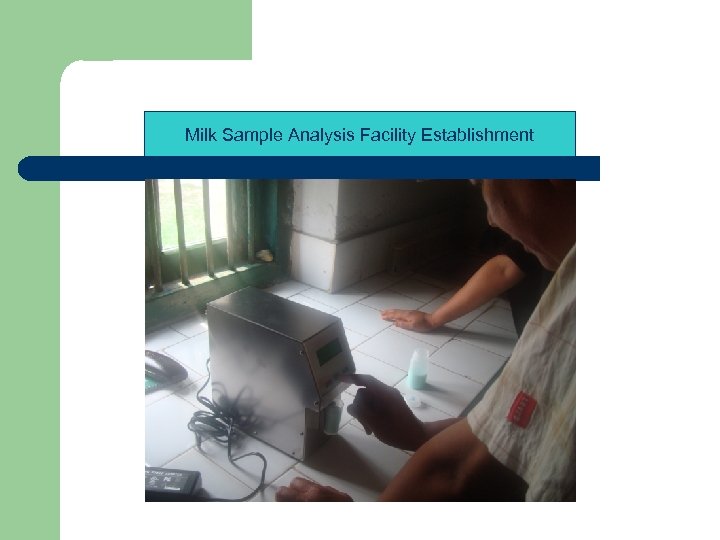 Milk Sample Analysis Facility Establishment
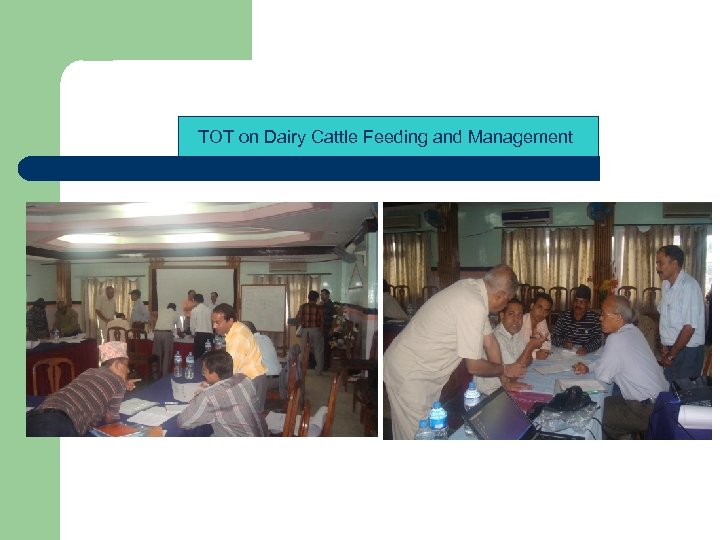 TOT on Dairy Cattle Feeding and Management
 l l Farmers’ Training and Meet AI of PPRS herd cows with imported semen Preliminary data analysis Initiation of planned mating of selected potential bull mothers with proven sire semen
 Procurement of Necessary Materials l l l l Frozen semen 5000+5000 doses from New Zealand (HF and Jersey) Lacto scans Computers and printer LN Container, referees Tags and tagging machine Weighing machine and tapes Milk sampler, preservatives, sampling bottle
 Current Status of DCIP
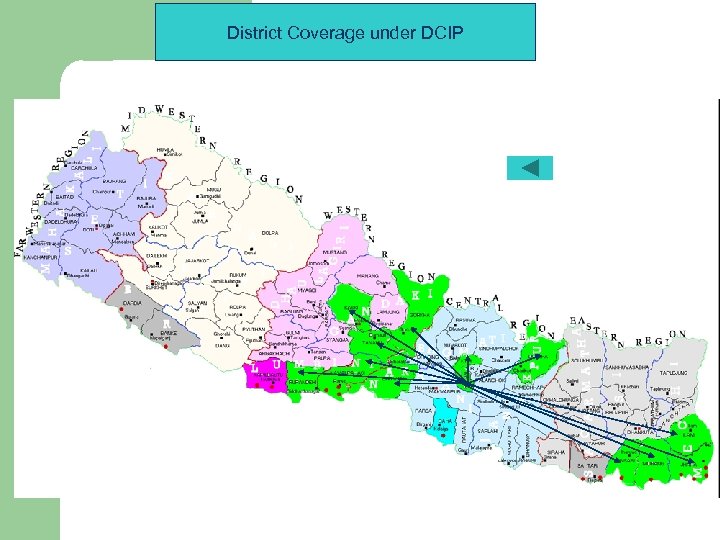 District Coverage under DCIP
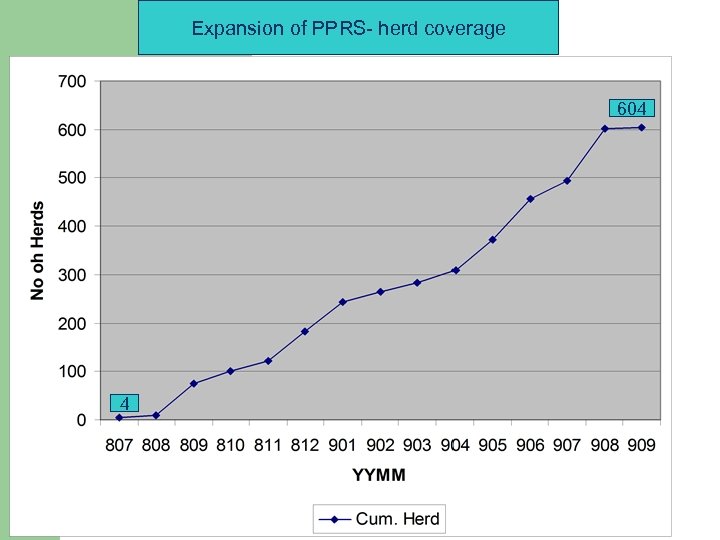 Expansion of PPRS- herd coverage 604 4
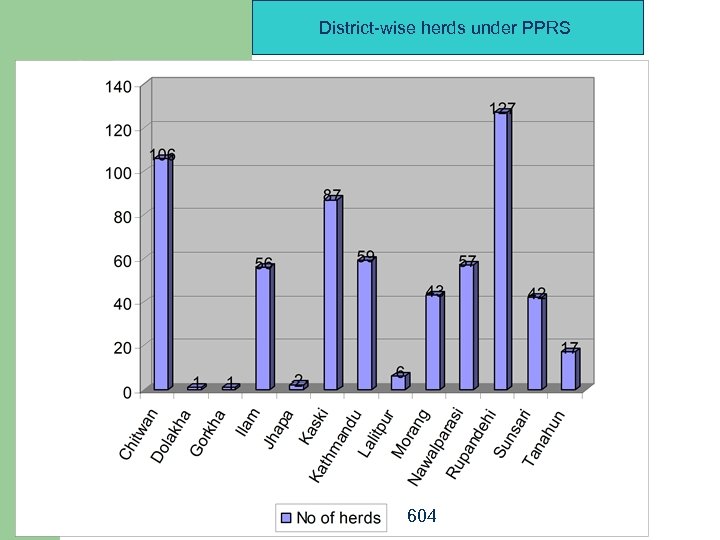 District-wise herds under PPRS 604
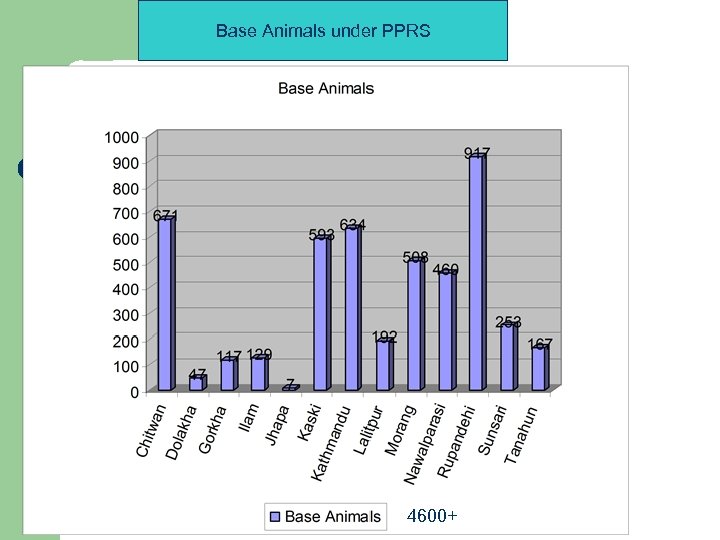 Base Animals under PPRS 4600+
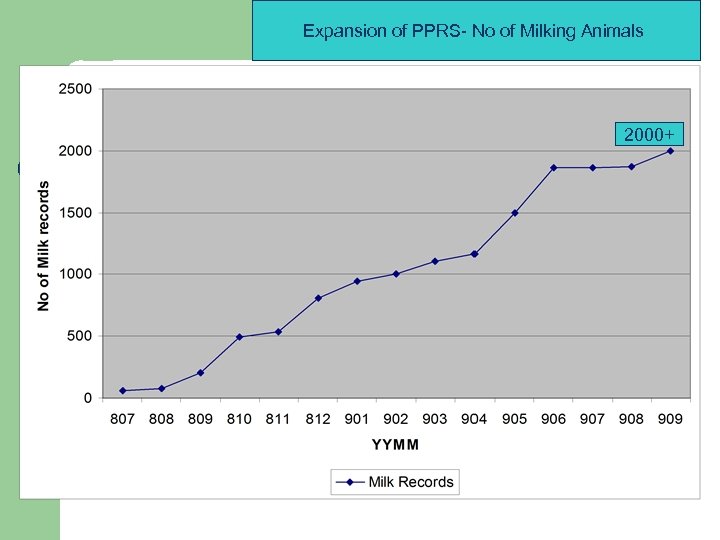 Expansion of PPRS- No of Milking Animals 2000+
 Some Preliminary Results and Implications
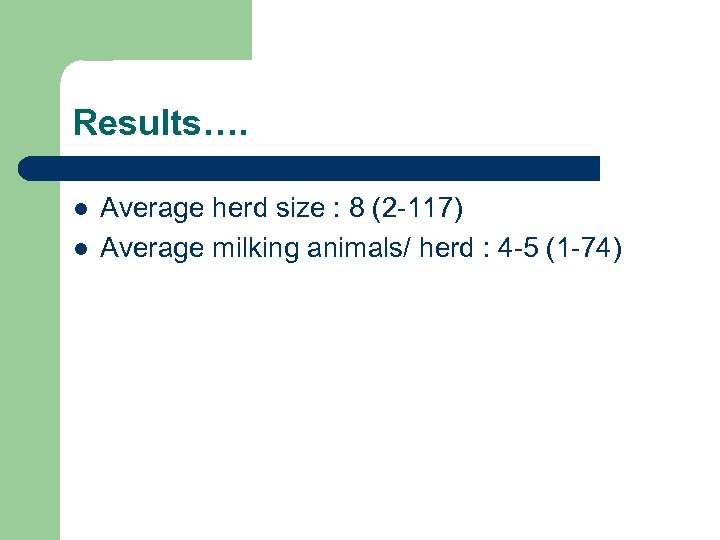 Results…. l l Average herd size : 8 (2 -117) Average milking animals/ herd : 4 -5 (1 -74)
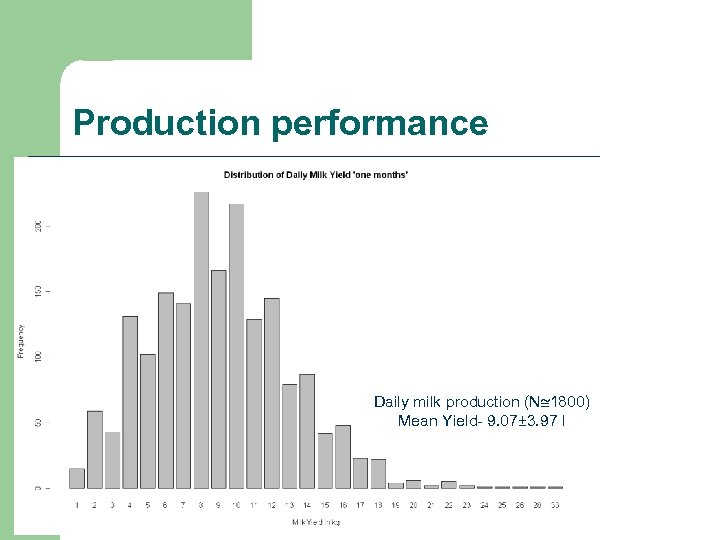 Production performance Daily milk production (N 1800) Mean Yield- 9. 07± 3. 97 l
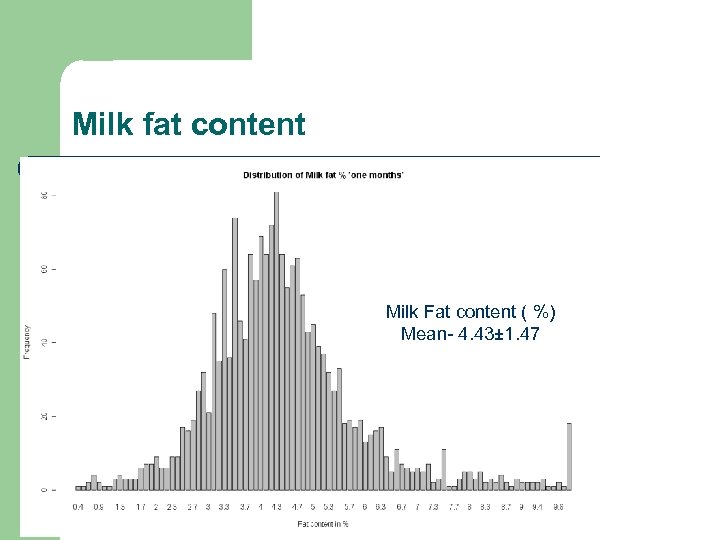 Milk fat content Milk Fat content ( %) Mean- 4. 43± 1. 47
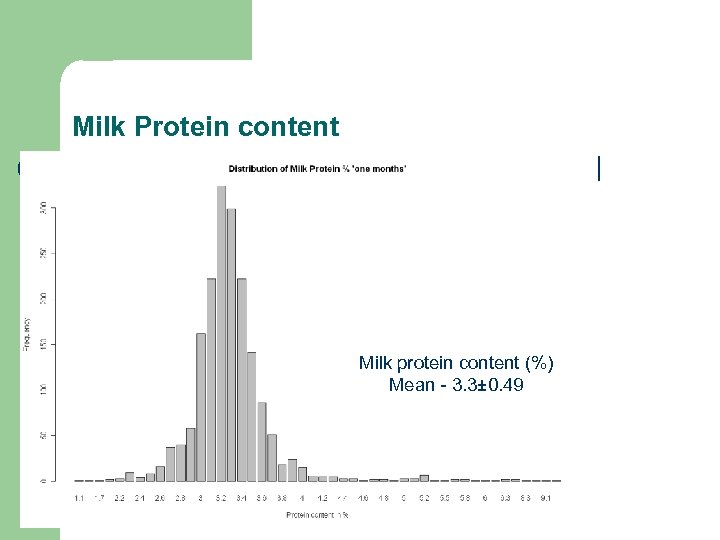 Milk Protein content Milk protein content (%) Mean - 3. 3± 0. 49
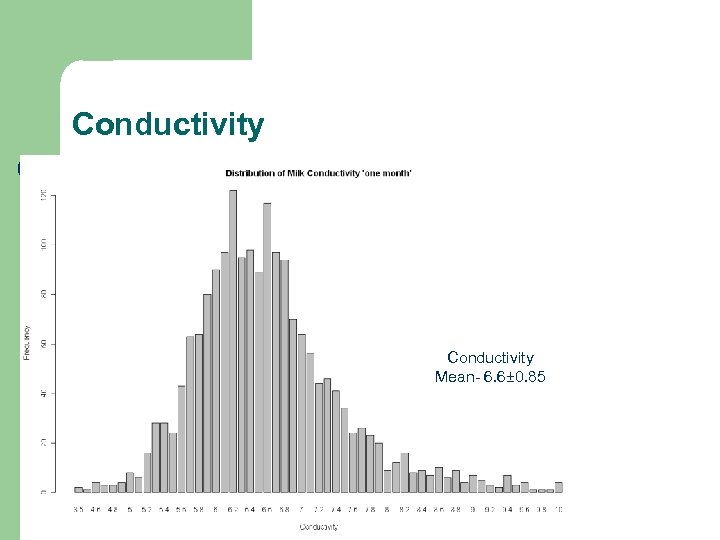 Conductivity Mean- 6. 6± 0. 85
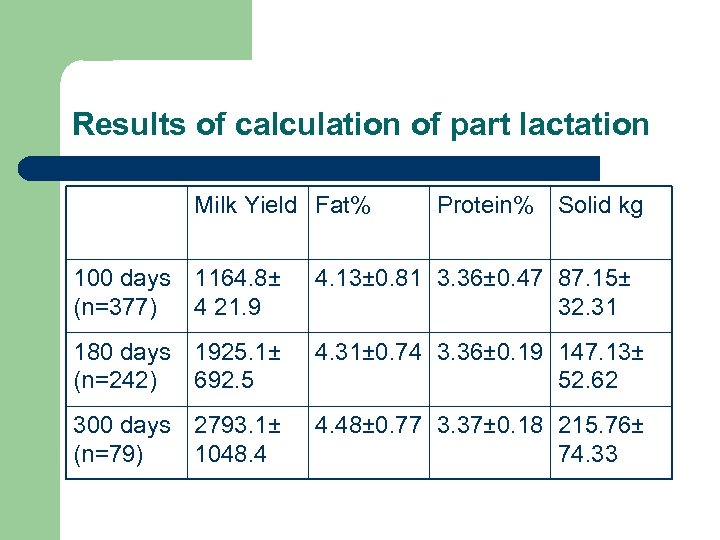 Results of calculation of part lactation Milk Yield Fat% Protein% Solid kg 100 days 1164. 8± (n=377) 4 21. 9 4. 13± 0. 81 3. 36± 0. 47 87. 15± 32. 31 180 days 1925. 1± (n=242) 692. 5 4. 31± 0. 74 3. 36± 0. 19 147. 13± 52. 62 300 days 2793. 1± (n=79) 1048. 4 4. 48± 0. 77 3. 37± 0. 18 215. 76± 74. 33
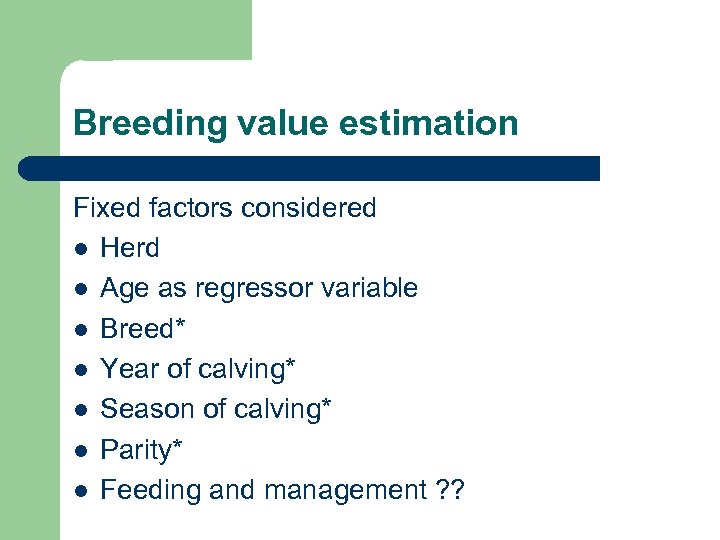 Breeding value estimation Fixed factors considered l Herd l Age as regressor variable l Breed* l Year of calving* l Season of calving* l Parity* l Feeding and management ? ?
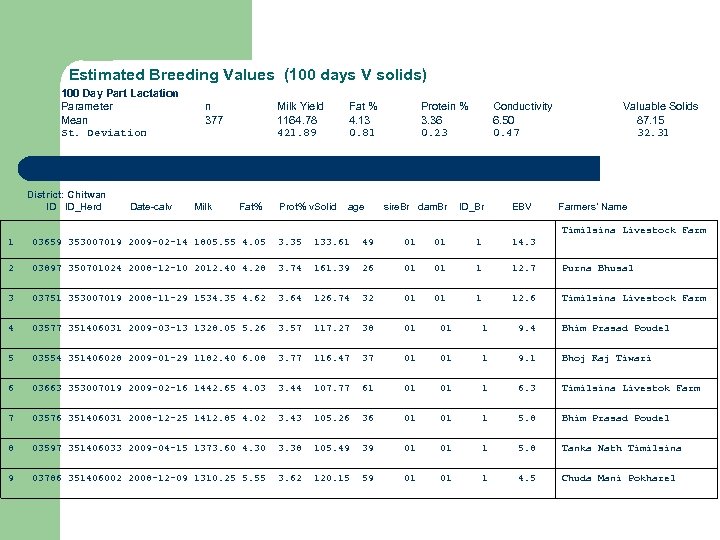 Estimated Breeding Values (100 days V solids) 100 Day Part Lactation Parameter Mean St. Deviation District: Chitwan ID ID_Herd Date-calv n 377 Milk Yield 1164. 78 421. 89 Fat% Fat % 4. 13 0. 81 Prot% v. Solid age Protein % 3. 36 0. 23 sire. Br dam. Br Conductivity 6. 50 0. 47 ID_Br EBV Valuable Solids 87. 15 32. 31 Farmers’ Name Timilsina Livestock Farm 1 03659 353007019 2009 -02 -14 1805. 55 4. 05 3. 35 133. 61 49 01 01 1 14. 3 2 03897 350701024 2008 -12 -10 2012. 40 4. 28 3. 74 161. 39 26 01 01 1 12. 7 Purna Bhusal 3 03751 353007019 2008 -11 -29 1534. 35 4. 62 3. 64 126. 74 32 01 01 1 12. 6 Timilsina Livestock Farm 4 03577 351406031 2009 -03 -13 1328. 05 5. 26 3. 57 117. 27 38 01 01 1 9. 4 Bhim Prasad Poudel 5 03554 351406028 2009 -01 -29 1182. 40 6. 08 3. 77 116. 47 37 01 01 1 9. 1 Bhoj Raj Tiwari 6 03663 353007019 2009 -02 -16 1442. 65 4. 03 3. 44 107. 77 61 01 01 1 6. 3 Timilsina Livestok Farm 7 03576 351406031 2008 -12 -25 1412. 85 4. 02 3. 43 105. 26 36 01 01 1 5. 8 Bhim Prasad Poudel 8 03597 351406033 2009 -04 -15 1373. 60 4. 30 3. 38 105. 49 39 01 01 1 5. 8 Tanka Nath Timilsina 9 03786 351406002 2008 -12 -09 1310. 25 5. 55 3. 62 120. 15 59 01 01 1 4. 5 Chuda Mani Pokharel
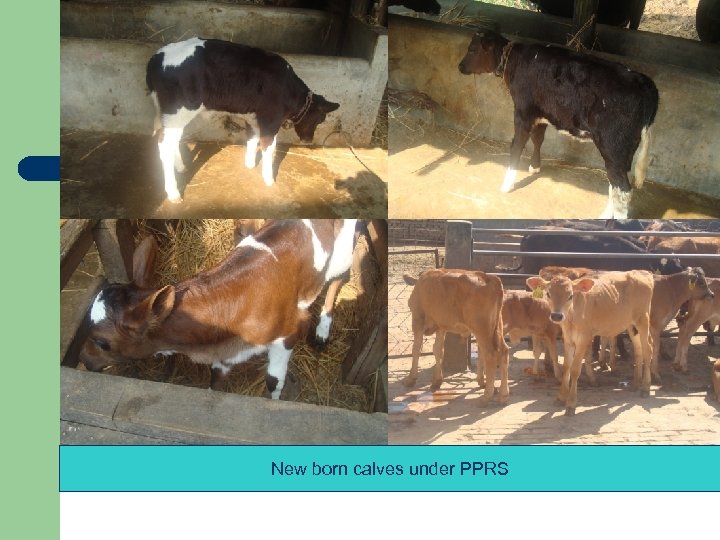 New born calves under PPRS
 Lesson Learnt l l l l l All stakeholders convinced on importance of DCIP Should have been initiated long back- However, late better than never Sustainability- Government support- Programme built on in NARC and DLS from current FY Commitment from stakeholders essential – for long term breeding project Inadequate project duration for this kind of work Sincerity of recorders and farmers cooperation - essential Strong and functional linkage between Research and Extension for achieving DCIP goal- an absolute necessity Exist potential within the country for improvement Immediate benefit for farmers- vaccination, drenching for their support ? ? Genetic improvement- track opened- gravelling, black topping essential - ensure for not washing away in monsoon- some sort of support necessary
 Problem Encountered At Farmers’ level l Animal exit from herd and frequent movement l Why s/he and why not me (herd size) l Fate of male calves Related to Recordings and Recorders l Small and scattered herd size l Production situation – early morning milking l Remuneration against hardship l Recorder leaving job Related to Data management l Timely flow of records (both way) l Incomplete format from recorders l Mismatching herds and animal identifications l Date conversion inconvenience
 Problem…. . Lab and semen handling l Some unbelievable analysis report l Lacto scan maintenance (instances- breakdown of machine) l Off time work for semen handler at district (with no remuneration) l Inadequate facility to handle semen properly (12 sire lines) AI Technician Level l Conflict of interest among technicians l Reading bull identification number in straw Unforeseen l Frequent strike and road blockade l FMD outbreaks- Farmers’ superstition l Unlucky incidence– more male calves born from DCIP- faith of farmers toward DCIP
 Some adjustment suggested l l l Initial feedback to the farmers’ from Lab via recorders (particularly for conductivity) to enable farmers to take immediate correction measures as the current flow of information is lengthy (farmers- district lab- DMU- districtfarmer) Decentralization of data recording Cooperatives involvement in PPRS
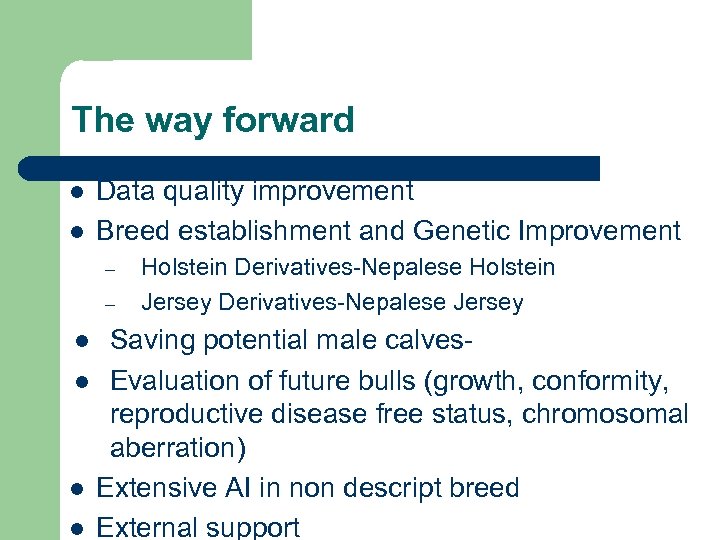 The way forward l l Data quality improvement Breed establishment and Genetic Improvement – – Holstein Derivatives-Nepalese Holstein Jersey Derivatives-Nepalese Jersey Saving potential male calvesl Evaluation of future bulls (growth, conformity, reproductive disease free status, chromosomal aberration) l Extensive AI in non descript breed l External support l