


 Скачать презентацию Daily Warm up 1 What two things must
ae05f5245d50c28123e63e7d67dca226.ppt
- Количество слайдов: 59
 Daily Warm up 1. What two things must happen for diffusion to occur? 2. Define these three words: Isotonic solution, Hypotonic, Hypertonic. (where is there more water in each scenario) 3. Does Diffusion need energy? Why or why not? 4. What are the four things the cell membrane is made out of? True and False 1. Only 25% of the world is left handed? 2. Each square inch of human skin consists of twenty feet of blood vessels.
 2/14/10 after the notes 1. On the membrane structure worksheet you received FIRST color the following structures appropriately: 1. 2. 3. 4. 5. The part that is Hydrophilic= BLUE The part that is Hydrophobic= RED The proteins= ORANGE Add some cholestrol and color that BROWN Add Carbohydrates = Yellow 2. Then follow the directions to cut and create the cell membrane
 2/15/11 Warm up 1. If a cell has 15% solute outside the cell and 25% inside which direction does water move and what type of osmosis is it? 2. If a cell has 15% solute outside the cell and 5% inside the cell which direction does water move and what type of osmosis is it? 3. What is active transport? 4. What is facilitated diffusion? 5. T/F An average person releases 17 oz of gas a day between burping and flatulents (farting)
 2. 16. 11 Warm up • Finish the Cell transport Worksheet if you have not done so. • Make a list of a MINIMUM of 5 questions of things you are confused about, want more practice on or just want to review.
 2. 17. 11 (Thurs) Warm up • Take the first 8 minutes to study/review for your Test! • IF IT IS LOUD- I assume you know it and we start the test!
 Daily Warm up • 1. Define Osmosis? • 2. What happens to a cell that is hypotonic? What about hypertonic? • 3. Does diffusion require energy? • 4. What two things must happen in order for diffusion to occur? • 5. What are the four things the cell membrane is made up of? • 6. T/F The average adult has 5 Liters of blood in their body? 6
 AFTER The warm up: 1. Grab your cups and re-measure and weigh both potatoes. 2. Make one more row on the bottom of your data sheet and record your info. 3. FINISH ALL the questions and observations in the lab- INCLUDING the graph. There is graph paper by the printer. 4. Write a paragraph that must include: 1. Summary of what you did. 2. What were the conclusions? Did you prove your hypothesis or was it wrong? Why? 3. Were there any problems in the lab that may have messed up your data? (Source of error) 4. What could you have done differently to fix the problems and make the lab more smooth next time.
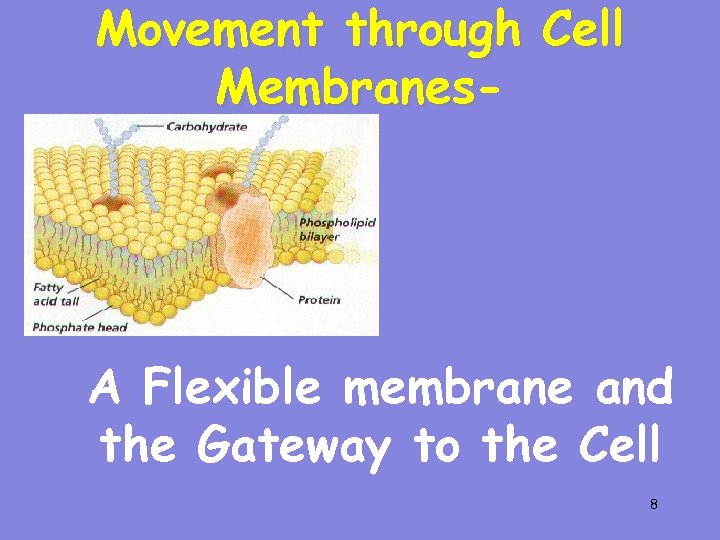 Movement through Cell Membranes A Flexible membrane and the Gateway to the Cell 8
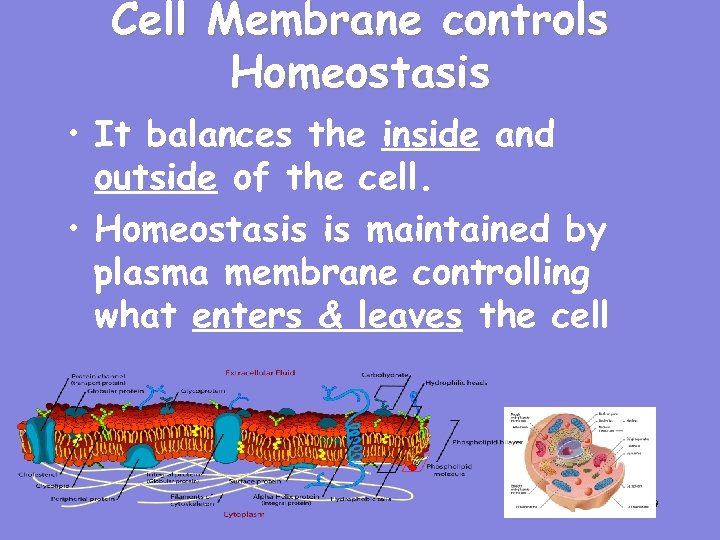 Cell Membrane controls Homeostasis • It balances the inside and outside of the cell. • Homeostasis is maintained by plasma membrane controlling what enters & leaves the cell 9
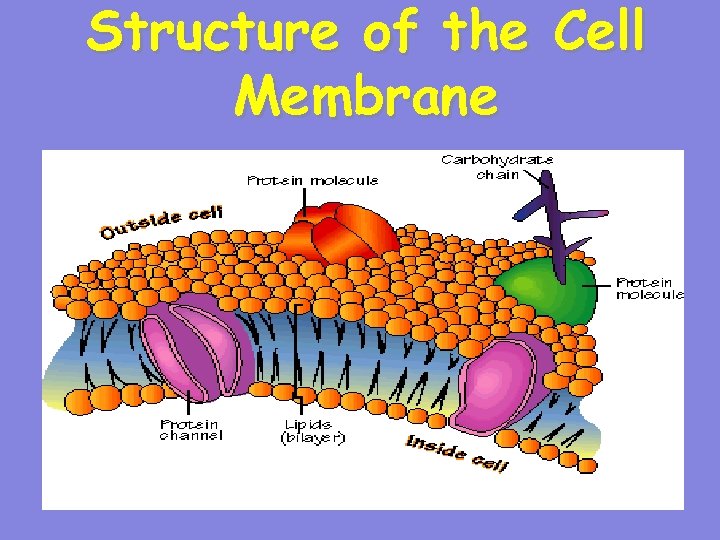 Structure of the Cell Membrane 10
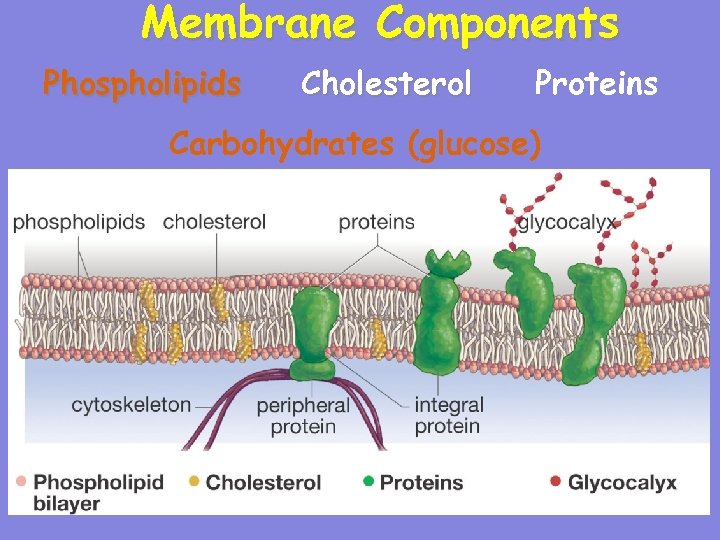 Membrane Components Phospholipids Cholesterol Proteins Carbohydrates (glucose) 11
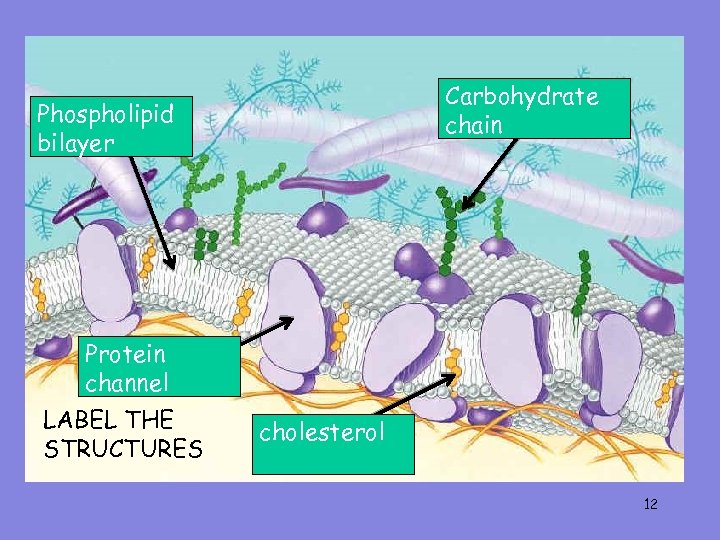 Carbohydrate chain Phospholipid bilayer Protein channel LABEL THE STRUCTURES cholesterol 12
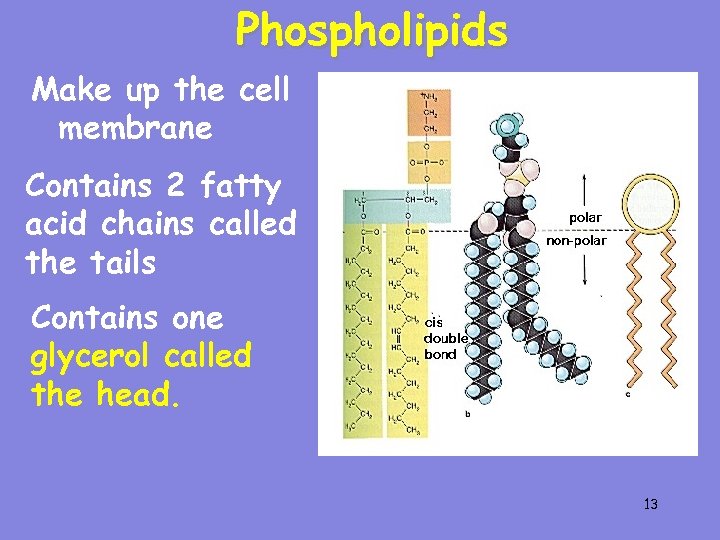 Phospholipids Make up the cell membrane Contains 2 fatty acid chains called the tails Contains one glycerol called the head. 13
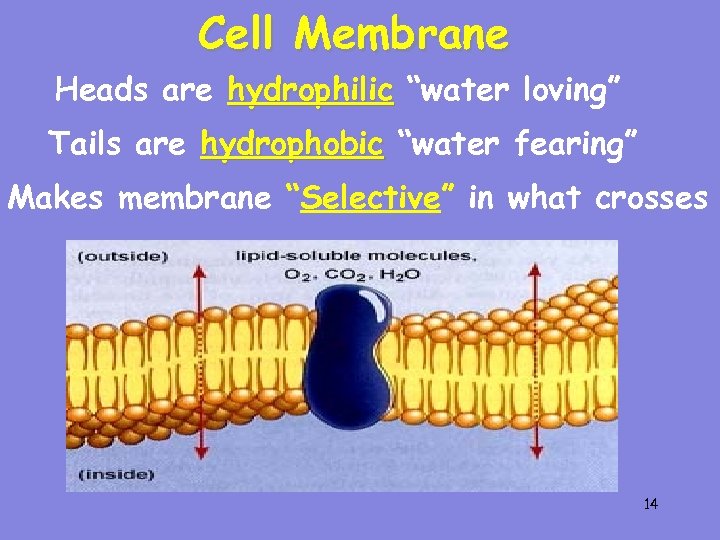 Cell Membrane Heads are hydrophilic “water loving” Tails are hydrophobic “water fearing” Makes membrane “Selective” in what crosses 14
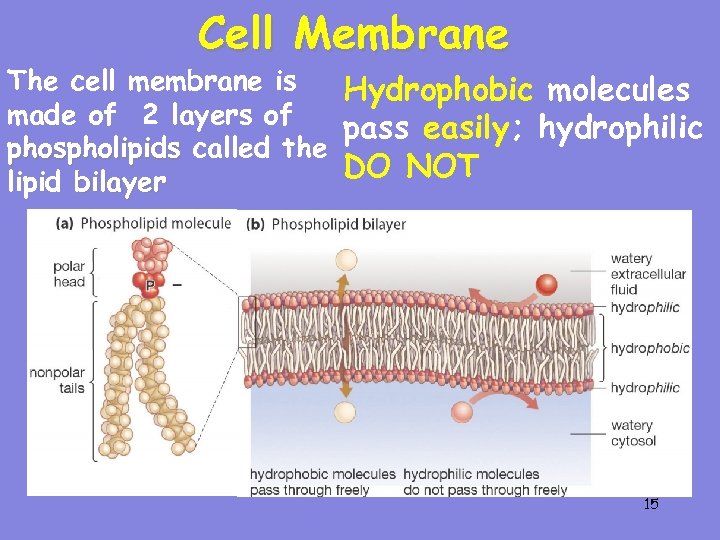 Cell Membrane The cell membrane is Hydrophobic molecules made of 2 layers of pass easily; hydrophilic phospholipids called the DO NOT lipid bilayer 15
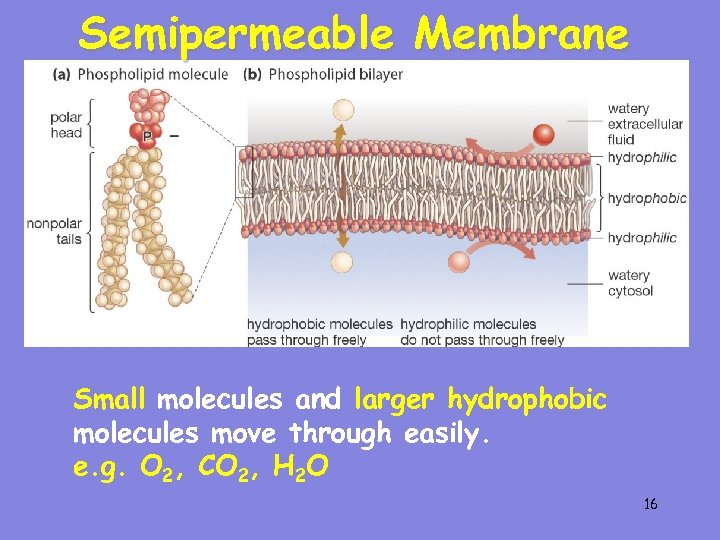 Semipermeable Membrane Small molecules and larger hydrophobic molecules move through easily. e. g. O 2, CO 2, H 2 O 16
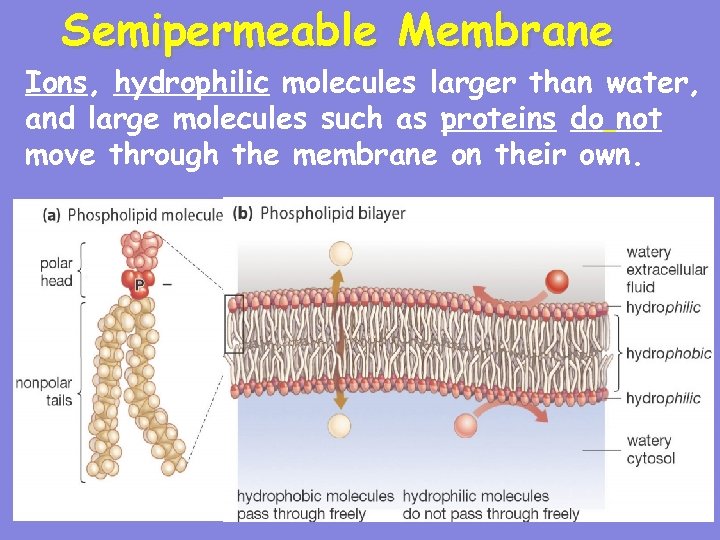 Semipermeable Membrane Ions, hydrophilic molecules larger than water, and large molecules such as proteins do not move through the membrane on their own. 17
 Types of Transport Across Cell Membranes 18
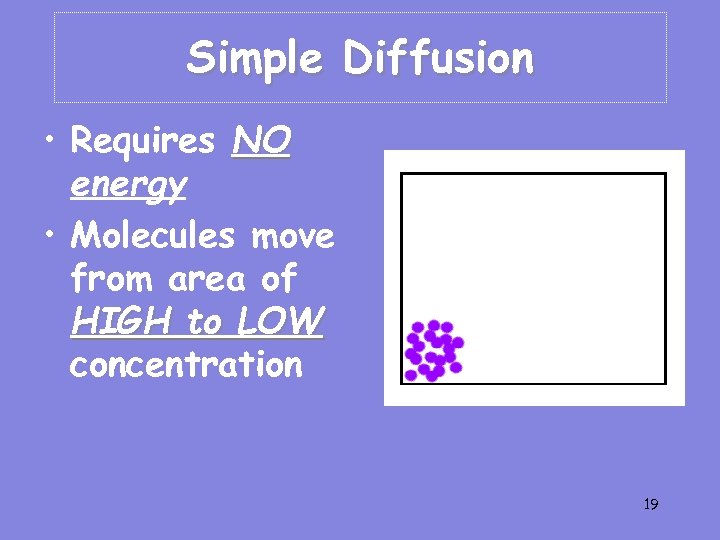 Simple Diffusion • Requires NO energy • Molecules move from area of HIGH to LOW concentration 19
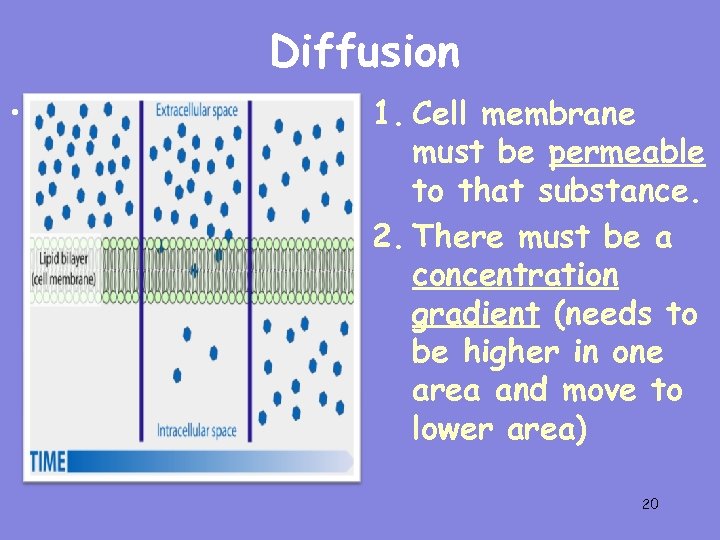 Diffusion • Two things need to happen in a cell in order for diffusion to occur… what are they? 1. Cell membrane must be permeable to that substance. 2. There must be a concentration gradient (needs to be higher in one area and move to lower area) 20
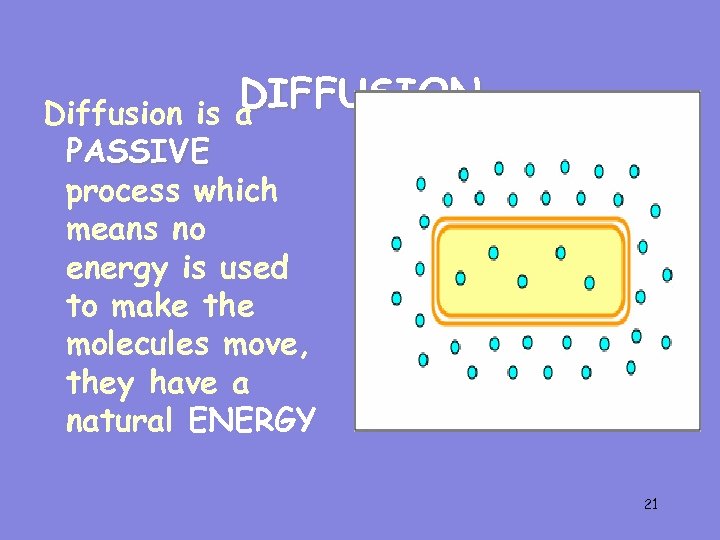 DIFFUSION a Diffusion is PASSIVE process which means no energy is used to make the molecules move, they have a natural ENERGY 21
 STOP POINT: • Diffusion of Food Coloring Demonstration. 1. EVERYONE Take out a piece of paper (# 1 -3). 2. Have someone at your table put in 4 drops of the food coloring I bring around. 3. Answer these questions- without talking: 1. What happened when the food coloring was added? 2. What did the water look like before the color was added, while it was being added and once it was finished? 3. How did the water end up turning red? 22 (tell me what the molecules were doing).
 Sugar Cube Diffusion • Answer the three questions as you watch the sugar cube in the next cup of water. 1. What happened when the sugar cube was added? 2. What did the water look like before the sugar was added, while it was being added and once it was finished? 3. Explain to me the process of diffusion and how this was an example? 23
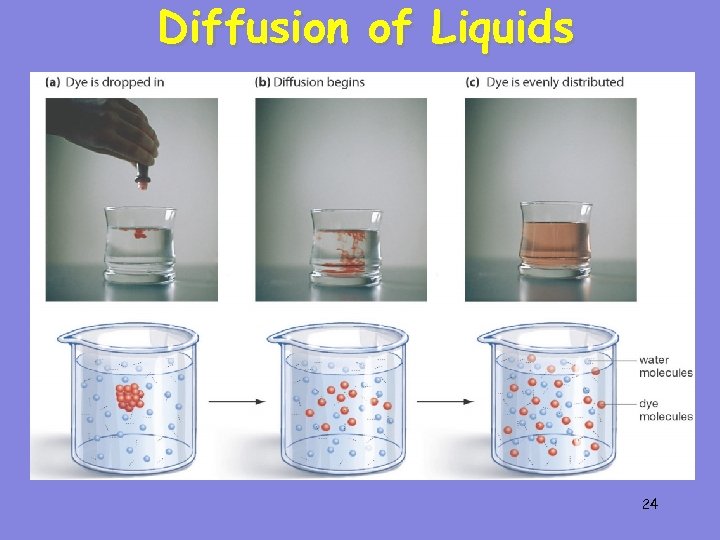 Diffusion of Liquids 24
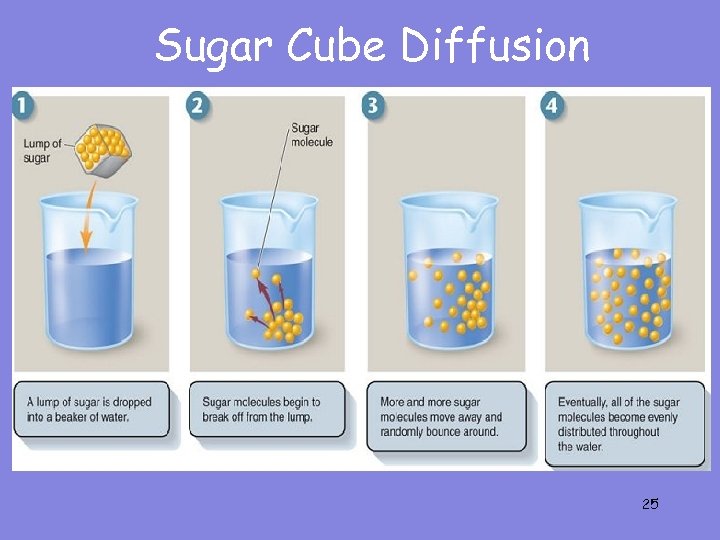 Sugar Cube Diffusion 25
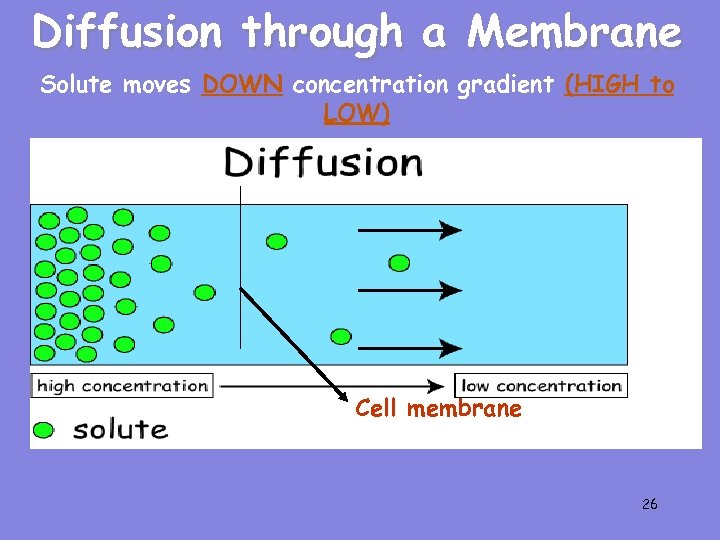 Diffusion through a Membrane Solute moves DOWN concentration gradient (HIGH to LOW) Cell membrane 26
 • Diffusion of. Osmosis a water across membrane • Moves from HIGH water potential (low solute) to LOW water potential (high solute) 27
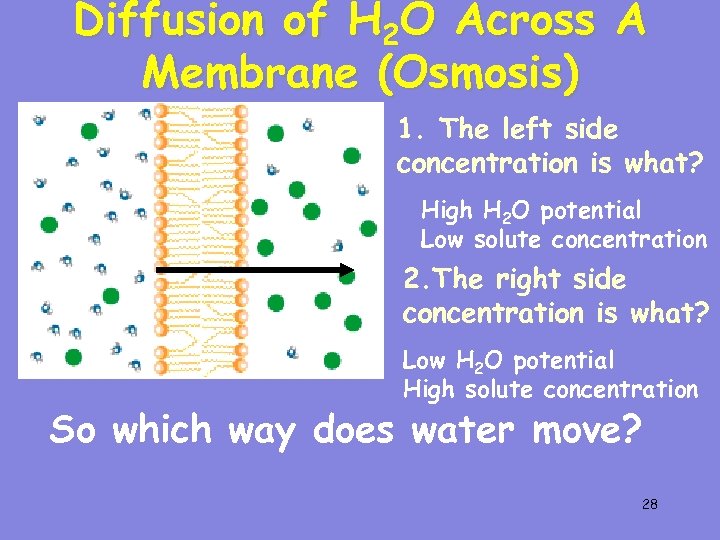 Diffusion of H 2 O Across A Membrane (Osmosis) 1. The left side concentration is what? High H 2 O potential Low solute concentration 2. The right side concentration is what? Low H 2 O potential High solute concentration So which way does water move? 28
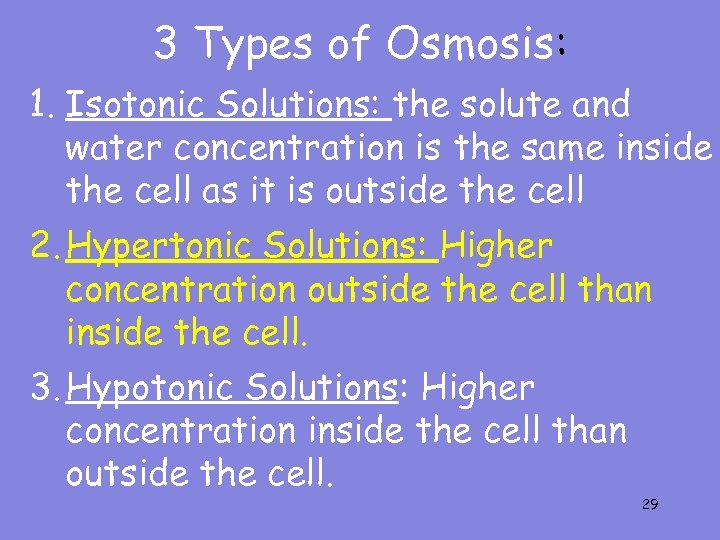 3 Types of Osmosis: 1. Isotonic Solutions: the solute and water concentration is the same inside the cell as it is outside the cell 2. Hypertonic Solutions: Higher concentration outside the cell than inside the cell. 3. Hypotonic Solutions: Higher concentration inside the cell than outside the cell. 29
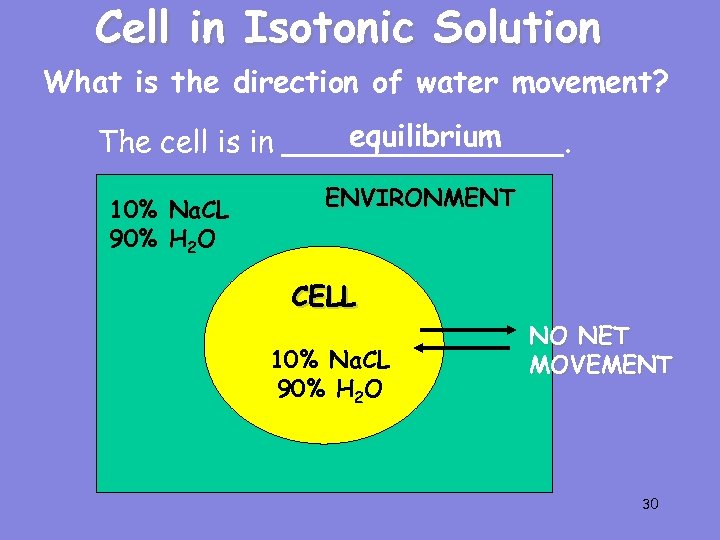 Cell in Isotonic Solution What is the direction of water movement? equilibrium The cell is in ________. 10% Na. CL 90% H 2 O ENVIRONMENT CELL 10% Na. CL 90% H 2 O NO NET MOVEMENT 30
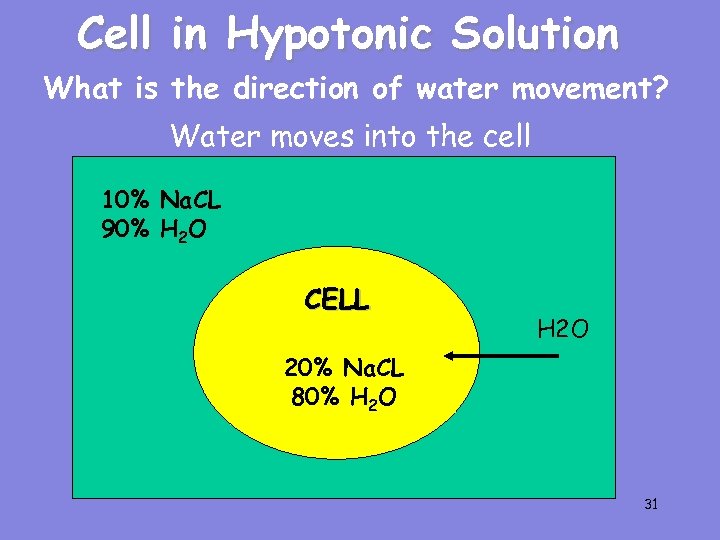 Cell in Hypotonic Solution What is the direction of water movement? Water moves into the cell 10% Na. CL 90% H 2 O CELL H 2 O 20% Na. CL 80% H 2 O 31
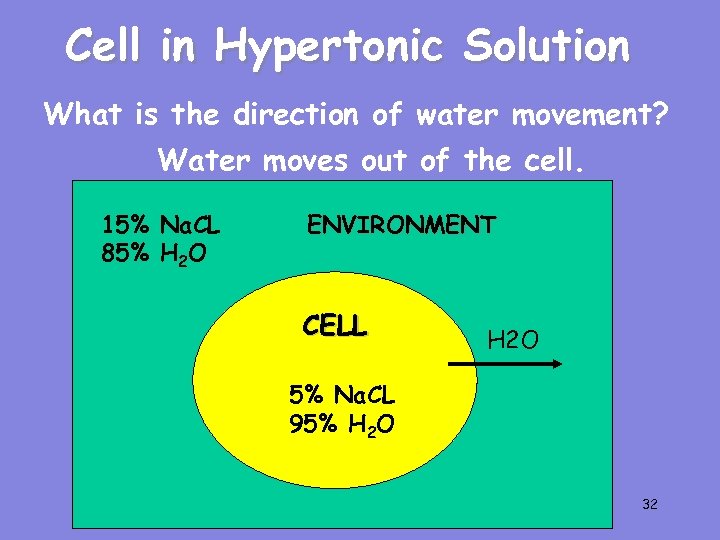 Cell in Hypertonic Solution What is the direction of water movement? Water moves out of the cell. 15% Na. CL 85% H 2 O ENVIRONMENT CELL H 2 O 5% Na. CL 95% H 2 O 32
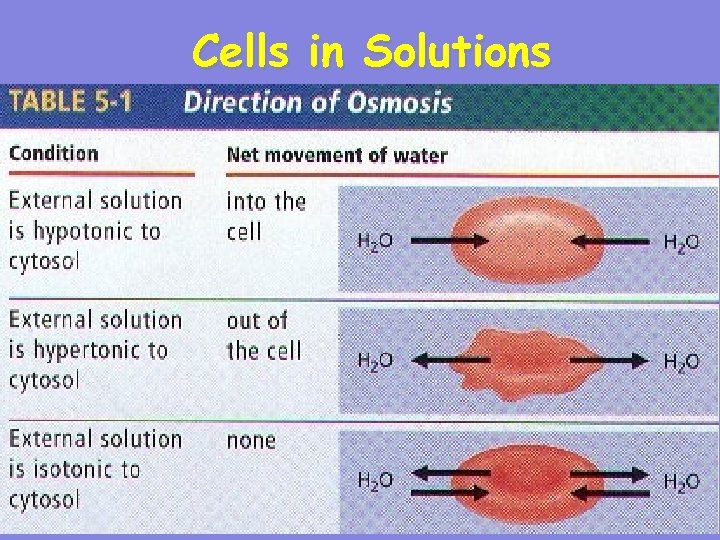 Cells in Solutions 33
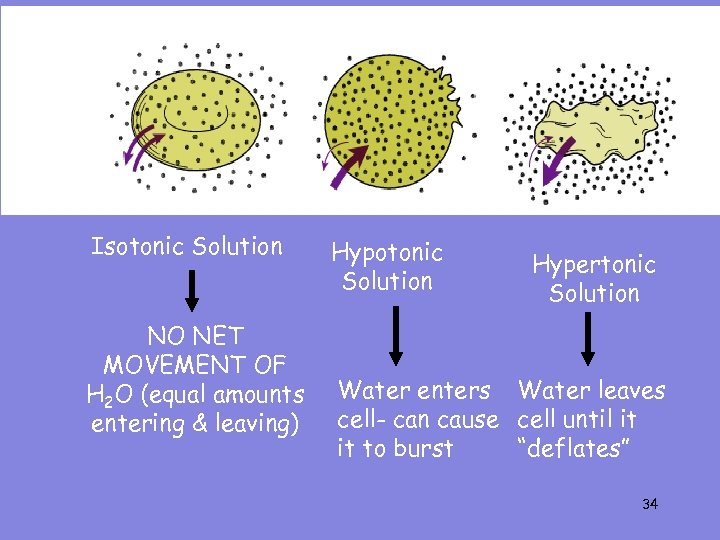 Isotonic Solution NO NET MOVEMENT OF H 2 O (equal amounts entering & leaving) Hypotonic Solution Hypertonic Solution Water enters Water leaves cell- can cause cell until it it to burst “deflates” 34
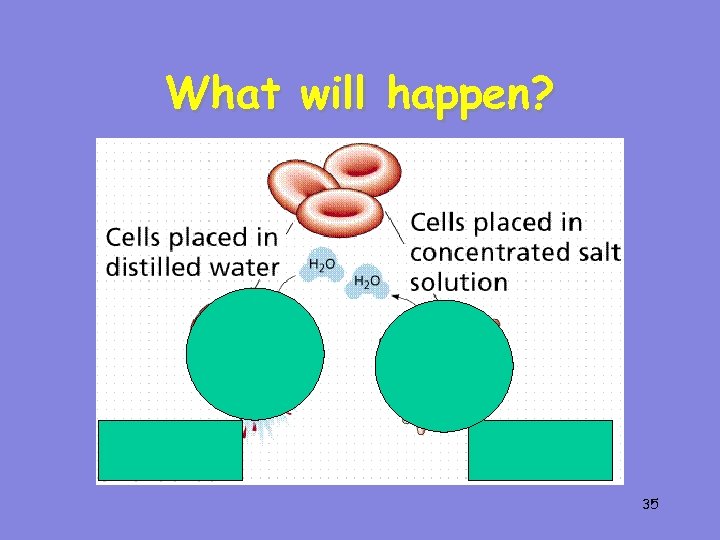 What will happen? 35
 How does this relate to Anatomy? • Discuss at your table this question and appoint someone to share your answer: • What would happen to your blood cells if the fluid surrounding them had too much salt? 36
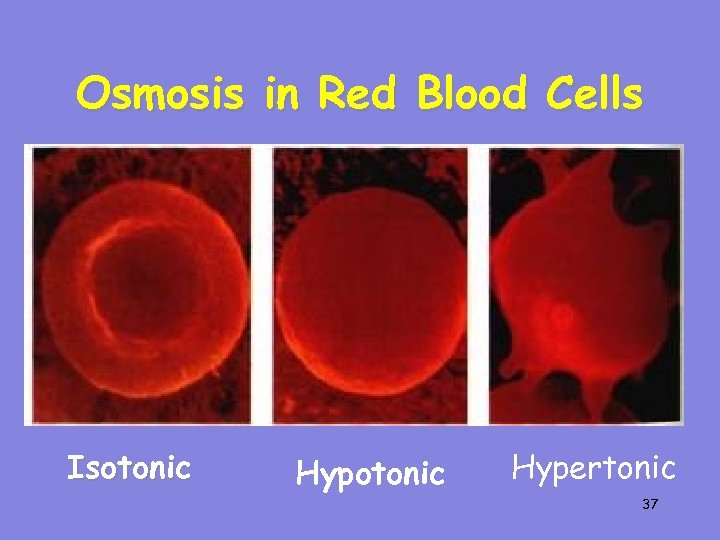 Osmosis in Red Blood Cells Isotonic Hypertonic 37
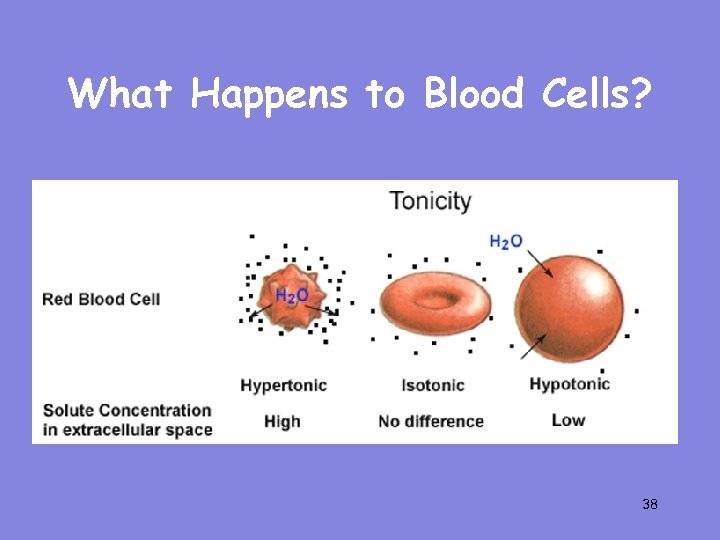 What Happens to Blood Cells? 38
 hypotonic hypertonic isotonic hypotonic 39
 STOP POINT: OSMOSIS ACTIVITY LAB At your lab tables you are working in groups of 2 or 3. Each lab table should be divided into 2 groups. WAIT FOR MY DIRECTIONS! Send one person from your group to the materials table to receive your materials. WAIT for FURTHER DIRECTIONS. 40
 3 Types of Transport: 1. Simple Diffusion (also includes osmosis) 2. Facilitated Diffusion 3. Active Transport 41
 Passive Transport vs. Active Transport • Passive means: it DOES NOT require energy. • Active means: it DOES require energy. • Which type(s) are passive? • Which type(s) are active?
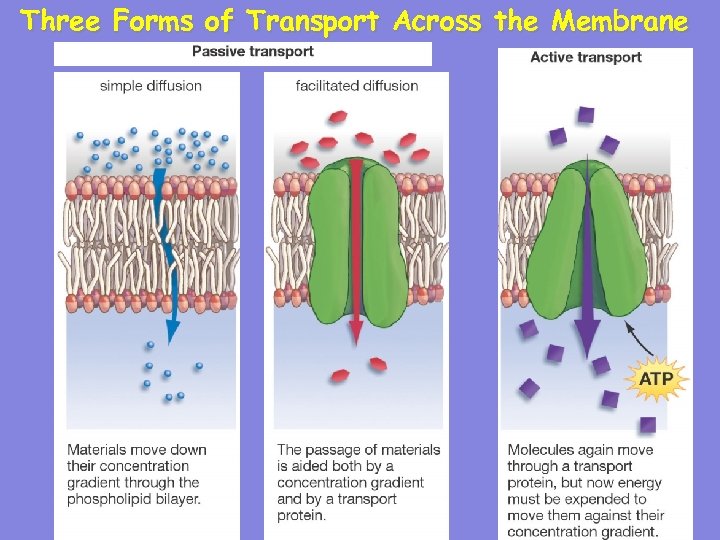 Three Forms of Transport Across the Membrane 43
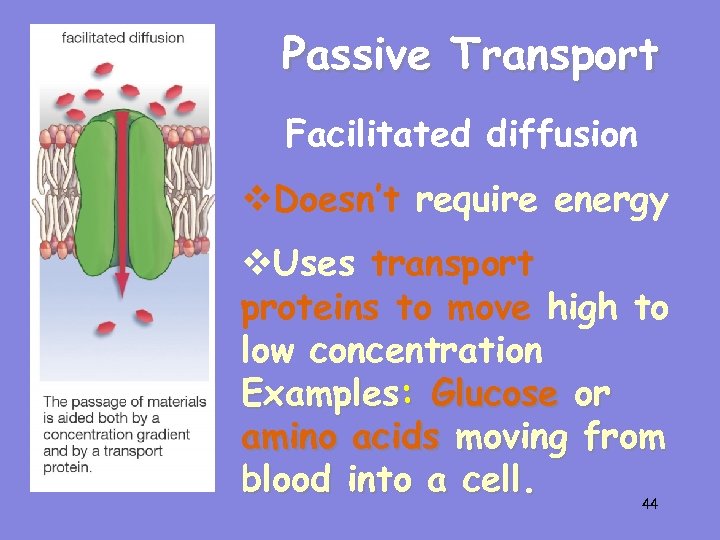 Passive Transport Facilitated diffusion v. Doesn’t require energy v. Uses transport proteins to move high to low concentration Examples: Glucose or amino acids moving from blood into a cell. 44
 2 Types of Transport Proteins • In Facilitated Diffusion- the molecules are too big and need “help” or to be facilitated across. 45
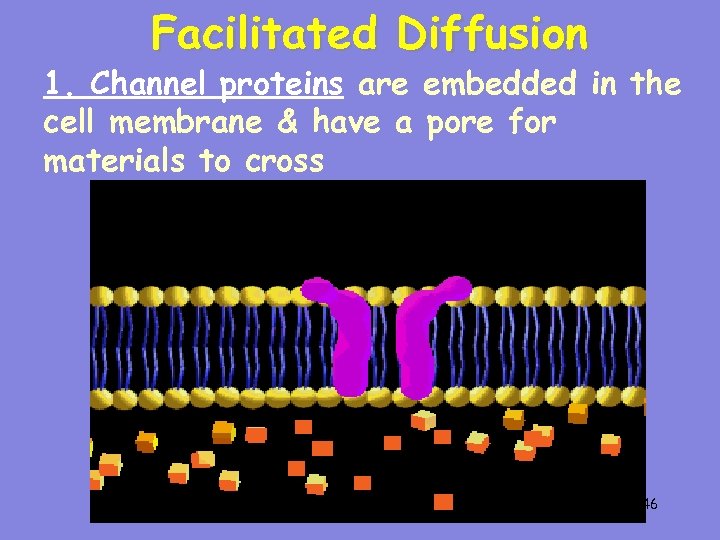 Facilitated Diffusion 1. Channel proteins are embedded in the cell membrane & have a pore for materials to cross copyright cmassengale 46
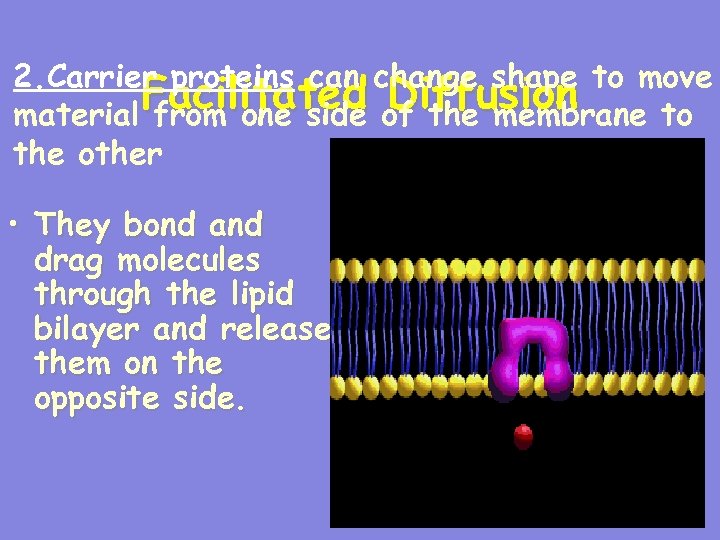 2. Carrier proteins can change shape to move Facilitated of the membrane to Diffusion material from one side the other • They bond and drag molecules through the lipid bilayer and release them on the opposite side. 47
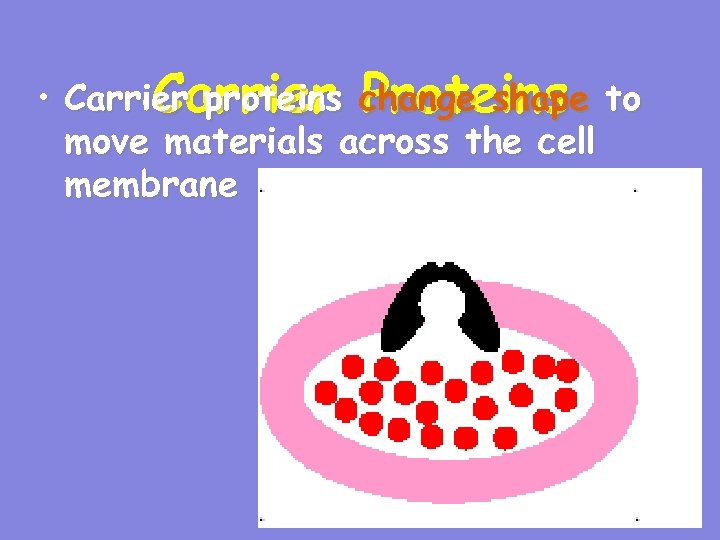 • Carrier proteins change shape to Carrier Proteins move materials across the cell membrane 48
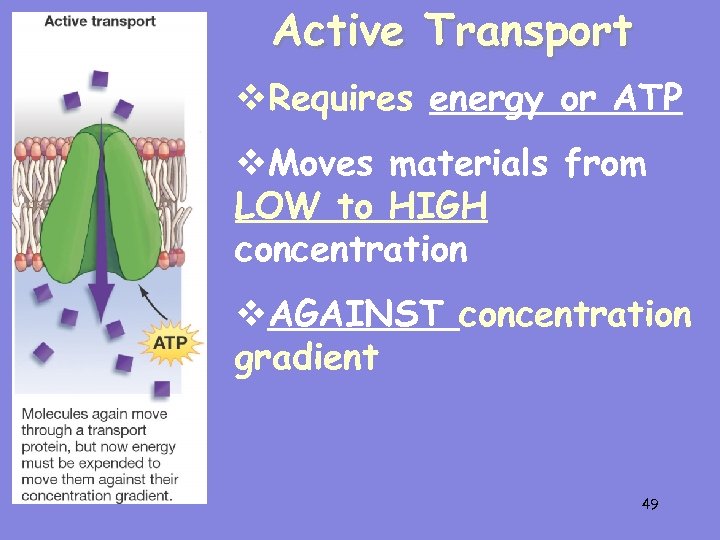 Active Transport v. Requires energy or ATP v. Moves materials from LOW to HIGH concentration v. AGAINST concentration gradient 49
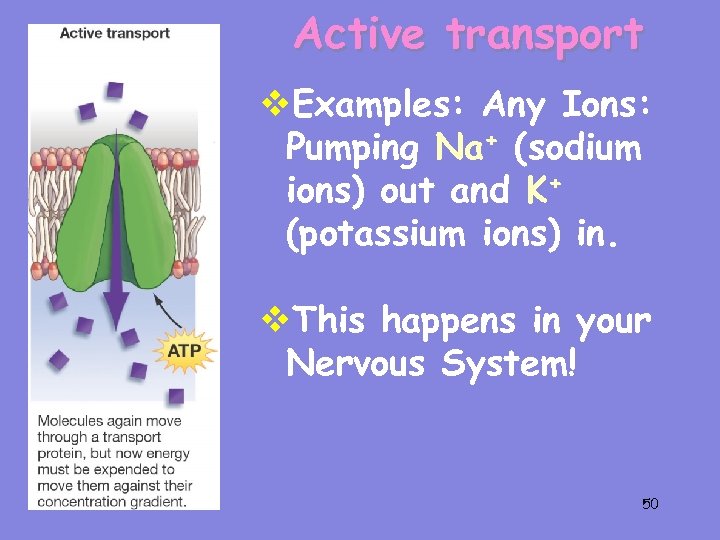 Active transport v. Examples: Any Ions: Pumping Na+ (sodium ions) out and K+ (potassium ions) in. v. This happens in your Nervous System! 50
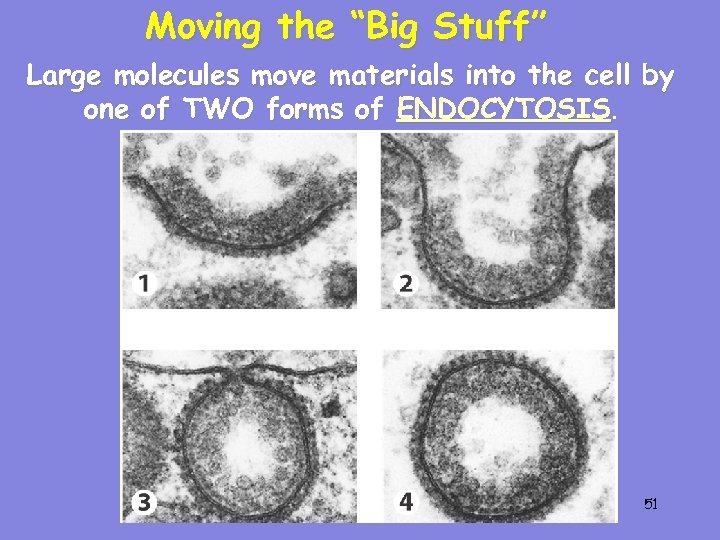 Moving the “Big Stuff” Large molecules move materials into the cell by one of TWO forms of ENDOCYTOSIS 51
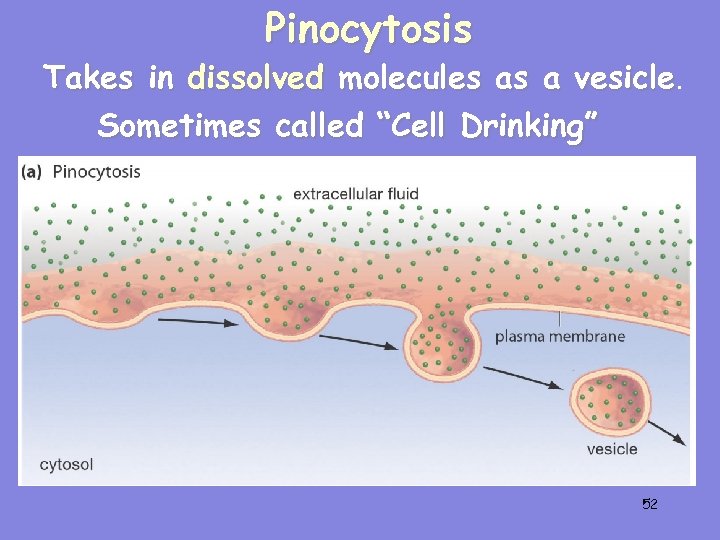 Pinocytosis Takes in dissolved molecules as a vesicle. Sometimes called “Cell Drinking” 52
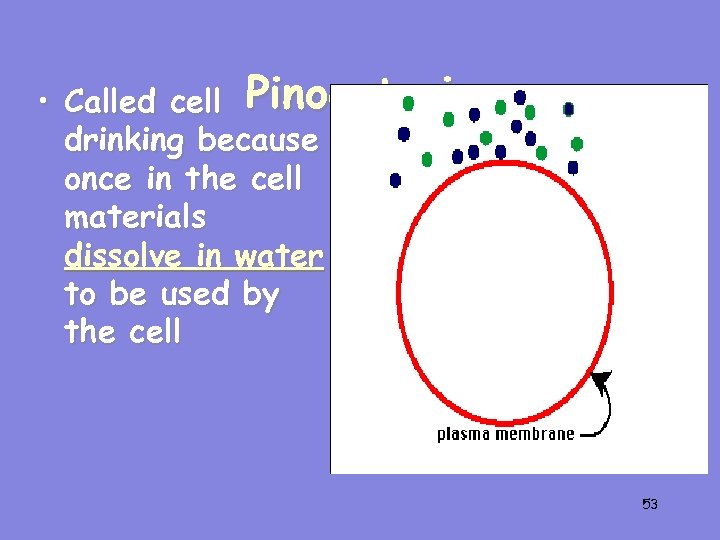 • Called cell Pinocytosis drinking because once in the cell materials dissolve in water to be used by the cell 53
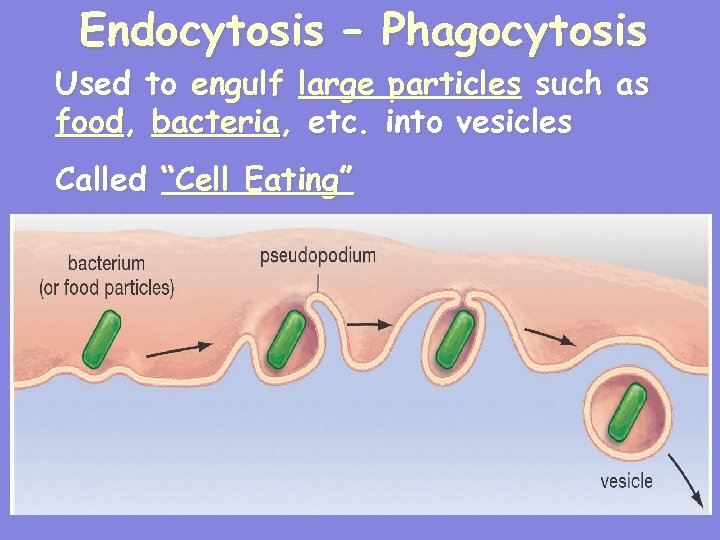 Endocytosis – Phagocytosis Used to engulf large particles such as food, bacteria, etc. into vesicles Called “Cell Eating” 54
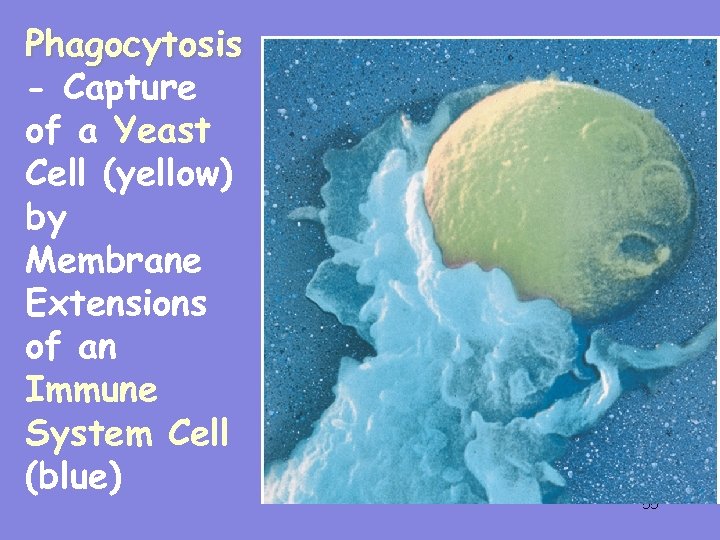 Phagocytosis - Capture of a Yeast Cell (yellow) by Membrane Extensions of an Immune System Cell (blue) 55
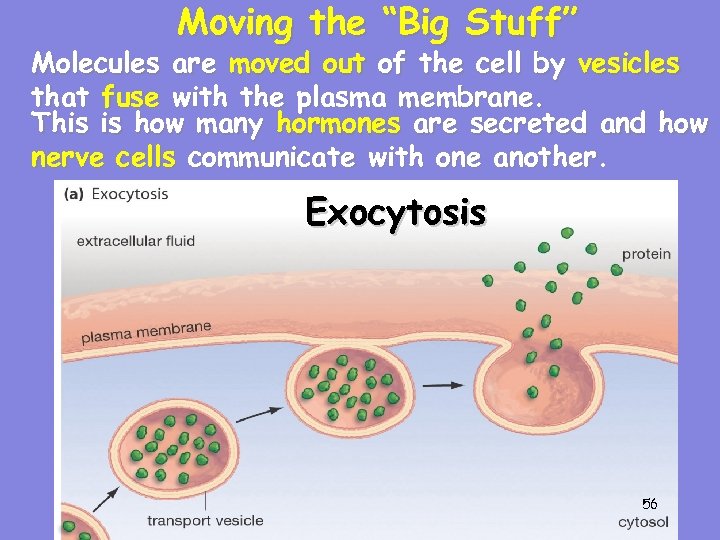 Moving the “Big Stuff” Molecules are moved out of the cell by vesicles that fuse with the plasma membrane. This is how many hormones are secreted and how nerve cells communicate with one another Exocytosis 56
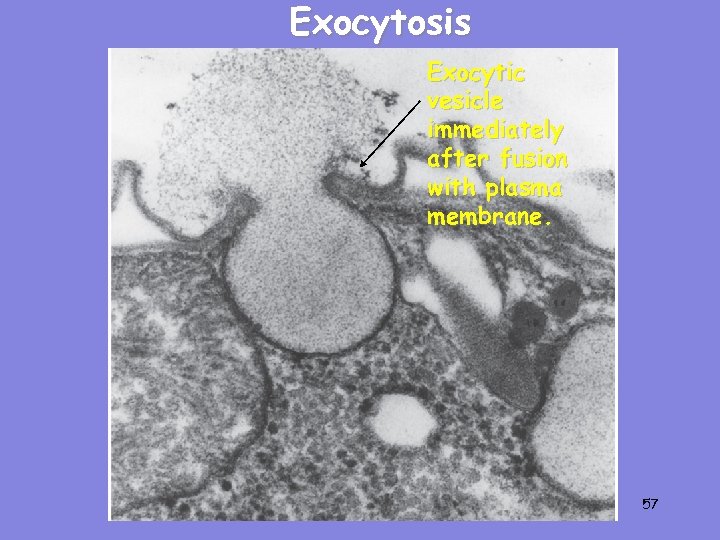 Exocytosis Exocytic vesicle immediately after fusion with plasma membrane. 57
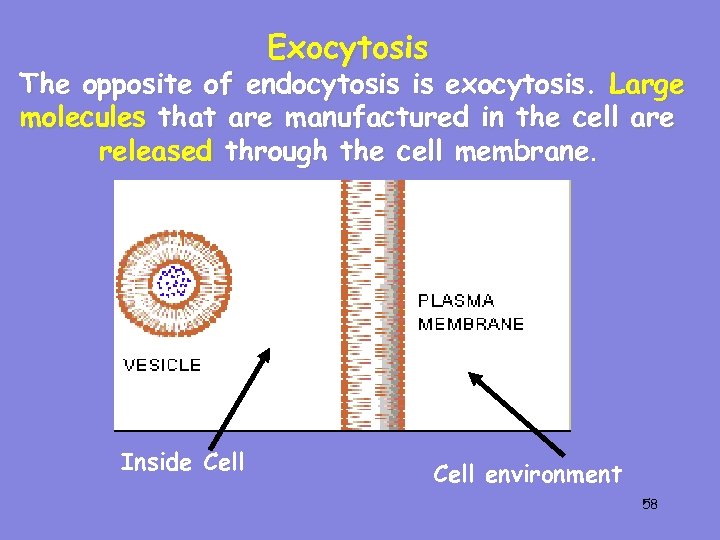 Exocytosis The opposite of endocytosis is exocytosis. Large molecules that are manufactured in the cell are released through the cell membrane. Inside Cell environment 58
 REVIEW QUESTIONS How does osmosis or Diffusion play a role in the human body? What is the main difference between Passive transport and Active transport? What is endocytosis and exocytosis? What happens if a red blood cell is in a hypertonic solution? Hypotonic? Isotonic? 59