



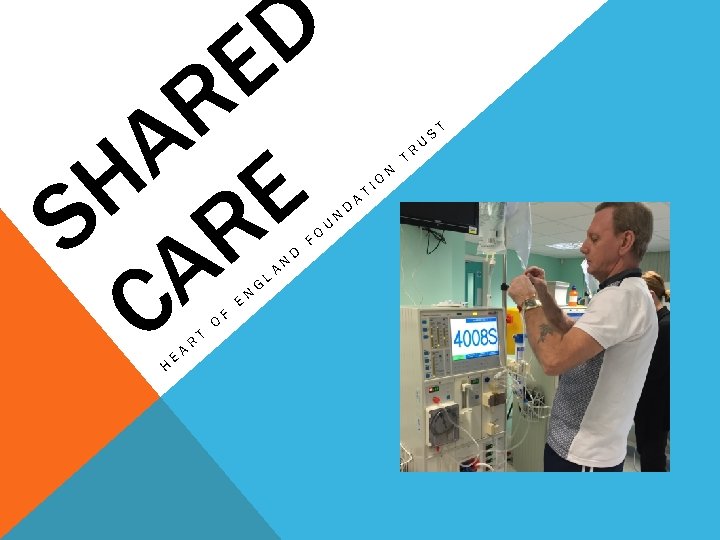
 D E R A H E S R A C H E A R T O F E N G L A N D F O U N D A T IO N T R U S T
 WHAT IS SHARED CARE? From the start of Dialysis patients always took an active role in their treatment. Over the last two decades with the expansion of in centre haemodialysis the role has shifted to the patient being a passive recipient of care and healthcare worker delivering the treatment.
 WHAT IS SHARED CARE? ‘this may be due, in part, an assumption about the level of patient dependency, as well as a perception that greater patient involvement would slow the throughput’(Yorkshire and Humber 2016)
 WHAT IS SHARED CARE? Our aim is to encourage, support, educate and teach our patients to be involved in the treatment they receive at any of our four units. This will enable them To take ownership of their health To take control Feel valued To have a voice
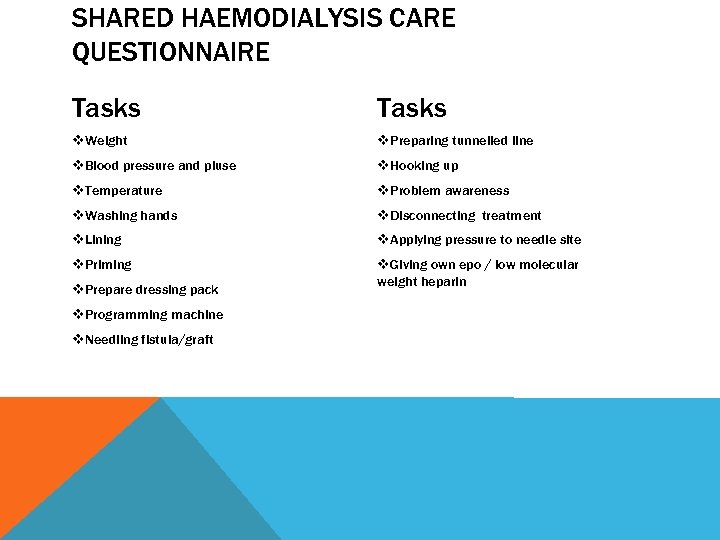 SHARED HAEMODIALYSIS CARE QUESTIONNAIRE Tasks v. Weight v. Preparing tunnelled line v. Blood pressure and pluse v. Hooking up v. Temperature v. Problem awareness v. Washing hands v. Disconnecting treatment v. Lining v. Applying pressure to needle site v. Priming v. Giving own epo / low molecular weight heparin v. Prepare dressing pack v. Programming machine v. Needling fistula/graft
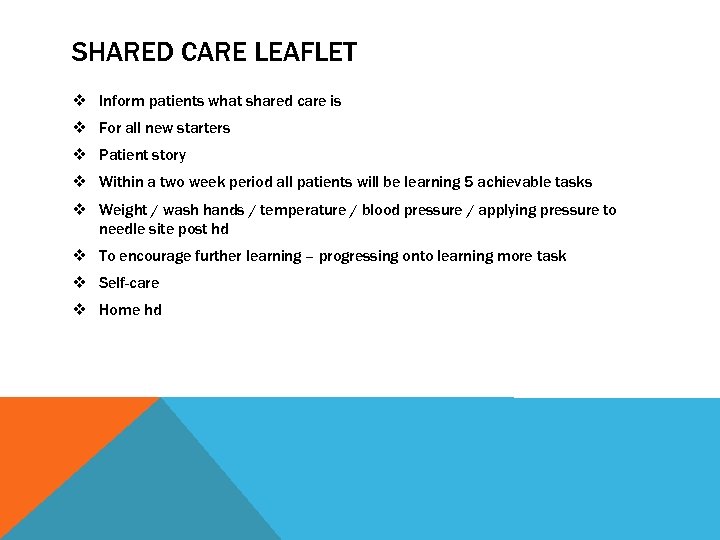 SHARED CARE LEAFLET v Inform patients what shared care is v For all new starters v Patient story v Within a two week period all patients will be learning 5 achievable tasks v Weight / wash hands / temperature / blood pressure / applying pressure to needle site post hd v To encourage further learning – progressing onto learning more task v Self-care v Home hd
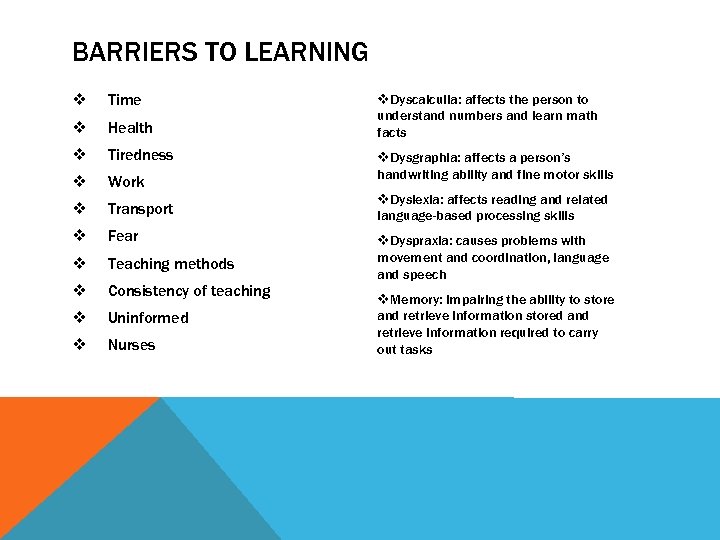 BARRIERS TO LEARNING v Time v Health v Tiredness v Work v Transport v Fear v Teaching methods v Consistency of teaching v Uninformed v Nurses v. Dyscalculia: affects the person to understand numbers and learn math facts v. Dysgraphia: affects a person’s handwriting ability and fine motor skills v. Dyslexia: affects reading and related language-based processing skills v. Dyspraxia: causes problems with movement and coordination, language and speech v. Memory: impairing the ability to store and retrieve information stored and retrieve information required to carry out tasks
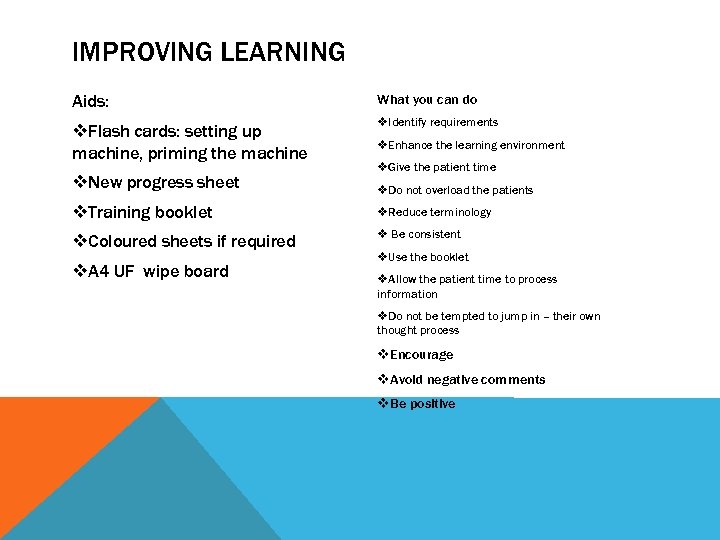 IMPROVING LEARNING Aids: What you can do v. Flash cards: setting up machine, priming the machine v. Identify requirements v. New progress sheet v. Enhance the learning environment v. Give the patient time v. Do not overload the patients v. Training booklet v. Reduce terminology v. Coloured sheets if required v Be consistent v. A 4 UF wipe board v. Use the booklet v. Allow the patient time to process information v. Do not be tempted to jump in – their own thought process v. Encourage v. Avoid negative comments v. Be positive
 PATIENT FEEDBACK ‘feel valued’ ‘enjoyed learning and being part of the team’ ‘I am taking control’ ‘reduces my time of waiting around’ ‘doing self-care I can come straight into the unit and set my machine’ ‘why allow someone else to cause me pain when I can needle myself’ ‘understanding how my body work I feel I have more control’ ‘I feel I can be involved in my partners treatment and psychological I feel it has helped me with dealing with his illness’ ‘while I wait I can help the nurses getting my table ready’
 THANK YOU