



 D E C I S I O N 2 0 14 The Facts About Election Advertising Active voters are active newspaper readers
 VOTERS AND NEWSPAPERS Top ten reasons newspapers deliver for political campaigns 1. Newspaper readers are voters In the 2004 presidential election, 9 out of 10 newspaper readers cast a ballot. In the 2006 midterm elections, when voting is typically much lighter, newspaper readers still delivered the vote, with more than 8 out of 10 newspaper readers going to the polls. 2. Newspapers are credible Voters look to newspapers for the information they need to make up their minds about candidates and issues. Newspapers rank second only to television among voters when it comes to providing the most helpful information about state & local elections. Newspaper advertising gives a campaign an aura of credibility and respectability that’s unmatched. 3. Newspapers consistently reach voters Voters consistently look to newspapers to help make up their minds about how they’ll vote. While the perceived usefulness of other media rises and falls as the campaign progresses, newspapers maintain their strength for influencing voter opinion. Voters count on newspapers to deliver the whole story about the candidates and issues, from the earliest moments of the campaign right up until Election Day. 4. Newspapers reach crucial undecided voters The conventional wisdom among consultants says that only 10 -15% of the electorate is typically up for grabs at the end of any campaign. But in reality, that number is much higher. That’s because while only 1015% of voters may be truly “undecided, ” many more are far from certain about their vote. Among those who say they experience some indecision, three out of four are regular newspaper readers. Newspapers can put your message in the hands of this crucial constituency. 5. Newspapers are reliable Nobody reads the newspaper to escape from reality, as is often the case with television and radio. And unlike annoying telephone calls, people actually enjoy reading newspapers. Newspaper readers seek out indepth, detailed political information. With newspaper in your media mix, you can be sure your ad dollars have been well spent. SOURCE: NAA
 VOTERS AND NEWSPAPERS Top ten reasons newspapers deliver for political campaigns 6. Newspapers make targeting easy Today’s newspapers can deliver the message right to the doorsteps of the voters you need to reach. Most major metropolitan newspapers have established sections based on geographic zones and can target a pre-printed flier or brochure for insertion and delivery within a specific zip code. Many can target delivery down to the census tract, block, or even house by house. You can have your message delivered in a flyer or brochure, on a “Post-it” note placed on the front page, or even on the poly/delivery bag in which the newspaper arrives. Poly/delivery bags are especially useful for getting out the vote on Election Day. 7. Newspapers can provide more information to voters Use newspapers to highlight endorsements, issue clarification, and candidate comparisons. Candidates can also use a compelling newspaper ad to generate interest from the press and garner valuable earned media opportunities. 9. All politics is local Voters know newspapers are the place to go to find out what’s going on in their communities. They know that unlike television or radio news programs, newspapers cover local issues every day of the week. And they know with a newspaper, they’ll get real, indepth coverage of the local issues most important to them. The same issues that often determine how they’ll vote on Election Day. 10. Newspapers are an essential part of a successful media mix Broadcast, direct mail, and phone calls are all still important, but you also have to put money into other proven and effective advertising mediums like newspaper. In fact, newspaper ranks second only to television among voters when it comes to providing the most helpful information about state & local elections. 8. It’s easy to advertise in newspapers Placing political ads in newspapers has never been easier. Typically the media buy can be completed with a single order and check. Nearly every state has its own press association that can help you with all of your planning and buying needs. You can always call newspapers directly. Most have their own trained political sales staff. SOURCE: NAA
 VOTERS AND NEWSPAPERS Newspaper readers are loyal voters • 9 of 10 newspaper readers voted in the last presidential election. • 8 of 10 newspaper readers voted in the last mid-term election. • 50% of voters read their newspaper every day. • 70% of voters read their newspaper several times a week. 49% of all voters seek political information and ads in their newspaper to help make voting decisions. SOURCE: NAA
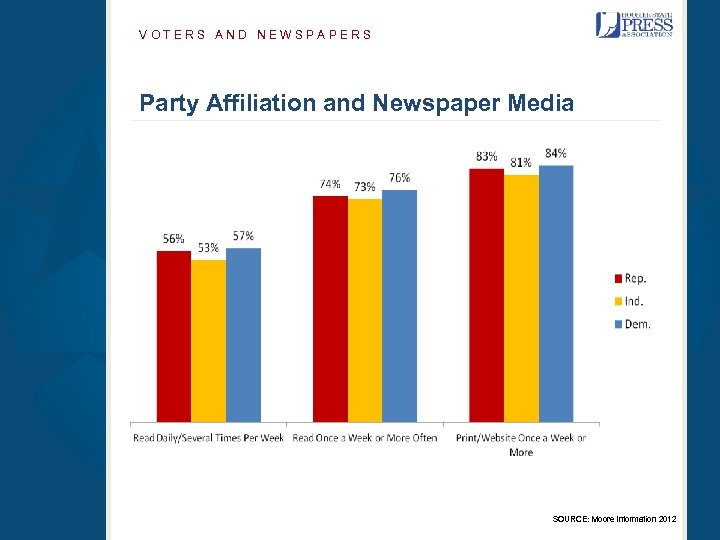 VOTERS AND NEWSPAPERS Party Affiliation and Newspaper Media SOURCE: Moore Information 2012
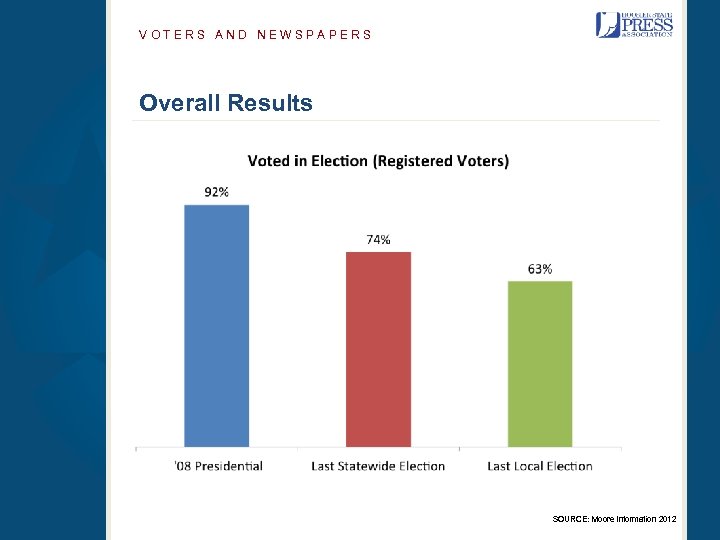 VOTERS AND NEWSPAPERS Overall Results SOURCE: Moore Information 2012
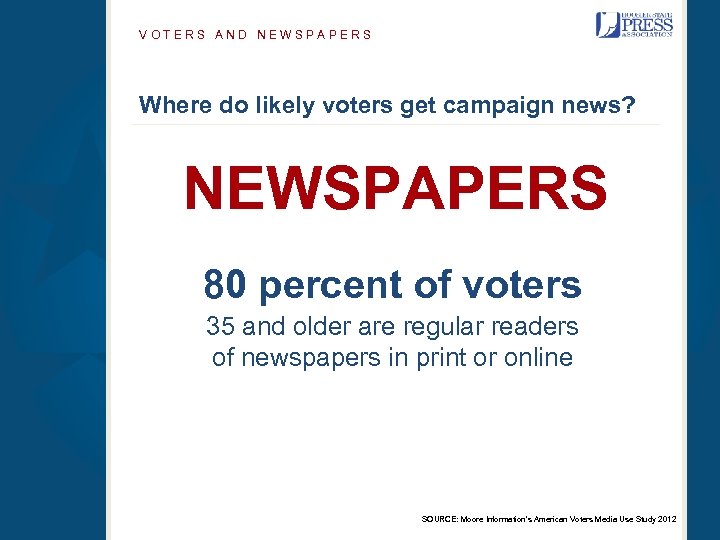 VOTERS AND NEWSPAPERS Where do likely voters get campaign news? NEWSPAPERS 80 percent of voters 35 and older are regular readers of newspapers in print or online SOURCE: Moore Information’s American Voters Media Use Study 2012
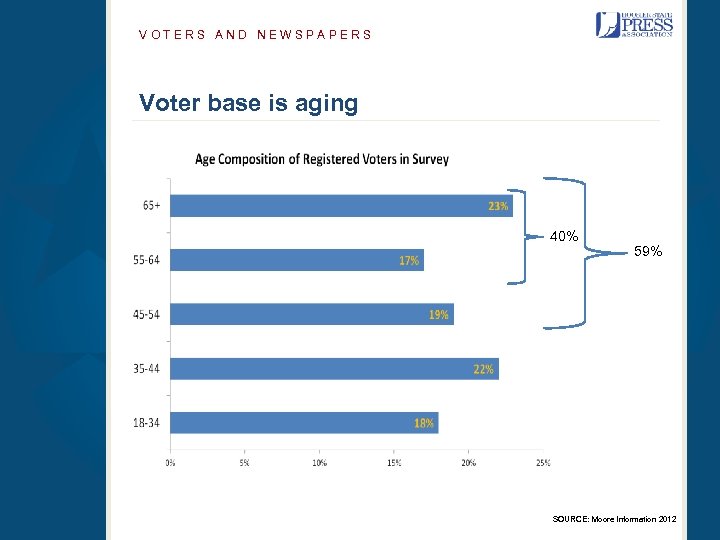 VOTERS AND NEWSPAPERS Voter base is aging 40% 59% SOURCE: Moore Information 2012
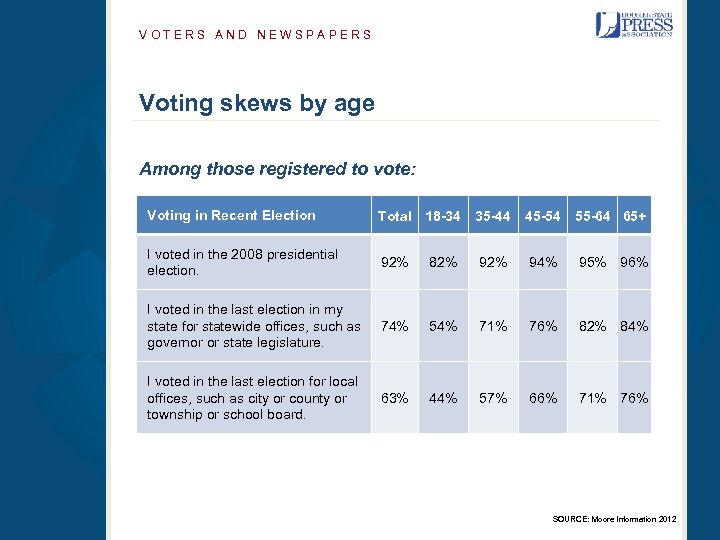 VOTERS AND NEWSPAPERS Voting skews by age Among those registered to vote: Voting in Recent Election Total 18 -34 35 -44 45 -54 55 -64 65+ I voted in the 2008 presidential election. 92% 82% 94% 95% 96% I voted in the last election in my state for statewide offices, such as governor or state legislature. 74% 54% 71% 76% 82% 84% I voted in the last election for local offices, such as city or county or township or school board. 63% 44% 57% 66% 71% 76% SOURCE: Moore Information 2012
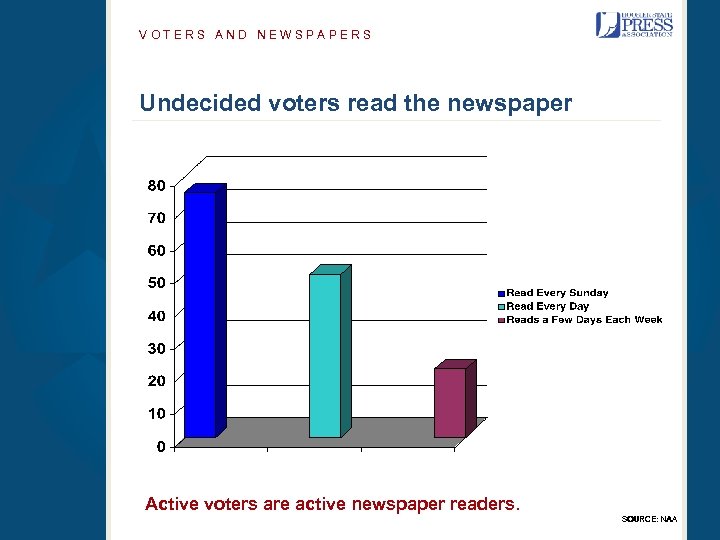 VOTERS AND NEWSPAPERS Undecided voters read the newspaper Active voters are active newspaper readers. SOURCE: NAA
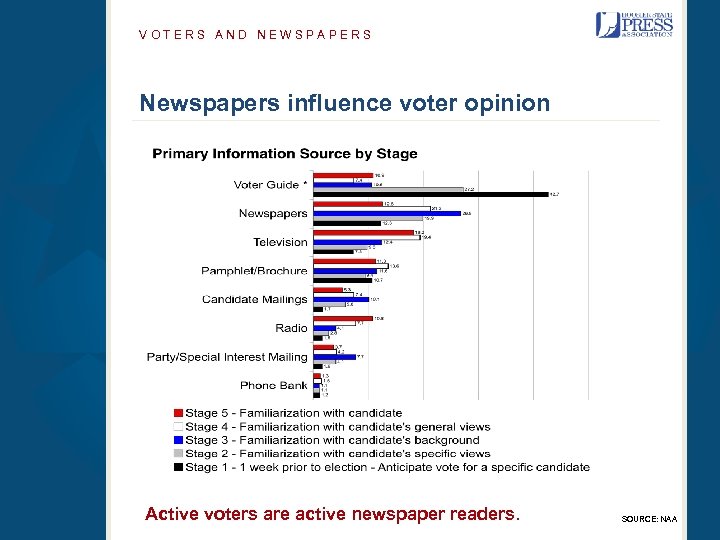 VOTERS AND NEWSPAPERS Newspapers influence voter opinion Active voters are active newspaper readers. SOURCE: NAA
 VOTERS AND NEWSPAPERS Why consider newspapers? As viewing habits change, political strategies switch screens The New York Times, April 1, 2012: “ 31 percent of likely voters had not watched television ‘live’ – that is, at the time it was being broadcast, as opposed to online or on a recording device – in the previous week. And of the 17 percent who said they mostly watched programs recorded on devices like a DVR, a large majority skipped through ads most of the time. ” Article’s key takeaways: • Mitt Romney's team spent 18 months trying to fight TV advertising’s law of diminishing returns. • Candidates see greater value buying audiences online and replacing TV buys with online. Full New York Times article: As Viewing Habits Change, Political Ads Switch Screens
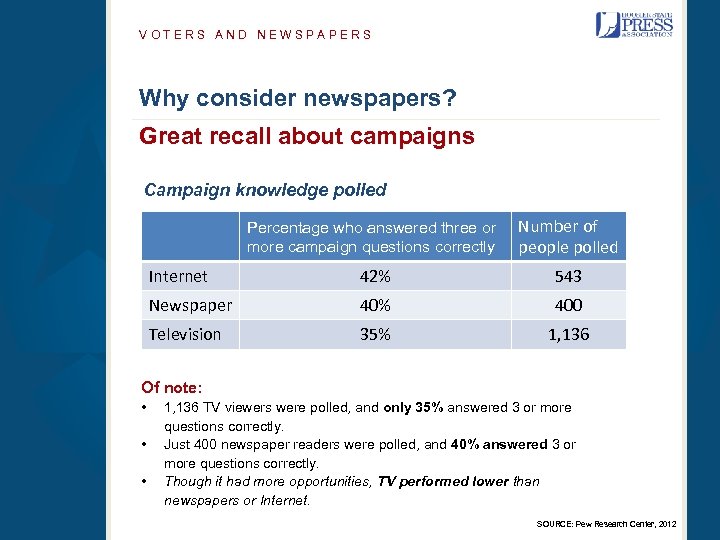 VOTERS AND NEWSPAPERS Why consider newspapers? Great recall about campaigns Campaign knowledge polled Percentage who answered three or more campaign questions correctly Number of people polled Internet 42% v 543 Newspaper 40% 400 Television 35% 1, 136 Of note: • • • 1, 136 TV viewers were polled, and only 35% answered 3 or more questions correctly. Just 400 newspaper readers were polled, and 40% answered 3 or more questions correctly. Though it had more opportunities, TV performed lower than newspapers or Internet. SOURCE: Pew Research Center, 2012
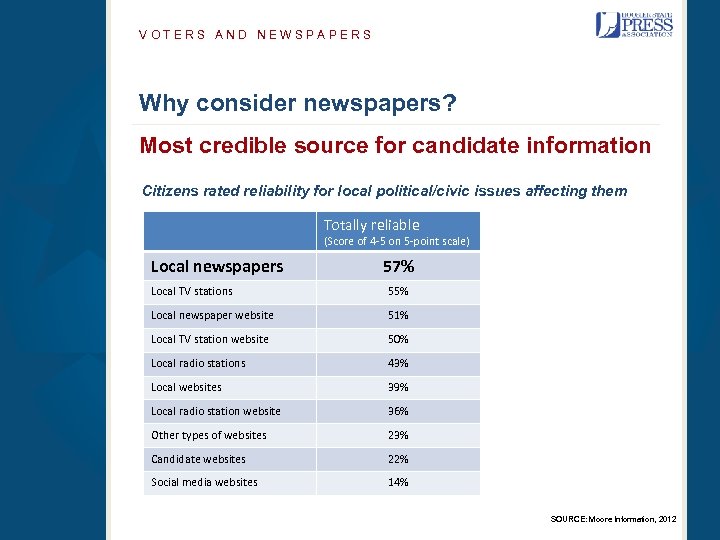 VOTERS AND NEWSPAPERS Why consider newspapers? Most credible source for candidate information Citizens rated reliability for local political/civic issues affecting them Totally reliable (Score of 4 -5 on 5 -point scale) Local newspapers 57% Local TV stations 55% Local newspaper website 51% Local TV station website 50% Local radio stations 43% Local websites 39% Local radio station website 36% Other types of websites 23% Candidate websites 22% Social media websites 14% SOURCE: Moore Information, 2012
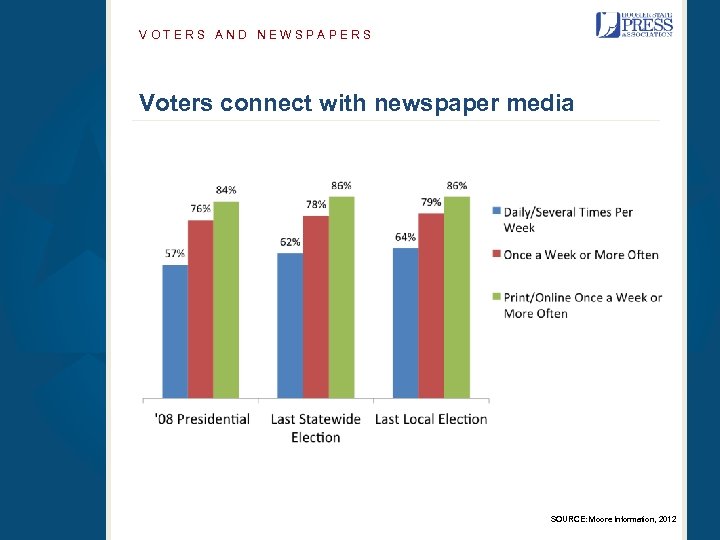 VOTERS AND NEWSPAPERS Voters connect with newspaper media SOURCE: Moore Information, 2012
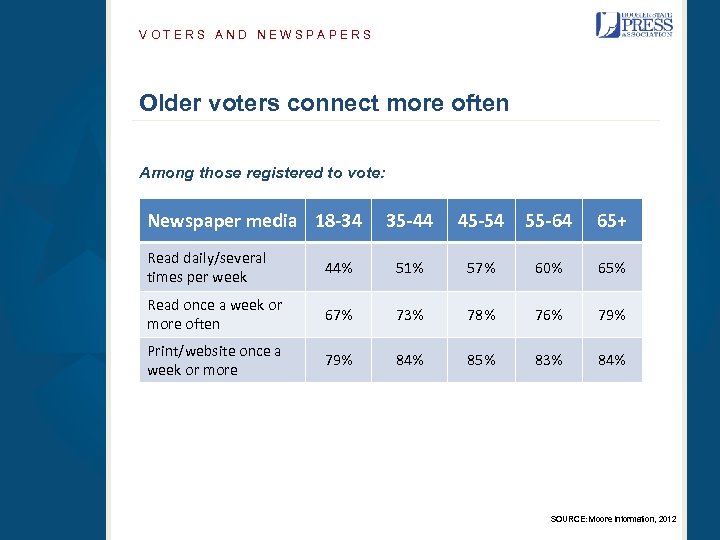 VOTERS AND NEWSPAPERS Older voters connect more often Among those registered to vote: Newspaper media 18 -34 35 -44 45 -54 55 -64 65+ Read daily/several times per week 44% 51% 57% 60% 65% Read once a week or more often 67% 73% 78% 76% 79% Print/website once a week or more 79% 84% 85% 83% 84% SOURCE: Moore Information, 2012
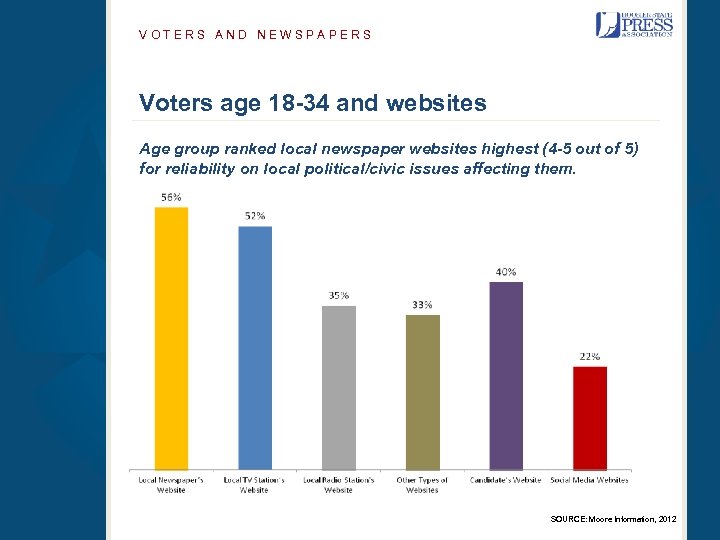 VOTERS AND NEWSPAPERS Voters age 18 -34 and websites Age group ranked local newspaper websites highest (4 -5 out of 5) for reliability on local political/civic issues affecting them. SOURCE: Moore Information, 2012
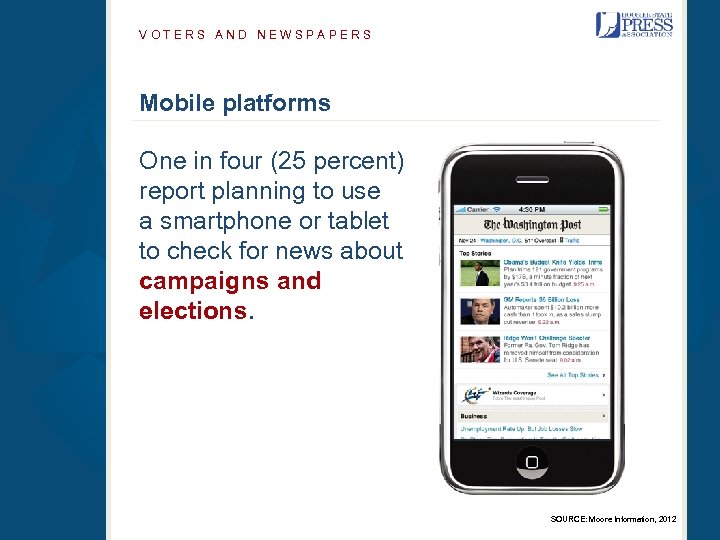 VOTERS AND NEWSPAPERS Mobile platforms One in four (25 percent) report planning to use a smartphone or tablet to check for news about campaigns and elections. SOURCE: Moore Information, 2012
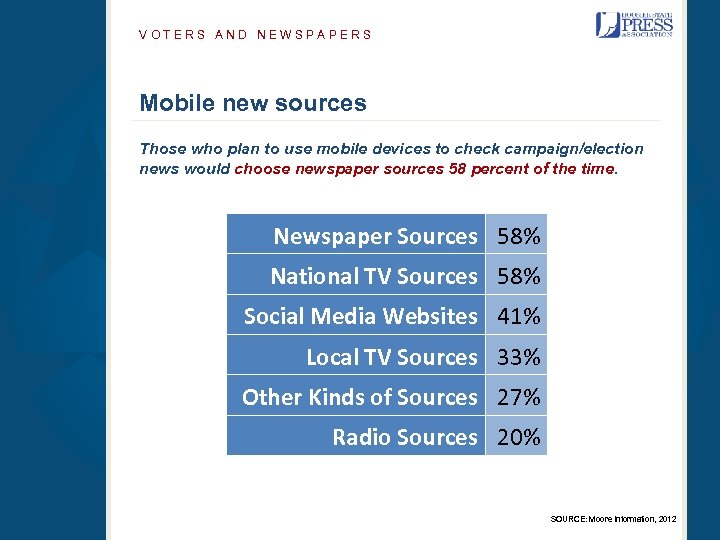 VOTERS AND NEWSPAPERS Mobile new sources Those who plan to use mobile devices to check campaign/election news would choose newspaper sources 58 percent of the time. Newspaper Sources 58% National TV Sources 58% Social Media Websites 41% Local TV Sources 33% Other Kinds of Sources 27% Radio Sources 20% SOURCE: Moore Information, 2012
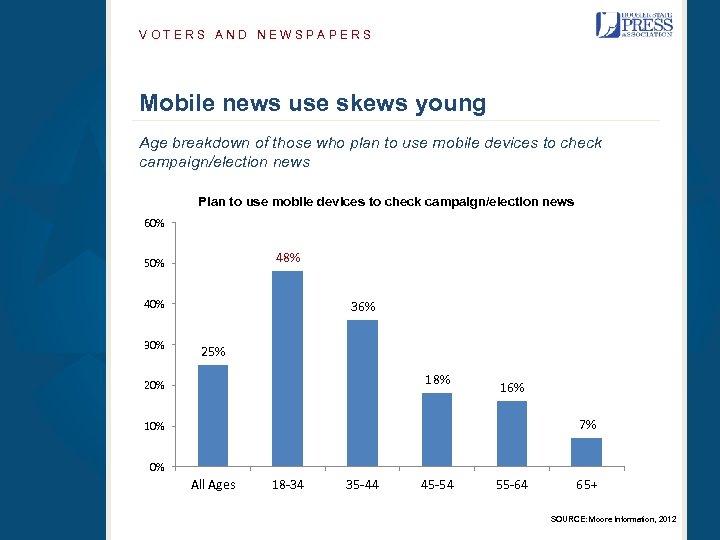 VOTERS AND NEWSPAPERS Mobile news use skews young Age breakdown of those who plan to use mobile devices to check campaign/election news Plan to use mobile devices to check campaign/election news 60% 48% 50% 40% 36% 25% 18% 20% 16% 7% 10% 0% All Ages 18 -34 35 -44 45 -54 55 -64 65+ SOURCE: Moore Information, 2012
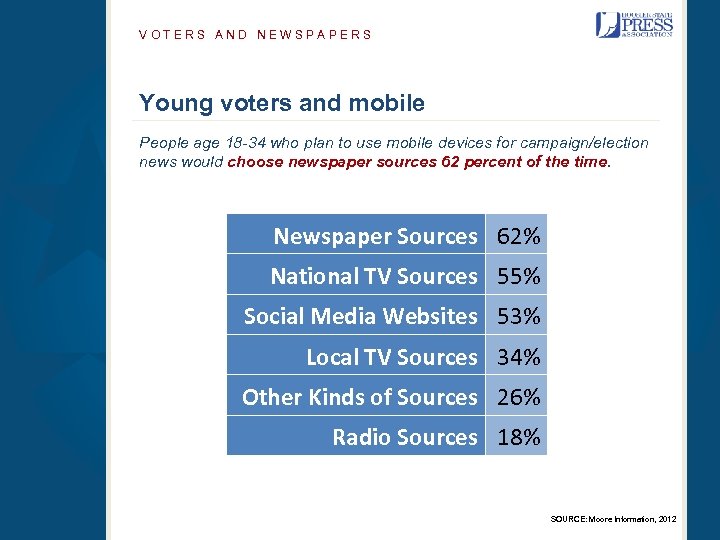 VOTERS AND NEWSPAPERS Young voters and mobile People age 18 -34 who plan to use mobile devices for campaign/election news would choose newspaper sources 62 percent of the time. Newspaper Sources 62% National TV Sources 55% Social Media Websites 53% Local TV Sources 34% Other Kinds of Sources 26% Radio Sources 18% SOURCE: Moore Information, 2012
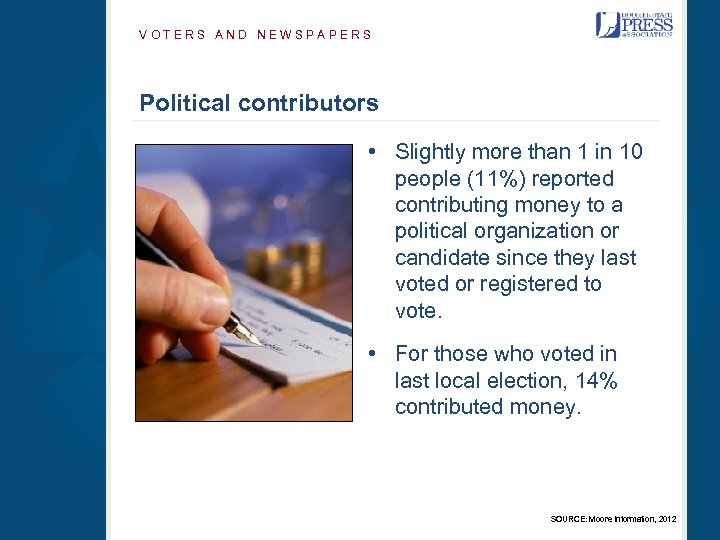 VOTERS AND NEWSPAPERS Political contributors • Slightly more than 1 in 10 people (11%) reported contributing money to a political organization or candidate since they last voted or registered to vote. • For those who voted in last local election, 14% contributed money. SOURCE: Moore Information, 2012
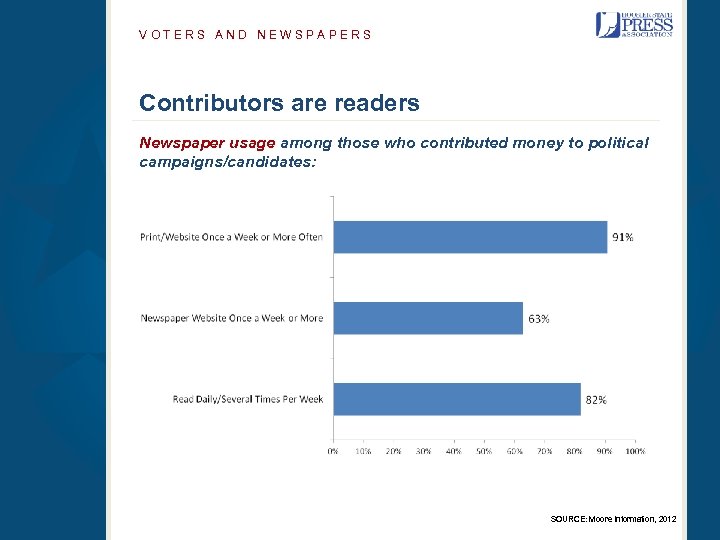 VOTERS AND NEWSPAPERS Contributors are readers Newspaper usage among those who contributed money to political campaigns/candidates: SOURCE: Moore Information, 2012
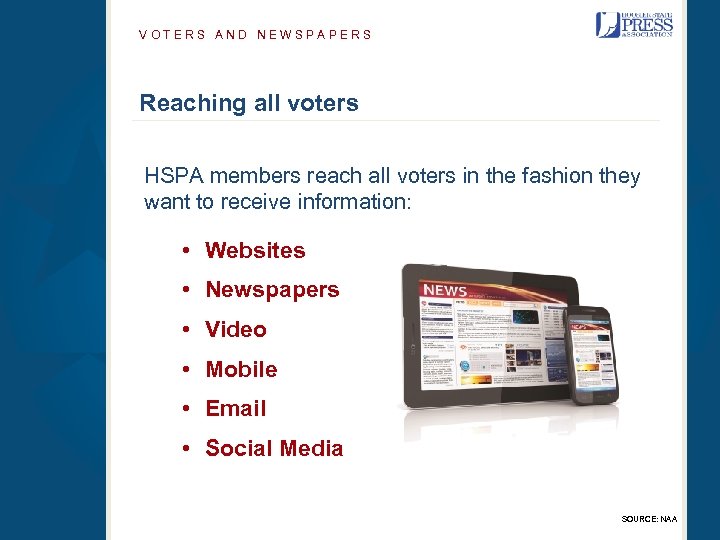 VOTERS AND NEWSPAPERS Reaching all voters HSPA members reach all voters in the fashion they want to receive information: • Websites • Newspapers • Video • Mobile • Email • Social Media SOURCE: NAA
 VOTERS AND NEWSPAPERS Delivering results HSPA can bring your message to life in many ways. Whether it’s full-color print ads, glossy brochures, or eye-catching links to your campaign’s website – we deliver. In market after market it’s newspaper websites that are the source for election news. But it doesn’t end there. Newspaper Voter Guides are where many voters turn for information in the crucial days before an election. Add to this front page stick-on notes, brightly colored delivery bags on election day or newspaper-delivered direct mailings, and you’re beginning to get the idea. HSPA can help you create a high-impact, targeted multi-media campaign. Regardless of who your target audience is, diversify your media mix and let HSPA deliver voters for you.