Скачать презентацию CYTOLOGY HISTOLOGY Lecture one DR ASHRAF SAID
CYTOLOGY & HISTOLOGY 1.ppt
- Количество слайдов: 69
 CYTOLOGY & HISTOLOGY Lecture one DR. ASHRAF SAID
 The aim of the present course Ú is to present histology and cytology in relation to the principles of physiology, biochemistry and molecular biology. Ú Duration: 80 hours Ú (Practical 4/week/16 week) Ú (Lecures 1/week/16 week)
 Course Objectives Ú Reviews basic cell structure and discuss the scope and nature of cell biology. Ú Describes the chemical components and processes of cells. Ú Describes the storage of genetic information within cells and how this information is passed Ú Ú Ú Ú Ú on to the next generation. Describes key concepts in molecular biology. Discusses membrane structure and transport across cell membranes. Describe the significant processes involved in transfer and storage of energy in a cell. Describes the significant processes that occur in cell communication and intracellular transport. Describes the life cycle of cells and how they combine to create different types of tissues Develops both a range of transferable skills as well as to allow you to acquire a comprehensive understanding of the processes involved in health and disease. Provides a broad scientific training in biological science and is particularly appropriate for those who wish to work in research, toxicological, forensic and diagnostic laboratories in hospitals and other medical research institutions. Develops both general skills and subject-specific knowledge and understanding by using a variety of teaching methods, including lectures, study skills exercises, problem solving, teamwork, project-type practical, independent study with discussions and oral presentations, data interpretation, videos and case studies. Gives a good grounding for students wishing to pursue careers in research (higher degrees), teaching and marketing or management within biological-related industries.
 Overall Objective ÚAn understanding of cell biology is important in many areas of study, for the cell is the building block of all living forms. This course complements studies in any area of applied biology including human health and fitness, horticulture, agriculture and wildlife management.
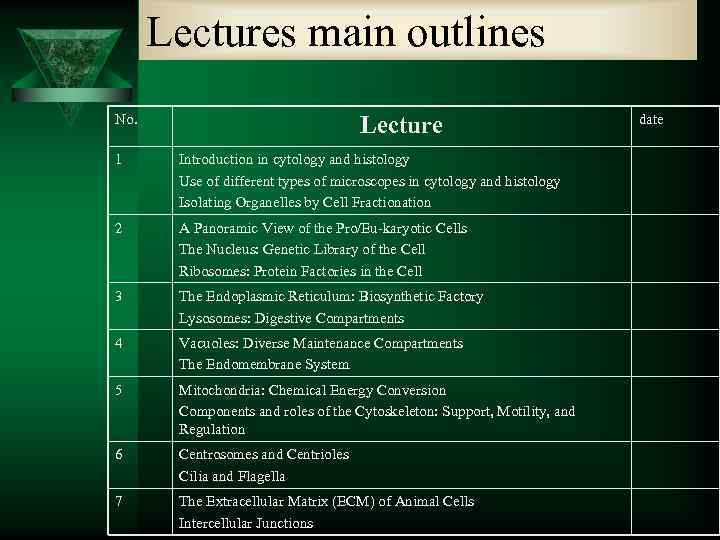 Lectures main outlines No. Lecture 1 Introduction in cytology and histology Use of different types of microscopes in cytology and histology Isolating Organelles by Cell Fractionation 2 A Panoramic View of the Pro/Eu-karyotic Cells The Nucleus: Genetic Library of the Cell Ribosomes: Protein Factories in the Cell 3 The Endoplasmic Reticulum: Biosynthetic Factory Lysosomes: Digestive Compartments 4 Vacuoles: Diverse Maintenance Compartments The Endomembrane System 5 Mitochondria: Chemical Energy Conversion Components and roles of the Cytoskeleton: Support, Motility, and Regulation 6 Centrosomes and Centrioles Cilia and Flagella 7 The Extracellular Matrix (ECM) of Animal Cells Intercellular Junctions date
 Overview: The Importance of Cells Ú All organisms are made of cells Ú The cell is the simplest collection of matter that can live
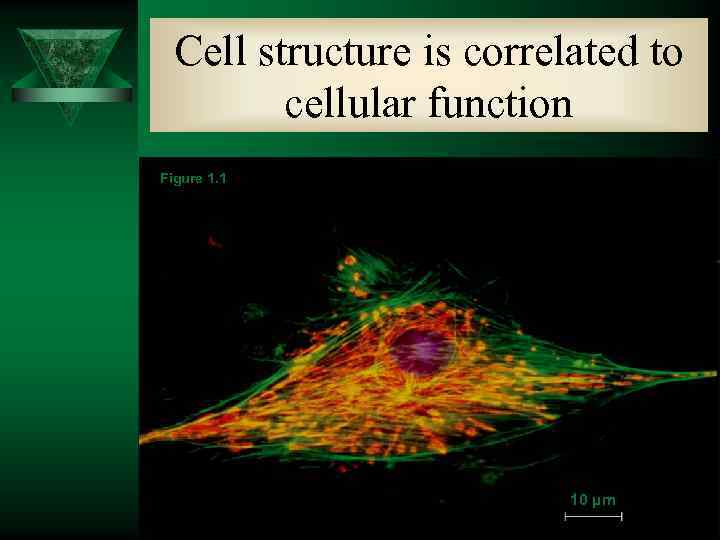 Cell structure is correlated to cellular function Figure 1. 1 10 µm
 Concept 1 ÚTo study cells, biologists use microscopes and the tools of biochemistry
 Microscopy Ú Scientists use microscopes to visualize cells that are too small with the naked eye Ú Light microscopes (LM. s) – Pass visible light through a specimen – Magnify cellular structures with lenses Ú Electron microscopes (EM. s) – Focus a beam of electrons through a specimen (TEM) or onto its surface (SEM)
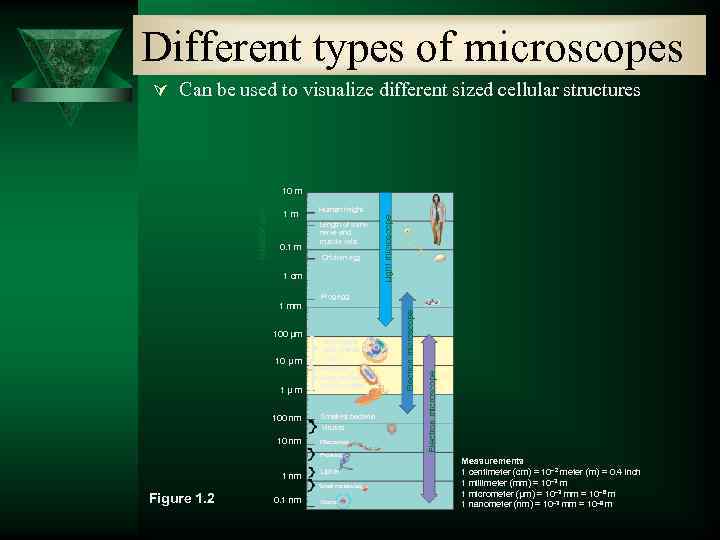 Different types of microscopes Ú Can be used to visualize different sized cellular structures Length of some nerve and muscle cells Chicken egg 1 cm 1 mm 100 µm 10 µ m 1µm 100 nm Frog egg Most plant and Animal cells Nucleus Most bacteria Mitochondrion Smallest bacteria Viruses 10 nm Ribosomes Proteins 1 nm Lipids Small molecules Figure 1. 2 0. 1 nm Atoms Electron microscope 0. 1 m Human height Electron microscope 1 m Light microscope Unaided eye 10 m Measurements 1 centimeter (cm) = 10 2 meter (m) = 0. 4 inch 1 millimeter (mm) = 10– 3 m 1 micrometer (µm) = 10– 3 mm = 10– 6 m 1 nanometer (nm) = 10– 3 mm = 10– 9 m
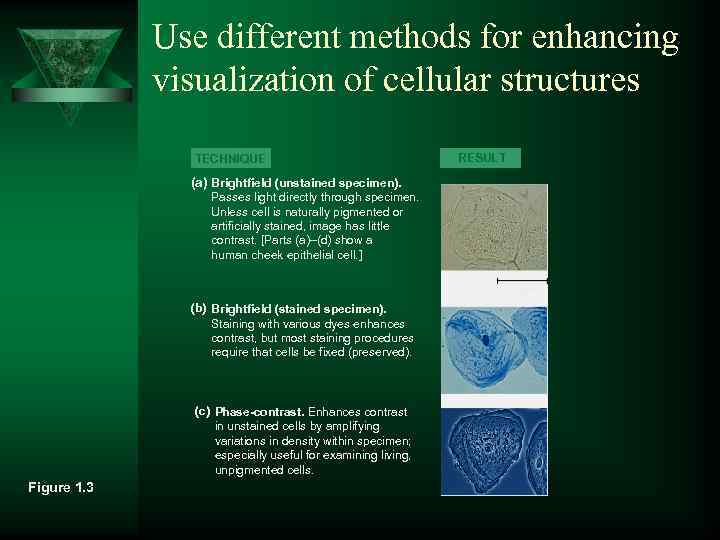 Use different methods for enhancing visualization of cellular structures TECHNIQUE RESULT (a) Brightfield (unstained specimen). Passes light directly through specimen. Unless cell is naturally pigmented or artificially stained, image has little contrast. [Parts (a)–(d) show a human cheek epithelial cell. ] 50 µm (b) Brightfield (stained specimen). Staining with various dyes enhances contrast, but most staining procedures require that cells be fixed (preserved). (c) Phase-contrast. Enhances contrast in unstained cells by amplifying variations in density within specimen; especially useful for examining living, unpigmented cells. Figure 1. 3
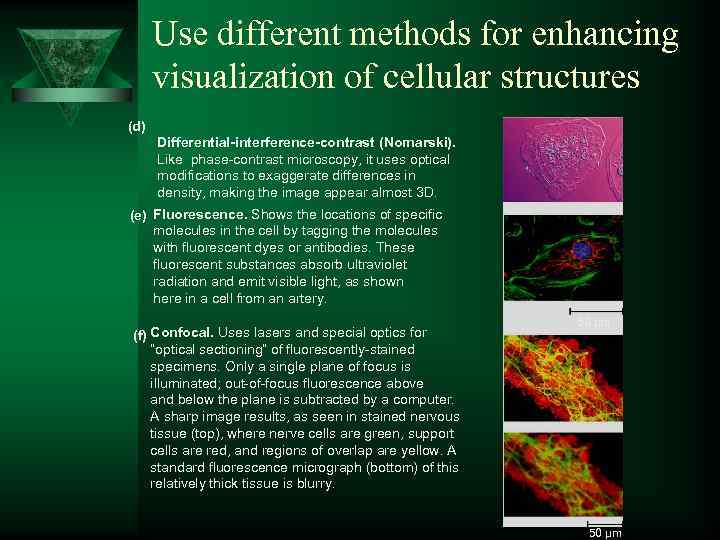 Use different methods for enhancing visualization of cellular structures (d) Differential-interference-contrast (Nomarski). Like phase-contrast microscopy, it uses optical modifications to exaggerate differences in density, making the image appear almost 3 D. (e) Fluorescence. Shows the locations of specific molecules in the cell by tagging the molecules with fluorescent dyes or antibodies. These fluorescent substances absorb ultraviolet radiation and emit visible light, as shown here in a cell from an artery. (f) Confocal. Uses lasers and special optics for “optical sectioning” of fluorescently-stained specimens. Only a single plane of focus is illuminated; out-of-focus fluorescence above and below the plane is subtracted by a computer. A sharp image results, as seen in stained nervous tissue (top), where nerve cells are green, support cells are red, and regions of overlap are yellow. A standard fluorescence micrograph (bottom) of this relatively thick tissue is blurry. 50 µm
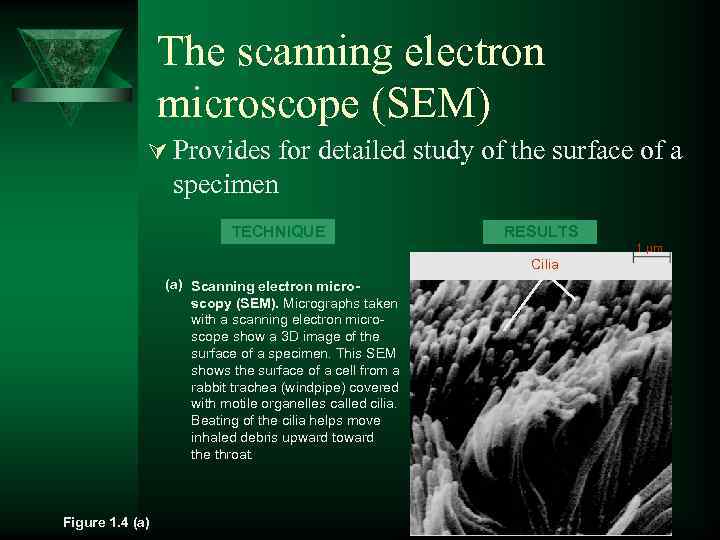 The scanning electron microscope (SEM) Ú Provides for detailed study of the surface of a specimen TECHNIQUE RESULTS 1 µm Cilia (a) Scanning electron microscopy (SEM). Micrographs taken with a scanning electron microscope show a 3 D image of the surface of a specimen. This SEM shows the surface of a cell from a rabbit trachea (windpipe) covered with motile organelles called cilia. Beating of the cilia helps move inhaled debris upward toward the throat. Figure 1. 4 (a)
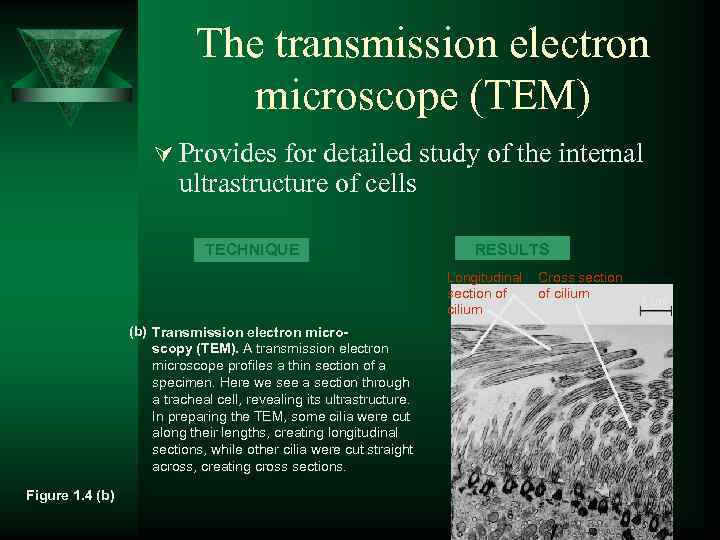 The transmission electron microscope (TEM) Ú Provides for detailed study of the internal ultrastructure of cells TECHNIQUE RESULTS Longitudinal section of cilium (b) Transmission electron microscopy (TEM). A transmission electron microscope profiles a thin section of a specimen. Here we see a section through a tracheal cell, revealing its ultrastructure. In preparing the TEM, some cilia were cut along their lengths, creating longitudinal sections, while other cilia were cut straight across, creating cross sections. Figure 1. 4 (b) Cross section of cilium 1 µm
 Isolating Organelles by Cell Fractionation Ú Cell fractionation – Takes cells apart and separates the major organelles from one another Ú The centrifuge – Is used to fractionate cells into their component parts
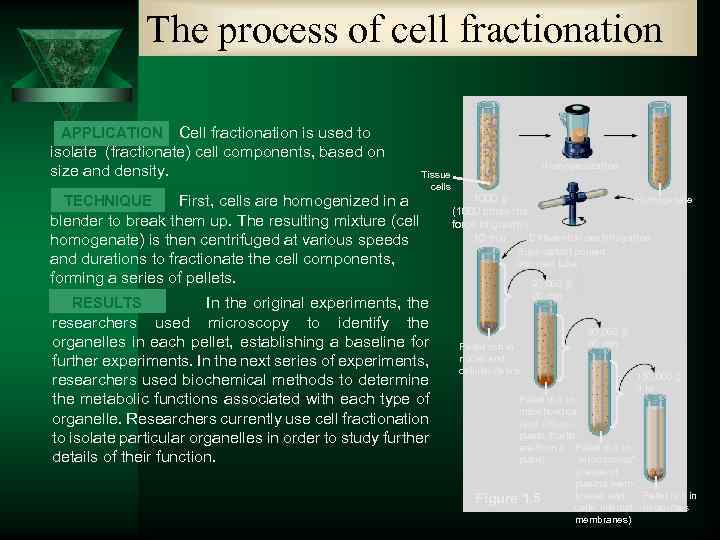 The process of cell fractionation Cell fractionation is used to isolate (fractionate) cell components, based on size and density. APPLICATION First, cells are homogenized in a blender to break them up. The resulting mixture (cell homogenate) is then centrifuged at various speeds and durations to fractionate the cell components, forming a series of pellets. Homogenization Tissue cells TECHNIQUE In the original experiments, the researchers used microscopy to identify the organelles in each pellet, establishing a baseline for further experiments. In the next series of experiments, researchers used biochemical methods to determine the metabolic functions associated with each type of organelle. Researchers currently use cell fractionation to isolate particular organelles in order to study further details of their function. 1000 g Homogenate (1000 times the force of gravity) Differential centrifugation 10 min Supernatant poured into next tube 20, 000 g 20 min RESULTS Pellet rich in nuclei and cellular debris 80, 000 g 60 min 150, 000 g 3 hr Pellet rich in mitochondria (and chloroplasts if cells are from a Pellet rich in plant) “microsomes” (pieces of plasma mem. Pellet rich in branes and Figure 1. 5 cells’ internal ribosomes membranes)
 Concept 2 Eukaryotic cells have internal membranes that compartmentalize their functions Ú Two types of cells make up every organism – Prokaryotic – Eukaryotic
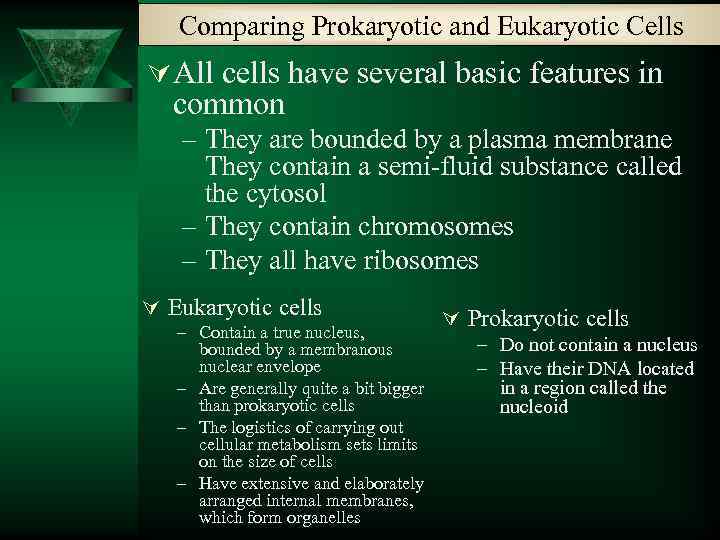 Comparing Prokaryotic and Eukaryotic Cells Ú All cells have several basic features in common – They are bounded by a plasma membrane They contain a semi-fluid substance called the cytosol – They contain chromosomes – They all have ribosomes Ú Eukaryotic cells – Contain a true nucleus, bounded by a membranous nuclear envelope – Are generally quite a bit bigger than prokaryotic cells – The logistics of carrying out cellular metabolism sets limits on the size of cells – Have extensive and elaborately arranged internal membranes, which form organelles Ú Prokaryotic cells – Do not contain a nucleus – Have their DNA located in a region called the nucleoid
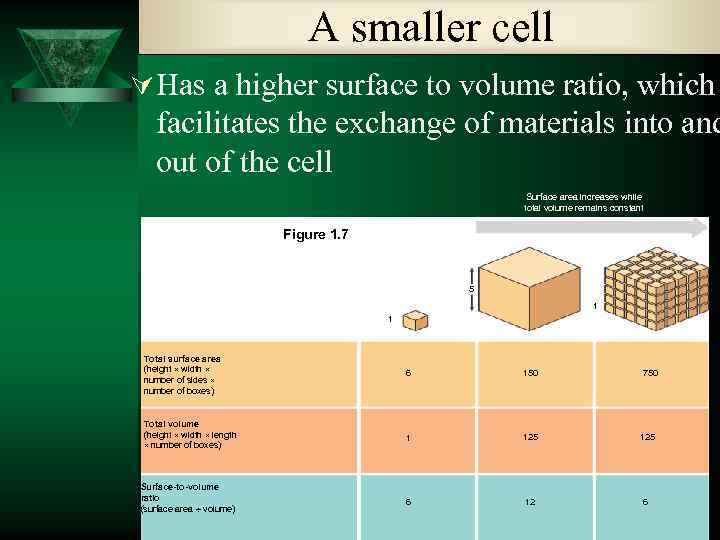 A smaller cell Ú Has a higher surface to volume ratio, which facilitates the exchange of materials into and out of the cell Surface area increases while total volume remains constant Figure 1. 7 5 1 1 Total surface area (height width number of sides number of boxes) 6 150 750 Total volume (height width length number of boxes) 1 125 Surface-to-volume ratio (surface area volume) 6 12 6
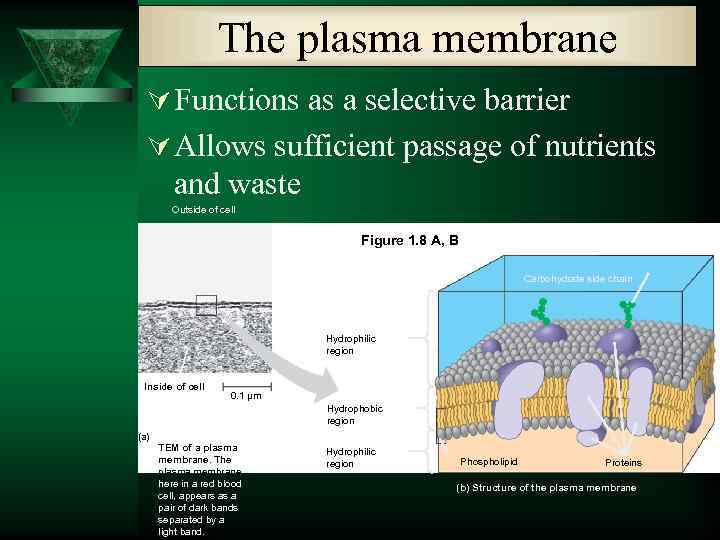 The plasma membrane Ú Functions as a selective barrier Ú Allows sufficient passage of nutrients and waste Outside of cell Figure 1. 8 A, B Carbohydrate side chain Hydrophilic region Inside of cell 0. 1 µm Hydrophobic region (a) TEM of a plasma membrane. The plasma membrane, here in a red blood cell, appears as a pair of dark bands separated by a light band. Hydrophilic region Phospholipid Proteins (b) Structure of the plasma membrane
 Concept 3 ÚCellular membranes are fluid mosaics of lipids and proteins ÚPhospholipids – Are the most abundant lipid in the plasma membrane – Are amphipathic, containing both hydrophobic and hydrophilic regions
 ÚThe fluid mosaic model of membrane structure – States that a membrane is a fluid structure with a “mosaic” of various proteins embedded in it
 Membrane Models: Scientific Inquiry ÚMembranes have been chemically analyzed – And found to be composed of proteins and lipids
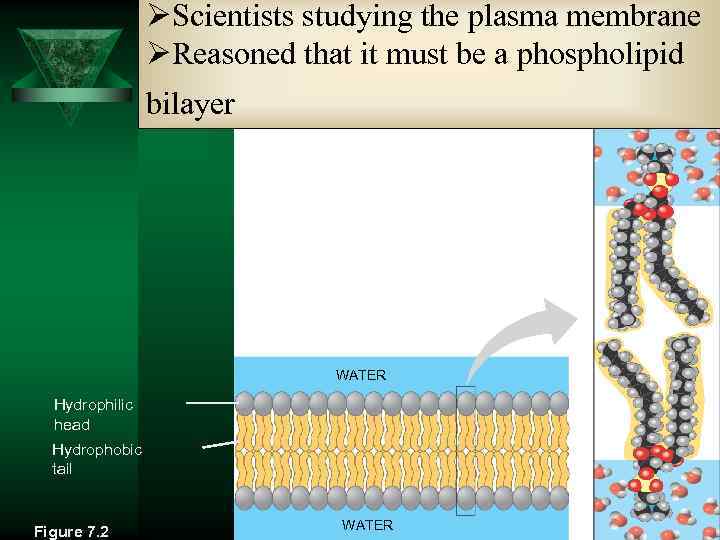 ØScientists studying the plasma membrane ØReasoned that it must be a phospholipid bilayer WATER Hydrophilic head Hydrophobic tail Figure 7. 2 WATER
 ÚThe Davson-Danielli sandwich model of membrane structure – Stated that the membrane was made up of a phospho-lipid bilayer sandwiched between two protein layers – Was supported by electron microscope pictures of membranes
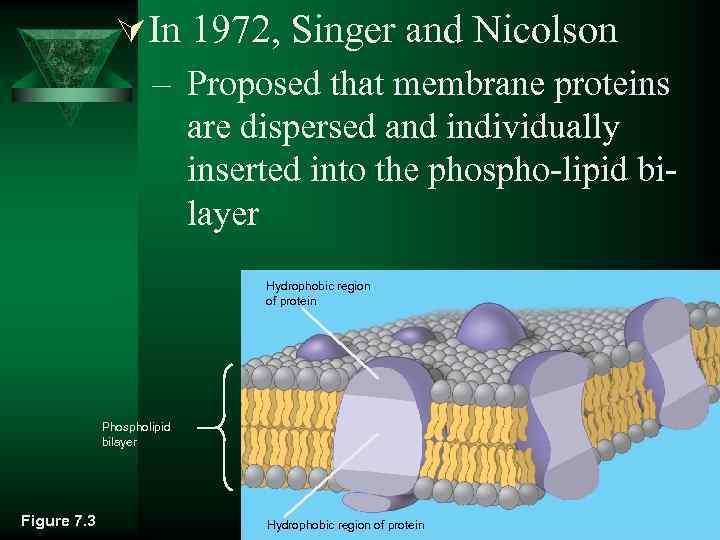 ÚIn 1972, Singer and Nicolson – Proposed that membrane proteins are dispersed and individually inserted into the phospho-lipid bilayer Hydrophobic region of protein Phospholipid bilayer Figure 7. 3 Hydrophobic region of protein
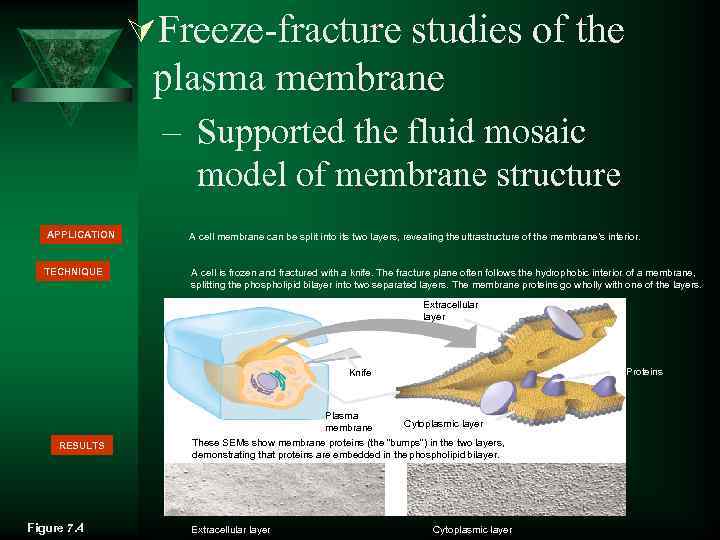 ÚFreeze-fracture studies of the plasma membrane – Supported the fluid mosaic model of membrane structure APPLICATION TECHNIQUE A cell membrane can be split into its two layers, revealing the ultrastructure of the membrane’s interior. A cell is frozen and fractured with a knife. The fracture plane often follows the hydrophobic interior of a membrane, splitting the phospholipid bilayer into two separated layers. The membrane proteins go wholly with one of the layers. Extracellular layer Proteins Knife RESULTS Figure 7. 4 Plasma Cytoplasmic layer membrane These SEMs show membrane proteins (the “bumps”) in the two layers, demonstrating that proteins are embedded in the phospholipid bilayer. Extracellular layer Cytoplasmic layer
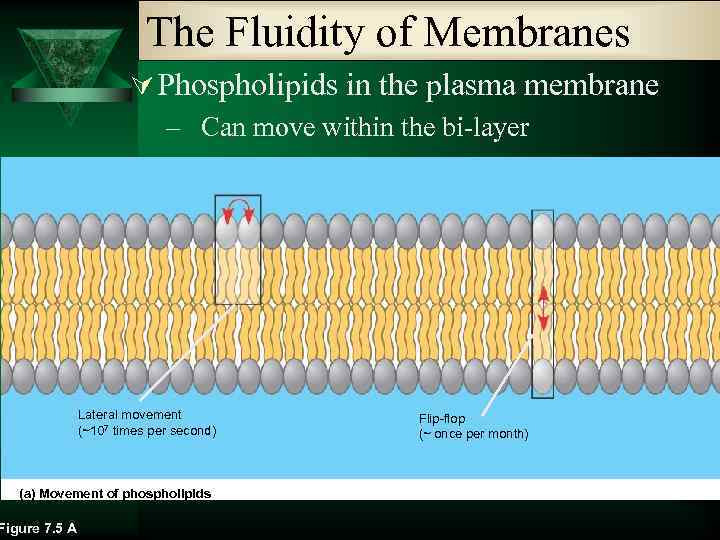 The Fluidity of Membranes Ú Phospholipids in the plasma membrane – Can move within the bi-layer Lateral movement (~107 times per second) (a) Movement of phospholipids Figure 7. 5 A Flip-flop (~ once per month)
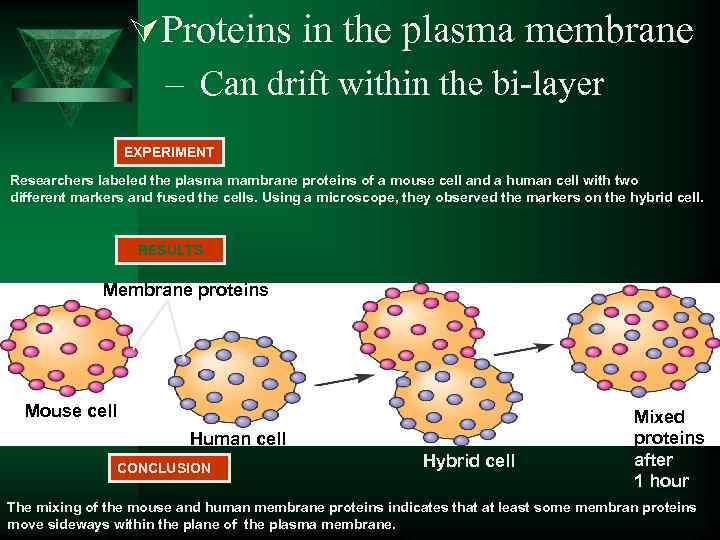 ÚProteins in the plasma membrane – Can drift within the bi-layer EXPERIMENT Researchers labeled the plasma mambrane proteins of a mouse cell and a human cell with two different markers and fused the cells. Using a microscope, they observed the markers on the hybrid cell. RESULTS Membrane proteins + Mouse cell Human cell CONCLUSION Hybrid cell Mixed proteins after 1 hour The mixing of the mouse and human membrane proteins indicates that at least some membran proteins move sideways within the plane of the plasma membrane.
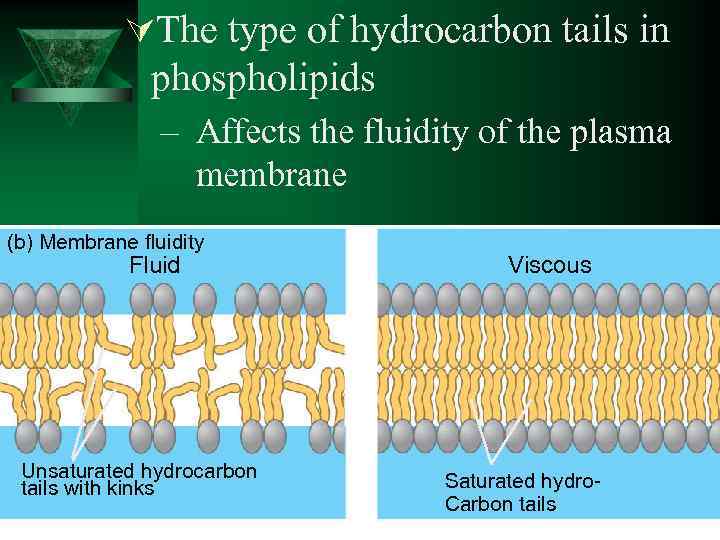 ÚThe type of hydrocarbon tails in phospholipids – Affects the fluidity of the plasma membrane (b) Membrane fluidity Fluid Unsaturated hydrocarbon tails with kinks Viscous Saturated hydro. Carbon tails
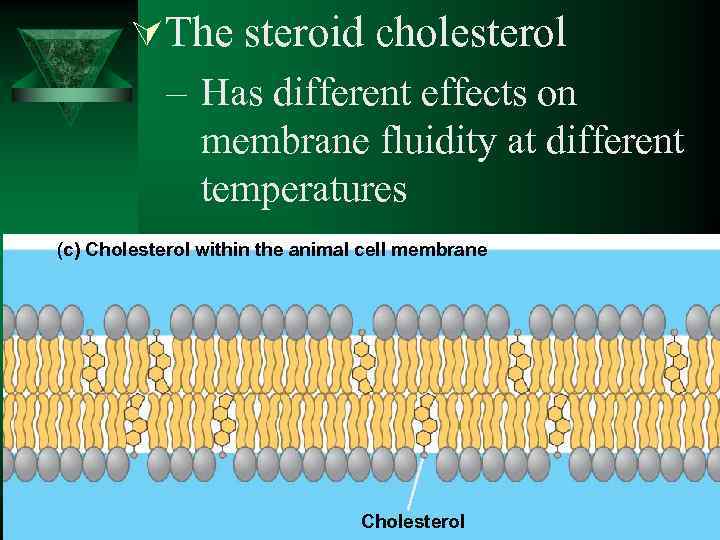 ÚThe steroid cholesterol – Has different effects on membrane fluidity at different temperatures (c) Cholesterol within the animal cell membrane Cholesterol
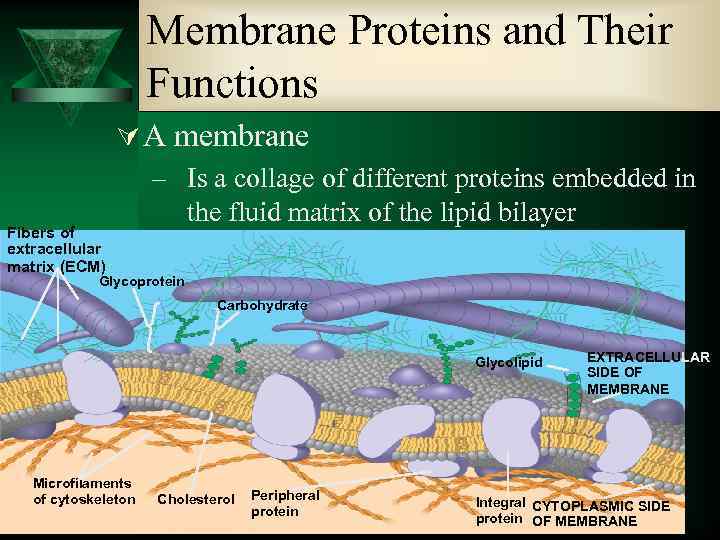 Membrane Proteins and Their Functions Fibers of extracellular matrix (ECM) Ú A membrane – Is a collage of different proteins embedded in the fluid matrix of the lipid bilayer Glycoprotein Carbohydrate Glycolipid Microfilaments of cytoskeleton Cholesterol Peripheral protein Figure 7. 7 EXTRACELLULAR SIDE OF MEMBRANE Integral CYTOPLASMIC SIDE protein OF MEMBRANE
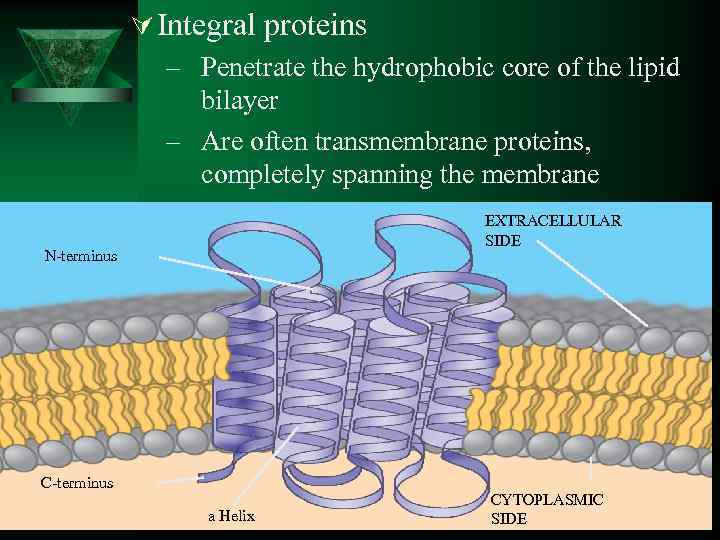 Ú Integral proteins – Penetrate the hydrophobic core of the lipid bilayer – Are often transmembrane proteins, completely spanning the membrane EXTRACELLULAR SIDE N-terminus EXTRACELLULAR SIDE C-terminus a Helix CYTOPLASMIC SIDE
 ÚPeripheral proteins – Are appendages loosely bound to the surface of the membrane
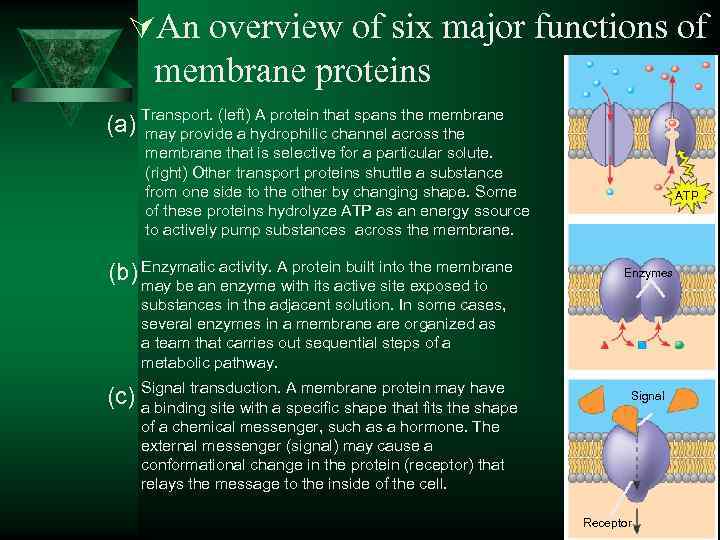 ÚAn overview of six major functions of membrane proteins A protein (a) Transport. (left)hydrophilicthat spans the membrane may provide a channel across the membrane that is selective for a particular solute. (right) Other transport proteins shuttle a substance from one side to the other by changing shape. Some of these proteins hydrolyze ATP as an energy ssource to actively pump substances across the membrane. (b) Enzymatic activity. A protein built into the membrane may be an enzyme with its active site exposed to ATP Enzymes substances in the adjacent solution. In some cases, several enzymes in a membrane are organized as a team that carries out sequential steps of a metabolic pathway. A membrane protein may (c) Signal transduction. specific shape that fits thehave a binding site with a shape Signal of a chemical messenger, such as a hormone. The external messenger (signal) may cause a conformational change in the protein (receptor) that relays the message to the inside of the cell. Receptor
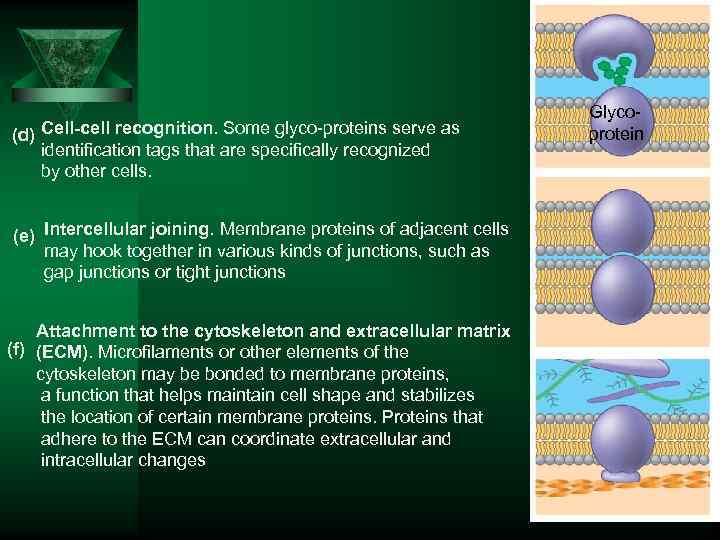 (d) Cell-cell recognition. Some glyco-proteins serve as identification tags that are specifically recognized by other cells. (e) Intercellular joining. Membrane proteins of adjacent cells may hook together in various kinds of junctions, such as gap junctions or tight junctions Attachment to the cytoskeleton and extracellular matrix (f) (ECM). Microfilaments or other elements of the cytoskeleton may be bonded to membrane proteins, a function that helps maintain cell shape and stabilizes the location of certain membrane proteins. Proteins that adhere to the ECM can coordinate extracellular and intracellular changes Glycoprotein
 The Role of Membrane Carbohydrates in Cell-Cell Recognition Ú Cell-cell recognition – Is a cell’s ability to distinguish one type of neighboring cell from another
 ÚMembrane carbohydrates – Interact with the surface molecules of other cells, facilitating cell-cell recognition
 Synthesis and Sidedness of Membranes Ú Membranes have distinct inside and outside faces Ú This affects the movement of proteins synthesized in the endomembrane system
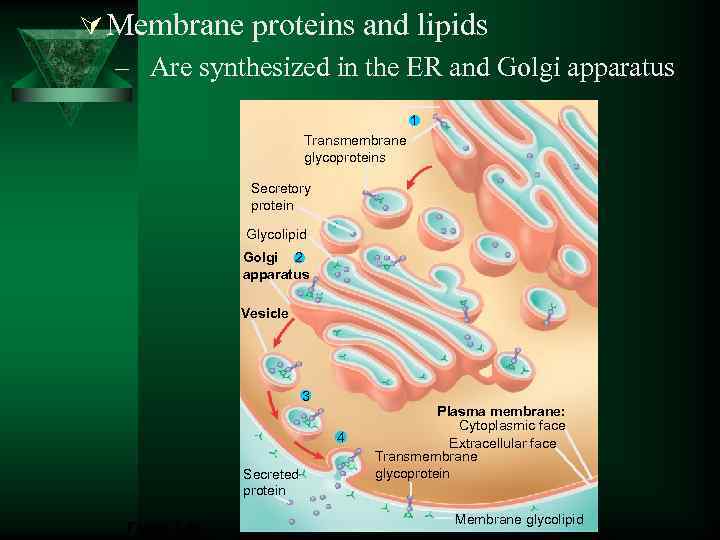 Ú Membrane proteins and lipids – Are synthesized in the ER and Golgi apparatus 1 Transmembrane glycoproteins ER Secretory protein Glycolipid Golgi 2 apparatus Vesicle 3 4 Secreted protein Figure 7. 10 Plasma membrane: Cytoplasmic face Extracellular face Transmembrane glycoprotein Membrane glycolipid
 ÚConcept 7. 2: Membrane structure results in selective permeability ÚA cell must exchange materials with its surroundings, a process controlled by the plasma membrane
 The Permeability of the Lipid Bilayer Ú Hydrophobic molecules – Are lipid soluble and can pass through the membrane rapidly Ú Polar molecules – Do not cross the membrane rapidly
 Transport Proteins Ú Transport proteins – Allow passage of hydrophilic substances across the membrane
 Ú Concept 7. 3: Passive transport is diffusion of a substance across a membrane with no energy investment
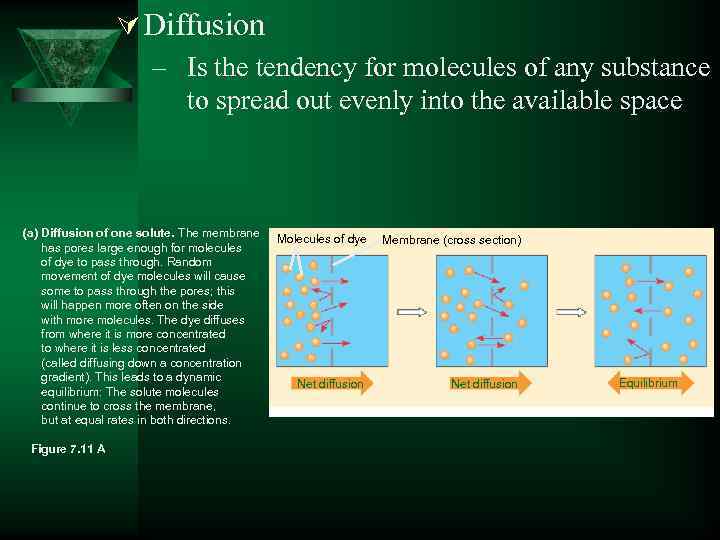 Ú Diffusion – Is the tendency for molecules of any substance to spread out evenly into the available space (a) Diffusion of one solute. The membrane has pores large enough for molecules of dye to pass through. Random movement of dye molecules will cause some to pass through the pores; this will happen more often on the side with more molecules. The dye diffuses from where it is more concentrated to where it is less concentrated (called diffusing down a concentration gradient). This leads to a dynamic equilibrium: The solute molecules continue to cross the membrane, but at equal rates in both directions. Figure 7. 11 A Molecules of dye Membrane (cross section) Net diffusion Equilibrium
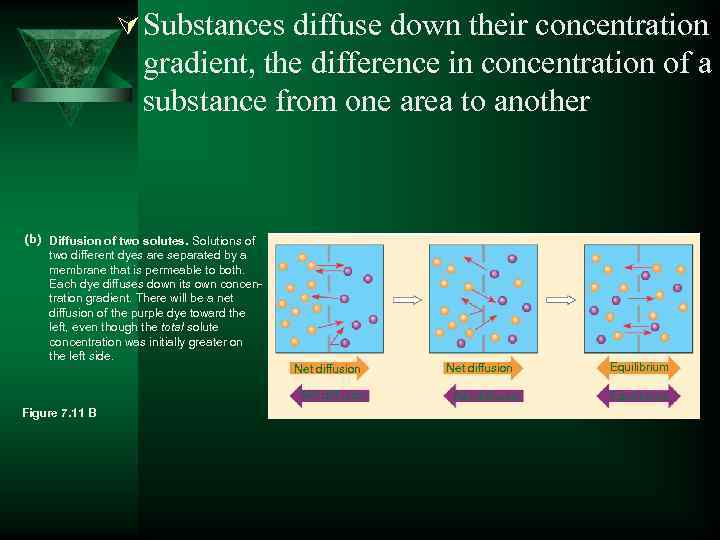 Ú Substances diffuse down their concentration gradient, the difference in concentration of a substance from one area to another (b) Diffusion of two solutes. Solutions of two different dyes are separated by a membrane that is permeable to both. Each dye diffuses down its own concentration gradient. There will be a net diffusion of the purple dye toward the left, even though the total solute concentration was initially greater on the left side. Net diffusion Figure 7. 11 B Net diffusion Equilibrium
 Effects of Osmosis on Water Balance Ú Osmosis – Is the movement of water across a semipermeable membrane
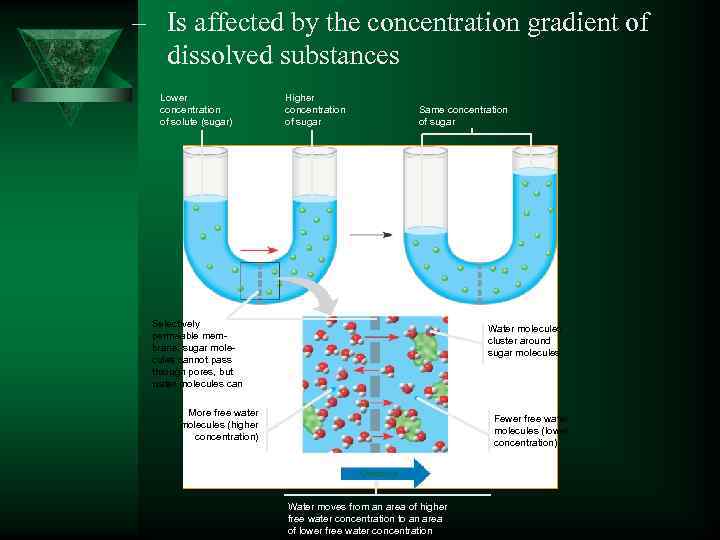 – Is affected by the concentration gradient of dissolved substances Lower concentration of solute (sugar) Higher concentration of sugar Same concentration of sugar Selectively permeable membrane: sugar molecules cannot pass through pores, but water molecules can Water molecules cluster around sugar molecules More free water molecules (higher concentration) Fewer free water molecules (lower concentration) Osmosis Water moves from an area of higher free water concentration to an area of lower free water concentration
 Water Balance of Cells Without Walls Ú Tonicity – Is the ability of a solution to cause a cell to gain or lose water – Has a great impact on cells without walls
 Ú If a solution is isotonic – The concentration of solutes is the same as it is inside the cell – There will be no net movement of water
 ÚIf a solution is hypertonic – The concentration of solutes is greater than it is inside the cell – The cell will lose water
 ÚIf a solution is hypotonic – The concentration of solutes is less than it is inside the cell – The cell will gain water
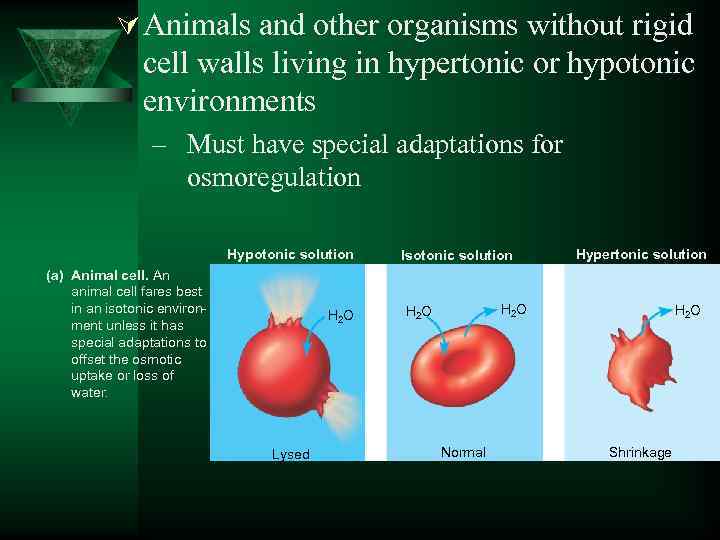 Ú Animals and other organisms without rigid cell walls living in hypertonic or hypotonic environments – Must have special adaptations for osmoregulation Hypotonic solution (a) Animal cell. An animal cell fares best in an isotonic environment unless it has special adaptations to offset the osmotic uptake or loss of water. H 2 O Isotonic solution Hypertonic solution H 2 O Lysed Normal Shrinkage
 Facilitated Diffusion: Passive Transport Aided by Proteins ÚIn facilitated diffusion – Transport proteins speed the movement of molecules across the plasma membrane
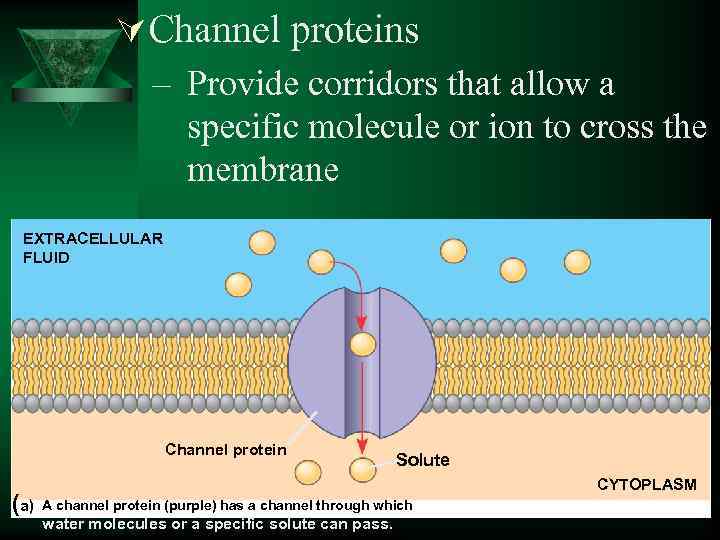 ÚChannel proteins – Provide corridors that allow a specific molecule or ion to cross the membrane EXTRACELLULAR FLUID Channel protein (a) Solute CYTOPLASM A channel protein (purple) has a channel through which water molecules or a specific solute can pass.
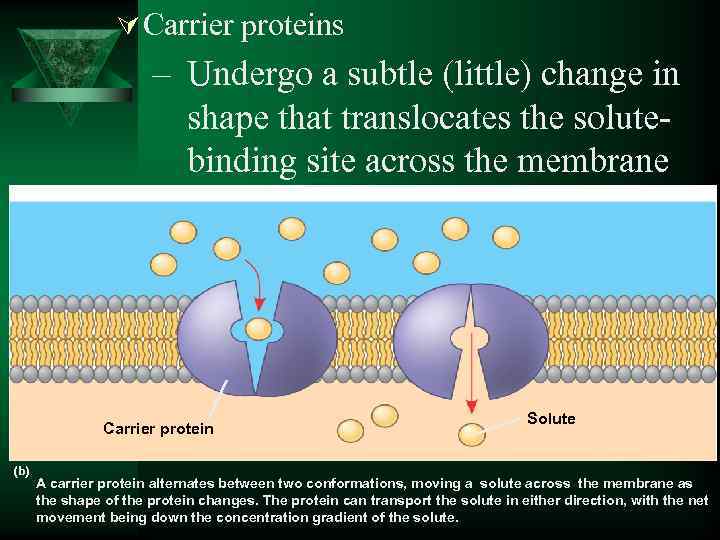 Ú Carrier proteins – Undergo a subtle (little) change in shape that translocates the solutebinding site across the membrane Carrier protein (b) Solute A carrier protein alternates between two conformations, moving a solute across the membrane as the shape of the protein changes. The protein can transport the solute in either direction, with the net movement being down the concentration gradient of the solute.
 ÚConcept 7. 4: Active transport uses energy to move solutes against their gradients
 The Need for Energy in Active Transport ÚActive transport – Moves substances against their concentration gradient – Requires energy, usually in the form of ATP
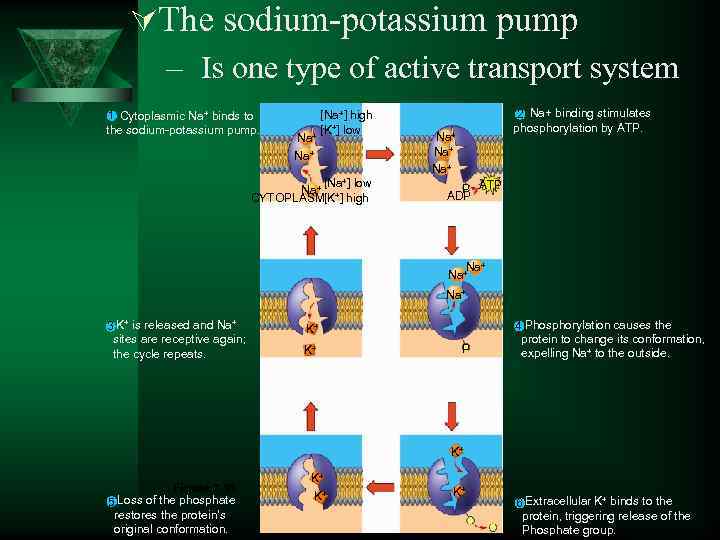 ÚThe sodium-potassium pump – Is one type of active transport system 1 Cytoplasmic Na+ binds to the sodium-potassium pump. [Na+] high [K+] low Na+ EXTRACELLULAR FLUID [Na+] low Na+ + CYTOPLASM[K ] high 2 Na+ binding stimulates phosphorylation by ATP. Na+ Na+ P ATP ADP Na+ Na+ 3 K+ is released and Na+ sites are receptive again; the cycle repeats. K+ K+ P 4 Phosphorylation causes the protein to change its conformation, expelling Na+ to the outside. + P P K i Figure 7. 16 5 Loss of the phosphate restores the protein’s original conformation. K+ K+ K+ 6 Extracellular K+ binds to the protein, triggering release of the Phosphate group.
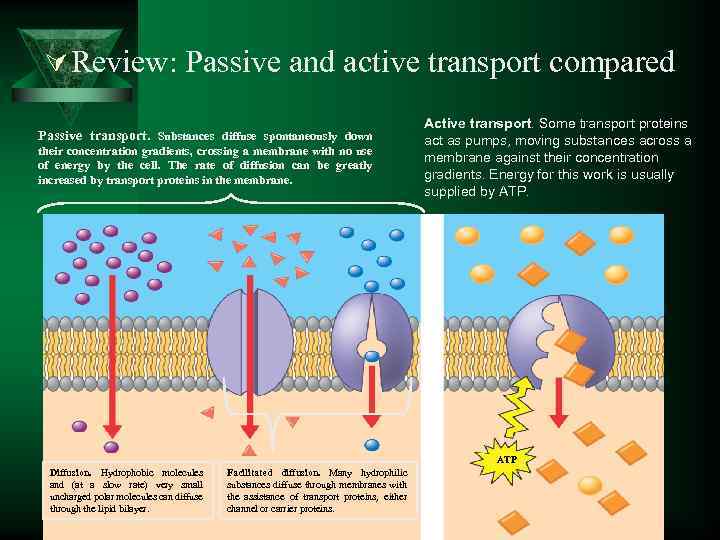 Ú Review: Passive and active transport compared Passive transport. Substances diffuse spontaneously down their concentration gradients, crossing a membrane with no use of energy by the cell. The rate of diffusion can be greatly increased by transport proteins in the membrane. Active transport. Some transport proteins act as pumps, moving substances across a membrane against their concentration gradients. Energy for this work is usually supplied by ATP Diffusion. Hydrophobic molecules and (at a slow rate) very small uncharged polar molecules can diffuse through the lipid bilayer. Facilitated diffusion. Many hydrophilic substances diffuse through membranes with the assistance of transport proteins, either channel or carrier proteins.
 Maintenance of Membrane Potential by Ion Pumps ÚMembrane potential – Is the voltage difference across a membrane ÚAn electrochemical gradient – Is caused by the difference in concentration of ions across a membrane
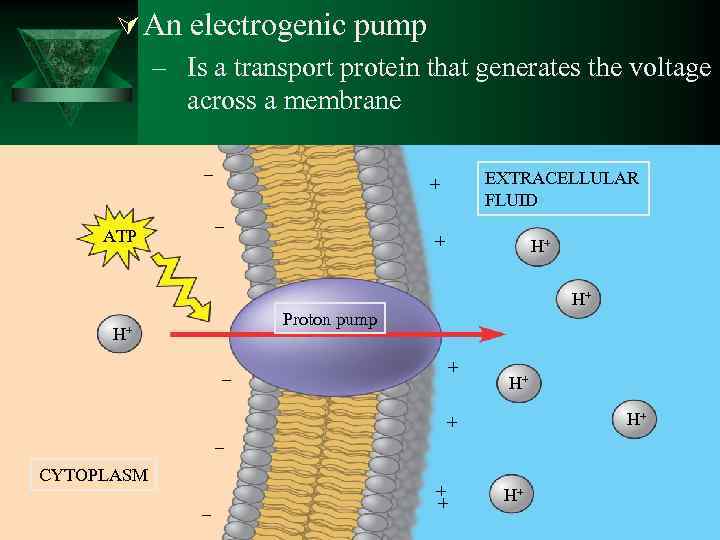 Ú An electrogenic pump – Is a transport protein that generates the voltage across a membrane – – ATP EXTRACELLULAR FLUID + + H+ H+ Proton pump H+ + – H+ H+ + – CYTOPLASM – + + H+
 Cotransport: Coupled Transport by a Membrane Protein Ú Cotransport – Occurs when active transport of a specific solute indirectly drives the active transport of another solute
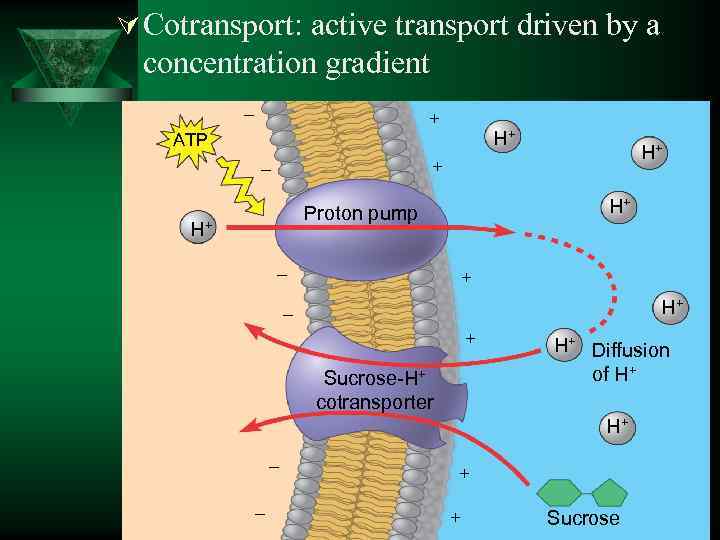 Ú Cotransport: active transport driven by a concentration gradient – + H+ ATP H+ + – H+ Proton pump H+ – + Sucrose-H+ cotransporter H+ Diffusion of H+ H+ – – + + Sucrose
 ÚConcept 7. 5: Bulk transport across the plasma membrane occurs by exocytosis and endocytosis ÚLarge proteins – Cross the membrane by different mechanisms
 Exocytosis Ú In exocytosis – Transport vesicles migrate to the plasma membrane, fuse with it, and release their contents
 Endocytosis Ú In endocytosis – The cell takes in macromolecules by forming new vesicles from the plasma membrane
 A Panoramic View of the Eukaryotic Cell Ú Eukaryotic cells – Have extensive and elaborately arranged internal membranes, which form organelles