 Скачать презентацию Cyberbullying and e-safety the voice of the child
2a638354115a21cb2528e64391f86b3c.ppt
- Количество слайдов: 36



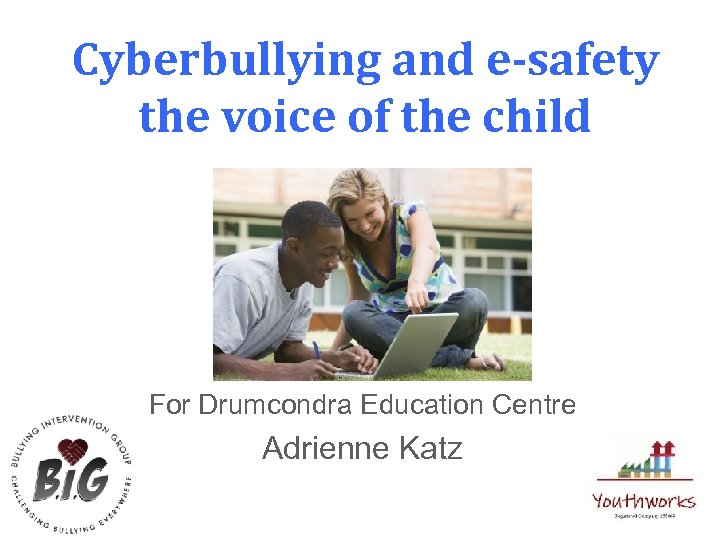
Cyberbullying and e-safety the voice of the child For Drumcondra Education Centre Adrienne Katz
The content of today • What do we know about this recent phenomenon? When did it start? • What are young people telling us? • What do we need to think about? • Practical steps we can adopt
• • Why the voice of the child? Evidence based practice ‘Ownership’ at all ages Prepare citizens for future Democratic practice UNCRC – right to have their voice heard Intervention does not succeed without this You cannot bully people into stopping!
Modelling what we want • We talk about bullying behaviour rather than bullies • We talk about ‘recipients’ or ‘targets’ of bullying behaviour, rather than victims • We can like the child, not their behaviour – remember, labels stick! Bullying is often a sign of other problems
Background Former Regional Adviser
Bullying of all kinds • What are the influences you see on children and young people today that effect bullying behaviour? • Talk to colleagues • Feed back
Influences include • • Family Neighbourhood Current events and media Consumerism: appearance & possessions Prejudice, fear of difference Reputation ‘management’ Belonging and ‘permissive’ environment Speed of development at puberty
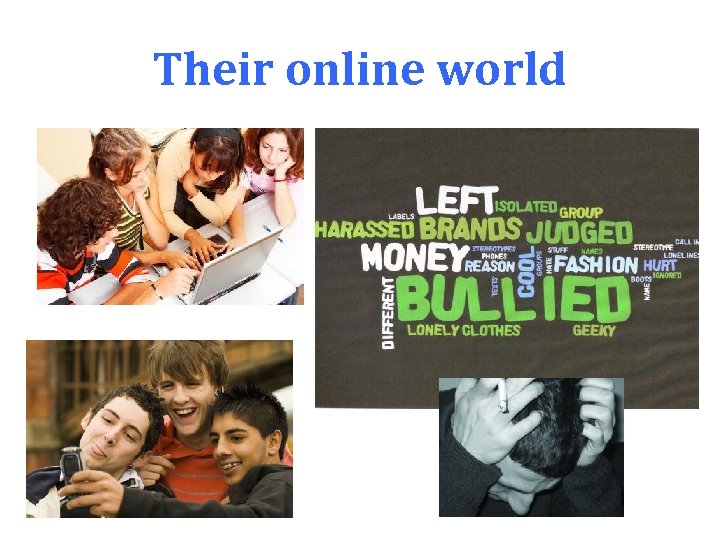
Their online world
Multi tasking your life • • Reputation management Social life manager Keeping tabs on what friends are doing Feeling included Up to date Entertainment Shopping Project and advertise self as popular
‘I’d die without my Blackberry!’ • ‘nomophobia’ – fear of being without your phone • Fifth of young adults would rather starve for 24 hrs than go without their mobile • One in ten wake at night to check phone • And 19 % said they would find it more difficult to go without their handset than water for a day. • A total of 11 % claimed they would prefer to give up television than their phone. • 48% say it is first thing they do in the morning 02 Insurance 11 th OCTOBER
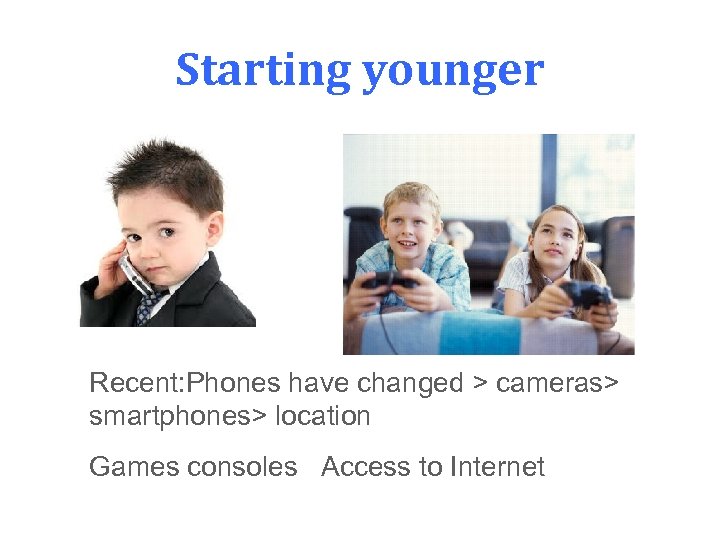
Starting younger Recent: Phones have changed > cameras> smartphones> location Games consoles Access to Internet
What do we know? The Cybersurvey • Over 9000 children and young people. • Developed in the Midlands. Youth participation model: widespread consultation, piloting and advice. • Run every year since in various locations • Plus a wide reading of other research and front line practice
The Cybersurvey • Explores the experiences of people who are recipients of any form of abusive or victimising message/behaviour • Identifies those who consider this to be cyberbullying (CB) • Compares by age and gender • Explores experiences of the vulnerable
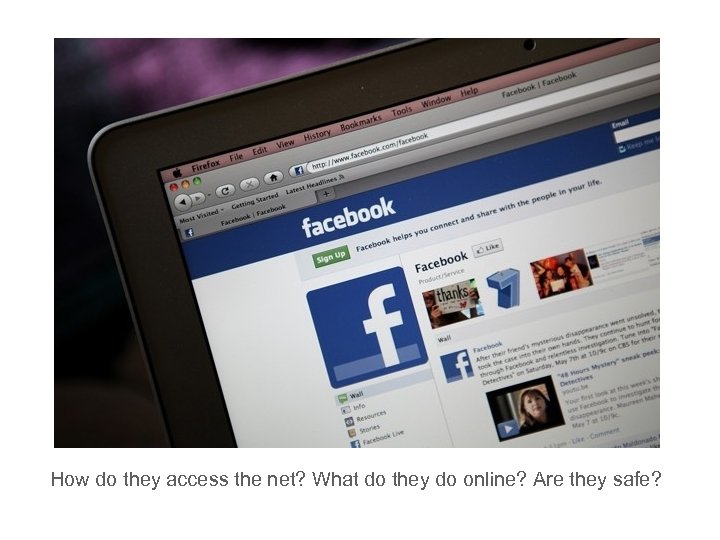
How do they access the net? What do they do online? Are they safe?
What is the extent? • 43% had experienced one or more online unpleasant messages or behaviours. • 19% consider they have been cyberbullied • Reluctance to see self as ‘victim’ • Widespread use of abusive language and threats, when does it cross the line?
Patterns to note (the science bit !) • Age – there are two peaks, 10 -11 & 14 -15 • Gender – there are different patterns • Bullying in school often leads to risky behaviour online • Some people especially vulnerable
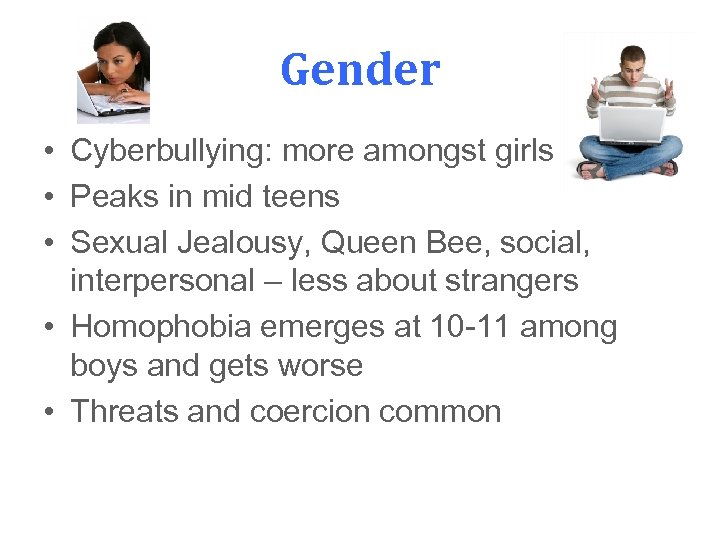
Gender • Cyberbullying: more amongst girls • Peaks in mid teens • Sexual Jealousy, Queen Bee, social, interpersonal – less about strangers • Homophobia emerges at 10 -11 among boys and gets worse • Threats and coercion common
Those who are cyberbullied More likely than peers to: Use chatrooms (1/3 more) Have a facebook page (78 vs 64%) Twitter account (23 vs 14%) Use a computer at a friend’s house with no adult present (47 vs 30%) Use a BB or smartphone 34 vs 23% Access internet at clubs and cafes (33 vs 23%)
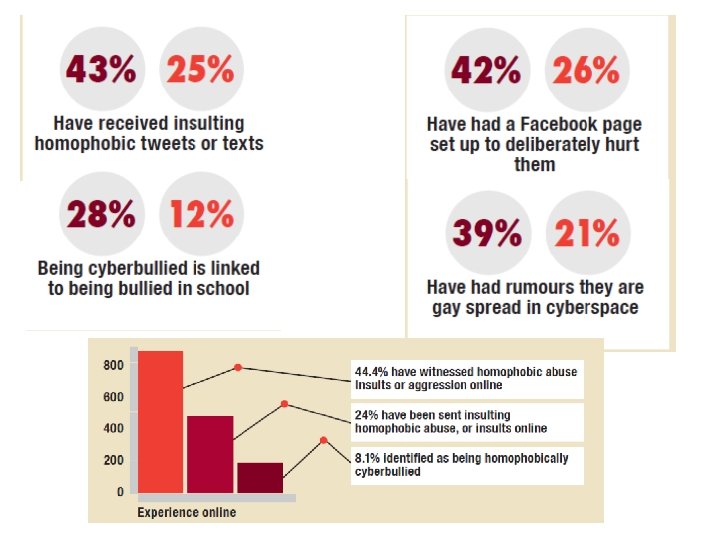
Those who are cyberbullied • Often bullying carried on from life in school • 43% of girls report nasty rumours • 24% of girls: Unwanted sexual threats/jokes/suggestions • 36% of boys report homophobic insults • 27% of boys report coercion
Age • 10 -11 year olds – chainletters • ‘If you don’t send this on your mum will die’ • 14 -15 ‘If you love me, send me your photo…. ’ • Social exclusion and ostracism
Session 2 E-safety • Are we delivering the right messages? • Delivery approaches OK? • Are they absorbing the advice and acting on it?
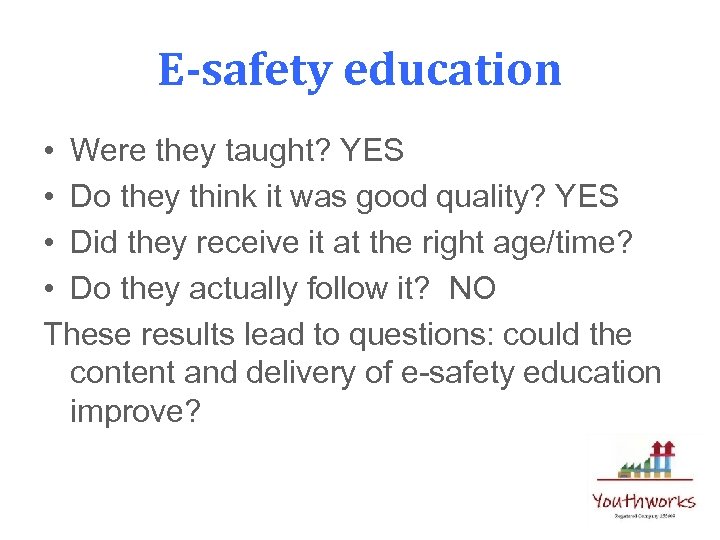
E-safety education • Were they taught? YES • Do they think it was good quality? YES • Did they receive it at the right age/time? • Do they actually follow it? NO These results lead to questions: could the content and delivery of e-safety education improve?
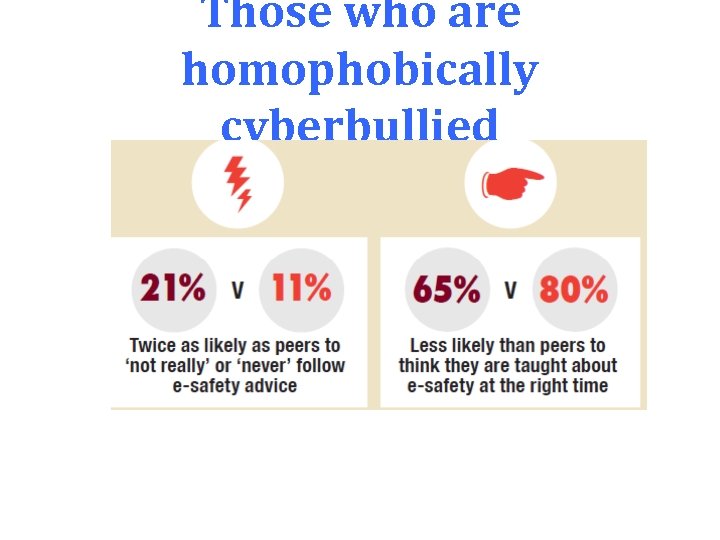
Those who are homophobically cyberbullied
Those in care • • • Often miss e-safety advice classes Seek out contacts/former family online May seek out friendship/intimacy May be given a phone as ‘gift’ by boyfriend Strings attached? Prejudice driven bullying towards them?
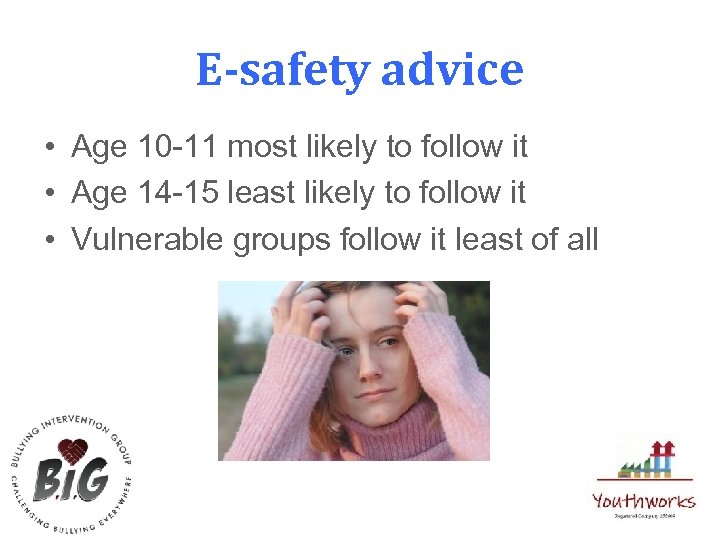
E-safety advice • Age 10 -11 most likely to follow it • Age 14 -15 least likely to follow it • Vulnerable groups follow it least of all
One set of rigid rules: not enough We need Nuanced, Gender aware, Age appropriate, Oft repeated ‘Owned’ not top down + extra support for vulnerable
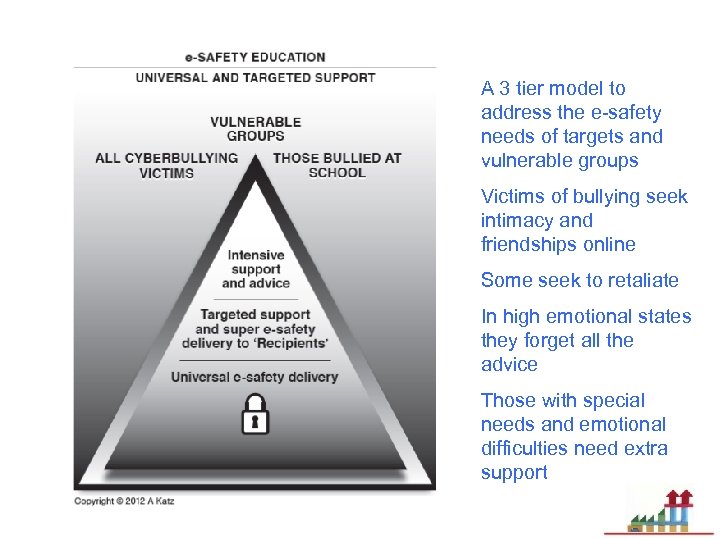
A 3 tier model to address the e-safety needs of targets and vulnerable groups Victims of bullying seek intimacy and friendships online Some seek to retaliate In high emotional states they forget all the advice Those with special needs and emotional difficulties need extra support
• • What do they think would help? Workshops Practical demos Finding out and teaching each other Challenging discussions Learning from older students Adults and pupils together Ownership and agency
We can try out a few Think… Ideas from young people… Not top down
Session 4 • Policy – what elements make a practical sustainable successful policy? • Checklist – to review yours • Think about how it interacts with other policies and safeguarding/child protection and…
Systems • • Staff training Induction Parents and pupils aware Recording and monitoring Accounting to parents How to deal with a serious incident How AB policy interacts with AUP
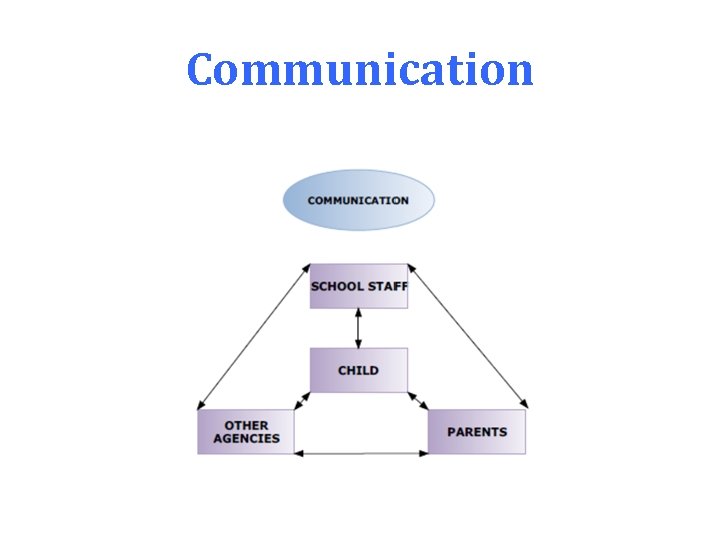
Communication
BIG Award • The award scheme that recognises excellence in bullying intervention practice • Register online – guides and resources – • Online portfolio • Help at the end of the phone • Training days www. bullyinginterventiongroup. co. uk
Available from www. JKP. com • Amazon • Youthworks • BIG Award (discount for members) admin@youthworksconsulting. co. uk
Скачать презентацию Cyberbullying and e-safety the voice of the child
2a638354115a21cb2528e64391f86b3c.ppt