


 Скачать презентацию Customs Service Russia s Customs Service is intertwined with
английский.ppt
- Количество слайдов: 8
 Customs Service Russia’s Customs Service is intertwined with the history of the Russian state. Over the centuries some of the leading figures of the country have protected its economic interests
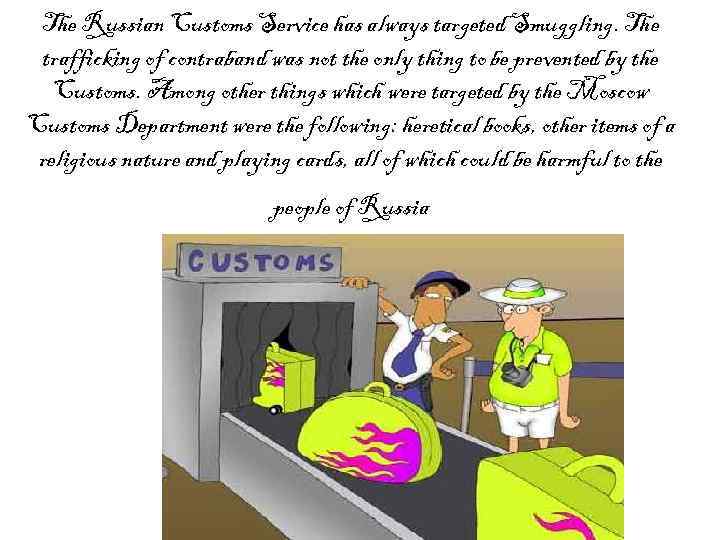 The Russian Customs Service has always targeted Smuggling. The trafficking of contraband was not the only thing to be prevented by the Customs. Among other things which were targeted by the Moscow Customs Department were the following: heretical books, other items of a religious nature and playing cards, all of which could be harmful to the people of Russia
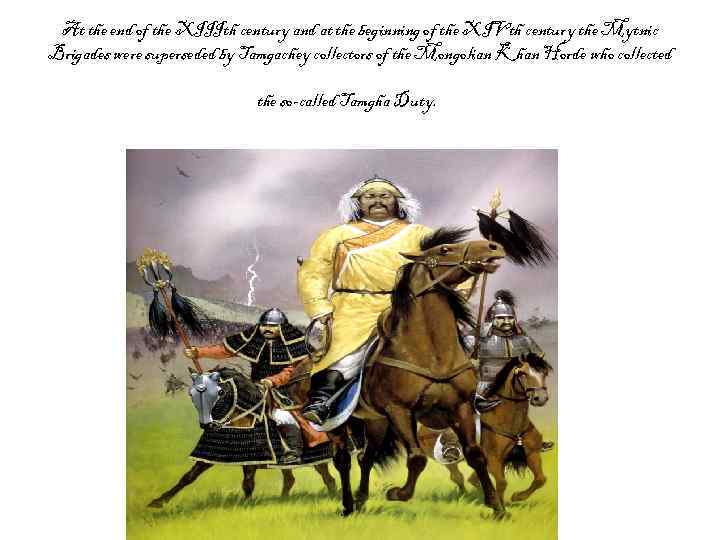 At the end of the XIIIth century and at the beginning of the XIVth century the Mytnic Brigades were superseded by Tamgachey collectors of the Mongolian Khan Horde who collected the so-called Tamgha Duty.
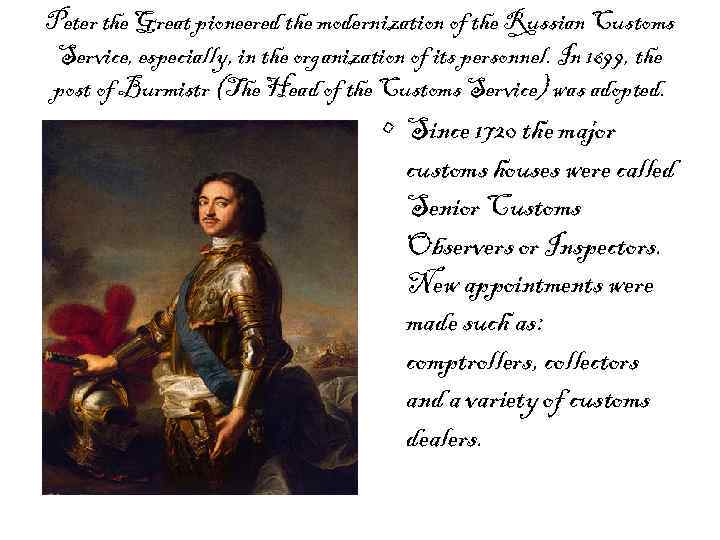 Peter the Great pioneered the modernization of the Russian Customs Service, especially, in the organization of its personnel. In 1699, the post of Burmistr (The Head of the Customs Service) was adopted. • Since 1720 the major customs houses were called Senior Customs Observers or Inspectors. New appointments were made such as: comptrollers, collectors and a variety of customs dealers.
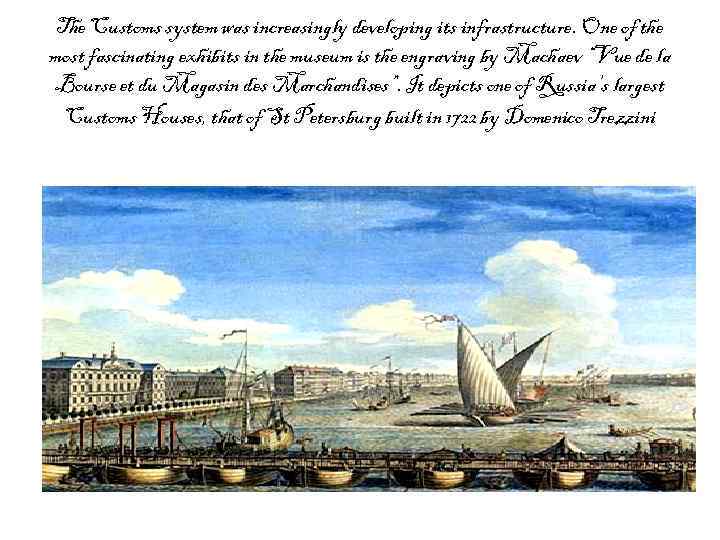 The Customs system was increasingly developing its infrastructure. One of the most fascinating exhibits in the museum is the engraving by Machaev “Vue de la Bourse et du Magasin des Marchandises”. It depicts one of Russia’s largest Customs Houses, that of St Petersburg built in 1722 by Domenico Trezzini
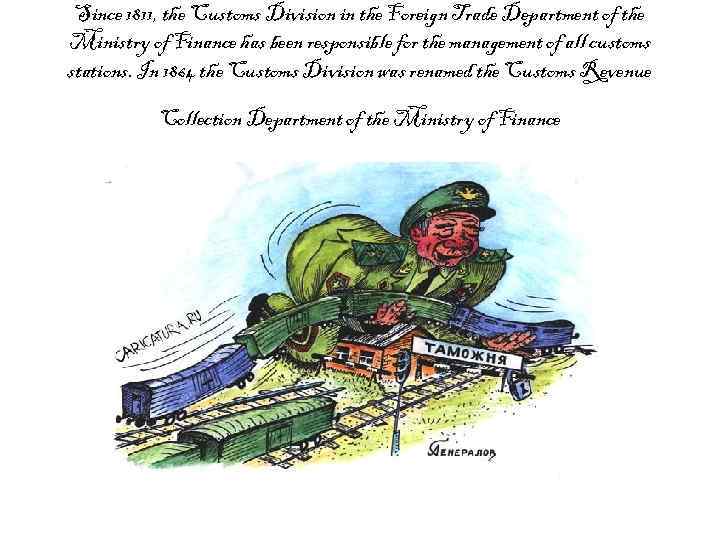 Since 1811, the Customs Division in the Foreign Trade Department of the Ministry of Finance has been responsible for the management of all customs stations. In 1864 the Customs Division was renamed the Customs Revenue Collection Department of the Ministry of Finance
 The New benchmark is dated 1991, when the State Customs committee was founded
 Thank you for your attention • Sovetova Marina • Kadirova Ryzana