


 Скачать презентацию Current Trends in Texas Higher Education Policy Harrison
1eaab8a16c552aa63d53a08be8248442.ppt
- Количество слайдов: 20
 Current Trends in Texas Higher Education Policy Harrison Keller, Ph. D. Director of Research Texas House of Representatives
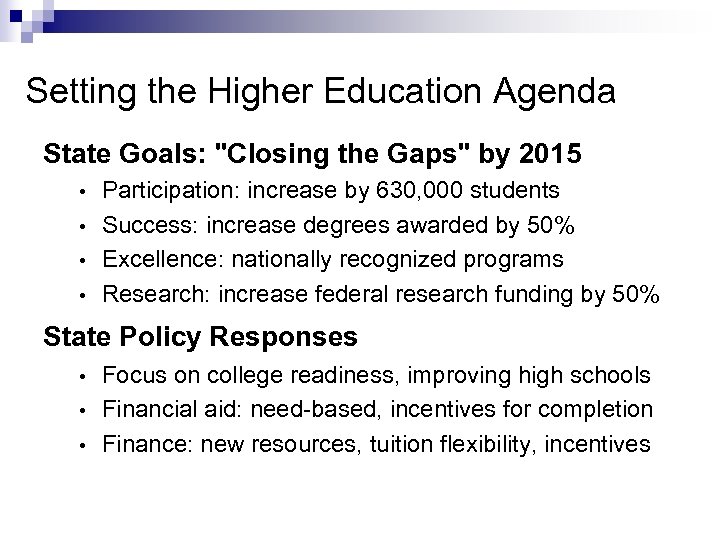 Setting the Higher Education Agenda State Goals: "Closing the Gaps" by 2015 Participation: increase by 630, 000 students • Success: increase degrees awarded by 50% • Excellence: nationally recognized programs • Research: increase federal research funding by 50% • State Policy Responses Focus on college readiness, improving high schools • Financial aid: need-based, incentives for completion • Finance: new resources, tuition flexibility, incentives •
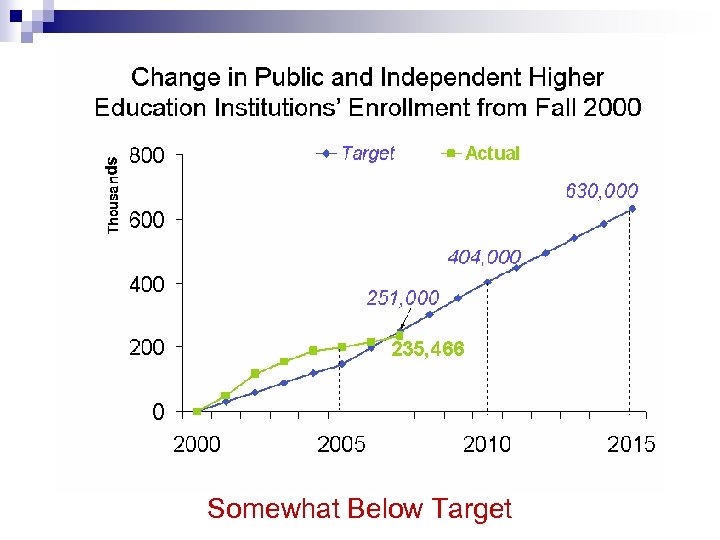 Somewhat Below Target
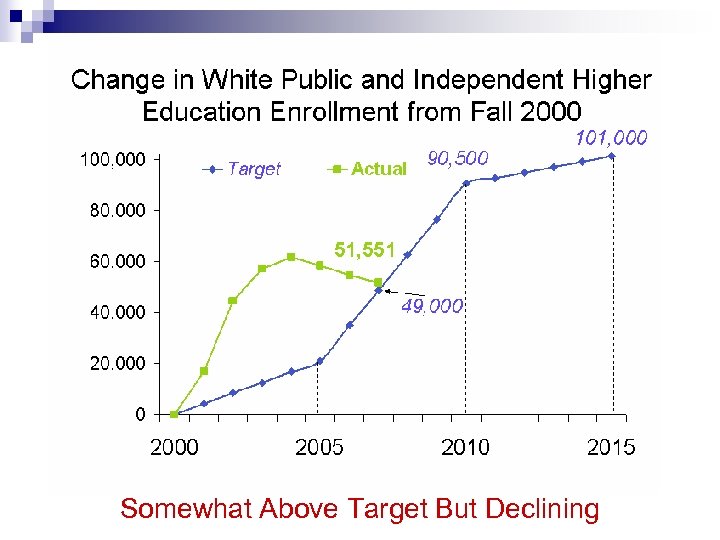 Somewhat Above Target But Declining
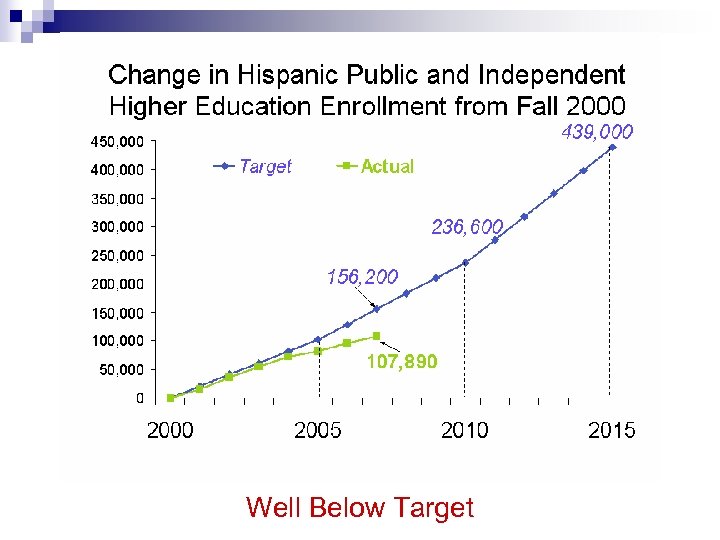 Well Below Target


 Proportion of Net Population Change Attributable to Each Race/Ethnicity Group in Texas for 1980 -1990, 1990 -2000 and 2000 -2005 (Texas State Data Center)
 Projected Percent of Net Change Attributable to Each Race/Ethnicity Group for 2000 -2040* (Texas State Data Center) *Using U. S. Census count for 2000 and Texas State Data Center 1. 0 population projection scenario for 2040
 Projected Percent of Labor Force by Educational Attainment in Texas, 2000 and 2040 (Texas State Data Center)
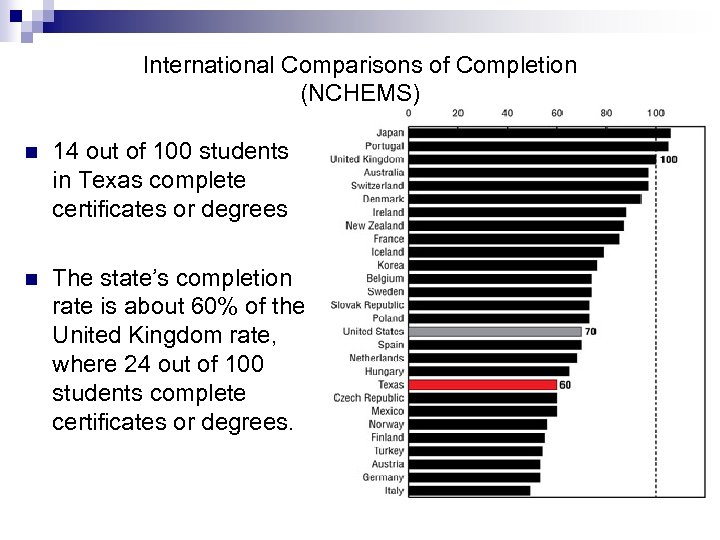 International Comparisons of Completion (NCHEMS) n 14 out of 100 students in Texas complete certificates or degrees n The state’s completion rate is about 60% of the United Kingdom rate, where 24 out of 100 students complete certificates or degrees.
 Percent of Adults with College Degrees (Associate and Higher) – Leading OECD Countries, US, Mexico, & Texas (NCHEMS) Source: OECD, Education at a Glance 2008
 Can Texas Reach International Competitiveness? (NCHEMS) Current Degree Production Combined with Population Growth and Migration and Improved Performance on the Student Pipeline Measures Degrees Produced 2005 -25 with Current Rate of Production Additional Degrees from Population Growth Additional Degrees from Net Migration of College-Educated Residents Reaching Best Performance in High School Graduation Rates by 2025 Reaching Best Performance in College-Going Rates by 2025 Pipeline Performance Is Cumulative Reaching Best Performance in Rates of Degree Production per FTE Student Total Degrees Produced 2005 -25 If All of the Above Degrees Needed to Meet Best Performance (55%) Source: 2005 ACS, PUMS
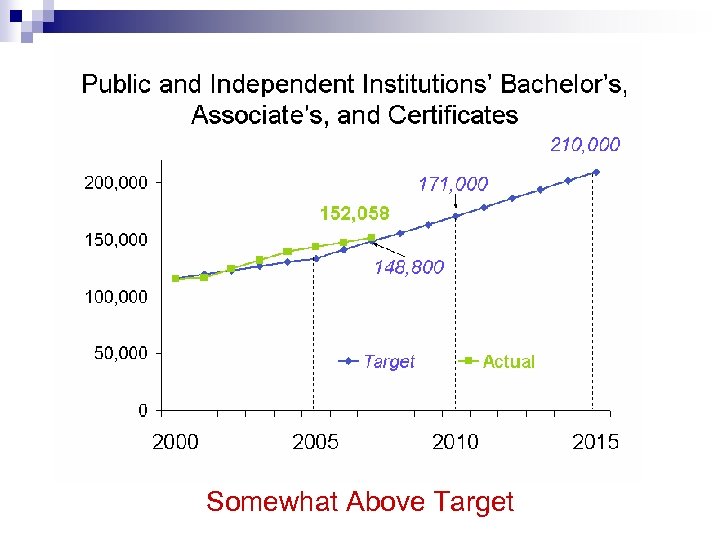 Somewhat Above Target
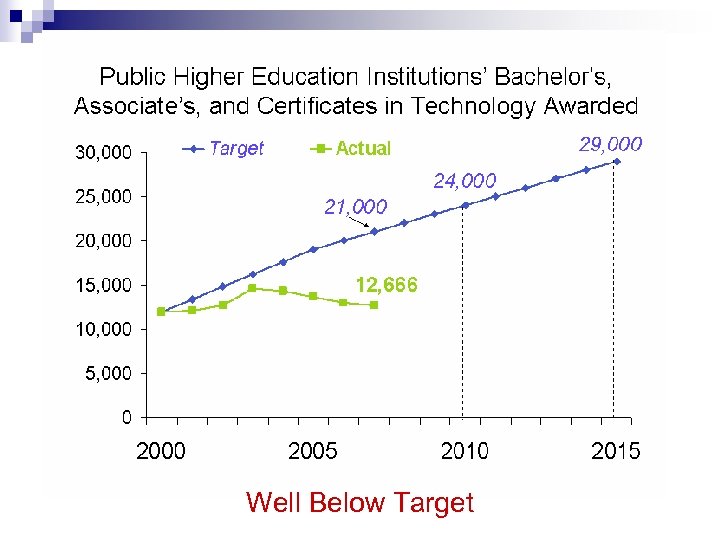 Well Below Target
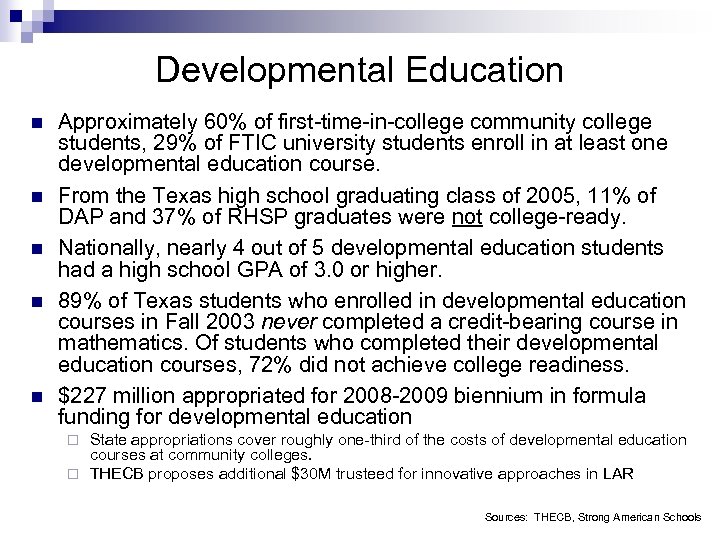 Developmental Education n n Approximately 60% of first-time-in-college community college students, 29% of FTIC university students enroll in at least one developmental education course. From the Texas high school graduating class of 2005, 11% of DAP and 37% of RHSP graduates were not college-ready. Nationally, nearly 4 out of 5 developmental education students had a high school GPA of 3. 0 or higher. 89% of Texas students who enrolled in developmental education courses in Fall 2003 never completed a credit-bearing course in mathematics. Of students who completed their developmental education courses, 72% did not achieve college readiness. $227 million appropriated for 2008 -2009 biennium in formula funding for developmental education State appropriations cover roughly one-third of the costs of developmental education courses at community colleges. ¨ THECB proposes additional $30 M trusteed for innovative approaches in LAR ¨ Sources: THECB, Strong American Schools
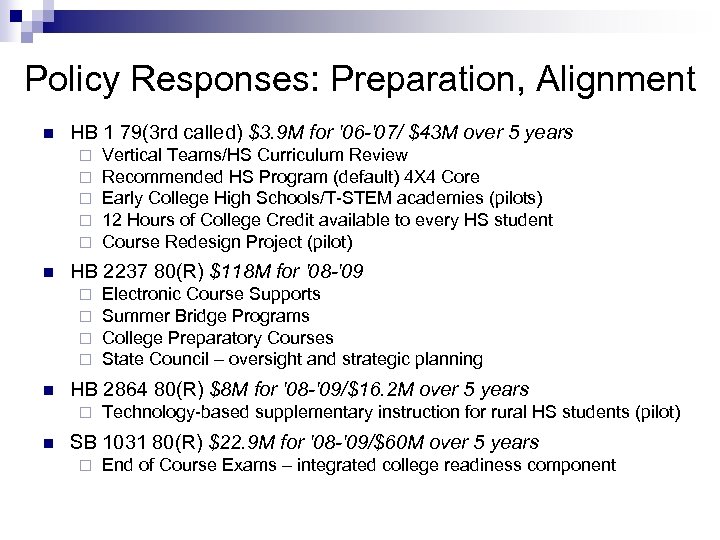 Policy Responses: Preparation, Alignment n HB 1 79(3 rd called) $3. 9 M for '06 -'07/ $43 M over 5 years ¨ ¨ ¨ n HB 2237 80(R) $118 M for '08 -'09 ¨ ¨ n Electronic Course Supports Summer Bridge Programs College Preparatory Courses State Council – oversight and strategic planning HB 2864 80(R) $8 M for '08 -'09/$16. 2 M over 5 years ¨ n Vertical Teams/HS Curriculum Review Recommended HS Program (default) 4 X 4 Core Early College High Schools/T-STEM academies (pilots) 12 Hours of College Credit available to every HS student Course Redesign Project (pilot) Technology-based supplementary instruction for rural HS students (pilot) SB 1031 80(R) $22. 9 M for '08 -'09/$60 M over 5 years ¨ End of Course Exams – integrated college readiness component
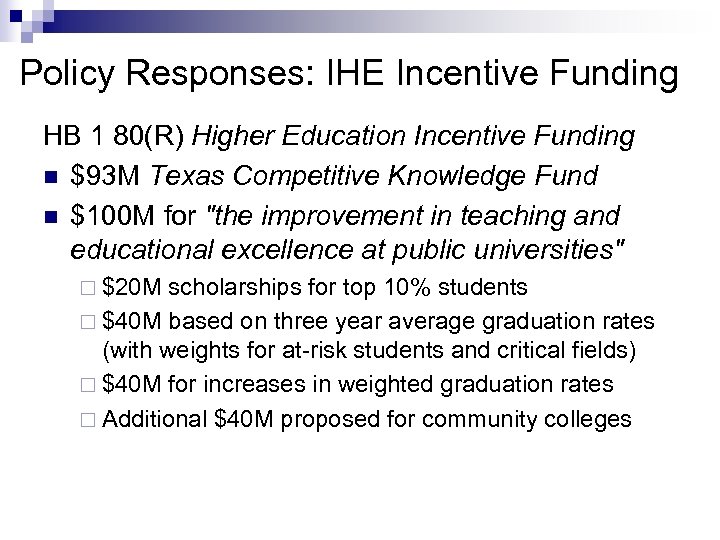 Policy Responses: IHE Incentive Funding HB 1 80(R) Higher Education Incentive Funding n $93 M Texas Competitive Knowledge Fund n $100 M for "the improvement in teaching and educational excellence at public universities" ¨ $20 M scholarships for top 10% students ¨ $40 M based on three year average graduation rates (with weights for at-risk students and critical fields) ¨ $40 M for increases in weighted graduation rates ¨ Additional $40 M proposed for community colleges
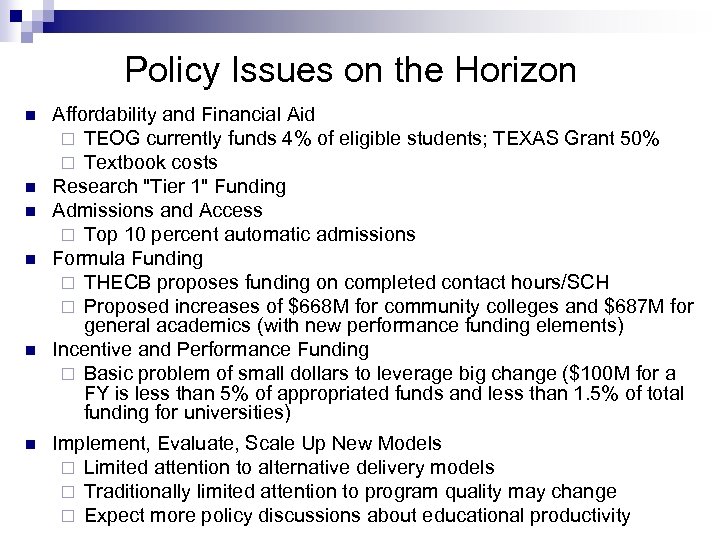 Policy Issues on the Horizon n n n Affordability and Financial Aid ¨ TEOG currently funds 4% of eligible students; TEXAS Grant 50% ¨ Textbook costs Research "Tier 1" Funding Admissions and Access ¨ Top 10 percent automatic admissions Formula Funding ¨ THECB proposes funding on completed contact hours/SCH ¨ Proposed increases of $668 M for community colleges and $687 M for general academics (with new performance funding elements) Incentive and Performance Funding ¨ Basic problem of small dollars to leverage big change ($100 M for a FY is less than 5% of appropriated funds and less than 1. 5% of total funding for universities) Implement, Evaluate, Scale Up New Models ¨ Limited attention to alternative delivery models ¨ Traditionally limited attention to program quality may change ¨ Expect more policy discussions about educational productivity
 Contact Information Harrison Keller Director of Research, Texas House of Representatives Speaker's Office (512) 463 -1546 Harrison. Keller@speaker. state. tx. us