 Скачать презентацию Current Diseases Staphylococcus Clostridia Food-borne bacteria
475208de30b1db2956cbe84573e0bb5f.ppt
- Количество слайдов: 31



Current Diseases • • Staphylococcus Clostridia Food-borne bacteria Malaria Influenza Common cold HIV HPV 1
Staphylococcus: G+ coccus • S. aureus and S. epidermidis (and 21 others). – S. aureus much worse, S. epi an opportunist. – Sturdy, salt tolerant, fac anaerobes; clusters – S. epidermidis common on skin, S. aureus less. • Diseases of S. aureus – Invasive: skin diseases (rashes, abscesses) • systemic diseases (bacteremia, organ and bone infections) – Toxin: toxic shock syndrome, scalded skin syndrome, food poisoning – Diseases spread by fomites and direct contact. 2
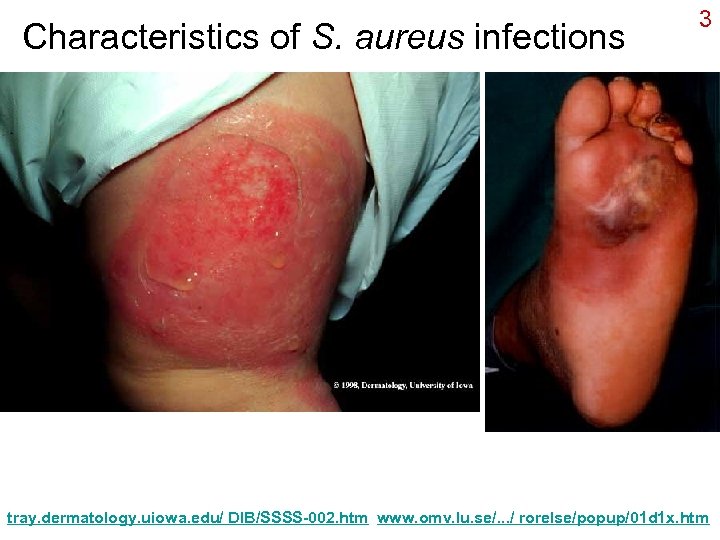
Characteristics of S. aureus infections 3 tray. dermatology. uiowa. edu/ DIB/SSSS-002. htm www. omv. lu. se/. . . / rorelse/popup/01 d 1 x. htm
S. aureus virulence factors & Rx 4 • Capsules, hyaluronidase, staphylokinase, betalactamases (destroy penicillins), leukocidins • Toxins: various, including TSS toxin, exfoliatin, and enterotoxins (heat stable) • 95% resistant to penicillin, but now many resistant to methicillin, oxacillin. Treatment usually clindamycin (oral) or vancomycin (IV). • S. aureus carried by 30 -40% – Well adapted to life with humans • http: //www. textbookofbacteriology. net/staph. html
Clostridium: G+ rods 5 • Strict anaerobes! Endospore formers. Toxigenic – Common in soil, sewage animal GI tracts – Produce neurotoxins, enterotoxins, histolytic toxins • Four important species: C. perfringens, C. botulinum, C. tetani, and C. difficile. • C. perfringens – Food poisoning: cramps and diarrhea – From injury: myonecrosis to gas gangrene • Fermentation in tissues, killing of tissues and spread of cells into anaerobic areas. • Oxygen treatment, debridement, amputation
More clostridia 6 • C. difficile: normal GI microbiota – Cause of pseudomembranous colitis, resulting from overgrowth following broad spectrum antibiotics • Damage to GI wall can lead to serious illness – Nosocomial infection, easily transmitted • C. botulinum: cause of botulism – Usually acquired by ingestion: intoxication • Food borne, infant (no honey), wound – Produces neurotoxin, inhibits acetylcholine release • Flaccid paralysis; Botox: deadly poison / beauty – Mouse bioassay; administer antitoxin
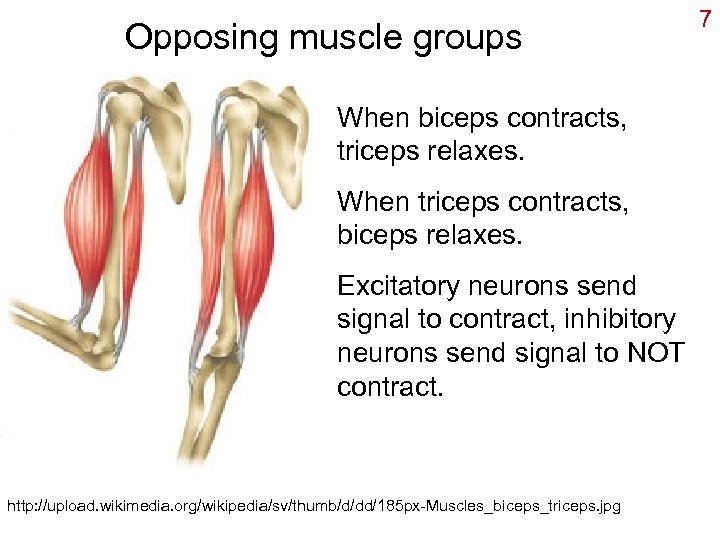
Opposing muscle groups When biceps contracts, triceps relaxes. When triceps contracts, biceps relaxes. Excitatory neurons send signal to contract, inhibitory neurons send signal to NOT contract. http: //upload. wikimedia. org/wikipedia/sv/thumb/d/dd/185 px-Muscles_biceps_triceps. jpg 7
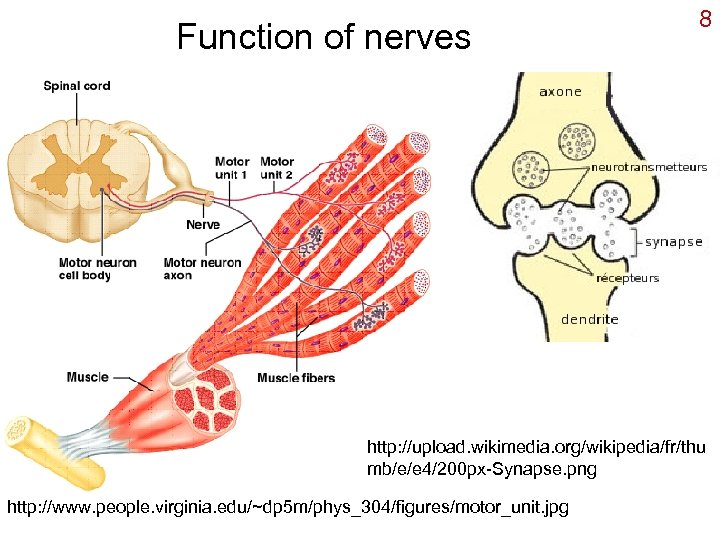
Function of nerves 8 http: //upload. wikimedia. org/wikipedia/fr/thu mb/e/e 4/200 px-Synapse. png http: //www. people. virginia. edu/~dp 5 m/phys_304/figures/motor_unit. jpg
More clostridia-2 • C. tetani: cause of tetanus – Growth in anaerobic wounds, makes tetanus toxin – Toxin prevents action of inhibitory neurons • Opposing muscle pairs both contract • Spastic paralysis, leading to death. – Recommendation is booster shot every 10 years • Toxoid vaccine, with diphtheria toxoid • No natural immunity: you would die first. 9
Gram negative rods 10 • Enteric bacteria – Gram negative, rod shaped, facultative anaerobes, nonspore forming, oxidase negative; Proteobacteria – Possess endotoxin – Medically significant but taxonomically similar – Distinguished with biochemical tests and serological tests. – Serological tests: using specific antibodies (as found in serum) to distinguish small differences in surface molecules of bacteria.
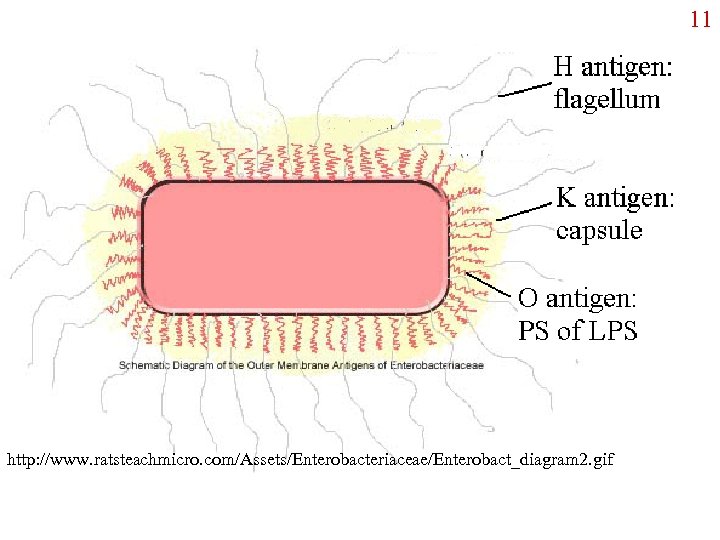
11 http: //www. ratsteachmicro. com/Assets/Enterobacteriaceae/Enterobact_diagram 2. gif
E. coli: friend or foe? 12 • E. coli: cause of 90% of urinary tract infections – Most strains common to GI tract, not harmful there. – Strains have fimbriae needed for attachment – Proanthocyanidins in cranberry juice interfere • E. coli: common cause of diarrhea – Many strains possess genes (some on plasmids) that code for additional virulence factors like exotoxins which cause disease • E. coli O 157: H 7: possesses shiga toxin; strain causes hemolytic uremia syndrome, damages kidneys. • E coli strains classified as EHEC, EIEC, EPEC, etc. – Enterohemorrhagic, enteroinvasive, etc.
Truly pathogenic enterics 13 • Salmonella: species so closely related that they are really all S. enterica. But medically, species epithets still used: S. typhi and others. Divided serologically. – Present in eggs, poultry, on animals such as reptiles – Large dose results in food poisoning; diarrhea, fever, etc. – Cells phagocytized by intestinal lining cells, kill cells causing symptoms, may pass through into blood. – S. typhi: typhoid fever. Spread through body • Gall bladder as reservoir; Typhoid Mary – http: //www. pbs. org/wgbh/nova/typhoid/ • Importance of clean water and sewage treatment.
Truly pathogenic enterics-2 14 • Shigella: especially S. sonnei (most common) and S. dysenteriae (most serious); cause shigellosis. – Food, flies, fingers, feces, fomites: very small infectious dose, personal hygiene important in prevention. – Infection of intestinal lining damaged, cells pass directly from cell to cell; cramps, diarrhea, bloody stools. – S. dysenteriae produces shiga toxin which inhibits protein synthesis, increases damage. – Most serious problem with diarrheal diseases in general is dehydration.
Gram negative curved rods 15 • Vibrio: comma shaped – Like enteric but oxidase positive; polar flagella – Halotolerant to halophilic, grow in estuarine and marine environments – V. cholerae: cause of cholera • Toxin-mediated severe diarrhea • Salt, fluid leave intestinal cells, patient dies of dehydration. • Oral rehydration therapy (ORT): water, salts, and glucose, now saving lives. • Causes pandemics that spread around the world – Lack of adequate sewage treatment
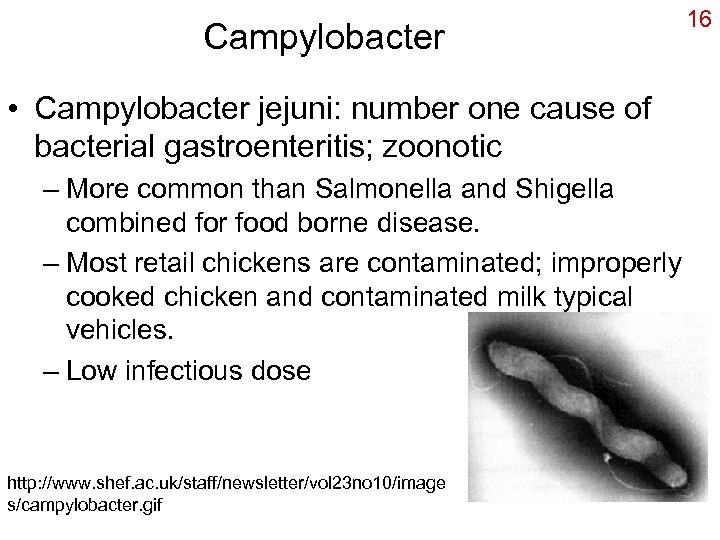
Campylobacter • Campylobacter jejuni: number one cause of bacterial gastroenteritis; zoonotic – More common than Salmonella and Shigella combined for food borne disease. – Most retail chickens are contaminated; improperly cooked chicken and contaminated milk typical vehicles. – Low infectious dose http: //www. shef. ac. uk/staff/newsletter/vol 23 no 10/image s/campylobacter. gif 16
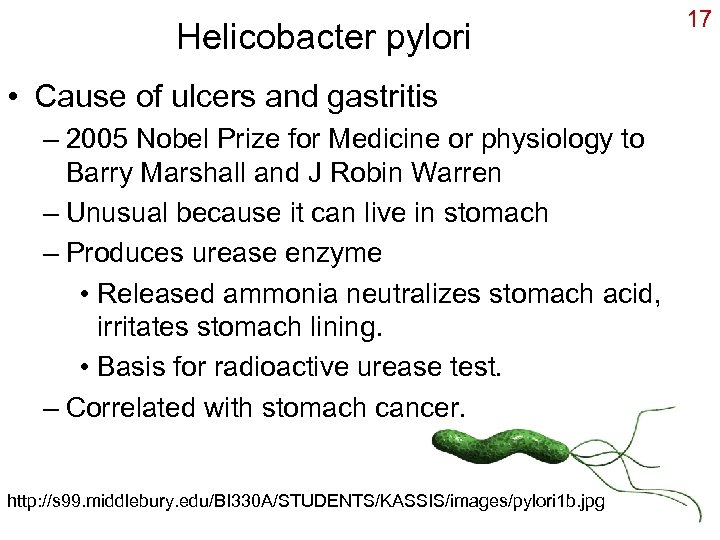
Helicobacter pylori • Cause of ulcers and gastritis – 2005 Nobel Prize for Medicine or physiology to Barry Marshall and J Robin Warren – Unusual because it can live in stomach – Produces urease enzyme • Released ammonia neutralizes stomach acid, irritates stomach lining. • Basis for radioactive urease test. – Correlated with stomach cancer. http: //s 99. middlebury. edu/BI 330 A/STUDENTS/KASSIS/images/pylori 1 b. jpg 17
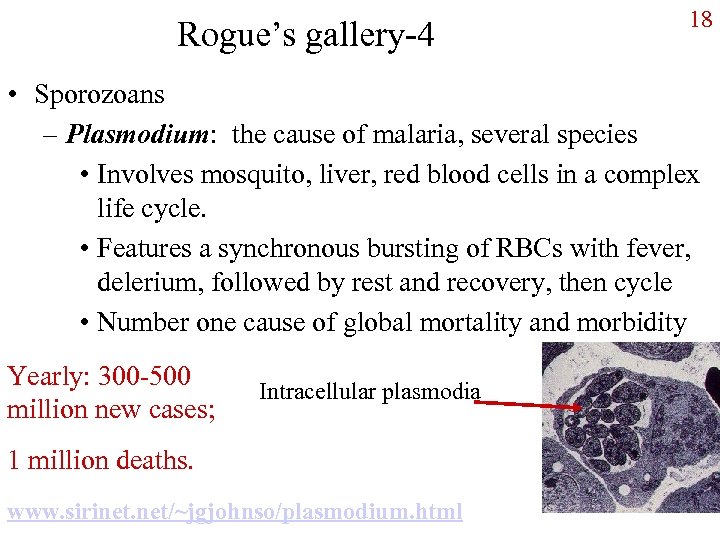
Rogue’s gallery-4 18 • Sporozoans – Plasmodium: the cause of malaria, several species • Involves mosquito, liver, red blood cells in a complex life cycle. • Features a synchronous bursting of RBCs with fever, delerium, followed by rest and recovery, then cycle • Number one cause of global mortality and morbidity Yearly: 300 -500 million new cases; Intracellular plasmodia 1 million deaths. www. sirinet. net/~jgjohnso/plasmodium. html
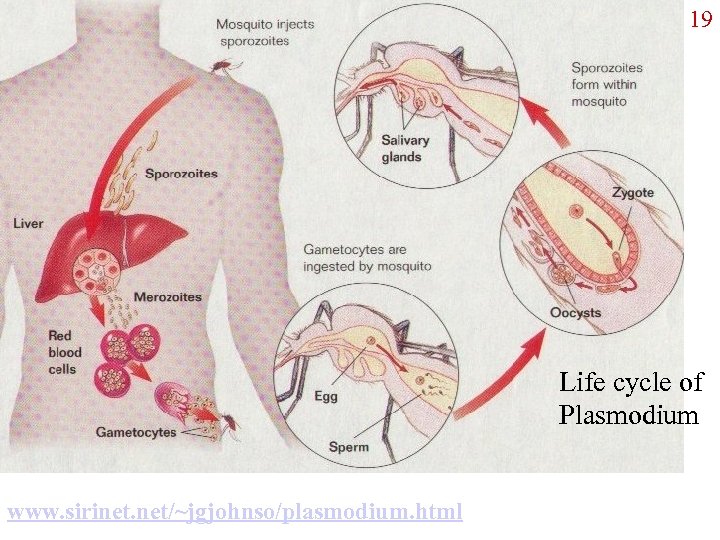
19 Life cycle of Plasmodium www. sirinet. net/~jgjohnso/plasmodium. html
20 In the poorest parts of the world, where effective window screens are lacking, insecticide-treated bed nets are arguably the most cost-effective way to prevent malaria transmission. One bed net costs just $10 to buy and deliver to individuals in need. One bed net can safely last a family for about four years, thanks to a long-lasting insecticide woven into the net fabric.
Orthomyxovirus • Influenza: a serious respiratory disease – Virus has a segmented genome • 8 different RNA molecules – Spikes: Hemagglutinin and Neuraminidase • Major antigens recognized by immune system • Antigenic drift and shift – Drift: small mutations, making host susceptible • Requires new vaccine each year – Shift: major mixing of RNAs, whole new virus. 21
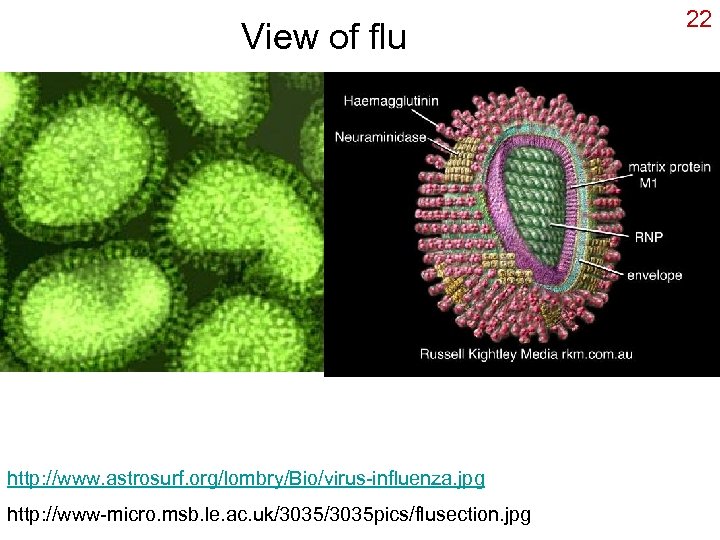
View of flu http: //www. astrosurf. org/lombry/Bio/virus-influenza. jpg http: //www-micro. msb. le. ac. uk/3035 pics/flusection. jpg 22
Nature of influenza • Attack on respiratory tract – Kills ciliated epithelial cells, allows bacterial infections. – Release of interferon from cells causes symptoms • H antigen (hemagglutinin) for attachment – That it agglutinates RBCs is an artifact • N antigen: neuraminidase – Cuts of the sugar on the glycoprotein receptor – Allows new virions to escape from cell without getting stuck 23
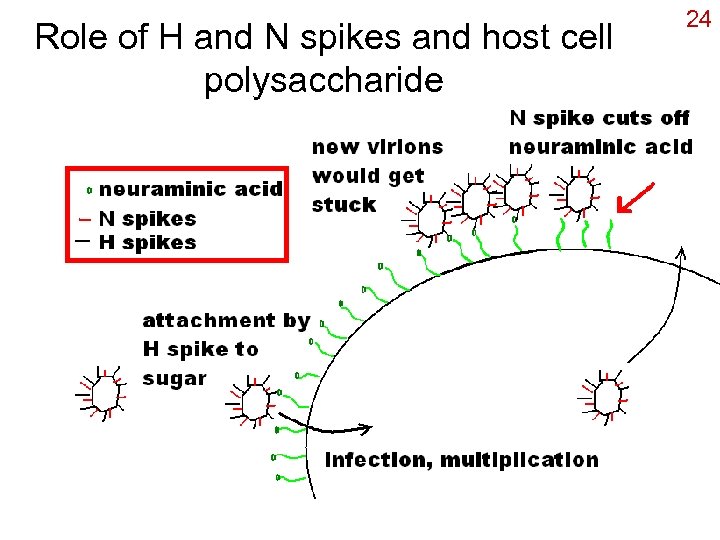
Role of H and N spikes and host cell polysaccharide 24
influenza 25 • Changes in H and N (antigenic shift) – Mixing of viruses that infect birds, pigs, produce new strains able to jump to humans. – New antigenic type leaves population unprotected – Numerous epidemics throughout history • Flu of 1918 -1919 killed 20 million – Asia watched very carefully: bird flu? • Flu vaccines made from deactivated viruses – Slow process (vaccine made in eggs), so every year correct strains are “guessed”. – Cell culture would be quicker but more $
The Common cold 26 • Rhinoviruses have many serotypes – Variants, caused by easy mutation of RNA – Immune system can’t recognize all differences, but some protection with age. – Multiplies in narrow temperature range, nose/sinus cooler than body temperature • Other cold viruses – Coronavirus (best known cousin causes SARS) – Adenovirus (DNA virus), some serotypes cause GI infections
HIV: Human Immunodeficiency Virus 27 • Host range – Main types of cells infected: T helper cells and dendritic cells (including macrophages, microglia) • Have CD 4 and CCR 5 glycoproteins on surface • Infection process – RNA is copied into c. DNA by reverse transcriptase – c. DNA inserts into host chromosome – New RNA made – Protein precursor made, then processed; assembly occurs – Virions bud through cell membrane
Disease process 28 • Chronic infection – T cells continually made, continually destroyed – Eventually, host loses • AIDS diagnosis: – Acquired Immuno Deficiency Syndrome • CD 4 cell count below 200/µl; • opportunistic infections • Examples of opportunistic “infections” – Pneumocystis carinii pneumonia (PCP pneumonia) – Kaposi’s sarcoma; Tuberculosis; several others
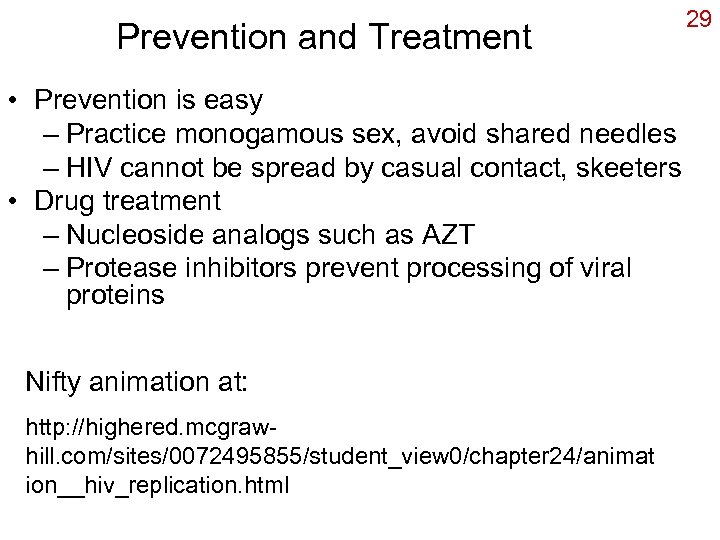
Prevention and Treatment • Prevention is easy – Practice monogamous sex, avoid shared needles – HIV cannot be spread by casual contact, skeeters • Drug treatment – Nucleoside analogs such as AZT – Protease inhibitors prevent processing of viral proteins Nifty animation at: http: //highered. mcgrawhill. com/sites/0072495855/student_view 0/chapter 24/animat ion__hiv_replication. html 29
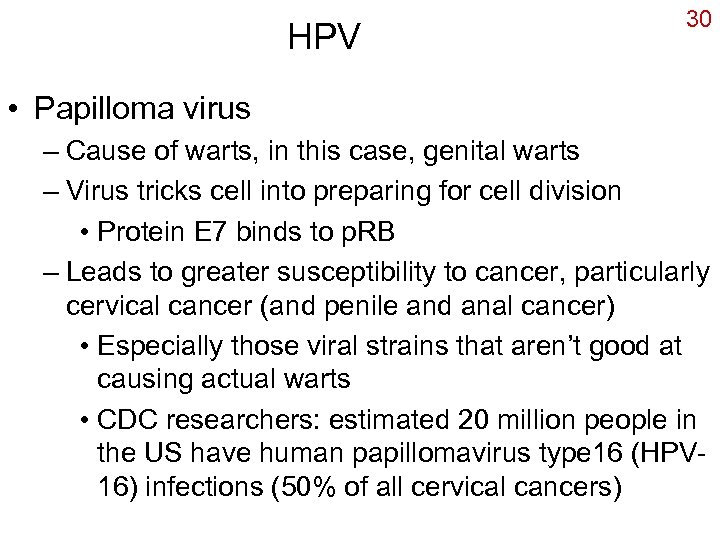
HPV 30 • Papilloma virus – Cause of warts, in this case, genital warts – Virus tricks cell into preparing for cell division • Protein E 7 binds to p. RB – Leads to greater susceptibility to cancer, particularly cervical cancer (and penile and anal cancer) • Especially those viral strains that aren’t good at causing actual warts • CDC researchers: estimated 20 million people in the US have human papillomavirus type 16 (HPV 16) infections (50% of all cervical cancers)
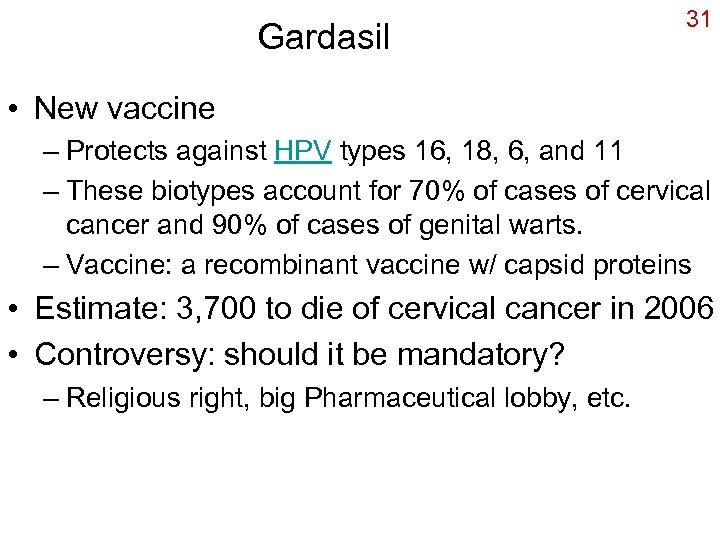
Gardasil 31 • New vaccine – Protects against HPV types 16, 18, 6, and 11 – These biotypes account for 70% of cases of cervical cancer and 90% of cases of genital warts. – Vaccine: a recombinant vaccine w/ capsid proteins • Estimate: 3, 700 to die of cervical cancer in 2006 • Controversy: should it be mandatory? – Religious right, big Pharmaceutical lobby, etc.
Скачать презентацию Current Diseases Staphylococcus Clostridia Food-borne bacteria
475208de30b1db2956cbe84573e0bb5f.ppt