


 Скачать презентацию Culture and traditions of war military Origin development changes
Culture and traditions of war1.ppt
- Количество слайдов: 141
 Culture and traditions of war/military Origin, development, changes
 • The people must be judged by their moral heights, the ideals they value, the idols they worship. ( М. Шаханов «Заблуждение цивилизации (сага о нравах эпохи)» )
 National Anthem of the Republic of Kazakhstan • The authors are poets Muzafar Alimbayev, Kadyr Myrzaliyev, Tumanbai Moldagaliyev and Zhadyra Daribayeva and composers Mukan Tulebayev, Eugeny Brusilovsky and Latif Khamidi. Word for word translation of the National Anthem of the Republic of Kazakhstan:
 • We are a valiant people, sons of honor, • And all we’ve sacrificed to gain our freedom. Emerging from malicious grip of fate, from hell of fire, We scored a victory of glory and success Refrain: Soar high up in the sky, oh, eagle of freedom, Call up to harmony, agreement and accord! For hero’s might and strength is in the nation, Just as the unity is nation’s razing sword. While honouring our mothers and respecting The cream of our rising nation We welcomed all ill-starred and struck by ruin. . .
 • Our homeland, the steppe, a sacred cradle Of friendship and accord Gave all a shelter and a hearty refuge Refrain: Soar high up in the sky, oh, eagle of freedom, Call up to harmony, agreement and accord! For hero’s might and strength is in the nation, Just as the unity is nation’s razing sword. We’ve overcome the hardships Let the past serve bitter lesson But ahead we face a radiant future. We bequeath our sacred legacy implying our mother tongue And sovereignty and valor and traditions So dearly cherished by our forefathers As true mandate to future generations.
 • Military culture and traditions is the specific set of practices associated with the military - soldiers and officers, and society in general. It includes: • 1) memories of the heroic past- struggle for liberation, defence, access to certain areas, • 2) stories and legends about real and mythical heroes, • 3) memories and views on the unity for the sake of common idea or cause, • 4) daily and particular practices for military - before, during and after the military conflict, life in military camp style •
 • 5) everyday training and education (physical, mental, psychological) for any type of conflict preparedness, • 6) way of thinking as to be ready for defence and attack in words, and fighting, mental mapping- who and why is the enemy and how to deal with him, system of military production; • 7) way of conflict settlement – arrangements of life- dwelling, migration, guarding the aul and pasturelands, • 8) role of military in the society and males’ functions as military caste position and role in society, in Kazakh society- batyrs and heroes, that played big role in social hierachy
 • 8) the symbolic and technical sides – tribal military call- uran, banner, the styles of military uniform, hardware - weaponry making tradition and cultural techniques, regular drills, • 9) military software- military thought tradition – strategy, tactics, army layout and planning • 10) diplomacy of war • 11) arts of war – legends, myths, songs, games, music with military content.
 Cultural values of war in Kazakh society Loyalty—love to native land, family/ancestors- clan/tribe/juz- Kazakh people. Now – to the Republic of Kazakhstan and its regime. Duty—Fulfill your obligations, participation in military drills, wars, military service compulsory since mid 1930 s (USSR). Respect—to comrades and enemies as they should be treated. Selfless Service—Put the welfare of the people before your own. Honor—Live up to all the your people values. Integrity—Do what’s right, legally and morally.
 Role of army • The Army is an organization that instills pride in its members because of its history, mission, capabilities, and the respect it has earned in the service of the Nation. A reflection of that pride is visible in the customs, courtesies, and traditions the Army holds. Adherence to them connects people with soldiers throughout Kazakh history.
 • The Army has its own customs, both official and social. Some have been handed down from the distant past while others are of comparatively recent origin. Those customs that endure stand on their own merits. As a long established social organization, the Army observes a number of customs that add to the interest, pleasure, and graciousness of Army life.
 • Tradition is a customary pattern of thought, action, or behavior help by an identifiable group of people. It is information, beliefs, and customs handed down by word of mouth or by example from one generation to another without written instruction. Kazakh military traditions are really the "Army Way" of doing and thinking. An interesting thing about traditions is that many of our Army traditions started out as something quite different from what they are now.
 • Military tradition is an interesting and often amusing subject. It gives a person a feeling of pride to understand just why we do things the way we do. Traditions are expressed in the things we do, the uniform we wear, and the things we say. Many of the words we use in the Army are unique and have been added to our vocabulary from different parts of the world and at different times in history. • Army traditions are things that everyone in the Army does, everywhere.
 Elements of culture of war • Power based on force / Belief that violence works Military training • Enemy images/ Intolerance and prejudice against people who are different • Sense of patriotism / Religious intolerance (suspicion and fear) • Nature of governance / Corruption / Obedience to orders from the top down (subservience and fear) • Nature of society and social hierarchy • Ideology of war- who is hero and his status in society
 • Armaments / Armies / War preparations / Military industry • Disregard for human rights (people living in fear) • Profiting from the exploitation of people and nature within and/or between countries (greed) • Male domination and power / Patriarchy
 Specifics of military culture and traditions in Kazakh society • 1. War was integral part of life in all spheres • 2. All life of society was subject to war- itself and preparations- nomadic lifestyle • 3. Ideal for leader, man and society – warrior and war-like, victorious • 4. Violence- norm for settlement of disputes in all spheres at all levels • 5. Economic system was based on struggle for survival with nature and other peoples • 6. Social and political life- competition, major augment- power, and mostly military or physical
 Historical legacy • 1. Turkic • 2. Mongol • 3. Islamic- war for religion, and designation for the opponent- Muslim, bad Muslim or infidel • 4. Russian • 5. Soviet • 6. Post-1991 - soviet legacy, Kazakhstani patriotism and international commitments – CIS and SCO security structures, NATO, peacekeeping
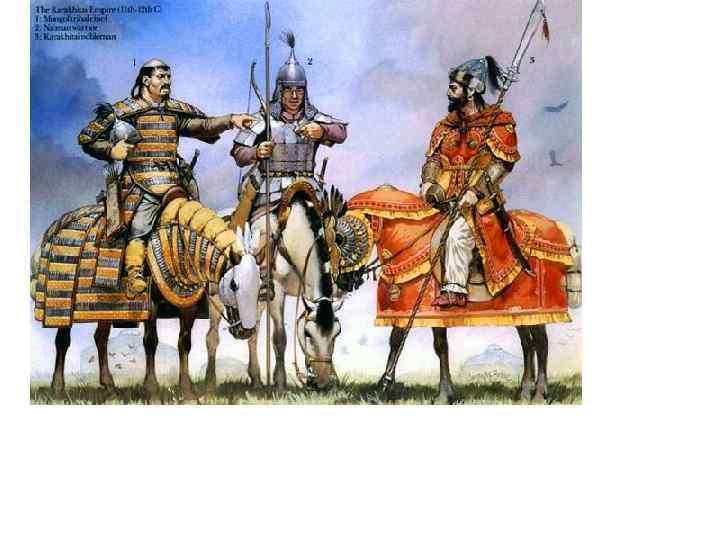
 Heroic epics • The Book of Qorqyt-ata (recorded in XIV century), Alpamys batyr (Turkic kaganat times), Er-Edige (collapse of the Golden Horde), Qoblandy batyr (Jungar wars), Er Targyn, Qambar batyr,
 Qualities of heroes- natural and supernatural • • • From Alpamys batyr: Your son’s name will be Alpamys Your daughters’ name- Qarlygash. If people shoot at him- never get through, If people cut him- a sword will never cut through.
 • Alpamys with the help of Qyzyr ata (mystical forefather of all Turks) made up his inner organs out of steel, body- of Damascus steel, but he cannot be drown in water.
 Specifics of heroic epic • 1) historical narrative on events and peoples; 2) encyclopaedia of human life; 3) philosophy; 4) collection of myths and realities; 5) real historical figures were present- past and present in one- Edige; 6) universal characters typical for all Turkic peoples- Еr Кокshe — hero of Kyrgyz epic «Маnas» and Russian legends’ ethnic history of tribes and clans- «Qoblandy batyr» . He was Kypshak and his tribesmen lived in the Arys river and Qaraspan mountains.
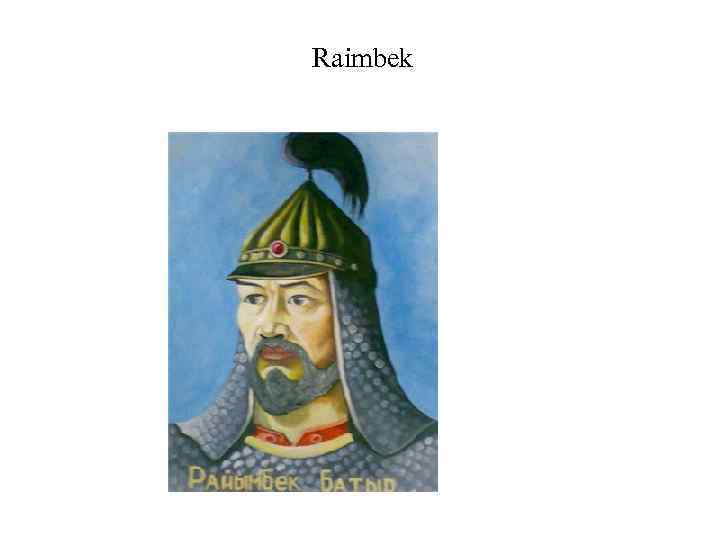
 War against Jungars’ heroes - «жаугершілік заманы» • Qarasay batyr, Nauryzbai batyr, Raimbek batyr, Bogenbai batyr, Malaisary-batyr, Olzhabai batyr, Shaqshaq Janibek batyr, Qanai Quttymbet-uly
 soviet • 1. Celebration of the Soviet Army day- 23 February, creation of the revolutionary Red Army by the decrees of Lenin and Trotsky. • 2. Heroes- criteria- fighters against the old regime (but not against Russia), for revolution and communist party.
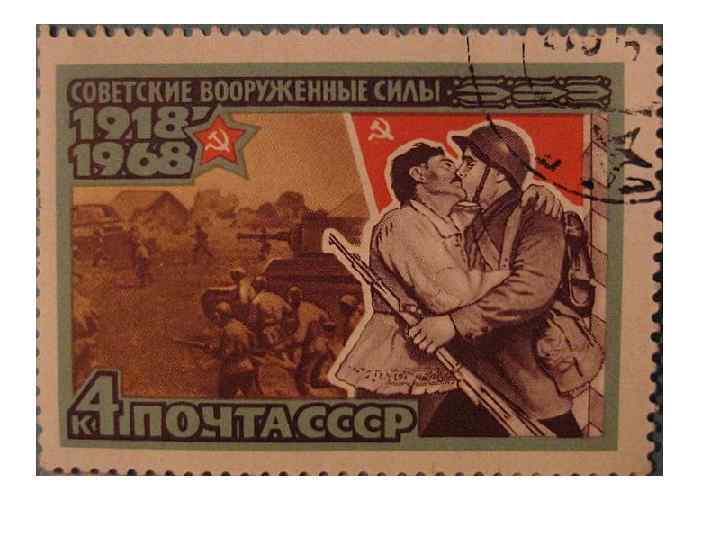
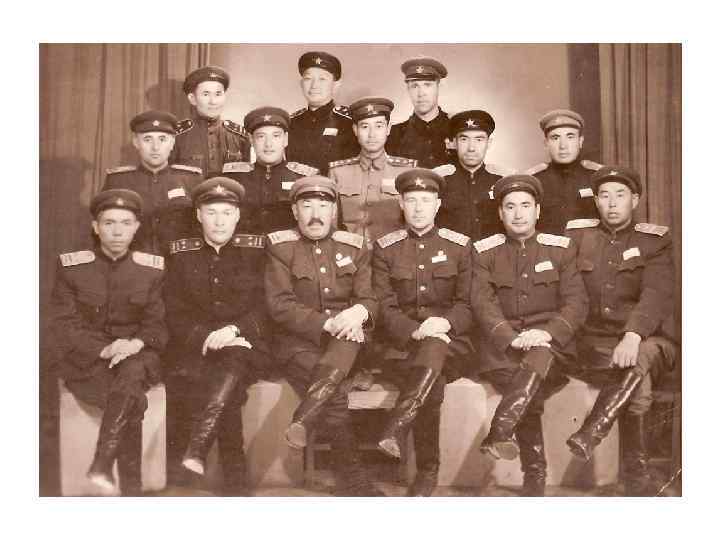
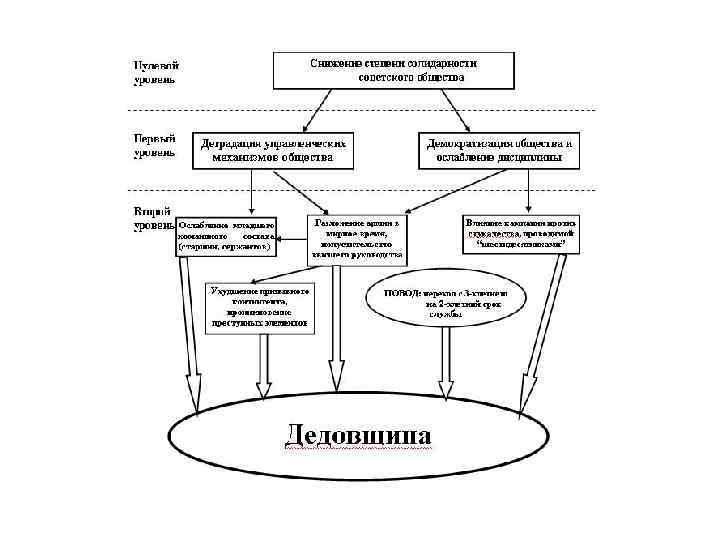
 The Soviet heritage • - military security networks created during the Soviet period- for domestic and external purposes • -- dedovshchina/hazing in Central Asian Armies • -image of Soviet armed forces in Central Asian societies
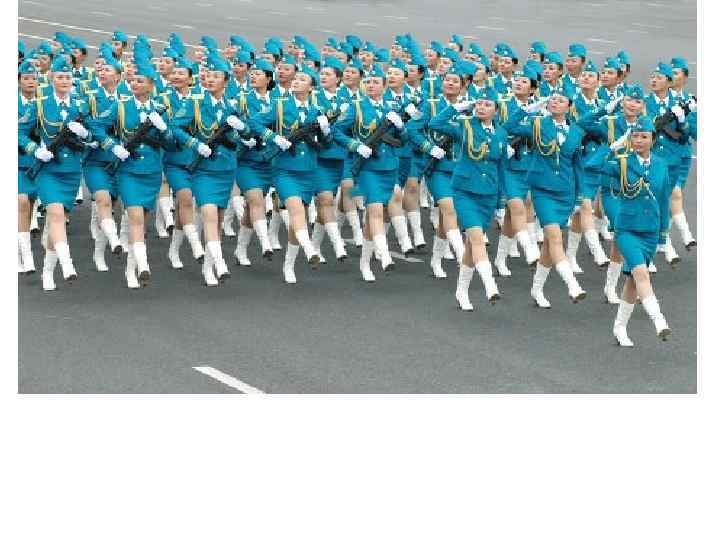
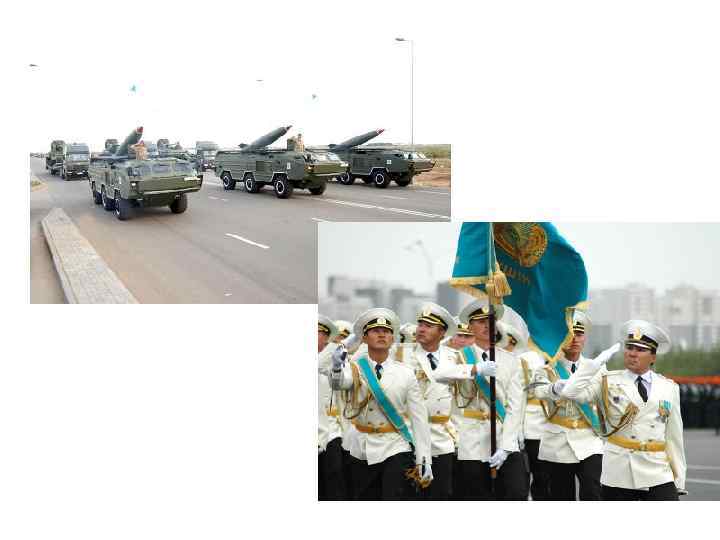
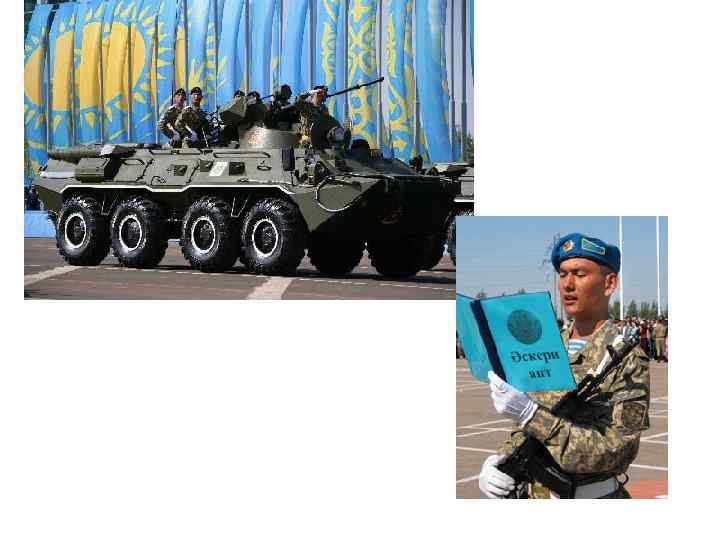
 • Kazakhstan has contributed a lot in USSR’s effort to defeat Nazi Germany. • Five national divisions were contributed to USSR’s military personnel coming from Kazakh’s Soviet Socialist Republic military reserves. May 9 is V-Day, may 7 th- day of the Kazakhstani army birth 9. Traditional military parade is seen on the street of Astana, Kazakhstan’s capital. Cultural events are also held during the day and other parades with contingents coming from schools and other government institutions in Kazakhstan. Although considered a national holiday, the celebration is not as grand as other public holidays in the country.
 • 196 164 people from Kazakhstan took part in the war, 497 of them were awarded the title of Hero of the USSR. 700. 000 people worked in the Labor Army (deported Koreans, Germans, Poles and others).
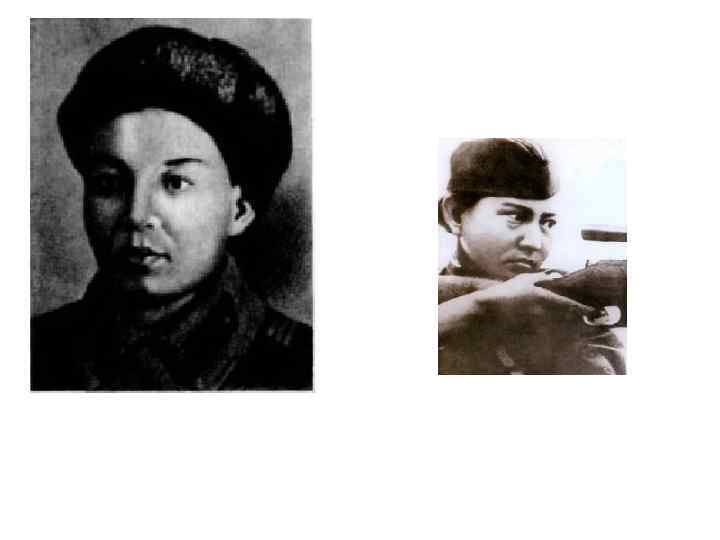
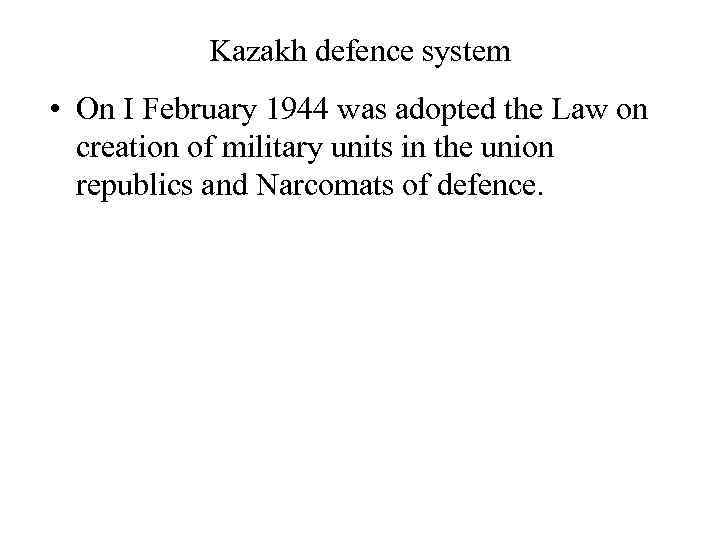
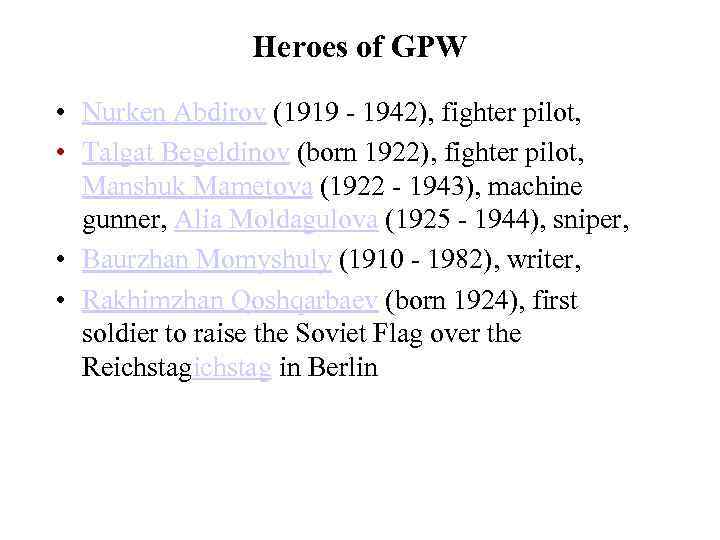 Heroes of GPW • Nurken Abdirov (1919 - 1942), fighter pilot, • Talgat Begeldinov (born 1922), fighter pilot, Manshuk Mametova (1922 - 1943), machine gunner, Alia Moldagulova (1925 - 1944), sniper, • Baurzhan Momyshuly (1910 - 1982), writer, • Rakhimzhan Qoshqarbaev (born 1924), first soldier to raise the Soviet Flag over the Reichstag in Berlin
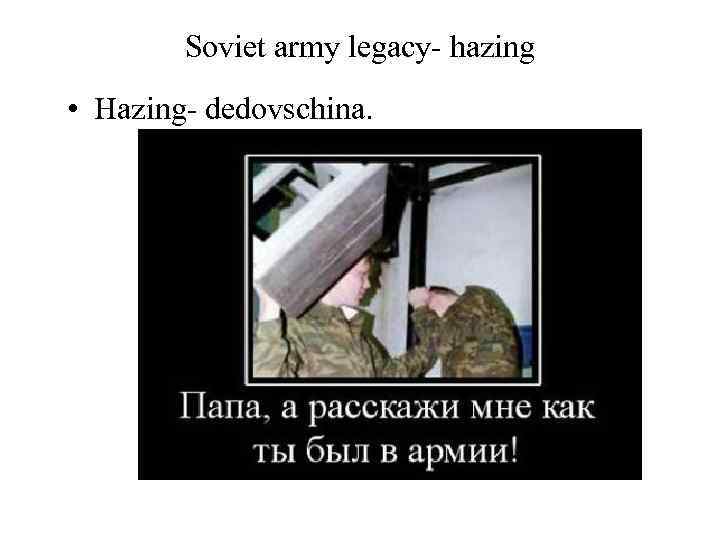 Soviet army legacy- hazing • Hazing- dedovschina.
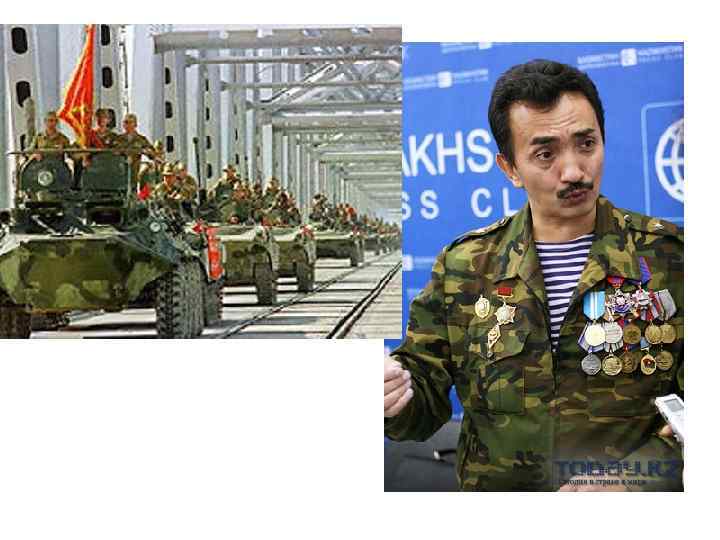
 Afghan war (1979 -1989) • 22. 000 people from Kazakhstan fought in Afghanistan war. 924 of them died in the front lines, 21 - lost. In the USSR they were heroes, after 1991 - status indefinite as the evaluation of Afghan campaign is ambiguous. The veterans do not have privileges. There are over 100 alliances of Afghan war veterans, fighting for their rights/survival.
 Building the new national soldier • 1. the role of national epic heroes in building the national soldier • 2. new officer: a sociological portrait- The renewal of military elites, r sociological composition, changes in recruitment and evaluation systems and in career profiles. • 3. changes in the ethnic composition of the armed forces of Kazakhstan -to the massive departure of Russian officers (who returned mainly to Russia and the Ukraine). • 4. Professional military staff preparation and training : the training of a specialist corps whose members are recruited among a population with a low level of instruction,
 • and which was not allowed to occupy positions of responsibility during under the Soviet regime. • - The difficult interaction of Russian officers with local officers due to language problems affecting the chain of command. • - Military personnel’s wives / Women in the military in Central Asian societies.
 Military/society relations • The role of solidarities and loyalties in Central Asian armies: minorities in the military; kinship networks in the military. • The action of military elites as lobby groups and the perceptions they generate. Are these elites no more than interest group(s) competing with others for the ownership and use of resources, power, etc… or does their state function (defense, public order) confer upon them a specific role and modus operandi? • How the contradictions affecting Central Asian societies (tribal and clan divisions, ethnic tension, regional disparities, urban-rural differences, social inequalities etc) affects the national armies ?
 Military reform • • 1. Doctrine, strategy and tactics 2. Security challenges 3. Economy of the military reform 4. security forces
 Heroic epics- batyrlar jury • Functions: 1) educative and ideological- train the young generation on glorious heroic past; 2) philosophical- reasons of war and mission of the society and its members in the war.
 Freedom Heroes- controversy • Akhmet Baitursunov (1873 - 1937), poet, writer and politician • Alikhan Bokeikhanov (1866 - 1937), writer, political activist and environmental scientist • Myrjaqyp Dulatov (1885 - 1935), poet, writer and a leader of Alash Orda government • Osman batyr (1899 - 1951), (also referred to as Ospan) fighter for the freedom of the Qazaq people in Xinxiang
 • Makhambet Otemis-uly (1804 - 1846), akyn, composer, leader of rebellious movement against Russian Empire • Raimbek batyr (1705 - ? ), warrior in the 18 th century against Jungars • Issatai Taiman uly (1791 - 1838), leader of rebellious movement against Russian Empire
 • From the first days the Red Army had national military units, by mid 20 s they were not many, and since March 7, 1938 all nationalities were to serve on general conditions. Only Great Patriotic war changed the situation and were formed national units. Why?
 • 1) technical- language and psychological problems • 2) ideological- propaganda- ethnic groups defend the motherland • 3) ethnic and religious- prevent conflicts on these grounds • 4) social- promotion through ethnic units, training
 • • • Казахская ССР 100 -я стрелковая бригада 101 -я отдельная стрелковая бригада. 102 -я отдельная стрелковая бригада. 105 -я кавалерийская дивизия 106 -я кавалерийская дивизия
 National units in the Soviet army • National units existed in the soviet army till mid 50 s. Exception: in 1980 was set up 177 Separate Unit of special purpose of the Chief Intelligence board out of Uigurs, for the – 300 for potential conflicts in XUAR.
 Heroes of Great Patriotic war (1941 -1945) • 96 Kazakhs were awarded the heroes title during the war. Among them: • Nurken Abdirov (1919 - 1942), fighter pilot, Talgat Begeldinov (born 1922), fighter pilot, Manshuk Mametova (1922 - 1943), machine gunner, • Aliya Moldagulova (1925 - 1944), sniper, Baurzhan Momyshuly (1910 - 1982), writer, Rakhimzhan Qoshqakbayev (born 1924), first soldier to raise the Soviet Flag over the Reichstag in Berlin (not awarded). • Malik Gabdulin
 • Over 8 мln. 200 thous. People from Kazakhstan went to the front lines. Over 20 divisions were formed: the most heroic were 328, 310, 312, 314, 316, 387, 391, 8, 29, 102, 405 rifle units, 100 and 101 national, 81, 105, 106 cavalry divisions, 74 and 75 naval rifle brigades, 209 Zaisan, 219 mortar, 85 zenith, 662, 991 and 992 aviation regiments.
 Kazakh defence system • On I February 1944 was adopted the Law on creation of military units in the union republics and Narcomats of defence.
 Post-war criticism • The heroes could be more, among them could be- Baurzhan Momysh-uly (only in 1990 by Gorbachev degree, after death), Rakhimzhan Qoshqarbayev, Qassym Qaisenov. • Since mid 1980 s- more heroes: -Kairbolat (Nickolai) Maidanov (for Afghan war), in 1998 - Tokhtar Aubakirov (for landing his Mig fighter on the ship deck), and then as the first cosmonaut –Halyk Kaharmany.
 Post 1991 • Tohtar Aubakirov (born 1946), the first Kazakh cosmonaut, member of Kazakhstan parliament • Talgan Mussabayev (born 1951), test pilot, former cosmonaut, Director of Aerospace Agency of Republic of Kazakhstan
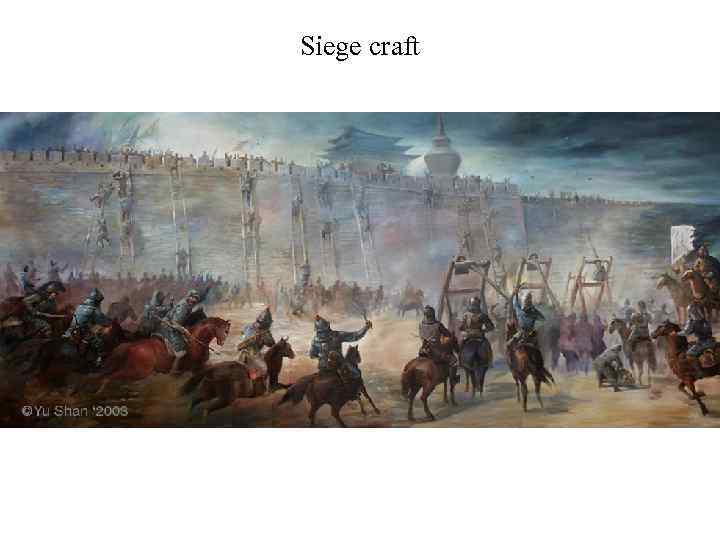 Siege craft
 Heroes- batyrs
 Raimbek
 Ammunition • 1. Horses. • They were the first people in the world to climb on the back of a horse and learn to ride. Estimates of when they achieved this range from 4200 BCE to 1500 BCE. From that moment, there was no looking back. These people lived in the saddle. They had no buildings, no houses, no farms, and no towns. They had no home nor did they want one. They were nomads. They spent their lives on their horses, roaming wild and free over the endless steppe. Their children learned to ride almost before they learned to walk. They put little bows and arrows in their children's hands as soon as they could grip something.
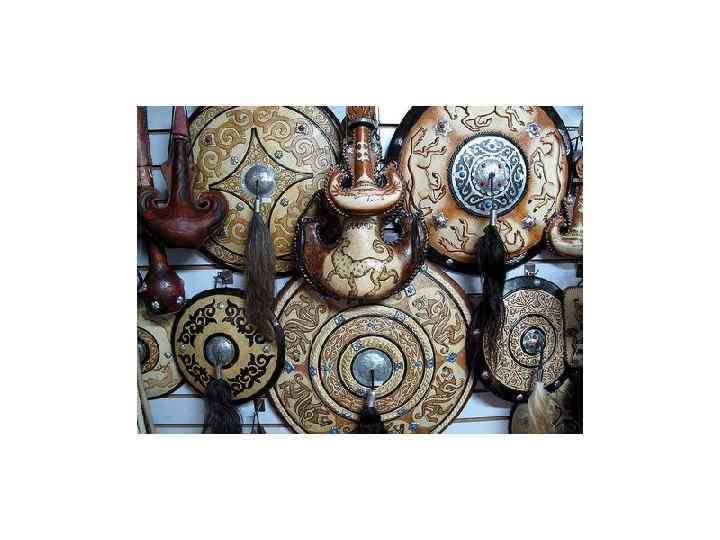
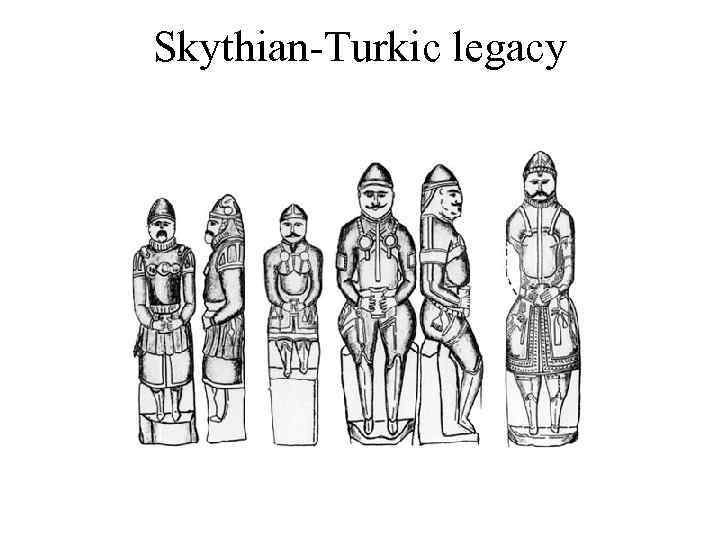
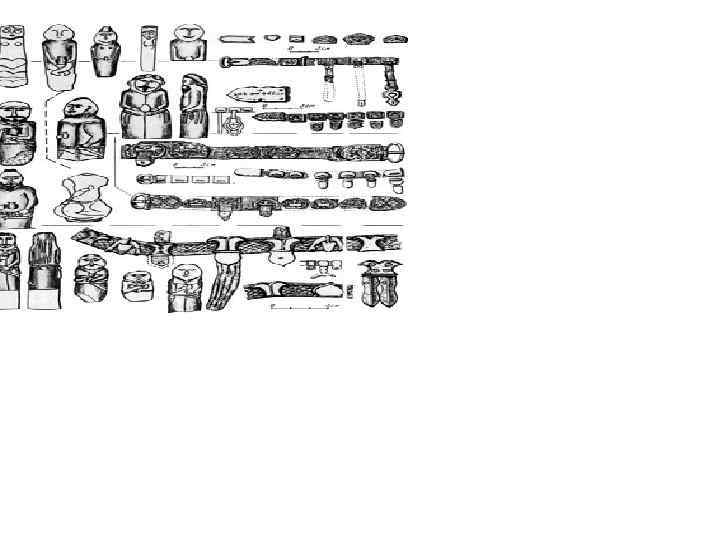
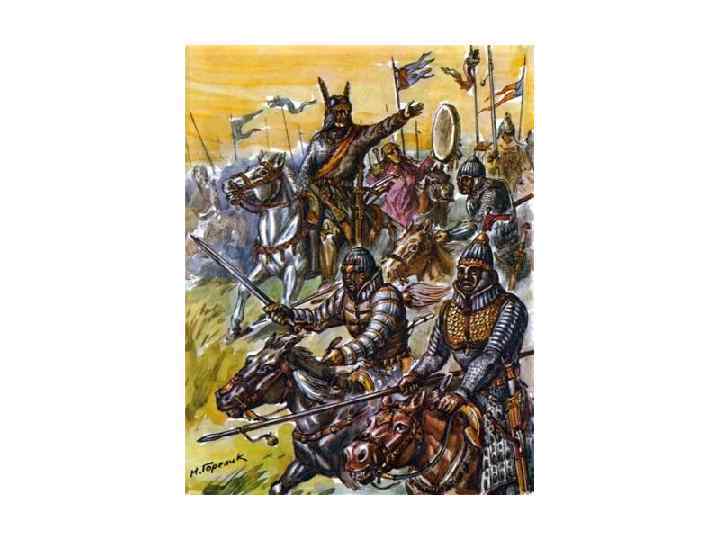
 • 2. Portable carts/tents/yurts • 3. Bows and arrows, pikes- naiza, swords- selebe, sables -qylysh, palash – semser, sap, qanzhar, long knives – zheke auz, long thin knives- bunda pushak. • Bows and arrow- sadaq. • Metal equipment for protection –saut made of steel rings with nets, wooden or leather shields, covered with metal plates.
 Skythian-Turkic legacy
 XIX century
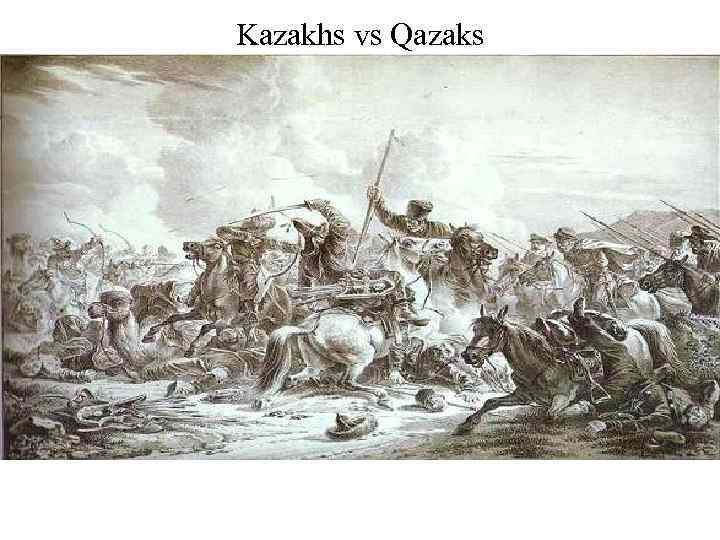 Kazakhs vs Qazaks
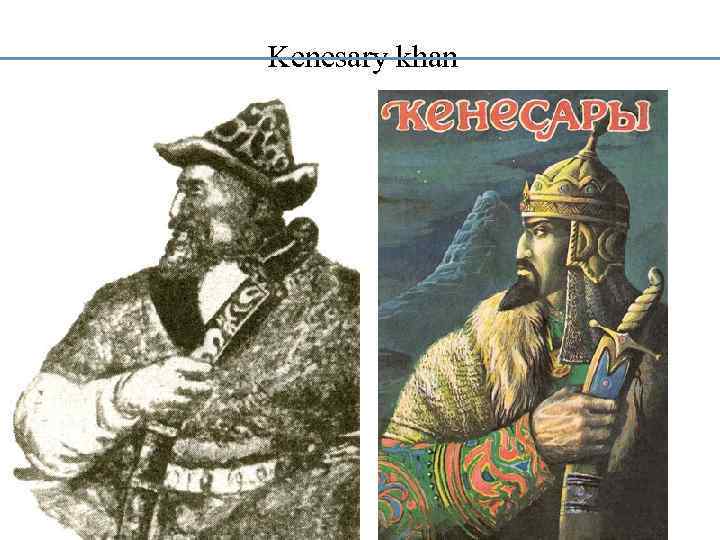 Kenesary khan
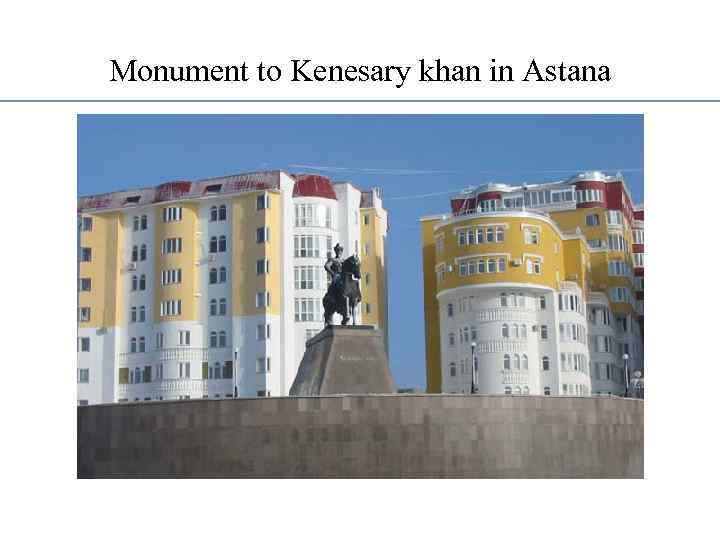 Monument to Kenesary khan in Astana
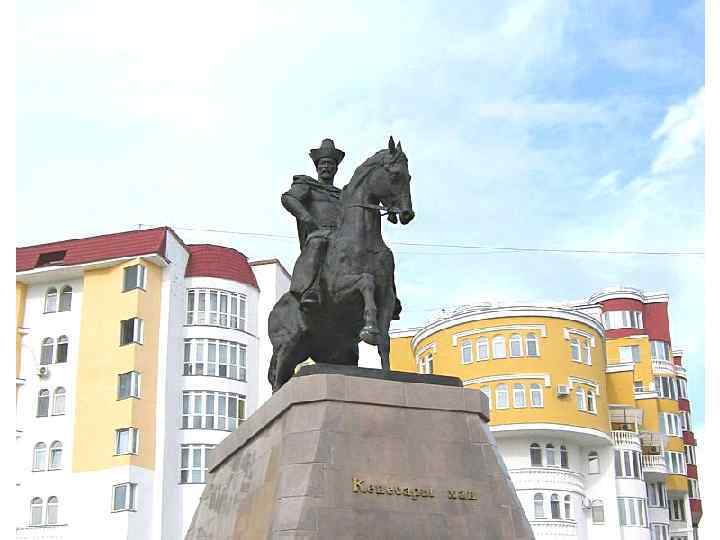
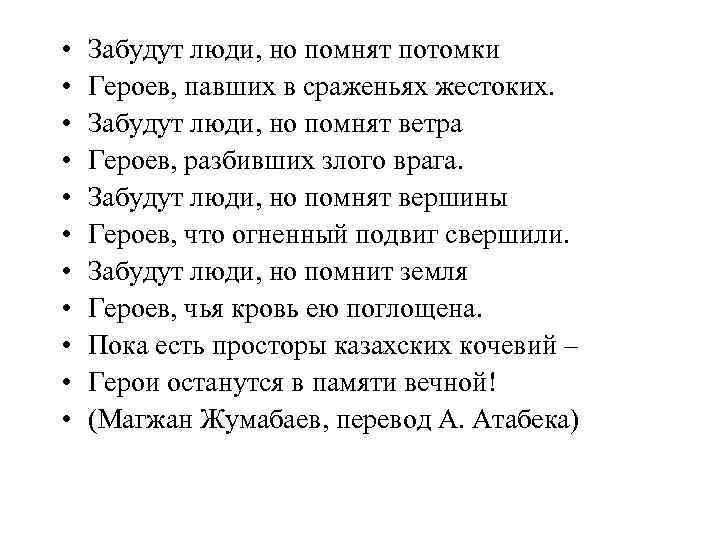 • • • Забудут люди, но помнят потомки Героев, павших в сраженьях жестоких. Забудут люди, но помнят ветра Героев, разбивших злого врага. Забудут люди, но помнят вершины Героев, что огненный подвиг свершили. Забудут люди, но помнит земля Героев, чья кровь ею поглощена. Пока есть просторы казахских кочевий – Герои останутся в памяти вечной! (Магжан Жумабаев, перевод А. Атабека)
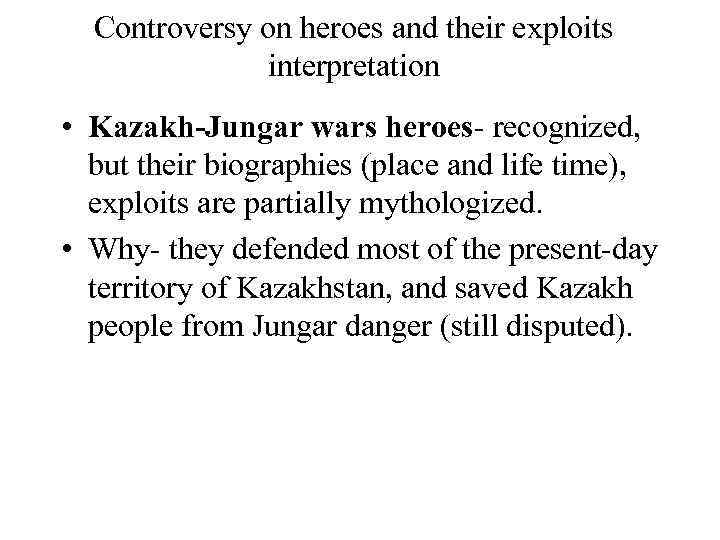 Controversy on heroes and their exploits interpretation • Kazakh-Jungar wars heroes- recognized, but their biographies (place and life time), exploits are partially mythologized. • Why- they defended most of the present-day territory of Kazakhstan, and saved Kazakh people from Jungar danger (still disputed).
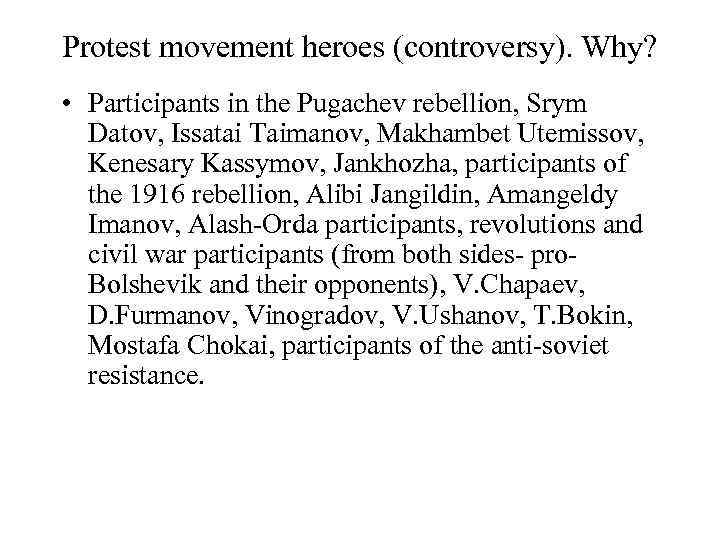 Protest movement heroes (controversy). Why? • Participants in the Pugachev rebellion, Srym Datov, Issatai Taimanov, Makhambet Utemissov, Kenesary Kassymov, Jankhozha, participants of the 1916 rebellion, Alibi Jangildin, Amangeldy Imanov, Alash-Orda participants, revolutions and civil war participants (from both sides- pro. Bolshevik and their opponents), V. Chapaev, D. Furmanov, Vinogradov, V. Ushanov, T. Bokin, Mostafa Chokai, participants of the anti-soviet resistance.
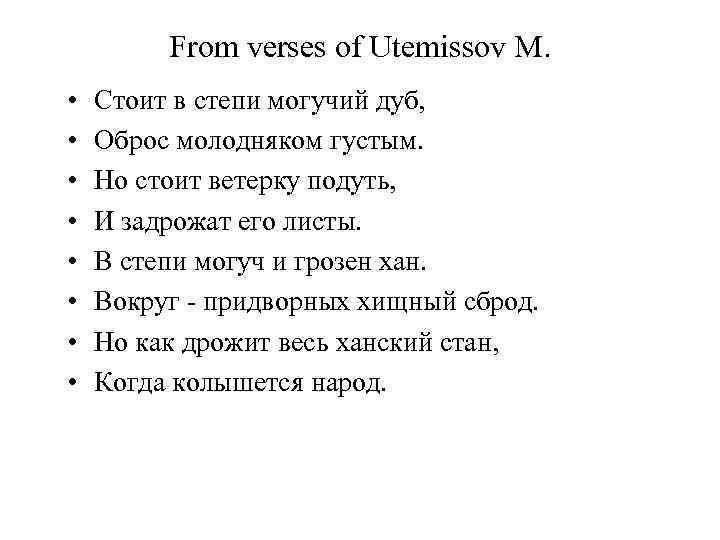 From verses of Utemissov M. • • Стоит в степи могучий дуб, Оброс молодняком густым. Но стоит ветерку подуть, И задрожат его листы. В степи могуч и грозен хан. Вокруг - придворных хищный сброд. Но как дрожит весь ханский стан, Когда колышется народ.
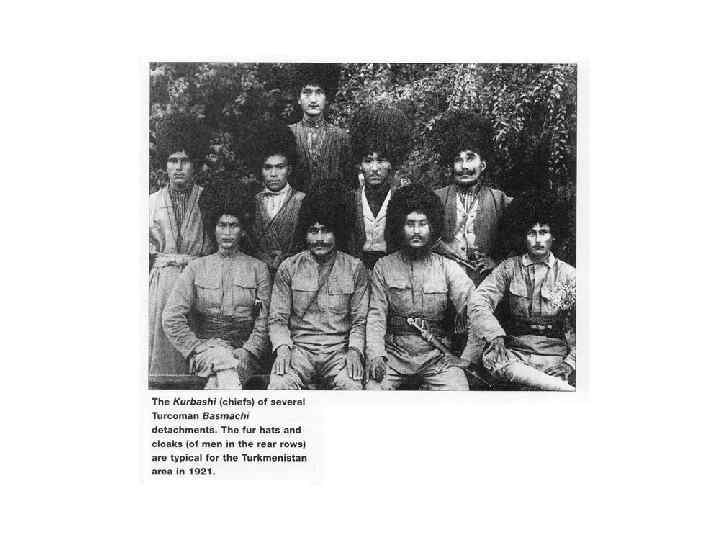
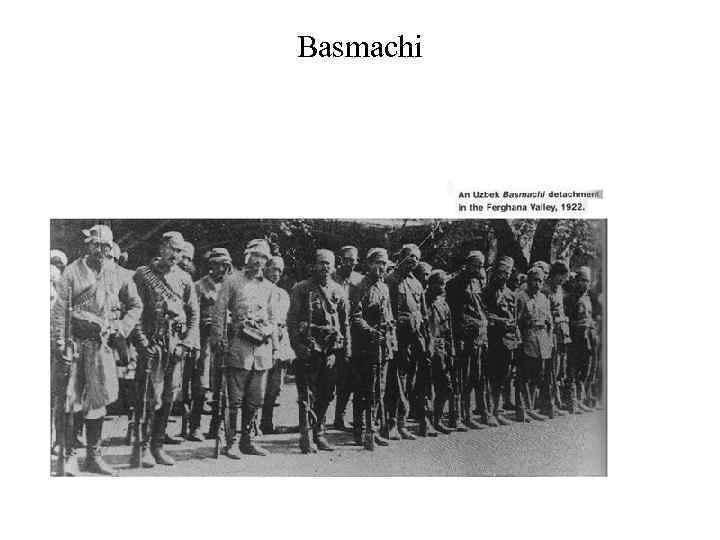 Basmachi
 Who they were and what did they fight for? • Freedom fighters, warriors of Islam, bandits, social heroes as Robin Hood, batyrs?
 From S. Seifulin poem “Mauzer” • He described the image of dedicated to revolution young Kazakh who died of the White army officers’ bullet. He left his mauzer to his son: • Вот мой маузер. Он — черен. • Был в боях он, лучший друг. • Бил без промаха и все же • Рано выпал он из рук. • Передай его ты сыну — • Пусть он маузер хранит. • Чтоб дрожали перед дулом. Враг, изменник и наймит!(Перевод В. Алтайского).
 From S. Seifulin poem “Agony of nationalist” • • Болен националист, Как осенний желтый лист, Он трясется чуть живой На перине пуховой. — Брат мой! Свет мой! Вы! О вы!— Мой аул! Увы!— О страна! Народ родной!Слышишь ли ты голос мой? • Слышит националиста • Лишь один хитрец-мулла, Но в душе его нечисто, Еле шепчет он «алла» …И, чалмой своей качая, Хочет «другу» смерти он — Заработает на чай он…Будет толк хоть с похорон. (Перевод М. Львова).
 S. Seifulin “Lenin” • • • Ленин! Ступень для лежащих в пыли. Имя его — святыня нашего времени. Ленин — величайший провидец земли, Опора всех угнетенных — в Ленине. Ленин — свобода, если ты батрак, Ленин — бой: за равенство бой священен. Ленин — знамя великих атак, Твердая политика и мудрость — Ленин. (Перевод В. Виноградова).
 Patriotism culture • Patriotism is a love and devotion to one's country. It has had different meanings over time and its meaning is highly dependent upon context, geography, and philosophy. • It is a related sentiment to nationalism, but nationalism is not necessarily an inherent part of patriotism. [
 Controversy on Ospan batyr, hero of Kazakhs in China, the last Kazakh batyr • In 1944 the USSR set up the East Turkestan republic (renamed soon in Three districts- fear of Islamic name) В led by Uigur Alikhan Tore. In September 1945, Ospan batyr was appointed the governor of Altai okrug. But he refused to be a puppet of the USSR, and dreamt of independent state for Kazakhs, therefore collaborated with Gomingdan regime since 1946. After defeat of nationalists refused to cooperate with the communists, in 1950 was captured by Maoists and executed in 1951.
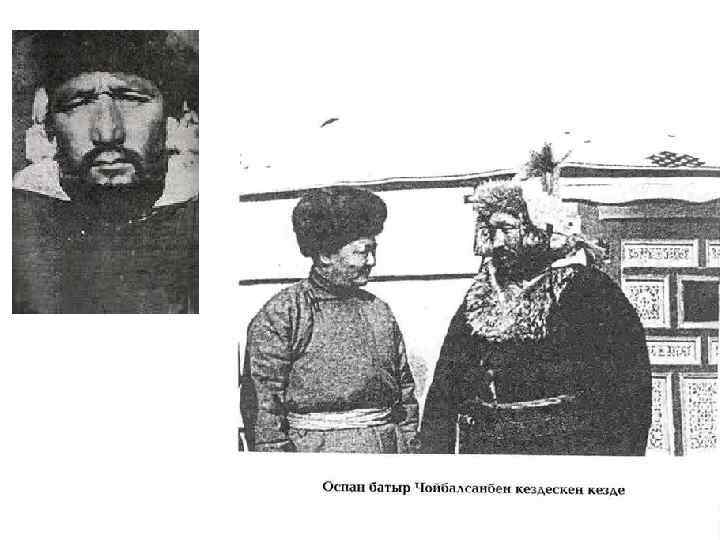
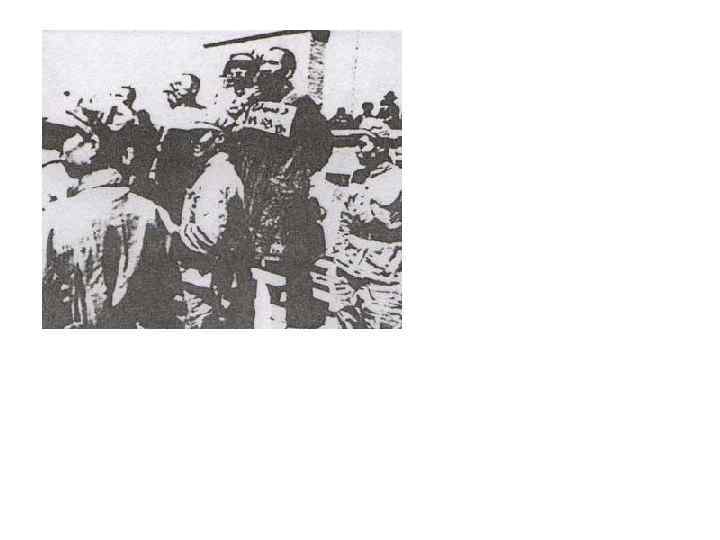
 The last words of Ospan batyr to Chinese communists • «В каком преступлении вы меня признаете – в том я и преступник. Когда я сражался со своими врагами, я не разделял их на китайцев, русских, монголов. Кто посягнет на мои чувства, религию, землю, народ – тот и будет моим врагом. От такой борьбы я никогда не откажусь. Я готов к самому тяжкому наказанию, которое вы приготовили для меня» . His 3 sons were repressed during cultural revolution in China, descendants live in Kuldja.
 Kazakh activists in China (pro-soviet forces)
 Great Patriotic war 1941 -1945 • • 1. Front lines 2. Guerrilla fighters 3. European Resistance 4. Underground resistance in the occupation zones • 5. Labor Army • 6. Fields and factories
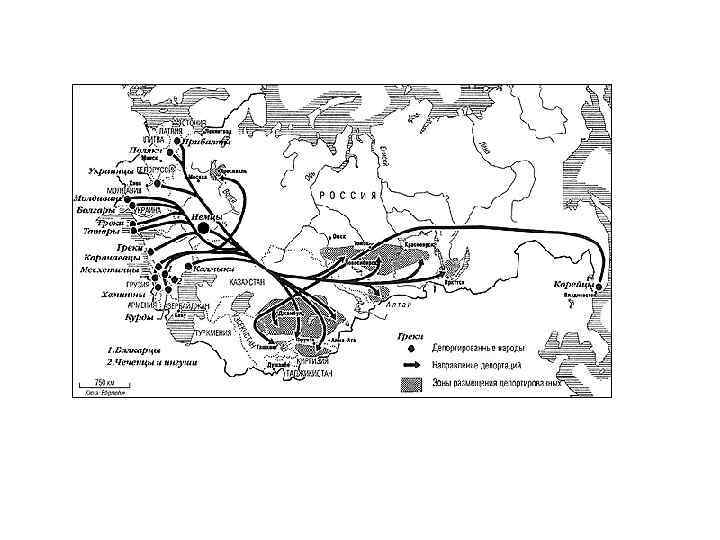
 Controversy • 1. Turkestan legion • 2. Collaborators with Nazis • 3. Defectors after WWII- those who stayed in Western Europe or moved to Turkey, and acted as agents of western anti-soviet propaganda, instrument - Radio Free Europe, and its affiliate- Azattyq • domestic war against the people during the WWII • 4. GULAG activities during the WWII on the territory of Kazakhstan- KARLAG, STEPLAG, ALZHIR • 5. Ethnic cleansings and deportations during the war- Kalmyks, Germans, Greeks, Poles, Kurds, Turks-Meskhetians, Moldovans, Chechens, Balkars, Karachais, West Ukranians
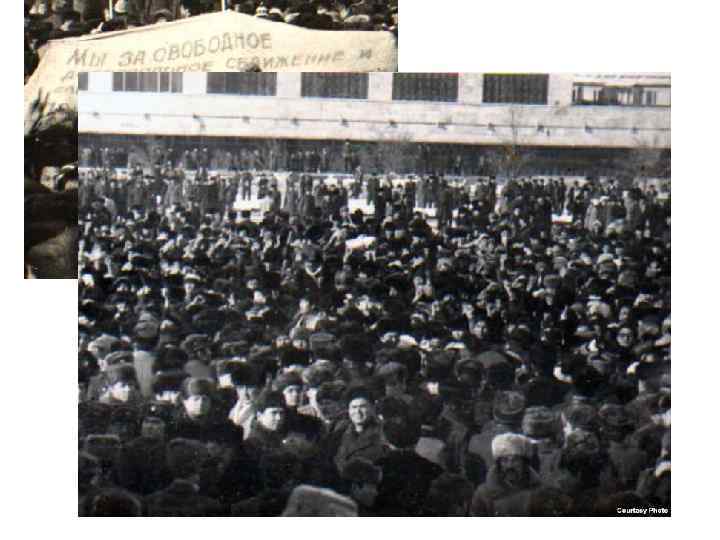
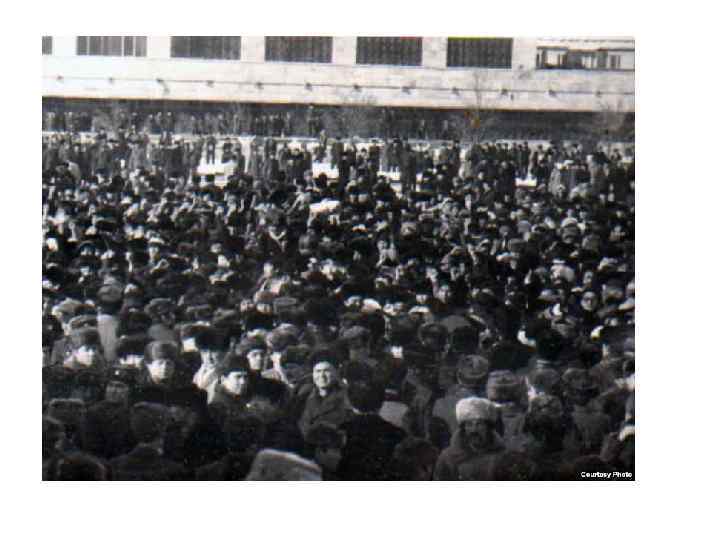
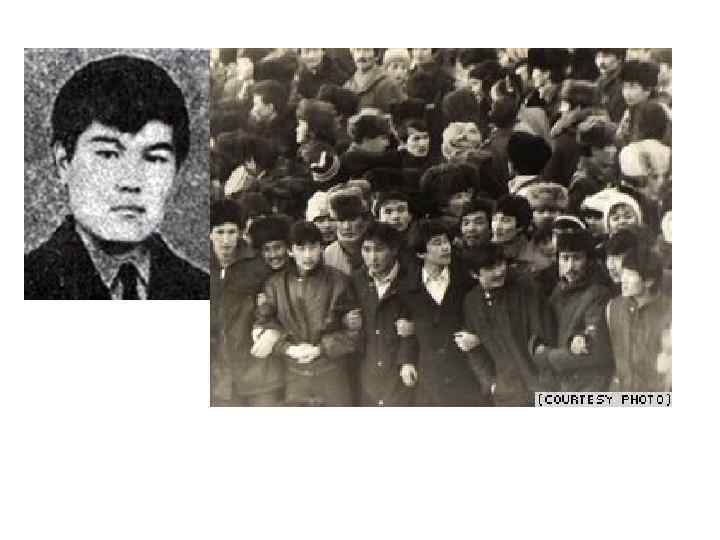
 • 6. Dissidents in Kazakh SSR (disagreed with the soviet regime) • 7. December 1986 events participants
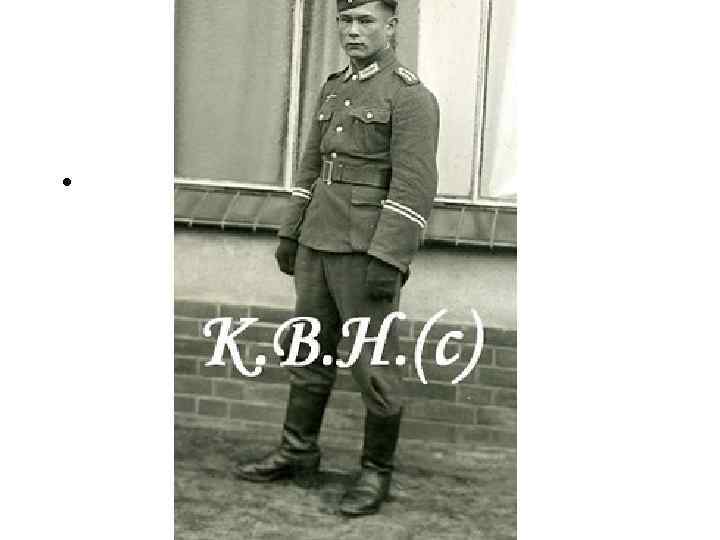
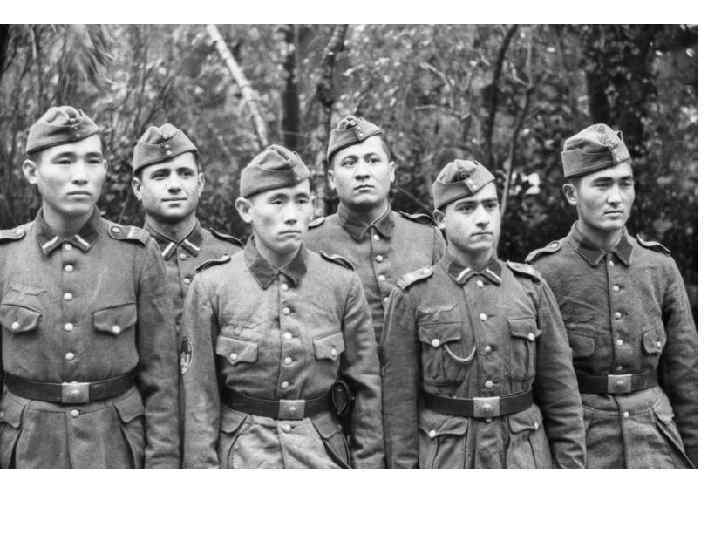
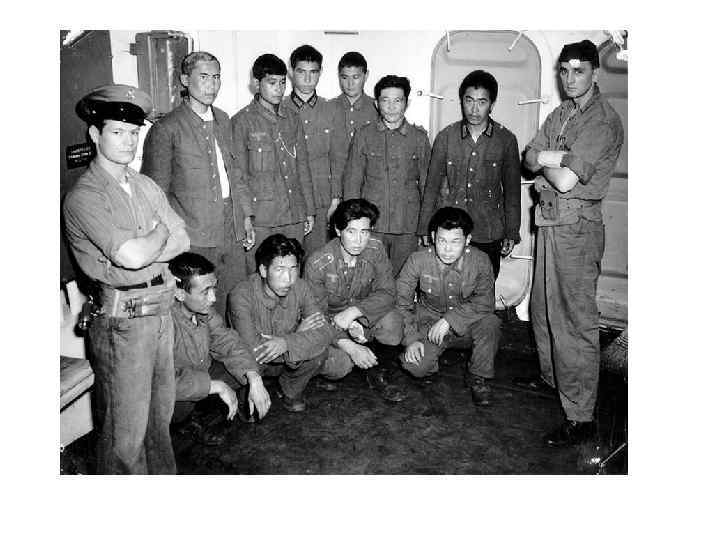
 Turkestan legion – 34 units/battalions • the name for the military units composed of the recruited from the concentration camps Turkic peoples who fought in the German Army during WWII. Many of them were deeply disillisioned with the soviet polices of 1920 s and 1930 s, and saw little difference between Nazi and Stalinist regimes, others- hoped to defect and tell about German plans when sent to the front lines.
 •
•
 • Although Turkic peoples had been perceived initially as "racially inferior", this attitude officially already changed in the Autumn 1941, when the Nazis attempted to harness the anti-Russian sentimentsi of Turkic peoples in Russia for political gain. The first "Turkistan Legion" was mobilized in May 1942, originally consisting of only one battalion but having been expanded to 16 battalions and 16, 000 soldiers by 1943. These units were mobilized exclusively on the Western front, isolating them from the Red Army, on the war fronts of France and north Italy.
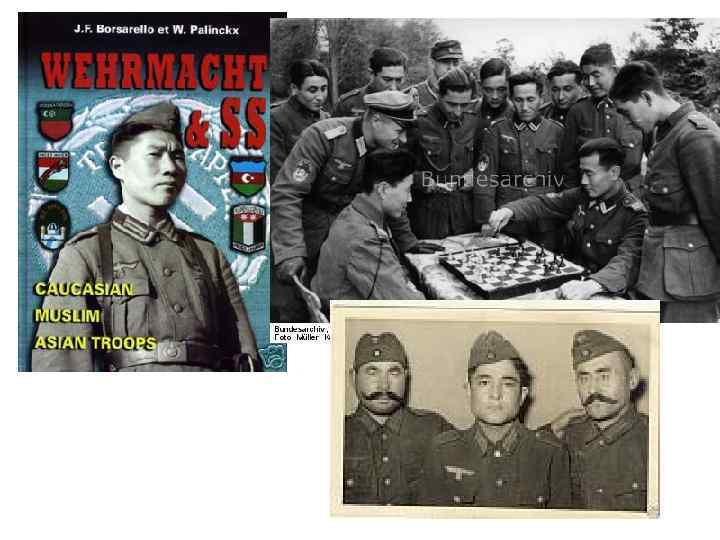
 • 16 (Turkistan) Infanterie-Division (Turkestani Volunteers) • Muselmanischen SS-Division Neu. Turkistan (Turkestani volunteers) • Turkestanische Legion (volunteers from Central Asia Uzbeks, Kazakhs, Turkomen, Dagestanis and Chechens). • Böhler-Brigade (Turkestani volunteers)
 • 1. Turkestanisches-Arbeits-Battalion (Turkestani volunteers) • 2. Turkestanisches-Arbeits-Battalion (Turkestani volunteers) • 3. Turkestanisches-Arbeits-Battalion (Turkestani volunteers) • Turkestanisches-Arbeits-Ersatz. Battalion (Turkestani volunteers) • Waffen-Gruppe Turkistan (Central Asian volunteers)
 Mixed units • Freiwilligen-Stamm-Division (Georgians, Turks, North Caucasians, Armenians, Azerbaijanis Volunteers) • Waffen-Gruppe Turkistan • Waffen-Gruppe Idel-Ural • Waffen-Gruppe Azerbaijan • Waffen-Gruppe Krim
 Propaganda outlets • Turkestaner(Central Asian nation) • Yeni Türkistan (Neues Turkestan) Turkestanische Legionäre • Svoboda (Die Freiheit) -162 nd Turkoman Division • Türk Birligi (Türkische Einheit) Osttürkischer Waffen-Verband der SS, Weekly publication, Berlin 1944 -1945
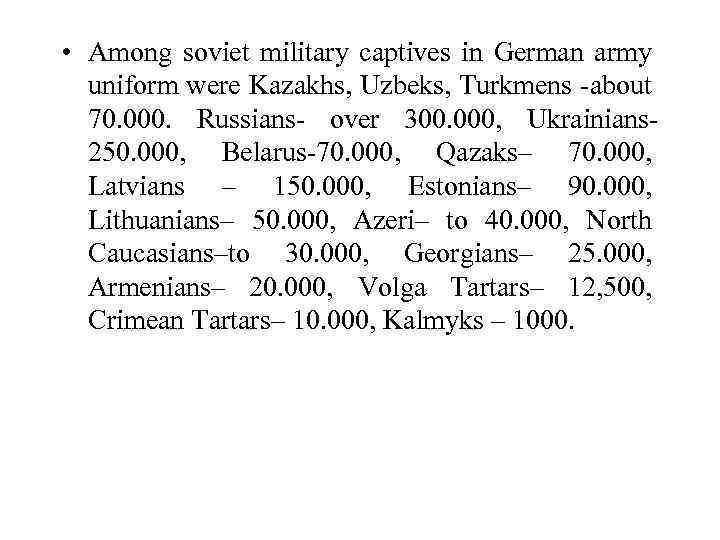 • Among soviet military captives in German army uniform were Kazakhs, Uzbeks, Turkmens -about 70. 000. Russians- over 300. 000, Ukrainians 250. 000, Belarus-70. 000, Qazaks– 70. 000, Latvians – 150. 000, Estonians– 90. 000, Lithuanians– 50. 000, Azeri– tо 40. 000, North Caucasians–tо 30. 000, Georgians– 25. 000, Armenians– 20. 000, Volga Tartars– 12, 500, Crimean Tartars– 10. 000, Kalmyks – 1000.
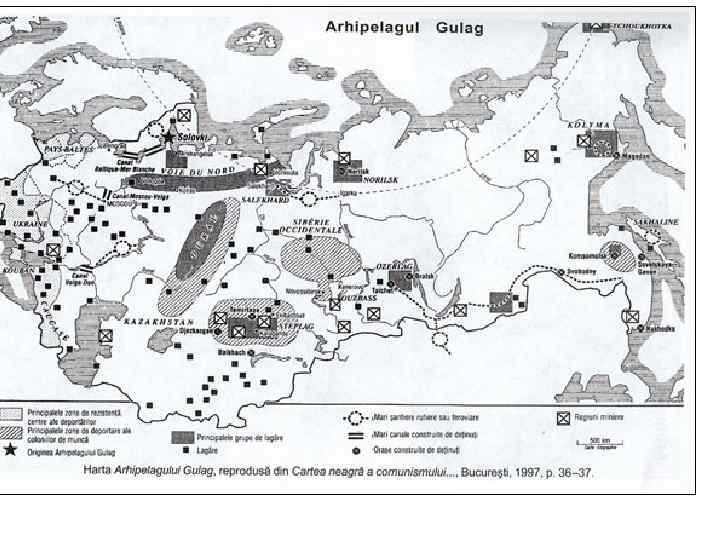
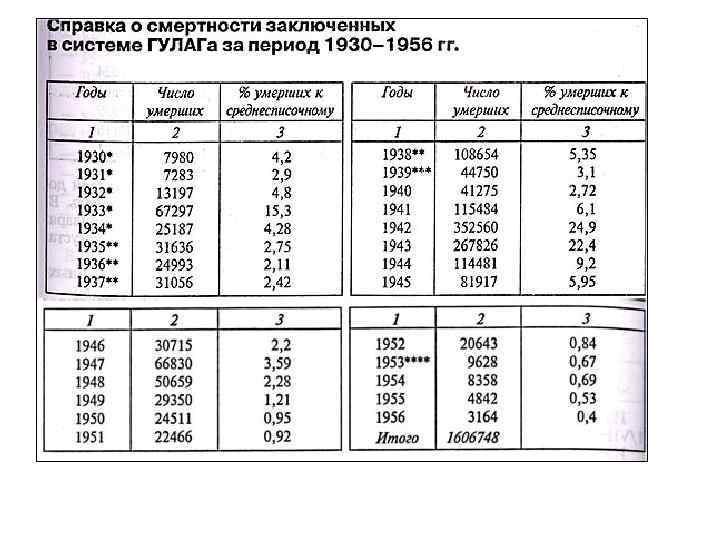
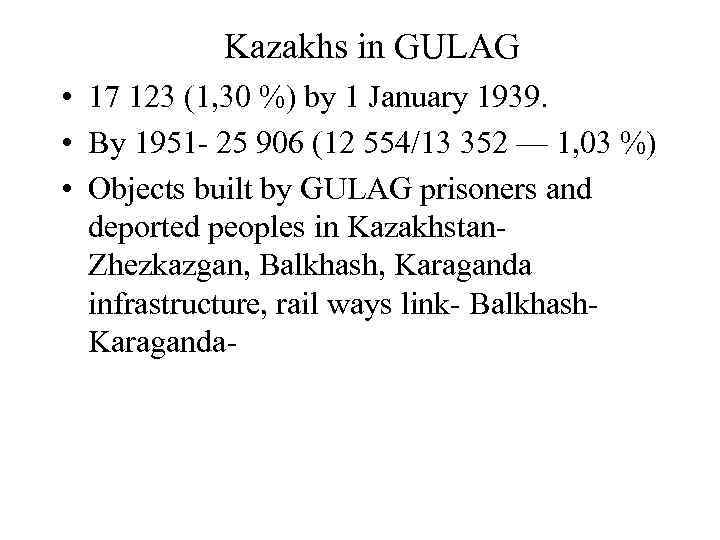 Kazakhs in GULAG • 17 123 (1, 30 %) by 1 January 1939. • By 1951 - 25 906 (12 554/13 352 — 1, 03 %) • Objects built by GULAG prisoners and deported peoples in Kazakhstan- Zhezkazgan, Balkhash, Karaganda infrastructure, rail ways link- Balkhash. Karaganda-
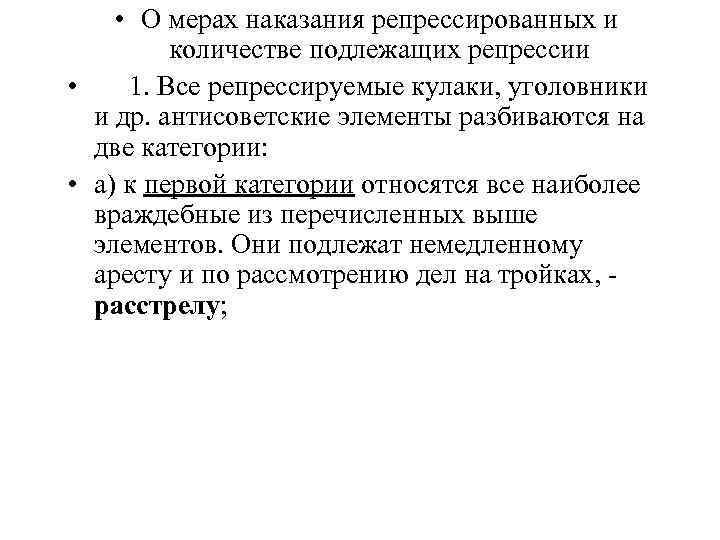 • О мерах наказания репрессированных и количестве подлежащих репрессии • 1. Все репрессируемые кулаки, уголовники и др. антисоветские элементы разбиваются на две категории: • а) к первой категории относятся все наиболее враждебные из перечисленных выше элементов. Они подлежат немедленному аресту и по рассмотрению дел на тройках, - расстрелу;
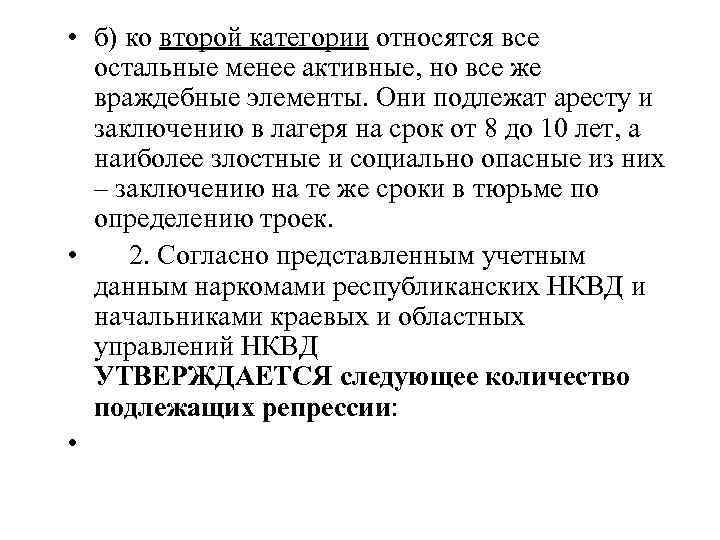 • б) ко второй категории относятся все остальные менее активные, но все же враждебные элементы. Они подлежат аресту и заключению в лагеря на срок от 8 до 10 лет, а наиболее злостные и социально опасные из них – заключению на те же сроки в тюрьме по определению троек. • 2. Согласно представленным учетным данным наркомами республиканских НКВД и начальниками краевых и областных управлений НКВД УТВЕРЖДАЕТСЯ следующее количество подлежащих репрессии: •
 • Каждый пишет, что он слышит, Каждый слышит, как он дышит, Как он дышит, так и пишет, Не стараясь угодить. Так природа захотела, Почему, не наше дело, Для чего, не нам судить. Окуджава Булат. Исторический роман.
 • 22 декабря. 2004 "Морально-психологический климат, сложившийся в Вооруженных силах РК, опасен для общества", - заявил депутат мажилиса Амангельды Айталы. • Поводом для столь резкой оценки стали участившиеся случаи суицида среди военнослужащих казахстанской армии, на сбор сведений о которых депутат потратил не один месяц. Военные неохотно делятся информацией о гибели солдат. И эти данные чаще всего остаются тайной за семью печатями. Однако Айталы с помощью работников военной прокуратуры удалось выяснить, что за два последних года в Вооруженных силах РК умерли 224 военнослужащих срочной службы, из них 53 совершили самоубийства.
 • Небоевые потери во внутренних войсках МВД составили 62 человека, из которых 25 покончили с собой. По мнению Амангельды Айталы, суицид и насилие в армии становятся, к сожалению, обыденным явлением. http: //www. materik. ru/index. php? section=a nalitics&bulid=99&bulsectionid=9163
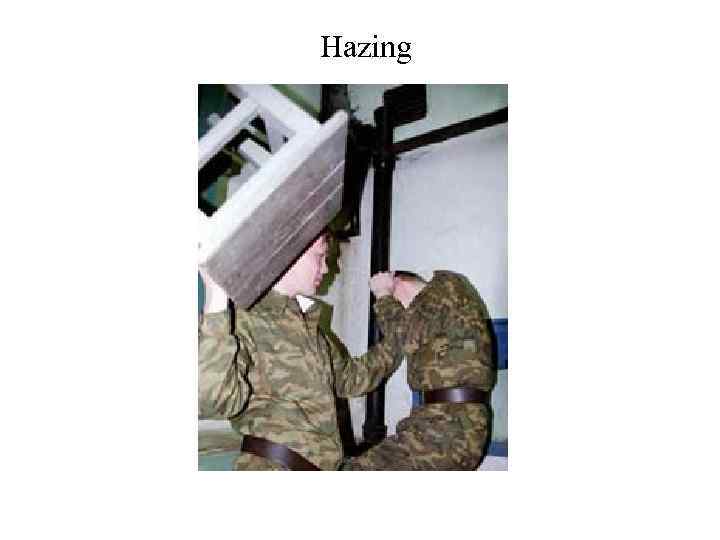 Hazing
 • Military science is the process of translating national defence policy to produce military capability by employing military scientists, including: theorists, researchers, experimental scientists, applied scientists, designers, engineers, test technicians, and military personnel responsible for prototyping. In so doing, military science seeks to interpret policy into what military skills are required, which, by employing military concepts and military methods, can use military technologies, military weapon systems, and other military equipment to produce required military capability.
 Securitization • Security concerns dominate in decisionsmaking in domestic and foreign policy. Aspects: • 1) closed/tabooed topics – tribalism, ethnic and racial problems, president and his family, military issues and defense budget. • 2) special status to some settlements- closed cities
 • Следующие населённые пункты закрыты для посещения иностранными гражданами: город Байконур/Байконыр (Ленинск) — комплекс «Байконур» (включающий одноимённый космодром и город) • Кармакшинский и Казалинский районы Кызылординской области • город Приозёрск Карагандинской области — бывший « 10 государственный научноисследовательский полигон систем ПРО» с системой СПРН и НИП-3 Военно-космических сил, позже переименованный в ОКИК-44 • посёлок Гульшат и город Балхаш-9 Карагандинской области — система предупреждения о ракетном нападении — РЛС Днепр (на боевом дежурстве)
 • поселок городского типа Гвардейский (Жамбылская область) — бывший Научноисследовательский сельскохозяйственный институт, занимавшийся разработкой биологического оружия • посёлок Рославль (Рославльский) (теперь Матибулак), расположенный на границе Алматинской и Жамбылской областей • Бокейординский и Жангалинский районы Западно-Казахстанской области • железнодорожный разъезд Кульжабасы (в 10 км от станции Отар)
 Former closed objects • Алма-Ата — производство биологического оружия (резервный биокомбинат по производству сибирской язвы и других биологических агентов)[11] • Степногорск / Целиноград-25, Макинск-2 (Акмолинская область Казахстана) — завод «Биомедпрепарат» (производство биологического оружия) • Курчатов (Восточно-Казахстанская область) / Семипалатинск-21, Москва-400, Берег (Восточно-Казахстанская область Казахстан) — административный и научный центр Семипалатинского полигона по испытанию ядерного оружия
 • Чаган (посёлок) / Семипалатинск-4 (Восточно. Казахстанская область Казахстан) — бывшая авиабаза стратегической авиации СССР • Эмба-5— бывший полигон зенитно-ракетных войск и войск ПВО в Актюбинской области Аральск-5 ( «Урал» ) • Аральск-6 ( «Чайка» и «Берёзка» Чайка — в/ч 41167 Отдельная опытно-испытательная база РВСН.
 Legacy of heroism • 1. History • 2. Geographical names- cities, towns, villages, streets • 3. Legends and myths • 4. Personal names- the original meaning of the name lost its significance and is associated with some historical figure (hero or talented person) Er, batyr, temir, tas, bolat, balta, Soldatbek, asker, - are composite part of male name, and names of heroes; Arystan, Barys, Jolbarys, Jigit, Yeskendir, Qairat, Qaisar, • Female names - Gaukhar, Aliya, Manshuk • 5. Lexicon- be brave and strong and patriot of your people and land as Baurzhan or Raibek
 • 6. Celebration of May 9 th- V-Day • 7. May 7 th- Day of the motherland defender
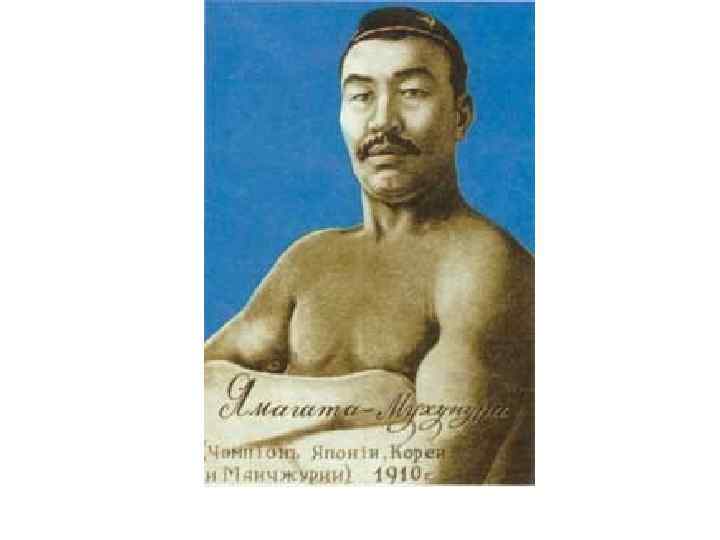
 Positive aspects • 1. Model of strong man- Qazhumukhan Кажымукан был на редкость крепкого, богатырского телосложения: рост 195 см, вес 139 кг (в 1946 году он весил 174 кг), окружность бедер 71 см, бицепсы 47 см, окружность шеи 56 см, размер обуви 54 (приведены данные профессора З. Коныратбаева), or Baluan Sholak (Nurmagambet Baimyrza ulu, 1864 -1919) • 2. Sports and physical culture development under state control • 3. Military service
 Sports culture • In 1920 s in some regions of Kazakhstan were formed groups on national sports games. In 1938 was held in Alma-Ata I republican kolkhoz spartakiad. An obligatory type- kazakhsha-qures (Kazakh wrestling). In 1939— 1941 the program included tayak-jugurty, togyz qumalaq. In 19044 -1947 were included all traditional Kazakh sports games.
 Traditional sports games presently • Alaman baiga- long distance racing; atomraulastury – fighting with an opponent in a ring on horse; baiga- horse racing; burkut-salu- hunting with a falcon; jorga-jarys – racing on specially trained horses; jauay-jarys- fighting on foot; jamby - aty- shooting from an arrow or a rifle; kazakshakures- belly wrestling in Kazakh manner; kokpar- horse racing type; kumis-alu- horse racing type; qyz-kuu- racing on horse and catching a girl; qyzjarys- racing contest between girls; saiys – wrestling on horse; togyz-qumalaq- table game with bones; tayaq-jugurty- throwing a stick on a snow to a distance; tuie-jarys- racing on camel.
 Russian and international sports games development • Since 1930 s
 Military training in Kazakhstan • • 1. Sports classes in secondary school 2. Sports education 3. Military service 4. Military education
 Military institute of foreign languages • Since 2005. Under the Ministry of defense. Training of officers as interpreters and specialists in regional studies with specialization in military information-analytical with knowledge of 2 and more languages. Since 2006 it operates as a training center for Partnership for Peace program (NATO)
 International cooperation • NATO under Pf. P program, trainings in the USA and western countries.
 • • Negative aspects of military culture 1. Banditism- from organized groupings to irregular activities of small groups and individuals 2. Racketeering 3. Criminal gangs 4. School crimes
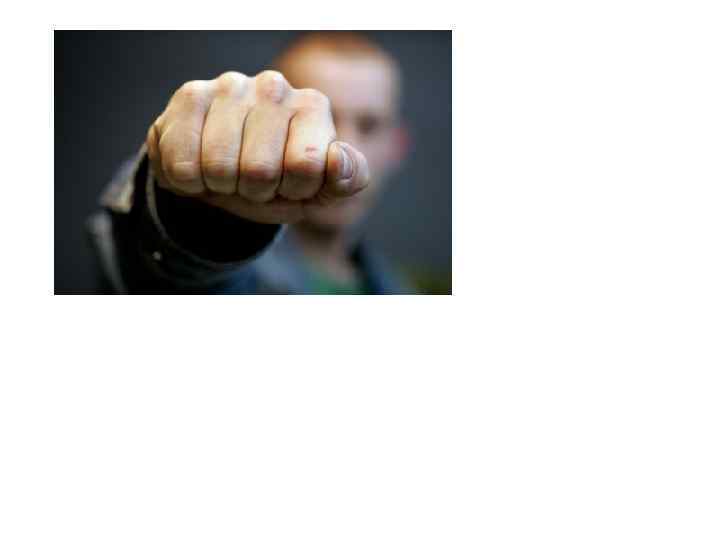
 Racket in Kz • Typology: social territorial– 1) asphalt (urban) and 2) rural (aul) that differ in object and causes of origin and activities; 3) regional (illegal migration, human and sex trafficking, drugs smuggling, customs control; 4) international (drugs, prostitution) • 1 groups are recruited out of deprived urban groupings and specialize in drugs, racketeering of money and clothes from school children, students, small businessmen, prostitutes and women trading in minor market places. Young men (under 30) make up about 60%, and cover 55 % of all crimes.
 • Scope of activities (regional): whole sale markets (barakholkas), food markets (optovkas). Social basis – young men with physical training, acting or ex-athletes (boxers, wresters, martial arts fighters), with military experience. Nature of activities- organized groups with strong control, conspiracy, hierarchy, discipline.
 Aul groupings • Small (3 -7 people, from 14 to 20), from the same place and sometimes relatives, jobless, activities- frauds and petty crimes, gambling, patronage of prostitutes. Scope of regional activities- microdistricts, highways sections, suburbs. Very brutal and violent.
 Established criminal groupings • The "thieves-in-law" (known as Vory v Zakone in Russian), formed as a society for mutual • support within the prison camps of Stalin, and adopted a system of collective responsibility, and • swearing a code of "complete submission to the laws of criminal life, including obligations to • support the criminal ideal, and rejection of labor and political activities. " This group existed • throughout the Soviet era and continues today throughout the republics of the former Soviet • Union. In this society the thieves-in-law live and obey the "Vorovskoy Zakon", the thieves' • code. The members are bound by 18 codes and if they are broken, the transgression is
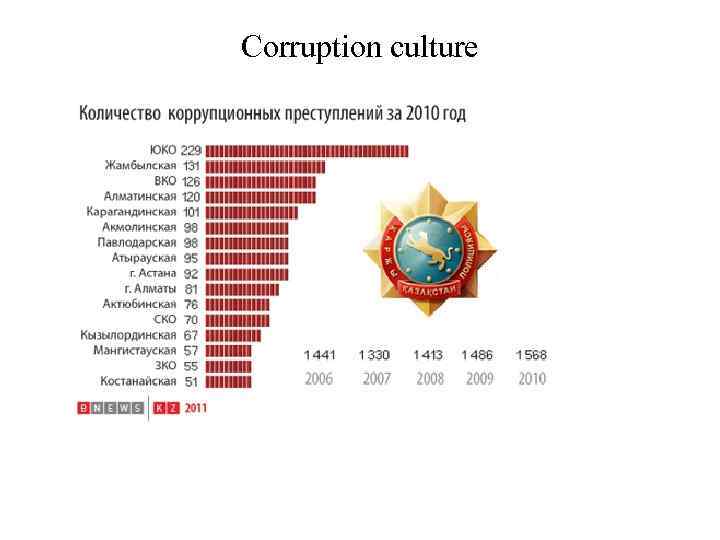 Corruption culture
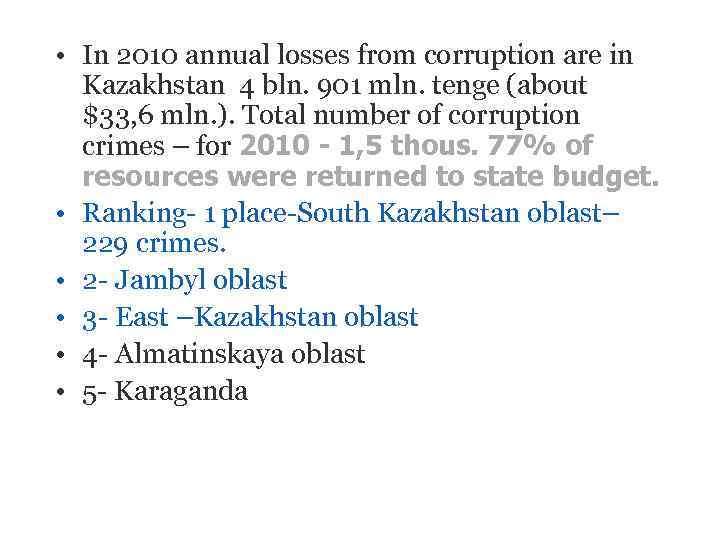 • In 2010 annual losses from corruption are in Kazakhstan 4 bln. 901 mln. tenge (about $33, 6 mln. ). Total number of corruption crimes – for 2010 - 1, 5 thous. 77% of resources were returned to state budget. • Ranking- 1 place-South Kazakhstan oblast– 229 crimes. • 2 - Jambyl oblast • 3 - East –Kazakhstan oblast • 4 - Almatinskaya oblast • 5 - Karaganda