


 Скачать презентацию Culture and Personality Processes Conceptual and Methodological Issues
97081f36eeb9450e741b0de62966d616.ppt
- Количество слайдов: 43
 Culture and Personality Processes: Conceptual and Methodological Issues Veronica Benet-Martinez University of California at Riverside, USA Universitat Rovira i Virgili March 23 -25, 2010
 March 23: Culture and Personality: What and How to Research it March 24: Culture and Personality Taxonomies March 25: The Dynamic Interplay of Cultural Identity, Language, and Personality
 Academic Bio: • • August 1989 -1990 -1995 -1997 1998 -2003 -now Fall 2010 Graduated in psych from UAB Move to USA: Au-pair for family in Davis (California) Ph. D. in Social-Personality Psychology at UC Davis Postdoctoral researcher at UC Berkeley (IPSR) Assistant Professor at Univ. of Michigan (Ann Arbor) Associate Professor at UC Riverside ICREA professor at Pompeu Fabra Univ.
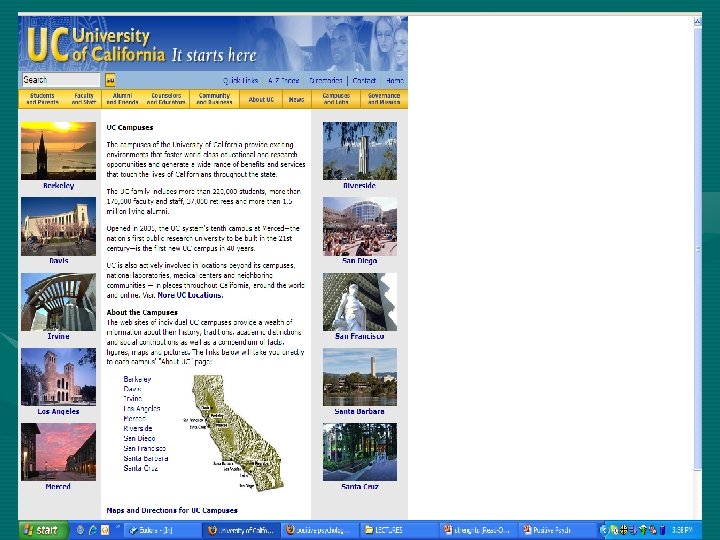
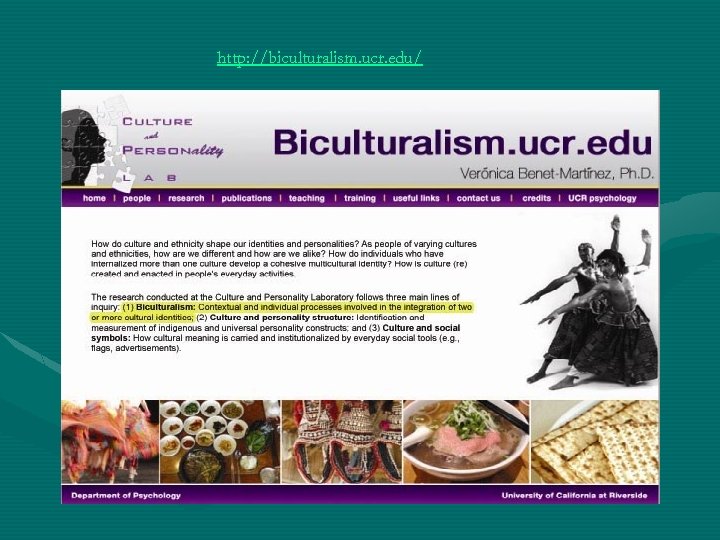 http: //biculturalism. ucr. edu/
 DAY 1 Culture and Personality: What it is and How to Research it *Required Readings: Ozer, D. , & Benet-Martínez, V. (2006). Personality and the prediction of consequential outcomes. Annual Review of Psychology, 57, 401 -421. Benet-Martínez, V. (2007). Cross-cultural personality research: Conceptual and methodological issues. In R. W. Robins, R. C. Fraley, & R. Krueger (Eds. ), Handbook of research methods in personality psychology. New York, NY: Guildford Press.
 Culture and Personality: What and How 1. PERSONALITY –Definitional issues Personality is consequential (Ozer & Benet-Martinez, 2006) 2. CULTURE --Definitional issues: Culture, race, ethnicity; Cultural & Crosscultural psychology; Cultural syndromes 3. CULTURE PERSONALITY CULTURE Inseparability of culture & psyche 4. Benefits of cultural social/personality studies
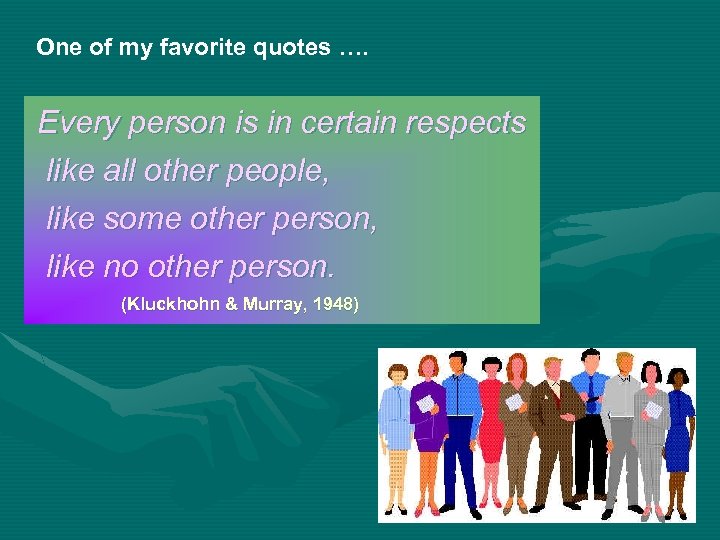 One of my favorite quotes …. Every person is in certain respects like all other people, like some other person, like no other person. (Kluckhohn & Murray, 1948)
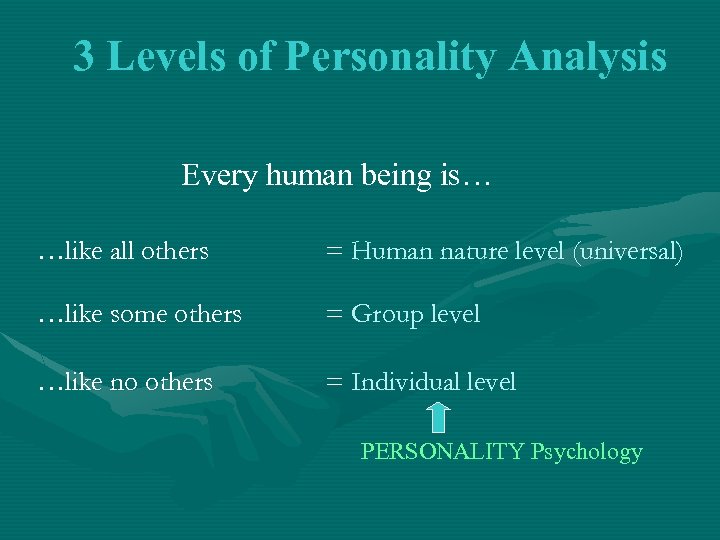 3 Levels of Personality Analysis Every human being is… …like all others = Human nature level (universal) …like some others = Group level …like no others = Individual level PERSONALITY Psychology
 DO YOU FIND THESE QUESTIONS INTERESTING? • Why we are all different from each other? • Where do these differences come from? • How can we best measure and organize these differences? • What do people really want/desire/need? • How would I be different if I had grown up in a different culture? With a different gender/race/social class?
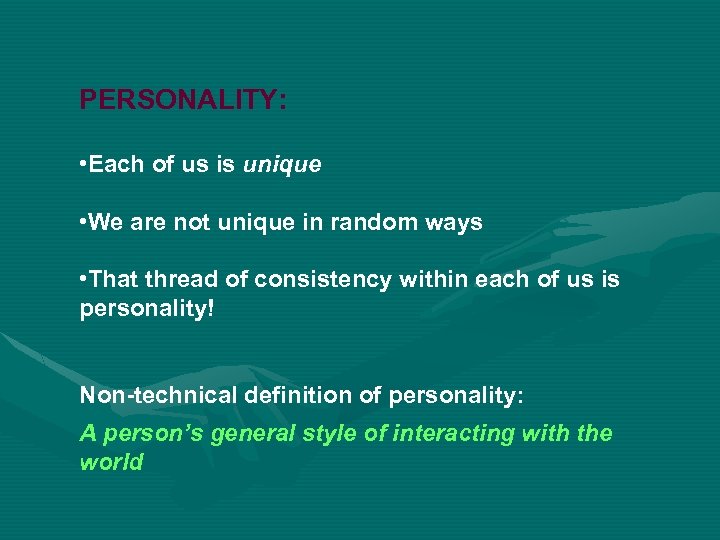 PERSONALITY: • Each of us is unique • We are not unique in random ways • That thread of consistency within each of us is personality! Non-technical definition of personality: A person’s general style of interacting with the world
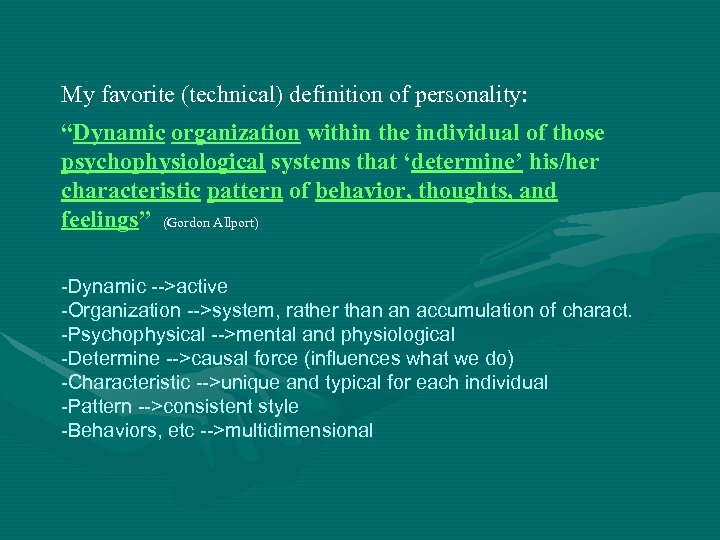 My favorite (technical) definition of personality: “Dynamic organization within the individual of those psychophysiological systems that ‘determine’ his/her characteristic pattern of behavior, thoughts, and feelings” (Gordon Allport) -Dynamic -->active -Organization -->system, rather than an accumulation of charact. -Psychophysical -->mental and physiological -Determine -->causal force (influences what we do) -Characteristic -->unique and typical for each individual -Pattern -->consistent style -Behaviors, etc -->multidimensional
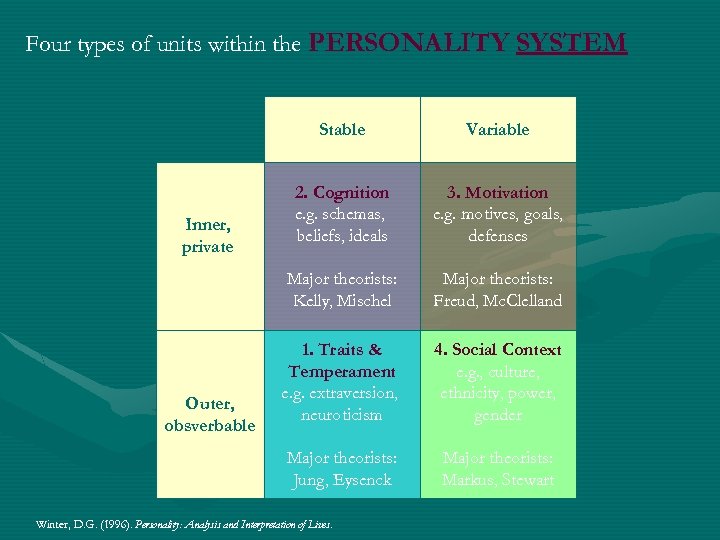 Four types of units within the PERSONALITY SYSTEM Stable 3. Motivation e. g. motives, goals, defenses Major theorists: Freud, Mc. Clelland 1. Traits & Temperament e. g. extraversion, neuroticism 4. Social Context e. g. , culture, ethnicity, power, gender Major theorists: Jung, Eysenck Outer, obsverbable 2. Cognition e. g. schemas, beliefs, ideals Major theorists: Kelly, Mischel Inner, private Variable Major theorists: Markus, Stewart Winter, D. G. (1996). Personality: Analysis and Interpretation of Lives.
![Personality: Units & Approaches Ø Psychoanalytic, Humanistic = MOTIVES [unconscious, conflict, neuroses] Ø Cognitive](https://present5.com/presentation/97081f36eeb9450e741b0de62966d616/image-14.jpg "Personality: Units & Approaches Ø Psychoanalytic, Humanistic = MOTIVES [unconscious, conflict, neuroses] Ø Cognitive") Personality: Units & Approaches Ø Psychoanalytic, Humanistic = MOTIVES [unconscious, conflict, neuroses] Ø Cognitive = COGNITIONS [conscious, beliefs, schemas] Ø Lexical, Biological, Evolutionary = TRAITS [differences, description, classification] [biology, evolution, genes] Ø Learning, Cultural = CONTEXT [environmental rewards and punishment, experience]
Personality: Units & Approaches Ø Psychoanalytic, Humanistic = MOTIVES [unconscious, conflict, neuroses] Ø Cognitive = COGNITIONS [conscious, beliefs, schemas] Ø Lexical, Biological, Evolutionary = TRAITS [differences, description, classification] [biology, evolution, genes] Ø Learning, Cultural = CONTEXT [environmental rewards and punishment, experience]
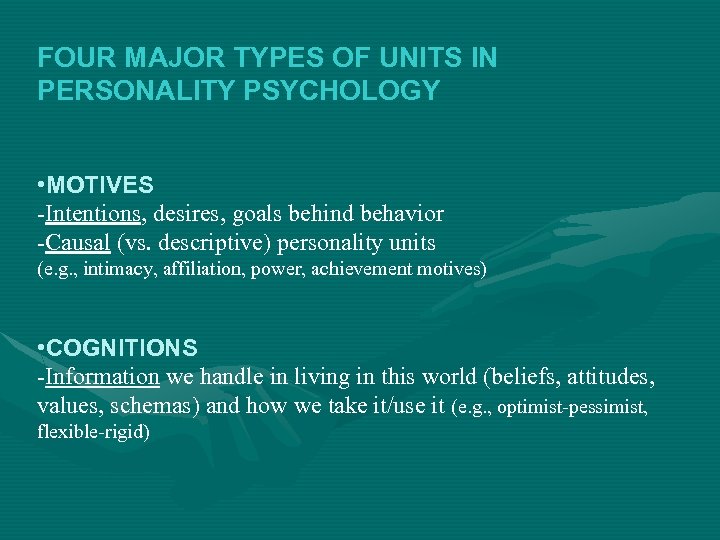 FOUR MAJOR TYPES OF UNITS IN PERSONALITY PSYCHOLOGY • MOTIVES -Intentions, desires, goals behind behavior -Causal (vs. descriptive) personality units (e. g. , intimacy, affiliation, power, achievement motives) • COGNITIONS -Information we handle in living in this world (beliefs, attitudes, values, schemas) and how we take it/use it (e. g. , optimist-pessimist, flexible-rigid)
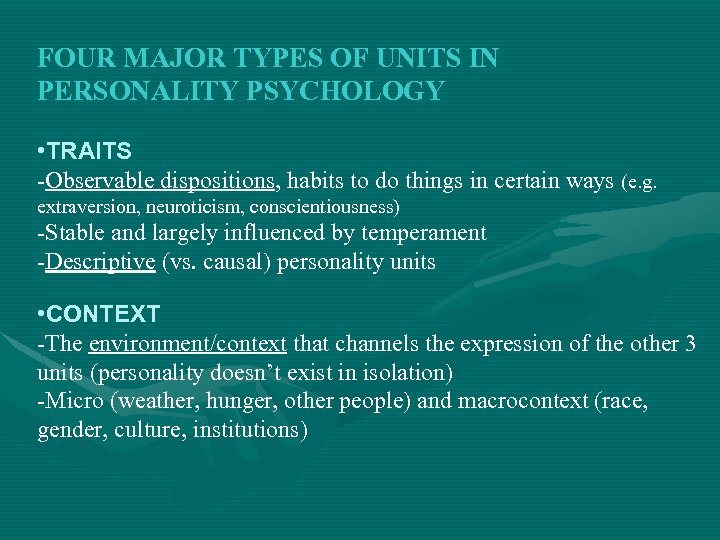 FOUR MAJOR TYPES OF UNITS IN PERSONALITY PSYCHOLOGY • TRAITS -Observable dispositions, habits to do things in certain ways (e. g. extraversion, neuroticism, conscientiousness) -Stable and largely influenced by temperament -Descriptive (vs. causal) personality units • CONTEXT -The environment/context that channels the expression of the other 3 units (personality doesn’t exist in isolation) -Micro (weather, hunger, other people) and macrocontext (race, gender, culture, institutions)
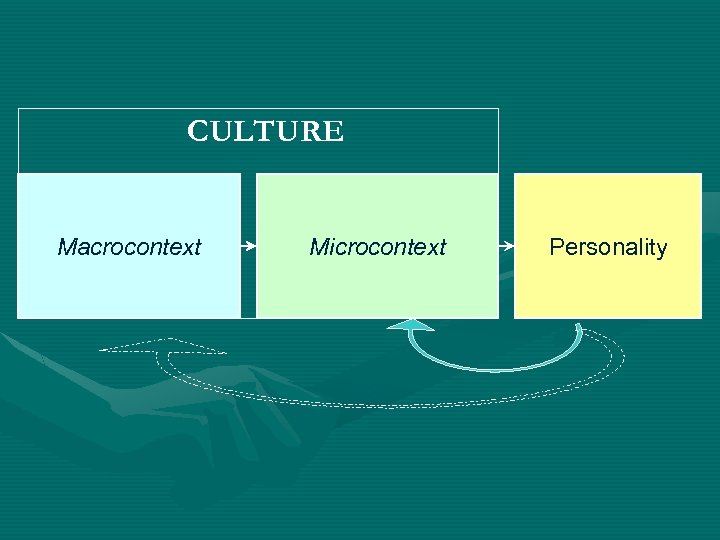
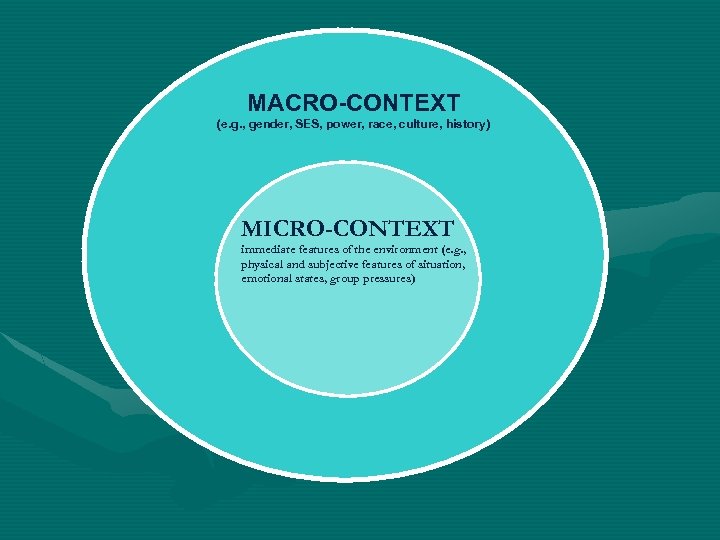 MACRO-CONTEXT (e. g. , gender, SES, power, race, culture, history) MICRO-CONTEXT immediate features of the environment (e. g. , MICRO-CONTEXT physical and subjective features of situation, emotional states, group pressures)
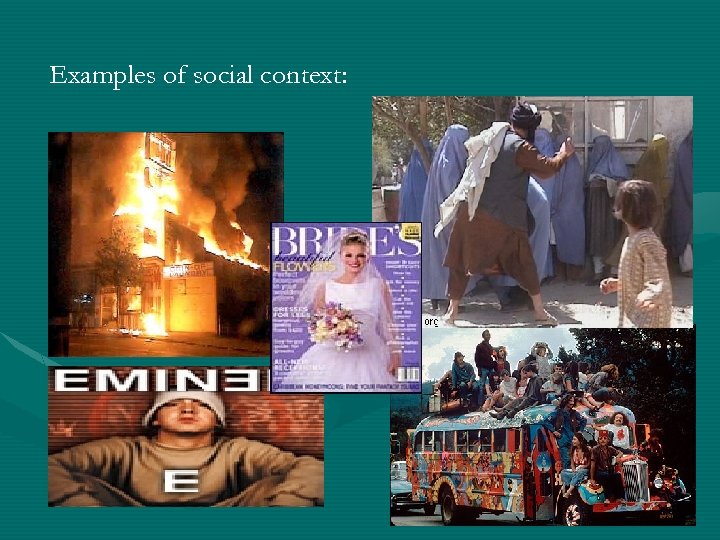 Examples of social context:
 How do these four elements work? • They all interact in predicting behavior • Researchers tend to focus on one or two at the time (focus of convenience). Personality as a homeostatic system: >traits (default, baseline) >cognitions (information to operate the ‘machine’) >motives (directionality, tasks) >context (outside pressures) …. . when the machine breaks down or losses homeostasis we have a problem! (feelings of depression, anxiety, adjustment problems)
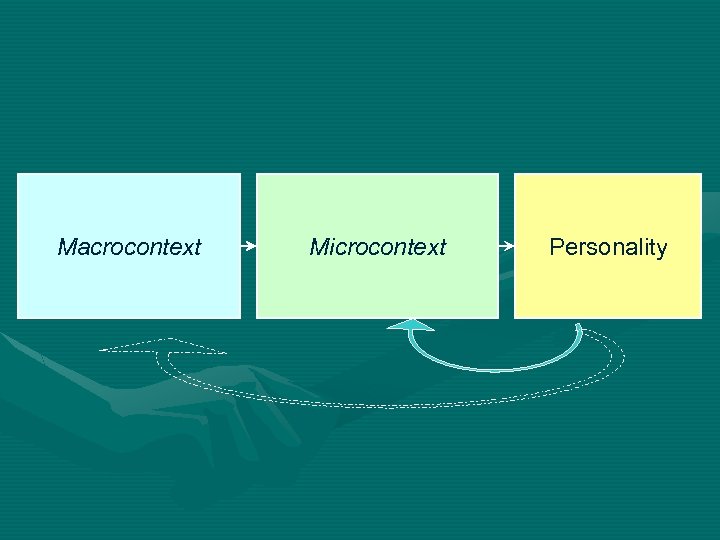 Macrocontext Microcontext Personality
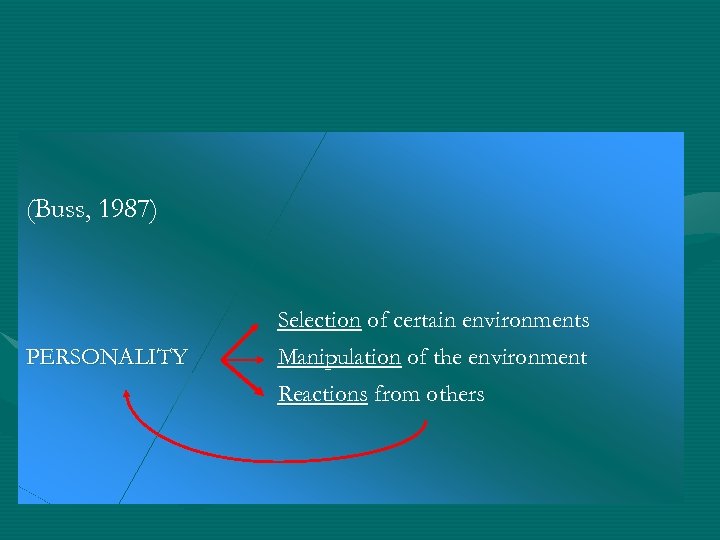 (Buss, 1987) Selection of certain environments PERSONALITY Manipulation of the environment Reactions from others
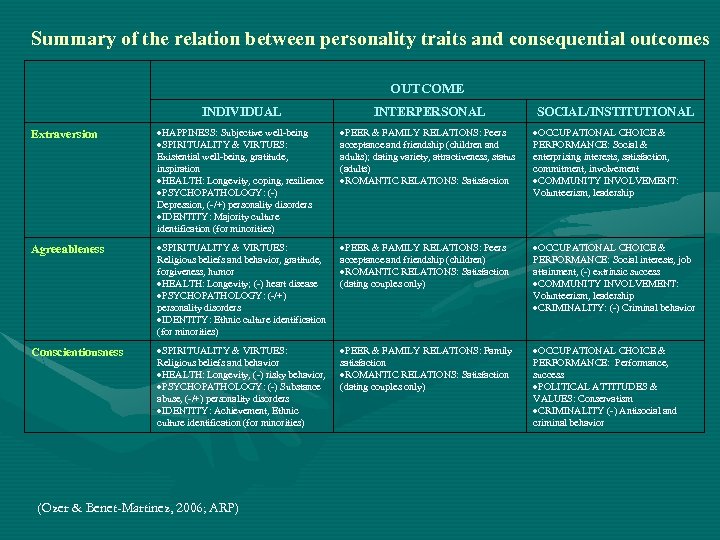 Summary of the relation between personality traits and consequential outcomes OUTCOME INDIVIDUAL INTERPERSONAL Extraversion HAPPINESS: Subjective well-being SPIRITUALITY & VIRTUES: Existential well-being, gratitude, inspiration HEALTH: Longevity, coping, resilience PSYCHOPATHOLOGY: (-) Depression, (-/+) personality disorders IDENTITY: Majority culture identification (for minorities) PEER & FAMILY RELATIONS: Peers acceptance and friendship (children and adults); dating variety, attractiveness, status (adults) ROMANTIC RELATIONS: Satisfaction OCCUPATIONAL CHOICE & PERFORMANCE: Social & enterprising interests, satisfaction, commitment, involvement COMMUNITY INVOLVEMENT: Volunteerism, leadership Agreeableness SPIRITUALITY & VIRTUES: Religious beliefs and behavior, gratitude, forgiveness, humor HEALTH: Longevity; (-) heart disease PSYCHOPATHOLOGY: (-/+) personality disorders IDENTITY: Ethnic culture identification (for minorities) PEER & FAMILY RELATIONS: Peers acceptance and friendship (children) ROMANTIC RELATIONS: Satisfaction (dating couples only) OCCUPATIONAL CHOICE & PERFORMANCE: Social interests, job attainment, (-) extrinsic success COMMUNITY INVOLVEMENT: Volunteerism, leadership CRIMINALITY: (-) Criminal behavior Conscientiousness SPIRITUALITY & VIRTUES: Religious beliefs and behavior HEALTH: Longevity, (-) risky behavior, PSYCHOPATHOLOGY: (-) Substance abuse, (-/+) personality disorders IDENTITY: Achievement, Ethnic culture identification (for minorities) PEER & FAMILY RELATIONS: Family satisfaction ROMANTIC RELATIONS: Satisfaction (dating couples only) OCCUPATIONAL CHOICE & PERFORMANCE: Performance, success POLITICAL ATTITUDES & VALUES: Conservatism CRIMINALITY (-) Antisocial and criminal behavior (Ozer & Benet-Martinez, 2006; ARP) SOCIAL/INSTITUTIONAL
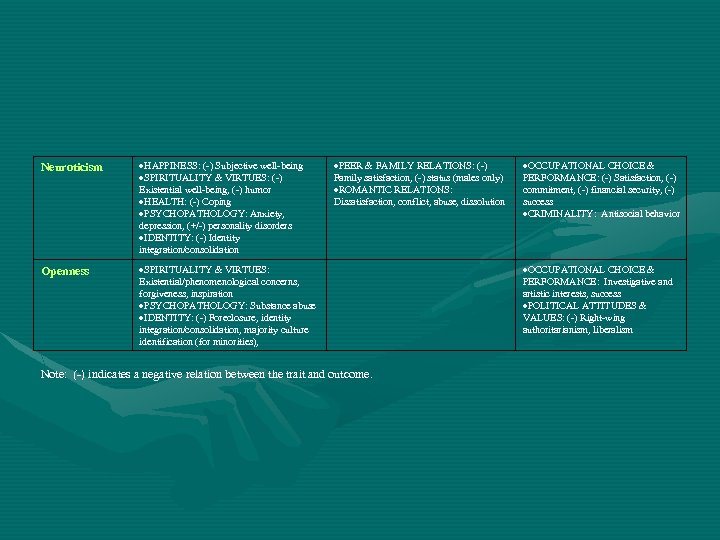 Neuroticism HAPPINESS: (-) Subjective well-being SPIRITUALITY & VIRTUES: (-) Existential well-being, (-) humor HEALTH: (-) Coping PSYCHOPATHOLOGY: Anxiety, depression, (+/-) personality disorders IDENTITY: (-) Identity integration/consolidation Openness PEER & FAMILY RELATIONS: (-) Family satisfaction, (-) status (males only) ROMANTIC RELATIONS: Dissatisfaction, conflict, abuse, dissolution SPIRITUALITY & VIRTUES: Existential/phenomenological concerns, forgiveness, inspiration PSYCHOPATHOLOGY: Substance abuse IDENTITY: (-) Foreclosure, identity integration/consolidation, majority culture identification (for minorities), Note: (-) indicates a negative relation between the trait and outcome. OCCUPATIONAL CHOICE & PERFORMANCE: (-) Satisfaction, (-) commitment, (-) financial security, (-) success CRIMINALITY: Antisocial behavior OCCUPATIONAL CHOICE & PERFORMANCE: Investigative and artistic interests, success POLITICAL ATTITUDES & VALUES: (-) Right-wing authoritarianism, liberalism
 CULTURE Macrocontext Microcontext Personality
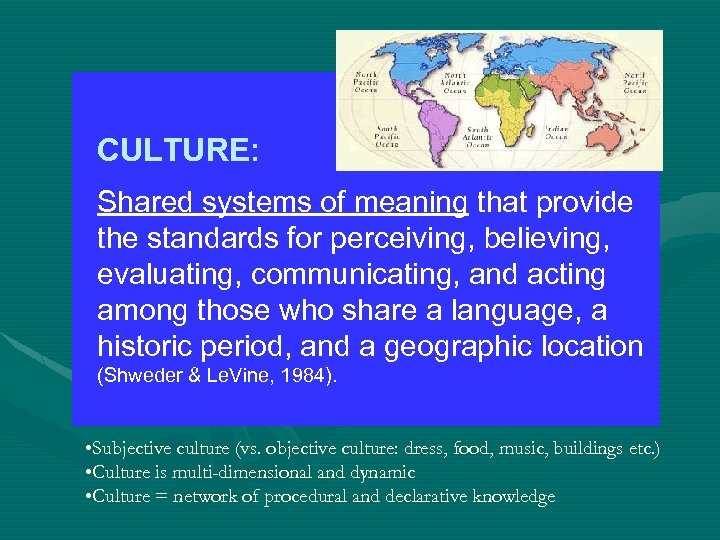 CULTURE: Shared systems of meaning that provide the standards for perceiving, believing, evaluating, communicating, and acting among those who share a language, a historic period, and a geographic location (Shweder & Le. Vine, 1984). • Subjective culture (vs. objective culture: dress, food, music, buildings etc. ) • Culture is multi-dimensional and dynamic • Culture = network of procedural and declarative knowledge
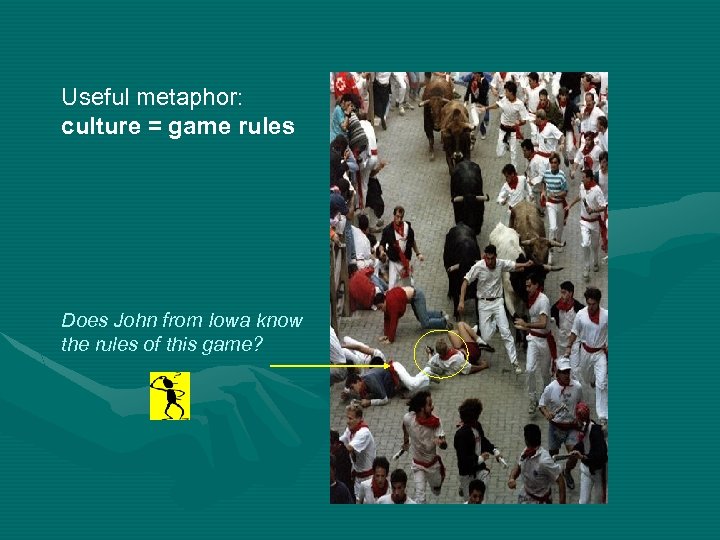 Useful metaphor: culture = game rules Does John from Iowa know the rules of this game?
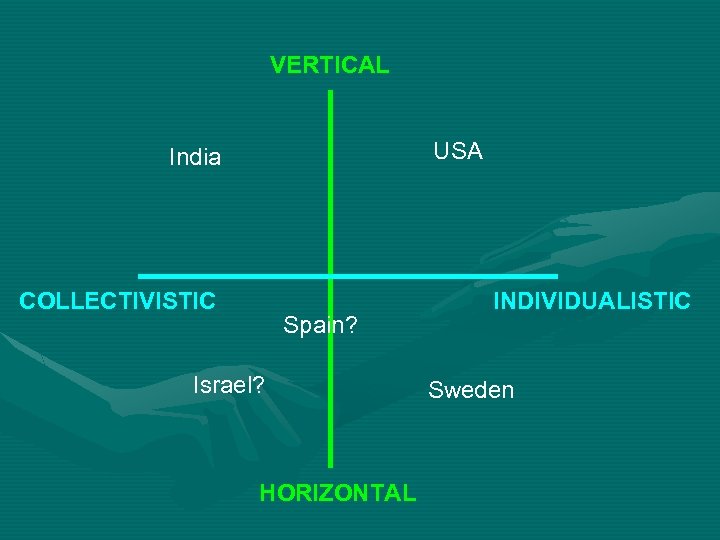
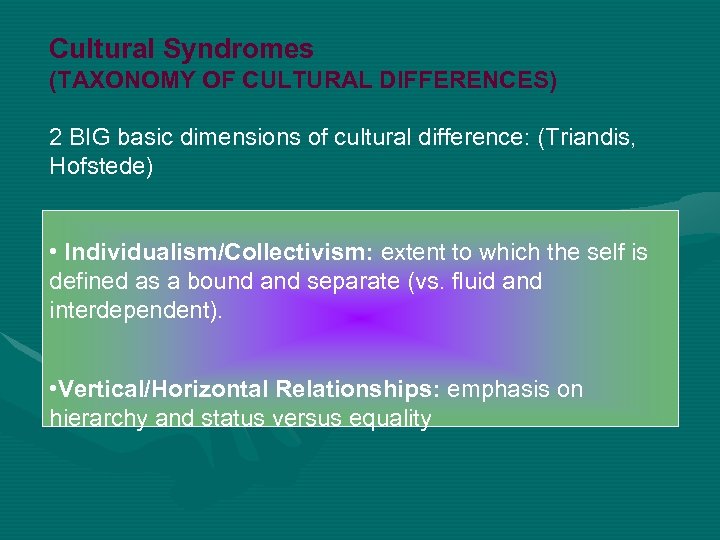 Cultural Syndromes (TAXONOMY OF CULTURAL DIFFERENCES) 2 BIG basic dimensions of cultural difference: (Triandis, Hofstede) • Individualism/Collectivism: extent to which the self is defined as a bound and separate (vs. fluid and interdependent). • Vertical/Horizontal Relationships: emphasis on hierarchy and status versus equality
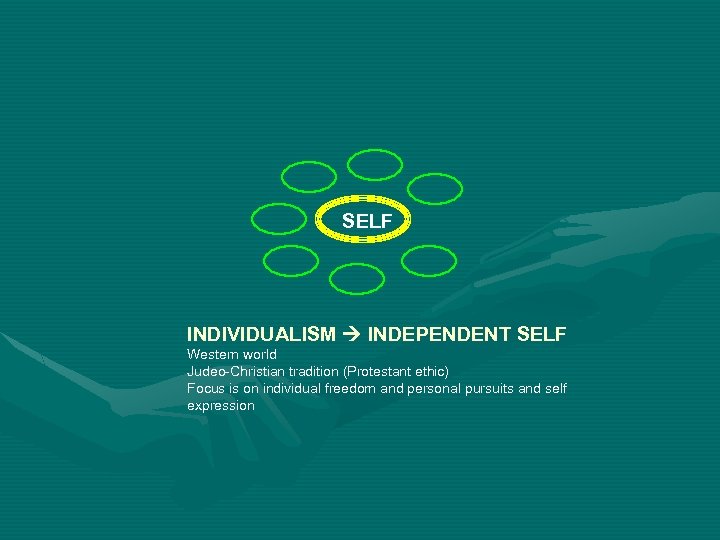 SELF INDIVIDUALISM INDEPENDENT SELF Western world Judeo-Christian tradition (Protestant ethic) Focus is on individual freedom and personal pursuits and self expression
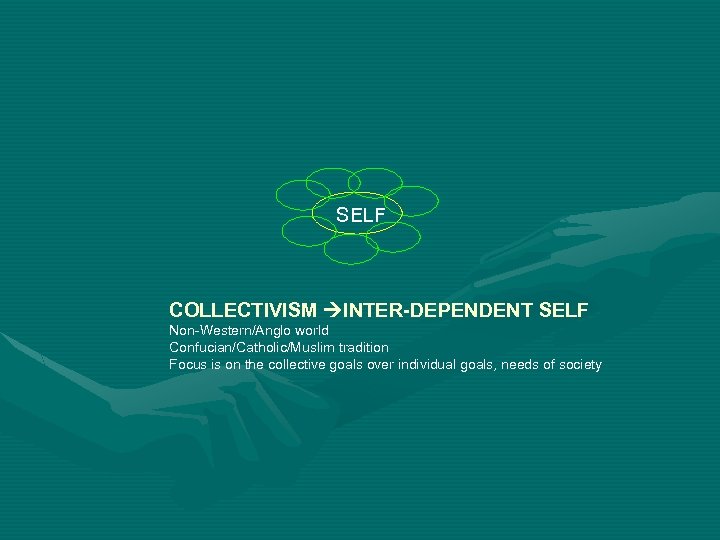 SELF COLLECTIVISM INTER-DEPENDENT SELF Non-Western/Anglo world Confucian/Catholic/Muslim tradition Focus is on the collective goals over individual goals, needs of society
 VERTICAL USA India COLLECTIVISTIC Spain? Israel? HORIZONTAL INDIVIDUALISTIC Sweden
![Culture Race Ethnicity e. g. Culture = N. American culture [macro] e. g. Ethnicity](https://present5.com/presentation/97081f36eeb9450e741b0de62966d616/image-31.jpg "Culture Race Ethnicity e. g. Culture = N. American culture [macro] e. g. Ethnicity") Culture Race Ethnicity e. g. Culture = N. American culture [macro] e. g. Ethnicity = Hispanics [group] e. g. Race = Black [biology]
Culture Race Ethnicity e. g. Culture = N. American culture [macro] e. g. Ethnicity = Hispanics [group] e. g. Race = Black [biology]
 CULTURE PSYCHE CULTURE
 Personality as a product of biological and socio-cultural influences CULTURE PERSONALITY “Personality is completely interdependent with the meanings and practices of particular sociocultural contexts. People develop their personalities over time through their active participation in the various social worlds in which they engage. A cultural psychological perspective implies that there is no personality without culture; there is only a biological entity. “ (Markus & Kitayama, 1998)
 “We are forced to conclude that human nature is almost unbelievable malleable, responding accurately and contrastingly to contrasting cultural conditions. ” (Mead, 1935, p. 280) But Mead (1954) also observed that “… the individual’s inclination to respond in a certain ways is relatively stable when the cultural context is understood. ” CULTURAL PSYCHOLOGY helps us at ‘seeing’ personality
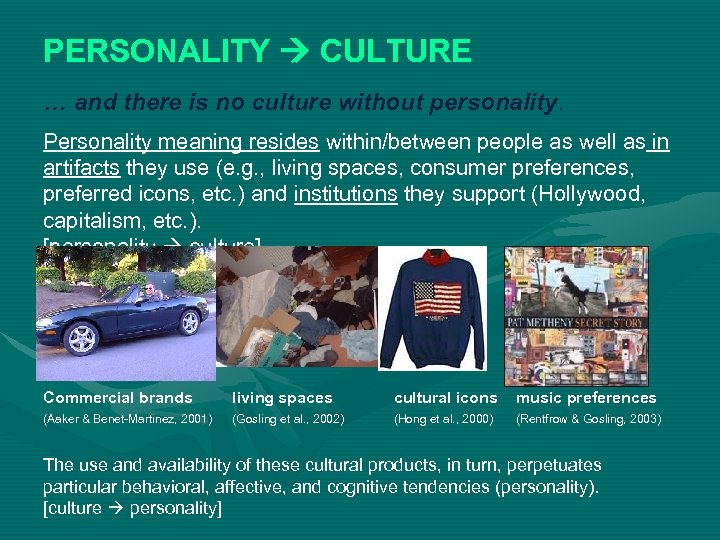 PERSONALITY CULTURE … and there is no culture without personality. Personality meaning resides within/between people as well as in artifacts they use (e. g. , living spaces, consumer preferences, preferred icons, etc. ) and institutions they support (Hollywood, capitalism, etc. ). [personality culture] Commercial brands living spaces cultural icons music preferences (Aaker & Benet-Martinez, 2001) (Gosling et al. , 2002) (Hong et al. , 2000) (Rentfrow & Gosling, 2003) The use and availability of these cultural products, in turn, perpetuates particular behavioral, affective, and cognitive tendencies (personality). [culture personality]
 Cultural Studies in Personality Psychology KEY GENERAL QUESTIONS: As people of varying cultures and ethnicities, how are we different and how are we alike? [DIFFERENCES] CROSS-CULTURAL PSYCHOLOGY How do culture and ethnicity shape our identities and personalities? How does personality/behavior influence culture? [PROCESSES] CULTURAL PSYCHOLOGY
 Benefits of cultural social/personality studies: = help elucidate how macro- and micro-contextual factors mediate and moderate personality outcomes (e. g. , Schimmack, Radhakrishnan, Oishi, Dzokoto, & Ahadi, 2002; JPSP) = help dispel shaky cultural stereotypes Brant, & Costa, 2005; Science) (e. g. , Terracciano, Mc. Crae, = Test the generalizability of our theories John, 1998; JPSP). (e. g. , Benet Martinez & = Are methodologically fun! -> reliance on multiple languages, samples, and covariates (Benet-Martinez, 2007; HRMSP).
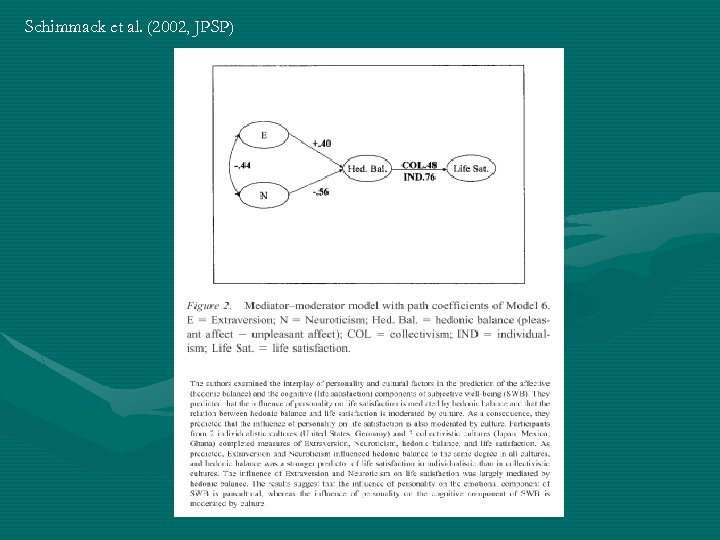 Schimmack et al. (2002, JPSP)
 Benet-Martinez & Karakitapoglu (2003). The interplay of cultural values and personality in predicting life-satisfaction. Journal of Cross-Cultural Psychology • Examine interplay between personality and cultural syndromes in predicting subjective well-being (SWB) among Anglos and Asians: Do cultural syndromes predict variations on personality traits, which in turn predict SWB? (‘Cultural values Personality SWB’ model) PHENOTYPIC VIEW OR Do personality traits drive the internalization of cultural syndromes, which in turn predict SWB? (‘Personality Cultural values SWB’ model) GENOTYPIC VIEW • Ethnic differences in these processes? (e. g. , individualism as stronger predictor of SWB among Caucasians)
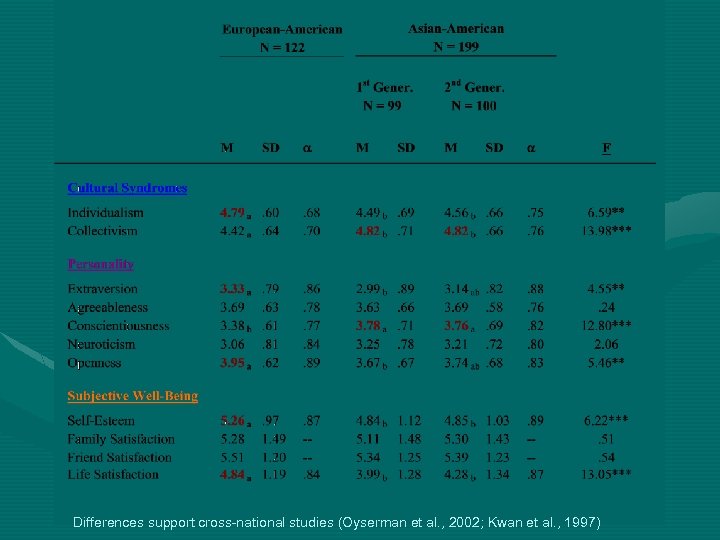 Differences support cross-national studies (Oyserman et al. , 2002; Kwan et al. , 1997)
 Do cultural syndromes predict variations on personality traits, which in turn predict SWB? (‘Cultural syndromes Personality SWB’ model) OR Do personality traits drive the endorsement of cultural syndromes, which in turn predict SWB? (‘Personality Cultural syndromes SWB’ model) ---method: multi-group SEM analyses
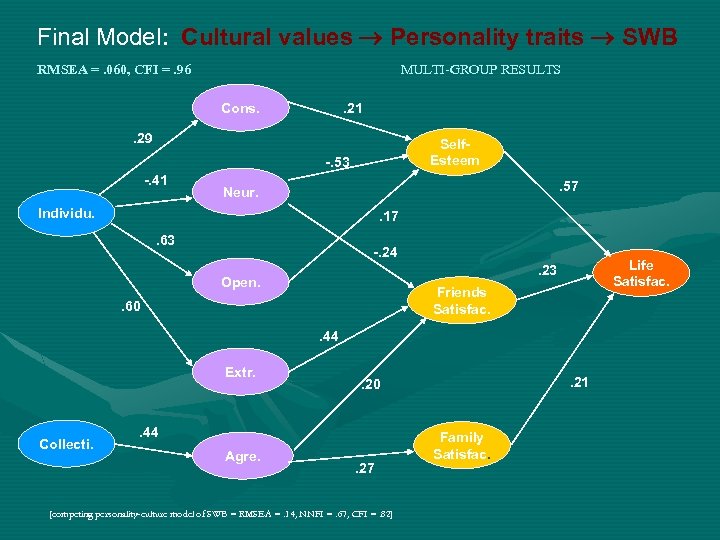 Final Model: Cultural values Personality traits SWB RMSEA =. 060, CFI =. 96 MULTI-GROUP RESULTS Cons. . 21 . 29 Self. Esteem -. 53 -. 41 . 57 Neur. Individu. . 17. 63 -. 24 Life Satisfac. . 23 Open. Friends Satisfac. . 60. 44 Extr. Collecti. . 44 Agre. . 21 . 20 . 27 [competing personality-culture model of SWB = RMSEA =. 14, NNFI =. 67, CFI =. 82] Family Satisfac.
 Conclusions • ‘Cultural values Personality SWB’ model fitted the data better than ‘P C SWB’ model – Cultural norms & values influences the endorsement and expression of personality traits • Individualism (vs. collectiv. ) & self-esteem (vs. relationalesteem) were strongest predictors of personality & lifesatisfaction (respectively) for both groups. • All the processes worked similarly across Asian-and European-Americans (despite the large ethnic mean-level differences). – Indicative of a particular Asian-American bicultural identity stage? (internalization of US-specific psychosocial processes while keeping Asian features)