


 Скачать презентацию Cultural Psychology Psychology of Culture Shock Prof dr
5a834afa84d935dacb1f56a94add4cd8.ppt
- Количество слайдов: 17
 Cultural Psychology: Psychology of Culture Shock Prof. dr hab. Halina Grzymała. Moszczyńska, halina. grzymalamoszczynska@uj. edu. pl Dr Marek Szopski, m. szopski@uw. edu. pl
 Timing Winter semester 2012/2013, 3 hours each class Dates: October: 8, 15, 22, 29 November: 5, 12, 19, 26 December: 3, 10
 Contact n n Professor Halina Grzymała-Moszczyńska - office hours Tuesday 15: 15 -16: 00, Collegium Broscianum Grodzka Street 52, room 14 (ground floor). Dr Szopski can be of help after class and through internet. Feel free to contact us and to ask questions and discuss issues related to class topics as well as have suggestions as to the content of the course. Maintaining an ongoing dialogue will make the experience of this class more productive and enjoyable
 Literature: n n n n n Primary: Lewis, Richard D. : When Cultures Collide: Leading Across Cultures, London, 2006. Hofstede, Geert : Cultures and Organizations: Software of the Mind, Intercultural Cooperation and Its Importance for Survival, Mc. Graw. Hill, 1991 or http: //www. geerthofstede. nl Trompenaars, Fons and Hampden-Turner, Charles: Riding the Waves of Culture: Understanding Cultural Diversity in Business, London, 1997. http: //changingminds. org/explanations/culture/trompenaars_culture. htm http: //alangutterman. typepad. com/files/cms---trompenaars-seven-dimensions. pdf Secondary: Klopf, Donald W. : Intercultural Encounters: The Fundamentals of Intercultural Communication, Morton Publishing Co. 1996. Martin, Judith N. , Nakayama, Thomas K. : Experiencing Intercultural Communication: an Introduction, Mc. Graw Hill. 2005. Jandt, Fred E. ; An introduction to Intercultural Communication: Identities in a Global Community, 2005.
 Intended Learning Outcomes n n To prepare students for struggle with acculturation stress due to new cultural envinronment To make participants aware of facts and theories providing understanding and explanation of cultural systems and communication practices between and within societies in general and in professional activities in particular. Students will develop better understanding of the relationship between communication strategies and interaction dynamics and the processes of socialization and acculturation. The role of language, non-verbal, verbal and contextual communication will be studied
 Method n Students will develop understanding of cultural encounters, intercultural communication skills through readings, case studies, documentaries and individual presentations. Through the choice of specific culture and study of cases they will develop an informed perspective both on the culture of choice and their own.
 Requirements n n n An essay developing the comprehension of a particular case of intercultural activity resulting in a presentation of that case in class, photo- essay about Cracow as an intercultural environment, final test on concepts and ideas covering the field of study will complete the course requirements. Composition of final grade: n . The test and both essays will contribute 75% of the final grade, while the presentation and course participation will contribute the remaining 25%. Students are expected to participate in class discussions and show interest in contemporary intercultural encounters.
 Description of the photoessay n n n Students are required to take 10 pictures pertaining to the Cracow as an intercultural environment and include comments in which they note their reasons for the selection of a certain motive plus their feelings and emotions at the time the photo was taken. This is necessary as people tend to forget why they selected an object and do not clearly remember their feelings and emotions later on. Students are entirely free in the selection of aspects and motives from Polish/Cracow environment. It is necessary to use literature from the course in order to provide analysis of intercultural motives chosen in the pictures. Photo-essay should be ready for submission and discussion in class by week 9 (December 3). Both electronic and printed version are required. Delay in submitting the photo-essay on time will result in lower final grade. Printed photo-essay needs to be submitted to the MISH Office or to Professor Halina Grzymała-Moszczyńska’s Office. As a „trial run” please bring print – out of one picture with a comment to class at week 2 ( October 15). We’ll discuss your work and clarify all possible misunderstandings about your photo-essay.
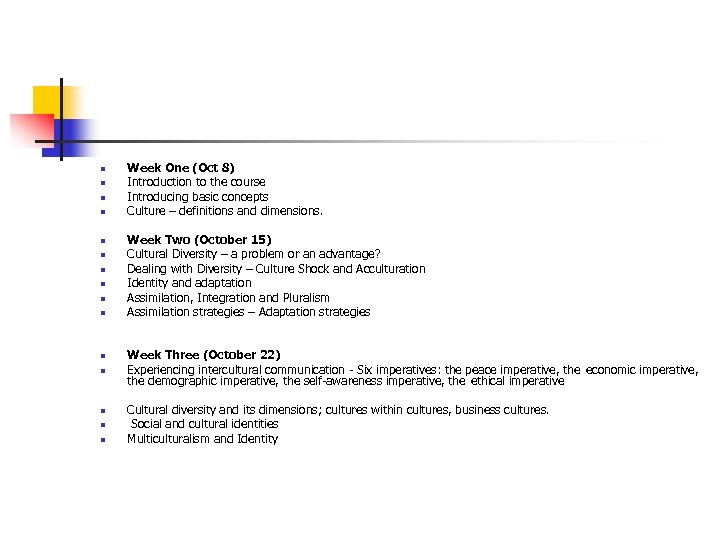 n n n n Week One (Oct 8) Introduction to the course Introducing basic concepts Culture – definitions and dimensions. Week Two (October 15) Cultural Diversity – a problem or an advantage? Dealing with Diversity – Culture Shock and Acculturation Identity and adaptation Assimilation, Integration and Pluralism Assimilation strategies – Adaptation strategies Week Three (October 22) Experiencing intercultural communication - Six imperatives: the peace imperative, the economic imperative, the demographic imperative, the self-awareness imperative, the ethical imperative Cultural diversity and its dimensions; cultures within cultures, business cultures. Social and cultural identities Multiculturalism and Identity
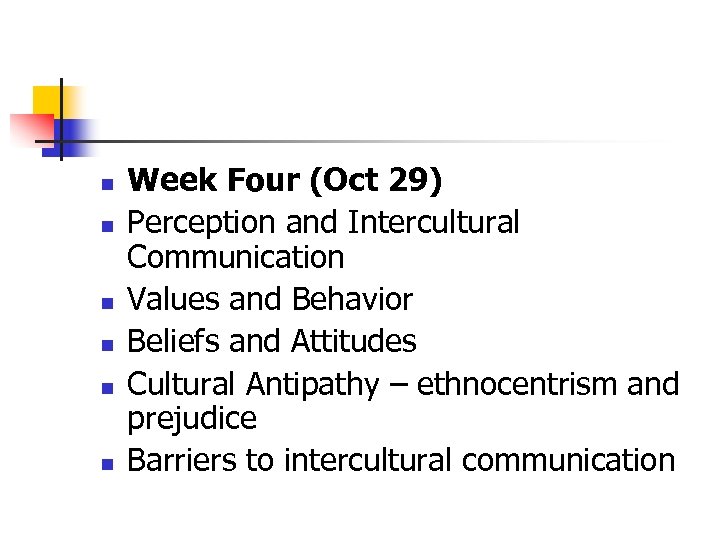 n n n Week Four (Oct 29) Perception and Intercultural Communication Values and Behavior Beliefs and Attitudes Cultural Antipathy – ethnocentrism and prejudice Barriers to intercultural communication
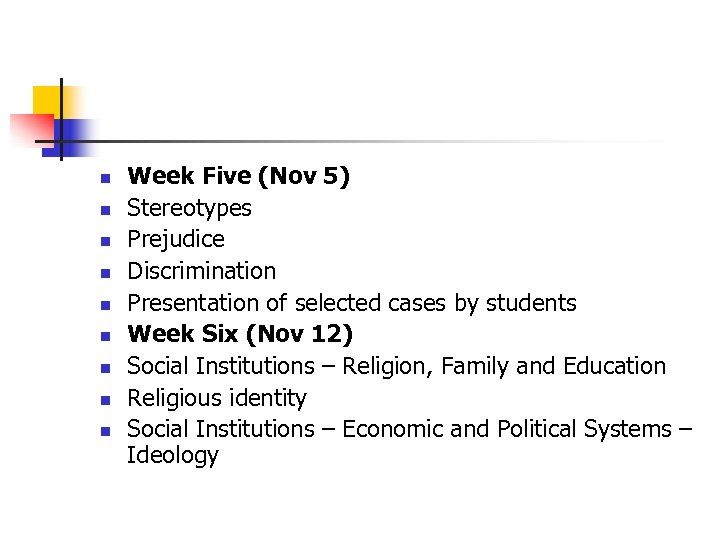 n n n n n Week Five (Nov 5) Stereotypes Prejudice Discrimination Presentation of selected cases by students Week Six (Nov 12) Social Institutions – Religion, Family and Education Religious identity Social Institutions – Economic and Political Systems – Ideology
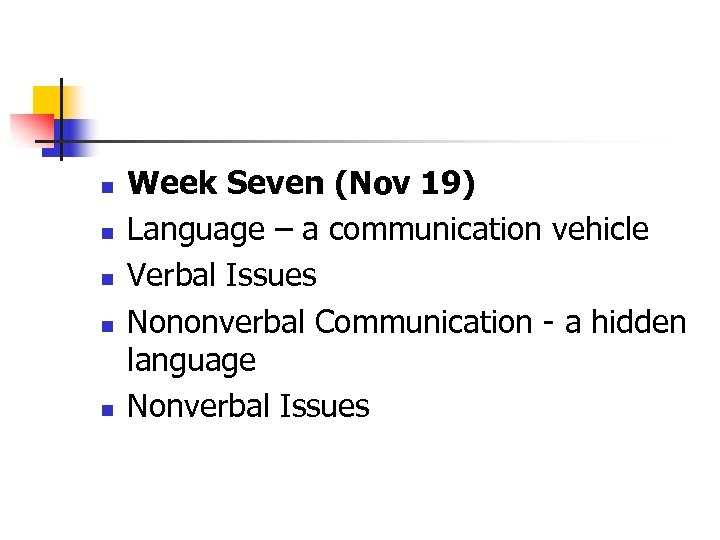 n n n Week Seven (Nov 19) Language – a communication vehicle Verbal Issues Nononverbal Communication - a hidden language Nonverbal Issues
 n n n Week Eight (Nov 26) Communication competence and its criteria Relationships across differences
 n n Week Nine (Dec 3) Developing intercultural relationships Developing multicultural society Review of the course n Photo-essays are due
 n Week Ten ( Dec. 10) FINAL Test
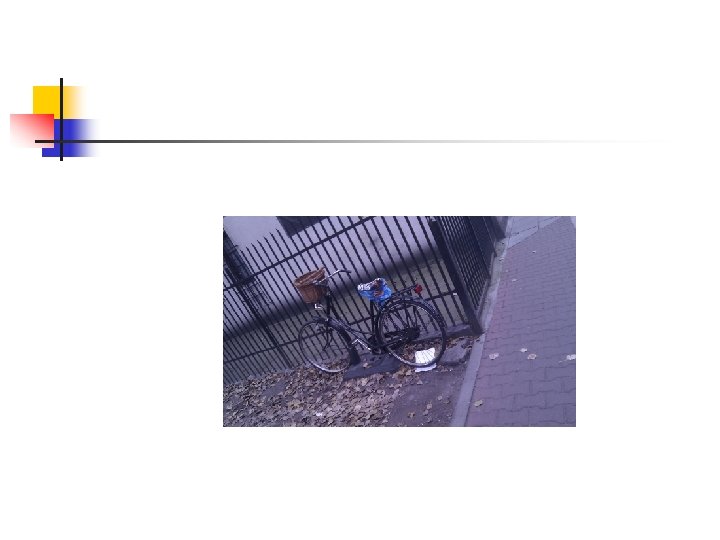
 n In this picture we see a bike, originally build in the Netherlands, my home country that is very popular in Poland since I have seen it a lot. Not in the same amount as in Holland, but compared to different countries I have ever visited it I can consider Poland to be a bikefriendly country. But now comes the most remarkable part. When I came to Krakow I was considering buying a bike instead of getting a public transportation card because in the Netherlands it is the quickest way of transportation in a city because you never have to wait for the tram, bus or subway and get there very quickly from door to door. I went to the flea market at Hala Targowe to buy me a bike. I was really surprised by the amount of Dutch bikes they had to offer and I was more surprised by the price they were asking for it. In Amsterdam you can buy a bike without locks on the street for about 10 or 15 euro (4060 PLN) but here they were easily asking up to 250 or 300 PLN for a simple and old bike. They were offended when I started bargaining about the price and didn’t want to pay more than 150 PLN for it. When they were asking me where I was from and asked what I would pay in Holland for a bike they were surprised and gave the argument that the bike was stolen, that was the only reason why it could be so cheap. In my opinion they are just making a fool of themselves by saying that because it was obvious that these bikes were not originally bought in Holland then transported to Poland. This could be seen as my end of my honeymoonperiod in Poland I start to get some troubles in managing life here. (cultureshock website)