


 Скачать презентацию CSE 473 Artificial Intelligence Dan Weld http www
dc84f7982c9500e2bc440b7a43085a24.ppt
- Количество слайдов: 42
 CSE 473: Artificial Intelligence Dan Weld http: //www. cs. washington. edu/cse 473/12 sp/ Slides from Dan Klein, Luke Zettlemoyer, Stuart Russell, Andrew Moore
 What is CSE 473? Textbook: Artificial Intelligence: A Modern Approach, Russell and Norvig (3 rd ed) Prerequisites: • Data Structures (CSE 326 or CSE 322) or equivalent • Basic exposure to probability, data structures, and logic Work: Readings (mostly from text), Programming assignment (40%), Written assignments (20%), Final exam (35%), Class participation (5%)
 Topics • • • Introduction Search Game Playing (minimax, alpha beta, expectimax) Contraint satisfaction Logic & Planning Markov Decision Processes Reinforcement Learning Uncertianty, Bayesian networks, HMMs Supervised Machine Learning Natural Language Processing
 Today § What is artificial intelligence (AI)? § What can AI do? § What is this course?
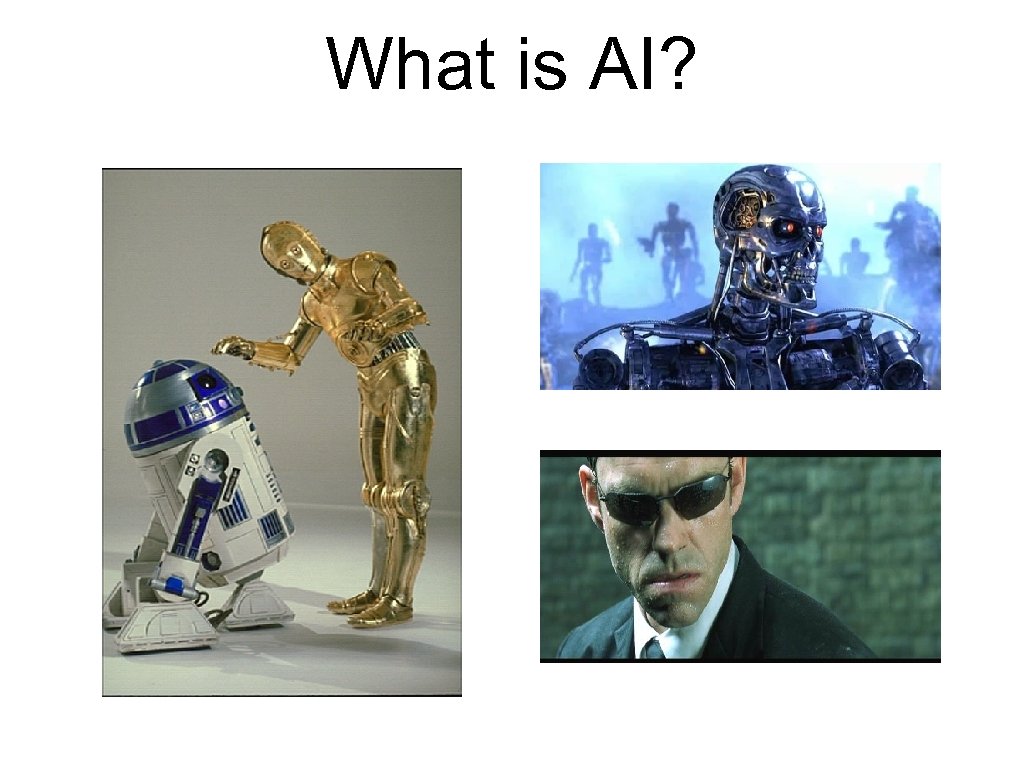 What is AI?
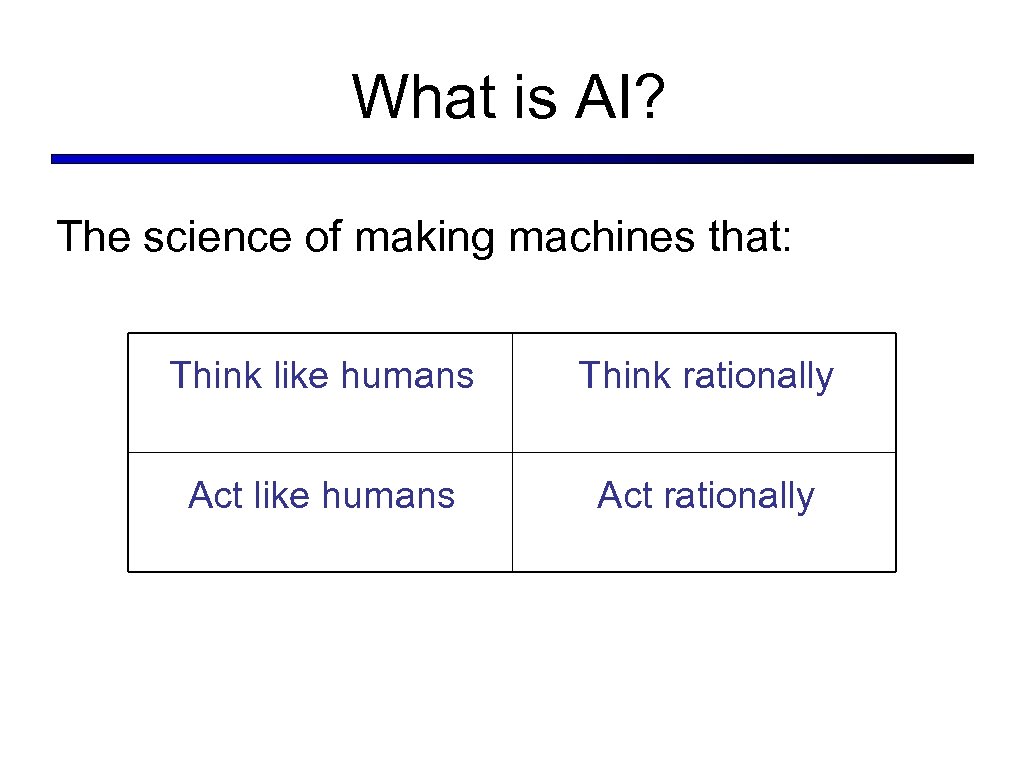 What is AI? The science of making machines that: Think like humans Think rationally Act like humans Act rationally
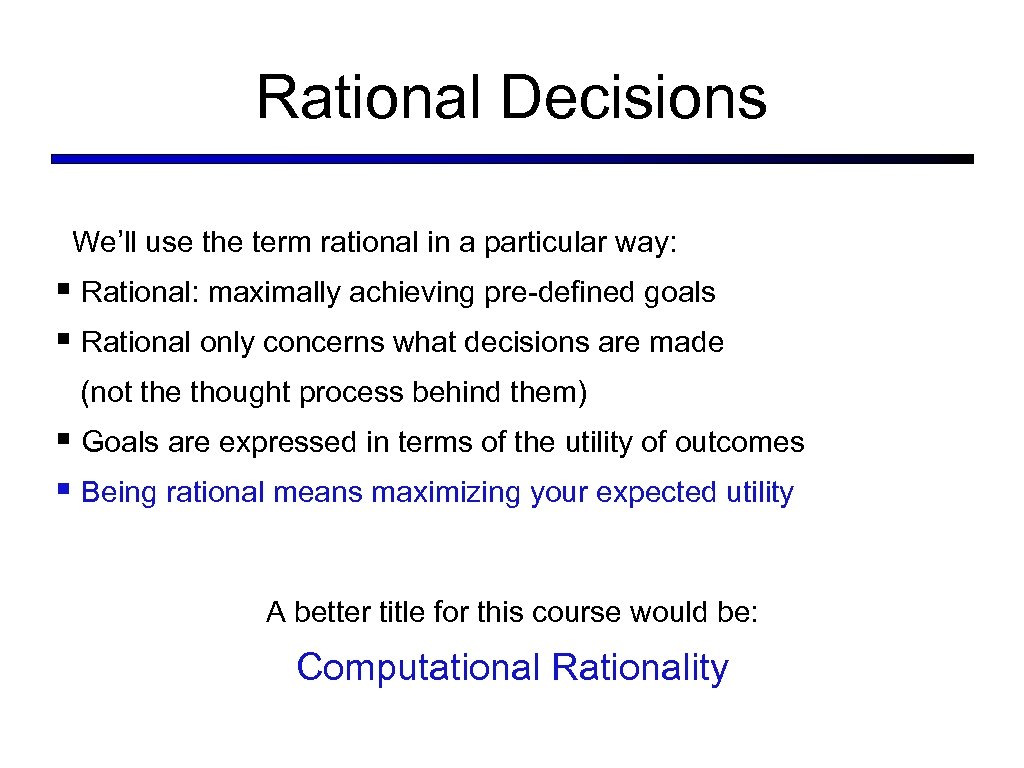 Rational Decisions We’ll use the term rational in a particular way: § Rational: maximally achieving pre-defined goals § Rational only concerns what decisions are made (not the thought process behind them) § Goals are expressed in terms of the utility of outcomes § Being rational means maximizing your expected utility A better title for this course would be: Computational Rationality
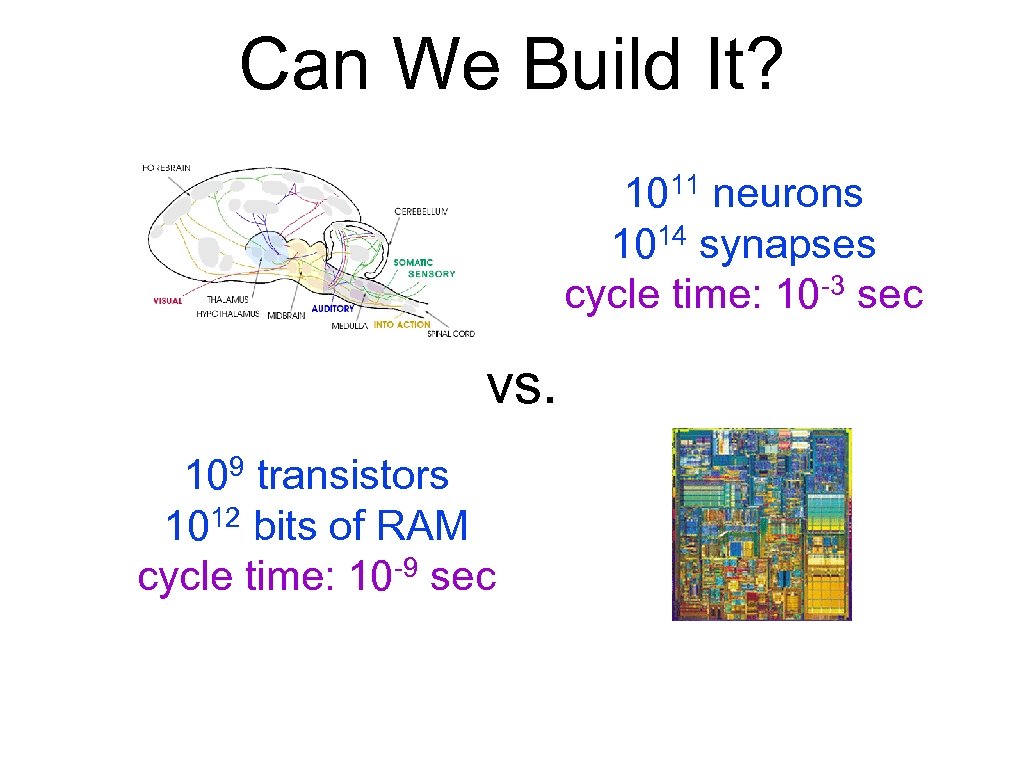 Can We Build It? 1011 neurons 1014 synapses -3 sec cycle time: 10 vs. 109 transistors 1012 bits of RAM cycle time: 10 -9 sec
 A (Short) History of AI § Prehistory § 1940 -1950: Early days § 1950— 70: Excitement: Look, Ma, no hands! § 1970— 88: Knowledge-based approaches § 1988—: Statistical approaches § 2000—: Where are we now?
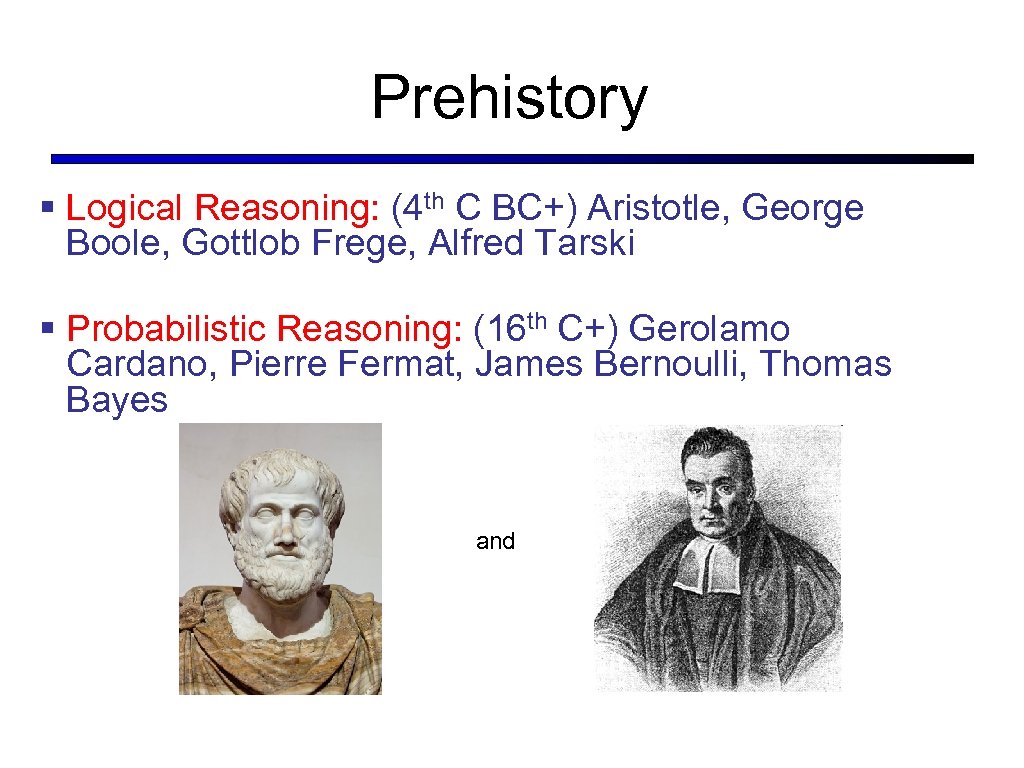 Prehistory § Logical Reasoning: (4 th C BC+) Aristotle, George Boole, Gottlob Frege, Alfred Tarski § Probabilistic Reasoning: (16 th C+) Gerolamo Cardano, Pierre Fermat, James Bernoulli, Thomas Bayes and
 1940 -1950: Early Days • 1943: Mc. Culloch & Pitts: Boolean circuit model of brain • 1950: Turing's “Computing Machinery and Intelligence” I propose to consider the question, "Can machines think? " This should begin with definitions of the meaning of the terms "machine" and "think. " The definitions might be framed. . . -Alan Turing
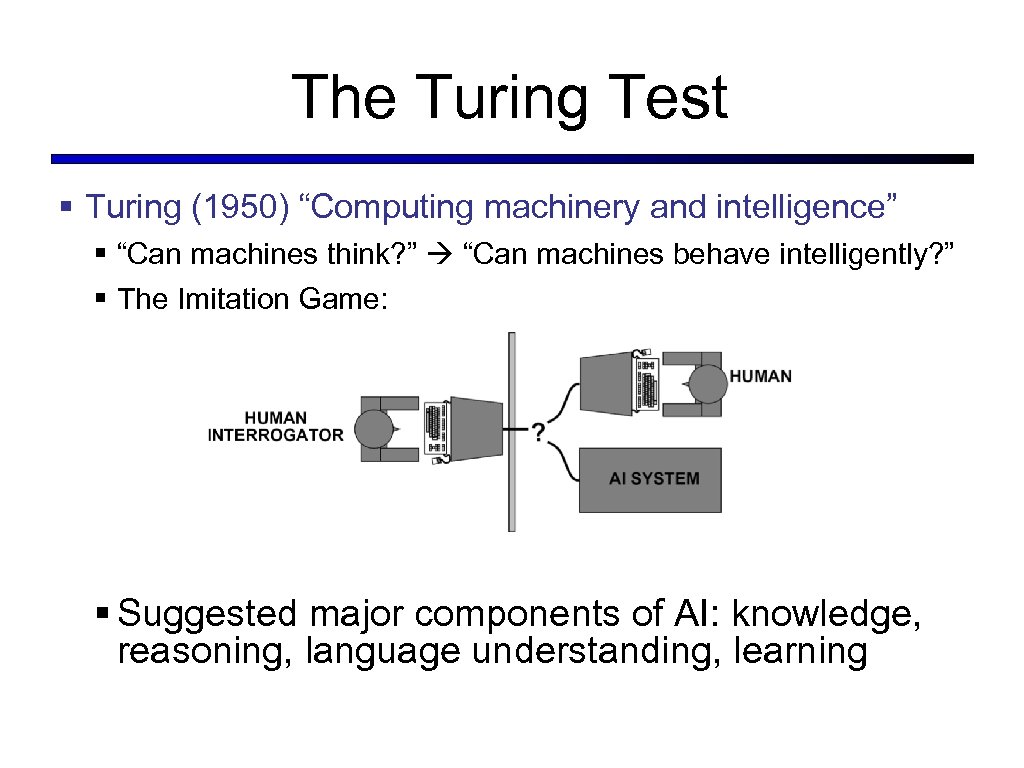 The Turing Test § Turing (1950) “Computing machinery and intelligence” § “Can machines think? ” “Can machines behave intelligently? ” § The Imitation Game: § Suggested major components of AI: knowledge, reasoning, language understanding, learning
 1950 -1970: Excitement § 1950 s: Early AI programs, including Samuel's checkers program, Newell & Simon's Logic Theorist, Gelernter's Geometry Engine § 1956: Dartmouth meeting: “Artificial Intelligence” adopted § 1965: Robinson's complete algorithm for logical reasoning “Over Christmas, Allen Newell and I created a thinking machine. ” -Herbert Simon
 1970 -1980: Knowledge Based Systems § 1969 -79: Early development of knowledge-based systems § 1980 -88: Expert systems industry booms § 1988 -93: Expert systems industry busts “AI Winter” The knowledge engineer practices the art of bringing the principles and tools of AI research to bear on difficult applications problems requiring experts’ knowledge for their solution. - Edward Felgenbaum in “The Art of Artificial Intelligence”
 1988 --: Statistical Approaches § 1985 -1990: Probability and Decision Theory win Pearl, Bayes Nets § 1990 -2000: Machine learning takes over subfields: Vision, Natural Language, etc. § Agents, uncertainty, and learning systems… “AI Spring”? "Every time I fire a linguist, the performance of the speech recognizer goes up" -Fred Jelinek, IBM Speech Team
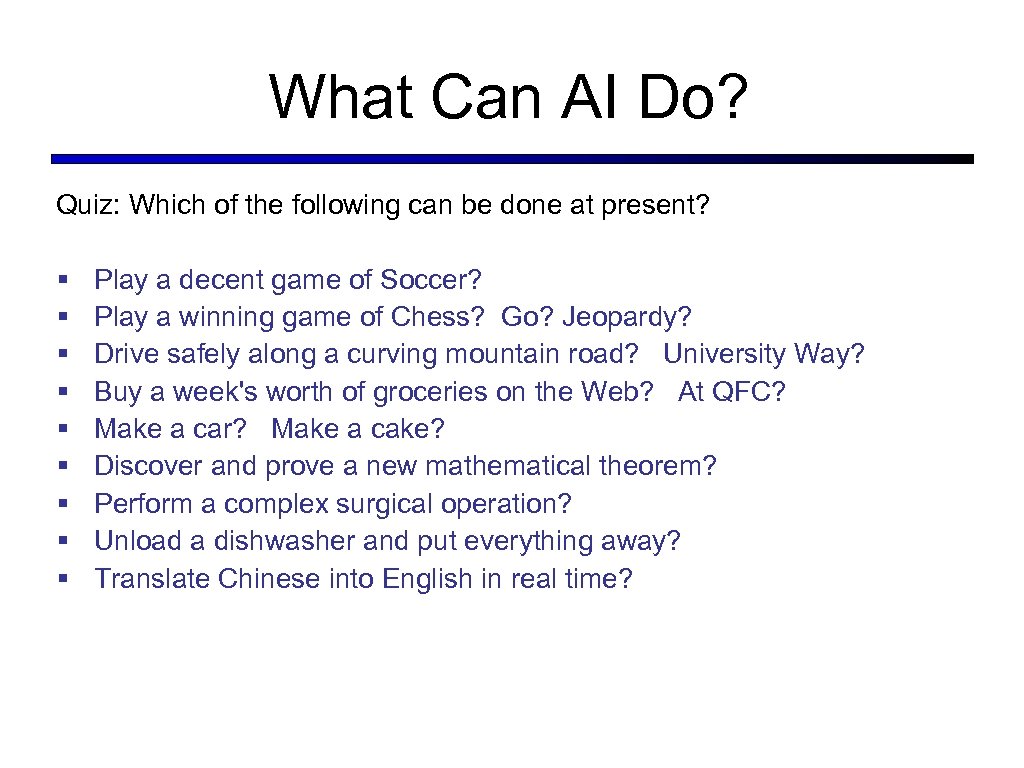
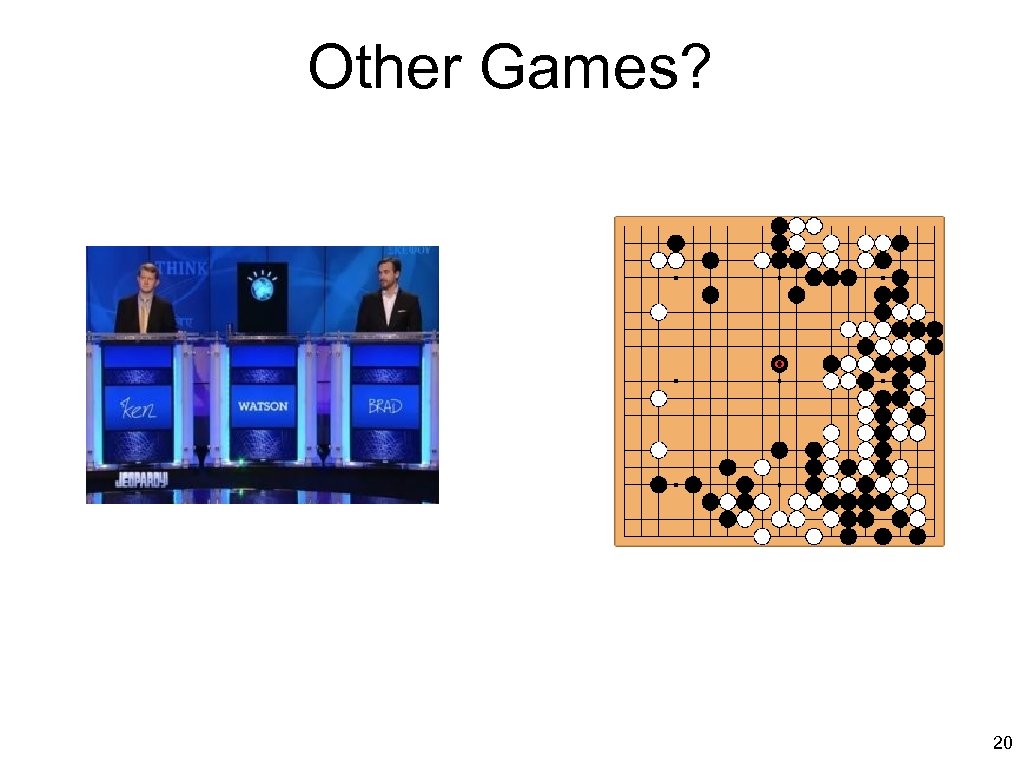
 What Can AI Do? Quiz: Which of the following can be done at present? § § § § § Play a decent game of Soccer? Play a winning game of Chess? Go? Jeopardy? Drive safely along a curving mountain road? University Way? Buy a week's worth of groceries on the Web? At QFC? Make a car? Make a cake? Discover and prove a new mathematical theorem? Perform a complex surgical operation? Unload a dishwasher and put everything away? Translate Chinese into English in real time?
 Robocup
 What Can AI Do? Quiz: Which of the following can be done at present? § § § § § Play a decent game of Soccer? Play a winning game of Chess? Go? Jeopardy? Drive safely along a curving mountain road? University Way? Buy a week's worth of groceries on the Web? At QFC? Make a car? Make a cake? Discover and prove a new mathematical theorem? Perform a complex surgical operation? Unload a dishwasher and put everything away? Translate Chinese into English in real time?
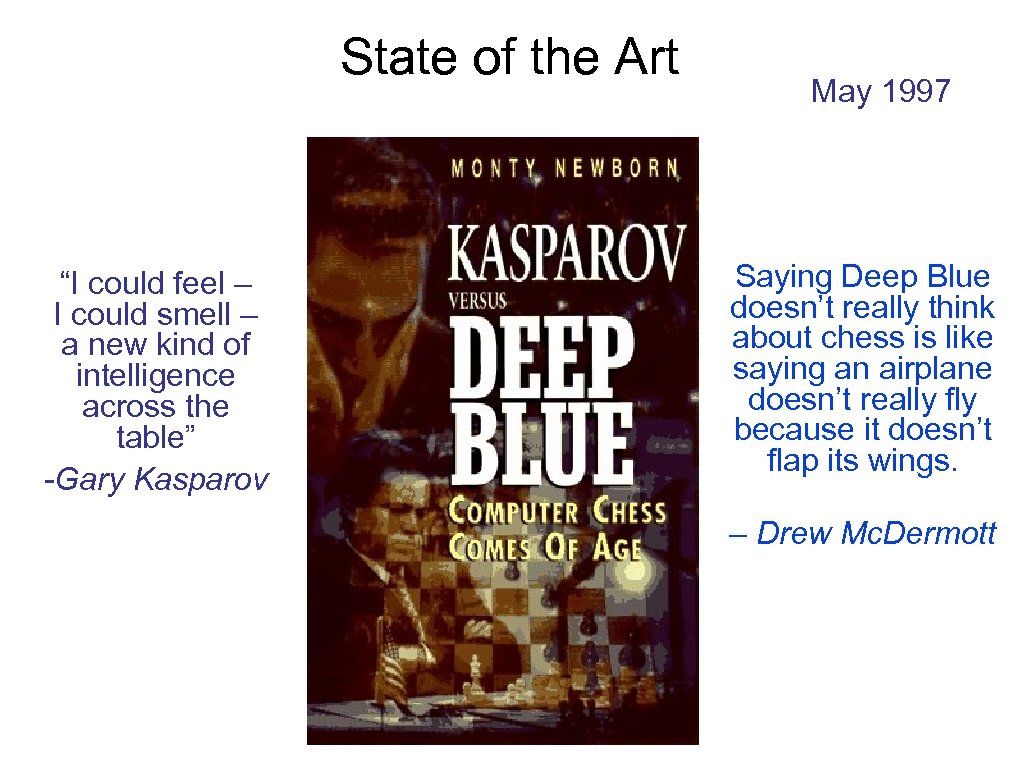 State of the Art “I could feel – I could smell – a new kind of intelligence across the table” -Gary Kasparov May 1997 Saying Deep Blue doesn’t really think about chess is like saying an airplane doesn’t really fly because it doesn’t flap its wings. – Drew Mc. Dermott
 Other Games? 20
 What Can AI Do? Quiz: Which of the following can be done at present? § § § § § Play a decent game of Soccer? Play a winning game of Chess? Go? Jeopardy? Drive safely along a curving mountain road? University Way? Buy a week's worth of groceries on the Web? At QFC? Make a car? Make a cake? Discover and prove a new mathematical theorem? Perform a complex surgical operation? Unload a dishwasher and put everything away? Translate Chinese into English in real time?
 Google Car
 What Can AI Do? Quiz: Which of the following can be done at present? § § § § § Play a decent game of Soccer? Play a winning game of Chess? Go? Jeopardy? Drive safely along a curving mountain road? University Way? Buy a week's worth of groceries on the Web? At QFC? Make a car? Make a cake? Discover and prove a new mathematical theorem? Perform a complex surgical operation? Unload a dishwasher and put everything away? Translate Chinese into English in real time?
 Brownies Anyone?
 What Can AI Do? Quiz: Which of the following can be done at present? § § § § § Play a decent game of Soccer? Play a winning game of Chess? Go? Jeopardy? Drive safely along a curving mountain road? University Way? Buy a week's worth of groceries on the Web? At QFC? Make a car? Make a cake? Discover and prove a new mathematical theorem? Perform a complex surgical operation? Unload a dishwasher and put everything away? Translate Chinese into English in real time?
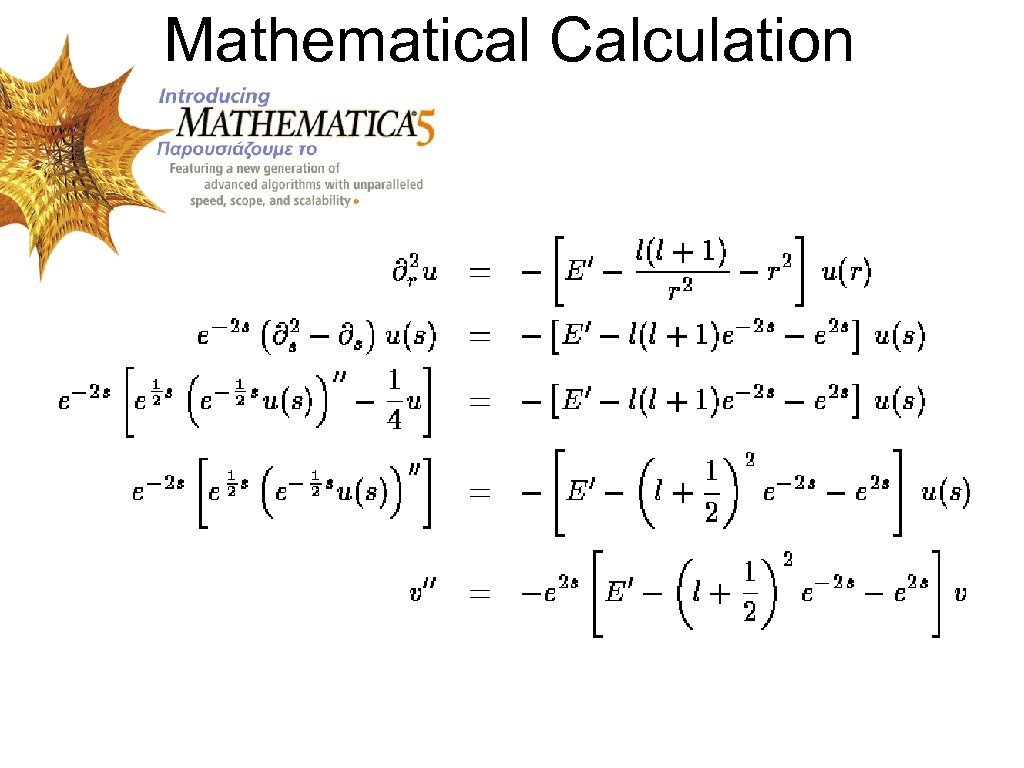 Mathematical Calculation
 What Can AI Do? Quiz: Which of the following can be done at present? § § § § § Play a decent game of Soccer? Play a winning game of Chess? Go? Jeopardy? Drive safely along a curving mountain road? University Way? Buy a week's worth of groceries on the Web? At QFC? Make a car? Make a cake? Discover and prove a new mathematical theorem? Perform a complex surgical operation? Unload a dishwasher and put everything away? Translate Chinese into English in real time?
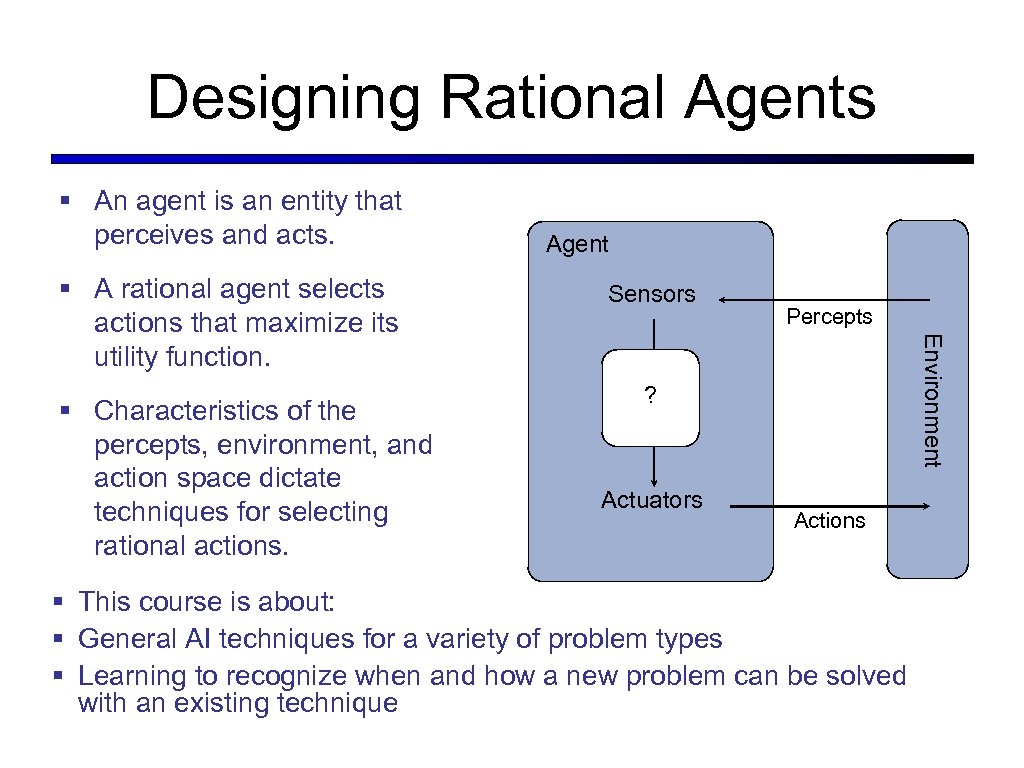 Designing Rational Agents § An agent is an entity that perceives and acts. § Characteristics of the percepts, environment, and action space dictate techniques for selecting rational actions. Sensors Percepts Environment § A rational agent selects actions that maximize its utility function. Agent ? Actuators Actions § This course is about: § General AI techniques for a variety of problem types § Learning to recognize when and how a new problem can be solved with an existing technique
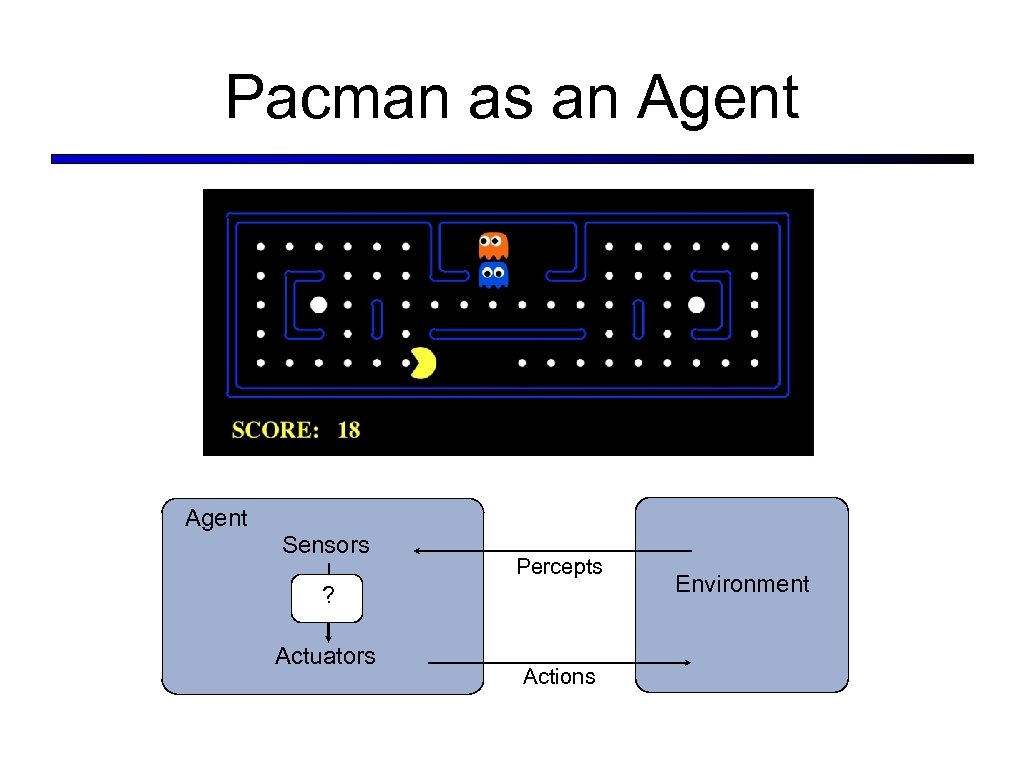 Pacman as an Agent Sensors Percepts ? Actuators Actions Environment
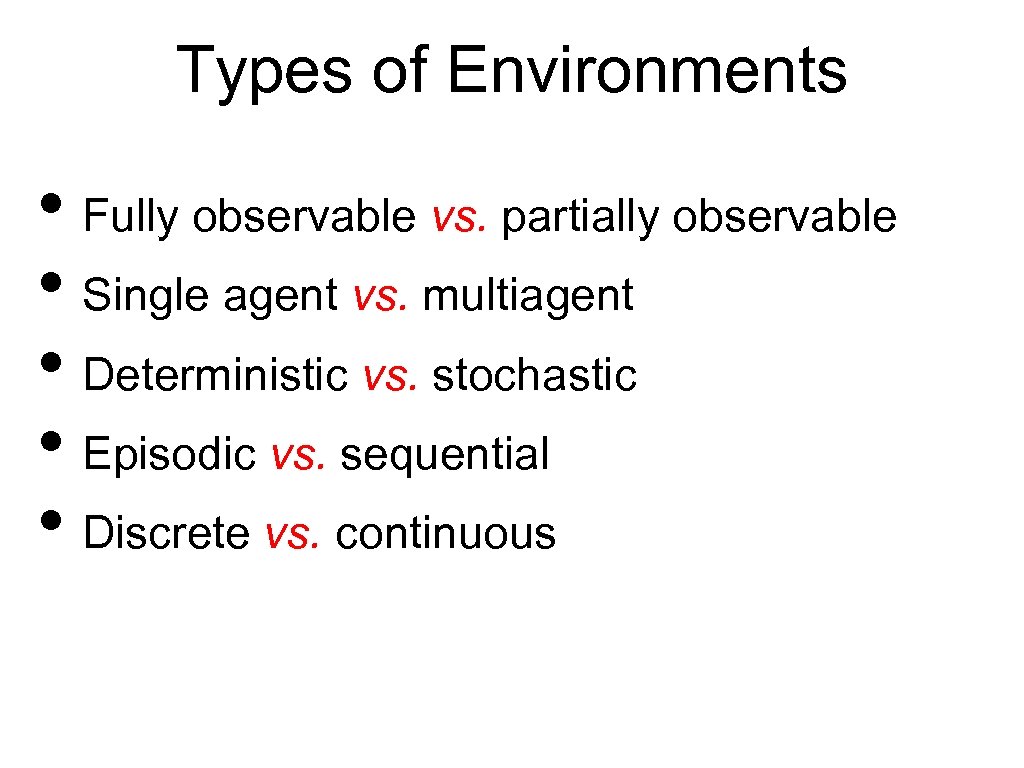 Types of Environments • Fully observable vs. partially observable • Single agent vs. multiagent • Deterministic vs. stochastic • Episodic vs. sequential • Discrete vs. continuous
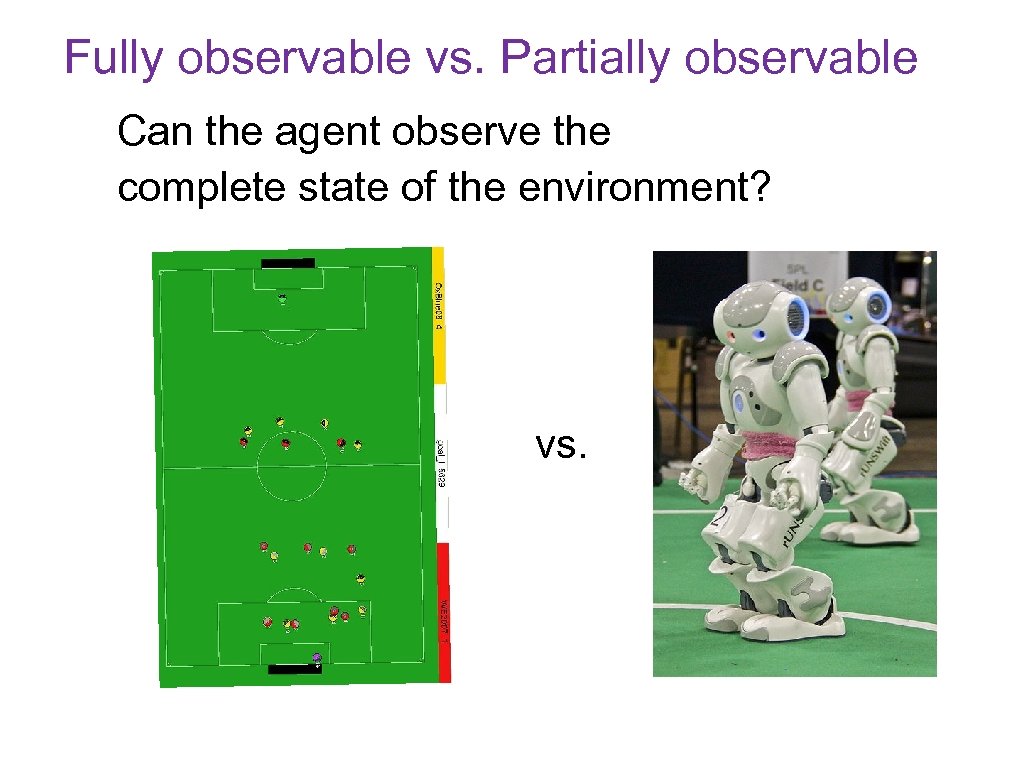 Fully observable vs. Partially observable Can the agent observe the complete state of the environment? vs.
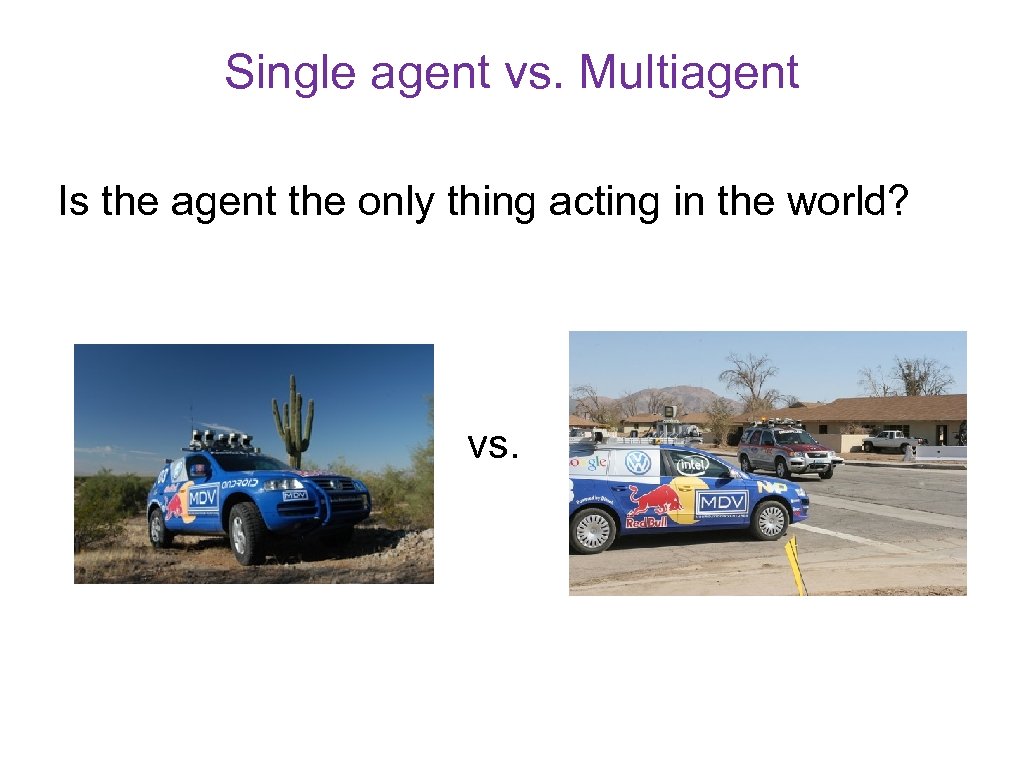 Single agent vs. Multiagent Is the agent the only thing acting in the world? vs.
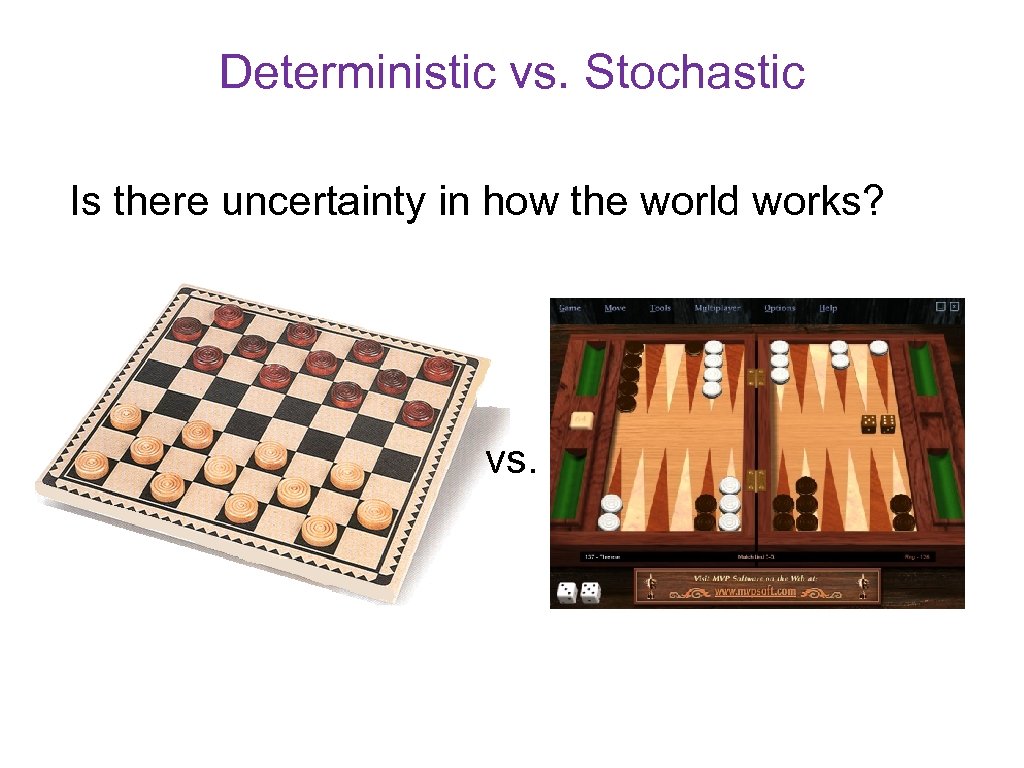 Deterministic vs. Stochastic Is there uncertainty in how the world works? vs.
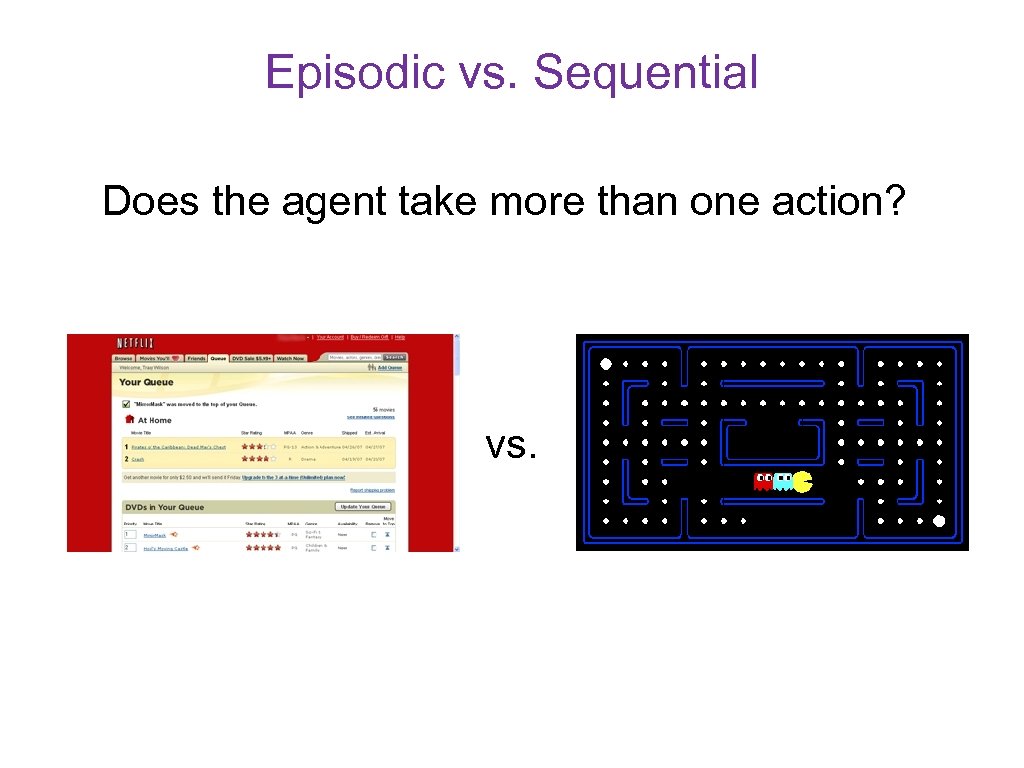 Episodic vs. Sequential Does the agent take more than one action? vs.
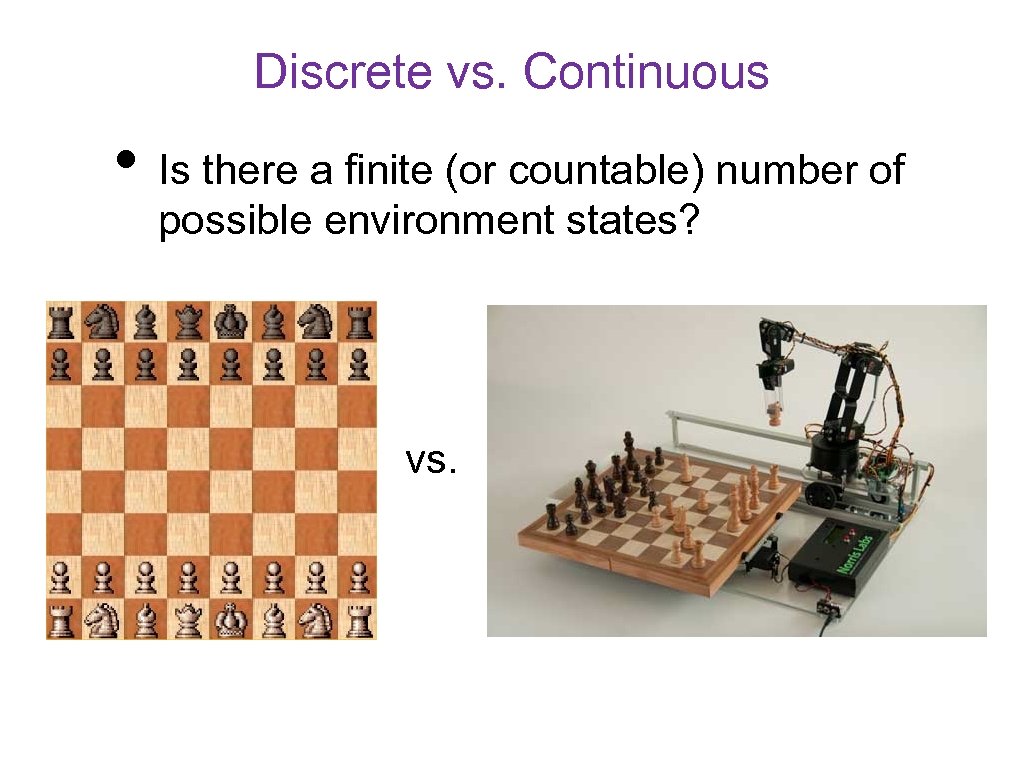 Discrete vs. Continuous • Is there a finite (or countable) number of possible environment states? vs.
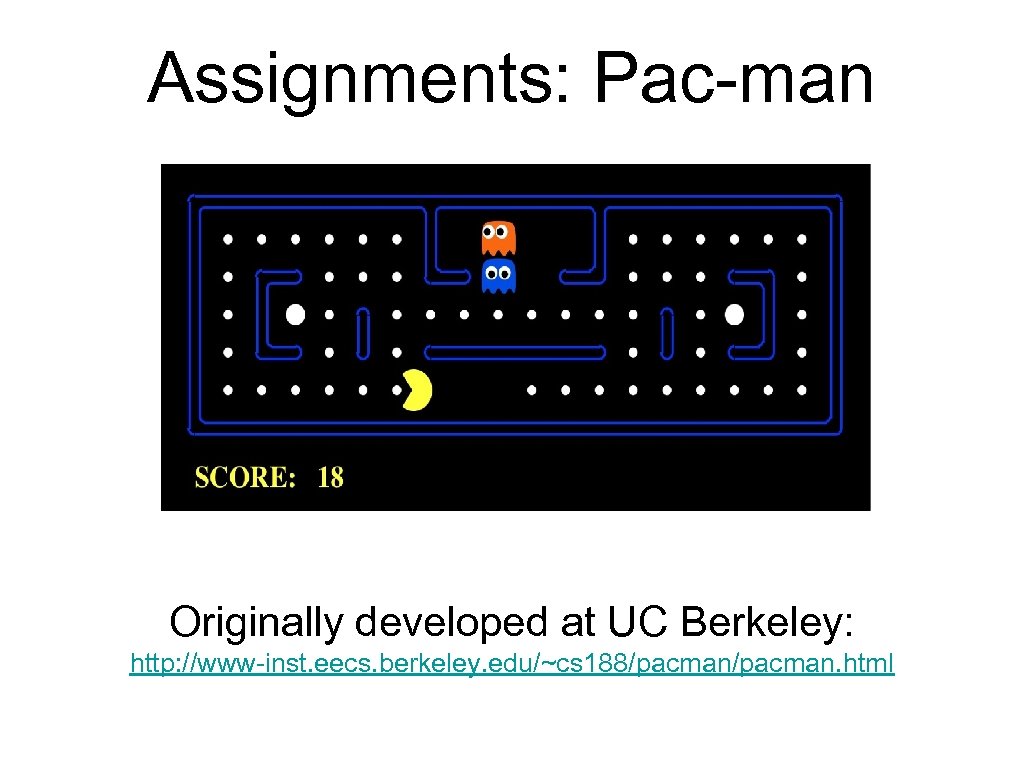 Assignments: Pac-man Originally developed at UC Berkeley: http: //www-inst. eecs. berkeley. edu/~cs 188/pacman. html
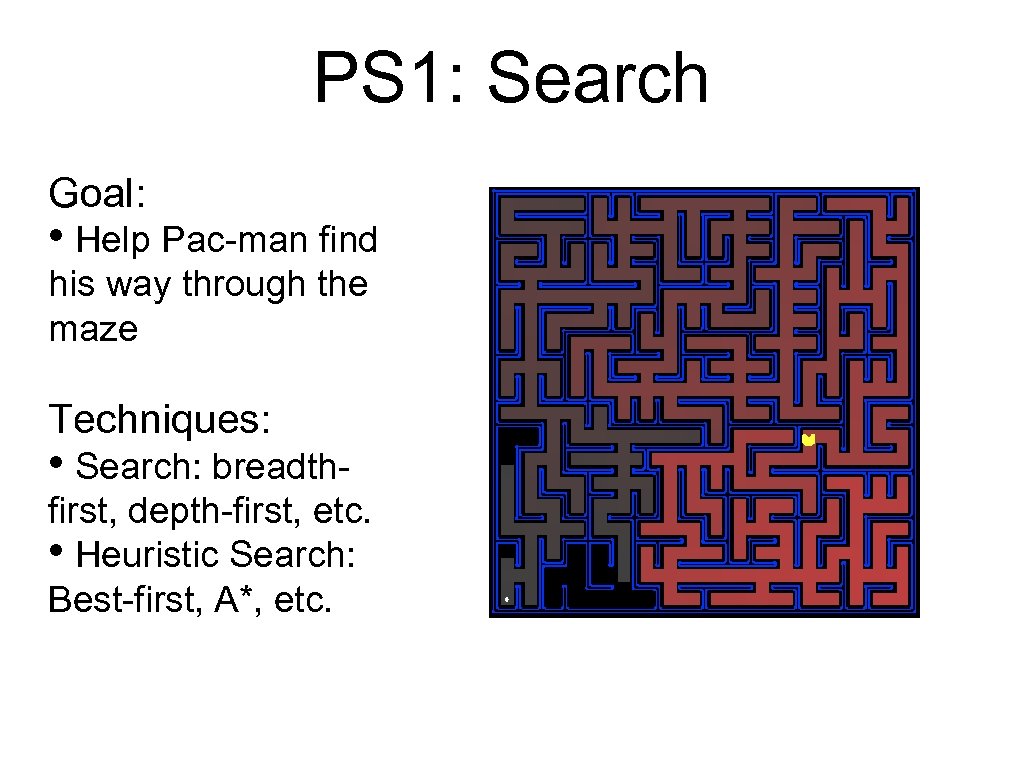 PS 1: Search Goal: • Help Pac-man find his way through the maze Techniques: • Search: breadthfirst, depth-first, etc. • Heuristic Search: Best-first, A*, etc.
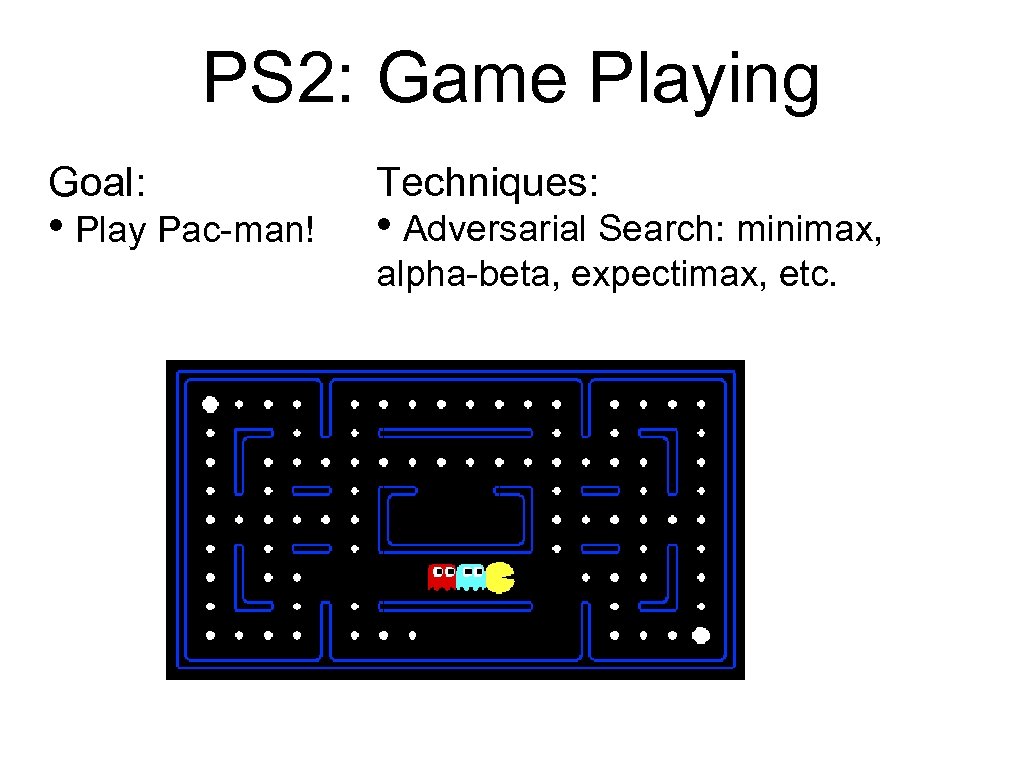 PS 2: Game Playing Goal: • Play Pac-man! Techniques: • Adversarial Search: minimax, alpha-beta, expectimax, etc.
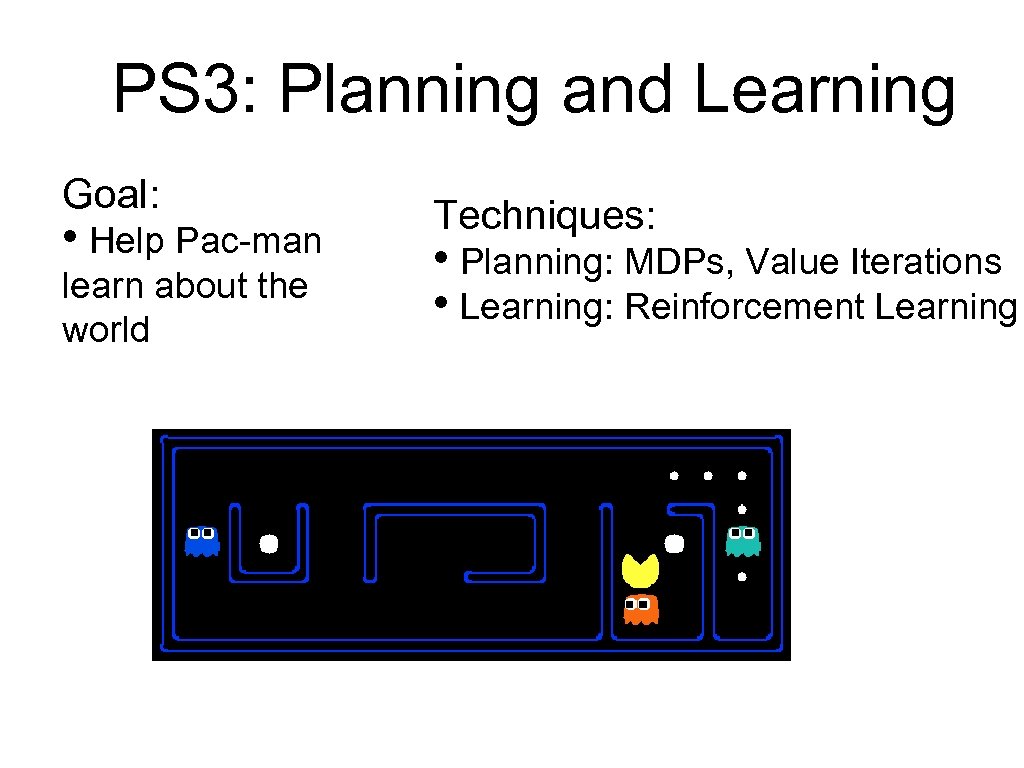 PS 3: Planning and Learning Goal: • Help Pac-man learn about the world Techniques: • Planning: MDPs, Value Iterations • Learning: Reinforcement Learning
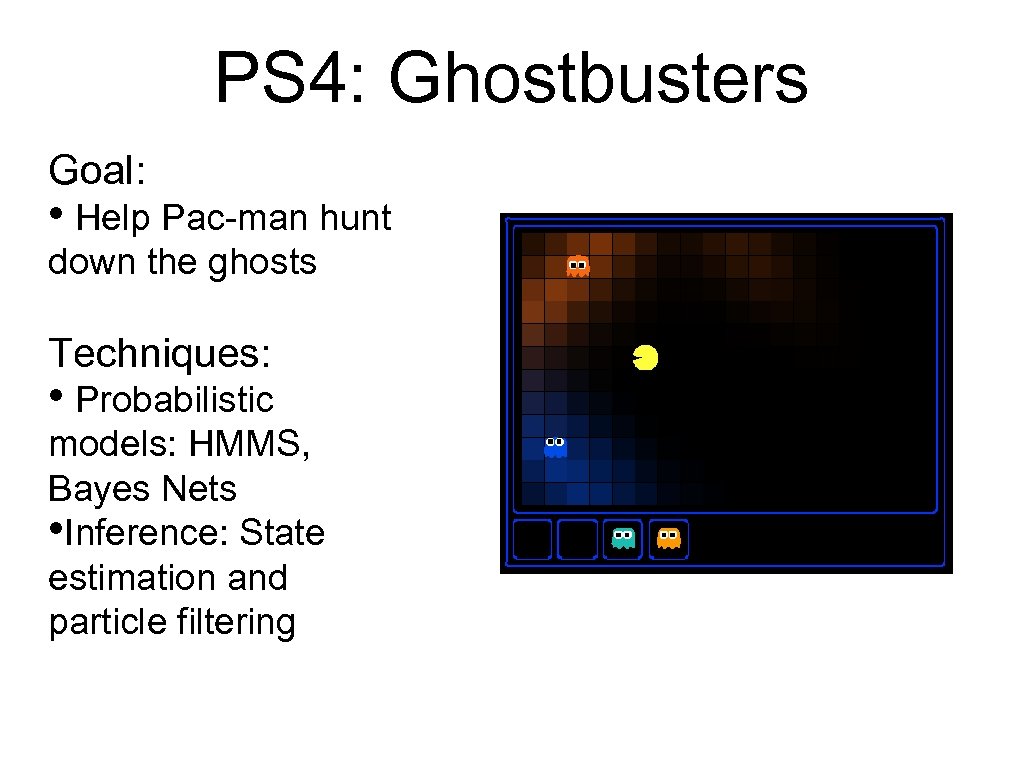 PS 4: Ghostbusters Goal: • Help Pac-man hunt down the ghosts Techniques: • Probabilistic models: HMMS, Bayes Nets • Inference: State estimation and particle filtering
 Robot Localization
 To Do: § Look at the course website: § http: //www. cs. washington. edu/cse 473/12 sp/ § Do the readings § Do the python tutorial