


 Скачать презентацию CSE 245 Computer Networks and Data Communications http
ac8f7a3df9daf76bb02de42d1c573aa1.ppt
- Количество слайдов: 30
 CSE 245: Computer Networks and Data Communications http: //vista. uconn. edu Jun-Hong Cui 08/29/2006
 Outline Ø Course information r What is a network protocol? r A brief introduction to the Internet: past and present r Summary 2
 Course Information r Personnel m Instructor • Jun-Hong Cui, jcui@cse. uconn. edu, ITEB 267 • Office hours – Tu/Th 10: 30 am-11: 30 am or by appointments – Feel free to stop by if you see my door open – e-mail is the best way to communicate with me m Teaching assistant • James Zheng Peng, zheng. peng@uconn. edu • Office hours – Time: TBA – Location: ITEB 230 3
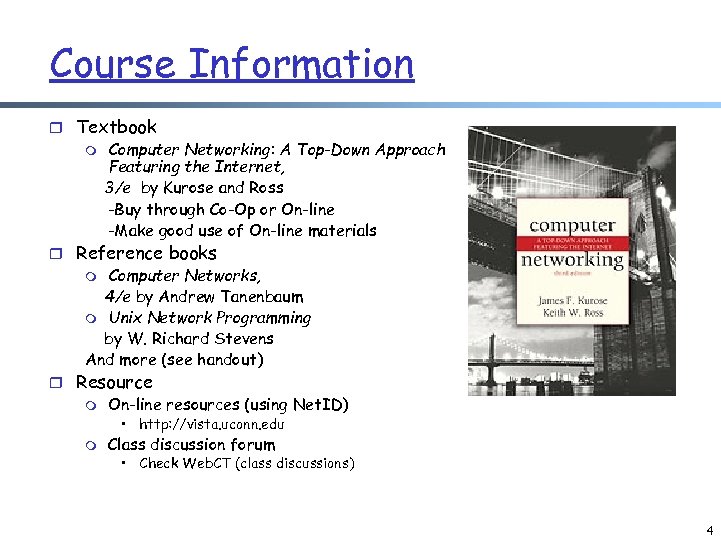 Course Information r Textbook m Computer Networking: A Top-Down Approach Featuring the Internet, 3/e by Kurose and Ross -Buy through Co-Op or On-line -Make good use of On-line materials r Reference books m Computer Networks, 4/e by Andrew Tanenbaum m Unix Network Programming by W. Richard Stevens And more (see handout) r Resource m On-line resources (using Net. ID) • http: //vista. uconn. edu m Class discussion forum • Check Web. CT (class discussions) 4
 What Are the Goals of This Course? r Understand how Internet works m Its philosophy m Its protocols and mechanisms r Learn network programming r And have fun! 5
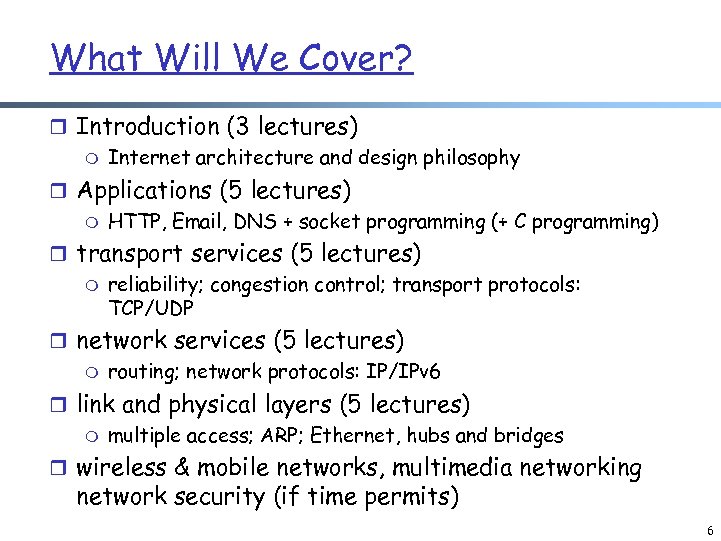 What Will We Cover? r Introduction (3 lectures) m Internet architecture and design philosophy r Applications (5 lectures) m HTTP, Email, DNS + socket programming (+ C programming) r transport services (5 lectures) m reliability; congestion control; transport protocols: TCP/UDP r network services (5 lectures) m routing; network protocols: IP/IPv 6 r link and physical layers (5 lectures) m multiple access; ARP; Ethernet, hubs and bridges r wireless & mobile networks, multimedia networking network security (if time permits) 6
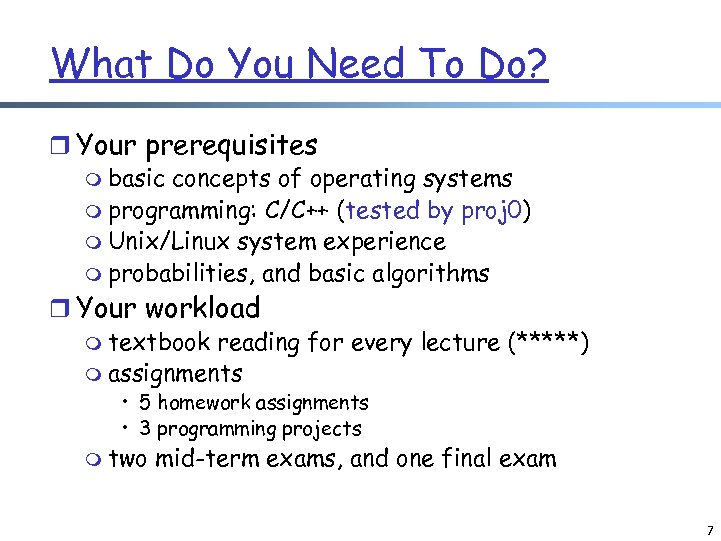 What Do You Need To Do? r Your prerequisites m basic concepts of operating systems m programming: C/C++ (tested by proj 0) m Unix/Linux system experience m probabilities, and basic algorithms r Your workload m textbook reading for every lecture (*****) m assignments • 5 homework assignments • 3 programming projects m two mid-term exams, and one final exam 7
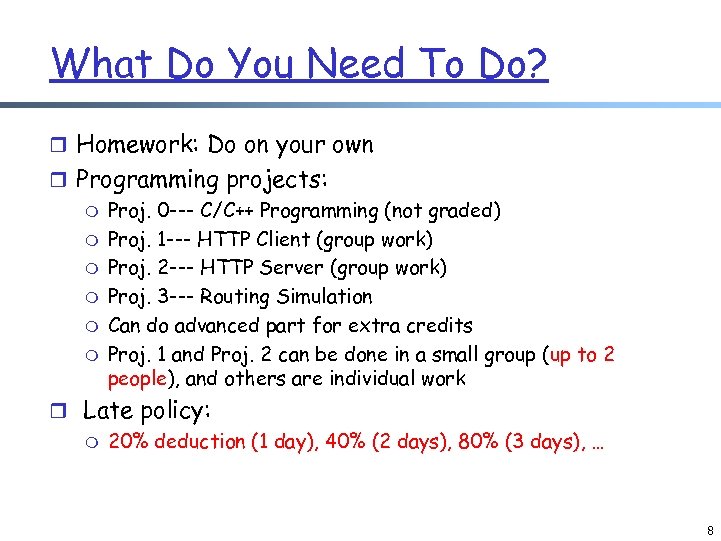 What Do You Need To Do? r Homework: Do on your own r Programming projects: m Proj. 0 --- C/C++ Programming (not graded) m Proj. 1 --- HTTP Client (group work) m Proj. 2 --- HTTP Server (group work) m Proj. 3 --- Routing Simulation m Can do advanced part for extra credits m Proj. 1 and Proj. 2 can be done in a small group (up to 2 people), and others are individual work r Late policy: m 20% deduction (1 day), 40% (2 days), 80% (3 days), … 8
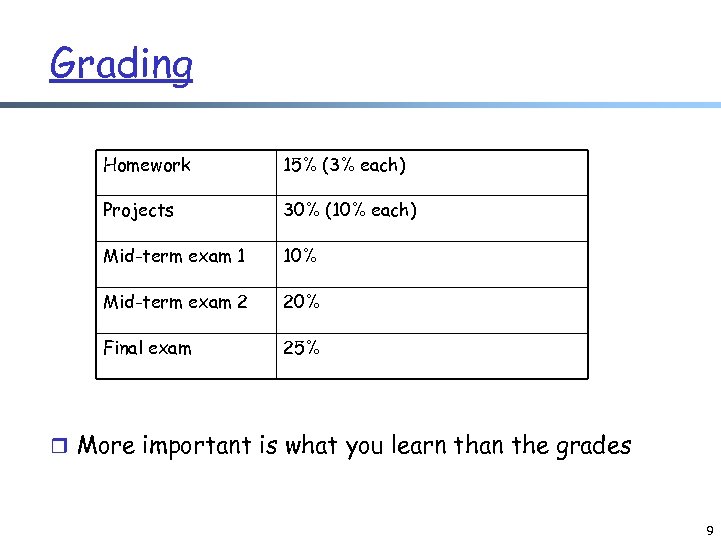 Grading Homework 15% (3% each) Projects 30% (10% each) Mid-term exam 1 10% Mid-term exam 2 20% Final exam 25% r More important is what you learn than the grades 9
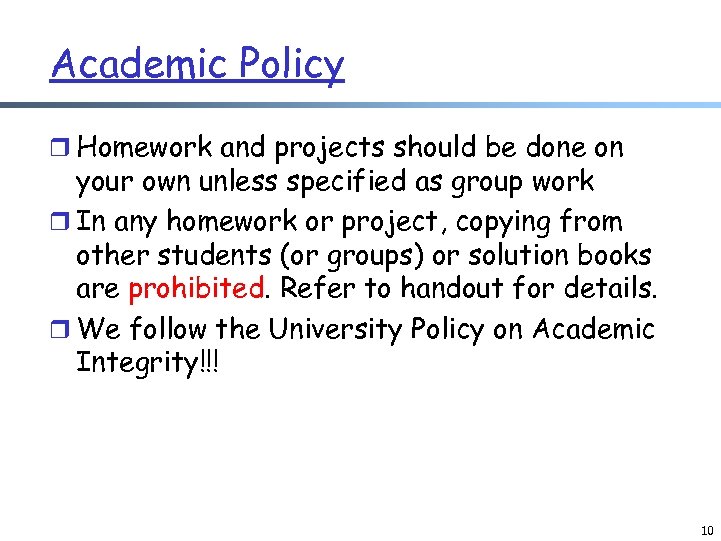 Academic Policy r Homework and projects should be done on your own unless specified as group work r In any homework or project, copying from other students (or groups) or solution books are prohibited. Refer to handout for details. r We follow the University Policy on Academic Integrity!!! 10
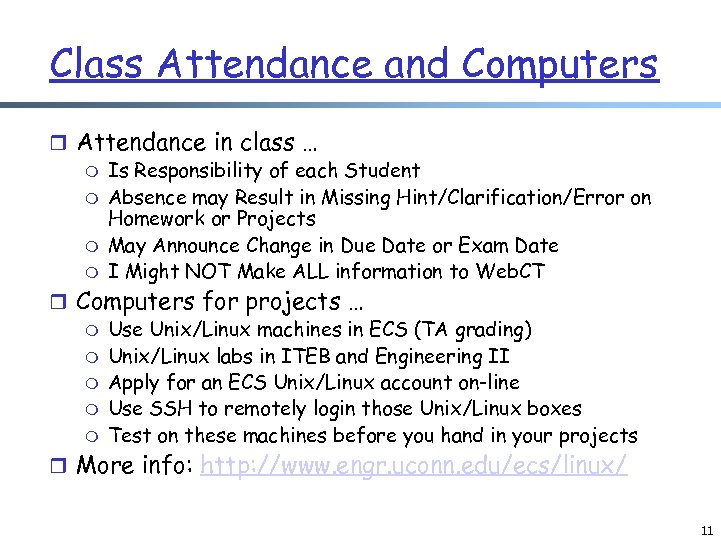 Class Attendance and Computers r Attendance in class … m Is Responsibility of each Student m Absence may Result in Missing Hint/Clarification/Error on Homework or Projects m May Announce Change in Due Date or Exam Date m I Might NOT Make ALL information to Web. CT r Computers for projects … m Use Unix/Linux machines in ECS (TA grading) m Unix/Linux labs in ITEB and Engineering II m Apply for an ECS Unix/Linux account on-line m Use SSH to remotely login those Unix/Linux boxes m Test on these machines before you hand in your projects r More info: http: //www. engr. uconn. edu/ecs/linux/ 11
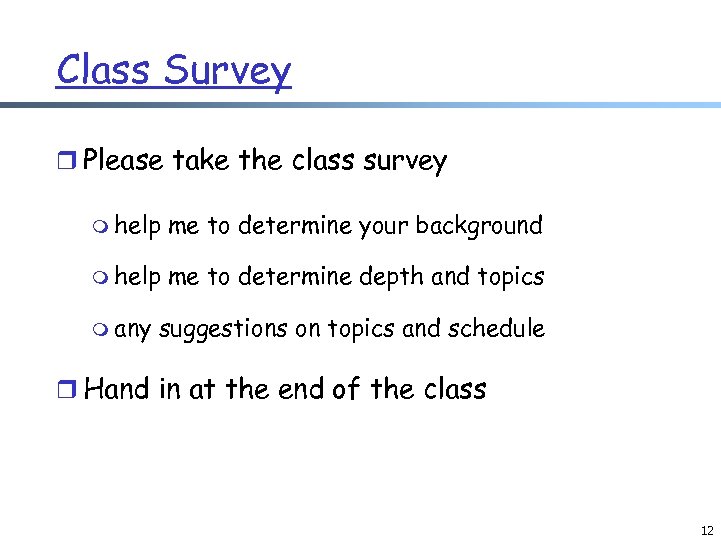 Class Survey r Please take the class survey m help me to determine your background m help me to determine depth and topics m any suggestions on topics and schedule r Hand in at the end of the class 12
 Questions?
 Outline r Course information Ø What is a network protocol? q A brief introduction to the Internet: past and present r Summary 14
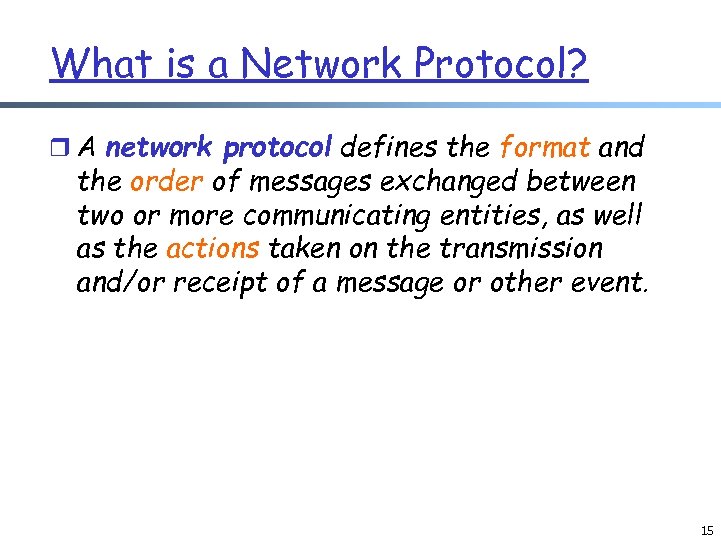 What is a Network Protocol? r A network protocol defines the format and the order of messages exchanged between two or more communicating entities, as well as the actions taken on the transmission and/or receipt of a message or other event. 15
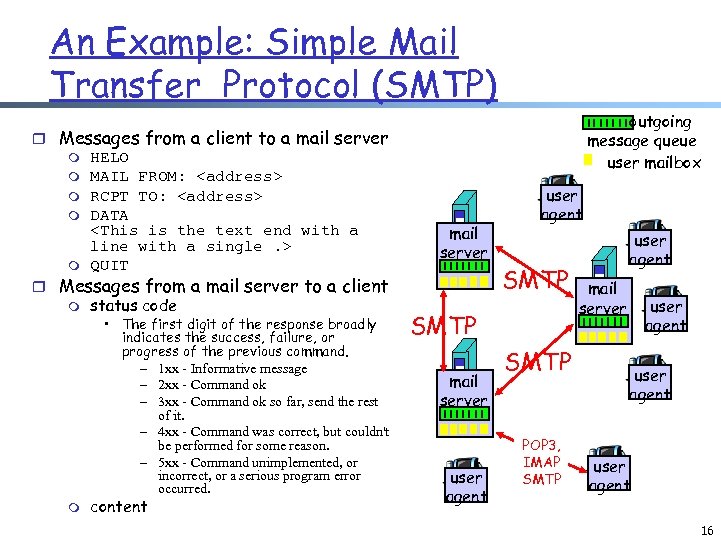 An Example: Simple Mail Transfer Protocol (SMTP) r Messages from a client to a mail server m HELO m MAIL FROM:
 Internet Standardization Process r All standards of the Internet are published as RFC (Request for Comments) m m but not all RFCs are Internet Standards ! available: http: //www. ietf. org r A typical (but not the only) way of standardization: m Internet draft m RFC m Proposed standard m Draft standard (requires 2 working implementations) m Internet standard (declared by Internet Architecture Board) 17
 Outline r Course information r What is a network protocol? Ø A brief introduction to the Internet Ø past ¦ present r Summary 18
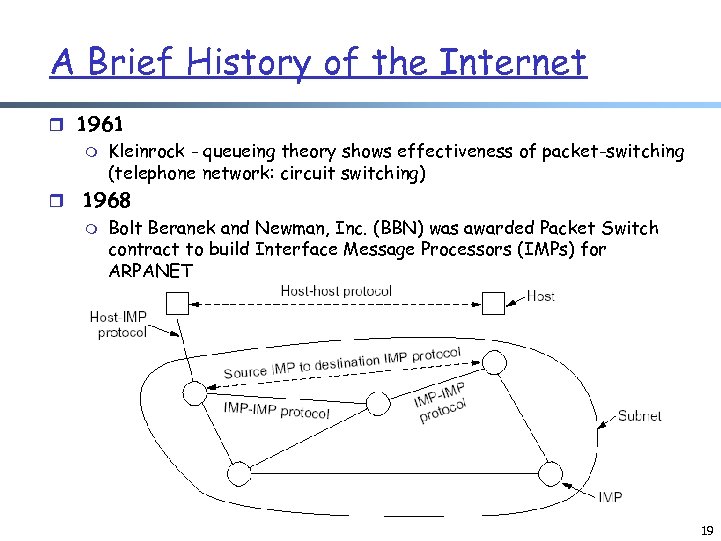 A Brief History of the Internet r 1961 m Kleinrock - queueing theory shows effectiveness of packet-switching (telephone network: circuit switching) r 1968 m Bolt Beranek and Newman, Inc. (BBN) was awarded Packet Switch contract to build Interface Message Processors (IMPs) for ARPANET 19
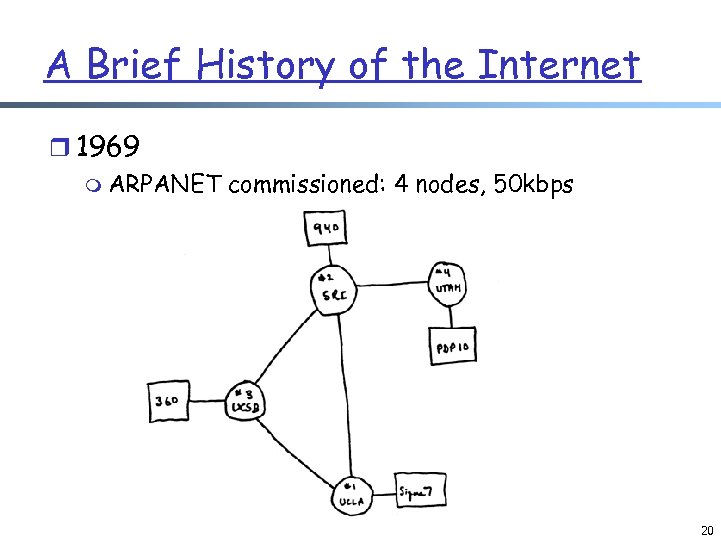 A Brief History of the Internet r 1969 m ARPANET commissioned: 4 nodes, 50 kbps 20
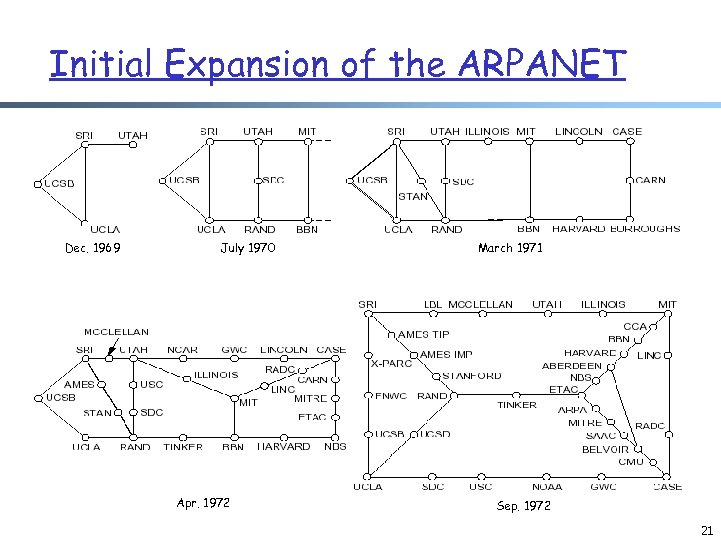 Initial Expansion of the ARPANET Dec. 1969 July 1970 Apr. 1972 March 1971 Sep. 1972 21
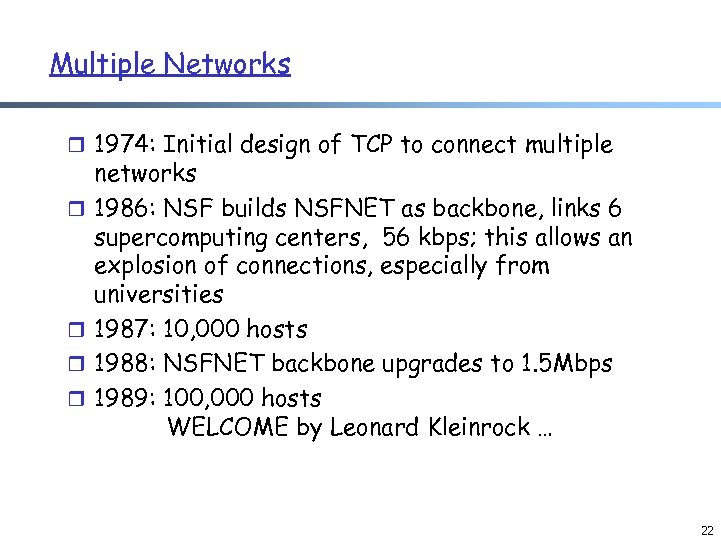 Multiple Networks r 1974: Initial design of TCP to connect multiple r r networks 1986: NSF builds NSFNET as backbone, links 6 supercomputing centers, 56 kbps; this allows an explosion of connections, especially from universities 1987: 10, 000 hosts 1988: NSFNET backbone upgrades to 1. 5 Mbps 1989: 100, 000 hosts WELCOME by Leonard Kleinrock … 22
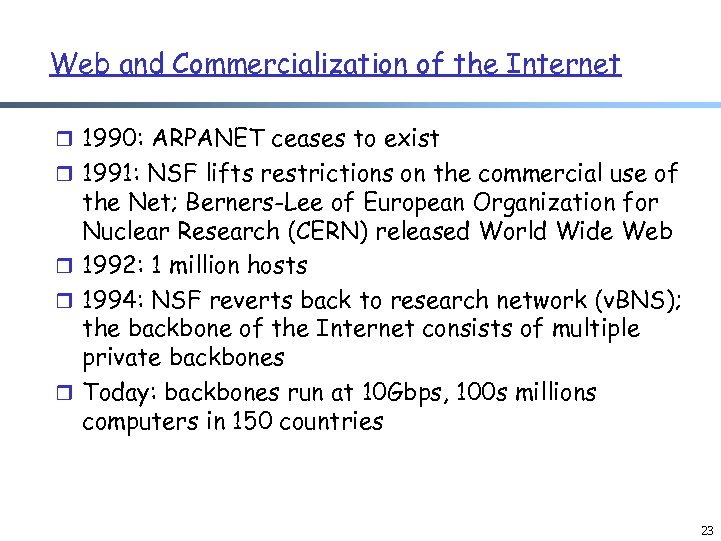 Web and Commercialization of the Internet r 1990: ARPANET ceases to exist r 1991: NSF lifts restrictions on the commercial use of the Net; Berners-Lee of European Organization for Nuclear Research (CERN) released World Wide Web r 1992: 1 million hosts r 1994: NSF reverts back to research network (v. BNS); the backbone of the Internet consists of multiple private backbones r Today: backbones run at 10 Gbps, 100 s millions computers in 150 countries 23
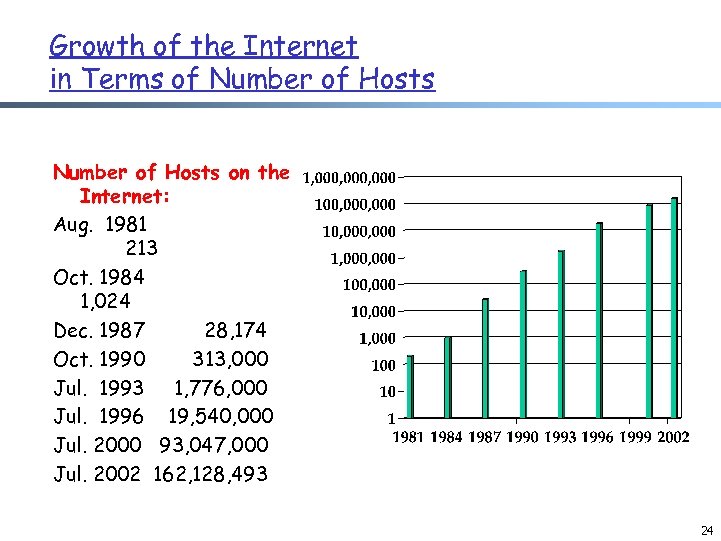 Growth of the Internet in Terms of Number of Hosts on the Internet: Aug. 1981 213 Oct. 1984 1, 024 Dec. 1987 28, 174 Oct. 1990 313, 000 Jul. 1993 1, 776, 000 Jul. 1996 19, 540, 000 Jul. 2000 93, 047, 000 Jul. 2002 162, 128, 493 24
 Outline r Course information r What is a network protocol? Ø A brief introduction to the Internet ¦ past Ø present r Summary 25
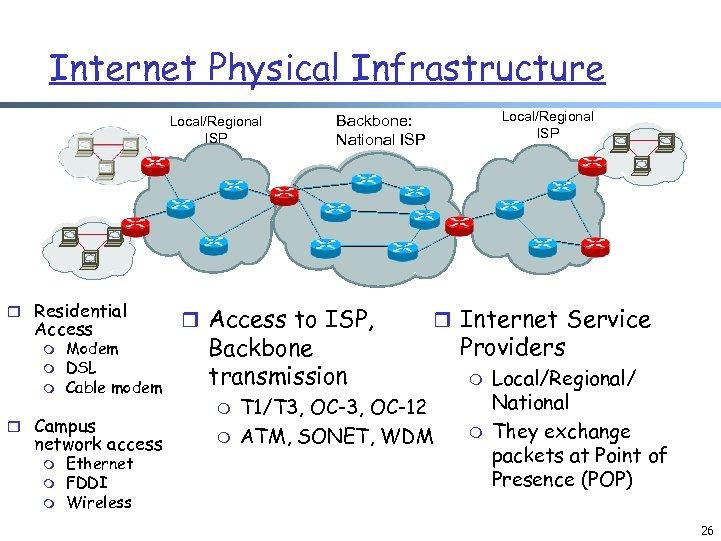 Internet Physical Infrastructure Local/Regional ISP r Residential Access m m m Modem DSL Cable modem r Campus network access m m m Ethernet FDDI Wireless r Access to ISP, Backbone transmission m m Local/Regional ISP Backbone: National ISP r Internet Service T 1/T 3, OC-12 ATM, SONET, WDM Providers m m Local/Regional/ National They exchange packets at Point of Presence (POP) 26
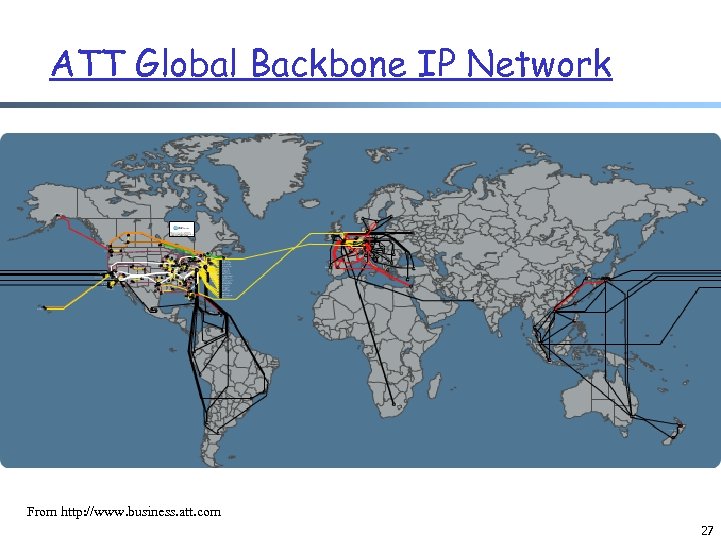 ATT Global Backbone IP Network From http: //www. business. att. com 27
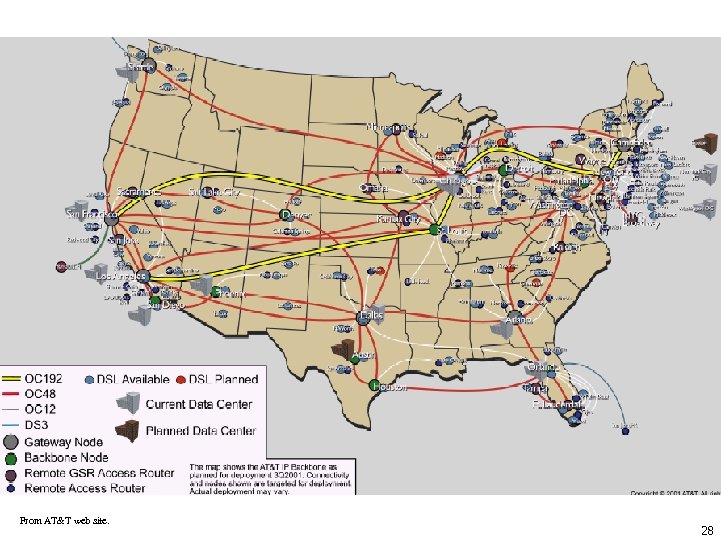 From AT&T web site. 28
 Summary r Course information r Concept of network protocol r The past: m The Internet started as ARPANET in late 1960 s m The initial link bandwidth was 50 kbps m The number of hosts at the end of 1969 was 4 r Current: m The number of hosts connected to the Internet grows at an exponential speed m The backbone speed of the current Internet is about 10 Gbps m The number of hosts attached to the Internet in July 2002 was about 162 millions 29
 Hands-on Exercises r Read the manual of ping and traceroute (or tracert), and try them on an ECS machine 1. 2. % /bin/ping