


 Скачать презентацию CS 5038 The Electronic Society Lecture 1 Overview
abbb0c49ddb3d5193e64d6efcdf4f747.ppt
- Количество слайдов: 27
 CS 5038 The Electronic Society Lecture 1: Overview of Electronic Commerce Lecture Outline • • • Definitions Perspectives Variations Business Models Pressures on businesses Responses of businesses The Networked Business Benefits Problems 1
 Time change! Move to 9 am for next week 2
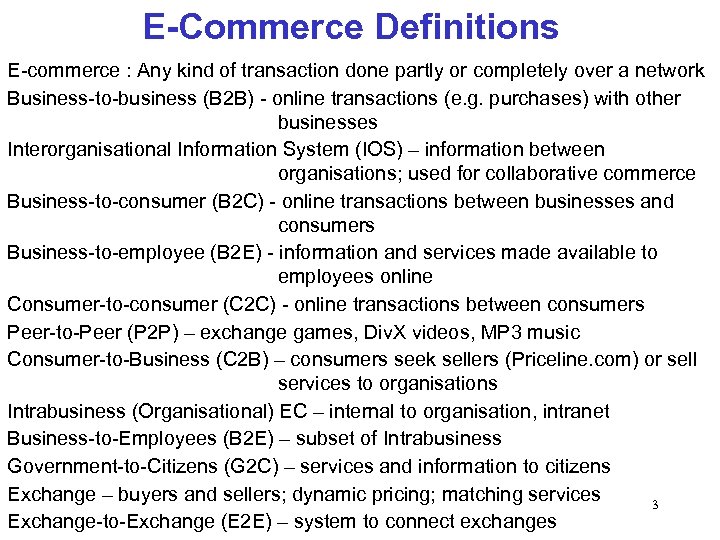 E-Commerce Definitions E-commerce : Any kind of transaction done partly or completely over a network Business-to-business (B 2 B) - online transactions (e. g. purchases) with other businesses Interorganisational Information System (IOS) – information between organisations; used for collaborative commerce Business-to-consumer (B 2 C) - online transactions between businesses and consumers Business-to-employee (B 2 E) - information and services made available to employees online Consumer-to-consumer (C 2 C) - online transactions between consumers Peer-to-Peer (P 2 P) – exchange games, Div. X videos, MP 3 music Consumer-to-Business (C 2 B) – consumers seek sellers (Priceline. com) or sell services to organisations Intrabusiness (Organisational) EC – internal to organisation, intranet Business-to-Employees (B 2 E) – subset of Intrabusiness Government-to-Citizens (G 2 C) – services and information to citizens Exchange – buyers and sellers; dynamic pricing; matching services 3 Exchange-to-Exchange (E 2 E) – system to connect exchanges
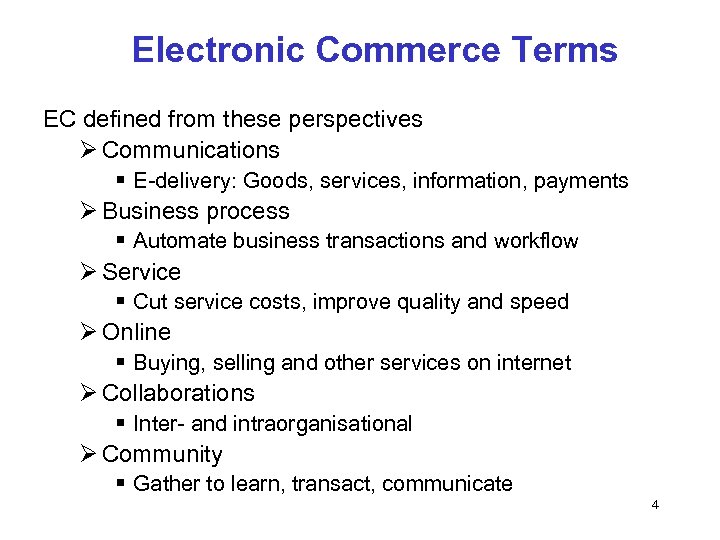 Electronic Commerce Terms EC defined from these perspectives Ø Communications § E-delivery: Goods, services, information, payments Ø Business process § Automate business transactions and workflow Ø Service § Cut service costs, improve quality and speed Ø Online § Buying, selling and other services on internet Ø Collaborations § Inter- and intraorganisational Ø Community § Gather to learn, transact, communicate 4
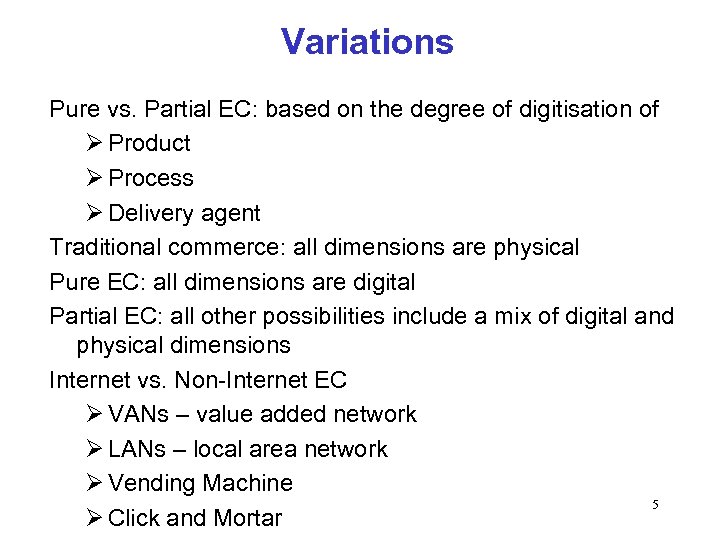 Variations Pure vs. Partial EC: based on the degree of digitisation of Ø Product Ø Process Ø Delivery agent Traditional commerce: all dimensions are physical Pure EC: all dimensions are digital Partial EC: all other possibilities include a mix of digital and physical dimensions Internet vs. Non-Internet EC Ø VANs – value added network Ø LANs – local area network Ø Vending Machine 5 Ø Click and Mortar
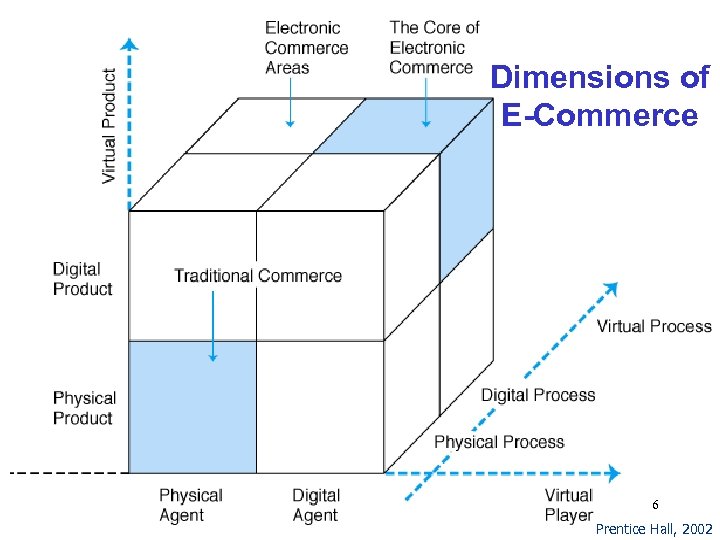 Dimensions of E-Commerce 6 Prentice Hall, 2002
 Business Models A method of doing business by which a company can generate revenue to sustain itself. Ø Name your price – priceline. com Ø Find the best price – hotwire. com Ø Dynamic brokering – getthere. com Ø Affiliate marketing – amazon. com Ø Electronic tendering systems – gxs. com Ø Online auctions – ebay. com Ø Customization and personalization – dell. com Ø Electronic marketplaces and exchanges – e-steel. com Ø Supply chain improvers – productbank. com. au Ø Collaborative commerce Where is the company positioned in the value chain? 7
 Rappa’s Business Models http: //www. digitalenterprise. org/models. html ØBrokerage – exchange, trading community, aggregator ØAdvertising – portals, sponsorship banners ØInfomediary § Recommender - users provide recommendations on products, e. g. http: //www. epinions. com § Registration - session tracking of users, allows greater targeting of advertising, e. g. http: //www. nytimes. com ØMerchant - retail ØManufacturer – eliminate middleman ØAffiliate – online referrals for commission ØCommunity – voluntary contributors, regular visitors ØSubscription – high value content § Many companies changed to subscription models in last two years ØUtility – pay by byte 8
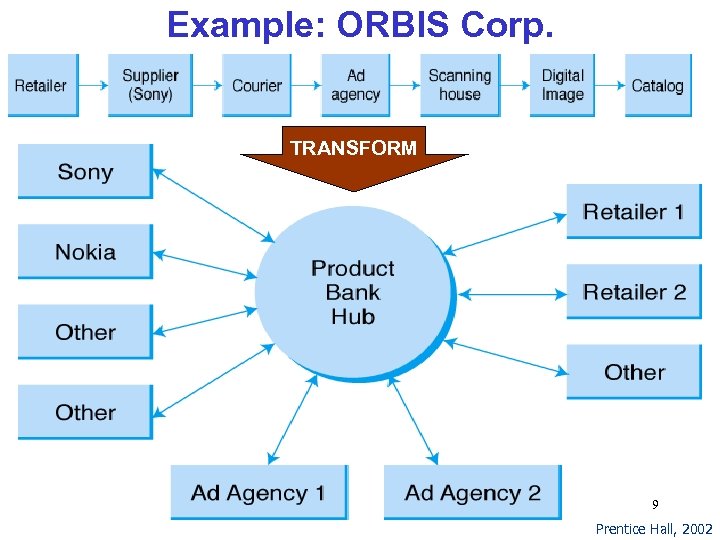 Example: ORBIS Corp. TRANSFORM 9 Prentice Hall, 2002
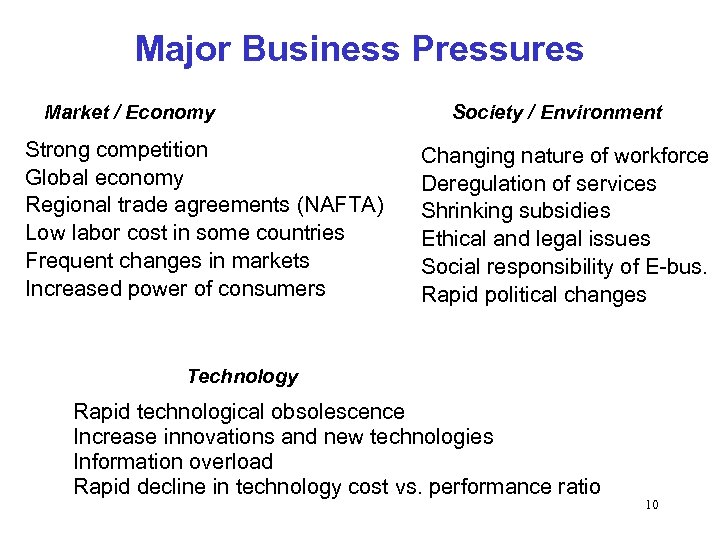 Major Business Pressures Market / Economy Strong competition Global economy Regional trade agreements (NAFTA) Low labor cost in some countries Frequent changes in markets Increased power of consumers Society / Environment Changing nature of workforce Deregulation of services Shrinking subsidies Ethical and legal issues Social responsibility of E-bus. Rapid political changes Technology Rapid technological obsolescence Increase innovations and new technologies Information overload Rapid decline in technology cost vs. performance ratio 10
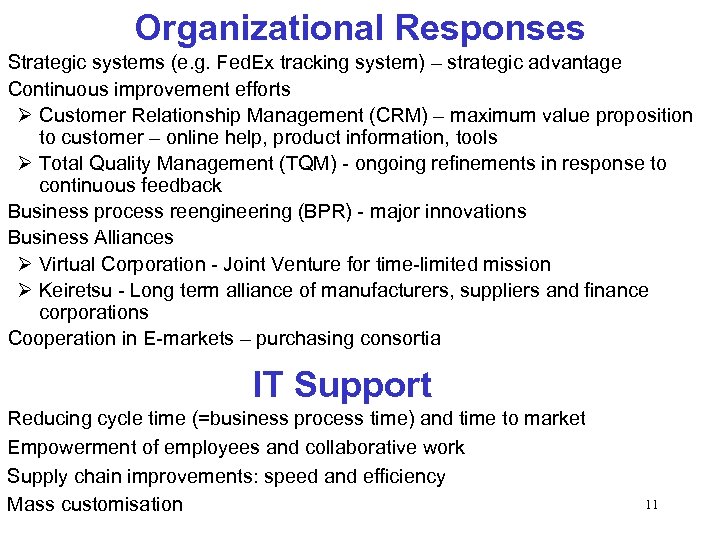 Organizational Responses Strategic systems (e. g. Fed. Ex tracking system) – strategic advantage Continuous improvement efforts Ø Customer Relationship Management (CRM) – maximum value proposition to customer – online help, product information, tools Ø Total Quality Management (TQM) - ongoing refinements in response to continuous feedback Business process reengineering (BPR) - major innovations Business Alliances Ø Virtual Corporation - Joint Venture for time-limited mission Ø Keiretsu - Long term alliance of manufacturers, suppliers and finance corporations Cooperation in E-markets – purchasing consortia IT Support Reducing cycle time (=business process time) and time to market Empowerment of employees and collaborative work Supply chain improvements: speed and efficiency Mass customisation 11
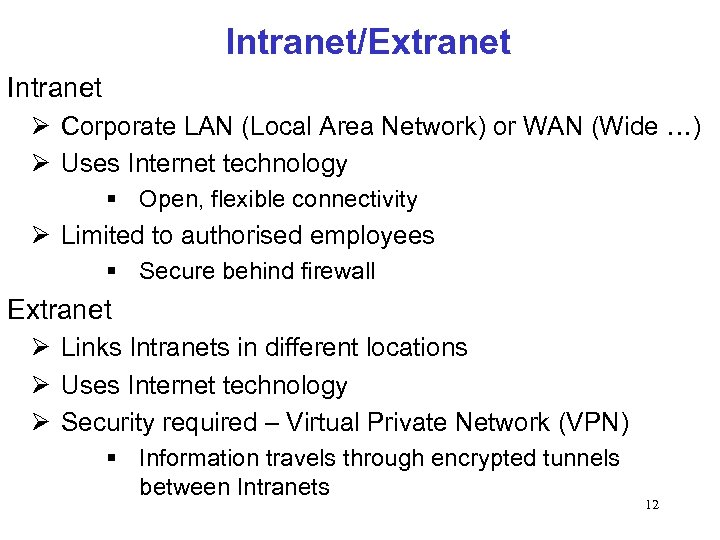 Intranet/Extranet Intranet Ø Corporate LAN (Local Area Network) or WAN (Wide …) Ø Uses Internet technology § Open, flexible connectivity Ø Limited to authorised employees § Secure behind firewall Extranet Ø Links Intranets in different locations Ø Uses Internet technology Ø Security required – Virtual Private Network (VPN) § Information travels through encrypted tunnels between Intranets 12
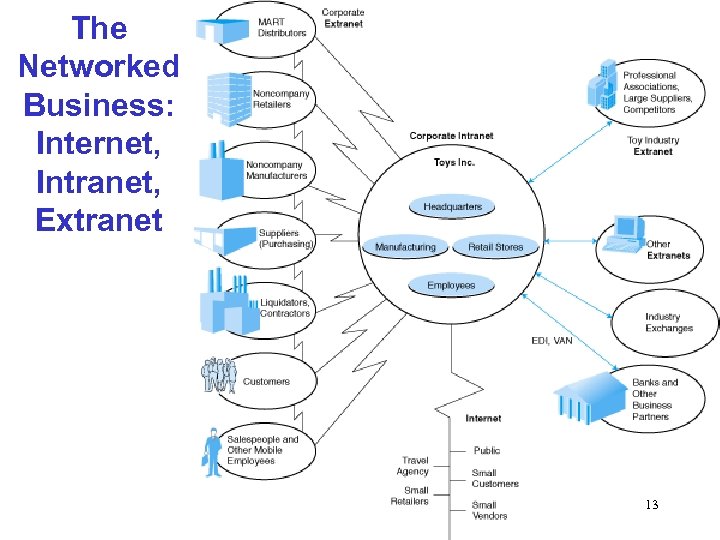 The Networked Business: Internet, Intranet, Extranet 13
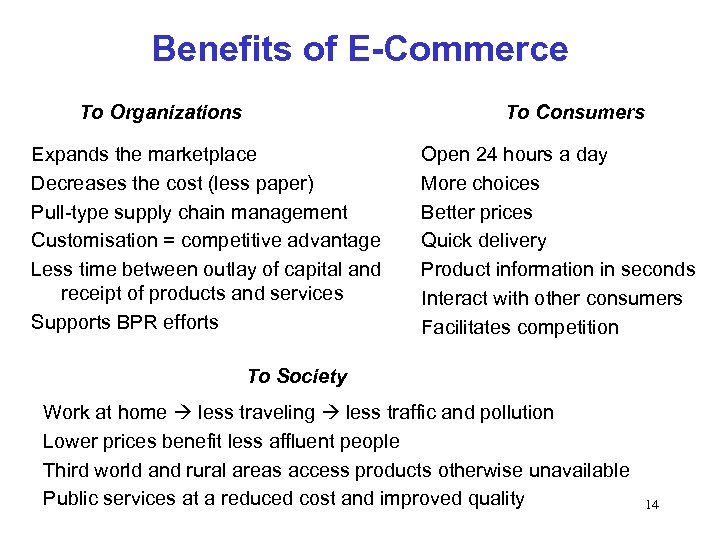 Benefits of E-Commerce To Organizations To Consumers Expands the marketplace Decreases the cost (less paper) Pull-type supply chain management Customisation = competitive advantage Less time between outlay of capital and receipt of products and services Supports BPR efforts Open 24 hours a day More choices Better prices Quick delivery Product information in seconds Interact with other consumers Facilitates competition To Society Work at home less traveling less traffic and pollution Lower prices benefit less affluent people Third world and rural areas access products otherwise unavailable Public services at a reduced cost and improved quality 14
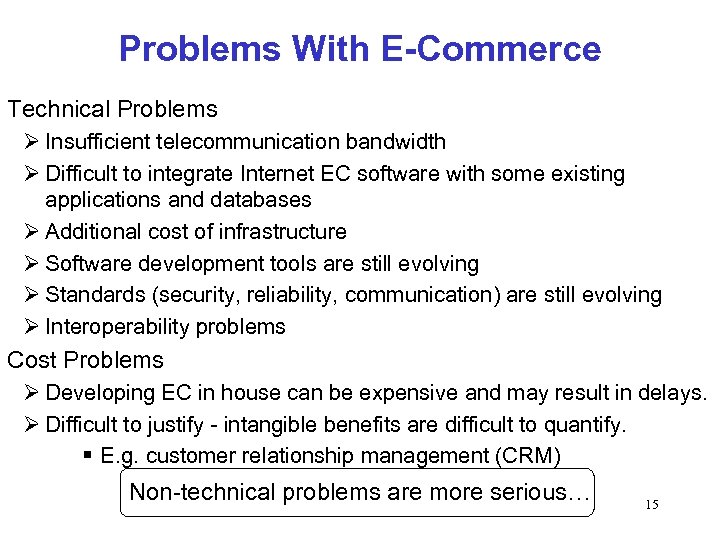 Problems With E-Commerce Technical Problems Ø Insufficient telecommunication bandwidth Ø Difficult to integrate Internet EC software with some existing applications and databases Ø Additional cost of infrastructure Ø Software development tools are still evolving Ø Standards (security, reliability, communication) are still evolving Ø Interoperability problems Cost Problems Ø Developing EC in house can be expensive and may result in delays. Ø Difficult to justify - intangible benefits are difficult to quantify. § E. g. customer relationship management (CRM) Non-technical problems are more serious… 15
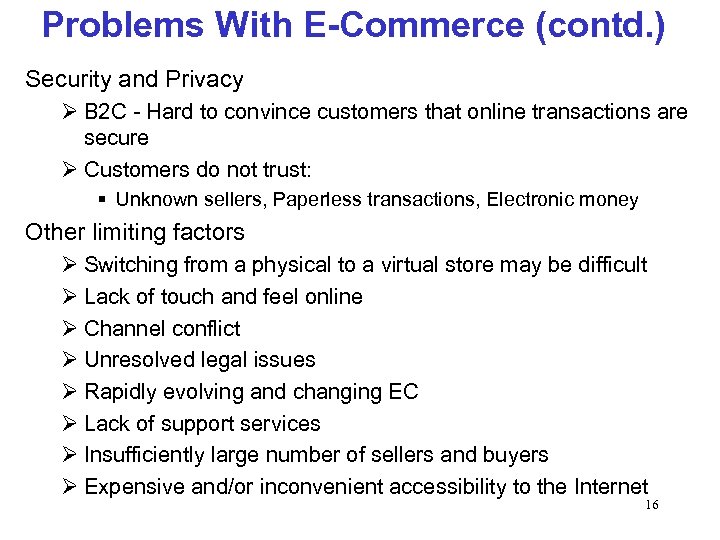 Problems With E-Commerce (contd. ) Security and Privacy Ø B 2 C - Hard to convince customers that online transactions are secure Ø Customers do not trust: § Unknown sellers, Paperless transactions, Electronic money Other limiting factors Ø Switching from a physical to a virtual store may be difficult Ø Lack of touch and feel online Ø Channel conflict Ø Unresolved legal issues Ø Rapidly evolving and changing EC Ø Lack of support services Ø Insufficiently large number of sellers and buyers Ø Expensive and/or inconvenient accessibility to the Internet 16
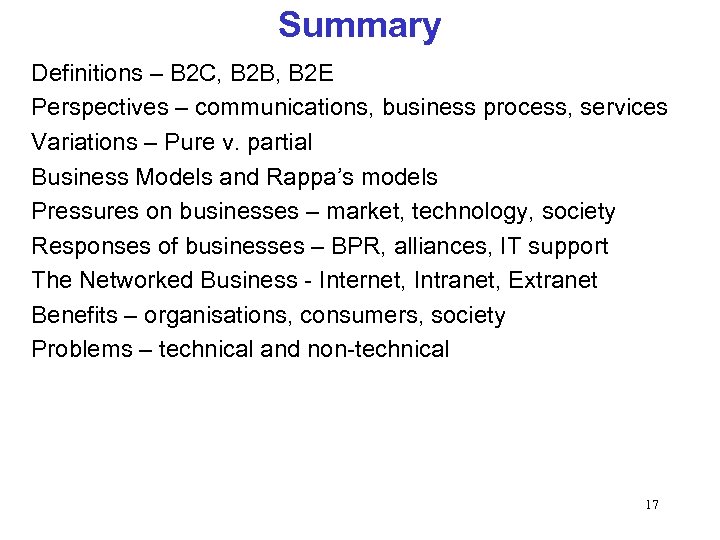 Summary Definitions – B 2 C, B 2 B, B 2 E Perspectives – communications, business process, services Variations – Pure v. partial Business Models and Rappa’s models Pressures on businesses – market, technology, society Responses of businesses – BPR, alliances, IT support The Networked Business - Internet, Intranet, Extranet Benefits – organisations, consumers, society Problems – technical and non-technical 17
 Quiz 1 18
 CS 5038 The Electronic Society Lecture 1. 5: The Digital Economy Lecture Outline • • • The digital economy Competition in E-markets Intermediation Winners and losers Impact on business process and organisation 19
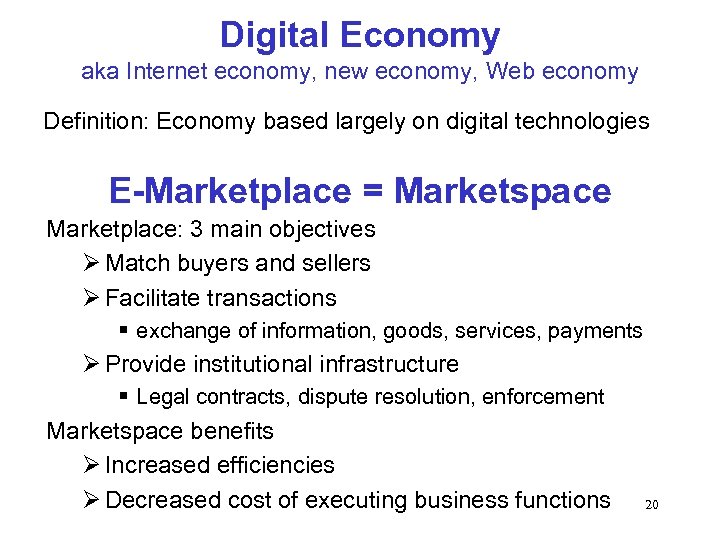 Digital Economy aka Internet economy, new economy, Web economy Definition: Economy based largely on digital technologies E-Marketplace = Marketspace Marketplace: 3 main objectives Ø Match buyers and sellers Ø Facilitate transactions § exchange of information, goods, services, payments Ø Provide institutional infrastructure § Legal contracts, dispute resolution, enforcement Marketspace benefits Ø Increased efficiencies Ø Decreased cost of executing business functions 20
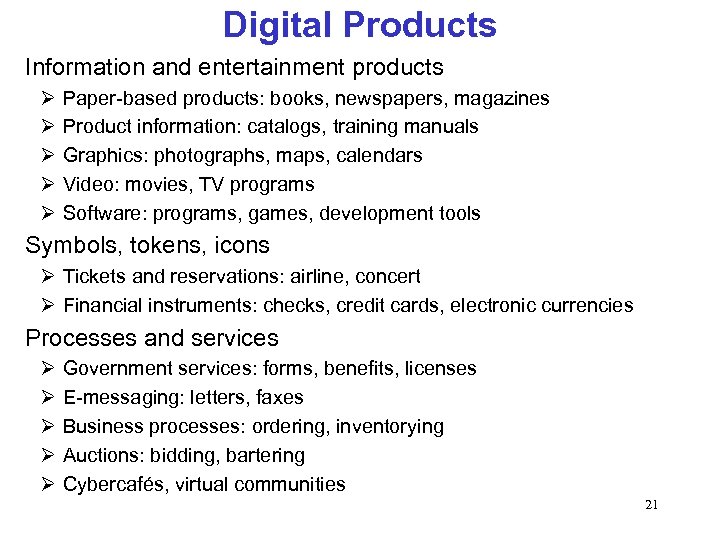 Digital Products Information and entertainment products Ø Ø Ø Paper-based products: books, newspapers, magazines Product information: catalogs, training manuals Graphics: photographs, maps, calendars Video: movies, TV programs Software: programs, games, development tools Symbols, tokens, icons Ø Tickets and reservations: airline, concert Ø Financial instruments: checks, credit cards, electronic currencies Processes and services Ø Ø Ø Government services: forms, benefits, licenses E-messaging: letters, faxes Business processes: ordering, inventorying Auctions: bidding, bartering Cybercafés, virtual communities 21
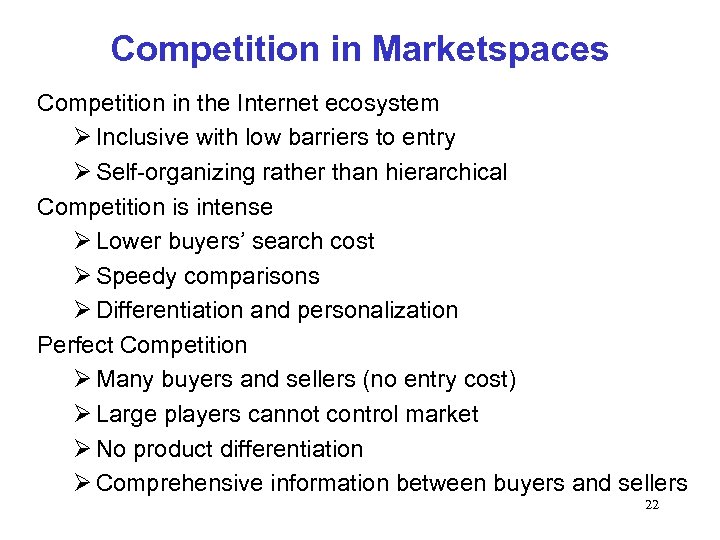 Competition in Marketspaces Competition in the Internet ecosystem Ø Inclusive with low barriers to entry Ø Self-organizing rather than hierarchical Competition is intense Ø Lower buyers’ search cost Ø Speedy comparisons Ø Differentiation and personalization Perfect Competition Ø Many buyers and sellers (no entry cost) Ø Large players cannot control market Ø No product differentiation Ø Comprehensive information between buyers and sellers 22
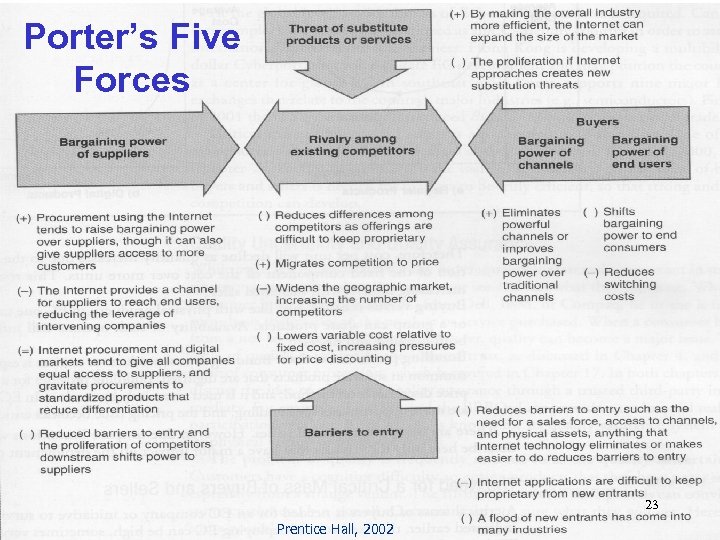 Porter’s Five Forces 23 Prentice Hall, 2002
 Intermediation Roles and value of intermediaries in e-markets (limitations of dealing directly) Ø Search costs: brokers with access to customer preferences can predict demand for products Ø Lack of privacy: anonymity of buyer and/or seller Ø Gather product information from many sources Ø Contracting risk - Broker can: § Record reputations § Act as policeman § Provide insurance Ø Pricing inefficiencies § Pricing mechanisms for imbalance of buy/sell orders 24
 Winners and Losers in EC Winners in EC Ø Infrastructure providers § Internet access (ISP) § Software and hardware § Security & payment systems Ø Diversified portal providers Ø Proprietary network owners Ø Midsize manufacturers Ø A few large resellers § economies of scale e. g. Fed. Ex, UPS Ø Advertising companies Ø Conventional retailers online Ø Online only companies § e. Bay, Amazon Ø E-market makers Losers in EC Ø Wholesalers (particularly small ones) § no need for local distributors Ø Brokers § travel, real estate, stock, insurance Ø Salespeople Ø Nondifferentiated manufacturers § Neither low cost nor innovative must adapt to change 25
 Impact on Business Processes and Organisations Improving direct marketing Ø Product promotion Ø New sales channels Ø Direct savings Ø Reduced cycle time Ø Customer service Ø Corporate image § E. g. amazon Ø Customisation Transforming organizations Ø Organization learning Ø Changing nature of work Redefining organizations Ø New product capabilities Ø New business models Impact on manufacturing Ø Virtual manufacturing Ø Build-to-order Impact on finance & accounting Impact on human resources 26 Ø Online distance learning
 Summary The digital economy – marketspaces Competition in marketspaces - intense Intermediation – role and value Winners and losers – must adapt to change Impact on business process and organisation Quiz 2 27