Скачать презентацию CS 155 Spring 2010 Computer and Network Security
3697f45c152be7fb3ac675b235cbfd49.ppt
- Количество слайдов: 60
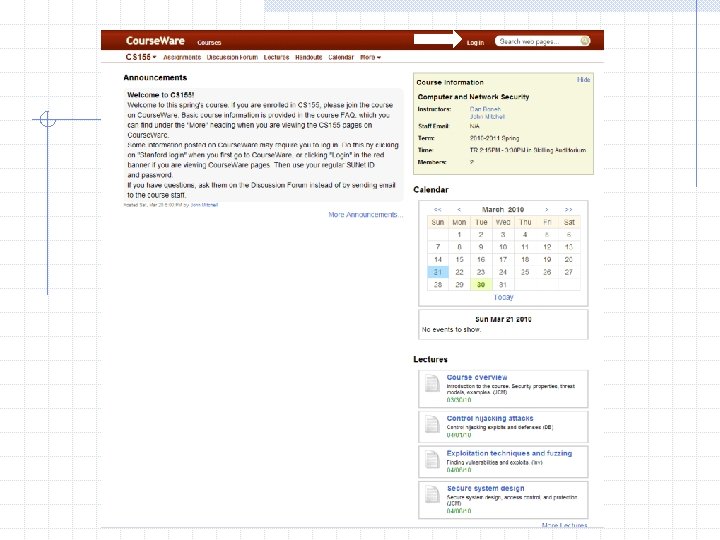
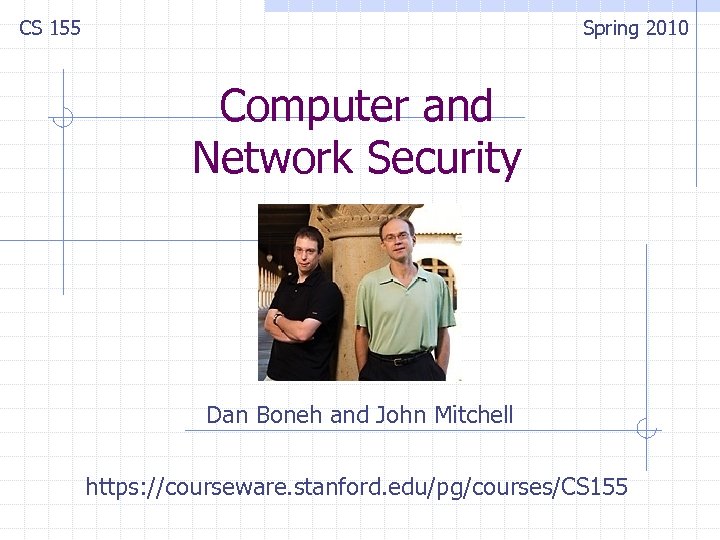 CS 155 Spring 2010 Computer and Network Security Dan Boneh and John Mitchell https: //courseware. stanford. edu/pg/courses/CS 155
 What’s this course about? Intro to computer and network security Some challenging fun projects n n Learn about attacks Learn about preventing attacks Lectures on related topics n n n Application and operating system security Web security Network security Some overlap with CS 241, Web Security Not a course on Cryptography (take CS 255)
 Organization Application and OS security (5 lectures) n n n Buffer overflow project Vulnerabilities: control hijacking attacks, fuzzing Prevention: System design, robust coding, isolation Web security (4 lectures) n n n Web site attack and defenses project Browser policies, session mgmt, user authentication HTTPS and web application security Network security (6 lectures) n n n Network traceroute and packet filtering project Protocol designs, vulnerabilities, prevention Malware, botnets, DDo. S, network security testing A few other topics n Cryptography (user perspective), digital rights management, final guest lecture, …
 General course info (see web) Prerequisite: Operating systems (CS 140) Textbook: none – reading online Coursework n n 3 projects, 2 homeworks, final exam grade: 0. 25 H + 0. 5 P + 0. 25 F Teaching assistants n Hariny Murli, Hristo Bojinov Occasional optional section n Experiment this year: Live Meeting
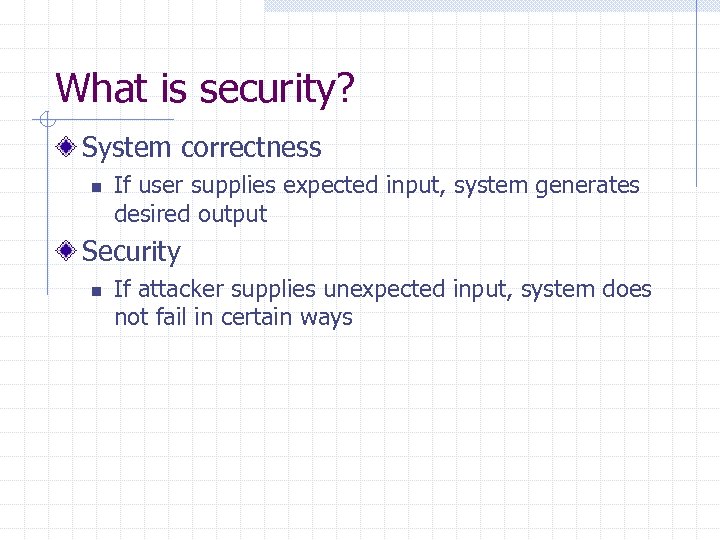 What is security? System correctness n If user supplies expected input, system generates desired output Security n If attacker supplies unexpected input, system does not fail in certain ways
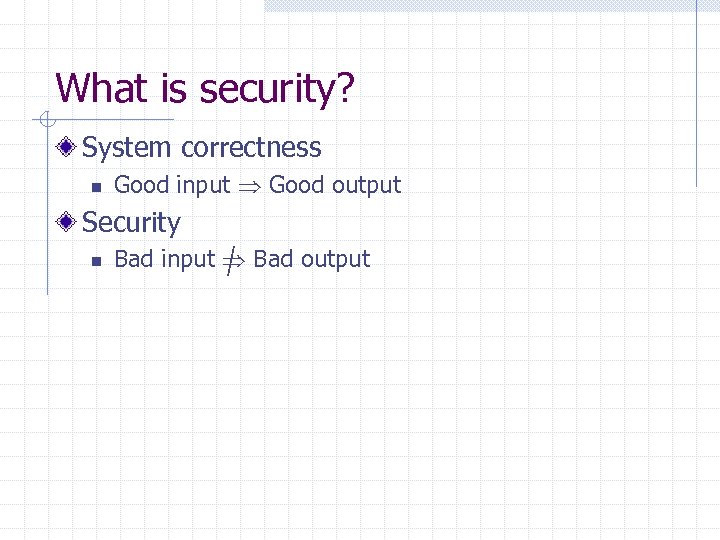 What is security? System correctness n Good input Good output Security n Bad input Bad output
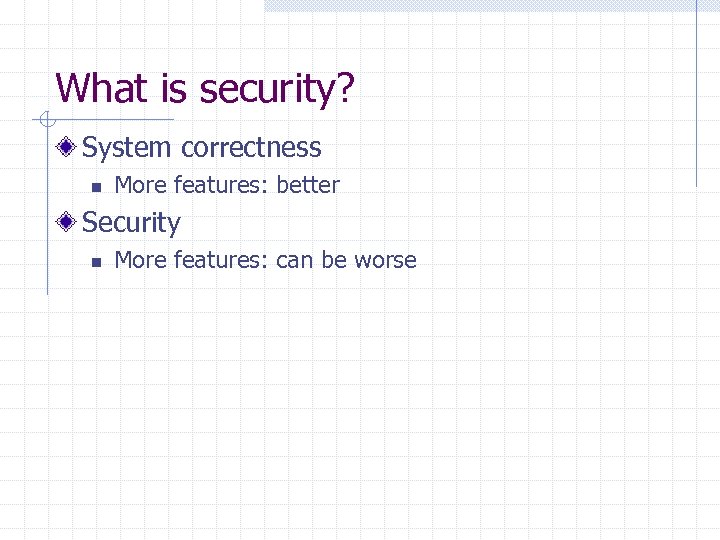 What is security? System correctness n More features: better Security n More features: can be worse
 Security properties Confidentiality n Information about system or its users cannot be learned by an attacker Integrity n The system continues to operate properly, only reaching states that would occur if there were no attacker Availability n Actions by an attacker do not prevent users from having access to use of the system
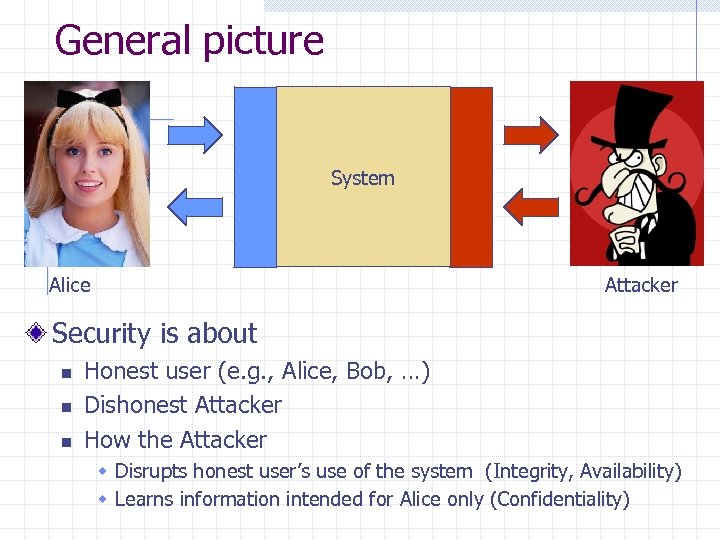 General picture System Alice Attacker Security is about n n n Honest user (e. g. , Alice, Bob, …) Dishonest Attacker How the Attacker w Disrupts honest user’s use of the system (Integrity, Availability) w Learns information intended for Alice only (Confidentiality)
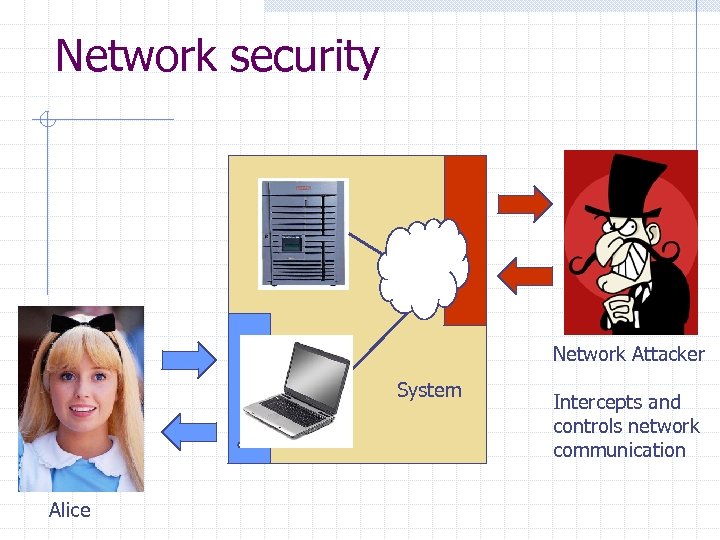 Network security Network Attacker System Alice Intercepts and controls network communication
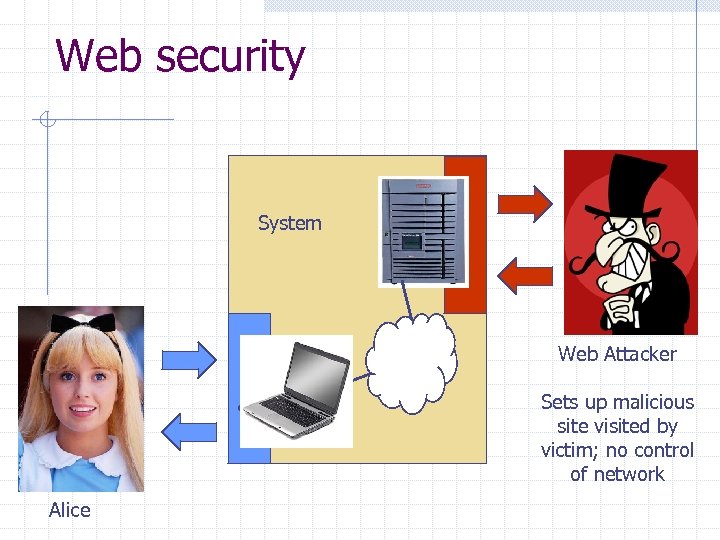 Web security System Web Attacker Sets up malicious site visited by victim; no control of network Alice
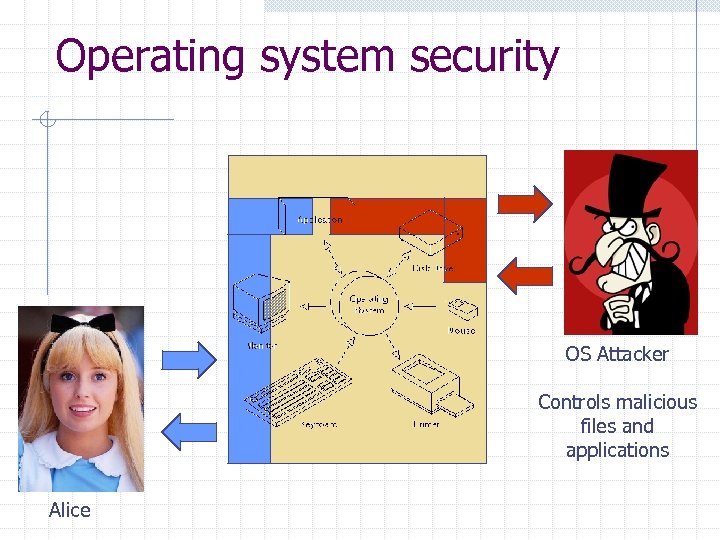 Operating system security OS Attacker Controls malicious files and applications Alice
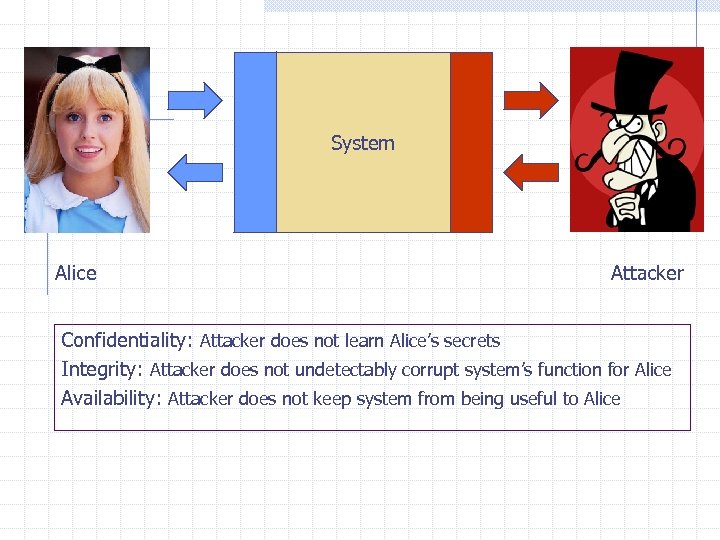 System Alice Attacker Confidentiality: Attacker does not learn Alice’s secrets Integrity: Attacker does not undetectably corrupt system’s function for Alice Availability: Attacker does not keep system from being useful to Alice
 Current Trends
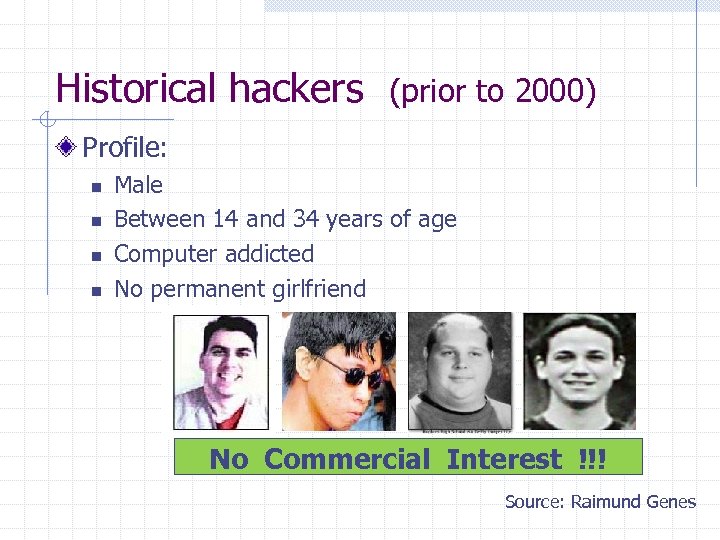 Historical hackers (prior to 2000) Profile: n n Male Between 14 and 34 years of age Computer addicted No permanent girlfriend No Commercial Interest !!! Source: Raimund Genes
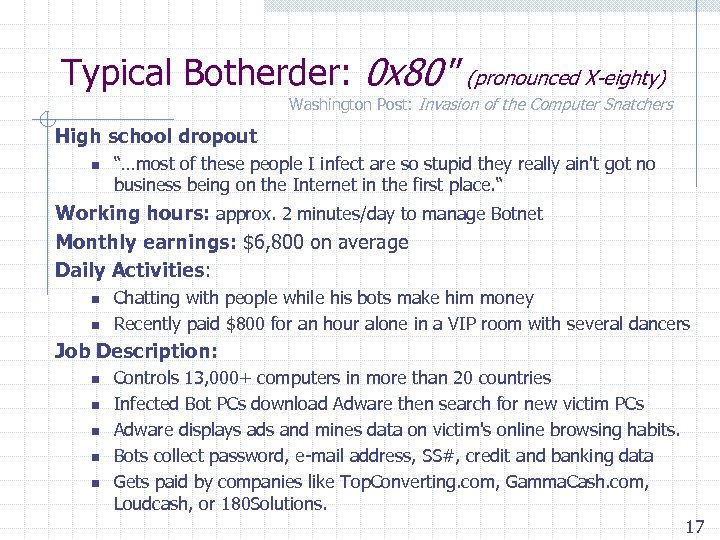 Typical Botherder: 0 x 80" (pronounced X-eighty) Washington Post: Invasion of the Computer Snatchers High school dropout n “…most of these people I infect are so stupid they really ain't got no business being on the Internet in the first place. “ Working hours: approx. 2 minutes/day to manage Botnet Monthly earnings: $6, 800 on average Daily Activities: n n Chatting with people while his bots make him money Recently paid $800 for an hour alone in a VIP room with several dancers Job Description: n n n Controls 13, 000+ computers in more than 20 countries Infected Bot PCs download Adware then search for new victim PCs Adware displays ads and mines data on victim's online browsing habits. Bots collect password, e-mail address, SS#, credit and banking data Gets paid by companies like Top. Converting. com, Gamma. Cash. com, Loudcash, or 180 Solutions. 17
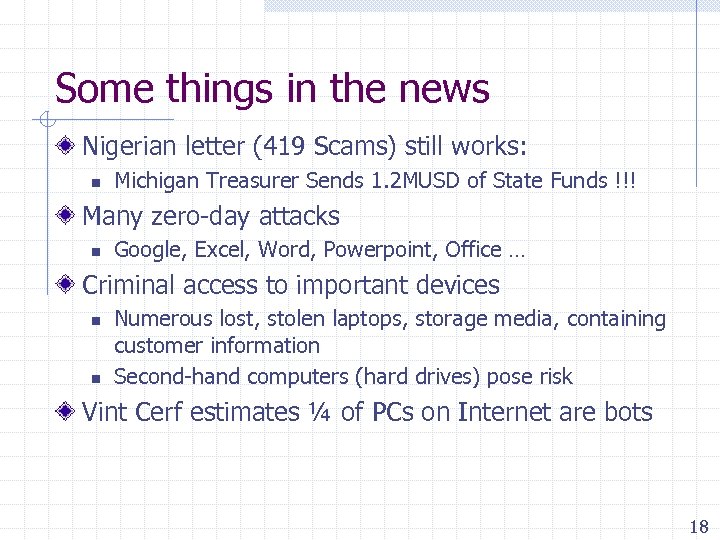 Some things in the news Nigerian letter (419 Scams) still works: n Michigan Treasurer Sends 1. 2 MUSD of State Funds !!! Many zero-day attacks n Google, Excel, Word, Powerpoint, Office … Criminal access to important devices n n Numerous lost, stolen laptops, storage media, containing customer information Second-hand computers (hard drives) pose risk Vint Cerf estimates ¼ of PCs on Internet are bots 18
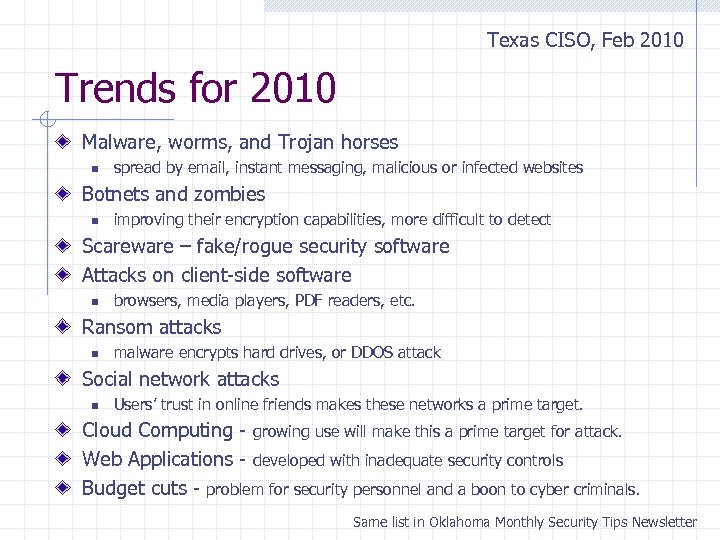 Texas CISO, Feb 2010 Trends for 2010 Malware, worms, and Trojan horses n spread by email, instant messaging, malicious or infected websites Botnets and zombies n improving their encryption capabilities, more difficult to detect Scareware – fake/rogue security software Attacks on client-side software n browsers, media players, PDF readers, etc. Ransom attacks n malware encrypts hard drives, or DDOS attack Social network attacks n Users’ trust in online friends makes these networks a prime target. Cloud Computing - growing use will make this a prime target for attack. Web Applications - developed with inadequate security controls Budget cuts - problem for security personnel and a boon to cyber criminals. Same list in Oklahoma Monthly Security Tips Newsletter
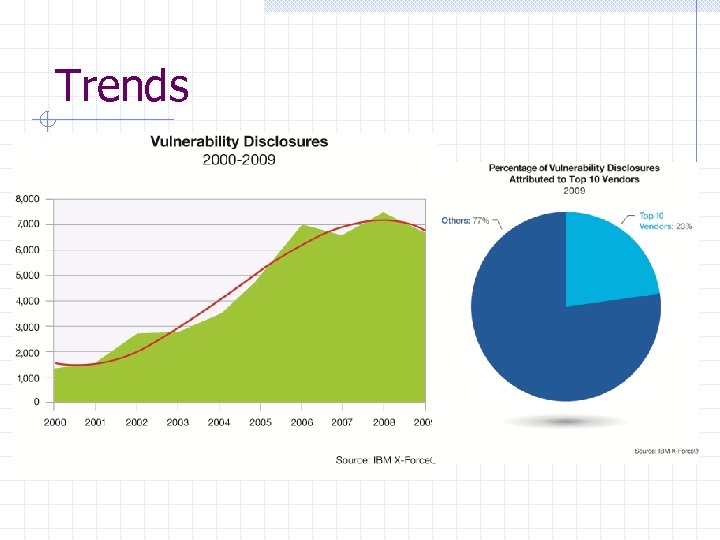 Trends
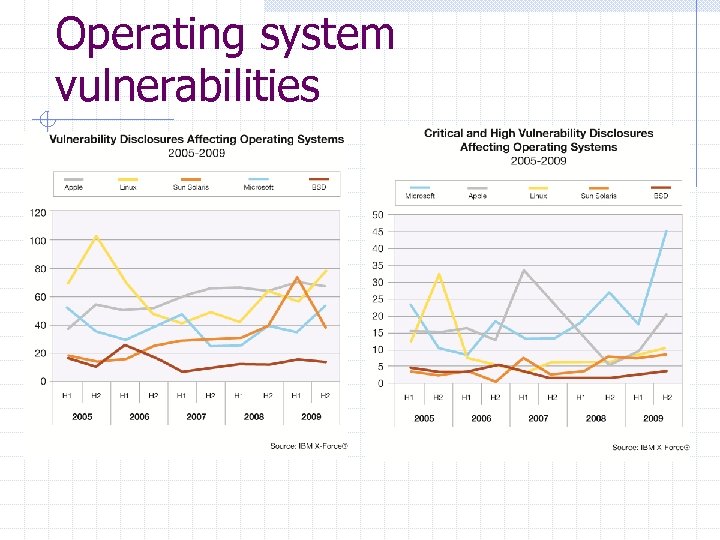 Operating system vulnerabilities
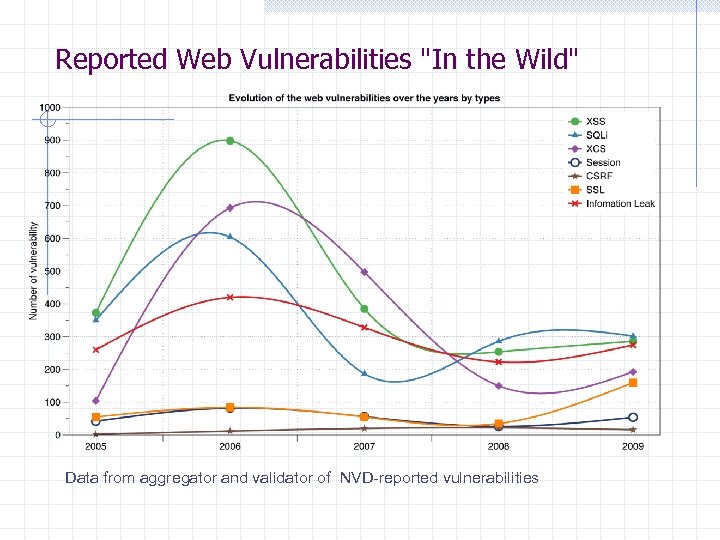 Reported Web Vulnerabilities "In the Wild" Data from aggregator and validator of NVD-reported vulnerabilities
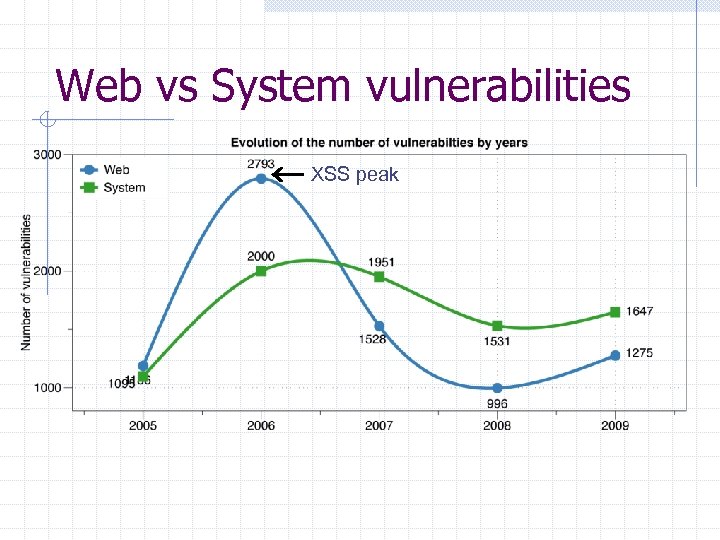 Web vs System vulnerabilities XSS peak
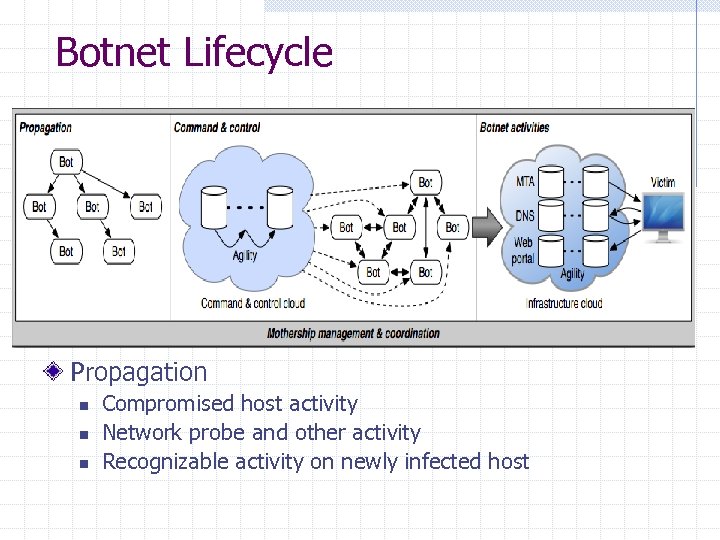 Botnet Lifecycle Propagation n Compromised host activity Network probe and other activity Recognizable activity on newly infected host
 Recent work on malware distribution • Blogs are widely used - • Blogs have automated Linkbacks - • 184 Million blogs world-wide 73% of internet users have read a blog 50% post comments Facilitate cross-referencing Exploited by spammers We carried out a 1 -year study - Analyzed 10 million spam samples Gained insight on attacker’s method of operation and resources Propose a defense against blog spams
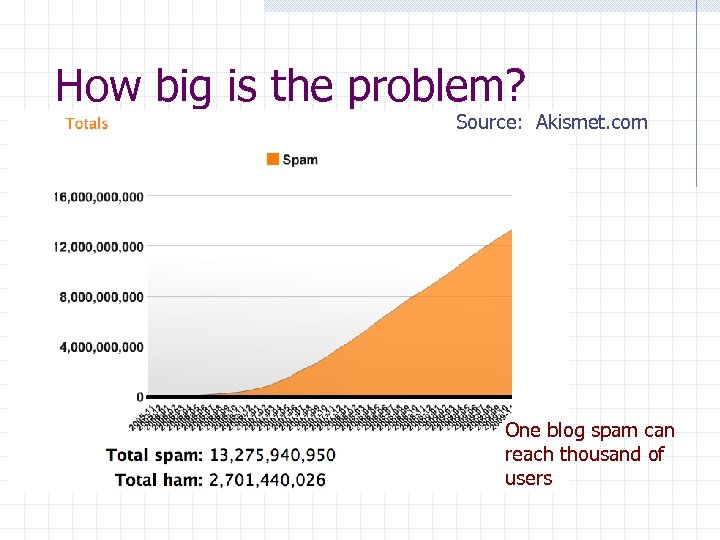 How big is the problem? Source: Akismet. com One blog spam can reach thousand of users
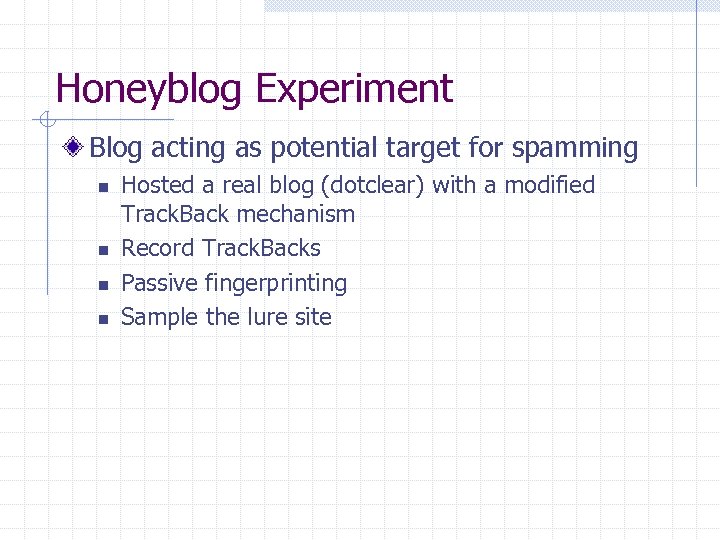 Honeyblog Experiment Blog acting as potential target for spamming n n Hosted a real blog (dotclear) with a modified Track. Back mechanism Record Track. Backs Passive fingerprinting Sample the lure site
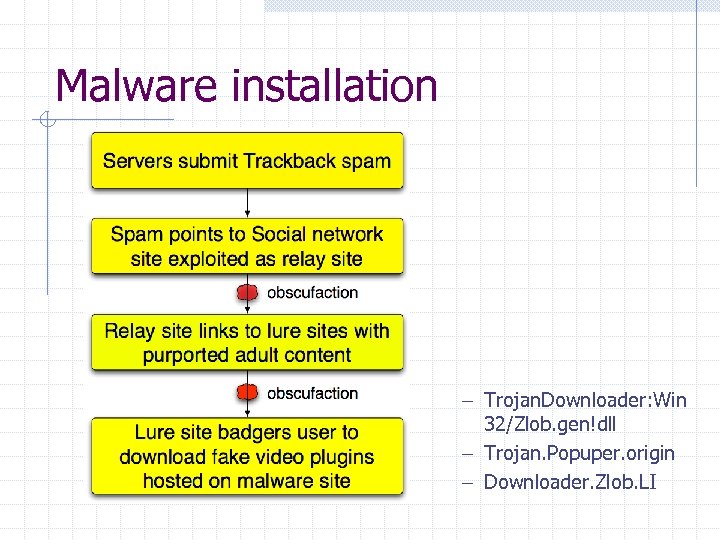 Malware installation – Trojan. Downloader: Win 32/Zlob. gen!dll – Trojan. Popuper. origin – Downloader. Zlob. LI
![Trackback spam example Apparent Bayesian poisoning against spam filters: [title] => Please teacher hentai](https://present5.com/presentation/3697f45c152be7fb3ac675b235cbfd49/image-29.jpg "Trackback spam example Apparent Bayesian poisoning against spam filters: [title] => Please teacher hentai") Trackback spam example Apparent Bayesian poisoning against spam filters: [title] => Please teacher hentai pics [url] =>http: //please-teacher-hentaipics. howdsl. nx. cn/index. html [excerpt] => pics Please teacher hentai pics . . . [blog_name] =>Please teacher hentai pics
Trackback spam example Apparent Bayesian poisoning against spam filters: [title] => Please teacher hentai pics [url] =>http: //please-teacher-hentaipics. howdsl. nx. cn/index. html [excerpt] => pics Please teacher hentai pics . . . [blog_name] =>Please teacher hentai pics
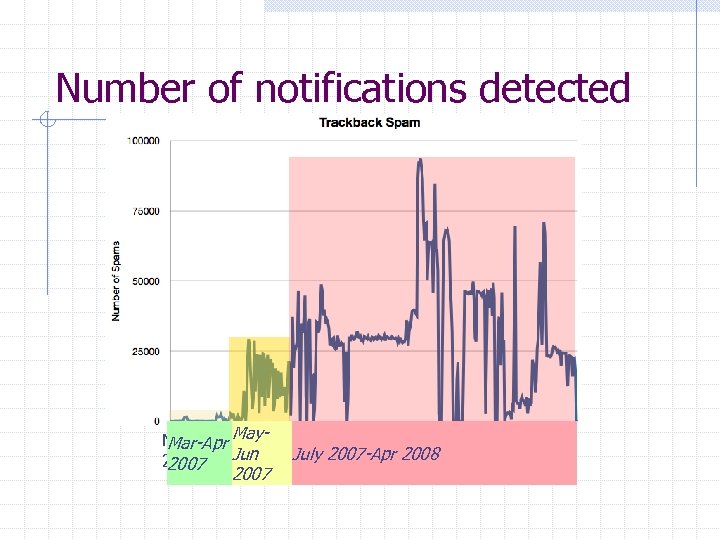 Number of notifications detected May. Mar-Apr May-Jun July 2007 -Apr 2008 Mar-Apr July 2007 -Apr 2008 Jun 2007
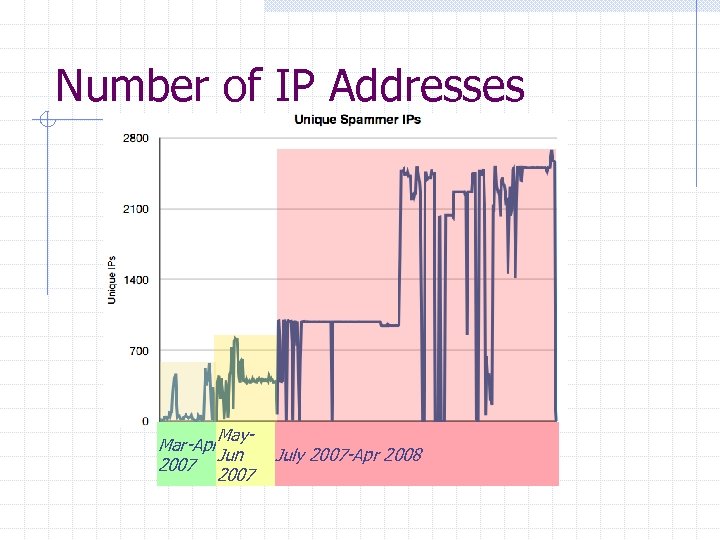 Number of IP Addresses May. Mar-Apr May-Jun July 2007 -Apr 2008 2007 Jun 2007 July 2007 -Apr 2008 2007
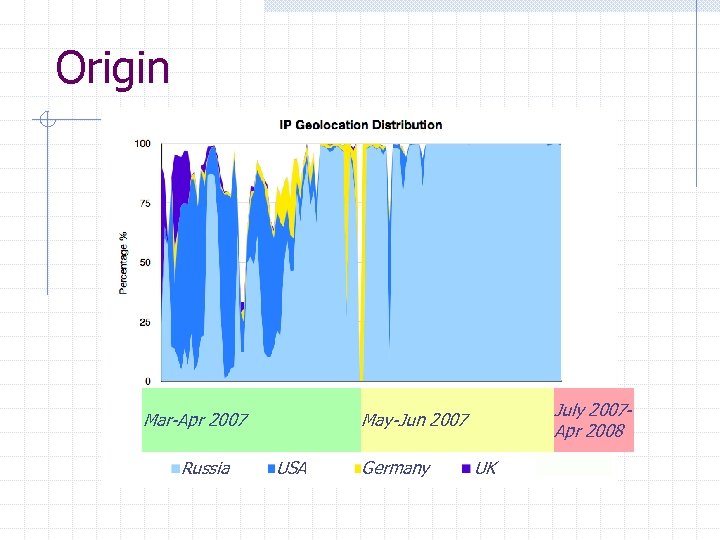 Origin Mar-Apr 2007 Russia July 2007 Apr 2008 May-Jun 2007 USA Germany UK
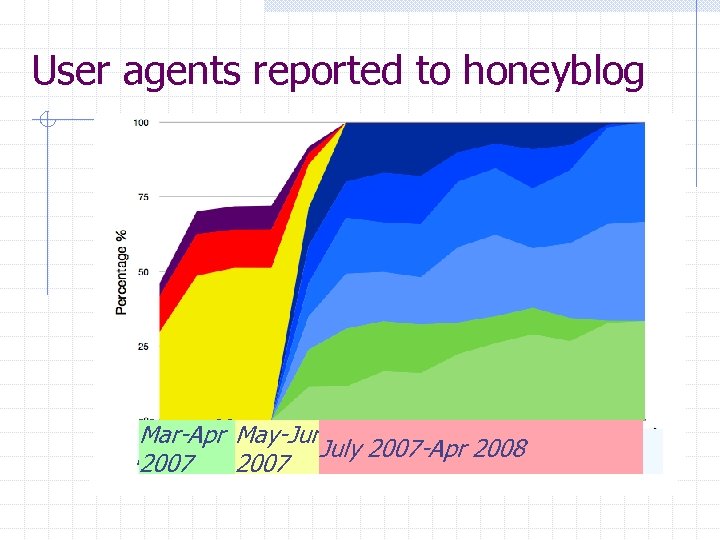 User agents reported to honeyblog Mar- May. Mar-Apr May-Jun Jul 2007 -Apr 2008 July 2007 -Apr 2008 Apr Jun 2007
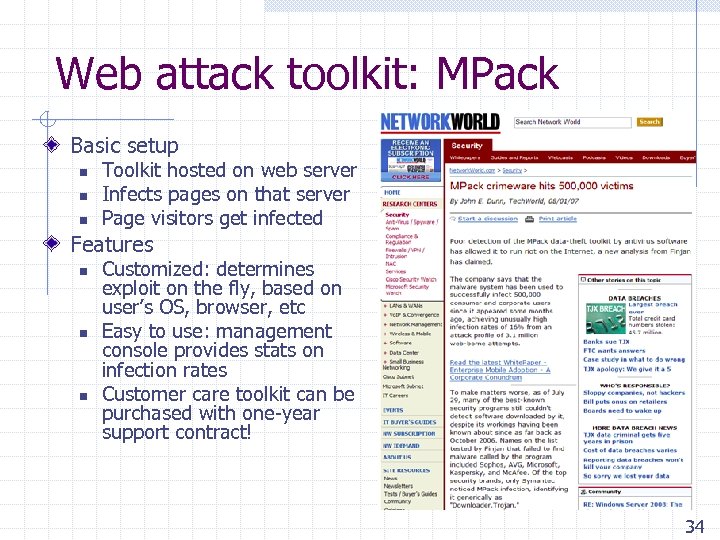 Web attack toolkit: MPack Basic setup n n n Toolkit hosted on web server Infects pages on that server Page visitors get infected Features n n n Customized: determines exploit on the fly, based on user’s OS, browser, etc Easy to use: management console provides stats on infection rates Customer care toolkit can be purchased with one-year support contract! 34
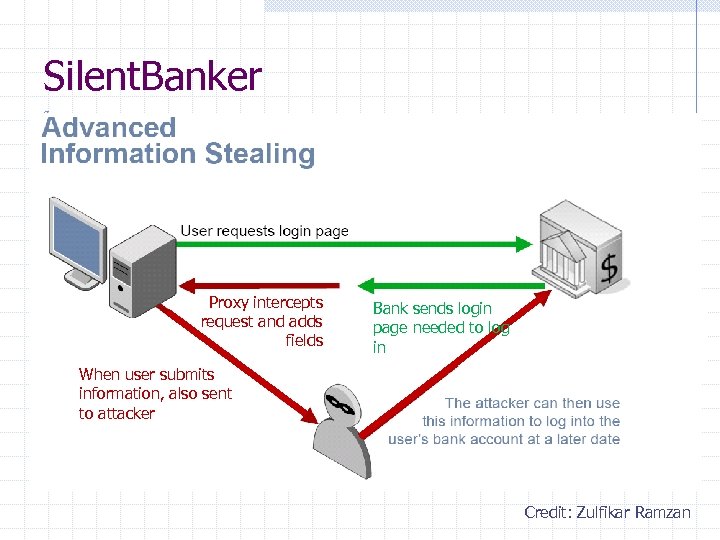 Silent. Banker Proxy intercepts request and adds fields Bank sends login page needed to log in When user submits information, also sent to attacker Credit: Zulfikar Ramzan
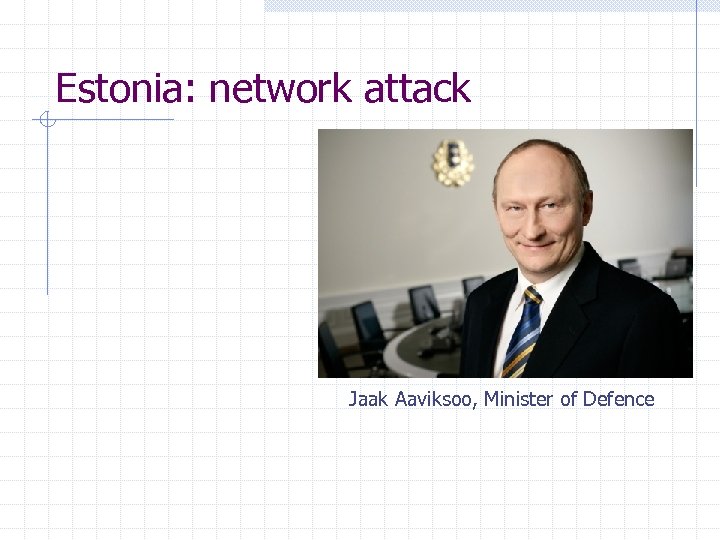 Estonia: network attack Jaak Aaviksoo, Minister of Defence
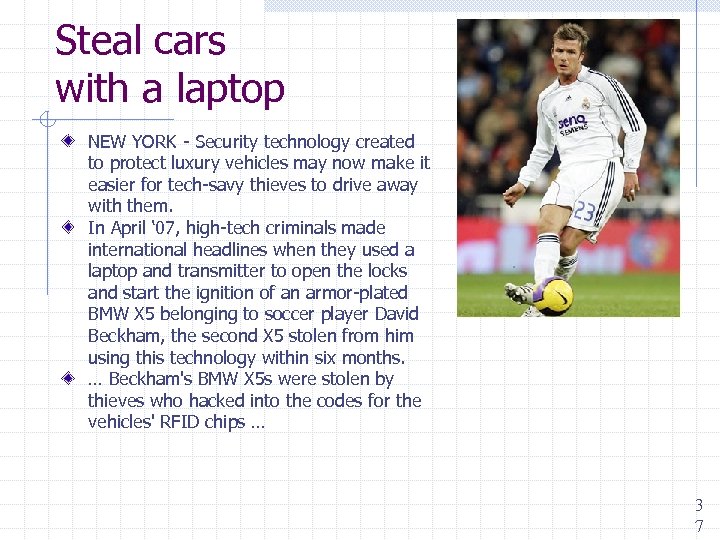 Steal cars with a laptop NEW YORK - Security technology created to protect luxury vehicles may now make it easier for tech-savy thieves to drive away with them. In April ‘ 07, high-tech criminals made international headlines when they used a laptop and transmitter to open the locks and start the ignition of an armor-plated BMW X 5 belonging to soccer player David Beckham, the second X 5 stolen from him using this technology within six months. … Beckham's BMW X 5 s were stolen by thieves who hacked into the codes for the vehicles' RFID chips … 3 7
 3 8
3 8
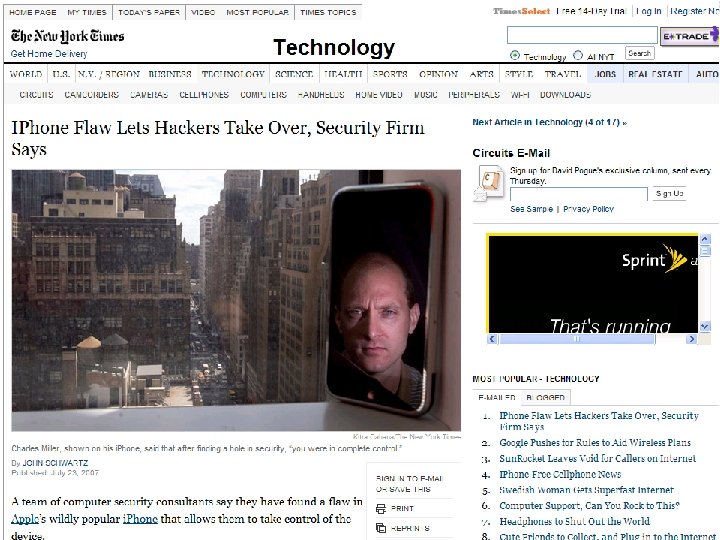
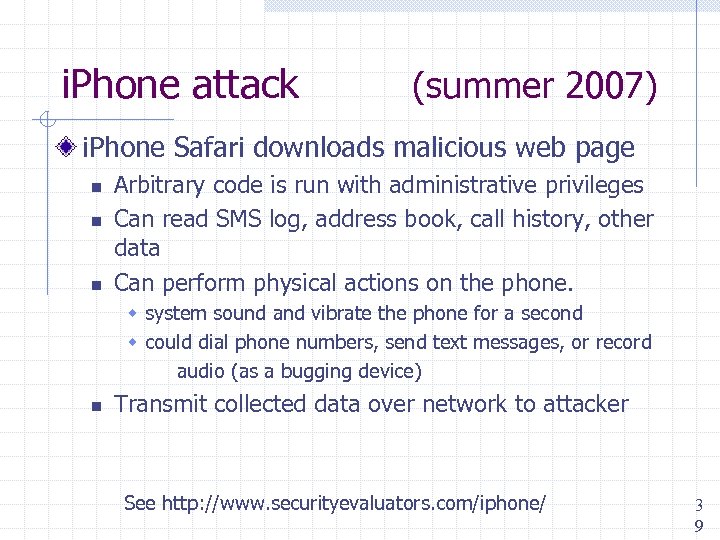 i. Phone attack (summer 2007) i. Phone Safari downloads malicious web page n n n Arbitrary code is run with administrative privileges Can read SMS log, address book, call history, other data Can perform physical actions on the phone. w system sound and vibrate the phone for a second w could dial phone numbers, send text messages, or record audio (as a bugging device) n Transmit collected data over network to attacker See http: //www. securityevaluators. com/iphone/ 3 9
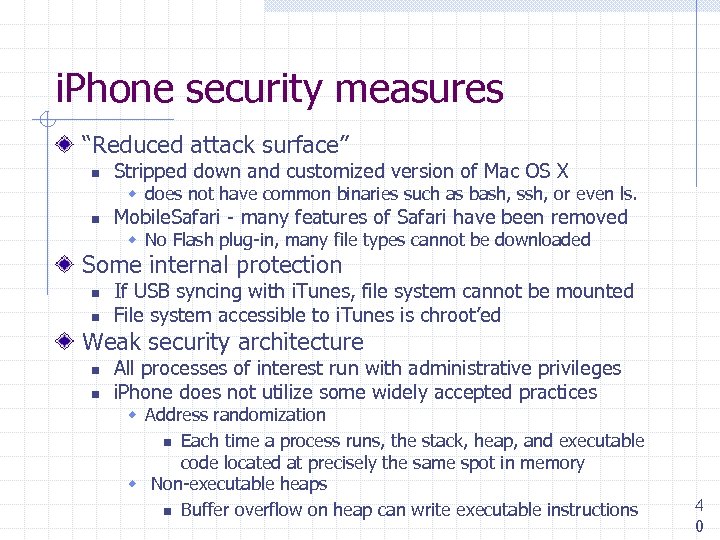 i. Phone security measures “Reduced attack surface” n Stripped down and customized version of Mac OS X w does not have common binaries such as bash, ssh, or even ls. n Mobile. Safari - many features of Safari have been removed w No Flash plug-in, many file types cannot be downloaded Some internal protection n n If USB syncing with i. Tunes, file system cannot be mounted File system accessible to i. Tunes is chroot’ed Weak security architecture n n All processes of interest run with administrative privileges i. Phone does not utilize some widely accepted practices w Address randomization n Each time a process runs, the stack, heap, and executable code located at precisely the same spot in memory w Non-executable heaps n Buffer overflow on heap can write executable instructions 4 0
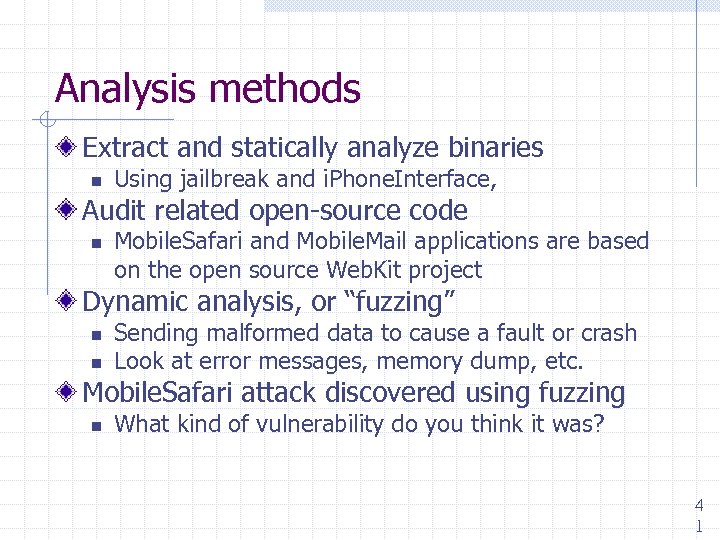 Analysis methods Extract and statically analyze binaries n Using jailbreak and i. Phone. Interface, Audit related open-source code n Mobile. Safari and Mobile. Mail applications are based on the open source Web. Kit project Dynamic analysis, or “fuzzing” n n Sending malformed data to cause a fault or crash Look at error messages, memory dump, etc. Mobile. Safari attack discovered using fuzzing n What kind of vulnerability do you think it was? 4 1
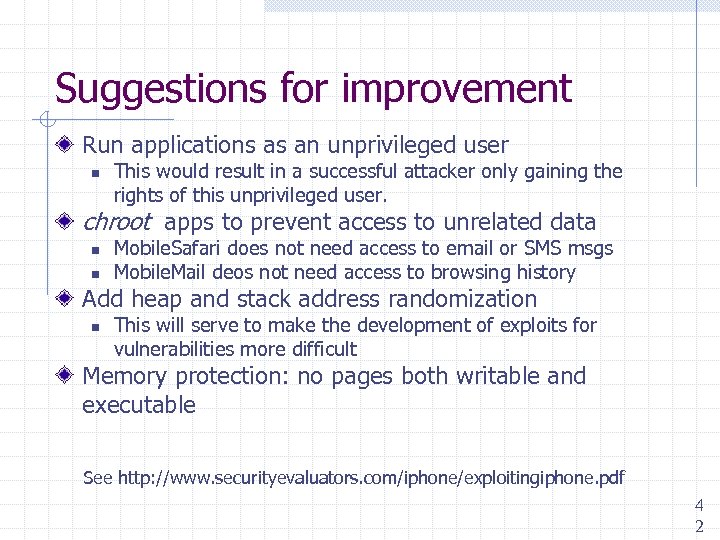 Suggestions for improvement Run applications as an unprivileged user n This would result in a successful attacker only gaining the rights of this unprivileged user. chroot apps to prevent access to unrelated data n n Mobile. Safari does not need access to email or SMS msgs Mobile. Mail deos not need access to browsing history Add heap and stack address randomization n This will serve to make the development of exploits for vulnerabilities more difficult Memory protection: no pages both writable and executable See http: //www. securityevaluators. com/iphone/exploitingiphone. pdf 4 2
 • • • Spam service Rent-a-bot Cash-out Pump and dump Botnet rental 4 3
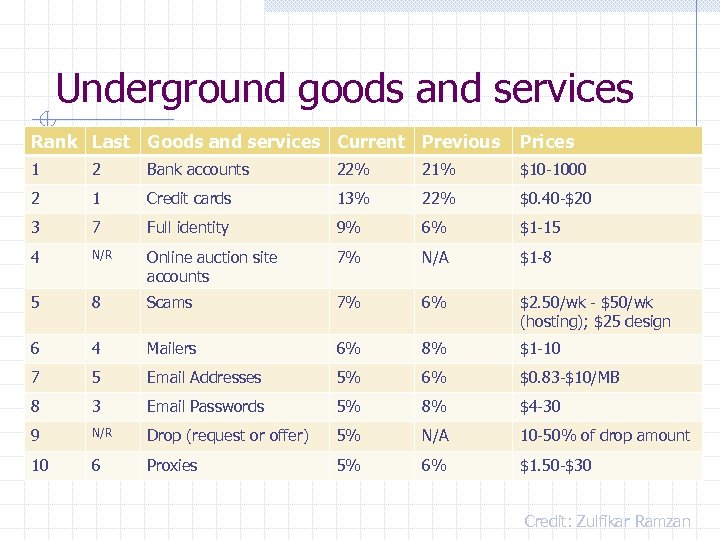 Underground goods and services Rank Last Goods and services Current Previous Prices 1 2 Bank accounts 22% 21% $10 -1000 2 1 Credit cards 13% 22% $0. 40 -$20 3 7 Full identity 9% 6% $1 -15 4 N/R Online auction site accounts 7% N/A $1 -8 5 8 Scams 7% 6% $2. 50/wk - $50/wk (hosting); $25 design 6 4 Mailers 6% 8% $1 -10 7 5 Email Addresses 5% 6% $0. 83 -$10/MB 8 3 Email Passwords 5% 8% $4 -30 9 N/R Drop (request or offer) 5% N/A 10 -50% of drop amount 10 6 Proxies 5% 6% $1. 50 -$30 Credit: Zulfikar Ramzan
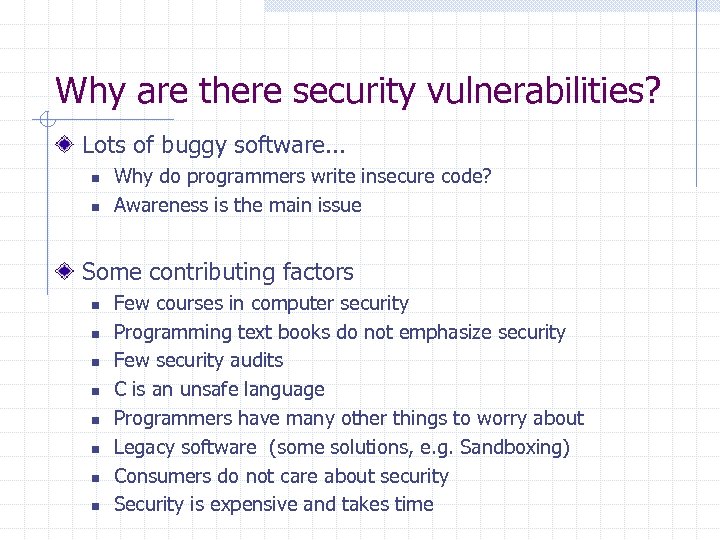 Why are there security vulnerabilities? Lots of buggy software. . . n n Why do programmers write insecure code? Awareness is the main issue Some contributing factors n n n n Few courses in computer security Programming text books do not emphasize security Few security audits C is an unsafe language Programmers have many other things to worry about Legacy software (some solutions, e. g. Sandboxing) Consumers do not care about security Security is expensive and takes time
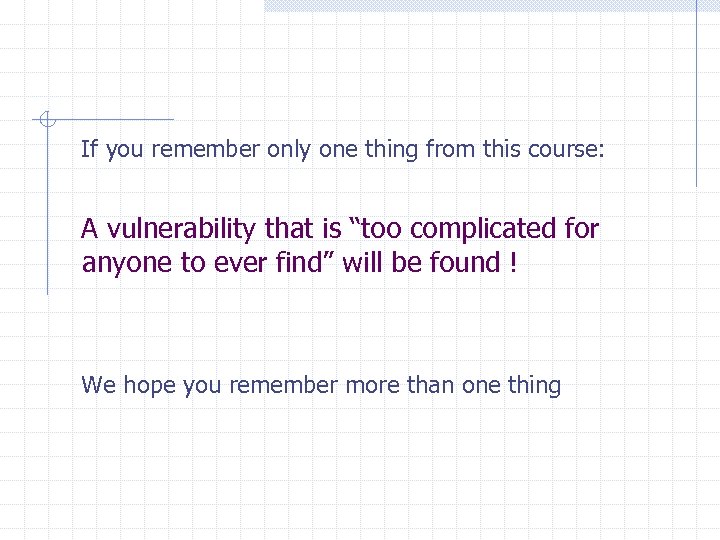 If you remember only one thing from this course: A vulnerability that is “too complicated for anyone to ever find” will be found ! We hope you remember more than one thing
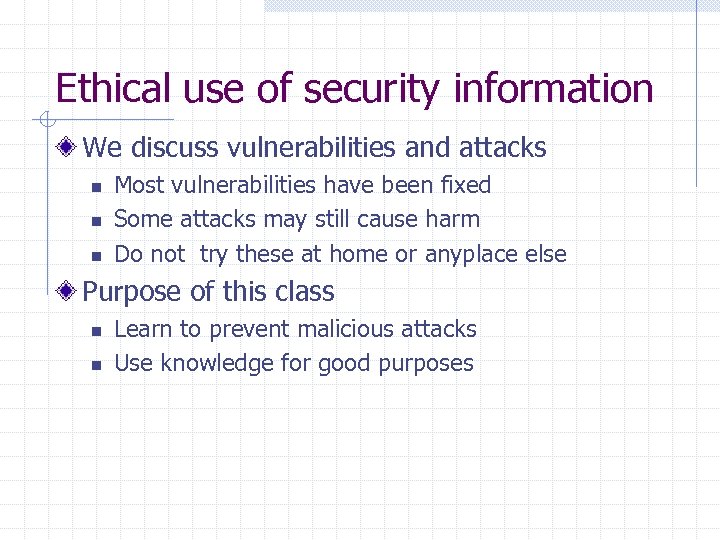 Ethical use of security information We discuss vulnerabilities and attacks n n n Most vulnerabilities have been fixed Some attacks may still cause harm Do not try these at home or anyplace else Purpose of this class n n Learn to prevent malicious attacks Use knowledge for good purposes
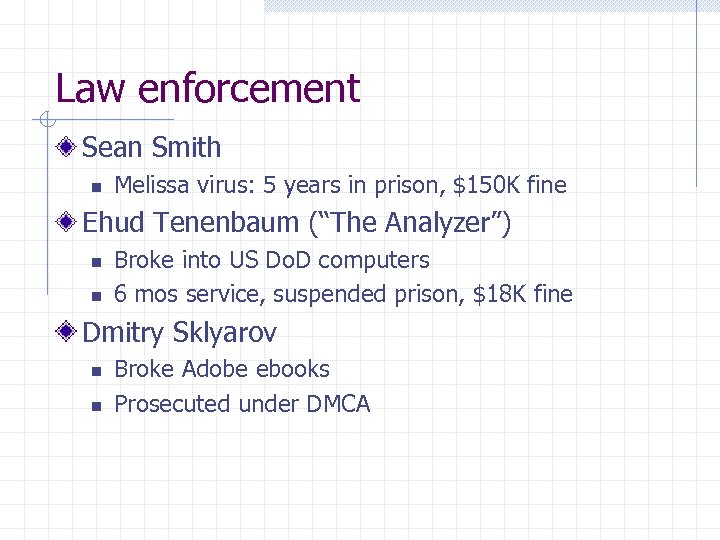 Law enforcement Sean Smith n Melissa virus: 5 years in prison, $150 K fine Ehud Tenenbaum (“The Analyzer”) n n Broke into US Do. D computers 6 mos service, suspended prison, $18 K fine Dmitry Sklyarov n n Broke Adobe ebooks Prosecuted under DMCA
 Difficult problem: insider threat Easy to hide code in large software packages n n n Virtually impossible to detect back doors Skill level needed to hide malicious code is much lower than needed to find it Anyone with access to development environment is capable slides: Avi Rubin
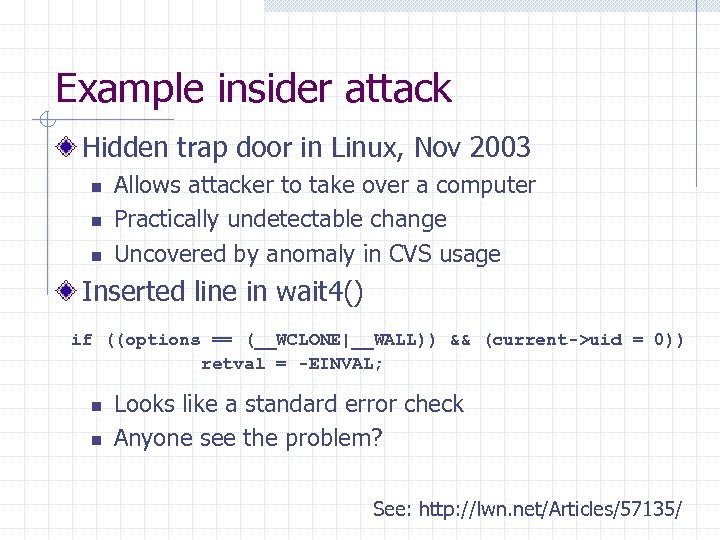 Example insider attack Hidden trap door in Linux, Nov 2003 n n n Allows attacker to take over a computer Practically undetectable change Uncovered by anomaly in CVS usage Inserted line in wait 4() if ((options == (__WCLONE|__WALL)) && (current->uid = 0)) retval = -EINVAL; n n Looks like a standard error check Anyone see the problem? See: http: //lwn. net/Articles/57135/
 Example #2 Rob Harris case - slot machines n an insider: worked for Gaming Control Board Malicious code in testing unit n when testers checked slot machines w downloaded malicious code to slot machine n n was never detected special sequence of coins activated “winning mode” Caught when greed sparked investigation n $100, 000 jackpot
 Example #3 Breeder’s cup race n n n Upgrade of software to phone betting system Insider, Christopher Harn, rigged software Allowed him and accomplices to call in w change the bets that were placed w undetectable n Caught when got greedy w won $3 million http: //horseracing. about. com/library/weekly/aa 110102 a. htm
 Software dangers Software is complex n top metric for measuring #of flaws is lines of code Windows Operating System n n tens of millions of lines of code new “critical” security bug announced every week Unintended security flaws unavoidable Intentional security flaws undetectable
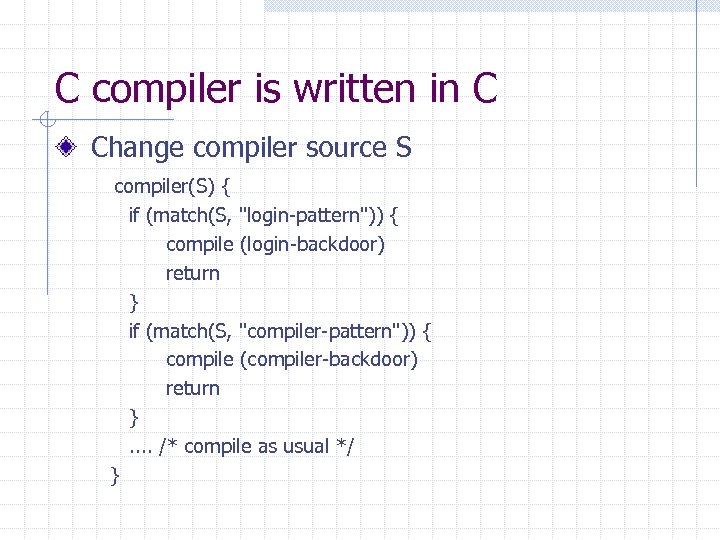
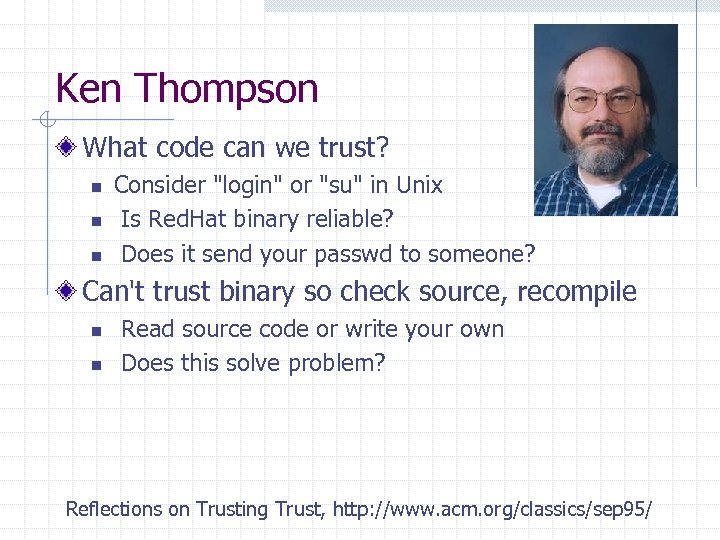 Ken Thompson What code can we trust? n n n Consider "login" or "su" in Unix Is Red. Hat binary reliable? Does it send your passwd to someone? Can't trust binary so check source, recompile n n Read source code or write your own Does this solve problem? Reflections on Trusting Trust, http: //www. acm. org/classics/sep 95/
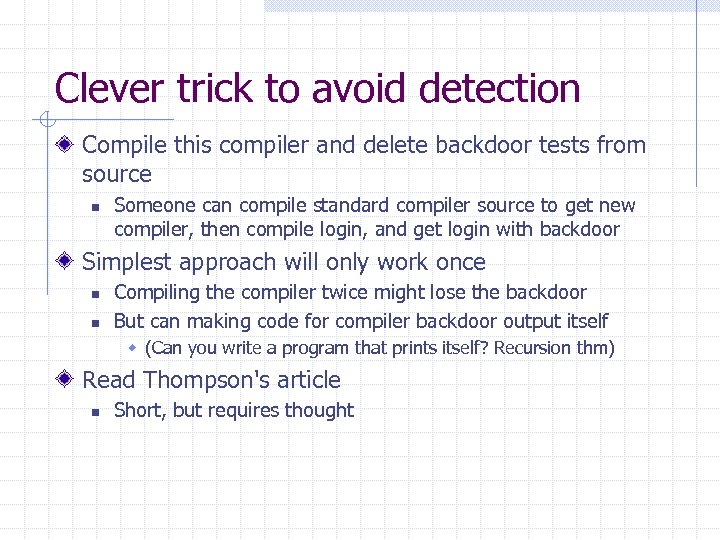
 Compiler backdoor This is the basis of Thompson's attack n n Compiler looks for source code that looks like login program If found, insert login backdoor (allow special user to log in) How do we solve this? n Inspect the compiler source
 C compiler is written in C Change compiler source S compiler(S) { if (match(S, "login-pattern")) { compile (login-backdoor) return } if (match(S, "compiler-pattern")) { compile (compiler-backdoor) return } . . /* compile as usual */ }
 Clever trick to avoid detection Compile this compiler and delete backdoor tests from source n Someone can compile standard compiler source to get new compiler, then compile login, and get login with backdoor Simplest approach will only work once n n Compiling the compiler twice might lose the backdoor But can making code for compiler backdoor output itself w (Can you write a program that prints itself? Recursion thm) Read Thompson's article n Short, but requires thought
 Social engineering Many attacks don't use computers n n Call system administrator Dive in the dumpster Online versions n n send trojan in email picture or movie with malicious code
 Organization Application and OS security (5 lectures) n n n Buffer overflow project Vulnerabilities: control hijacking attacks, fuzzing Prevention: System design, robust coding, isolation Web security (4 lectures) n n n Web site attack and defenses project Browser policies, session mgmt, user authentication HTTPS and web application security Network security (6 lectures) n n n Network traceroute and packet filtering project Protocol designs, vulnerabilities, prevention Malware, botnets, DDo. S, network security testing A few other topics n Cryptography (user perspective), digital rights management, final guest lecture, …