


 Скачать презентацию Crypto Protocols part 2 Crypto primitives Today s talk
b23267767b178abb46ff6a1dbda532cb.ppt
- Количество слайдов: 65
 Crypto Protocols, part 2 Crypto primitives Today’s talk includes slides from: Bart Preneel, Jonathan Millen, and Dan Wallach
![Example - Needham-Schroeder l The Needham- Schroeder symmetric-key protocol [NS 78] A -> S:](https://present5.com/presentation/b23267767b178abb46ff6a1dbda532cb/image-2.jpg "Example - Needham-Schroeder l The Needham- Schroeder symmetric-key protocol [NS 78] A -> S:") Example - Needham-Schroeder l The Needham- Schroeder symmetric-key protocol [NS 78] A -> S: A, B, Na S -> A: {Na, B, Kc, {Kc, A}Kb }Ka A -> B: {Kc, A}Kb B -> A: {Nb}Kc A -> B: {Nb-1}Kc l l l A, B are “principals; ” S is a trusted key server Ka, Kb are secret keys shared with S {X, Y}K means: X concatenated with Y, encrypted with K Na, Nb are “nonces; ” fresh (not used before) Kc is a fresh connection key
Example - Needham-Schroeder l The Needham- Schroeder symmetric-key protocol [NS 78] A -> S: A, B, Na S -> A: {Na, B, Kc, {Kc, A}Kb }Ka A -> B: {Kc, A}Kb B -> A: {Nb}Kc A -> B: {Nb-1}Kc l l l A, B are “principals; ” S is a trusted key server Ka, Kb are secret keys shared with S {X, Y}K means: X concatenated with Y, encrypted with K Na, Nb are “nonces; ” fresh (not used before) Kc is a fresh connection key
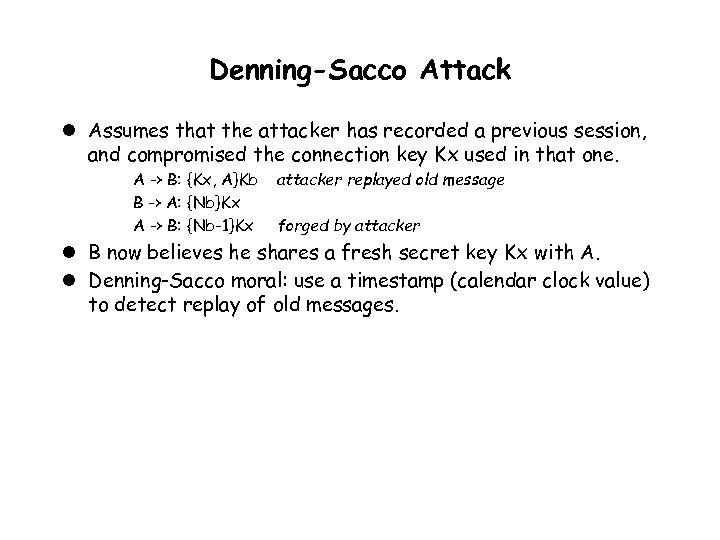 Denning-Sacco Attack l Assumes that the attacker has recorded a previous session, and compromised the connection key Kx used in that one. A -> B: {Kx, A}Kb B -> A: {Nb}Kx A -> B: {Nb-1}Kx attacker replayed old message forged by attacker l B now believes he shares a fresh secret key Kx with A. l Denning-Sacco moral: use a timestamp (calendar clock value) to detect replay of old messages.
![Belief Logic l Burrows, Abadi, and Needham (BAN) Logic [BAN 90 a] – Modal](https://present5.com/presentation/b23267767b178abb46ff6a1dbda532cb/image-4.jpg "Belief Logic l Burrows, Abadi, and Needham (BAN) Logic [BAN 90 a] – Modal") Belief Logic l Burrows, Abadi, and Needham (BAN) Logic [BAN 90 a] – Modal logic of belief (“belief” as local knowledge) – Special constructs and inference rules e. g. , P sees X (P has received X in a message) – Protocol messages are “idealized” into logical statements – Objective is to prove that both parties share common beliefs
Belief Logic l Burrows, Abadi, and Needham (BAN) Logic [BAN 90 a] – Modal logic of belief (“belief” as local knowledge) – Special constructs and inference rules e. g. , P sees X (P has received X in a message) – Protocol messages are “idealized” into logical statements – Objective is to prove that both parties share common beliefs
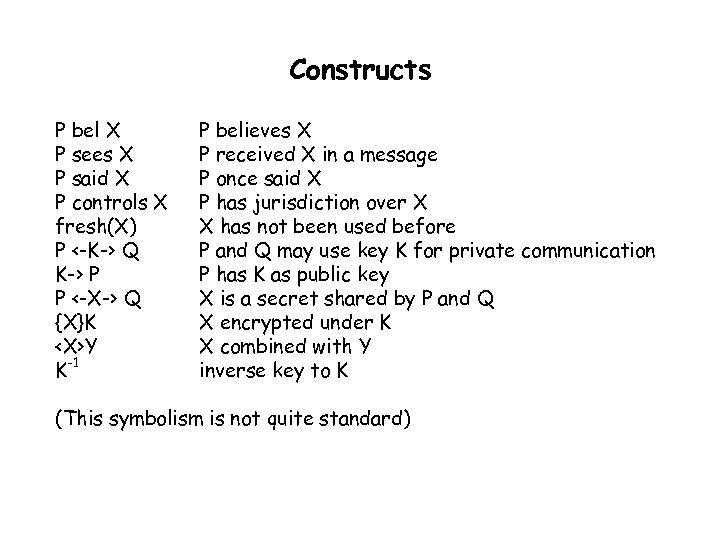 Constructs P bel X P sees X P said X P controls X fresh(X) P <-K-> Q K-> P P <-X-> Q {X}K
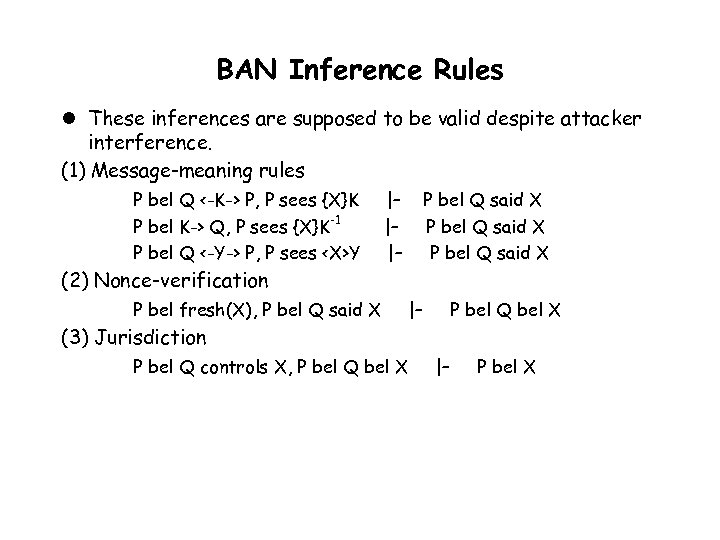 BAN Inference Rules l These inferences are supposed to be valid despite attacker interference. (1) Message-meaning rules P bel Q <-K-> P, P sees {X}K P bel K-> Q, P sees {X}K-1 P bel Q <-Y-> P, P sees
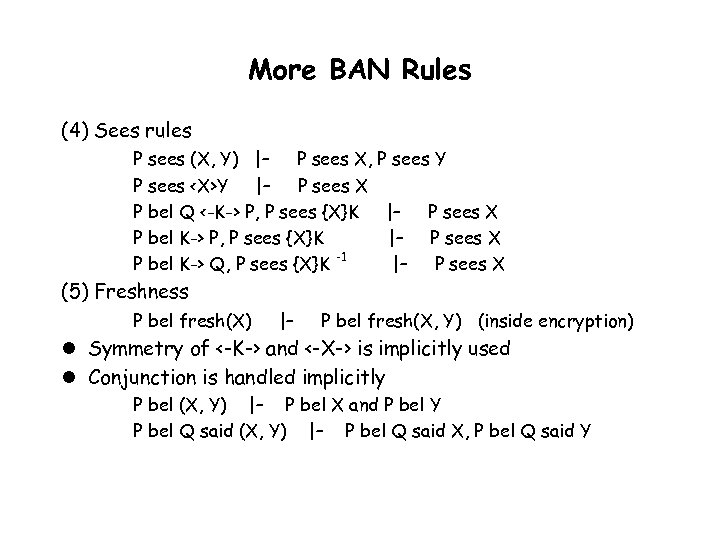 More BAN Rules (4) Sees rules P sees (X, Y) |– P sees X, P sees Y P sees
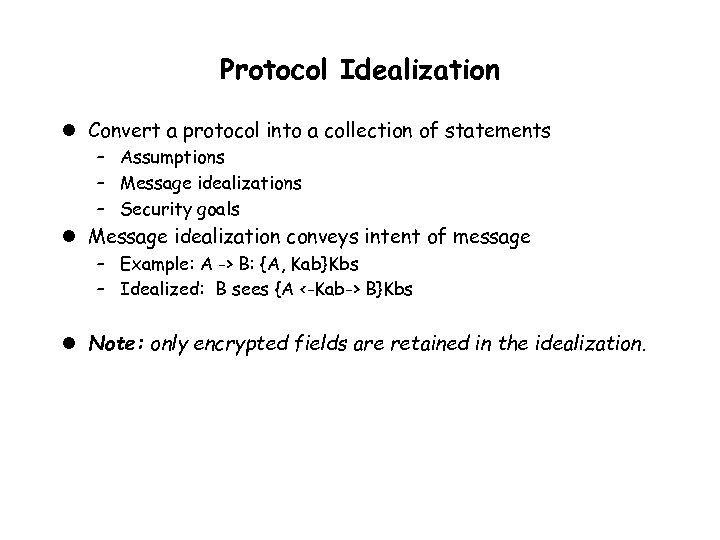 Protocol Idealization l Convert a protocol into a collection of statements – Assumptions – Message idealizations – Security goals l Message idealization conveys intent of message – Example: A -> B: {A, Kab}Kbs – Idealized: B sees {A <-Kab-> B}Kbs l Note: only encrypted fields are retained in the idealization.
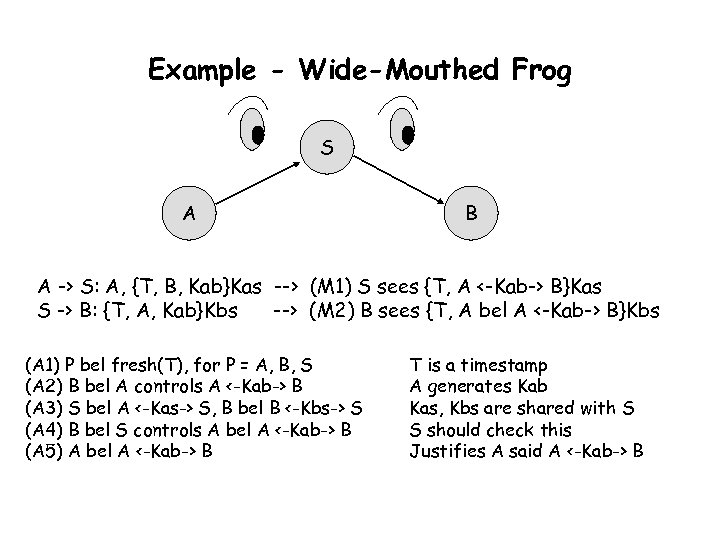 Example - Wide-Mouthed Frog S A B A -> S: A, {T, B, Kab}Kas --> (M 1) S sees {T, A <-Kab-> B}Kas S -> B: {T, A, Kab}Kbs --> (M 2) B sees {T, A bel A <-Kab-> B}Kbs (A 1) P bel fresh(T), for P = A, B, S (A 2) B bel A controls A <-Kab-> B (A 3) S bel A <-Kas-> S, B bel B <-Kbs-> S (A 4) B bel S controls A bel A <-Kab-> B (A 5) A bel A <-Kab-> B T is a timestamp A generates Kab Kas, Kbs are shared with S S should check this Justifies A said A <-Kab-> B
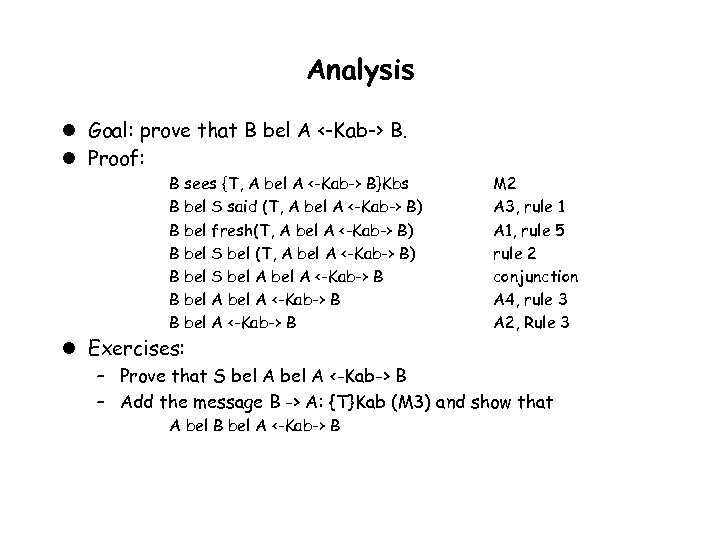 Analysis l Goal: prove that B bel A <-Kab-> B. l Proof: B sees {T, A bel A <-Kab-> B}Kbs B bel S said (T, A bel A <-Kab-> B) B bel fresh(T, A bel A <-Kab-> B) B bel S bel A <-Kab-> B B bel A <-Kab-> B M 2 A 3, rule 1 A 1, rule 5 rule 2 conjunction A 4, rule 3 A 2, Rule 3 l Exercises: – Prove that S bel A <-Kab-> B – Add the message B -> A: {T}Kab (M 3) and show that A bel B bel A <-Kab-> B
![Nessett’s Critique l Awkward example in [Nes 90] A -> B: {T, Kab}Ka-1 -->](https://present5.com/presentation/b23267767b178abb46ff6a1dbda532cb/image-11.jpg "Nessett’s Critique l Awkward example in [Nes 90] A -> B: {T, Kab}Ka-1 -->") Nessett’s Critique l Awkward example in [Nes 90] A -> B: {T, Kab}Ka-1 --> B sees {T, A <-Kab-> B}Ka-1 l Assumptions (A 1) B bel Ka-> A (A 2) A bel A <-Kab-> B (A 3) B bel fresh(T) (A 4) B bel A controls A <-Kab-> B l Goal: B bel A <-Kab-> B l Proof: B bel A said (T, A <-Kab-> B) fresh(T, A <-Kab-> B) A bel (T, A <-Kab-> B) A <-Kab-> B A 1, rule 1 A 3, rule 5 rule 2 A 4, rule 3 l Problem: Ka is a public key, so Kab is exposed.
Nessett’s Critique l Awkward example in [Nes 90] A -> B: {T, Kab}Ka-1 --> B sees {T, A <-Kab-> B}Ka-1 l Assumptions (A 1) B bel Ka-> A (A 2) A bel A <-Kab-> B (A 3) B bel fresh(T) (A 4) B bel A controls A <-Kab-> B l Goal: B bel A <-Kab-> B l Proof: B bel A said (T, A <-Kab-> B) fresh(T, A <-Kab-> B) A bel (T, A <-Kab-> B) A <-Kab-> B A 1, rule 1 A 3, rule 5 rule 2 A 4, rule 3 l Problem: Ka is a public key, so Kab is exposed.
![Observations l According to “Rejoinder” [BAN 90 b], “There is no attempt to deal](https://present5.com/presentation/b23267767b178abb46ff6a1dbda532cb/image-12.jpg "Observations l According to “Rejoinder” [BAN 90 b], “There is no attempt to deal") Observations l According to “Rejoinder” [BAN 90 b], “There is no attempt to deal with … unauthorized release of secrets” l The logic is monotonic: if a key is believed to be good, the belief cannot be retracted l The protocol may be inconsistent with beliefs about confidentiality of keys and other secrets l More generally - one should analyze the protocol for consistency with its idealization l Alternatively - devise restrictions on protocols and idealization rules that guarantee consistency
Observations l According to “Rejoinder” [BAN 90 b], “There is no attempt to deal with … unauthorized release of secrets” l The logic is monotonic: if a key is believed to be good, the belief cannot be retracted l The protocol may be inconsistent with beliefs about confidentiality of keys and other secrets l More generally - one should analyze the protocol for consistency with its idealization l Alternatively - devise restrictions on protocols and idealization rules that guarantee consistency
![Subsequent Developments l Discussions and semantics, e. g. , [Syv 91] l More extensive](https://present5.com/presentation/b23267767b178abb46ff6a1dbda532cb/image-13.jpg "Subsequent Developments l Discussions and semantics, e. g. , [Syv 91] l More extensive") Subsequent Developments l Discussions and semantics, e. g. , [Syv 91] l More extensive logics, e. g. , GNY (Gong-Needham-Yahalom) [GNY 90] and SVO [Sv. O 94] l GNY extensions: – – – Unencrypted fields retained “P possesses X” construct and possession rules “not originated here” operator Rationality rule: if X |– Y then P bel X |– P bel Y “message extension” links fields to assertions l Mechanization of inference, e. g, [KW 96, Bra 96] – User still does idealization l Protocol vs. idealization problem still unsolved
Subsequent Developments l Discussions and semantics, e. g. , [Syv 91] l More extensive logics, e. g. , GNY (Gong-Needham-Yahalom) [GNY 90] and SVO [Sv. O 94] l GNY extensions: – – – Unencrypted fields retained “P possesses X” construct and possession rules “not originated here” operator Rationality rule: if X |– Y then P bel X |– P bel Y “message extension” links fields to assertions l Mechanization of inference, e. g, [KW 96, Bra 96] – User still does idealization l Protocol vs. idealization problem still unsolved
 Model-Checking l Application of software tools designed for hardware CAD Verification by state space exploration - exhaustive on model l Like earlier Prolog tool approach, but Forward search rather than reverse search Special algorithms (BDDs, etc. ) A priori finite model (no unbounded recursion) Fully automatic once protocol is encoded l Practicioners: Roscoe [Ros 95], using FDR (the first) Mitchell, et al, using Murphi [MMS 97] Marrero, et al, using SMV [MCJ 97] Denker, et al, using Maude [DMT 98] … and more
 Model-Checking Observations Very effective at finding flaws, but No guarantee of correctness, due to artificial finite bounds Setup and analysis is quick when done by experts Automatic translation from simple message-list format to model-checker input is possible [Low 98 a, Mil 97] l “Killer” example: Lowe attack on Needham-Schroeder publickey protocol, using FDR [Low 96] l l
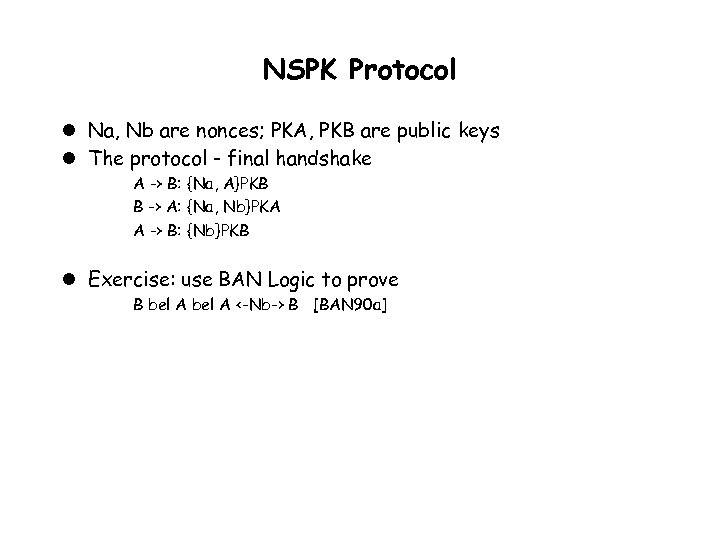 NSPK Protocol l Na, Nb are nonces; PKA, PKB are public keys l The protocol - final handshake A -> B: {Na, A}PKB B -> A: {Na, Nb}PKA A -> B: {Nb}PKB l Exercise: use BAN Logic to prove B bel A <-Nb-> B [BAN 90 a]
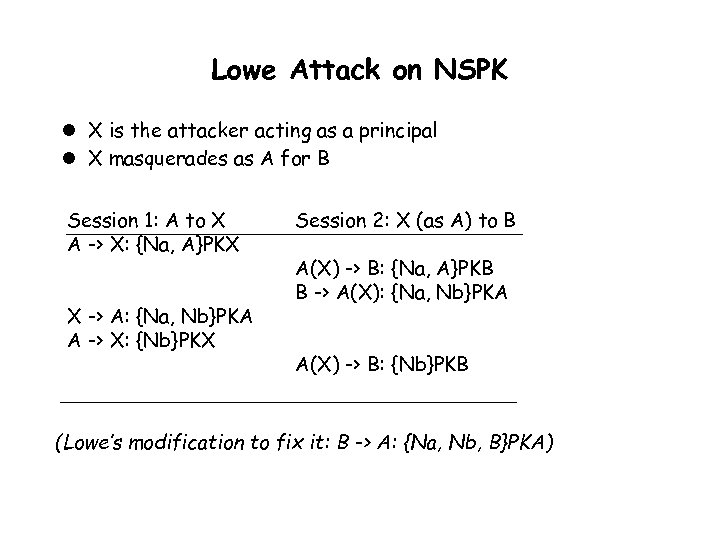 Lowe Attack on NSPK l X is the attacker acting as a principal l X masquerades as A for B Session 1: A to X A -> X: {Na, A}PKX X -> A: {Na, Nb}PKA A -> X: {Nb}PKX Session 2: X (as A) to B A(X) -> B: {Na, A}PKB B -> A(X): {Na, Nb}PKA A(X) -> B: {Nb}PKB (Lowe’s modification to fix it: B -> A: {Na, Nb, B}PKA)
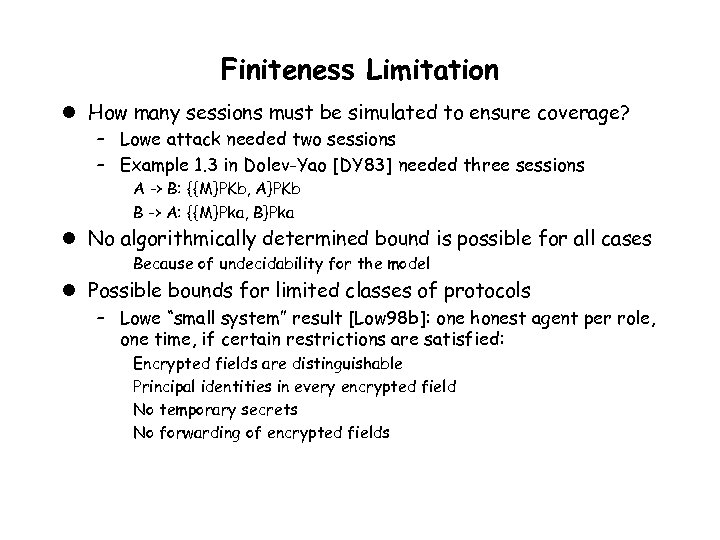 Finiteness Limitation l How many sessions must be simulated to ensure coverage? – Lowe attack needed two sessions – Example 1. 3 in Dolev-Yao [DY 83] needed three sessions A -> B: {{M}PKb, A}PKb B -> A: {{M}Pka, B}Pka l No algorithmically determined bound is possible for all cases Because of undecidability for the model l Possible bounds for limited classes of protocols – Lowe “small system” result [Low 98 b]: one honest agent per role, one time, if certain restrictions are satisfied: Encrypted fields are distinguishable Principal identities in every encrypted field No temporary secrets No forwarding of encrypted fields
 Inductive Proofs l Approach: like proofs of program correctness – Induction to prove “loop invariant” l State-transition model, objective is security invariant l General-purpose specification/verification system support – – Kemmerer, using Ina Jo and ITP [Kem 89] (the first) Paulson, using Isabelle [Paul 98] (the new wave) Dutertre and Schneider, using PVS [DS 97] Bolignano, using Coq [Bol 97] l Can also be done manually [Sch 98, THG 98] – Contributed to better understanding of invariants – Much more complex than belief logic proofs l Full guarantee of correctness (with respect to model) – Proofs include confidentiality
 Summary l Cryptographic protocol verification is based on models where – Encryption is perfect (strong encryption) – The attacker intercepts all messages (strong attacker) – Security is undecidable in general, primarily because the number of sessions is unbounded. l Belief logic analysis: – Requires “idealization” of the protocol – Does not address confidentiality – Can be peformed easily, manually or with automated support l State-exploration approaches – Use model-checking tools – Are effective for finding flaws automatically – Are limited by finiteness
 Summary, cont’d l Inductive proofs – Can prove correctness – Require substantial effort – Can be done manually, but preferably with verification tools l Protocol security verification is still a research area – But experts can do it fairly routinely l “Real” protocols are difficult to analyze for practical reasons – Specifications are not precise – They use operators with more complex properties than simple abstract encryption – Flow of control is more complex - protocols negotiate alternative encryption algorithms and other parameters – Messages have many fields not relevant to provable security
 Crypto primitives • The building blocks of everything else – Stream ciphers – Block ciphers (& cipher modes) • Far more material than we can ever cover – In addition to your book… • Nice reference, lots of details: • http: //home. ecn. ab. ca/~jsavard/crypto/jscrypt. htm
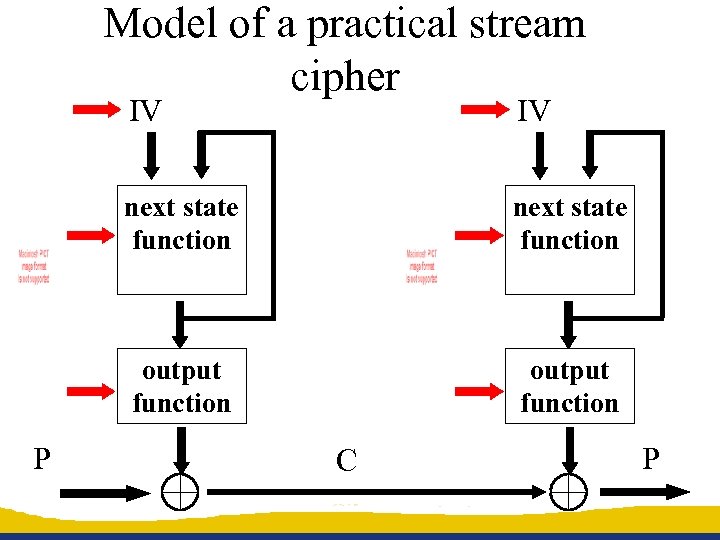 Model of a practical stream cipher IV next state function output function P IV output function C P
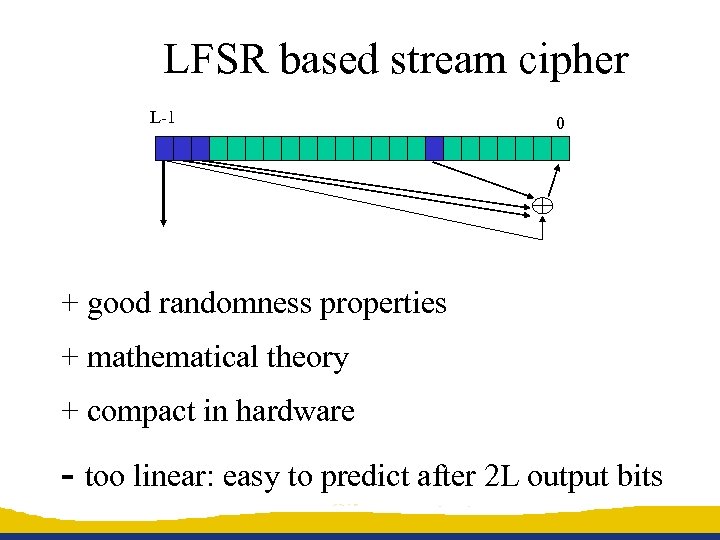 LFSR based stream cipher L-1 0 + good randomness properties + mathematical theory + compact in hardware - too linear: easy to predict after 2 L output bits
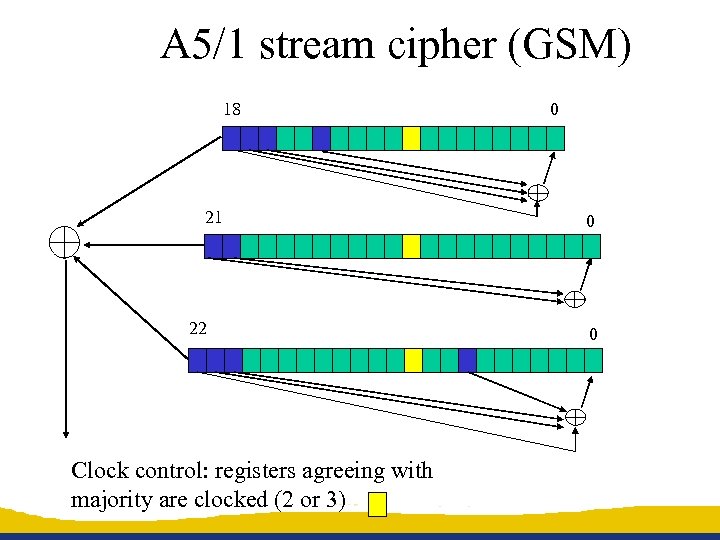 A 5/1 stream cipher (GSM) 18 21 22 Clock control: registers agreeing with majority are clocked (2 or 3) 0 0 0
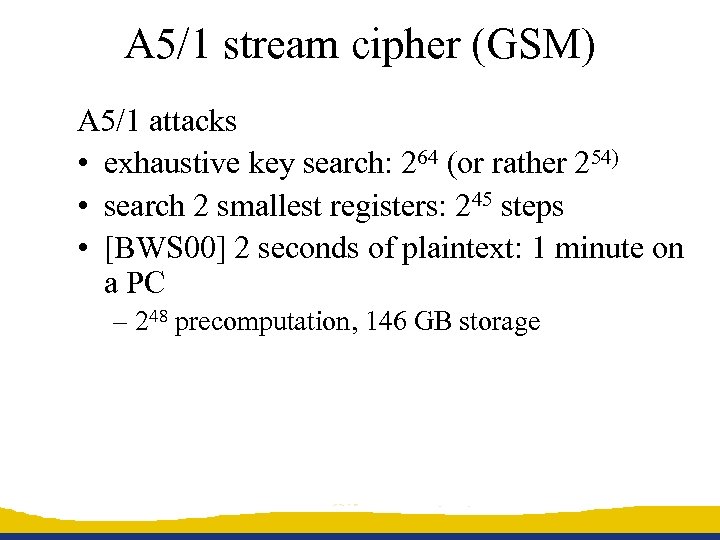 A 5/1 stream cipher (GSM) A 5/1 attacks • exhaustive key search: 264 (or rather 254) • search 2 smallest registers: 245 steps • [BWS 00] 2 seconds of plaintext: 1 minute on a PC – 248 precomputation, 146 GB storage
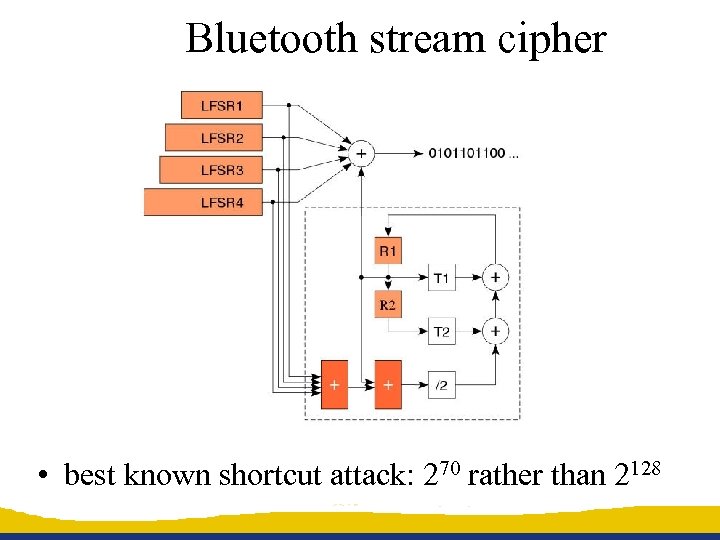 Bluetooth stream cipher • best known shortcut attack: 270 rather than 2128
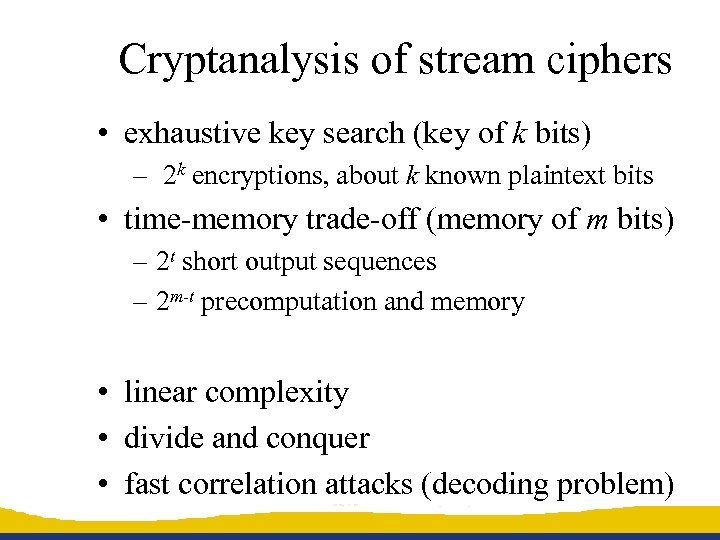 Cryptanalysis of stream ciphers • exhaustive key search (key of k bits) – 2 k encryptions, about k known plaintext bits • time-memory trade-off (memory of m bits) – 2 t short output sequences – 2 m-t precomputation and memory • linear complexity • divide and conquer • fast correlation attacks (decoding problem)
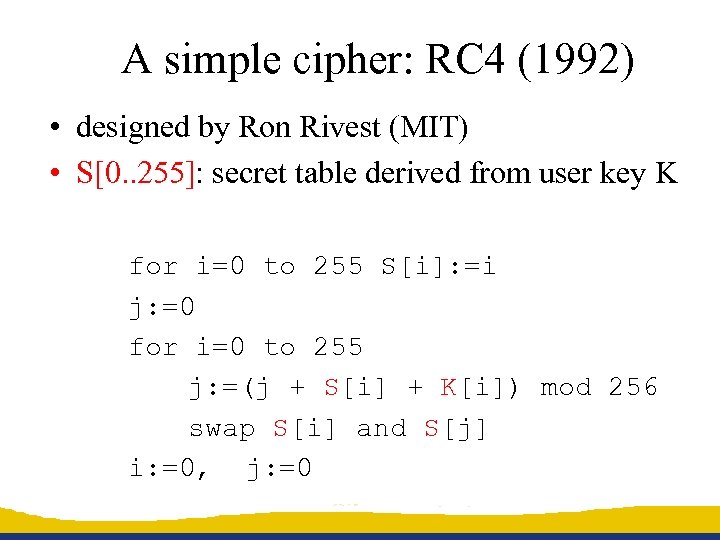 A simple cipher: RC 4 (1992) • designed by Ron Rivest (MIT) • S[0. . 255]: secret table derived from user key K for i=0 to 255 S[i]: =i j: =0 for i=0 to 255 j: =(j + S[i] + K[i]) mod 256 swap S[i] and S[j] i: =0, j: =0
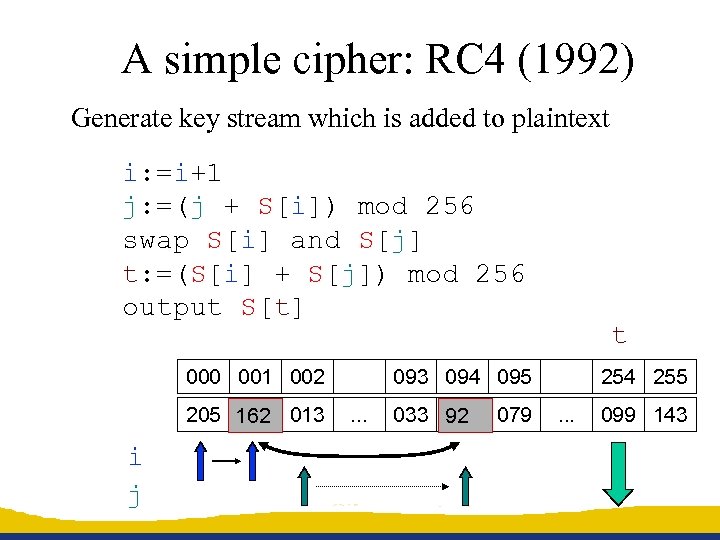 A simple cipher: RC 4 (1992) Generate key stream which is added to plaintext i: =i+1 j: =(j + S[i]) mod 256 swap S[i] and S[j] t: =(S[i] + S[j]) mod 256 output S[t] 000 001 002 205 162 013 092 i j t 093 094 095. . . 033 92 079 162 254 255. . . 099 143
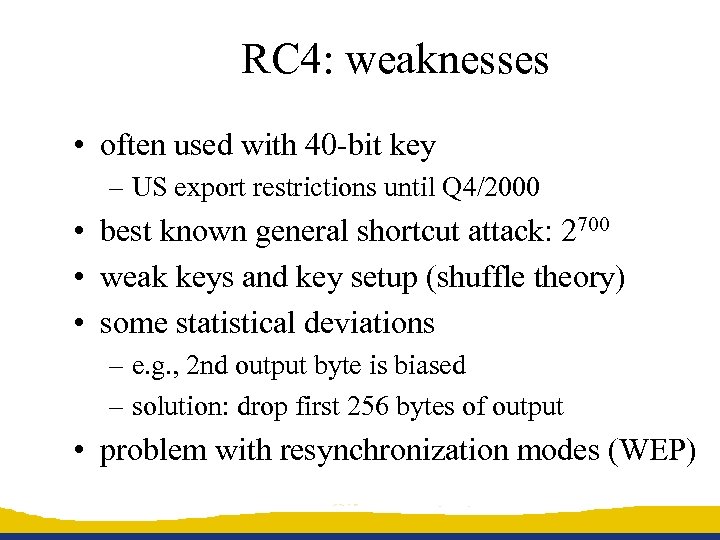 RC 4: weaknesses • often used with 40 -bit key – US export restrictions until Q 4/2000 • best known general shortcut attack: 2700 • weak keys and key setup (shuffle theory) • some statistical deviations – e. g. , 2 nd output byte is biased – solution: drop first 256 bytes of output • problem with resynchronization modes (WEP)
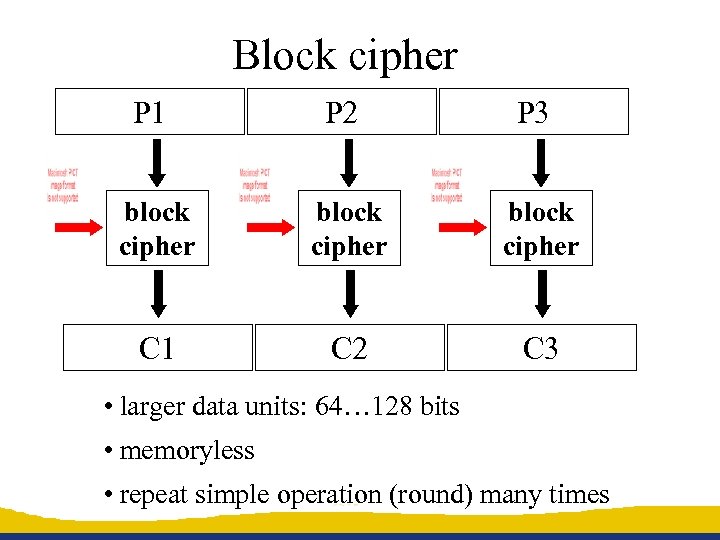 Block cipher P 1 P 2 P 3 block cipher C 1 C 2 C 3 • larger data units: 64… 128 bits • memoryless • repeat simple operation (round) many times
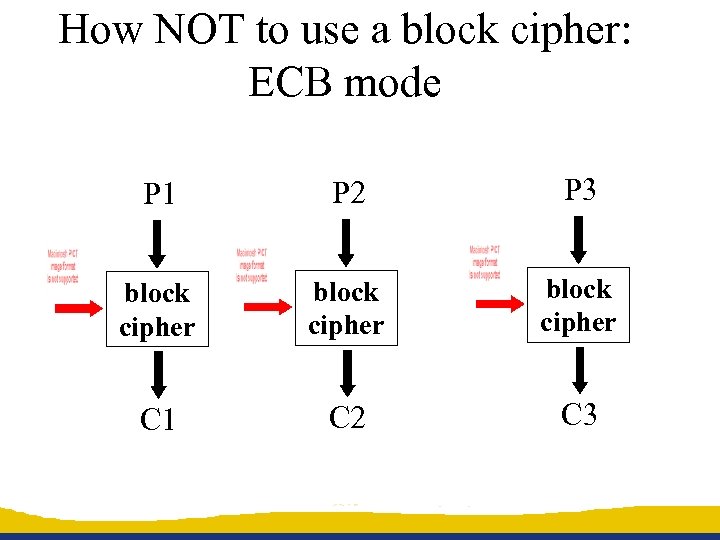 How NOT to use a block cipher: ECB mode P 1 P 2 P 3 block cipher C 1 C 2 C 3
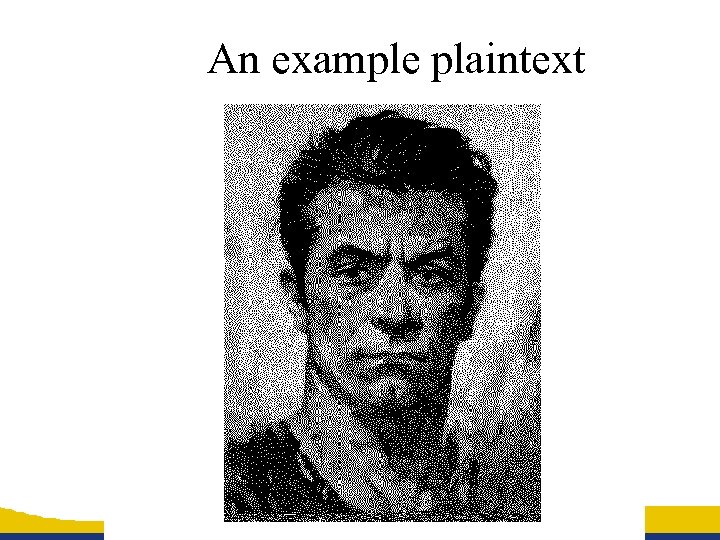 An example plaintext
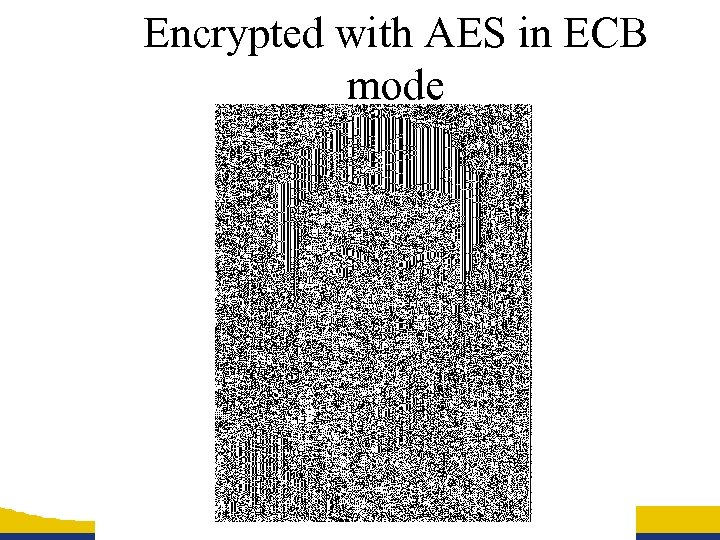 Encrypted with AES in ECB mode
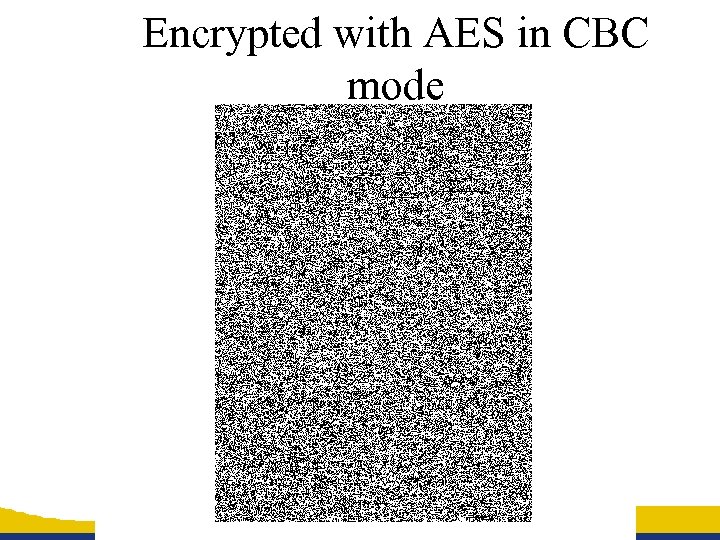 Encrypted with AES in CBC mode
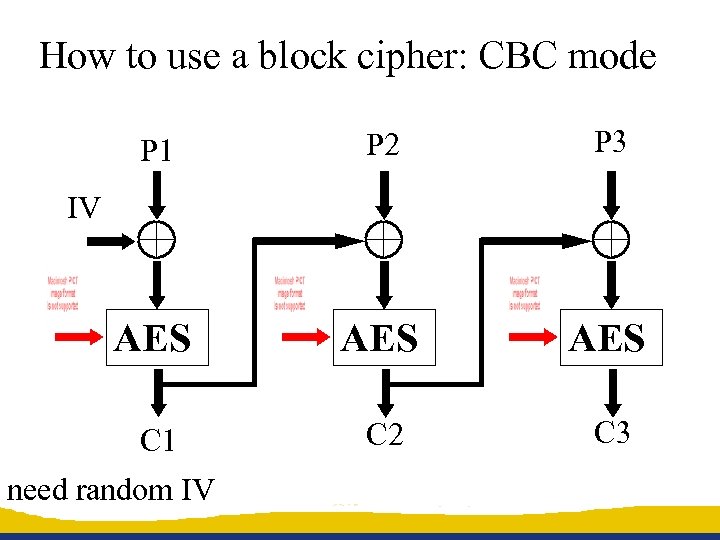 How to use a block cipher: CBC mode P 1 P 2 P 3 AES AES C 1 C 2 C 3 IV need random IV
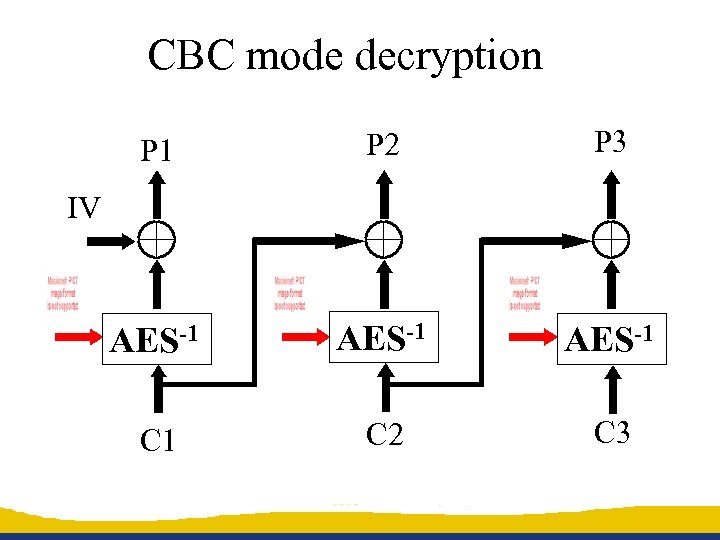 CBC mode decryption P 1 P 2 P 3 AES-1 C 2 C 3 IV
 Secure encryption • What is a secure block cipher anyway? • What is secure encryption anyway? • Definition of security – security assumption – security goal – capability of opponent
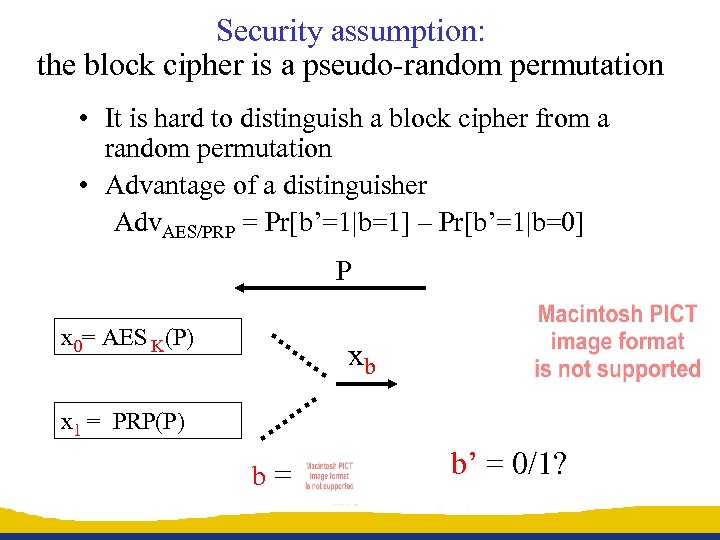 Security assumption: the block cipher is a pseudo-random permutation • It is hard to distinguish a block cipher from a random permutation • Advantage of a distinguisher Adv. AES/PRP = Pr[b’=1|b=1] – Pr[b’=1|b=0] P x 0= AES K(P) xb x 1 = PRP(P) b= b’ = 0/1?
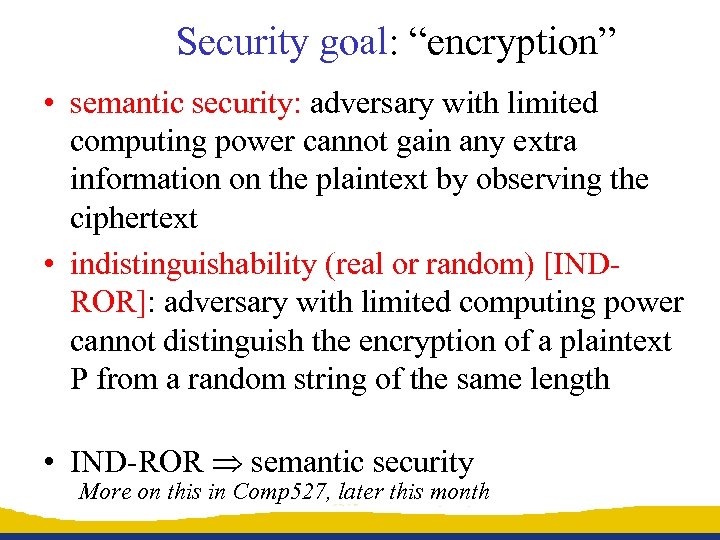 Security goal: “encryption” • semantic security: adversary with limited computing power cannot gain any extra information on the plaintext by observing the ciphertext • indistinguishability (real or random) [INDROR]: adversary with limited computing power cannot distinguish the encryption of a plaintext P from a random string of the same length • IND-ROR semantic security More on this in Comp 527, later this month
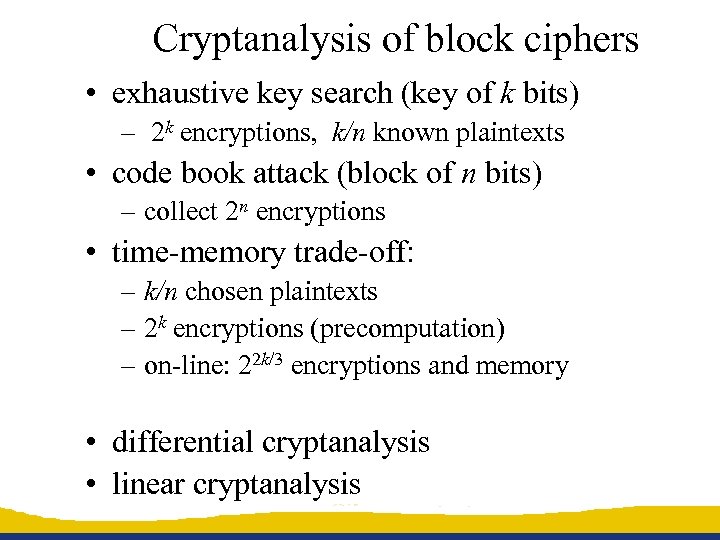 Cryptanalysis of block ciphers • exhaustive key search (key of k bits) – 2 k encryptions, k/n known plaintexts • code book attack (block of n bits) – collect 2 n encryptions • time-memory trade-off: – k/n chosen plaintexts – 2 k encryptions (precomputation) – on-line: 22 k/3 encryptions and memory • differential cryptanalysis • linear cryptanalysis
![Time-memory trade-off [Hellman] • f (x) is a one-way function: {0, 1}n • easy](https://present5.com/presentation/b23267767b178abb46ff6a1dbda532cb/image-43.jpg "Time-memory trade-off [Hellman] • f (x) is a one-way function: {0, 1}n • easy") Time-memory trade-off [Hellman] • f (x) is a one-way function: {0, 1}n • easy to compute, but hard to invert • f(x) has ( , t) preimage security iff – choose x uniformly in {0, 1}n – let M be an adversary that on input f(x) needs time t and outputs M(f(x)) in {0, 1}n – Prob{f(M(f(x))) = f(x) < }, where the probability is taken over x and over all the random choices of M • t/ should be large
Time-memory trade-off [Hellman] • f (x) is a one-way function: {0, 1}n • easy to compute, but hard to invert • f(x) has ( , t) preimage security iff – choose x uniformly in {0, 1}n – let M be an adversary that on input f(x) needs time t and outputs M(f(x)) in {0, 1}n – Prob{f(M(f(x))) = f(x) < }, where the probability is taken over x and over all the random choices of M • t/ should be large
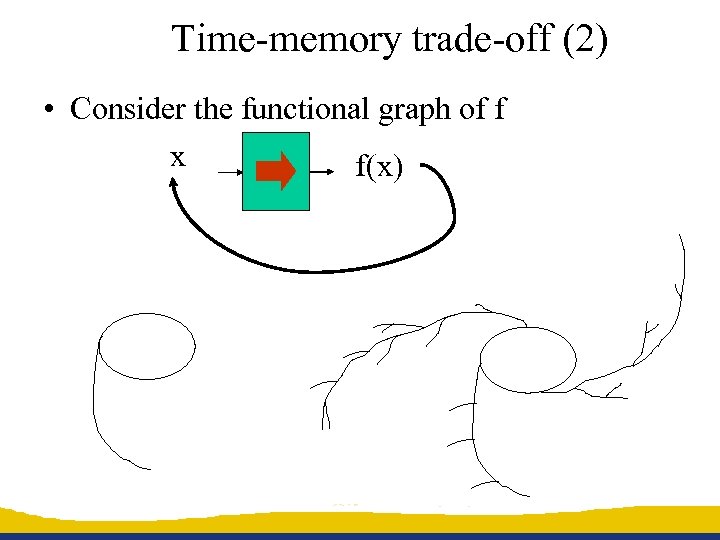 Time-memory trade-off (2) • Consider the functional graph of f x f(x)
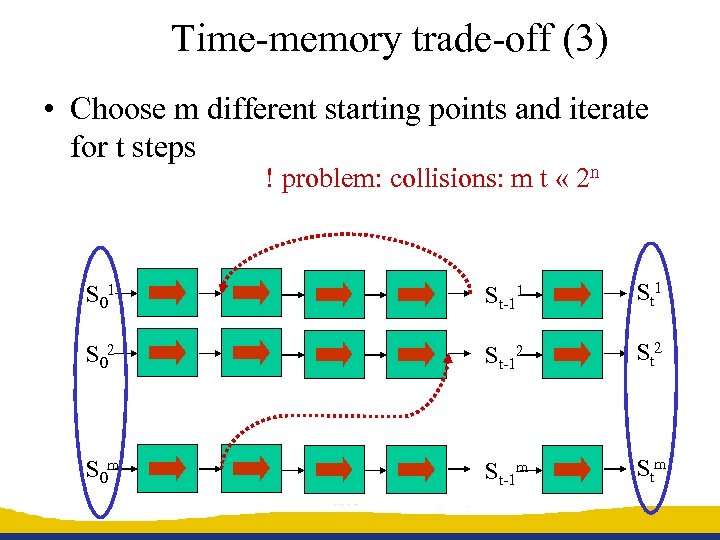 Time-memory trade-off (3) • Choose m different starting points and iterate for t steps ! problem: collisions: m t « 2 n S 01 St-11 St 1 S 02 St-12 St 2 S 0 m St-1 m St m
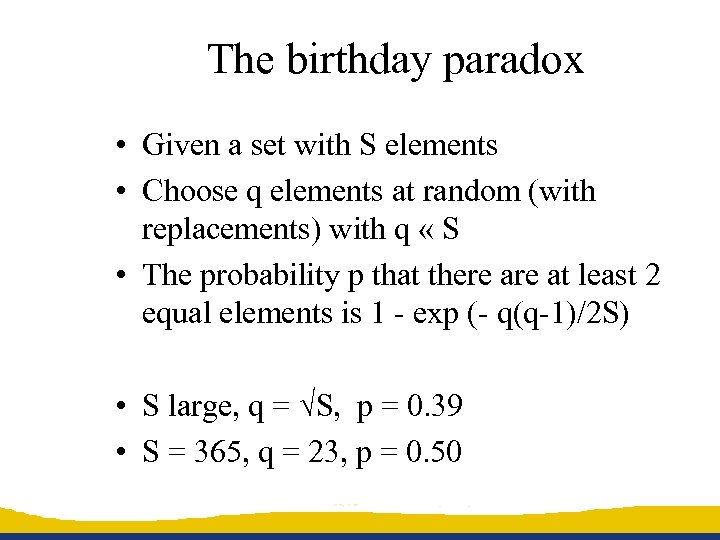 The birthday paradox • Given a set with S elements • Choose q elements at random (with replacements) with q « S • The probability p that there at least 2 equal elements is 1 - exp - q(q-1)/2 S) • S large, q = S, p = 0. 39 • S = 365, q = 23, p = 0. 50
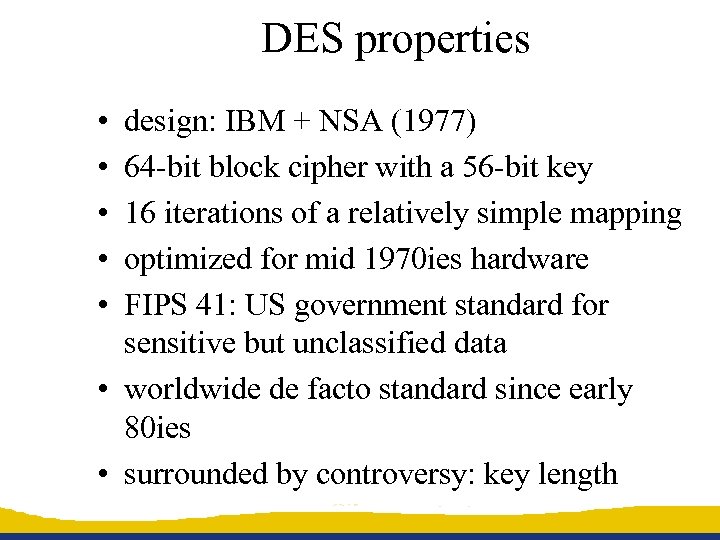 DES properties • • • design: IBM + NSA (1977) 64 -bit block cipher with a 56 -bit key 16 iterations of a relatively simple mapping optimized for mid 1970 ies hardware FIPS 41: US government standard for sensitive but unclassified data • worldwide de facto standard since early 80 ies • surrounded by controversy: key length
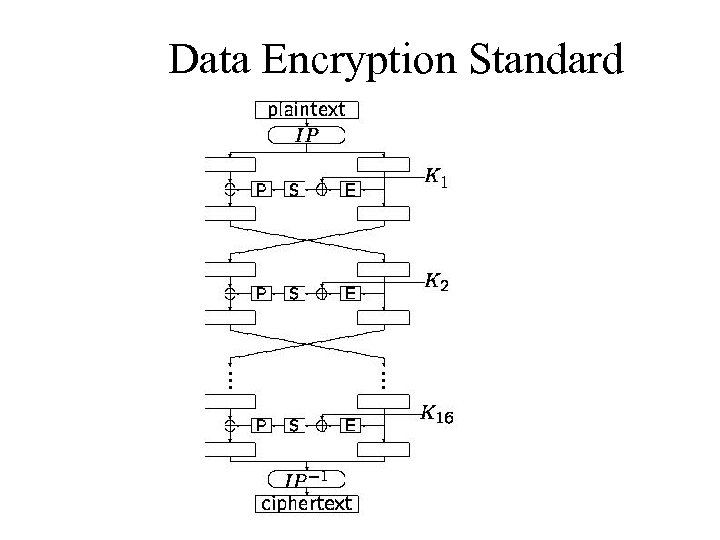 Data Encryption Standard
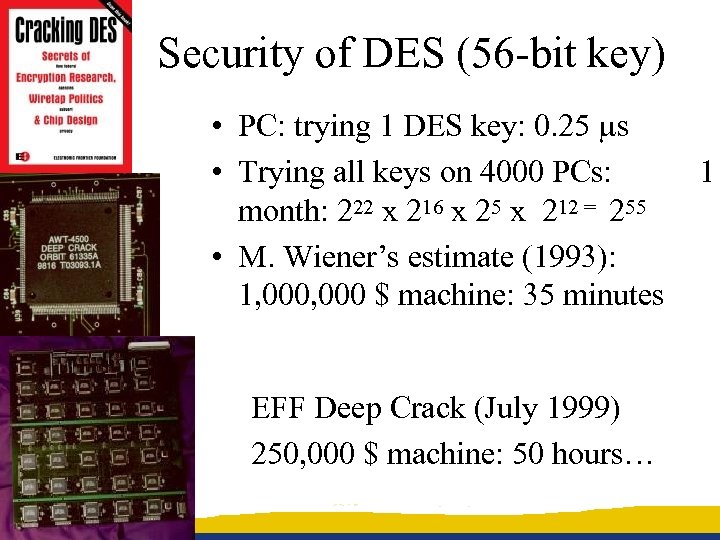 Security of DES (56 -bit key) • PC: trying 1 DES key: 0. 25 s • Trying all keys on 4000 PCs: month: 222 x 216 x 25 x 212 = 255 • M. Wiener’s estimate (1993): 1, 000 $ machine: 35 minutes EFF Deep Crack (July 1999) 250, 000 $ machine: 50 hours… 1
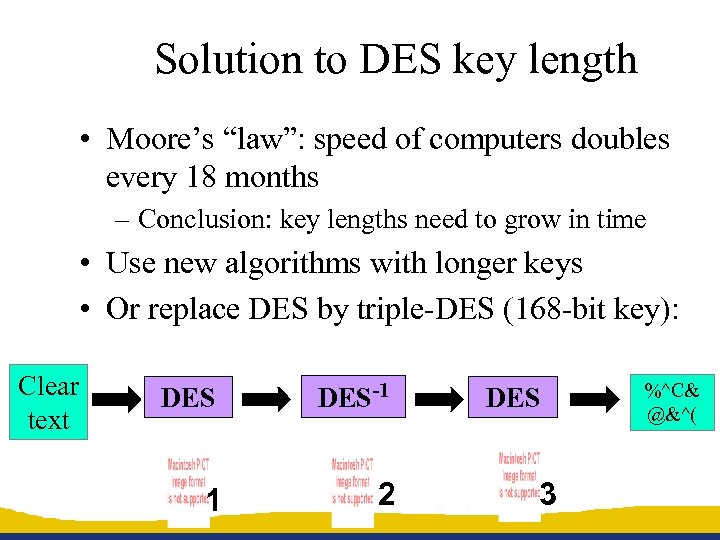 Solution to DES key length • Moore’s “law”: speed of computers doubles every 18 months – Conclusion: key lengths need to grow in time • Use new algorithms with longer keys • Or replace DES by triple-DES (168 -bit key): Clear text DES-1 1 2 DES 3 %^C& @&^(
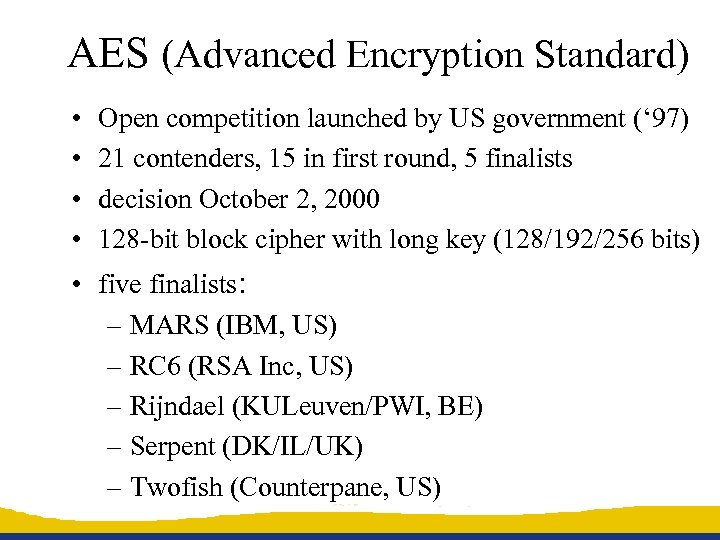 AES (Advanced Encryption Standard) • • Open competition launched by US government (‘ 97) 21 contenders, 15 in first round, 5 finalists decision October 2, 2000 128 -bit block cipher with long key (128/192/256 bits) • five finalists: – MARS (IBM, US) – RC 6 (RSA Inc, US) – Rijndael (KULeuven/PWI, BE) – Serpent (DK/IL/UK) – Twofish (Counterpane, US)
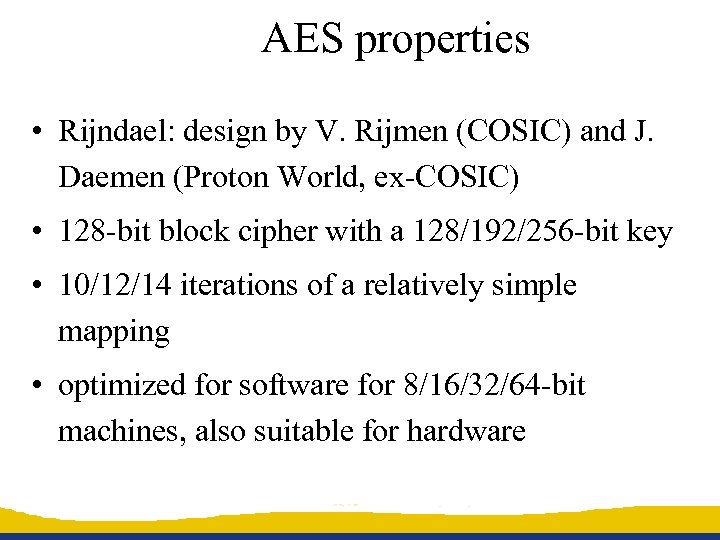 AES properties • Rijndael: design by V. Rijmen (COSIC) and J. Daemen (Proton World, ex-COSIC) • 128 -bit block cipher with a 128/192/256 -bit key • 10/12/14 iterations of a relatively simple mapping • optimized for software for 8/16/32/64 -bit machines, also suitable for hardware
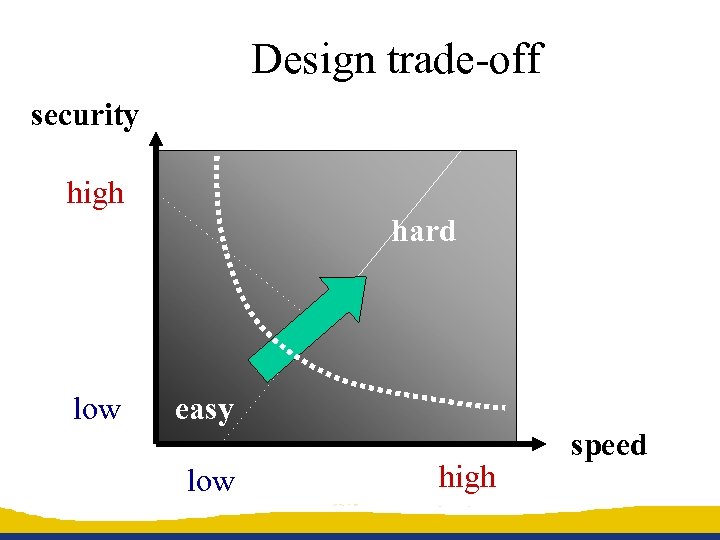 Design trade-off security high hard low easy low high speed
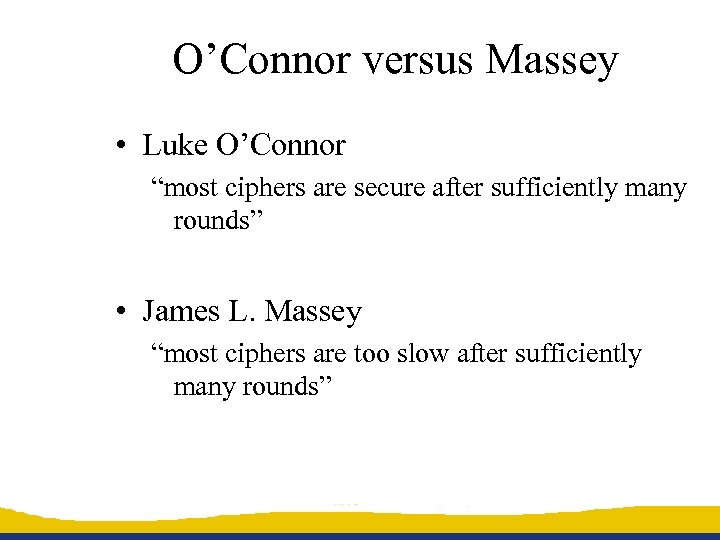 O’Connor versus Massey • Luke O’Connor “most ciphers are secure after sufficiently many rounds” • James L. Massey “most ciphers are too slow after sufficiently many rounds”
 AES Status • FIPS 197 published on 6 December 2001 • Revised FIPS on modes of operation • Rijndael has more options than AES • fast adoption in the market – early 2002, 74 products are using AES – standardization: ISO, IETF, … • slower adoption in financial sector
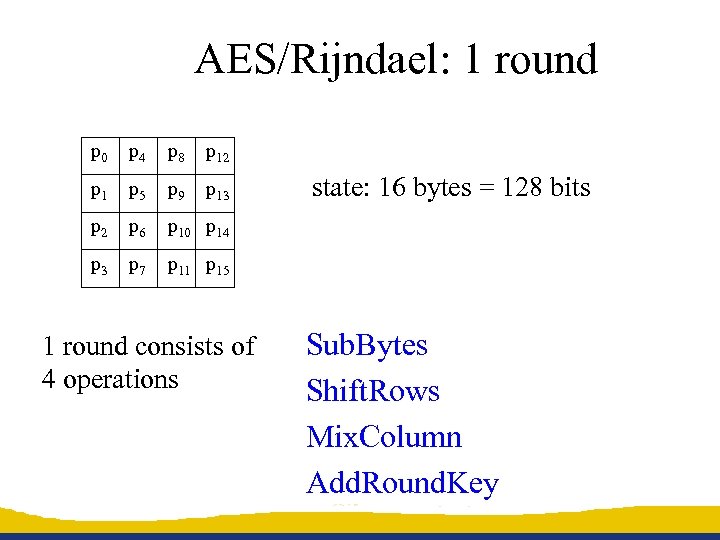 AES/Rijndael: 1 round p 0 p 4 p 8 p 12 p 1 p 5 p 9 p 13 p 2 p 6 p 10 p 14 p 3 p 7 p 11 p 15 1 round consists of 4 operations state: 16 bytes = 128 bits Sub. Bytes Shift. Rows Mix. Column Add. Round. Key
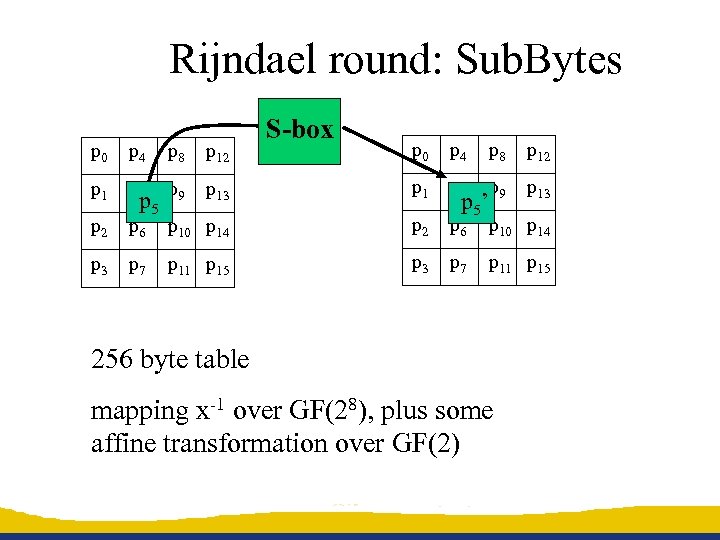 Rijndael round: Sub. Bytes S-box p 0 p 4 p 8 p 12 p 13 p 1 p 5 p 9 p 13 p 6 p 10 p 14 p 2 p 6 p 10 p 14 p 7 p 11 p 15 p 3 p 7 p 11 p 15 p 0 p 4 p 8 p 12 p 1 p 5 p 9 p 2 p 3 p 5’ 256 byte table mapping x-1 over GF(28), plus some affine transformation over GF(2)
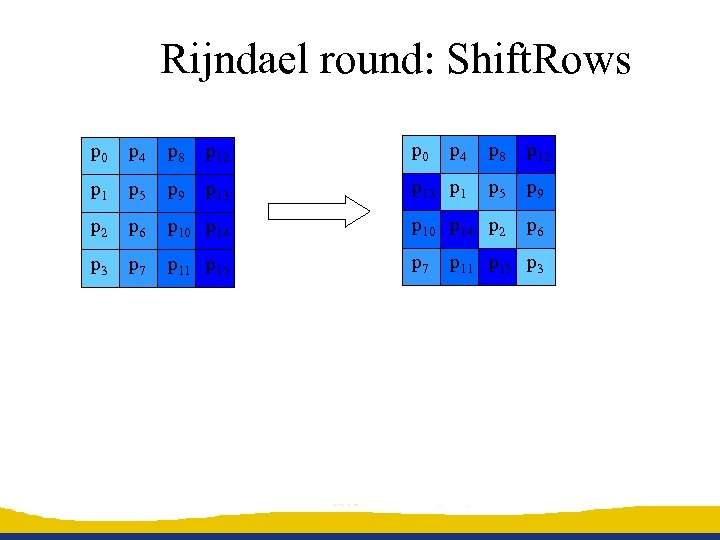 Rijndael round: Shift. Rows p 0 p 4 p 8 p 12 p 1 p 5 p 9 p 13 p 1 p 5 p 9 p 2 p 6 p 10 p 14 p 2 p 6 p 3 p 7 p 11 p 15 p 3
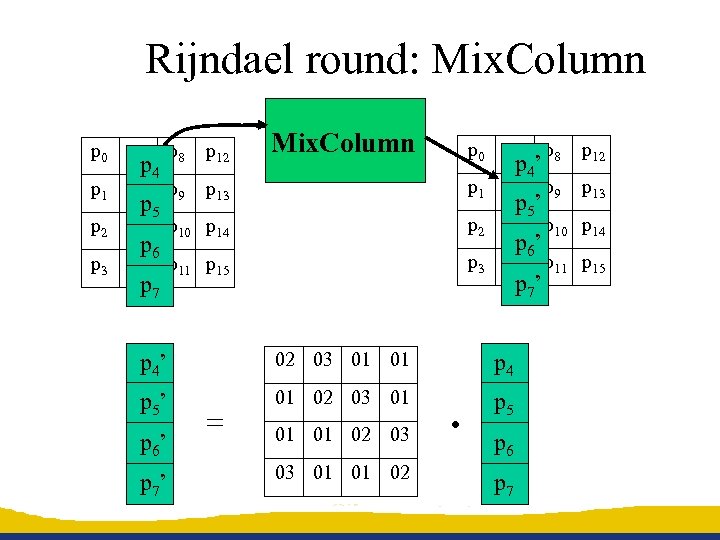 Rijndael round: Mix. Column p 0 p 4 p 8 p 12 p 13 p 1 p 5 p 9 p 13 p 6 p 10 p 14 p 2 p 6 p 10 p 14 p 7 p 11 p 15 p 3 p 7 p 11 p 15 p 0 p 4 p 8 p 12 p 1 p 5 p 9 p 2 p 3 p 4 p 5 p 6 p 7 p 4’ p 5’ p 6’ p 7’ p 4’ 02 03 01 01 p 4 p 5’ 01 02 03 01 p 5 p 6’ p 7’ = 01 01 02 03 03 01 01 02 . p 6 p 7
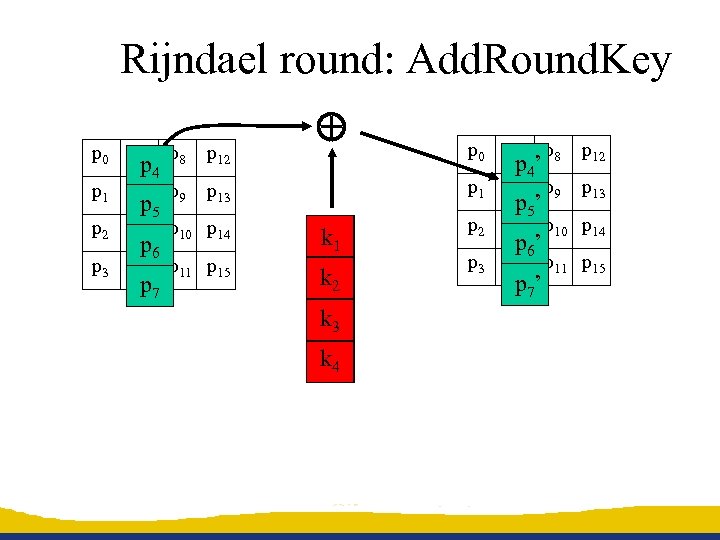 Rijndael round: Add. Round. Key p 0 p 4 p 8 p 12 p 13 p 1 p 5 p 9 p 13 p 6 p 10 p 14 p 2 p 6 p 10 p 14 p 7 p 11 p 15 p 3 p 7 p 11 p 15 p 0 p 4 p 8 p 12 p 1 p 5 p 9 p 2 p 3 p 4 p 5 p 6 p 7 k 1 k 2 k 3 k 4 p 4’ p 5’ p 6’ p 7’
 Rijndael design strategy • simple and elegant • no integer arithmetic • wide trail strategy: – strong resistance against linear and differential attacks – over 4 rounds, sum of number of “active” input and output bytes equals 25 • diffusion based on (8, 4) MDS code with minimum distance 5 [p 1 p 2 p 3 p 4 | p 1’ p 2’ p 3’ p 4’ ]
 Performance reference data (Pentium) encryption speed (cycles/byte) key setup (cycles)
![Differential cryptanalysis [Biham Shamir 90] Plaintext P K 1 round 1 Plaintext P’ K](https://present5.com/presentation/b23267767b178abb46ff6a1dbda532cb/image-63.jpg "Differential cryptanalysis [Biham Shamir 90] Plaintext P K 1 round 1 Plaintext P’ K") Differential cryptanalysis [Biham Shamir 90] Plaintext P K 1 round 1 Plaintext P’ K 1 C 1 K 2 round 2 C 1’ K 2 C 2 Kr-1 round r Ciphertext C round 2 C 2’ Kr-1 Cr-1 Kr round 1 choose the difference P, P’ round r-1 Cr-1’ Kr round r Ciphertext C’ try to predict the difference Cr-1, Cr-1’ this leaks information on Kr
Differential cryptanalysis [Biham Shamir 90] Plaintext P K 1 round 1 Plaintext P’ K 1 C 1 K 2 round 2 C 1’ K 2 C 2 Kr-1 round r Ciphertext C round 2 C 2’ Kr-1 Cr-1 Kr round 1 choose the difference P, P’ round r-1 Cr-1’ Kr round r Ciphertext C’ try to predict the difference Cr-1, Cr-1’ this leaks information on Kr
![Linear cryptanalysis [Matsui 93] Plaintext P K 1 round 1 C 1 K 2](https://present5.com/presentation/b23267767b178abb46ff6a1dbda532cb/image-64.jpg "Linear cryptanalysis [Matsui 93] Plaintext P K 1 round 1 C 1 K 2") Linear cryptanalysis [Matsui 93] Plaintext P K 1 round 1 C 1 K 2 round 2 C 2 Kr-1 round r-1 C r-1 Kr round r Ciphertext C for a non-perfect cipher, there exist values 0, r-1 s. t. P. 0 C r-1 = 0 with probability p 1/2 or P. 0 round-1(Kr, C). r-1 = 0 with probability p 1/2 this leaks information on Kr
Linear cryptanalysis [Matsui 93] Plaintext P K 1 round 1 C 1 K 2 round 2 C 2 Kr-1 round r-1 C r-1 Kr round r Ciphertext C for a non-perfect cipher, there exist values 0, r-1 s. t. P. 0 C r-1 = 0 with probability p 1/2 or P. 0 round-1(Kr, C). r-1 = 0 with probability p 1/2 this leaks information on Kr
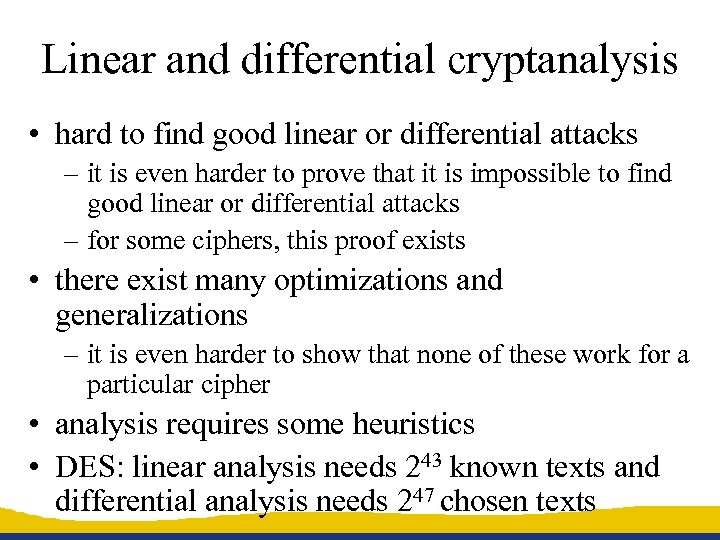 Linear and differential cryptanalysis • hard to find good linear or differential attacks – it is even harder to prove that it is impossible to find good linear or differential attacks – for some ciphers, this proof exists • there exist many optimizations and generalizations – it is even harder to show that none of these work for a particular cipher • analysis requires some heuristics • DES: linear analysis needs 243 known texts and differential analysis needs 247 chosen texts