Скачать презентацию Crustal Structure Crustal Earthquake Process and Earthquake Strong
42098c25f2562cb1ecbfdd8411253f0d.ppt
- Количество слайдов: 72
 Crustal Structure, Crustal Earthquake Process and Earthquake Strong Ground Motion Scaling for the Conterminous U. S. R. B. Herrmann Otto Nuttli Professor of Geophysics Saint Louis University
 Interrelated Studies • Ground motion study requires • Moment magnitude for absolute calibration, which is determined from • Source mechanism, depth and moment determination, which needs • Crustal structure, from • Receiver functions and • Surface wave dispersion
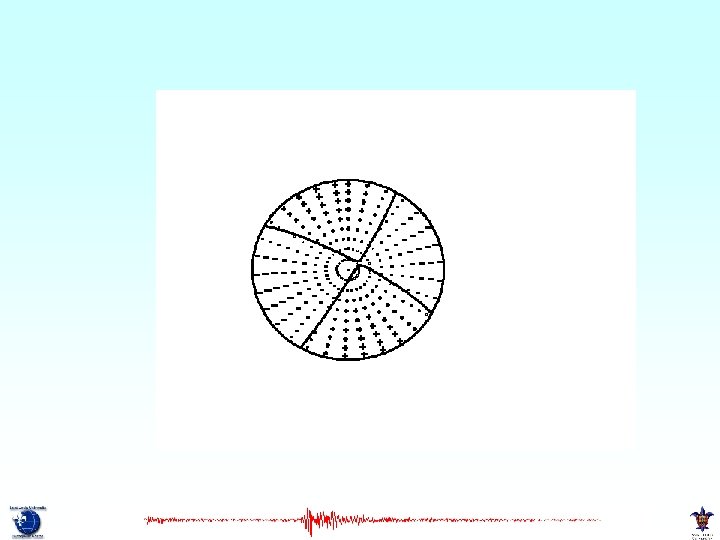
 Earthquake Focal Mechanism Determination • First motion – need high quality data – need good sampling of focal sphere • Waveform modeling – good waveforms - high S/N – good crustal model • Spectral amplitudes
 Procedure • Multiple filter analysis to define spectral amplitudes • Radiation pattern search for 4 possible mechanisms (180 degree symmetry and P-T axis switch) • Select according to waveform prediction or good first motion
 Timeline • All digital data in hand within 1 hour of event - 70 Mb downloaded • Data QC, spectral analysis, grid search, forward modeling, web page generation within 1 hour
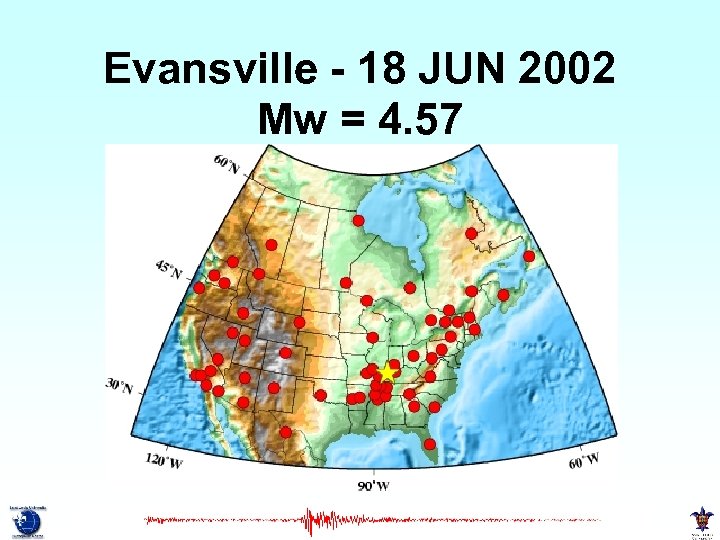 Evansville - 18 JUN 2002 Mw = 4. 57
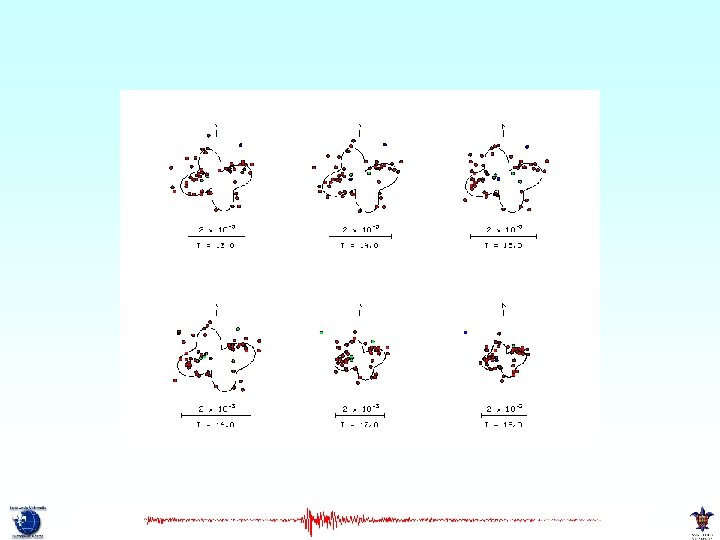
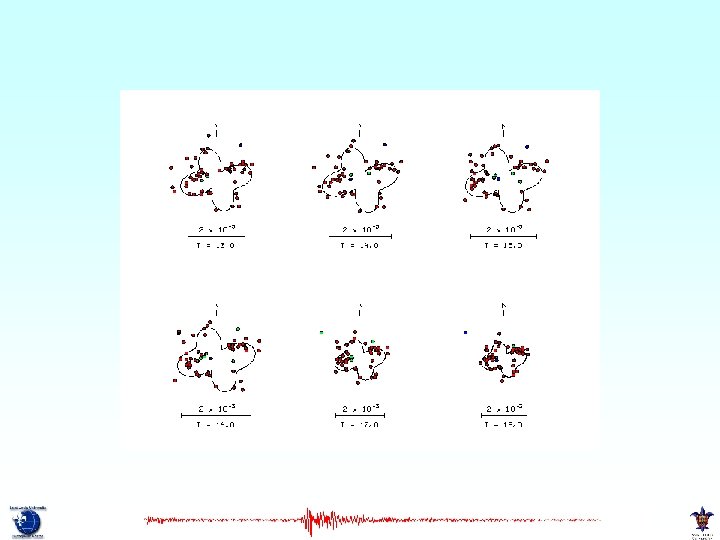
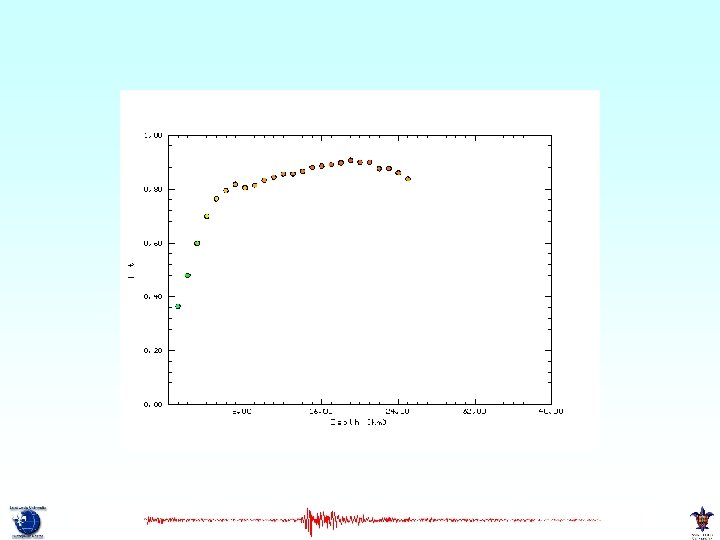
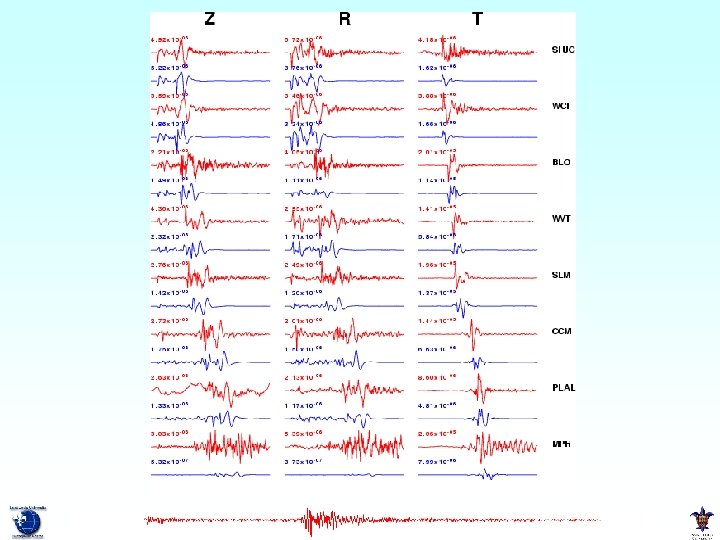
 Questions • Can procedure be fully automated? • Can timeline be shortened • Can direct waveform inversion be made less sensitive to velocity model • What patterns are emerging
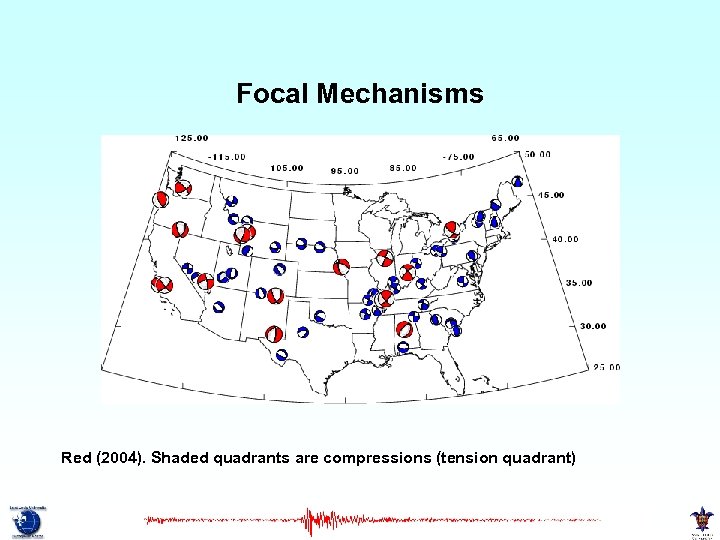 Focal Mechanisms Red (2004). Shaded quadrants are compressions (tension quadrant)
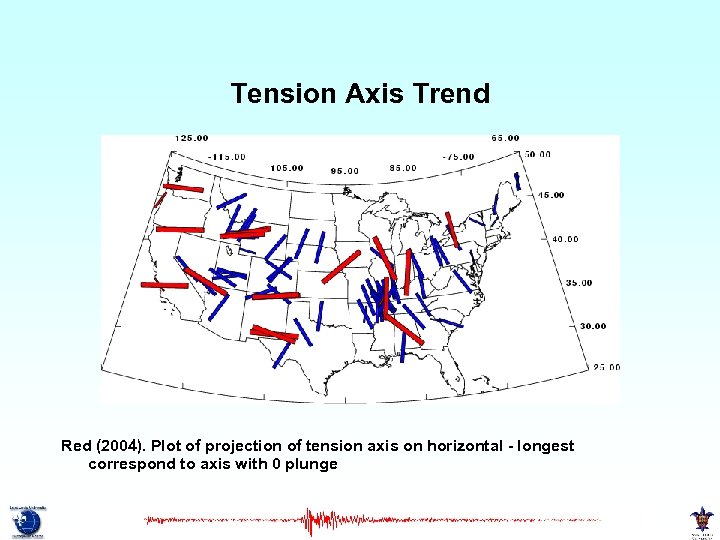 Tension Axis Trend Red (2004). Plot of projection of tension axis on horizontal - longest correspond to axis with 0 plunge
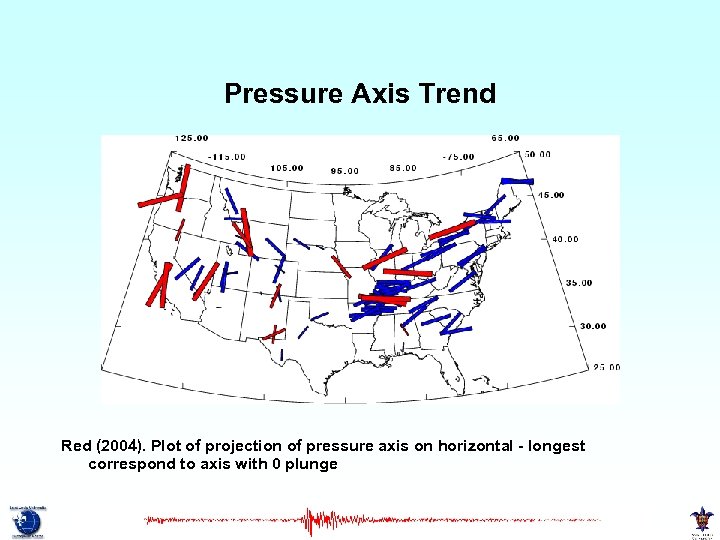 Pressure Axis Trend Red (2004). Plot of projection of pressure axis on horizontal - longest correspond to axis with 0 plunge
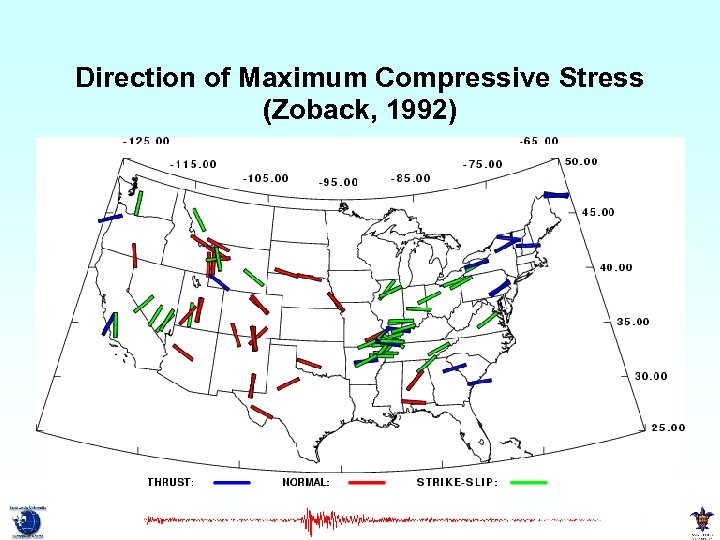 Direction of Maximum Compressive Stress (Zoback, 1992)
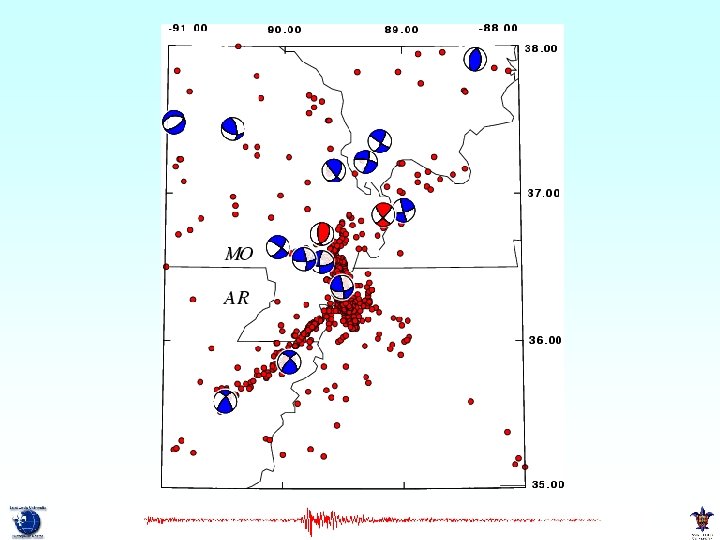
 Questions • Why does nature of focal mechanism change • What is relation to pattern of seismicity, especially location of larger earthquakes
 Current work • Systematically determining mechanisms using USNSN digital data from 1990 - present. • Determining lower magnitude limit as function of network geometry and time of year (S/N)
 Issues in High Frequency Ground Motion Scaling: Regression, Crust, Absolute Scaling
 Objective of Studies • Construct a forward ground motion model for a region using – Recordings of small and large earthquakes – Tool of random vibration theory / stochastic simulation
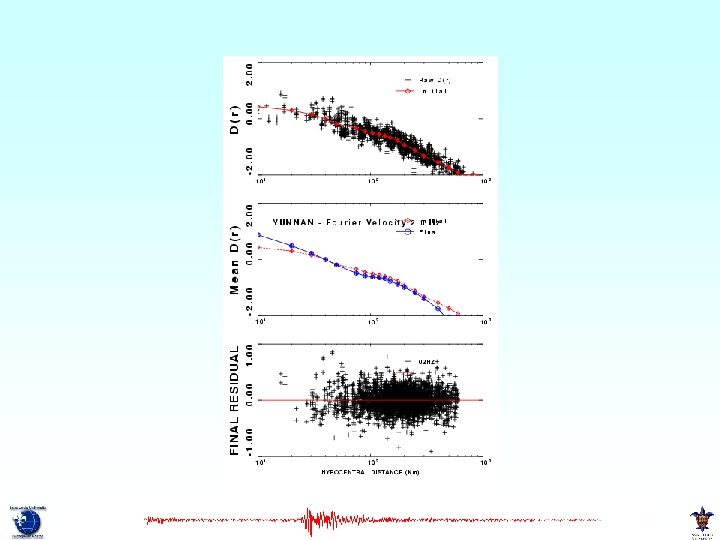
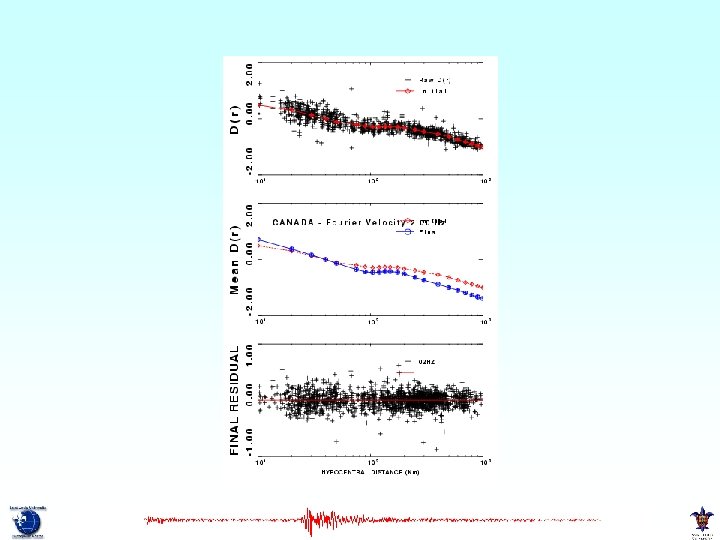
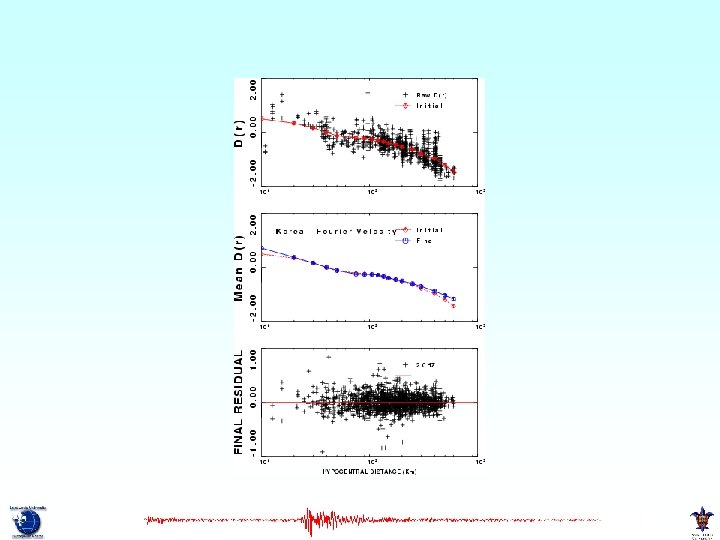
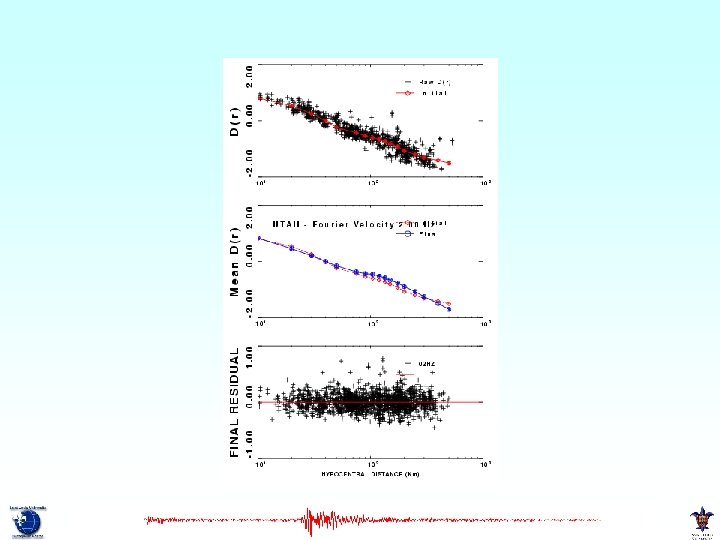
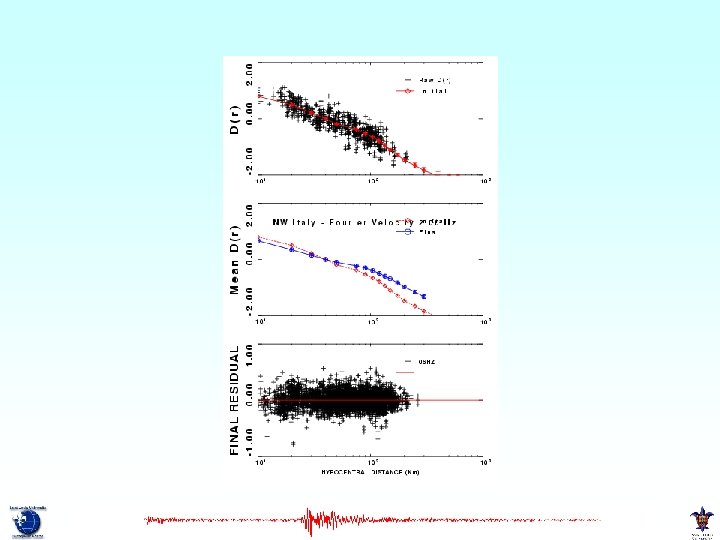
 Regression • Data from small earthquakes • Model A=E+D+S A = log a E = excitation (not source) D = distance S = site
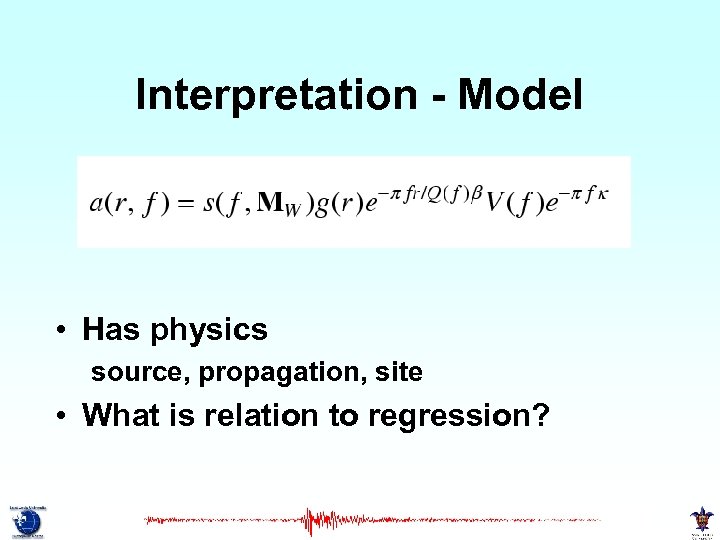 Interpretation - Model • Has physics source, propagation, site • What is relation to regression?
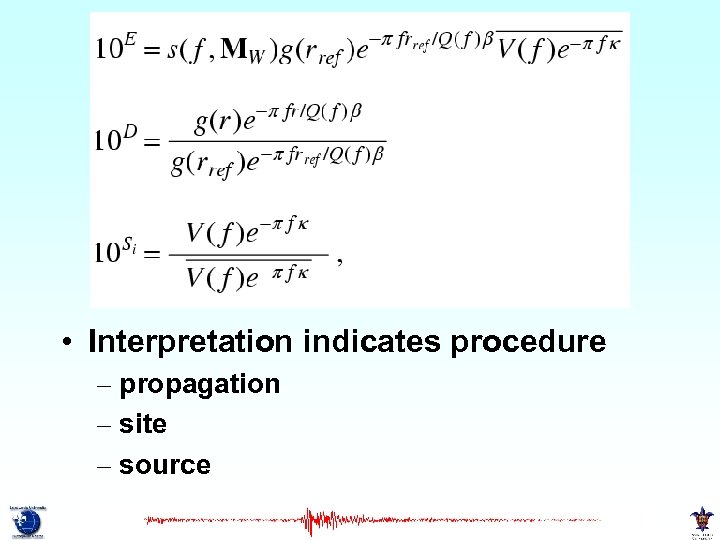 • Interpretation indicates procedure – propagation – site – source
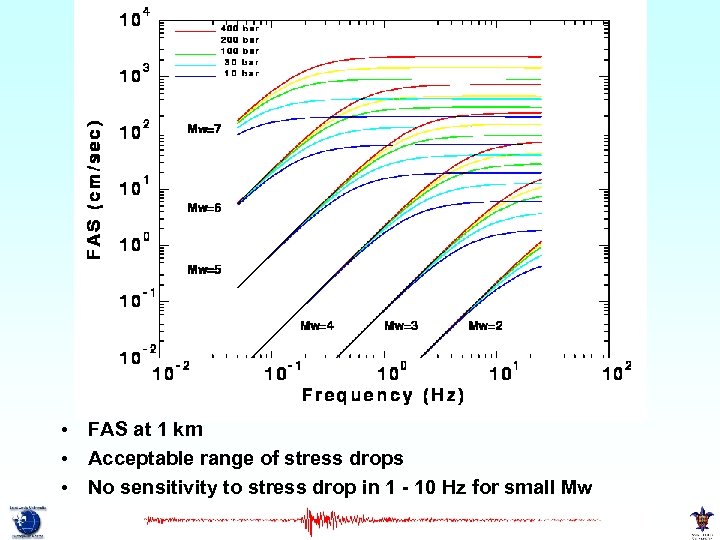 • FAS at 1 km • Acceptable range of stress drops • No sensitivity to stress drop in 1 - 10 Hz for small Mw
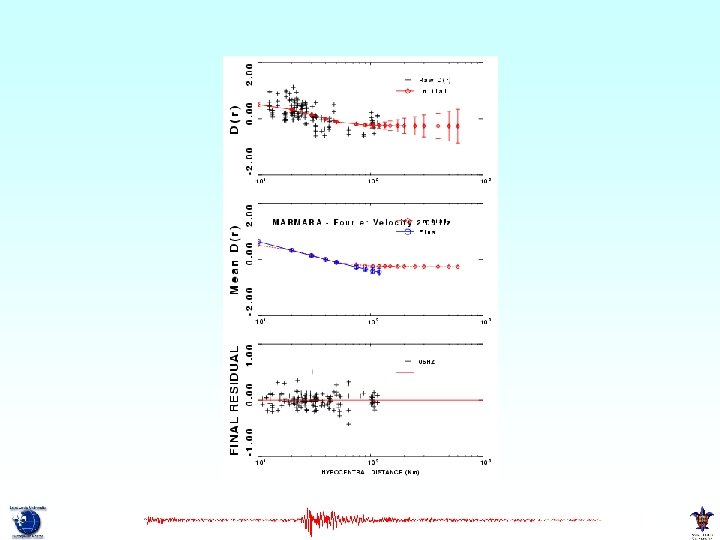
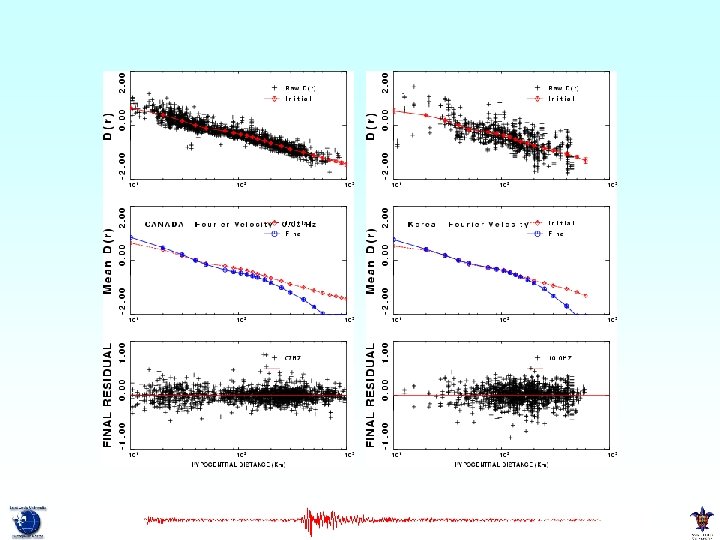
 Questions • Is a study of vertical component motions useful for predicting horizontal motions? • What is the nature of the ground motion scaling from the source to the first observation point? Does this depend upon the focal mechanism?
 • How does crustal structure affect ground motions, especially at larger distances? • Does the simple forward prediction model apply to all frequencies
 Method • Create data set with synthetics – 240 events, 23 stations (15000) • Use different velocity models • Use different focal mechanisms – Strike slip – 45 dip slip – mix of strike slip and dip slip
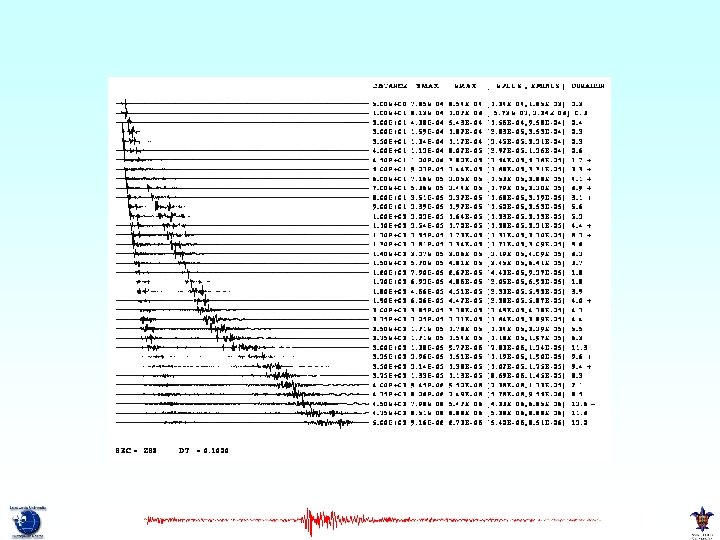
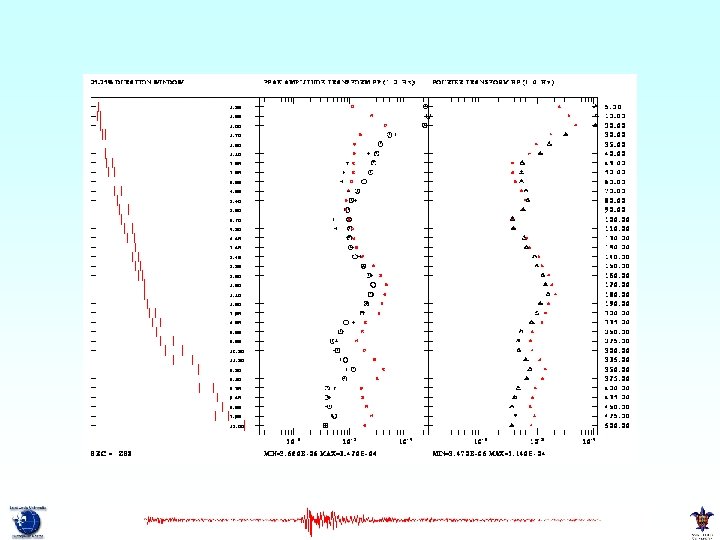
 • Process as with real data • Compare mechanism effect for different models at 1. 0 Hz • Examination excitation • Look at Excitation
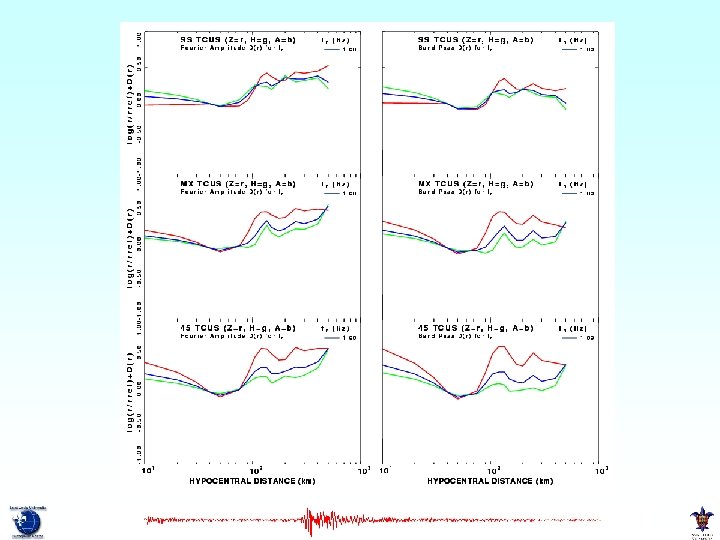
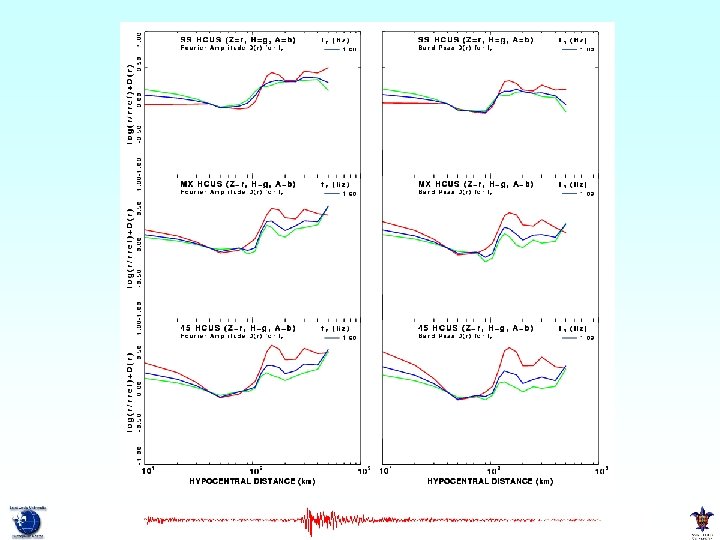
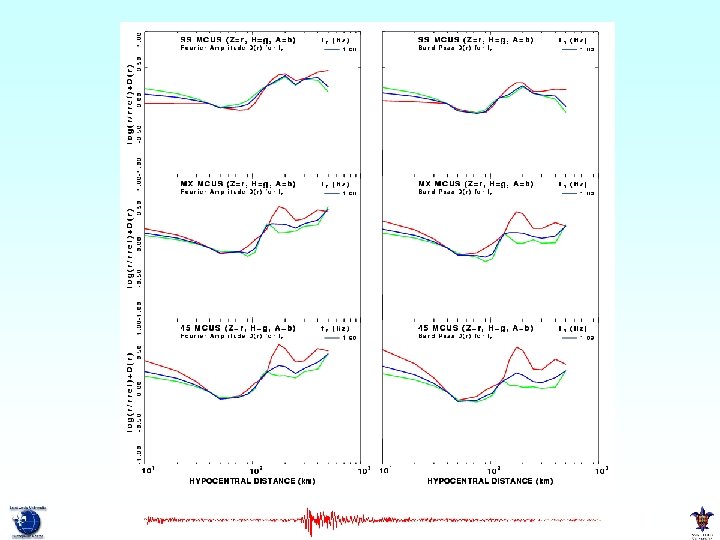
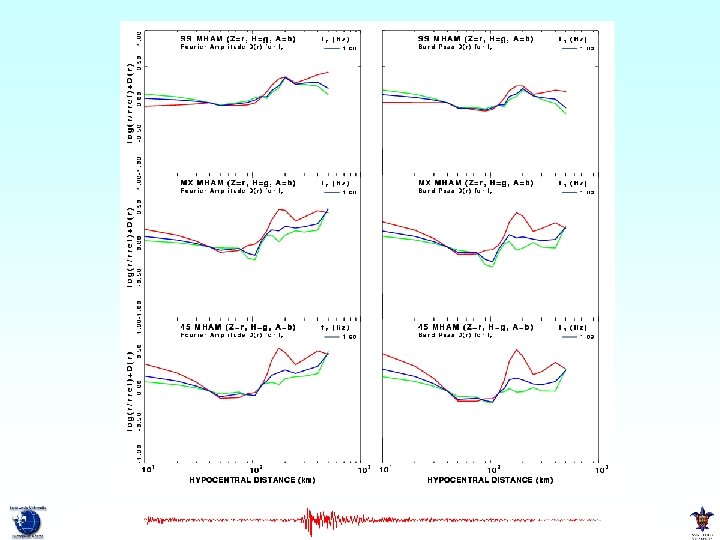
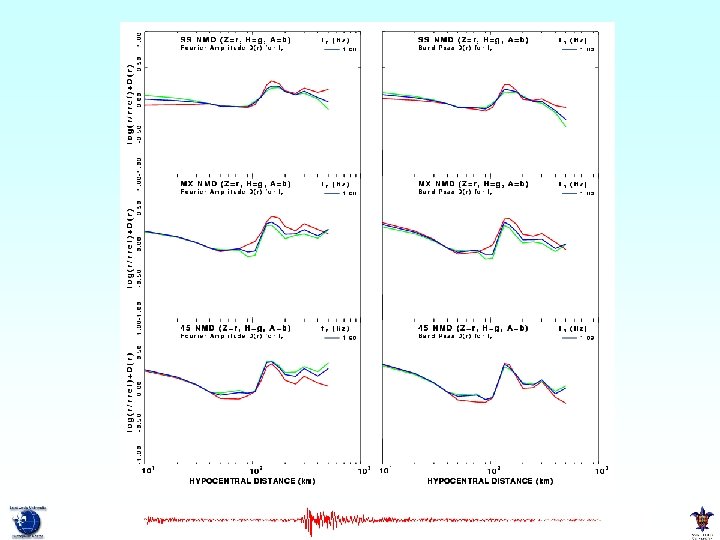
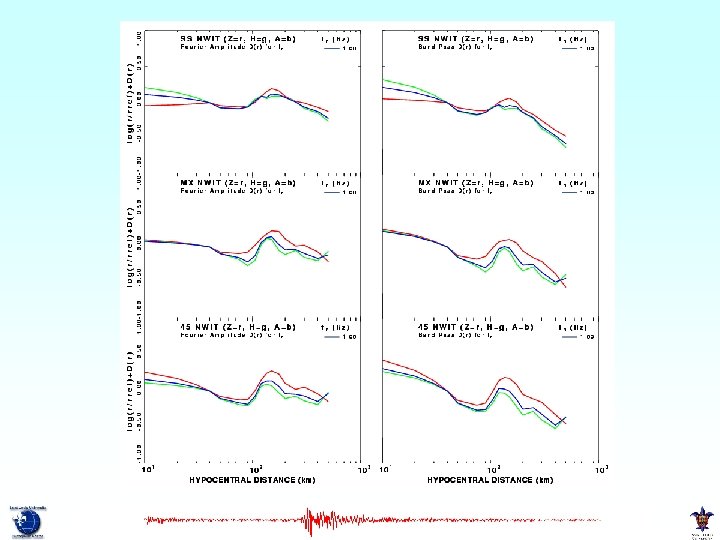
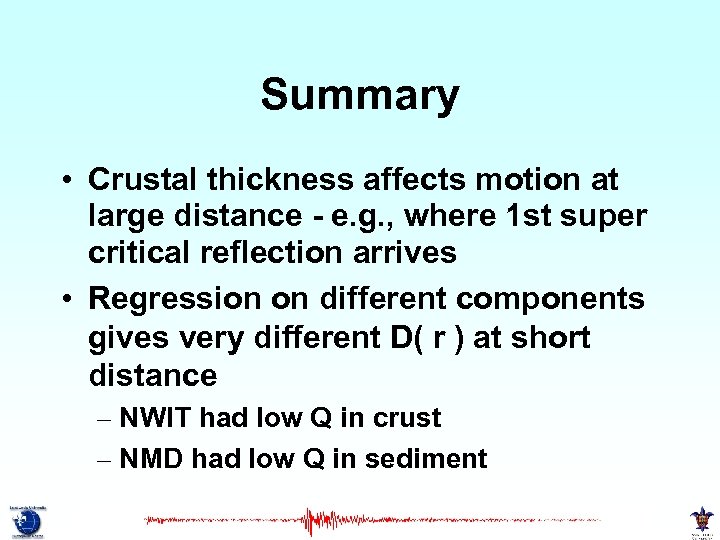 Summary • Crustal thickness affects motion at large distance - e. g. , where 1 st super critical reflection arrives • Regression on different components gives very different D( r ) at short distance – NWIT had low Q in crust – NMD had low Q in sediment
 Conclusions • Nothing sacred about 1/R from source • Relation between source radiation and ‘n’ in R-n
 Methodolody • • • Data Reduction Regression Fit Fourier Spectra Fit Peak Velocity TEST g( r) near source by comparing observed spectra for Mw=4 to predicted (requires waveform Mw estimate)
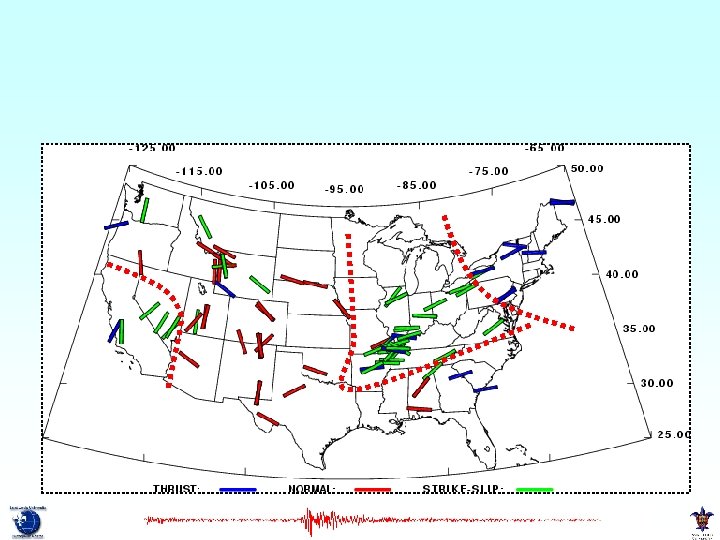
 Implications • Different strong ground motion scaling relations expected at short distances for different parts of the US according to regional earthquake process - strike-slip vs thrust or normal faulting
 Opportunities • Earth. Scope – USArray • Advanced National Seismic System
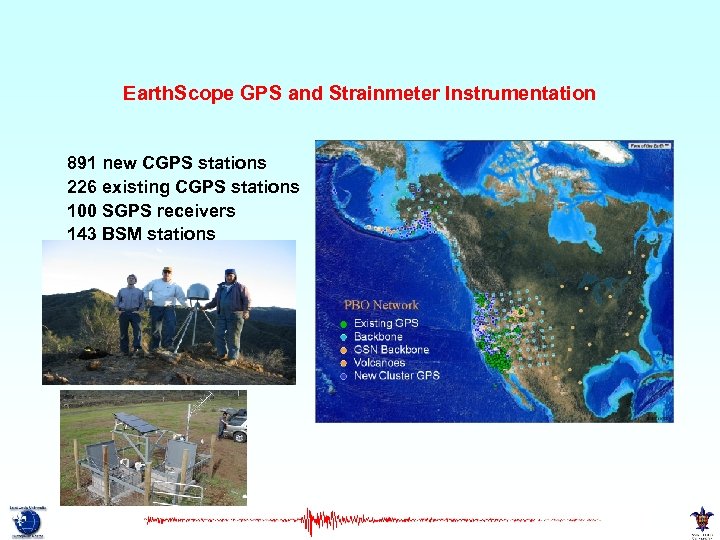 Earth. Scope GPS and Strainmeter Instrumentation 891 new CGPS stations 226 existing CGPS stations 100 SGPS receivers 143 BSM stations 5 LSM stations
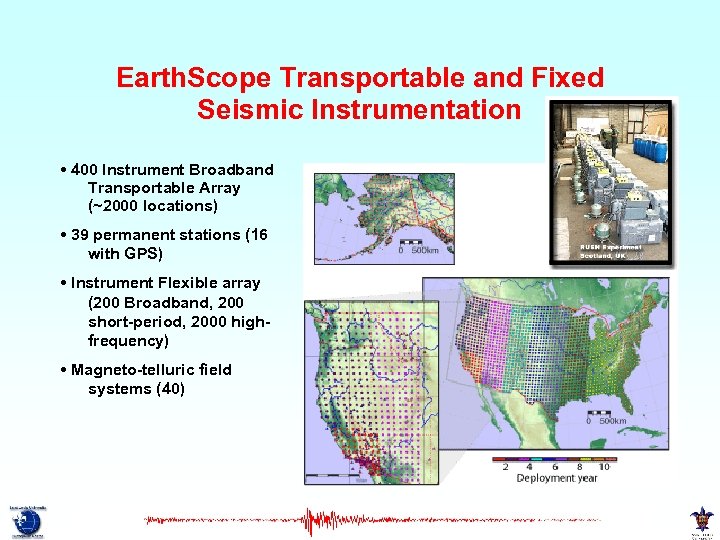 Earth. Scope Transportable and Fixed Seismic Instrumentation • 400 Instrument Broadband Transportable Array (~2000 locations) • 39 permanent stations (16 with GPS) • Instrument Flexible array (200 Broadband, 200 short-period, 2000 highfrequency) • Magneto-telluric field systems (40)
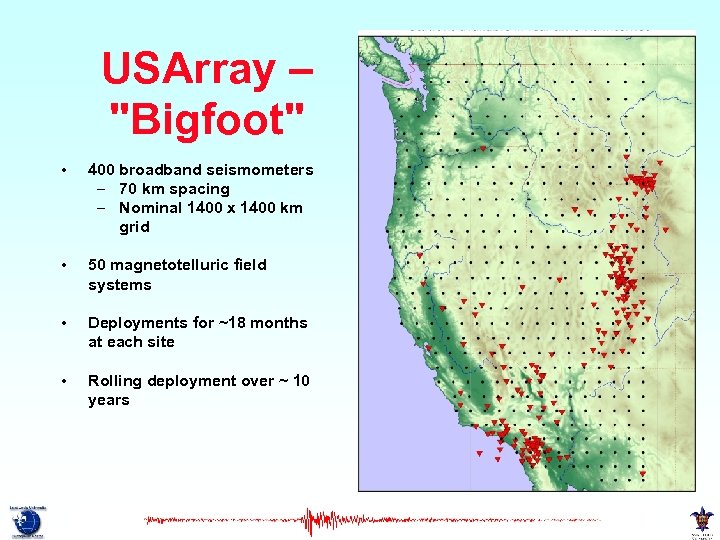 USArray – "Bigfoot" • 400 broadband seismometers – 70 km spacing – Nominal 1400 x 1400 km grid • 50 magnetotelluric field systems • Deployments for ~18 months at each site • Rolling deployment over ~ 10 years
 My Research Directions • USArray Data – map focal mechanisms (only about 1020 annually with Mw > 4 outside California - more if lower threshold – define S-velocity structure of upper crust - needed for inversion of waveforms – characterize regional high frequency ground motion scaling
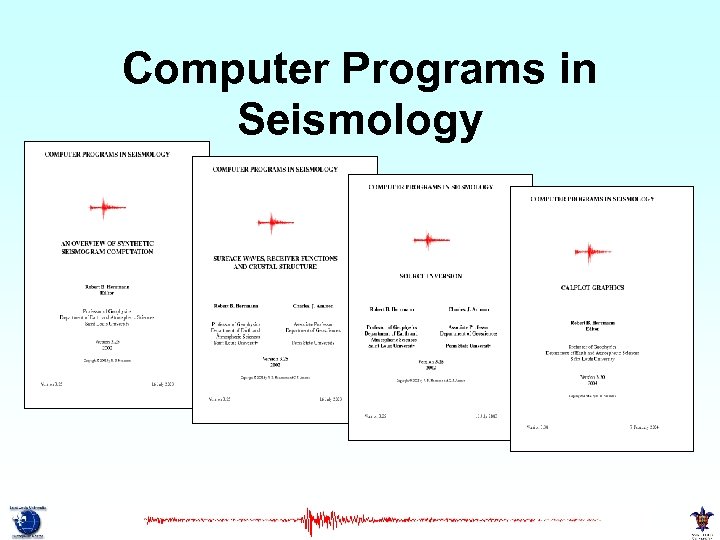 Computer Programs in Seismology
 Version 3. 30 • • UNIX LINUX Mac. OSX Windows – Cygwin (100%) – Zhao and Helmberger, Zhu and Helmberger waveform inversion
 High Frequency Ground Motion Studies Applied in Southern California Southern Great Basin SE Canada Korea Italy (4) Germany Switzerland Yunnan, China Central US Utah/Yellowstone Pacific North West Southern Spain Erzican, Turkey Eastern Turkey
 GSAC • Basic SAC compatibility for trace manipulation (13500 lines of C + CALPLOT graphics; 1990 FORTRAN sac > 120, 000 lines) • Use MATLAB for other graphics • UNIX/LINUX/ Mac. OSX/ Windows (Cygwin 100%) • Open source
 Version 3. 35 • Transverse Isotropy – surface wave modeling – surface wave inversion • Shallow S-wave velocity determination – SPAC, ESAC – Joint inversion of refraction survey dispersion and first arrivals
 The BOOK 300 pages typeset so far
 Caveats (concerns) • Equation is not unique A=(E+1)+(D-1)+S one event is only data in one distance range A= E +(D-1)+(S+1) one station provides data in one distance range • Thus constraints D(rref ) = 0 , and Σ S = 0