


 Скачать презентацию CRT 2010 Washington DC January 21 2010 MITRALIGN
7f96837fb487933cdad28906f7fcae96.ppt
- Количество слайдов: 22
 CRT 2010 Washington DC, January 21, 2010 MITRALIGN: Direct Annuloplasty Device Evolution, Technique and Clinical Trial Update Eberhard Grube, MD, FACC, FSCAI St. Elisabeth Hospital, Heart Center Rhein-Ruhr, Essen, Germany Instituto Cardiologico Dante Pazzanese, São Paulo, Brazil
 DISCLOSURES Eberhard Grube, MD Consulting Fees – Abbott Vascular, Boston Scientific Corporation, Cordis, a Johnson & Johnson Company, Medtronic Cardio. Vascular, Inc. Honoraria – Biosensors International , Boston Scientific Corporation, Medtronic Cardio. Vascular, Inc Ownership Interest (Stocks, Stock Options or Other Ownership Interest) – Biosensors International , Medtronic Cardio. Vascular, Inc. I intend to reference unlabeled/ unapproved uses of drugs or devices in my presentation. I intend to reference off-label use of stents and valve prosthesis.
 Disclosure Within the past 12 months, the presenter or their spouse/partner have had a financial interest/arrangement or affiliation with the organization(s) listed below. Physician Name Company/Relationship Eberhard Grube, MD Mitralign: C Key G – Grant and or Research Support E – Equity Interests S - Salary C – Consulting fees, Honoraria R – Royalty Income I – Intellectual Property Rights SB – Speaker’s Bureau O – Ownership OF – Other Financial Benefits‘
 MITRALIGN Concept ● Surgical approaches for treatment of FMR are focused on size reduction of the mitral valve annulus. ● A relatively small (1 cm) plication of the posterior annulus can normalize the septo-lateral dimension and reduce MR. ● Mitralign concept emulates suture annuloplasty. - Retrograde LV approach - Surgical pledgets are delivered percutaneously through the posterior annulus - Plicate the annulus
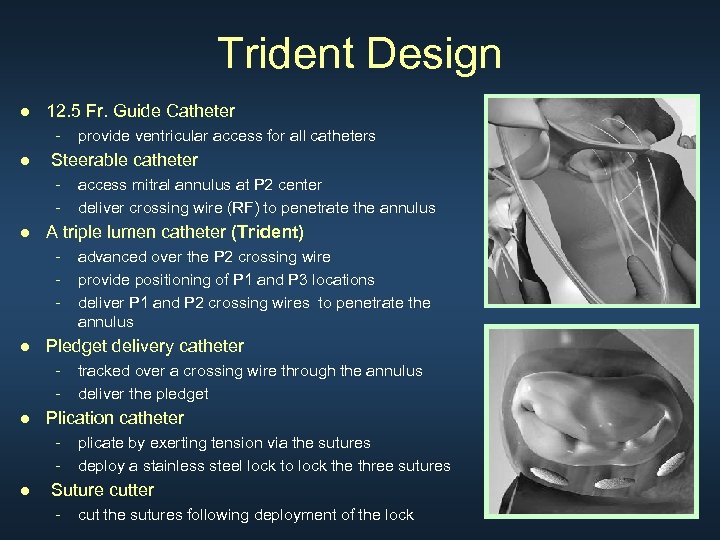 Trident Design ● 12. 5 Fr. Guide Catheter - ● provide ventricular access for all catheters Steerable catheter - access mitral annulus at P 2 center deliver crossing wire (RF) to penetrate the annulus ● A triple lumen catheter (Trident) - advanced over the P 2 crossing wire provide positioning of P 1 and P 3 locations deliver P 1 and P 2 crossing wires to penetrate the annulus ● Pledget delivery catheter - tracked over a crossing wire through the annulus deliver the pledget ● Plication catheter - ● plicate by exerting tension via the sutures deploy a stainless steel lock to lock the three sutures Suture cutter - cut the sutures following deployment of the lock
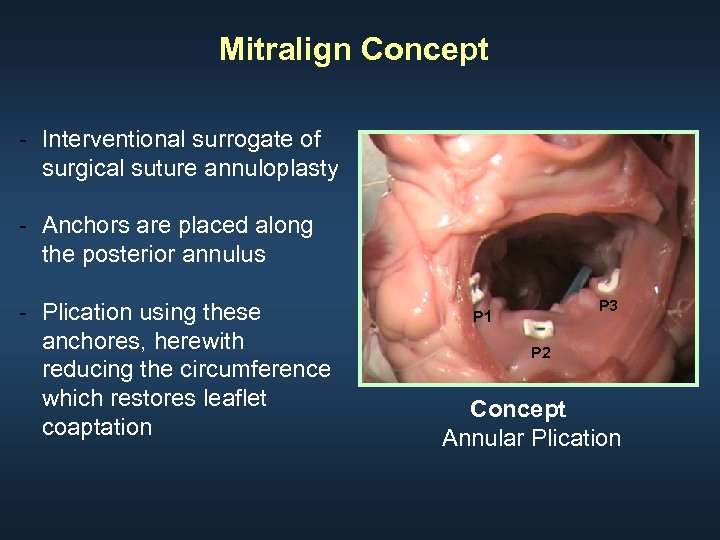 Mitralign Concept - Interventional surrogate of surgical suture annuloplasty - Anchors are placed along the posterior annulus - Plication using these anchores, herewith reducing the circumference which restores leaflet coaptation P 3 P 1 P 2 Concept Annular Plication
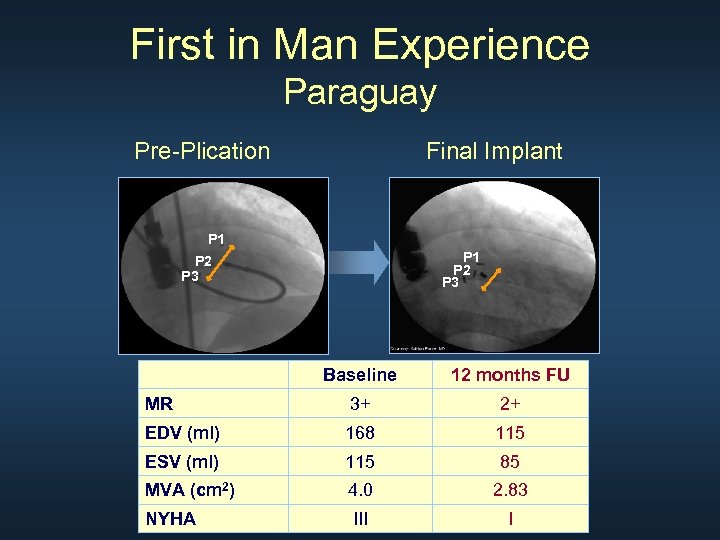 First in Man Experience Paraguay Pre-Plication Final Implant P 1 P 2 P 3 Baseline 12 months FU MR 3+ 2+ EDV (ml) 168 115 ESV (ml) 115 85 MVA (cm 2) 4. 0 2. 83 NYHA III I
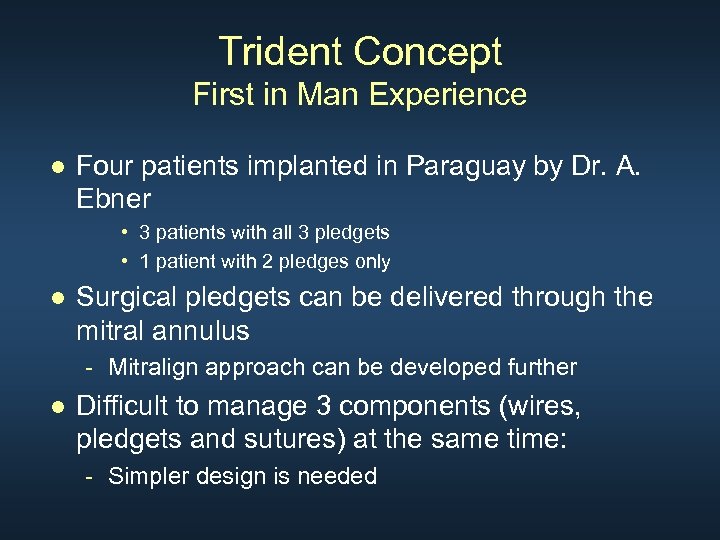 Trident Concept First in Man Experience ● Four patients implanted in Paraguay by Dr. A. Ebner • 3 patients with all 3 pledgets • 1 patient with 2 pledges only ● Surgical pledgets can be delivered through the mitral annulus - Mitralign approach can be developed further ● Difficult to manage 3 components (wires, pledgets and sutures) at the same time: - Simpler design is needed
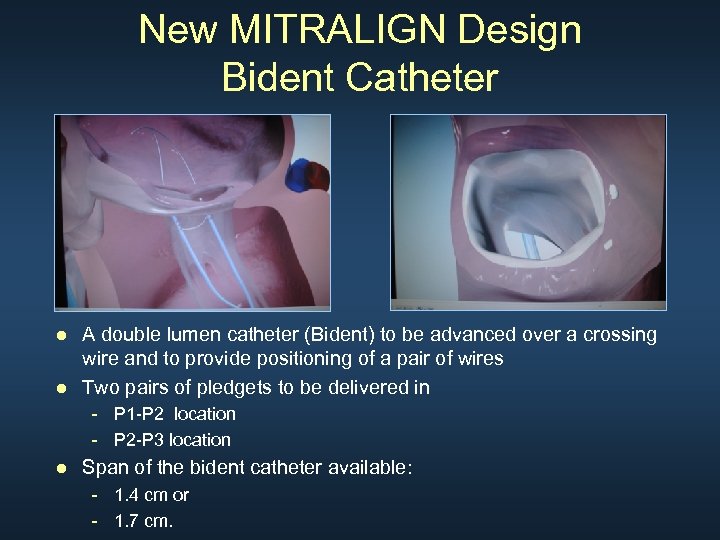 New MITRALIGN Design Bident Catheter ● A double lumen catheter (Bident) to be advanced over a crossing wire and to provide positioning of a pair of wires ● Two pairs of pledgets to be delivered in - P 1 -P 2 location - P 2 -P 3 location ● Span of the bident catheter available: - 1. 4 cm or - 1. 7 cm.
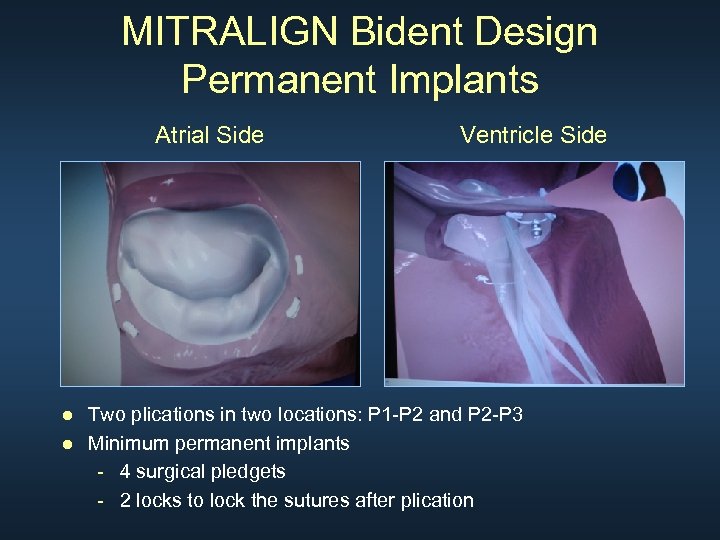 MITRALIGN Bident Design Permanent Implants Atrial Side Ventricle Side ● Two plications in two locations: P 1 -P 2 and P 2 -P 3 ● Minimum permanent implants - 4 surgical pledgets - 2 locks to lock the sutures after plication
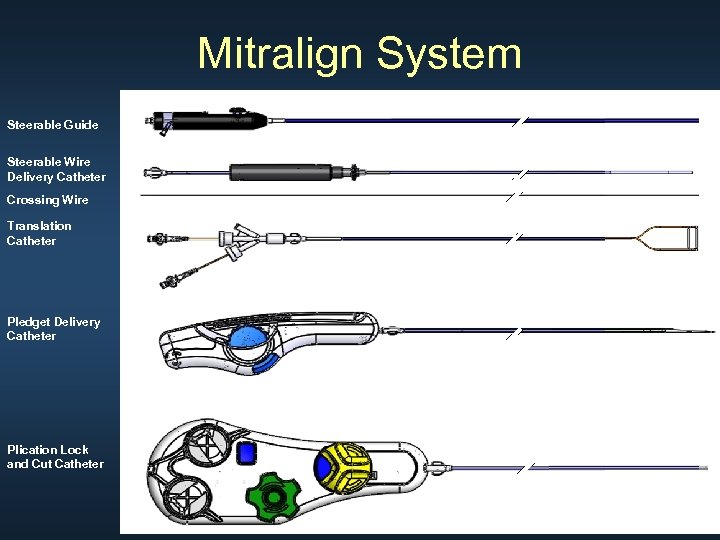 Mitralign System Steerable Guide Steerable Wire Delivery Catheter Crossing Wire Translation Catheter Pledget Delivery Catheter Plication Lock and Cut Catheter
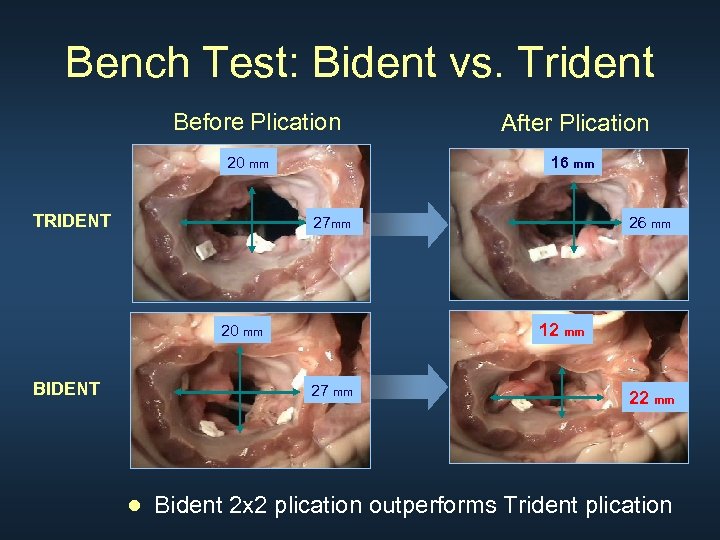 Bench Test: Bident vs. Trident Before Plication 20 mm TRIDENT 16 mm 27 mm 26 mm 12 mm 20 mm BIDENT After Plication 27 mm 22 mm ● Bident 2 x 2 plication outperforms Trident plication
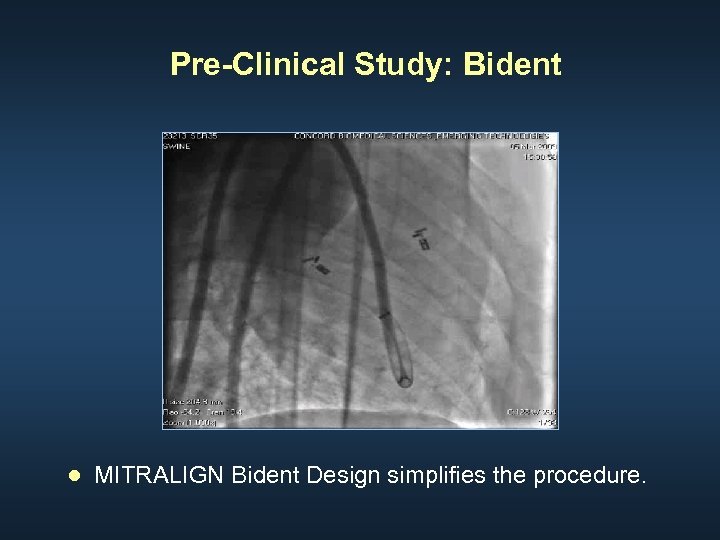 Pre-Clinical Study: Bident ● MITRALIGN Bident Design simplifies the procedure.
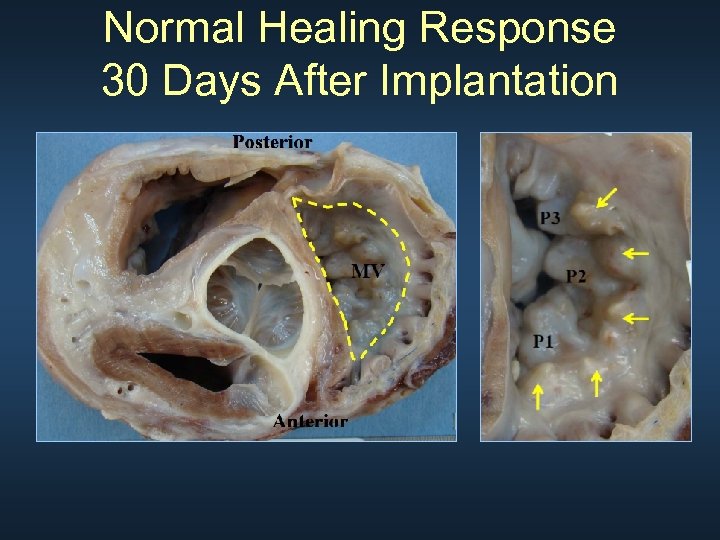 Normal Healing Response 30 Days After Implantation
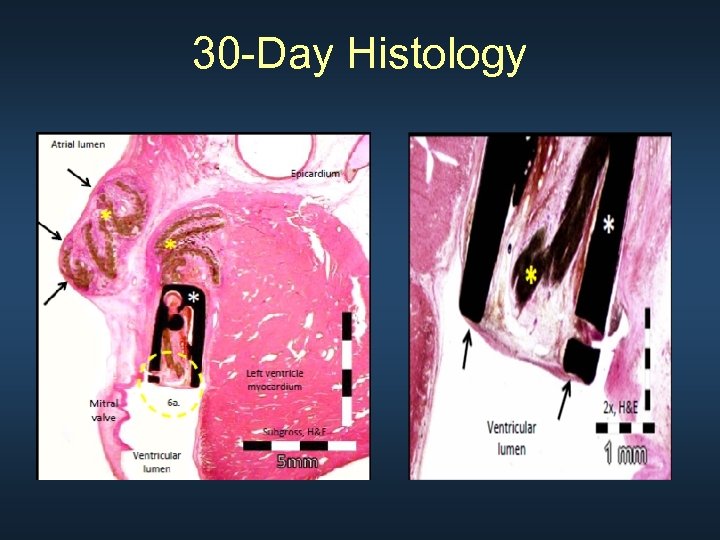 30 -Day Histology
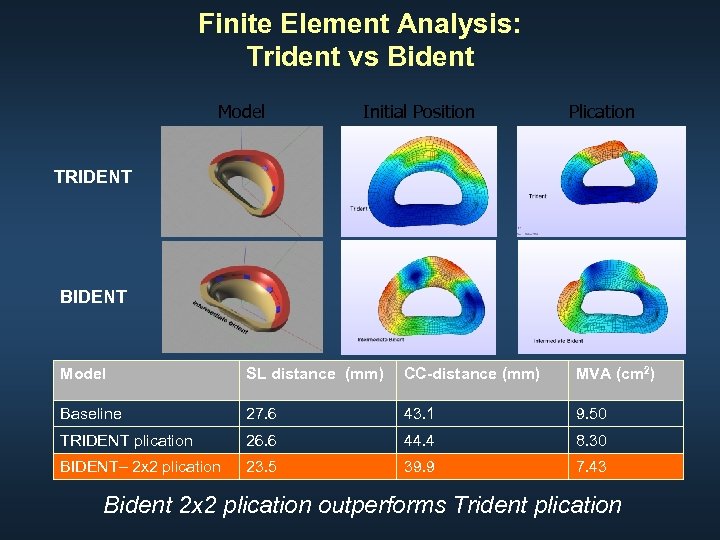 Finite Element Analysis: Trident vs Bident Model Initial Position Plication TRIDENT BIDENT Model SL distance (mm) CC-distance (mm) MVA (cm 2) Baseline 27. 6 43. 1 9. 50 TRIDENT plication 26. 6 44. 4 8. 30 BIDENT– 2 x 2 plication 23. 5 39. 9 7. 43 Bident 2 x 2 plication outperforms Trident plication
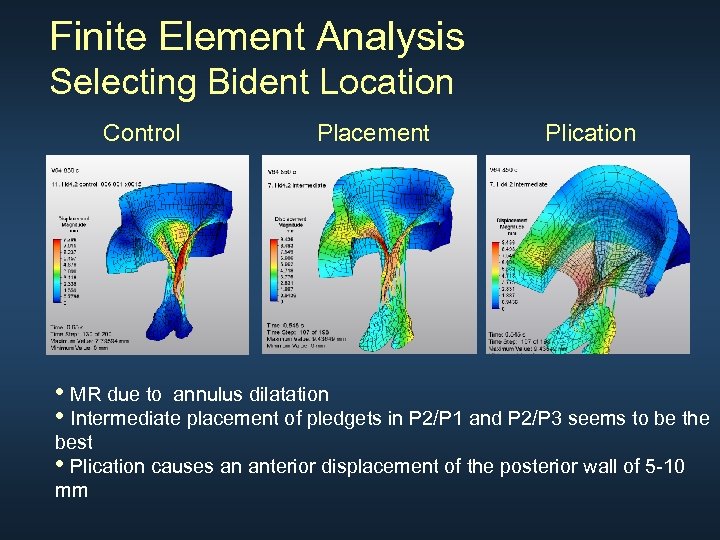 Finite Element Analysis Selecting Bident Location Control Placement Plication • MR due to annulus dilatation • Intermediate placement of pledgets in P 2/P 1 and P 2/P 3 seems to be the best • Plication causes an anterior displacement of the posterior wall of 5 -10 mm
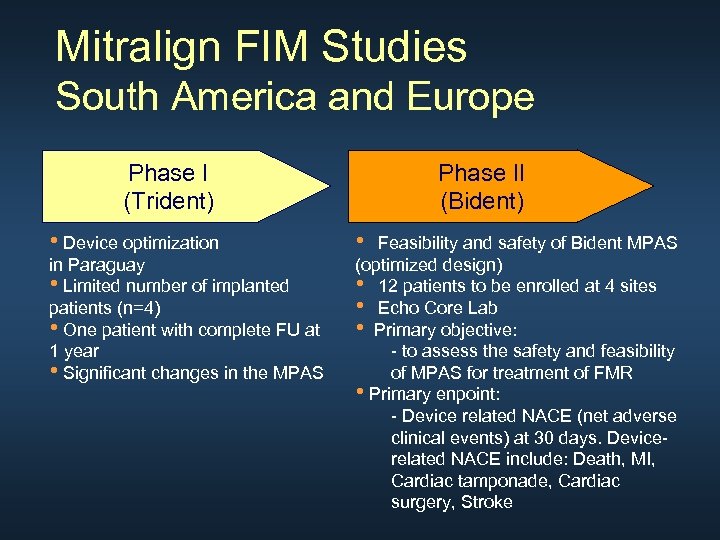 Mitralign FIM Studies South America and Europe Phase I (Trident) • Device optimization in Paraguay • Limited number of implanted patients (n=4) • One patient with complete FU at 1 year • Significant changes in the MPAS Phase II (Bident) • Feasibility and safety of Bident MPAS (optimized design) • 12 patients to be enrolled at 4 sites • Echo Core Lab • Primary objective: - to assess the safety and feasibility of MPAS for treatment of FMR • Primary enpoint: - Device related NACE (net adverse clinical events) at 30 days. Devicerelated NACE include: Death, MI, Cardiac tamponade, Cardiac surgery, Stroke
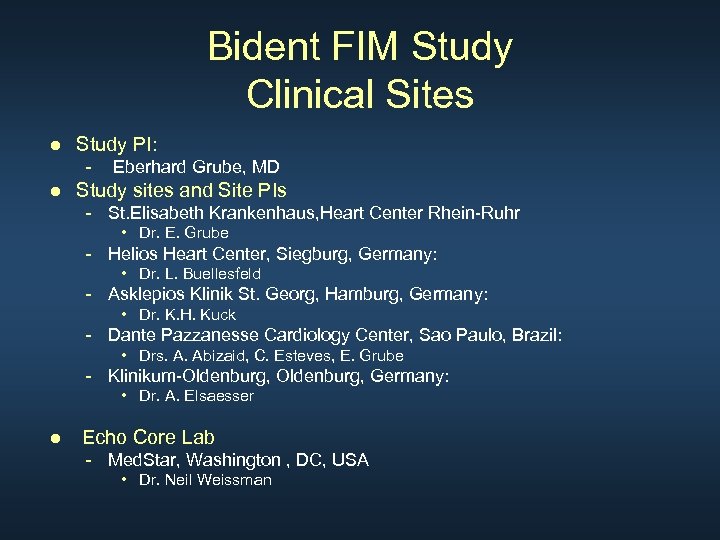 Bident FIM Study Clinical Sites ● Study PI: - Eberhard Grube, MD ● Study sites and Site PIs - St. Elisabeth Krankenhaus, Heart Center Rhein-Ruhr • Dr. E. Grube - Helios Heart Center, Siegburg, Germany: • Dr. L. Buellesfeld - Asklepios Klinik St. Georg, Hamburg, Germany: • Dr. K. H. Kuck - Dante Pazzanesse Cardiology Center, Sao Paulo, Brazil: • Drs. A. Abizaid, C. Esteves, E. Grube - Klinikum-Oldenburg, Germany: • Dr. A. Elsaesser ● Echo Core Lab - Med. Star, Washington , DC, USA • Dr. Neil Weissman
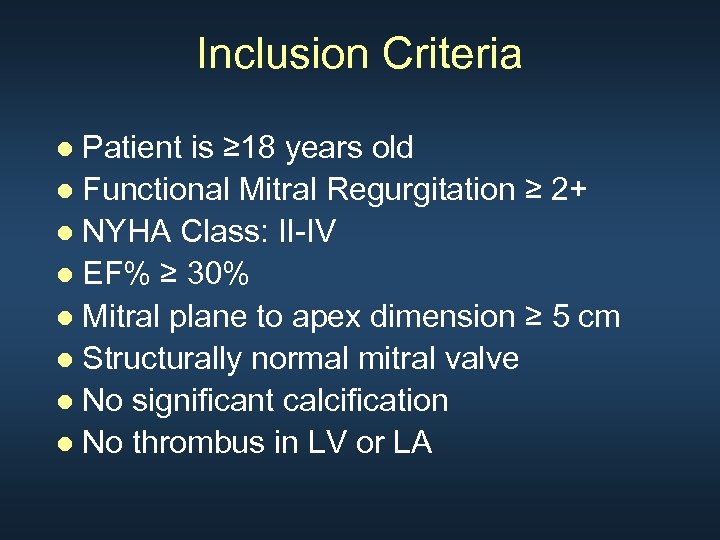 Inclusion Criteria ● Patient is ≥ 18 years old ● Functional Mitral Regurgitation ≥ 2+ ● NYHA Class: II-IV ● EF% ≥ 30% ● Mitral plane to apex dimension ≥ 5 cm ● Structurally normal mitral valve ● No significant calcification ● No thrombus in LV or LA
 Conclusions ● Mitralign Percutaneous Annuloplasty System is emerging technology for direct annuloplasty. ● First experience with the Trident System was promising but change in design concept was needed. - To simplify the procedure - To possibly improve outcomes ● Safety and feasibility of the new Bident System will be studied in the new FIM study in Germany and Brazil.
 Thank you for your attention !