


 Скачать презентацию CRT 2010 Washington DC January 21 2010 Medtronic
07bceded9691a4c9d64ece0068d2abe0.ppt
- Количество слайдов: 32
 CRT 2010 Washington DC, January 21, 2010 Medtronic Core. Valve Trans-Femoral TAVI System. Dealing with Complications! Eberhard Grube, MD, FACC, FSCAI St. Elisabeth Hospital, Essen, Germany Heart Center Rhein-Ruhr Instituto Cardiologico Dante Pazzanese, São Paulo, Brazil
 DISCLOSURES Eberhard Grube, MD Consulting Fees – Abbott Vascular, Boston Scientific Corporation, Cordis, a Johnson & Johnson Company, Medtronic Cardio. Vascular, Inc. Honoraria – Biosensors International , Boston Scientific Corporation, Medtronic Cardio. Vascular, Inc Ownership Interest (Stocks, Stock Options or Other Ownership Interest) – Biosensors International , Medtronic Cardio. Vascular, Inc. I intend to reference unlabeled/ unapproved uses of drugs or devices in my presentation. I intend to reference off-label use of stents and valve prosthesis.
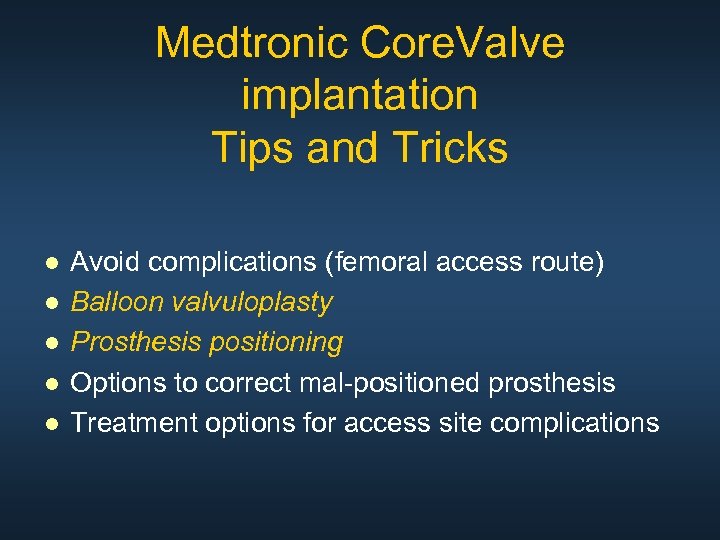 Medtronic Core. Valve implantation Tips and Tricks ● ● ● Avoid complications (femoral access route) Balloon valvuloplasty Prosthesis positioning Options to correct mal-positioned prosthesis Treatment options for access site complications
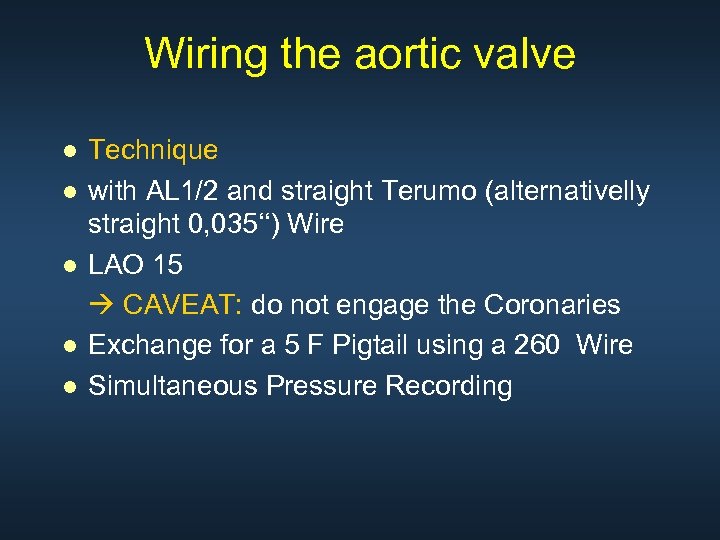 Wiring the aortic valve ● Technique ● with AL 1/2 and straight Terumo (alternativelly straight 0, 035‘‘) Wire ● LAO 15 CAVEAT: do not engage the Coronaries ● Exchange for a 5 F Pigtail using a 260 Wire ● Simultaneous Pressure Recording
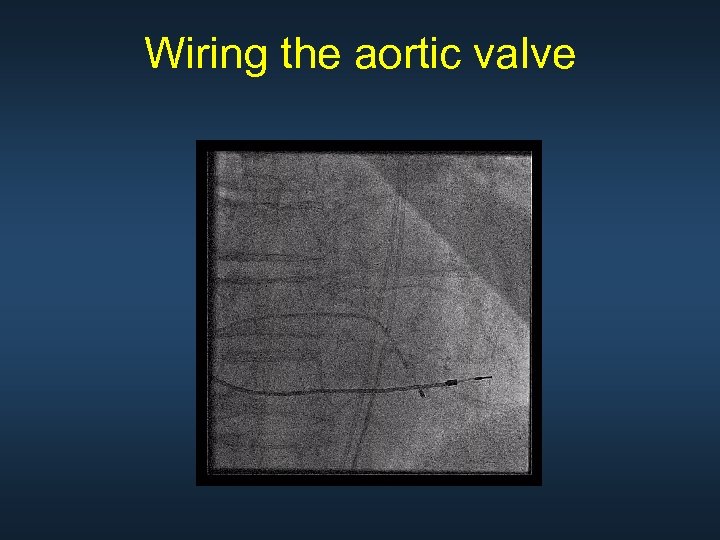 Wiring the aortic valve
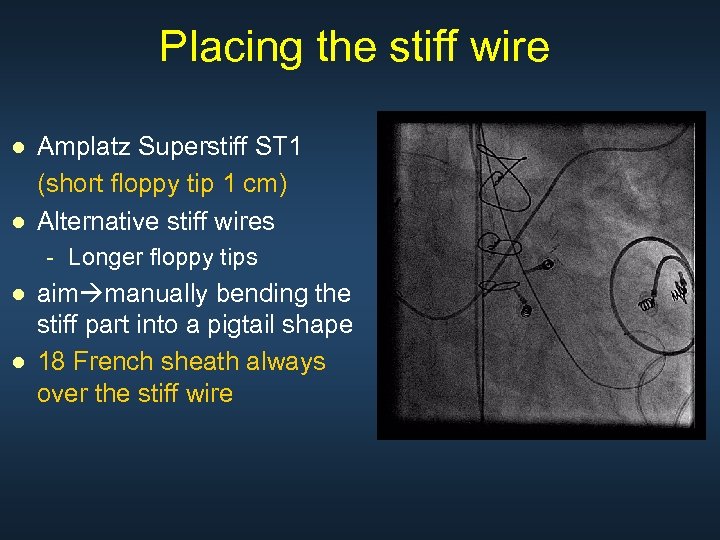 Placing the stiff wire ● Amplatz Superstiff ST 1 (short floppy tip 1 cm) ● Alternative stiff wires - Longer floppy tips ● aim manually bending the stiff part into a pigtail shape ● 18 French sheath always over the stiff wire
 Balloon Valvuloplasty ● Balloon catheters: - Nucleus 12 F (Inoue like behavior) Stabilize position - Z-med X 12 F - Tyshak II (9 F to 25 mm) rated burst 1. 0 -1. 5 Atm - or other Valvuloplasty Balloons possible ● Rapid RV stimulation ~180 - 200 BPM (systolic pressure <60 mm. Hg)
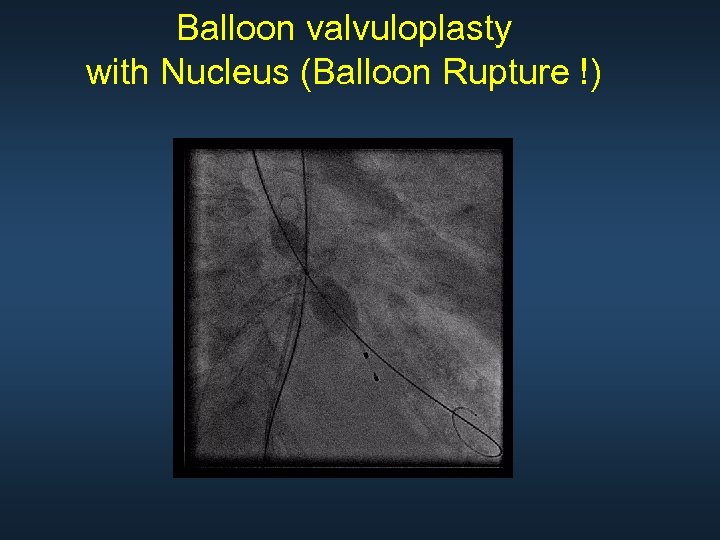 Balloon valvuloplasty with Nucleus (Balloon Rupture !)
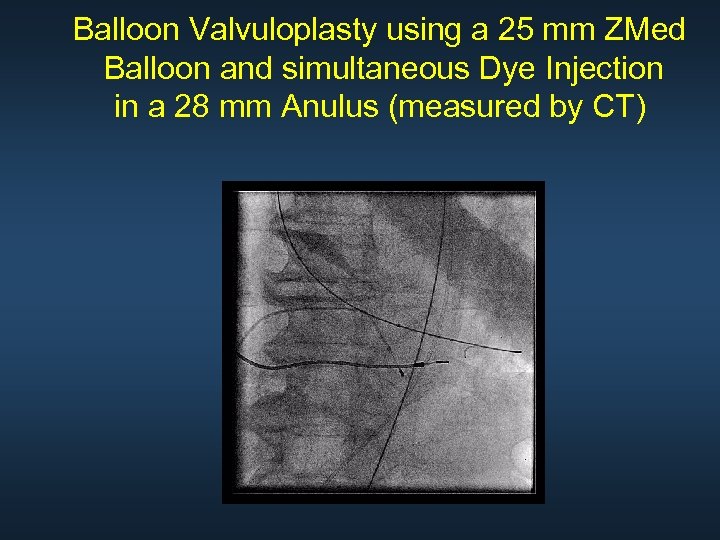 Balloon Valvuloplasty using a 25 mm ZMed Balloon and simultaneous Dye Injection in a 28 mm Anulus (measured by CT)
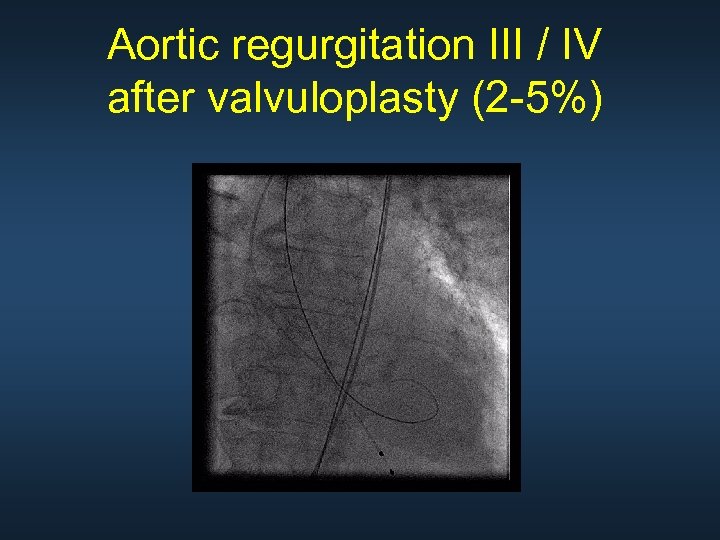 Aortic regurgitation III / IV after valvuloplasty (2 -5%)
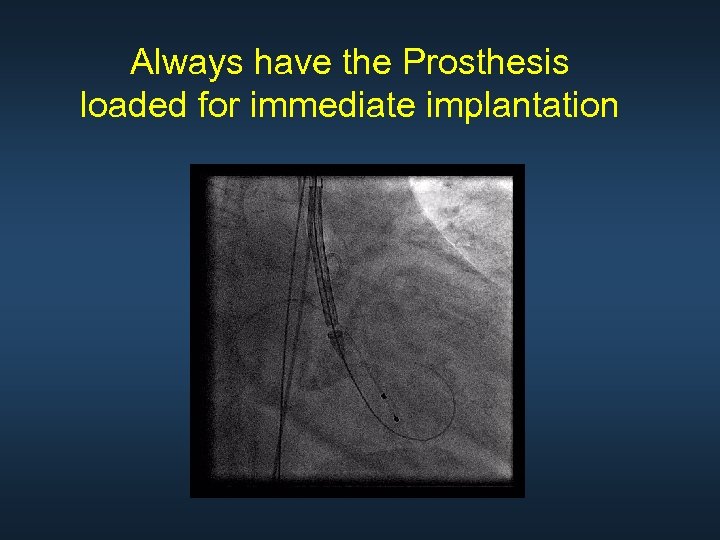 Always have the Prosthesis loaded for immediate implantation
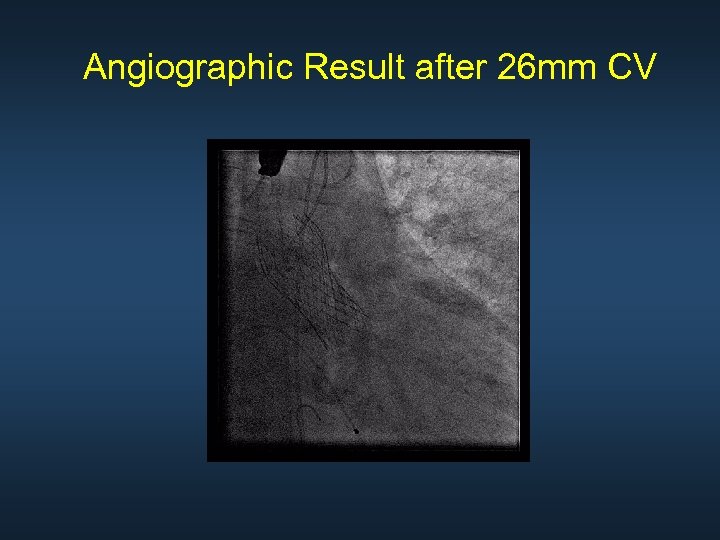 Angiographic Result after 26 mm CV
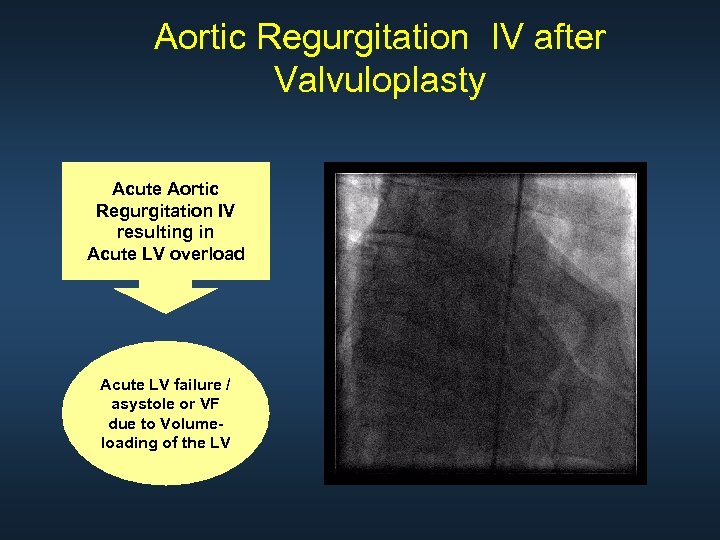 Aortic Regurgitation IV after Valvuloplasty Acute Aortic Regurgitation IV resulting in Acute LV overload Acute LV failure / asystole or VF due to Volumeloading of the LV
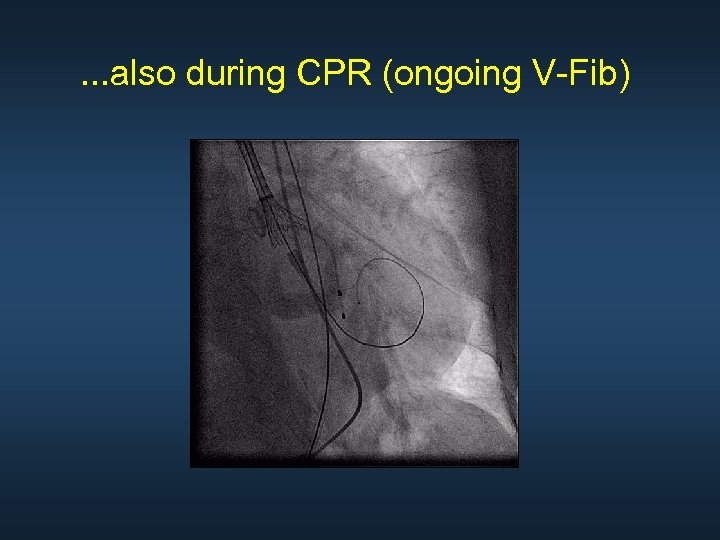 . . . also during CPR (ongoing V-Fib)
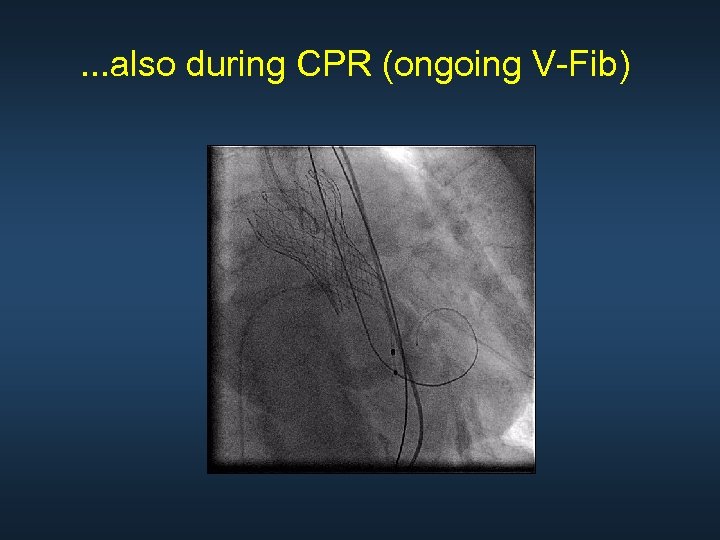 . . . also during CPR (ongoing V-Fib)
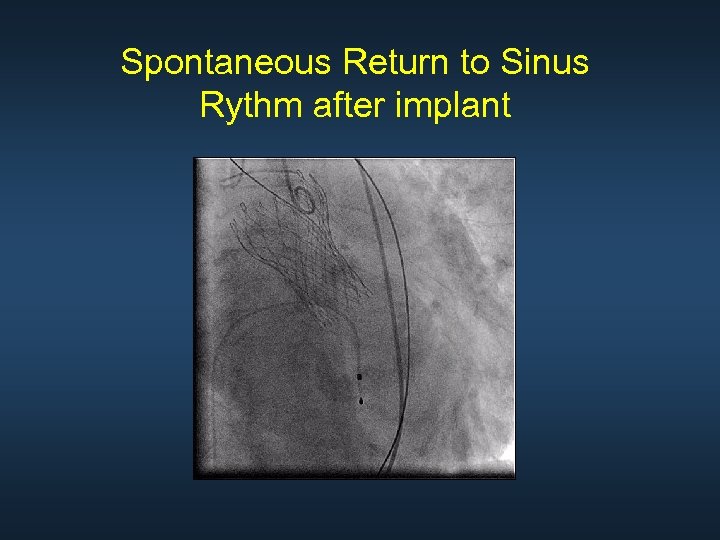 Spontaneous Return to Sinus Rythm after implant
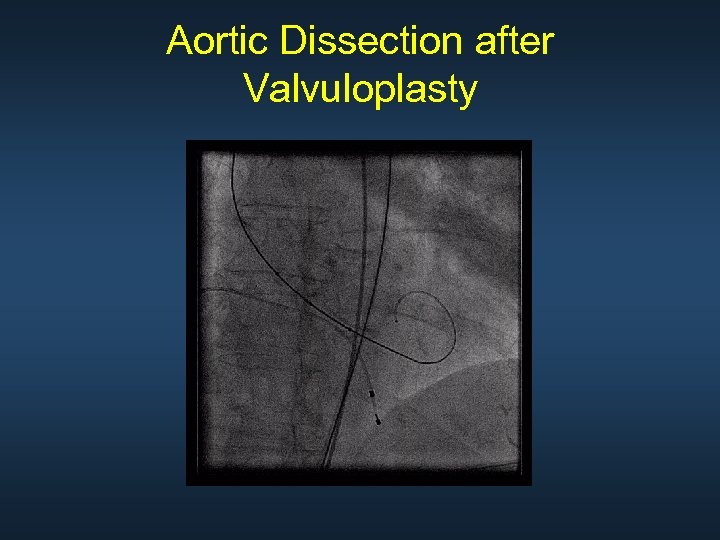 Aortic Dissection after Valvuloplasty
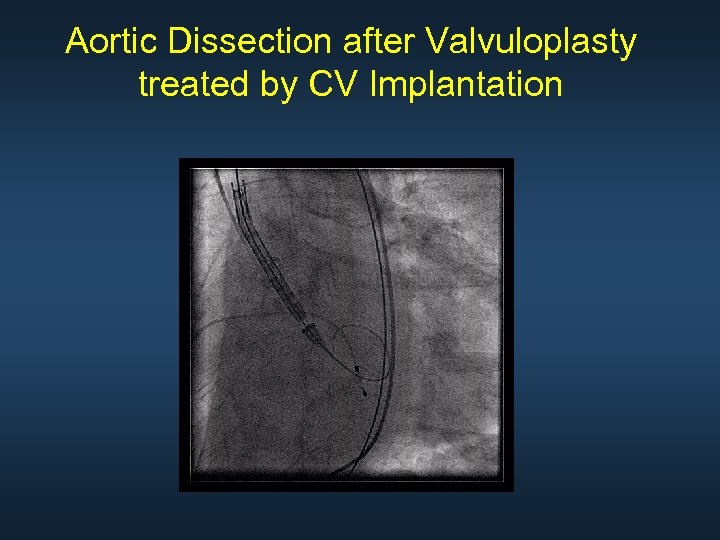 Aortic Dissection after Valvuloplasty treated by CV Implantation
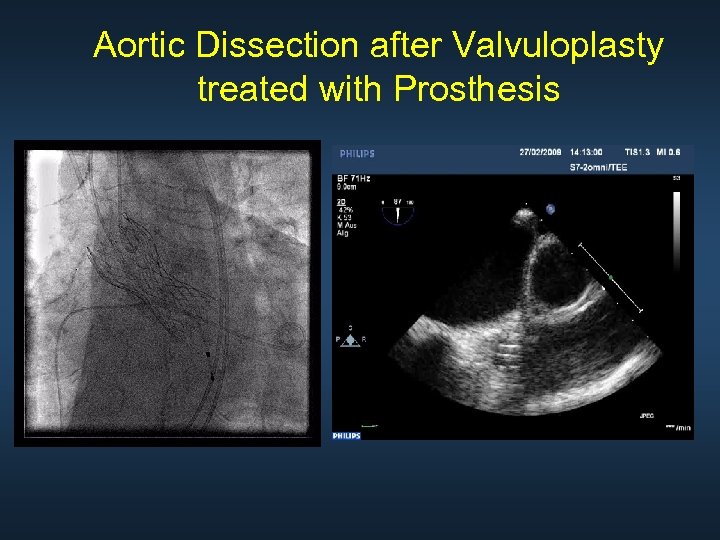 Aortic Dissection after Valvuloplasty treated with Prosthesis
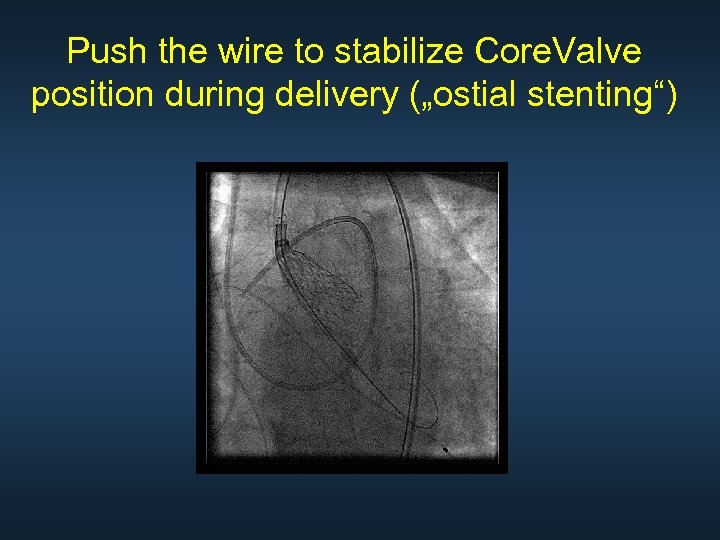 Push the wire to stabilize Core. Valve position during delivery („ostial stenting“)
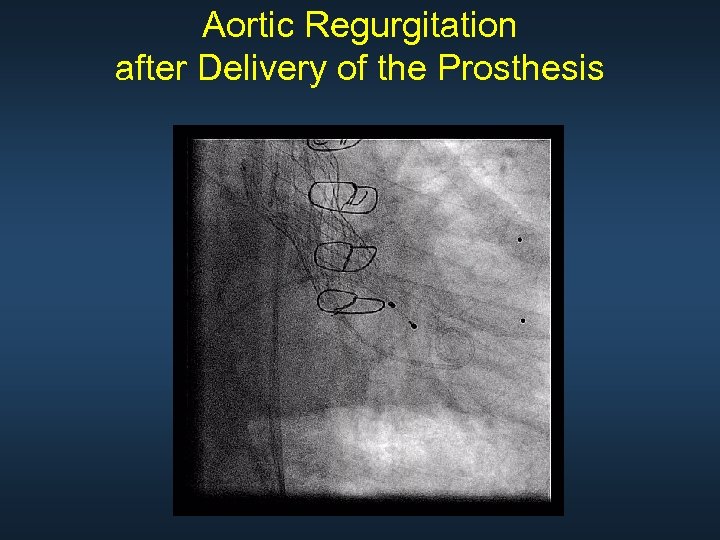 Aortic Regurgitation after Delivery of the Prosthesis
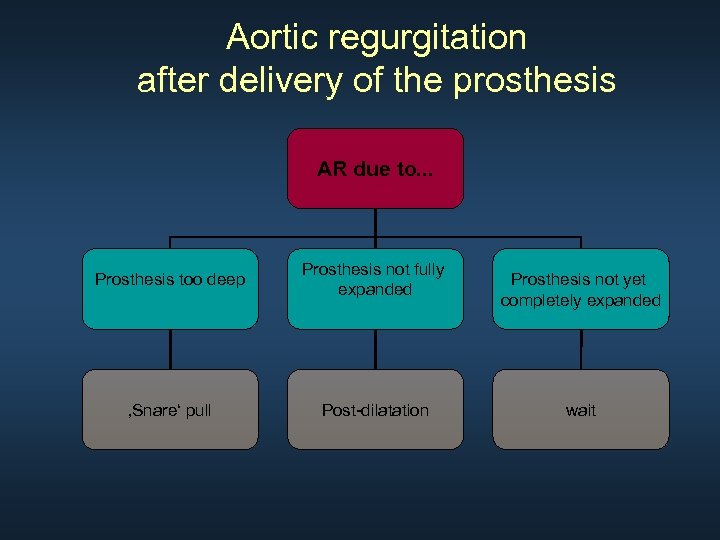 Aortic regurgitation after delivery of the prosthesis AR due to. . . Prosthesis too deep Prosthesis not fully expanded ‚Snare‘ pull Post-dilatation Prosthesis not yet completely expanded wait
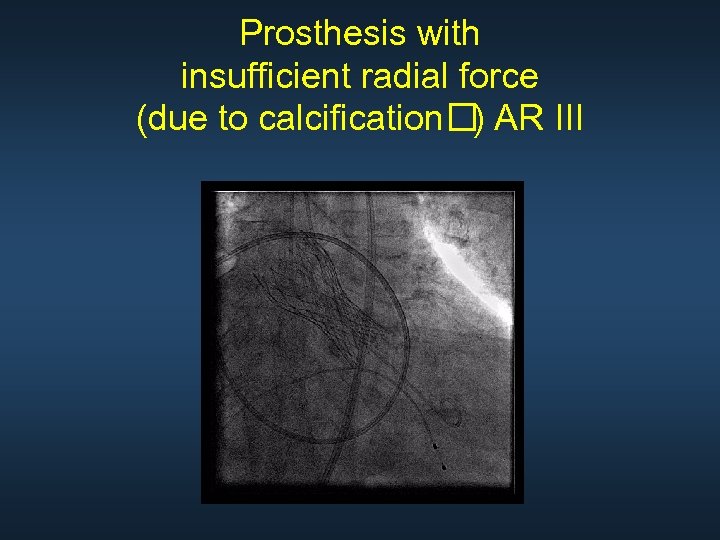 Prosthesis with insufficient radial force (due to calcification AR III )
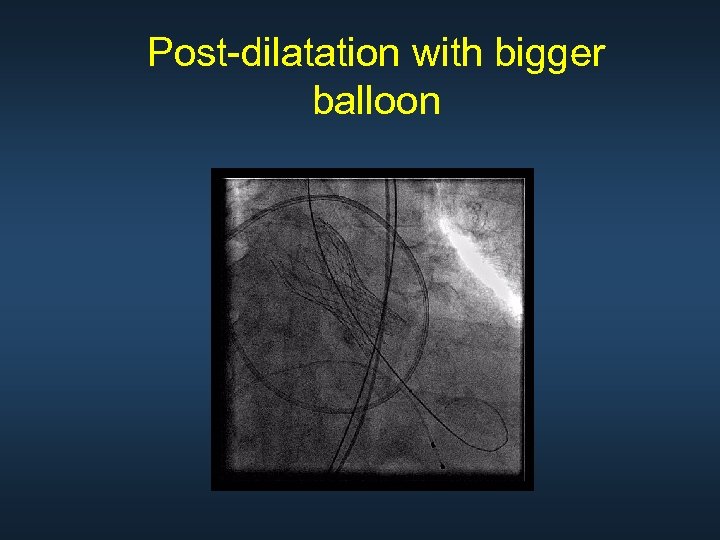 Post-dilatation with bigger balloon
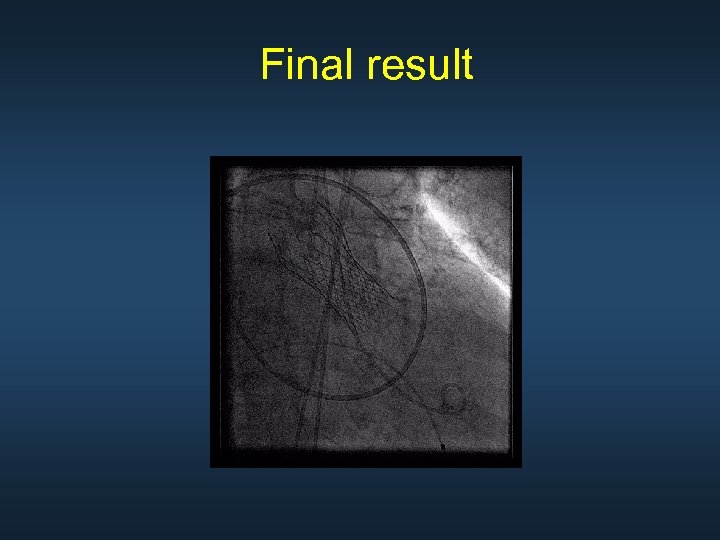 Final result
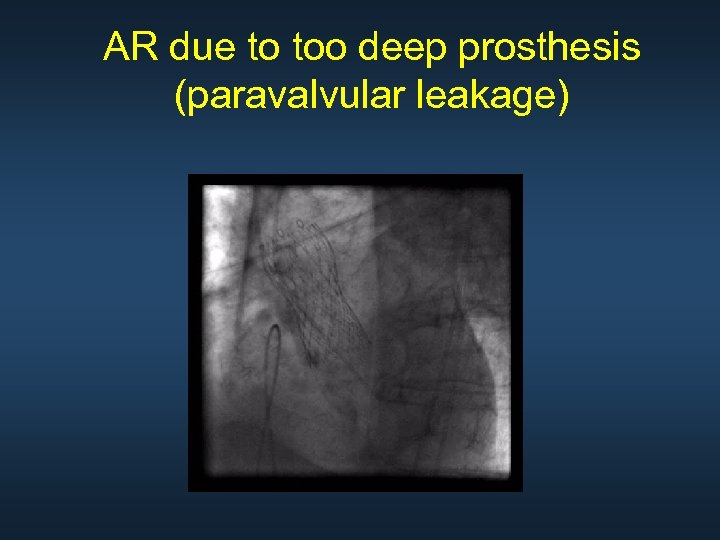 AR due to too deep prosthesis (paravalvular leakage)
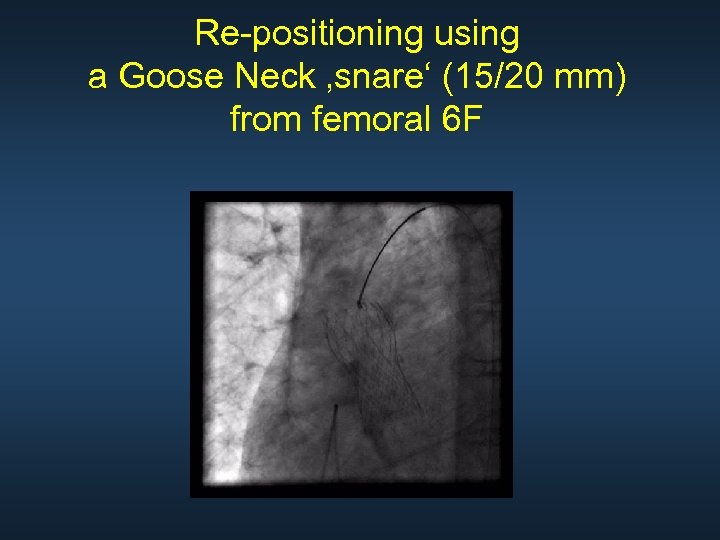 Re-positioning using a Goose Neck ‚snare‘ (15/20 mm) from femoral 6 F
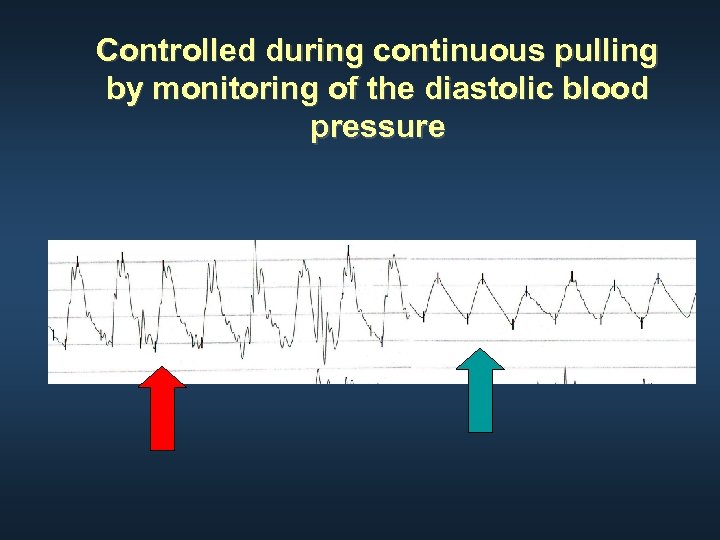 Controlled during continuous pulling by monitoring of the diastolic blood pressure
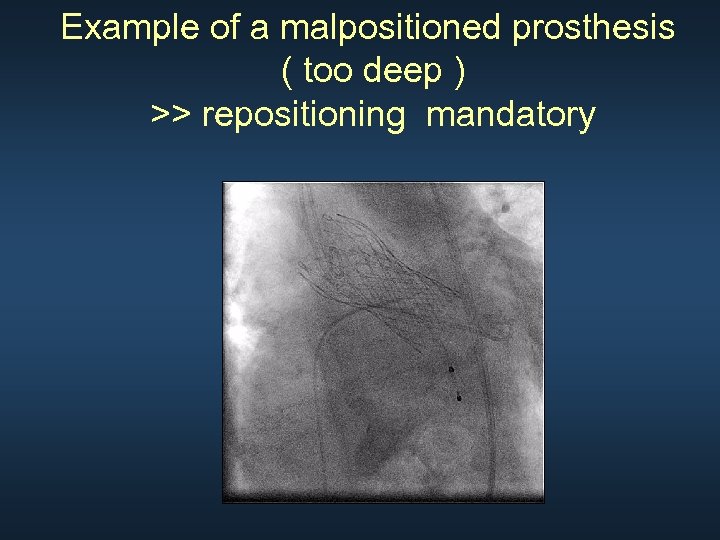 Example of a malpositioned prosthesis ( too deep ) >> repositioning mandatory
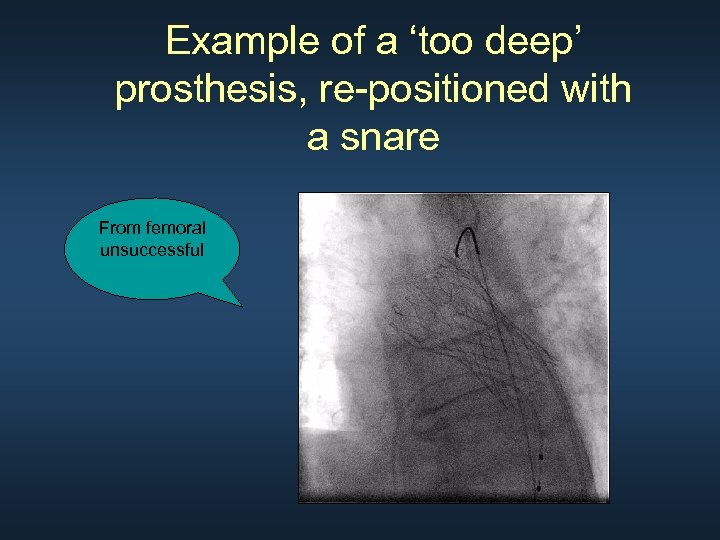 Example of a ‘too deep’ prosthesis, re-positioned with a snare From femoral unsuccessful
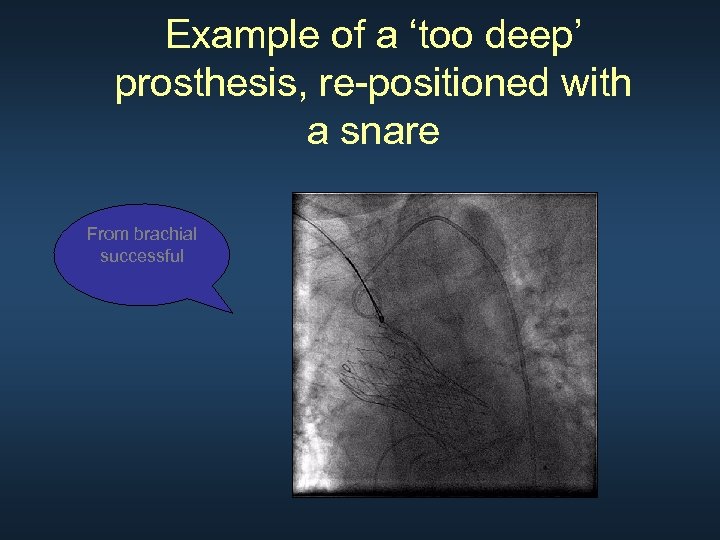 Example of a ‘too deep’ prosthesis, re-positioned with a snare From brachial successful
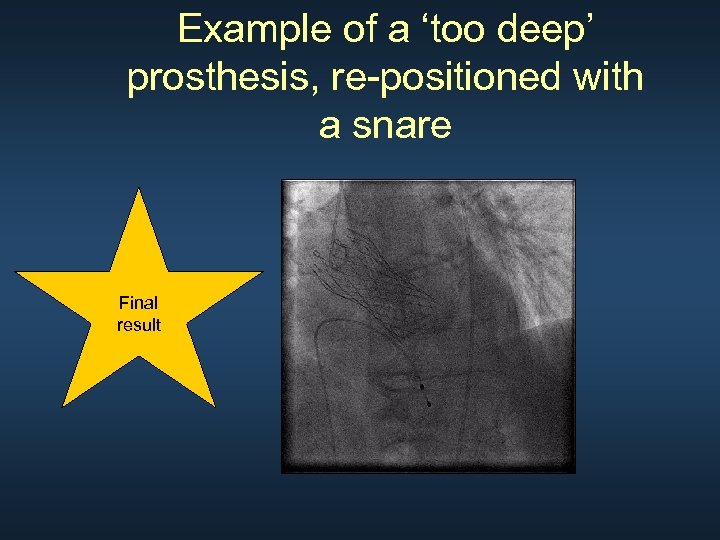 Example of a ‘too deep’ prosthesis, re-positioned with a snare Final result