 Скачать презентацию Cross-Cultural Psychology Teachers Lectures Nadezhda M Lebedeva Ph
Cross-Cultural Psychology_1.ppt
- Количество слайдов: 14



Cross-Cultural Psychology Teachers: Lectures: Nadezhda M. Lebedeva (Ph. D. , Prof. ), e-mail: nlebedeva@hse. ru. Seminars Ekaterina V. Bushina (Ph. D. ), e-mail: evbushina@hse. ru Practical classes: Victoria N. Galyapina (Ph. D), e-mail: vgalyapina@hse. ru Teaching assistant: Maria Bultseva, e-mail: mbultseva@hse. ru
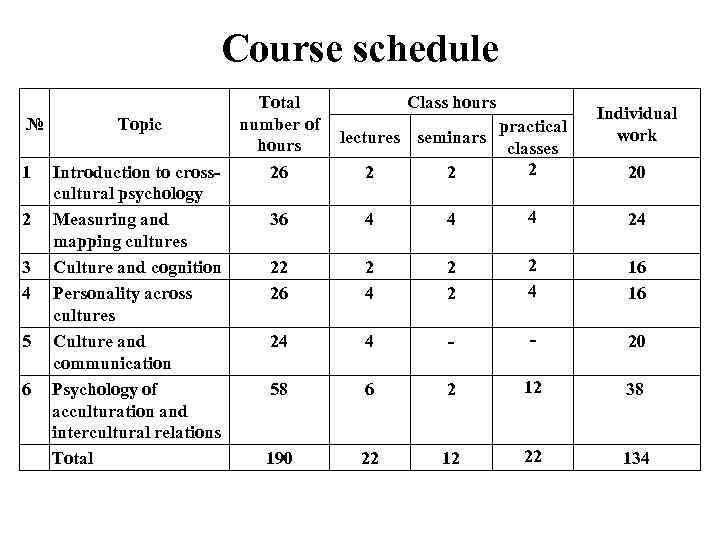
Course schedule № 1 2 3 4 5 6 Topic Introduction to crosscultural psychology Measuring and mapping cultures Culture and cognition Personality across cultures Culture and communication Psychology of acculturation and intercultural relations Total Class hours number of practical lectures seminars hours classes 2 26 2 2 Individual work 20 36 4 4 4 24 22 26 2 4 2 2 2 4 16 16 24 4 - - 20 58 6 2 12 38 190 22 12 22 134
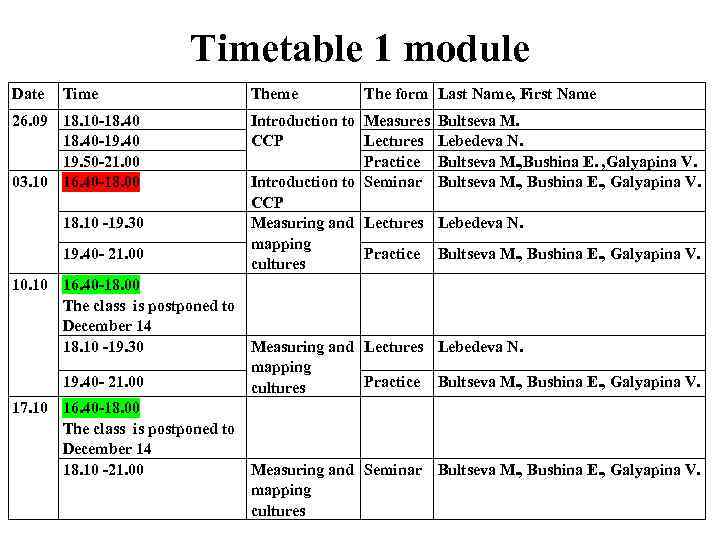
Timetable 1 module Date Time 26. 09 18. 10 -18. 40 -19. 40 19. 50 -21. 00 03. 10 16. 40 -18. 00 18. 10 -19. 30 19. 40 - 21. 00 Theme The form Last Name, First Name Introduction to Measures Bultseva M. CCP Lectures Lebedeva N. Practice Bultseva M. , Bushina E. , Galyapina V. Introduction to Seminar Bultseva M. , Bushina E. , Galyapina V. CCP Measuring and Lectures Lebedeva N. mapping Practice Bultseva M. , Bushina E. , Galyapina V. cultures 10. 10 16. 40 -18. 00 The class is postponed to December 14 18. 10 -19. 30 Measuring and Lectures Lebedeva N. mapping 19. 40 - 21. 00 Practice Bultseva M. , Bushina E. , Galyapina V. cultures 17. 10 16. 40 -18. 00 The class is postponed to December 14 18. 10 -21. 00 Measuring and Seminar Bultseva M. , Bushina E. , Galyapina V. mapping cultures
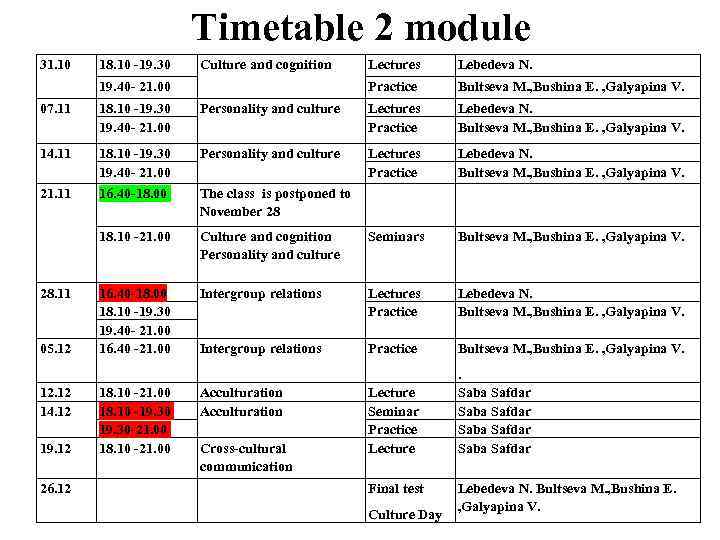
Timetable 2 module 31. 10 18. 10 -19. 30 Culture and cognition Lebedeva N. Practice 19. 40 - 21. 00 Lectures Bultseva M. , Bushina E. , Galyapina V. 07. 11 18. 10 -19. 30 19. 40 - 21. 00 Personality and culture Lectures Practice Lebedeva N. Bultseva M. , Bushina E. , Galyapina V. 14. 11 18. 10 -19. 30 19. 40 - 21. 00 Personality and culture Lectures Practice Lebedeva N. Bultseva M. , Bushina E. , Galyapina V. 21. 11 16. 40 -18. 00 The class is postponed to November 28 18. 10 -21. 00 Culture and cognition Personality and culture Seminars Bultseva M. , Bushina E. , Galyapina V. 16. 40 -18. 00 18. 10 -19. 30 19. 40 - 21. 00 16. 40 -21. 00 Intergroup relations Lectures Practice Lebedeva N. Bultseva M. , Bushina E. , Galyapina V. Intergroup relations Practice Bultseva M. , Bushina E. , Galyapina V. Lecture Seminar Practice Lecture . Saba Safdar 28. 11 05. 12 12. 12 14. 12 19. 12 26. 12 18. 10 -21. 00 18. 10 -19. 30 -21. 00 18. 10 -21. 00 Acculturation Cross-cultural communication Final test Culture Day Lebedeva N. Bultseva M. , Bushina E. , Galyapina V.
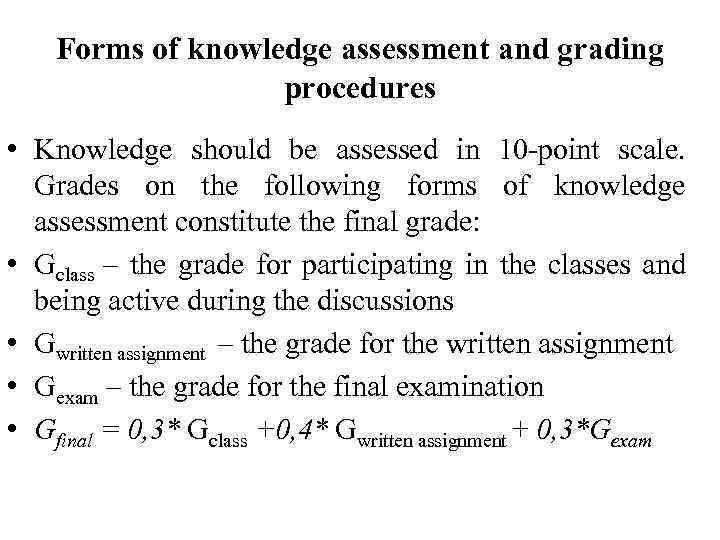
Forms of knowledge assessment and grading procedures • Knowledge should be assessed in 10 -point scale. Grades on the following forms of knowledge assessment constitute the final grade: • Gclass – the grade for participating in the classes and being active during the discussions • Gwritten assignment – the grade for the written assignment • Gexam – the grade for the final examination • Gfinal = 0, 3* Gclass +0, 4* Gwritten assignment + 0, 3*Gexam
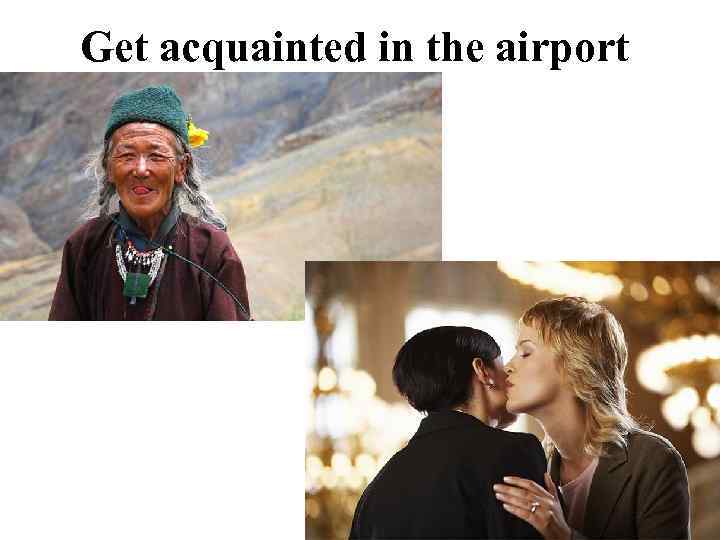
Get acquainted in the airport
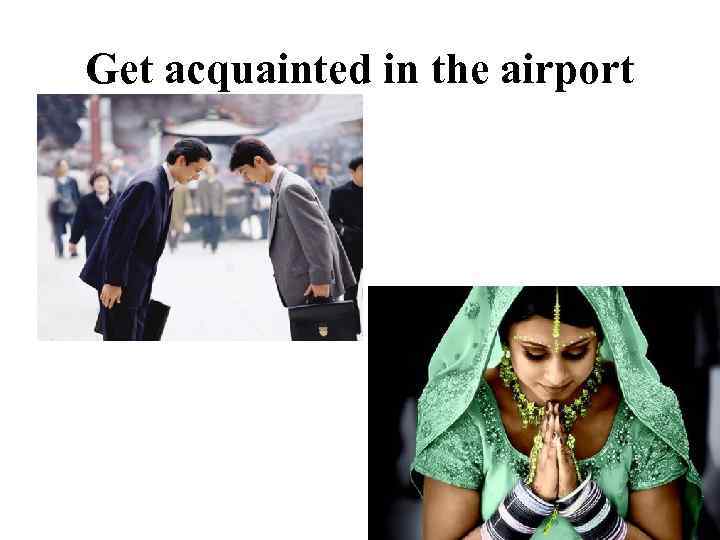
Get acquainted in the airport
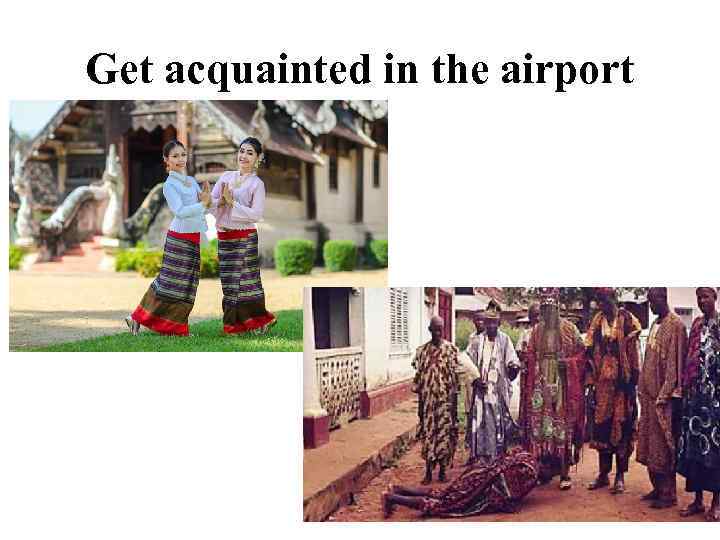
Get acquainted in the airport
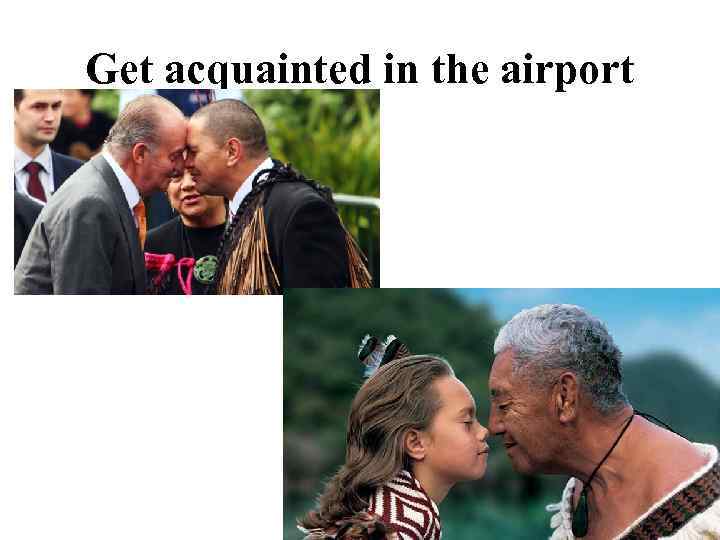
Get acquainted in the airport
For meters and visitors • What was the most problematic in the exercise? • To which greeting elements did you pay attention and how successful was it? • Who among guest was the most and the least difficult aims for recognizing and why? • How many visitors cold you keep in sight? • What feelings did you have demonstrating and answering the greeting? • What barriers did you face during mutual ritual execution? How did you overcome them?
For observers • What was the most problematic in the exercise? • What search strategies did meters use and how successful were they? • Who among participants was the most impressive? • Who did you want to help and why? • What barriers did you notice during mutual ritual execution? • What greeting rituals were the most interesting and why?
The final discussion • What new info did you get during this exercise? • What emic and ethic aspect of culture were presented in the greetings? • What features of cultures (for example, degree of openness, expansivity, level of distance, gender and age hierarchy) can be seen in the greetings?
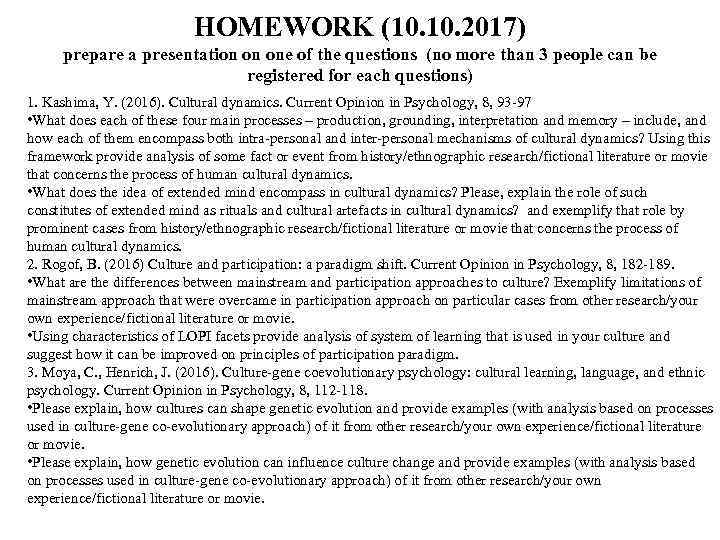
HOMEWORK (10. 2017) prepare a presentation on one of the questions (no more than 3 people can be registered for each questions) 1. Kashima, Y. (2016). Cultural dynamics. Current Opinion in Psychology, 8, 93 -97 • What does each of these four main processes – production, grounding, interpretation and memory – include, and how each of them encompass both intra-personal and inter-personal mechanisms of cultural dynamics? Using this framework provide analysis of some fact or event from history/ethnographic research/fictional literature or movie that concerns the process of human cultural dynamics. • What does the idea of extended mind encompass in cultural dynamics? Please, explain the role of such constitutes of extended mind as rituals and cultural artefacts in cultural dynamics? and exemplify that role by prominent cases from history/ethnographic research/fictional literature or movie that concerns the process of human cultural dynamics. 2. Rogof, B. (2016) Culture and participation: a paradigm shift. Current Opinion in Psychology, 8, 182 -189. • What are the differences between mainstream and participation approaches to culture? Exemplify limitations of mainstream approach that were overcame in participation approach on particular cases from other research/your own experience/fictional literature or movie. • Using characteristics of LOPI facets provide analysis of system of learning that is used in your culture and suggest how it can be improved on principles of participation paradigm. 3. Moya, C. , Henrich, J. (2016). Culture-gene coevolutionary psychology: cultural learning, language, and ethnic psychology. Current Opinion in Psychology, 8, 112 -118. • Please explain, how cultures can shape genetic evolution and provide examples (with analysis based on processes used in culture-gene co-evolutionary approach) of it from other research/your own experience/fictional literature or movie. • Please explain, how genetic evolution can influence culture change and provide examples (with analysis based on processes used in culture-gene co-evolutionary approach) of it from other research/your own experience/fictional literature or movie.
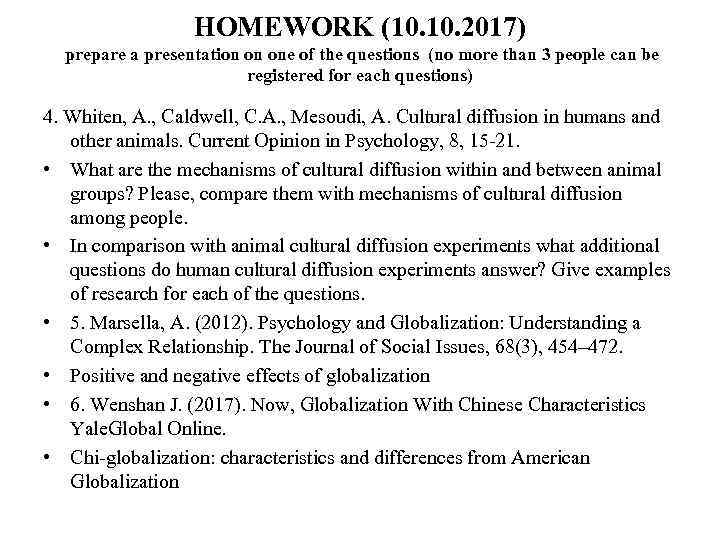
HOMEWORK (10. 2017) prepare a presentation on one of the questions (no more than 3 people can be registered for each questions) 4. Whiten, A. , Caldwell, C. A. , Mesoudi, A. Cultural diffusion in humans and other animals. Current Opinion in Psychology, 8, 15 -21. • What are the mechanisms of cultural diffusion within and between animal groups? Please, compare them with mechanisms of cultural diffusion among people. • In comparison with animal cultural diffusion experiments what additional questions do human cultural diffusion experiments answer? Give examples of research for each of the questions. • 5. Marsella, A. (2012). Psychology and Globalization: Understanding a Complex Relationship. The Journal of Social Issues, 68(3), 454– 472. • Positive and negative effects of globalization • 6. Wenshan J. (2017). Now, Globalization With Chinese Characteristics Yale. Global Online. • Chi-globalization: characteristics and differences from American Globalization
Скачать презентацию Cross-Cultural Psychology Teachers Lectures Nadezhda M Lebedeva Ph
Cross-Cultural Psychology_1.ppt