 Скачать презентацию Critical Appraisal The Librarian s Role Andrew Booth
5caa42c1f4fa413140a80be17fb47665.ppt
- Количество слайдов: 23



Critical Appraisal : The Librarian’s Role Andrew Booth and Louise Falzon
What is critical appraisal? Weighing up evidence to assess: • • its validity (closeness to the truth) its usefulness (clinical applicability). Sackett and Haynes, 1995 FIND APPRAISE ACT
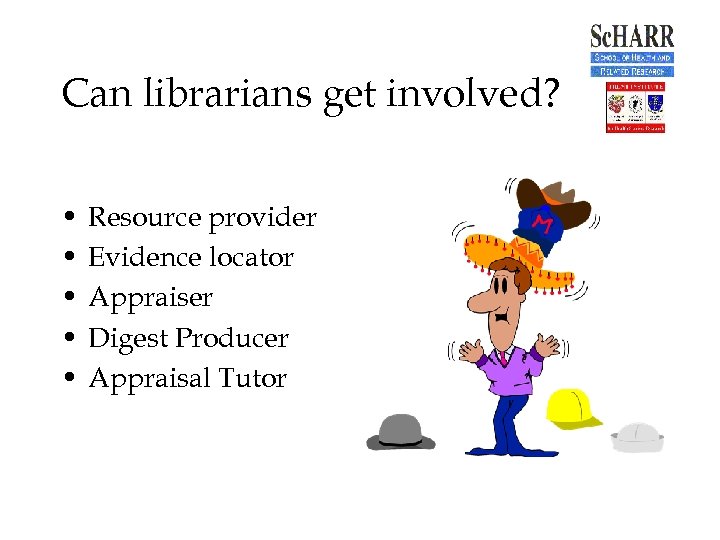
Can librarians get involved? • • • Resource provider Evidence locator Appraiser Digest Producer Appraisal Tutor
Some familiar roles • Resource provider – Critical appraisal tools – Critically appraised resources • Evidence locator – Search skills – Search filters • Appraiser? Digest producer?
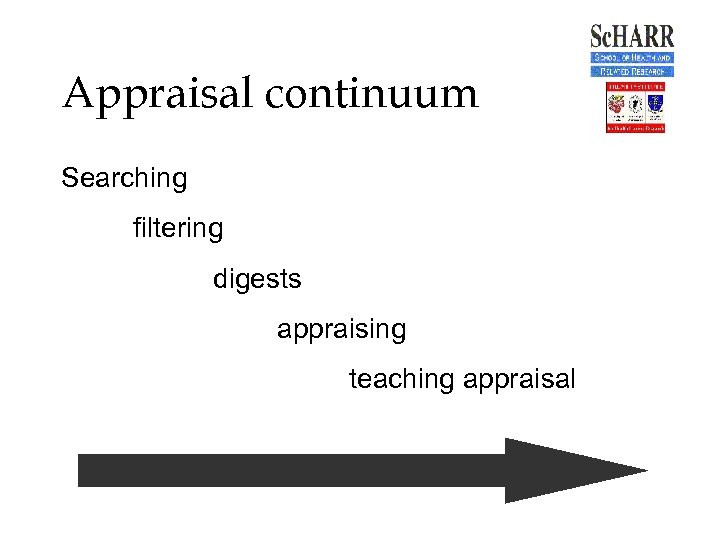
Appraisal continuum Searching filtering digests appraising teaching appraisal
Why should librarians get involved? • Extends and demonstrates existing skills. • Other information sectors do it. • Area of research expertise • Value-added service • Improved profile/prestige
How are we getting involved today. . . Producing an evidence digest
Critically appraised resources • Systematic reviews – telling the full story – e. g. Cochrane Library, NHS CRD, NHS HTA • Guidelines – implementing the full story – SIGN, DEC, AHRQ, NIH • Digests of evidence – giving a pointer in the right direction
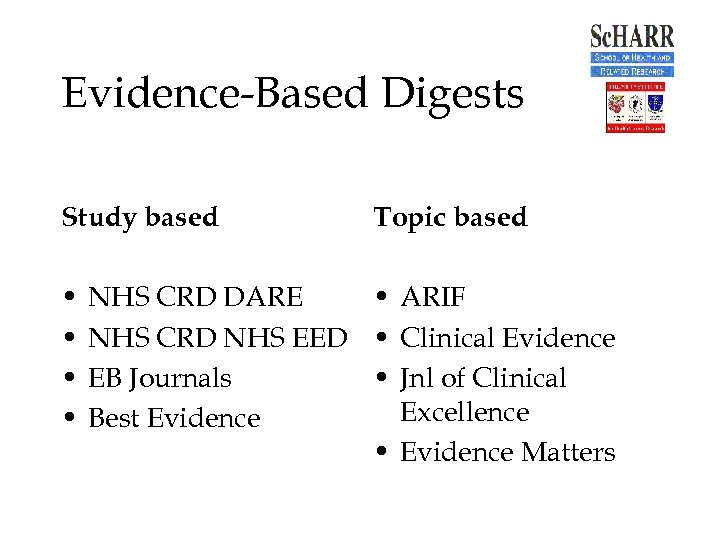
Evidence-Based Digests Study based • • Topic based NHS CRD DARE • ARIF NHS CRD NHS EED • Clinical Evidence EB Journals • Jnl of Clinical Excellence Best Evidence • Evidence Matters
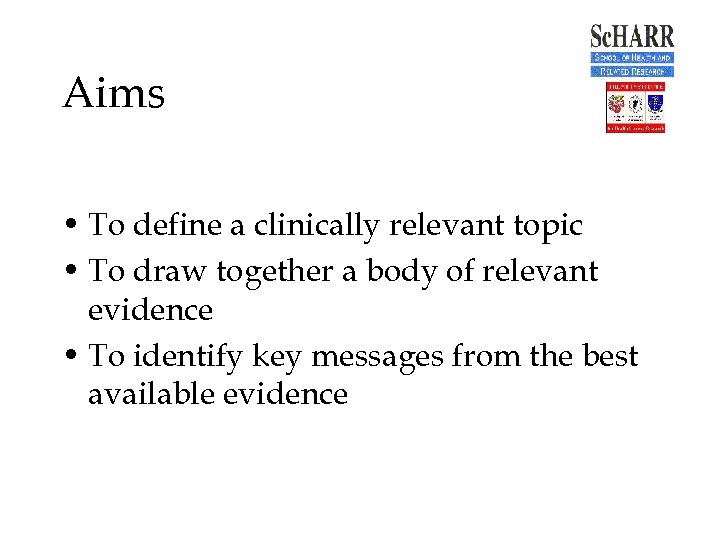
Aims • To define a clinically relevant topic • To draw together a body of relevant evidence • To identify key messages from the best available evidence
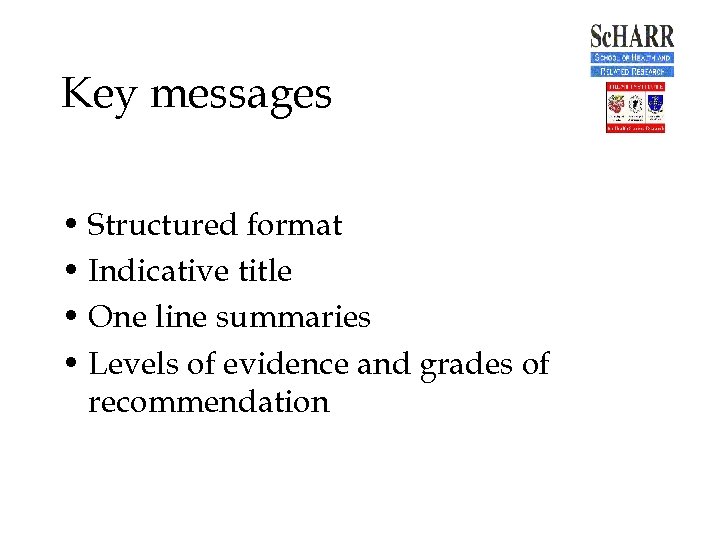
Key messages • Structured format • Indicative title • One line summaries • Levels of evidence and grades of recommendation
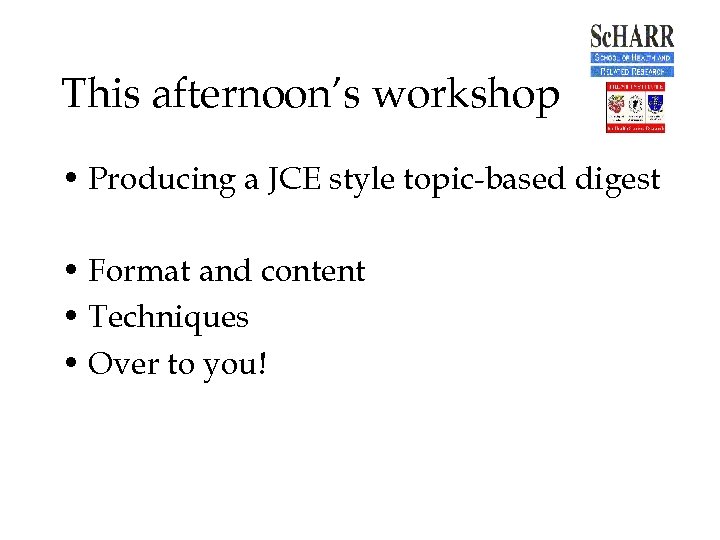
This afternoon’s workshop • Producing a JCE style topic-based digest • Format and content • Techniques • Over to you!
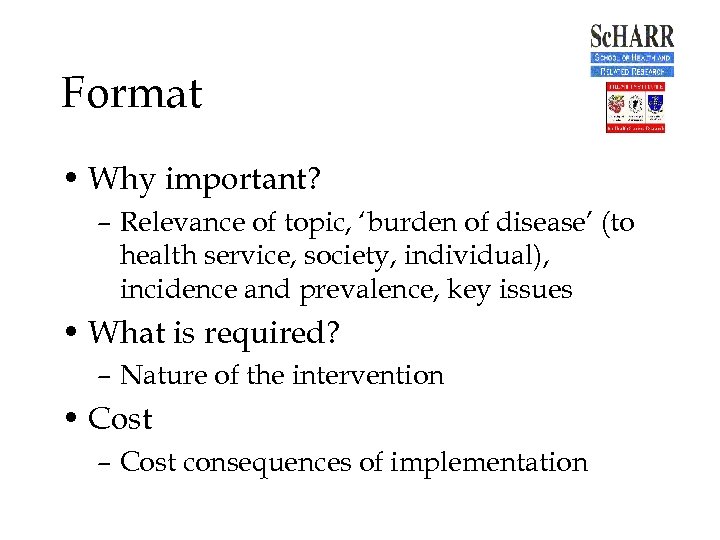
Format • Why important? – Relevance of topic, ‘burden of disease’ (to health service, society, individual), incidence and prevalence, key issues • What is required? – Nature of the intervention • Cost – Cost consequences of implementation
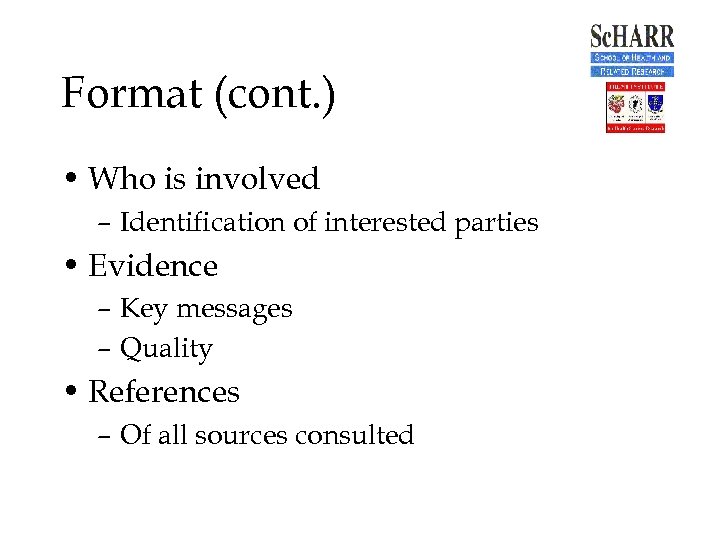
Format (cont. ) • Who is involved – Identification of interested parties • Evidence – Key messages – Quality • References – Of all sources consulted
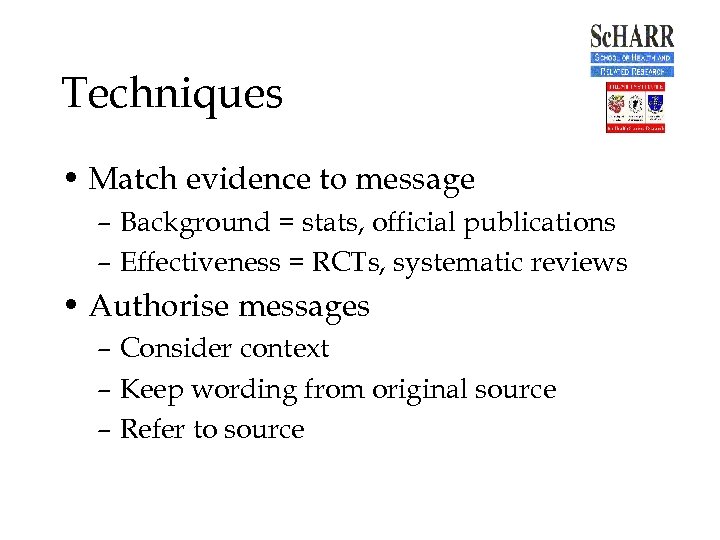
Techniques • Match evidence to message – Background = stats, official publications – Effectiveness = RCTs, systematic reviews • Authorise messages – Consider context – Keep wording from original source – Refer to source
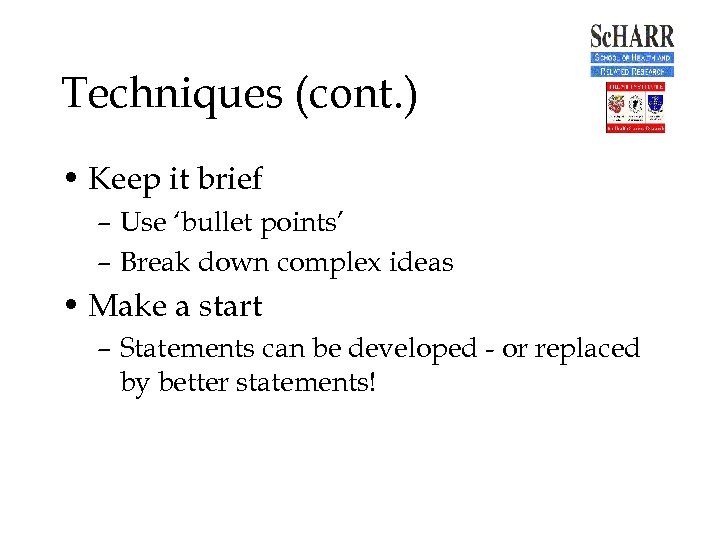
Techniques (cont. ) • Keep it brief – Use ‘bullet points’ – Break down complex ideas • Make a start – Statements can be developed - or replaced by better statements!
Over to you. . . Support for Breastfeeding mothers • Why important? • What is required? • Cost consequences • Interested parties • Evidence of effectiveness • References (Author, year, study type)
You have to help you. . . • Search results • Examples of JCE digests • Facilitators • Pens, paper, overheads • Time!

Resources for Producing Digests
Matching the evidence • Background • Clinical effectiveness • Cost effectiveness
Background • Official publications – Government and professional bodies • Statistics – Stat. Base, WHO • ‘Burden of disease’ to individual, health service and society – Cohort studies
Clinical Effectiveness • Sources of systematic reviews, guidelines and digests • TRIP database • Sum. Search • Pub. Med Clinical queries • Medline filters

Cost effectiveness • NHS CRD NHS EED and HTA • INAHTA Clearing House • Health Economics research units – University of York CHE links page • Medline filter
Скачать презентацию Critical Appraisal The Librarian s Role Andrew Booth
5caa42c1f4fa413140a80be17fb47665.ppt