 Скачать презентацию Cristina Moya Sebastián Ibañez Federico Carbonell Tomás García
1d56cbe3053fe6a1ace05b268583c7e5.ppt
- Количество слайдов: 46



Cristina Moya Sebastián Ibañez Federico Carbonell Tomás García
HISTORY l FGV was founded in November 1986, following a process of transferral to the Valencian Community of the services that Ferrocarriles de Vía Estrecha del Estado (FEVE) had been operating in its territory. l It’s FGV who operates and manages METROVALENCIA railway lines and complementary services.
HISTORY l l l Before, a classic suburban network with little influence in urban traffic movements. 1988: first underground section of the network was opened 1994: Line 4 tramline went into operation. Became a pioneer in Spain in reintroducing this mean of transport.
HISTORY l l l During the following years constant process of change, growing and modernization. Nowadays big project with line 2. Future • Line 1 : (modernization) • Line 7 : Metroribera • Line 8 : l’Horta Sud
SECTOR SERVICES !!! Public corporation with its own independent legal status, subject to private law, and enjoys organisational autonomy with private assets and full capacity to carry out its goals
SIZE l FGV has 1700 workers including Valencia and Alicante. l From mechanical staff to engineers and managers
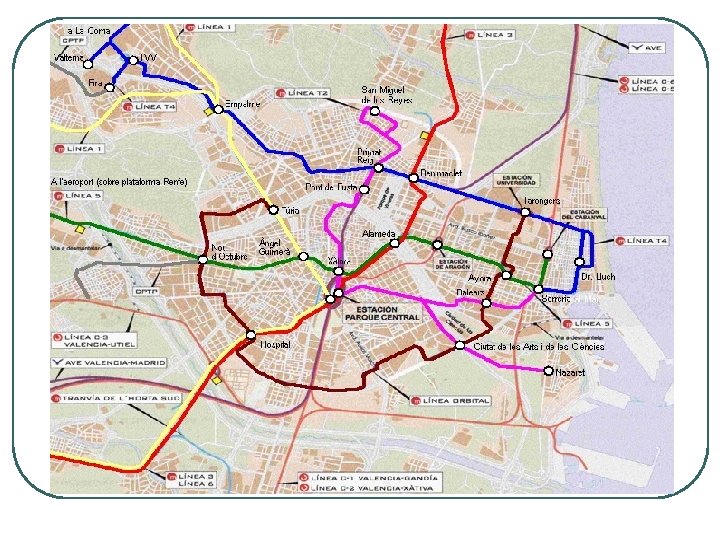
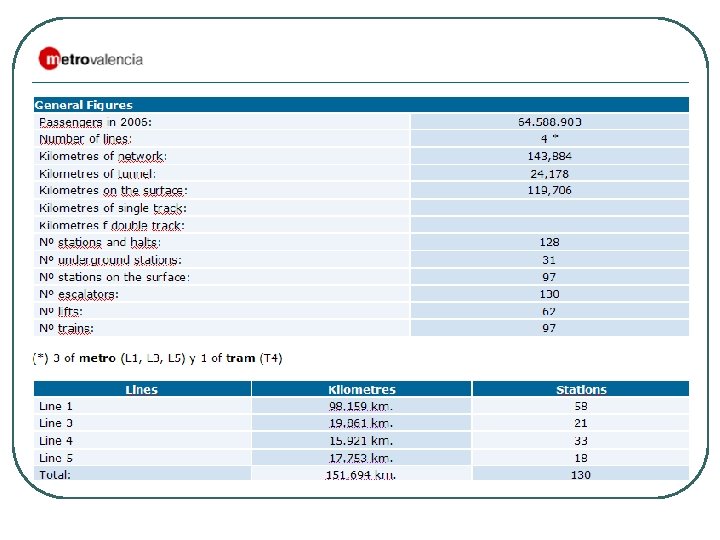
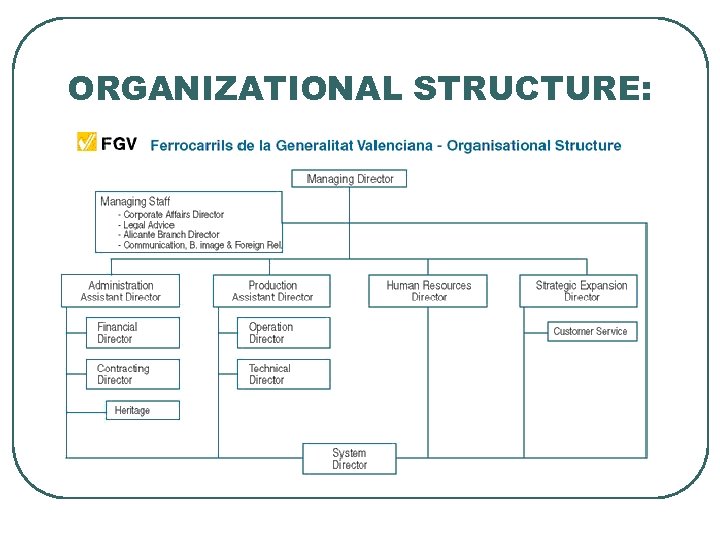
ORGANIZATIONAL STRUCTURE:
LOCATION l Sede Social - Valencia Sud • Headquarters Building of Ferrocarrils de la Generalitat Valenciana • Central Command Post • Workshops of Train Line 1
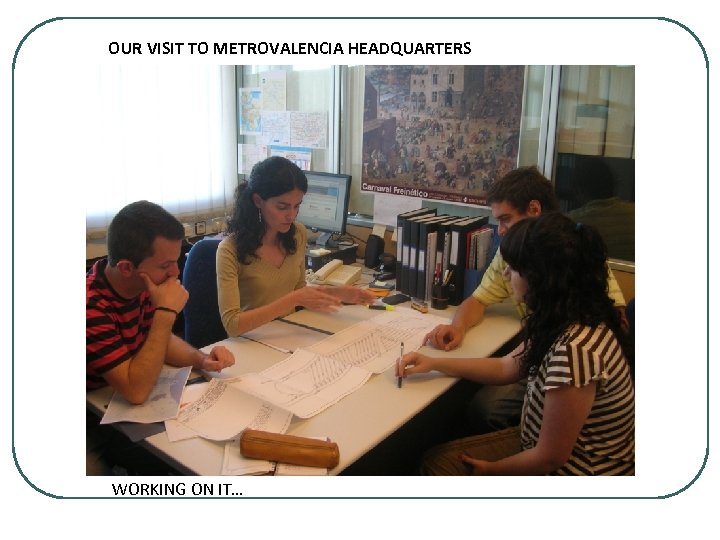
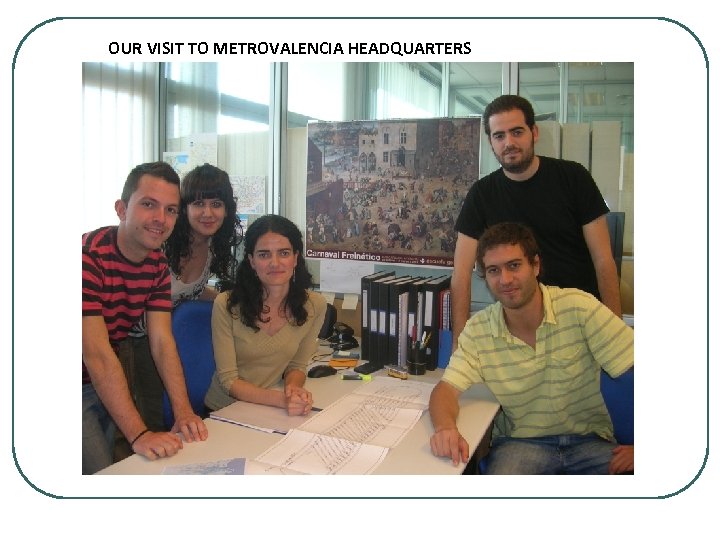
OUR VISIT TO METROVALENCIA HEADQUARTERS WORKING ON IT…
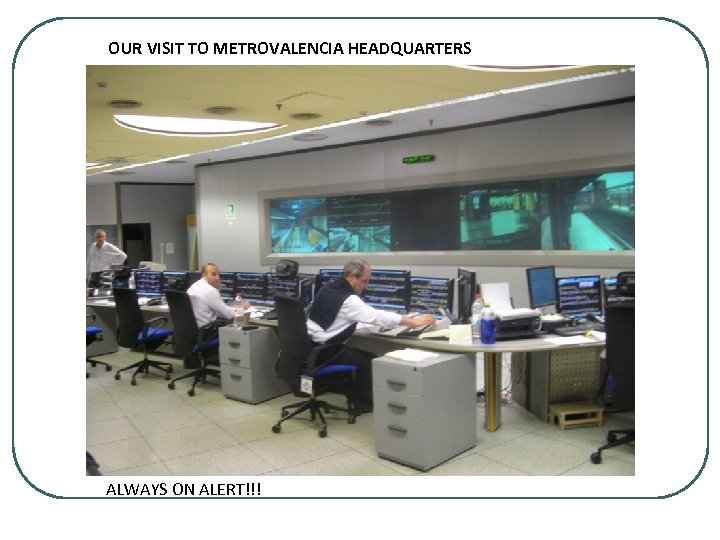
OUR VISIT TO METROVALENCIA HEADQUARTERS ALWAYS ON ALERT!!!
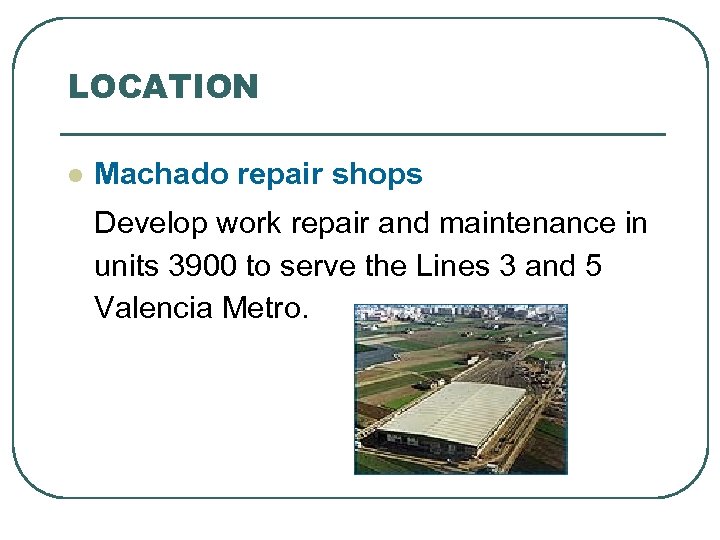
LOCATION l Machado repair shops Develop work repair and maintenance in units 3900 to serve the Lines 3 and 5 Valencia Metro.
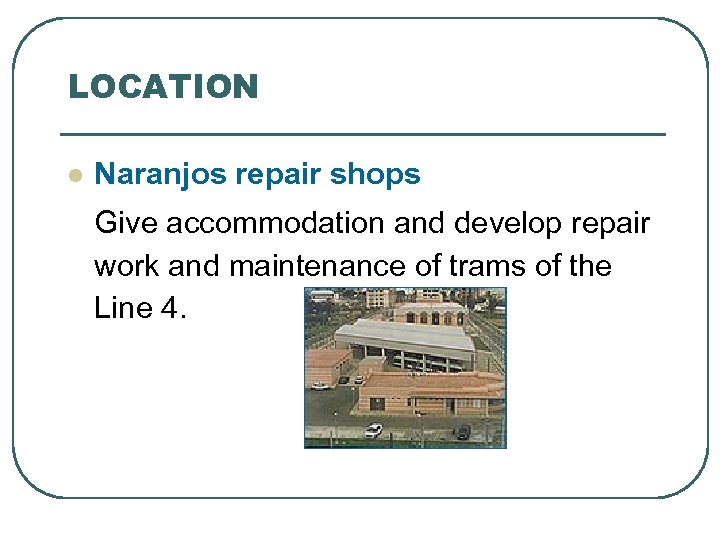
LOCATION l Naranjos repair shops Give accommodation and develop repair work and maintenance of trams of the Line 4.
Sevices of FGV in Valencia Primary Services: l Underground lines 1, 3 and 5 l Tram lines 4 and 6 Secondary or add value services: Principally focused on the corporative image and marketing Linea 0 Nano metro Metro Club Bici metro Fdsmn familiar Metro rutas Online services
e-commerce B 2 B? What are the common points? ? Online auctions? B 2 C? ? Online catalogues?
E-COMMERCE BENEFITS Information available 24/7 for everyone with internet access. l Helps the costumers to decide their means of transport and take the underground as their first option. l Quick update of special events. l Comprehensive information on schedules, strikes, new routes, reforms. . . l
E-COMMERCE LIMITATIONS l l Their web platform is basically to provide information. Does not offer sale of services like the possibility of buying tickets on-line or a new travel card recharged with on-line transfers.
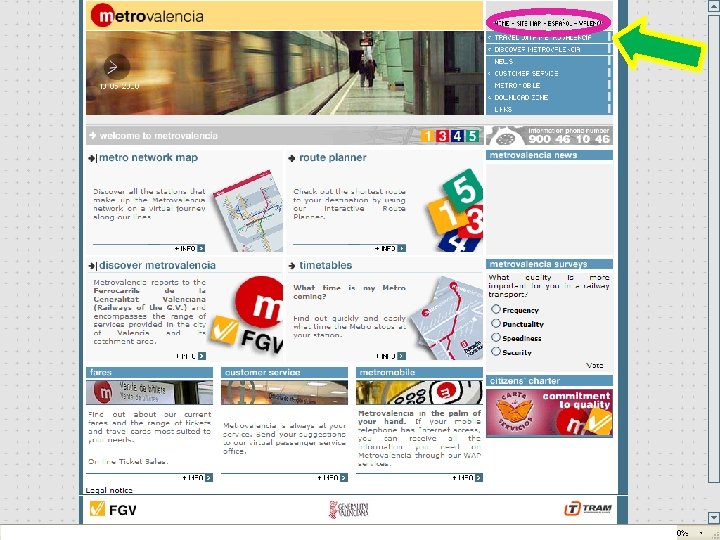
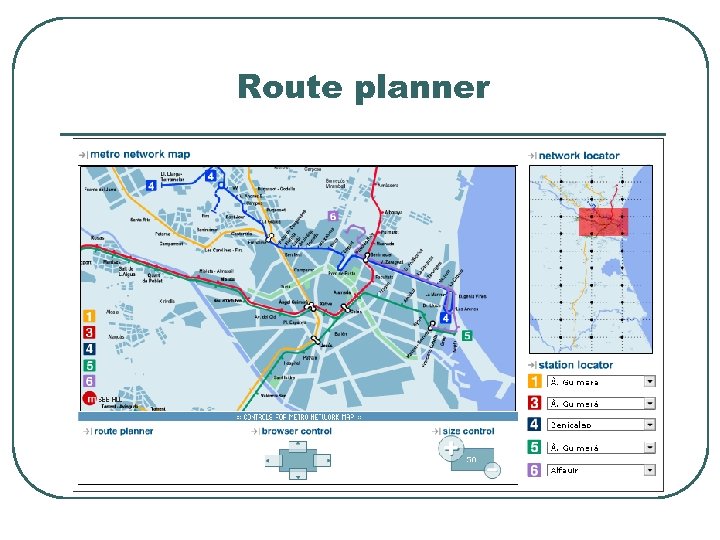
Route planner
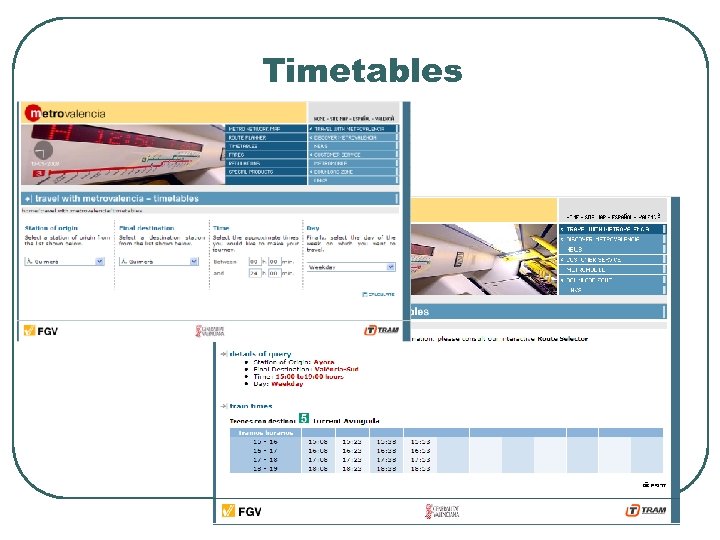
Timetables
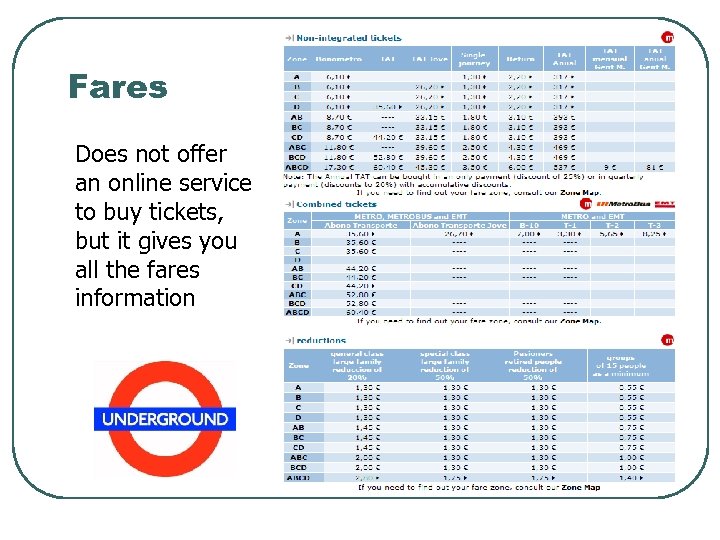
Fares Does not offer an online service to buy tickets, but it gives you all the fares information
Client Service l The aim of this facility is to provide Metrovalencia customers with all the information they need about: • • • Timetables Fares Integration plan Lost and found Comments and suggestions Places of interest and events Administration on personal ID cards Payment and issues relating to the purchase of tickets from automatic vending machines. . .
10 OM Decisions Maintenance of mobile units Preventive tasks: Corrective tasks: Outside washing, painting, turn of the wheels… Punctual unexpected breakdowns or failures Maintenance of physical installations Preventive tasks: Corrective tasks: Periodical controls, Cleaning of the installations Punctual unexpected failures Important to have a good telemetrical system (huge extensions)
10 OM Decisions Human resource and job design Need of very specialized knowledge: Workers are formed by the company Empowerment of workers easier to shape an old worker in a more complicated work then to form a new one Laboral absenteeism : incentive systems Quality department depends directly on the main manager : Lines 3 and 5 have the AENOR ISO 9001 For FGV punctuality and security are very important
10 OM Decisions Scheduling Important to synchronize train services and workers People working 24 hours a day and every day of the year at least four controllers at the command post Location selection Garages and train parking lots don’t have to bee together but it is recommended Two conditions: They need big land extensions They should be at the beginning of one line
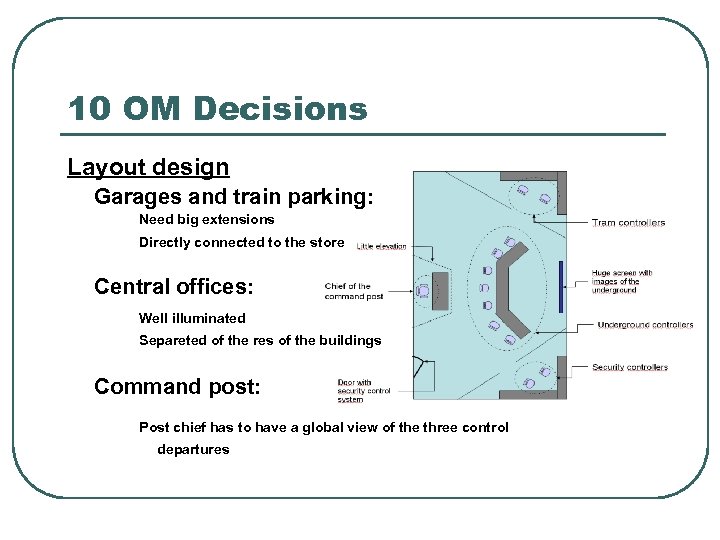
10 OM Decisions Layout design Garages and train parking: Need big extensions Directly connected to the store Central offices: Well illuminated Separeted of the res of the buildings Command post: Post chief has to have a global view of the three control departures
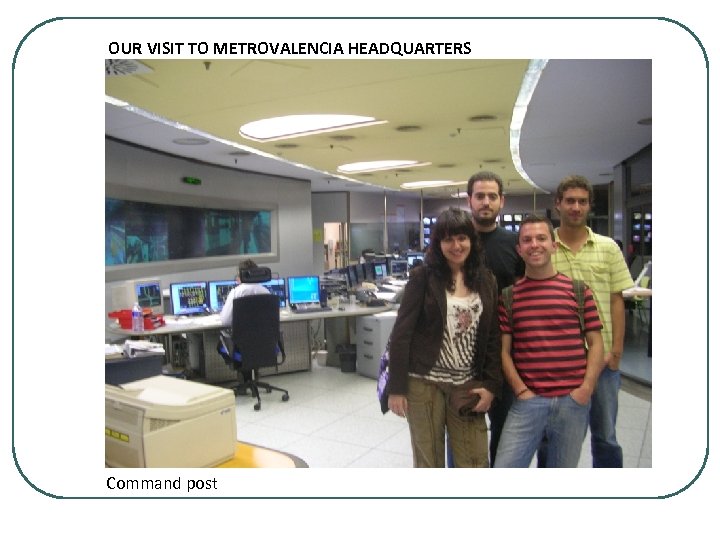
OUR VISIT TO METROVALENCIA HEADQUARTERS Command post
10 OM Decisions Supply-chain management Many decisions in FGV have to be done with a long term vision Important to have good forecast of the passengers evolution. In a short term: need of new pieces in the periodical checks or possible breakdowns Inventory Great variety and number of spare parts inventories are automated by computer
10 OM Decisions Goods & service design The big service design decisions, like the design of a new tram line, are taken by the Conselleria. FGV can only design secondary services or add value services. Process & capacity design Precesses are not design to be benefitarian FGV earns only a 55% of the processes costs Main costs in human resources and energy
Desing of a new product l Weekend night underground train
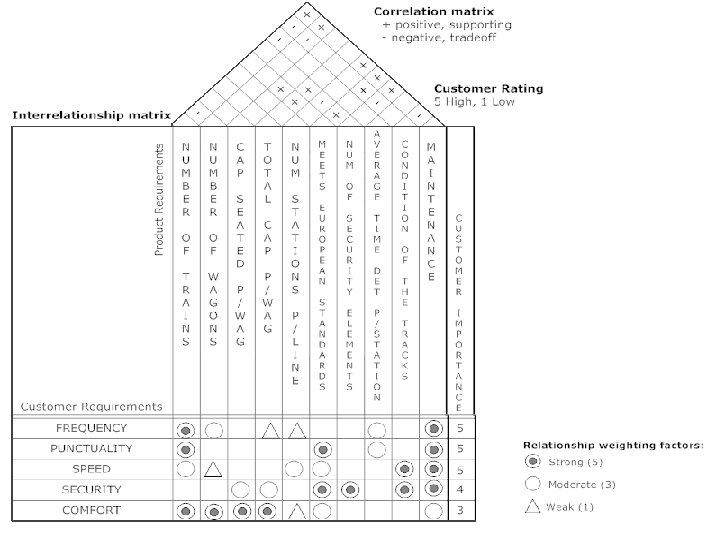
House of quality Customer requirements: • Frecuency • Punctuality • Speed • Security (in terms of the “thiefs” and of the service itself) • Comfort
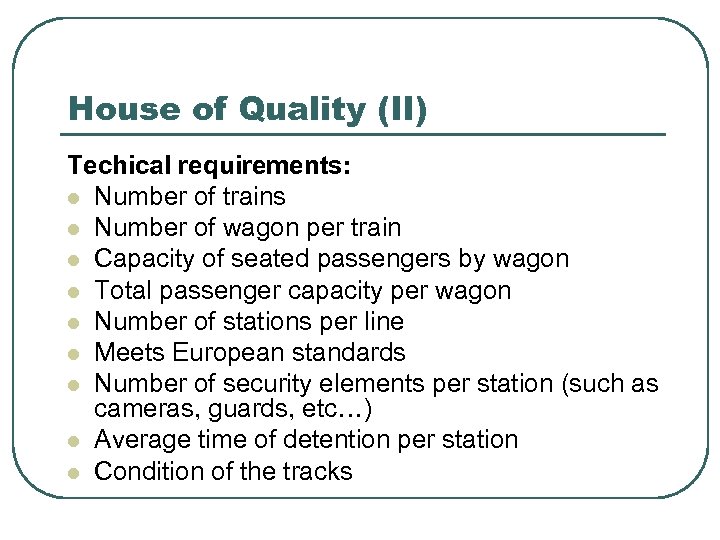
House of Quality (II) Techical requirements: l Number of trains l Number of wagon per train l Capacity of seated passengers by wagon l Total passenger capacity per wagon l Number of stations per line l Meets European standards l Number of security elements per station (such as cameras, guards, etc…) l Average time of detention per station l Condition of the tracks
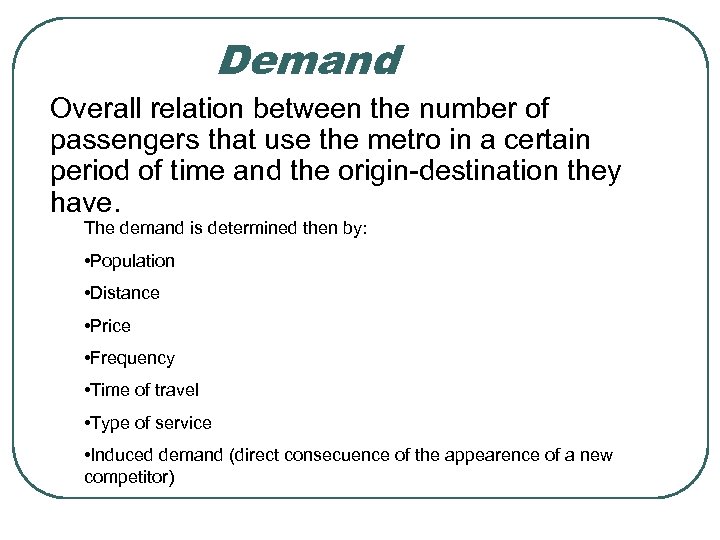
Demand Overall relation between the number of passengers that use the metro in a certain period of time and the origin-destination they have. The demand is determined then by: • Population • Distance • Price • Frequency • Time of travel • Type of service • Induced demand (direct consecuence of the appearence of a new competitor)
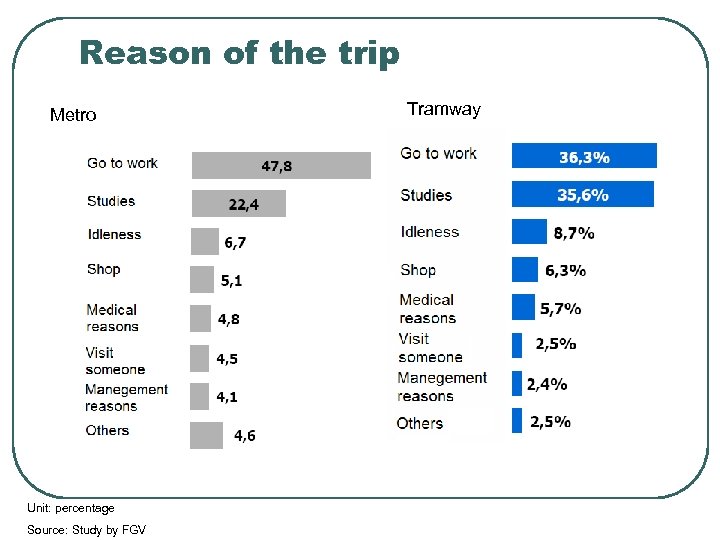
Reason of the trip Metro Unit: percentage Source: Study by FGV Tramway
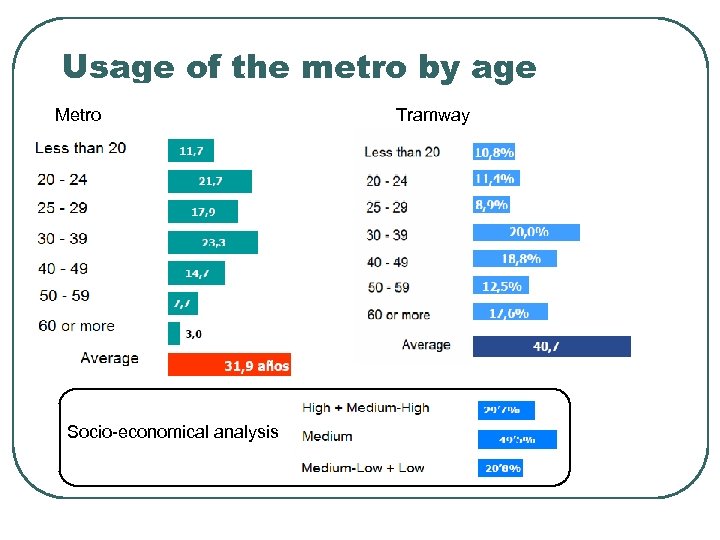
Usage of the metro by age Metro Socio-economical analysis Tramway
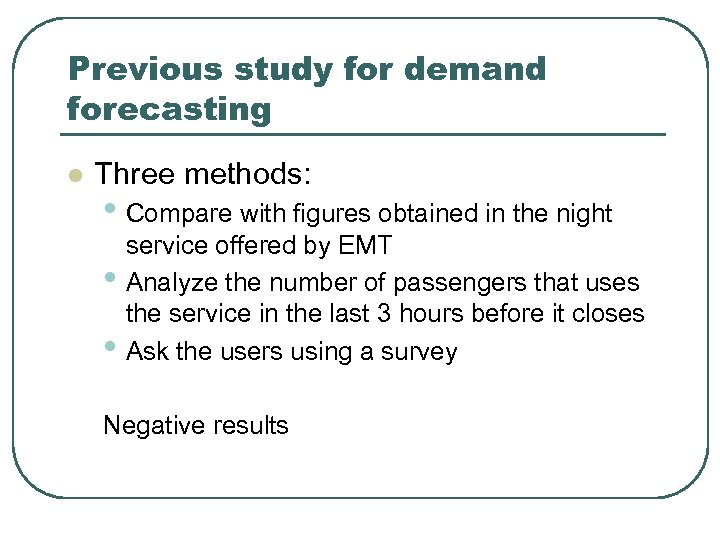
Previous study for demand forecasting l Three methods: • Compare with figures obtained in the night • • service offered by EMT Analyze the number of passengers that uses the service in the last 3 hours before it closes Ask the users using a survey Negative results
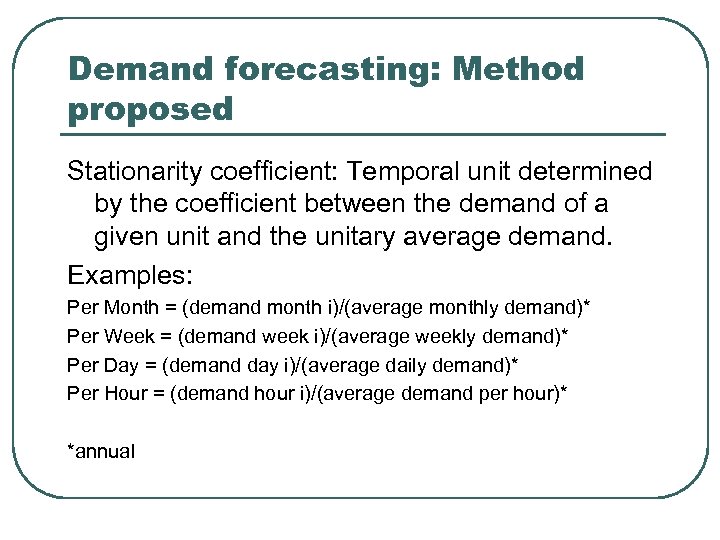
Demand forecasting: Method proposed Stationarity coefficient: Temporal unit determined by the coefficient between the demand of a given unit and the unitary average demand. Examples: Per Month = (demand month i)/(average monthly demand)* Per Week = (demand week i)/(average weekly demand)* Per Day = (demand day i)/(average daily demand)* Per Hour = (demand hour i)/(average demand per hour)* *annual
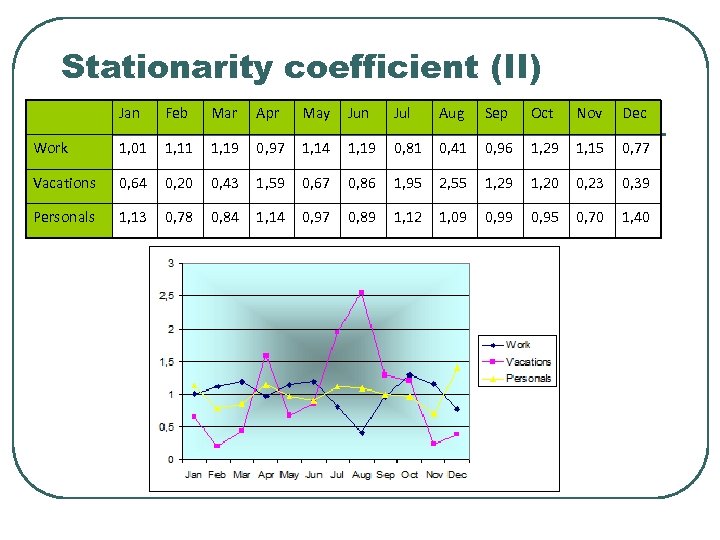
Stationarity coefficient (II) Jan Feb Mar Apr May Jun Jul Aug Sep Oct Nov Dec Work 1, 01 1, 19 0, 97 1, 14 1, 19 0, 81 0, 41 0, 96 1, 29 1, 15 0, 77 Vacations 0, 64 0, 20 0, 43 1, 59 0, 67 0, 86 1, 95 2, 55 1, 29 1, 20 0, 23 0, 39 Personals 1, 13 0, 78 0, 84 1, 14 0, 97 0, 89 1, 12 1, 09 0, 95 0, 70 1, 40
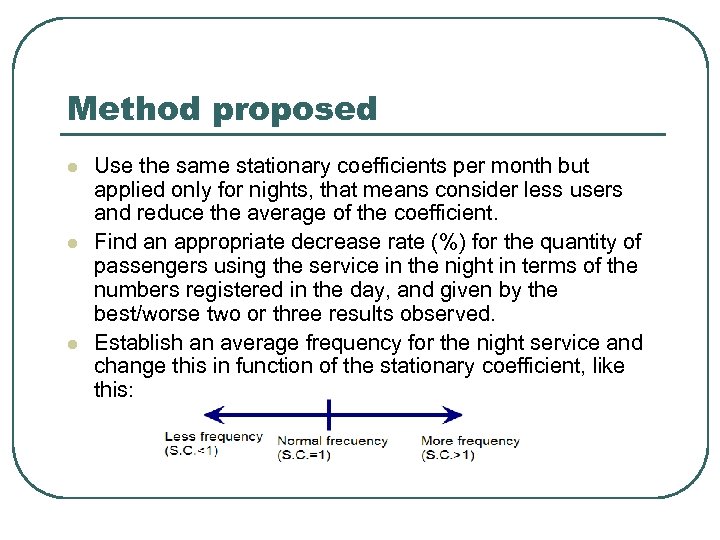
Method proposed l l l Use the same stationary coefficients per month but applied only for nights, that means consider less users and reduce the average of the coefficient. Find an appropriate decrease rate (%) for the quantity of passengers using the service in the night in terms of the numbers registered in the day, and given by the best/worse two or three results observed. Establish an average frequency for the night service and change this in function of the stationary coefficient, like this:
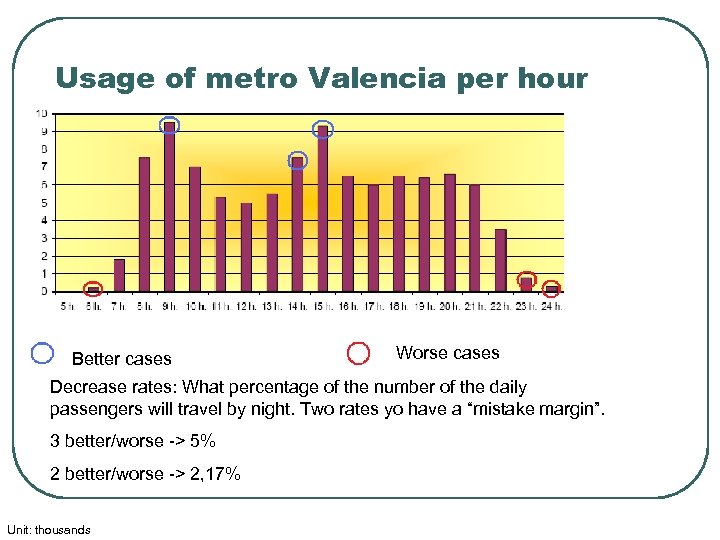
Usage of metro Valencia per hour Better cases Worse cases Decrease rates: What percentage of the number of the daily passengers will travel by night. Two rates yo have a “mistake margin”. 3 better/worse -> 5% 2 better/worse -> 2, 17% Unit: thousands
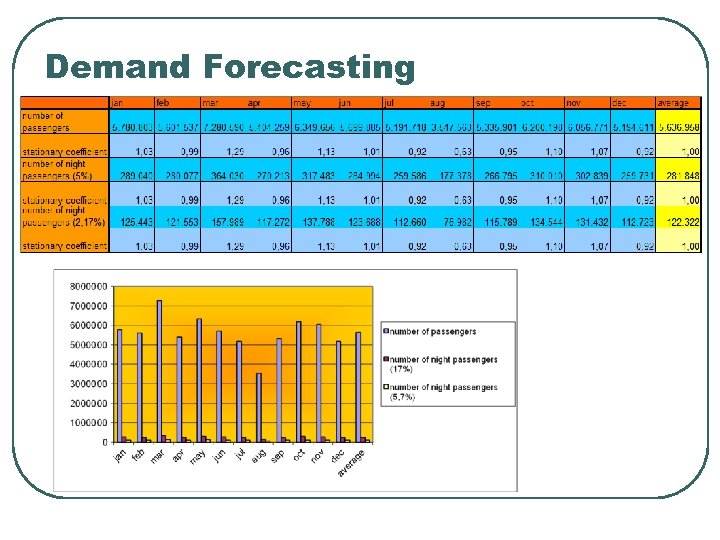
Demand Forecasting
Important points Here we expose some points we think are important and haven't been taken in consideration in previous studies: l l l l Consider new potential clients, people that do not use the metro usually (specially people that owns a car but doesn't drive at night if they consume alcohol). Focus the study only on weekends. Work in combination with EMT Restrict the service to certain areas Vary the frequency as we exposed before Cash flow with high discount rate and different train/tram frequencies Make a decision tree with previously calculated probabilities, and considerating the costs of deaths in other means of transport. Make a trial period
THE END l. Any questions? ? l. No? ? l. So answer us!
OUR VISIT TO METROVALENCIA HEADQUARTERS
Скачать презентацию Cristina Moya Sebastián Ibañez Federico Carbonell Tomás García
1d56cbe3053fe6a1ace05b268583c7e5.ppt