


 Скачать презентацию Crisis Management and Prevention Management of Human-made Crises
66c350d80cc5b8906106c583ec5c2437.ppt
- Количество слайдов: 93
 Crisis Management and Prevention (Management of Human-made Crises, behaviour of National States and IOs) Giovanni Marizza gianni. marizza@yahoo. it 19 May 2014, 15. 00 – 19. 00
 Summary: n n n Human-made disasters How National States manage crises How International Organizations manage crises
 Crises caused by Human-made Disasters Case Studies: n n n n Great Smog, 1952 Banqiao Dam, 1975 Bhopal, 1984 Chernobyl, 1986 Exxon Valdez Oil Spill, 1989 Kuwait Oil Spill, 1991 Gulf of Mexico, 2010
 1952
1952
 1952, historical framework: n n n n 7 years after the end of WWII, EDC Treaty signed (it will last 2 years) 25 January: USSR vetoes admission of Italy to UN, 18 February: Greece, Turkey in NATO, 26 February, Churchill: “UK has the Bomb!” Economic crisis in UK because of the war, UK: High quality coal: exported, UK: Low quality coal (high % of sulphur): for domestic use
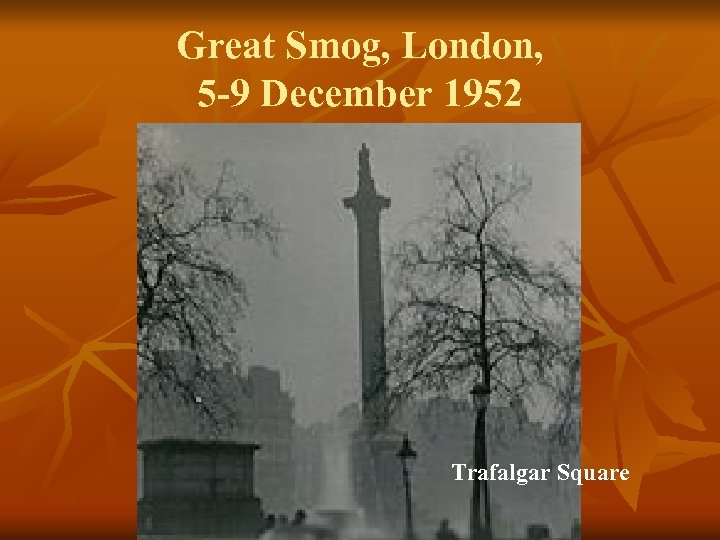 Great Smog, London, 5 -9 December 1952 Trafalgar Square
 Great Smog, London, 5 -9 December 1952 n n n Environmental catastrophe caused by cold temperatures and abuse of (poisonous) coal 12. 000 dead, 10. 000 sick City traffic: impossible, cinemas, theaters closed (screen: not visible!)
 Considerations/Lessons learned n Coexistence of Nuclear Power and economic crisis (Marshall Plan? ),
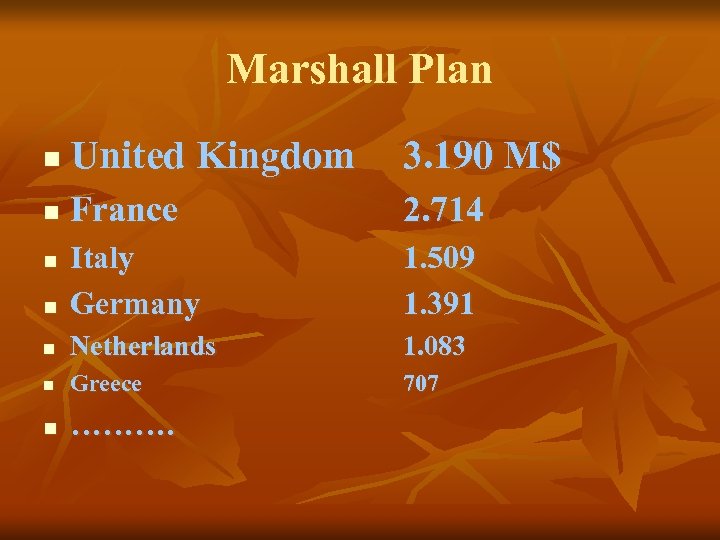 Marshall Plan n United Kingdom 3. 190 M$ n France 2. 714 n Italy Germany 1. 509 1. 391 n Netherlands 1. 083 n Greece 707 n ………. n
 Considerations/Lessons learned n n n Coexistence of Nuclear Power and economic crisis (Marshall Plan? ), Government’ cynicism (coal policy), Energy: alternative sources not yet available
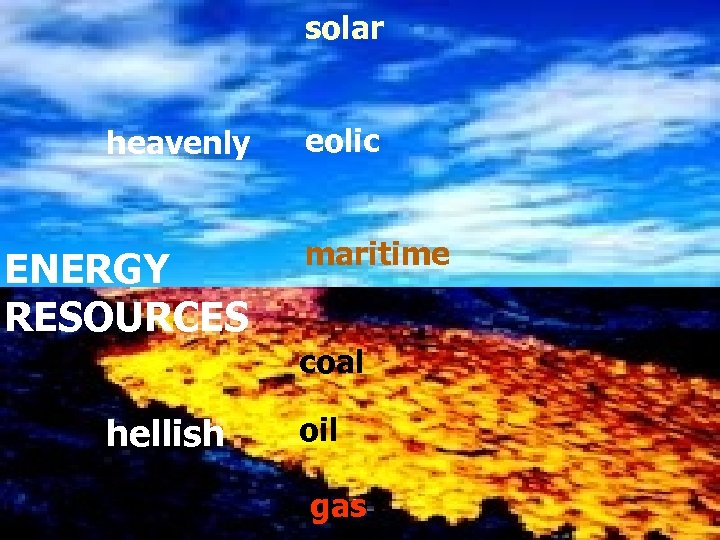 solar heavenly ENERGY RESOURCES eolic maritime coal hellish oil gas
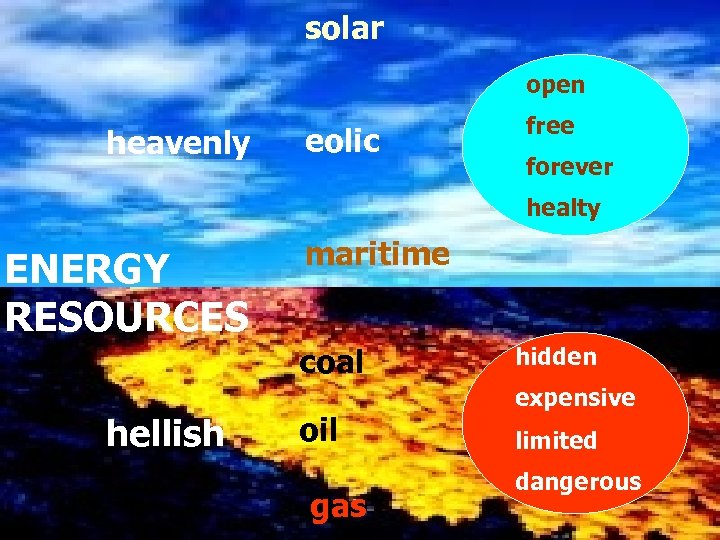 solar open heavenly eolic free forever healty ENERGY RESOURCES maritime coal hellish oil gas hidden expensive limited dangerous
 1975
1975
 1975 historical framework n n n n Khmer Rouge take the power in Cambodia, Civil war begins in Lebanon, USA defeated in Vietnam, Saigon renamed Ho-Chi. Minh City, Suez Canal re-opened after 8 years, Andrei Sacharov Peace Nobelprize, Spain: Francisco Franco dies, Juan Carlos becomes King, Angola, Mozambique independent.
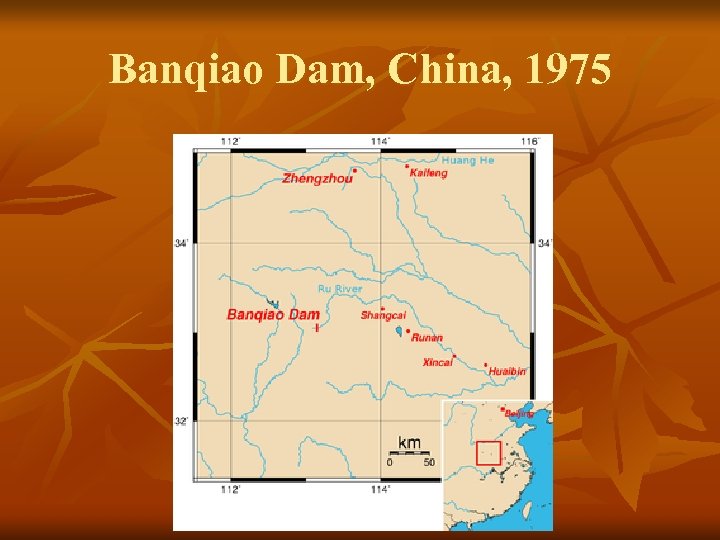 Banqiao Dam, China, 1975
 n n n n 60 dams built in the Fifties in Henan province for hydroelectric energy purposes, Banqiao Dam: 118 m high, basin: 492 million m 3 1975: the dam collapsed / intentionally destroyed, Death tall: unknown up to 1991, then declassified: 171. 000, 16 billion tons water, wave 10 km wide and 7 m high, speed 50 km/h (like a tsunami), 6 million houses destroyed, 11 million displaced people, After 10 days, millions surviving on small islands, depending on airdrops of food
 peculiarities: n n Destruction of dams: casual/intentional, First ever air battle between PLA Air Force and 60 dams, some of them destroyed by air-surface missiles, Meteorological reason: exceptional event, clash between a typhoon and a front of cold air, 1. 060 mm rain in 1 day (average: 800 mm in 1 year) Technical reason: too small number of sluice-gates (less than 50% of the need),
 Lessons learned: n n Don’t force the Nature (unpredictable) Also the Air Force can be useful
 1984
1984
 1984, historical framework. n n February: Yuri Andropov dies, Konstantin Chernenko new SG of CP, USSR, July: Los Angeles Olimpic Games, October: Indira Gandhi killed,
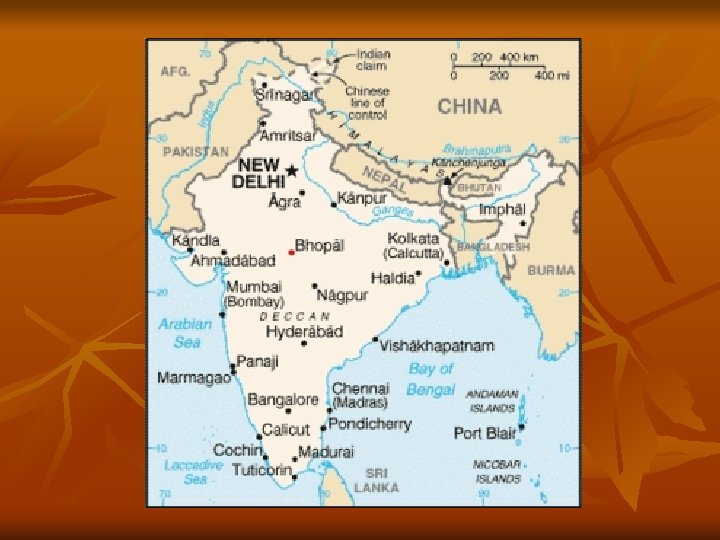
 n n n Union Carbide, producing pesticides, Structure in the middle of the town, activated in 1980, Crisis in 1982, closure in Oct 1984, deactivation of security, 60 tons abandoned underground without refrigeration, Dec 1984, Toxic cloud: 40 tons, Victims: 4. 000 – 15. 000, 145 legal actions vs Union Carbide, trials ended in 2011, without consequences (the only accused is hiding from justice)
 Considerations/Lessons learned: n n Doubts about morality of “delocalization” Companies never pay (they have huge financial capabilities and the best lawyers, victims don’t)
 1986
1986
 1986, historical framework n n n 1 January: Spain, Portugal in the EEC, 16 March: referendum in Switzerland (no to UN) 15 April: 2 SCUD missiles from Libia to Lampedusa 28 July, Gorbaciov: partial withdrawal from Afghanistan 21 August: toxic cloud from a volcanic lake in Camerun (1. 500 victims)
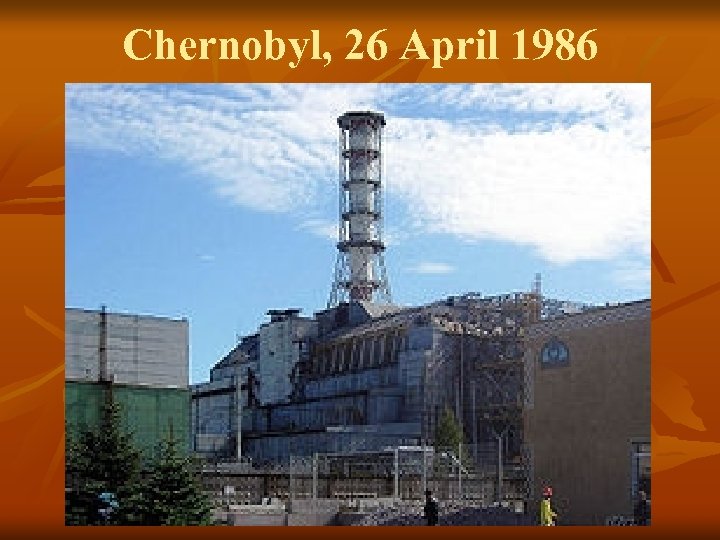 Chernobyl, 26 April 1986
 Chernobyl, 1986 -a “security test without security” generates high power, high temperature and a catastrofic explosion, - radioactive cloud over Europe, - evacuation of 336. 000 people, - radioactivity: 1 billion times higher than normal, - first technicians on the spot equipped with surgical masks (!), - Soviet Government: initially silent, later: “Niet problema!” - official report: 65 victims immediately, plus additional 4. 000 in an 80 year timeframe, - report by Greenpeace: 6 million victims in 70 years
 The Chernobyl’s heritage: n n After 1986: still on duty because of need of energy Reactor n. 4: closed by a “sarcophagus” (duration: 30 years, then 1 billion € for a new one), n n n Reactor n. 2: damaged by a fire in 1991, Reactor n. 1: deactivated in 1996, Reactor n. 3: “I’ll close it!” (L. Kuchma, 2000)
 Lessons Learned: n n In case of “niet problema”, keep worrying, Human mistake (avoidable), Adoption of new generations of nuclear plants, Management of nuclear wastes (today: 1 m 3/year, recyclable)
 1989
1989
 1989, historical framework n n n n 7 January: Emperor Hiroito dies in Japan, 15 January: Prague, 20 th Jan Palach, police arrests hundreds (included V. Havel), 14 February: Iran, fatwa vs. S. Rushdie, 4 June: Beijing, slaughter of students in Tienanmen Square, August: Poland, Solidarnosc rules the govt, 9 November: Berlin wall falls, 17 November: Velvet Revolution in Czechoslovakia, December. Romania: N. Ceausescu killed, Czechoslowakia: V. Havel President.
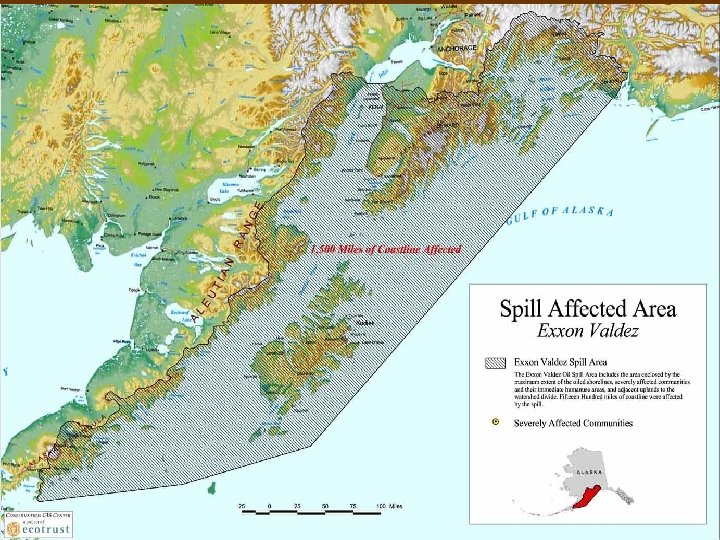
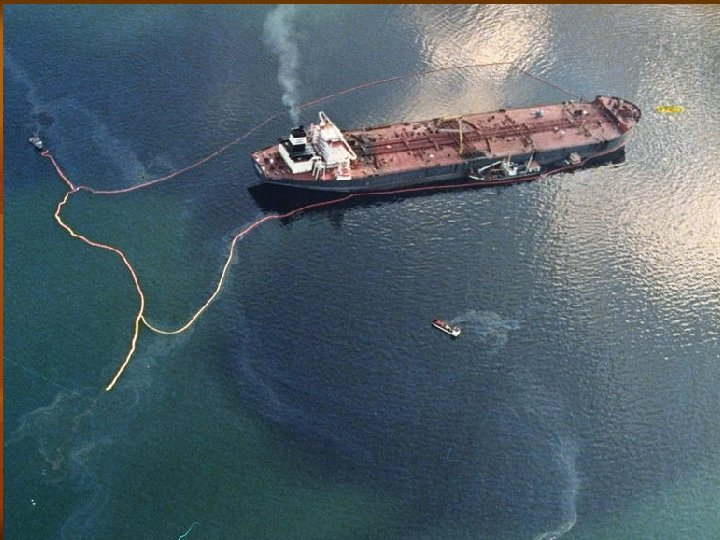
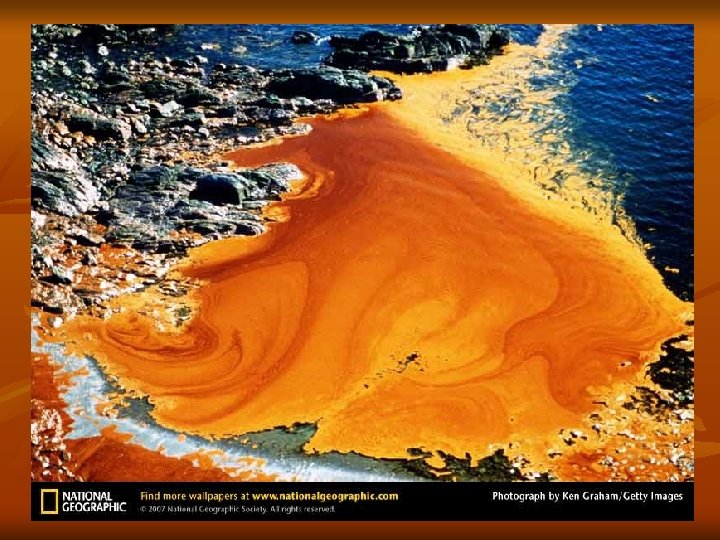
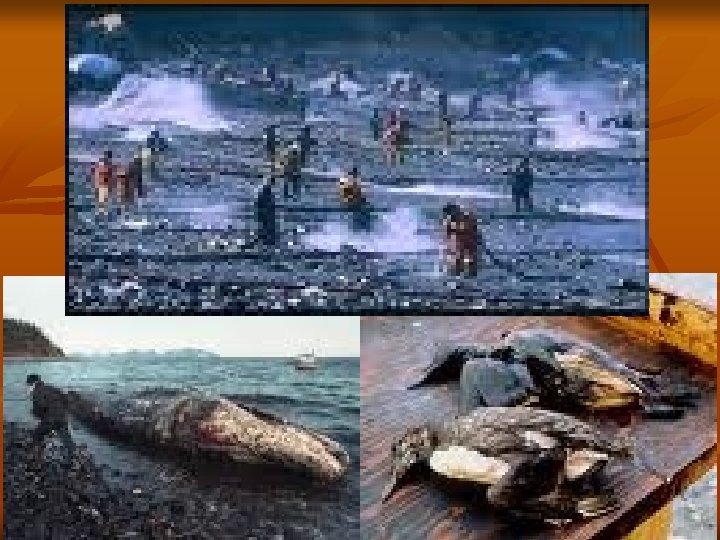
 Considerations/Lessons learned n n n The trial ended in 2009, 20 years after Last 25 years: Exxon became world leader Oil companies never pay
 1991
1991
 Historical framework: -first call by a GSM cellphone, -9 January: Soviet troops occupy Vilnius trying to stop the independence of Lithuania, -11 January: US Congress authorizes President Bush to attack Iraq, -Gulf war, Iraq launches 45 SCUD missiles on Israel, -1 February: South Africa, end of apartheid, -9 April: Georgia declares the independence, -21 May: India, Rajiv Gandhi killed, -25 June: Croatia, Slovenia independent, -6 August: www, -19 August: coup in USSR, solved by Eltsin, -26 December: URSS disbanded
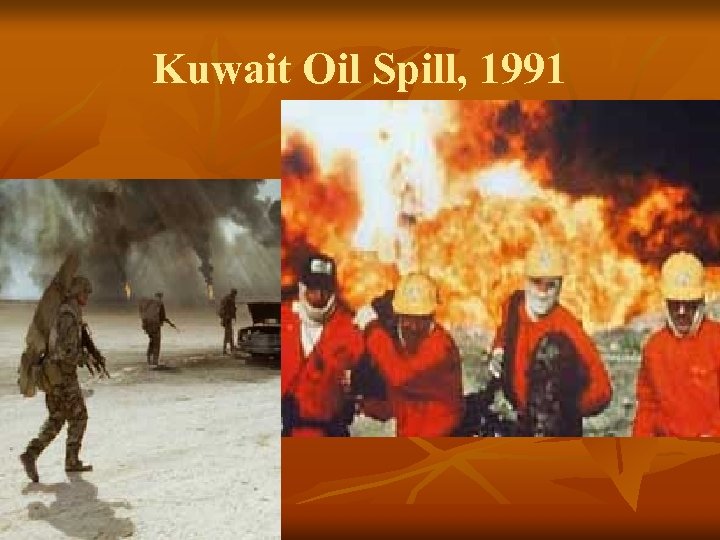 Kuwait Oil Spill, 1991
 n n n n 730 oil wells in flames, 100 damaged by Iraqi army Damaged pipelines throwing oil into the Gulf Attempts of putting out fire last 8 months 6 million barrels/day destroyed 10. 000 tons black smog in the atmosphere Crops damaged 2. 000 km far from Shatt El-Arab Himalaya: black snow, melting of snow doubled, pollution of rivers
 Lessons Learned: n Need of developing in advance technologies for similar accidents (in 2010 BP was improvising)
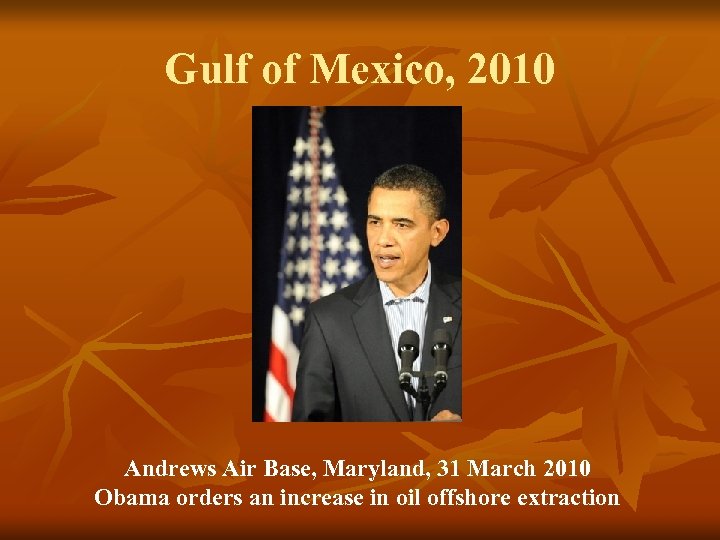 Gulf of Mexico, 2010 Andrews Air Base, Maryland, 31 March 2010 Obama orders an increase in oil offshore extraction
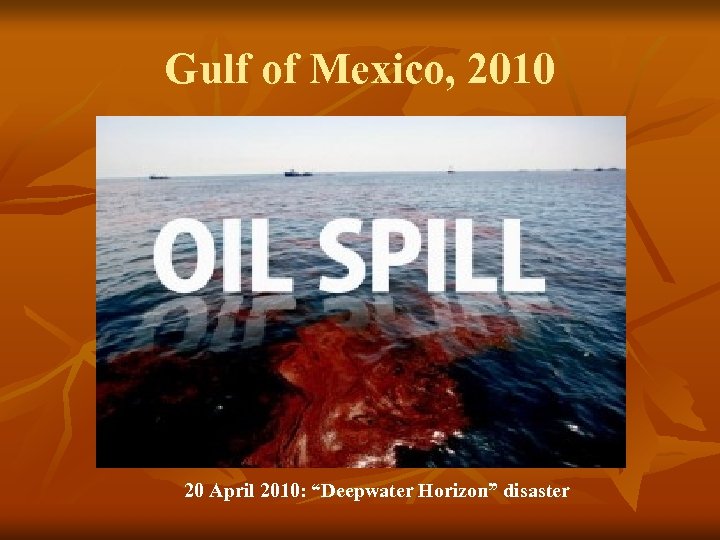 Gulf of Mexico, 2010 20 April 2010: “Deepwater Horizon” disaster
 Offshore Oil Extractions n n n n 1947: first platform off Louisiana, company Kerr-Mc. Gee (5 m), … … … 1994: “Auger” (900 m), 1996: “Mars” (950 m), 1999: “Ursa” (1. 000 m),
 Offshore Oil Extractions: a dangerous escalation n n n 2000: “Hoover Diana” (1. 500 m), 2002: “Horn Mountain” (1. 600 m), 2004: “Devil’s Tower” (1. 700 m), 2005: “Constitution” (1. 500 m, 13. 000 tons, 600 M$, 300 km SW from New Orleans), 2007: “Atlantis” (BP, 58. 700 tons, 2. 150 m), 2007: “Independence Hub” (2. 400 m), 2008: Shell “Perdido Star” (towed from Finland to the Gulf of Mexico, Tour Eiffel-like, 2. 400 m),
 “Deepwater Horizon” n n n “old” structure (1998, on the basis of “Deepwater Nautilus”, an obsolete platform) 2001: given to Company Transocean, BP Security Plan (52 pages), examined by FMMS, Federal Mineral Management Service: “…an oil spill is highly improbable… In that case, thanks to our capabilities, we don’t foresee any negative environmental impact”
 Lessons Learned: n n n Don’t believe to “security plans”, Guilty never pay (examples: Vajont, Bhopal, Exxon Valdez, …) Need of developing in advance technologies for similar accidents (in 2010 BP was improvising), Oil companies recover after few months, Environment recovers after decades/centuries, Privilege renewable sources of energy
 National States and International Organizations
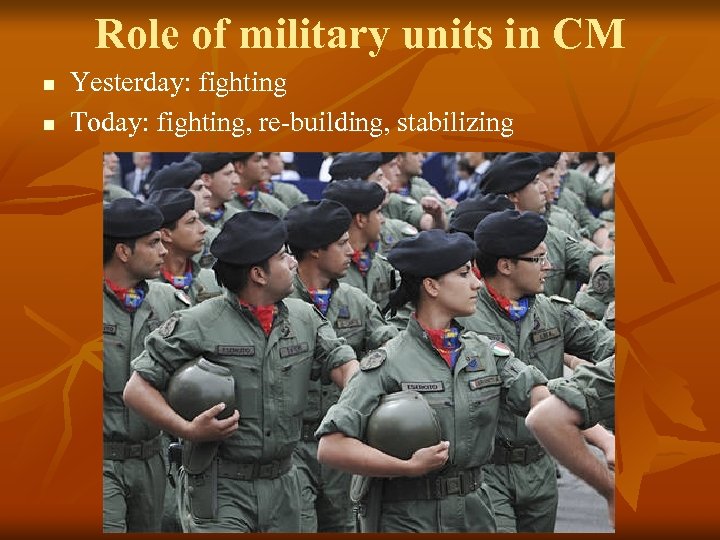 Role of military units in CM n n Yesterday: fighting Today: fighting, re-building, stabilizing
 What military units do: -humanitarian corridors (5 corridors in Mozambique, Bosnia: from Ploce to Mostar-Sarajevo, 2 LOCs for Kosovo, …) -protected areas (bad UN experience) Bosnia: Srebrenica and Zepa, July 1995 Croatia: UNPA North & South, August 1995 -mine clearing 100 millions, 300 types. Each month: 800 dead, 1. 200 wounded. Statistics: military reasons at the 11 th place (1 st: collecting woods, 2 nd: pasturing cattle, 3 rd: collecting water, 4 th: playing, …) -inventing peace (distributing toys, medicines, building roads, bridges, learning local language, impartiality with ethnic groups, …)
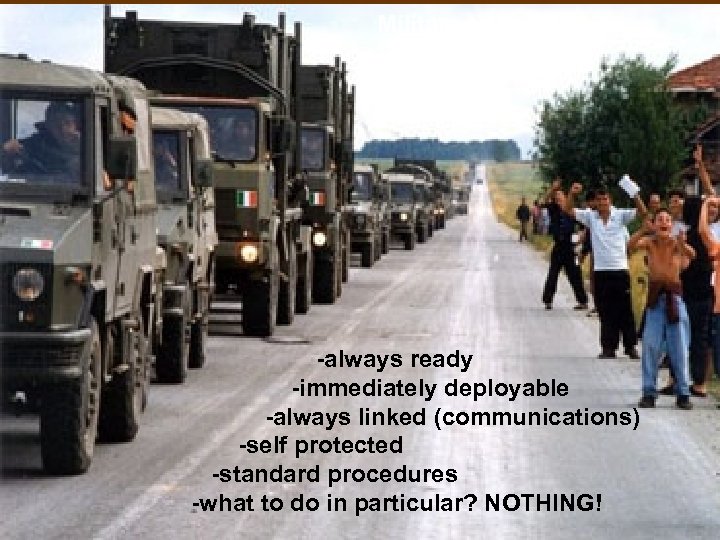 Military units: -always ready -immediately deployable -always linked (communications) -self protected -standard procedures -what to do in particular? NOTHING!
 National States Recent crises: -Chernobyl 1986, -Kursk submarine 2000, -Dubrovka theater 2002, -Beslan school 2004, -war with Georgia 2008 Procedures: sometimes affected by Czarist and Soviet heritage (keeping the secret, lack of transparency, brutality, low respect for human life, …) NATO-Russia Council?
 NATO – RUSSIA COUNCIL -fight against terrorism; -crisis management; -cooperation against the proliferation of WMDs; -armaments control and CBMs; -defense against theater missiles; -search and rescue at sea; -cooperation among military and Defense sector reform; -civil emergencies; -civil and military control of the air space; -scientific cooperation; …any other useful matter of reciprocal interest
 National States Recent crises: -Vietnam war (1964 -1975), -1 st (2 nd? ) Gulf war (1990 -1991), -Exxon Valdez, 1998, -Twin Towers, 11 September 2001, -GWOT, war in Afghanistan, 2001 -2014, -2 nd (3 rd? ) Gulf war, 2003 -2010, -Katrina hurricane, 2005, -Gulf of Mexico oil Spill, 2010 Doctrines and tools: National Defense Security (4 Services), Homeland Security (National Guard)
 National States Recent crises: -since 1948 permanently at war, -war with Hezbollah (Lebanon) 2006, -war with Hamas (Gaza) 2009, -Freedom Flotilla (2010) Crisis Management: -based on an excellent intelligence -enforced with strong decisionism -no multilaterality -multi-bilateralism
 International Organizations UN n EU n NATO n OSCE n SCO n
 United Nations www. un. org
 United Nations n Doctrine: n n Decisional body: n n UN Charter (Chapters VI, VII) Security Council (veto power by 5 perm Members) Enforcement: n n TCN, Troop Contributing Nations SHIRBRIG, Stand-by High Readiness Brigade (now disbanded)
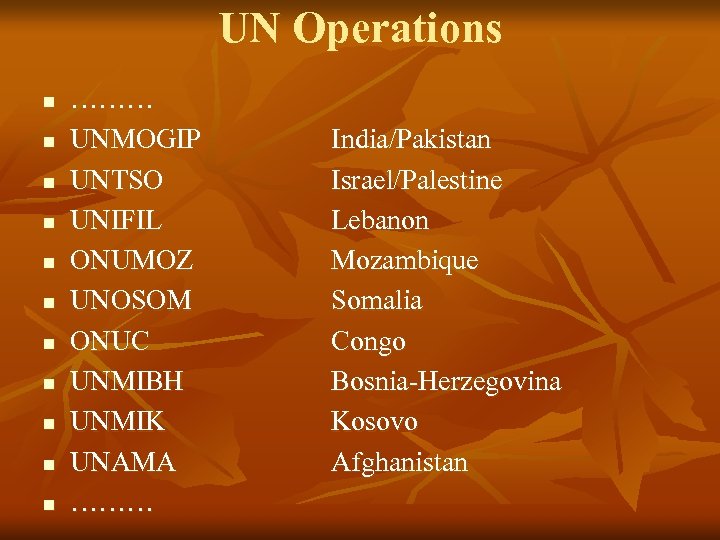 UN Operations n n n ……… UNMOGIP UNTSO UNIFIL ONUMOZ UNOSOM ONUC UNMIBH UNMIK UNAMA ……… India/Pakistan Israel/Palestine Lebanon Mozambique Somalia Congo Bosnia-Herzegovina Kosovo Afghanistan
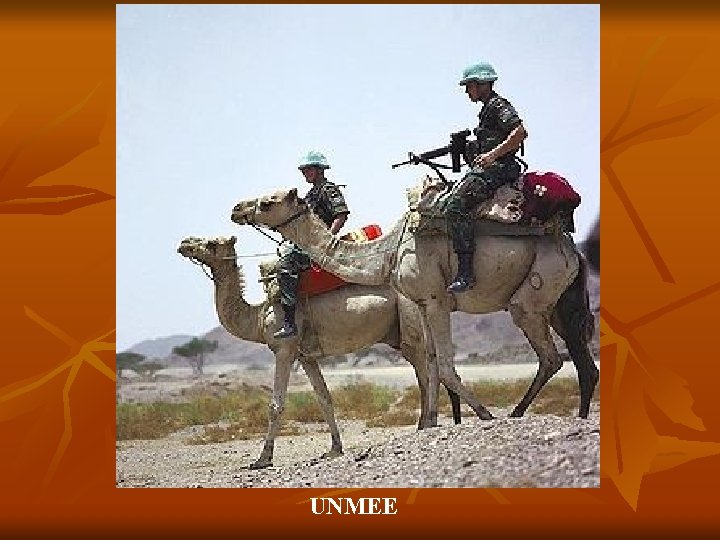 UNMEE
UNMEE
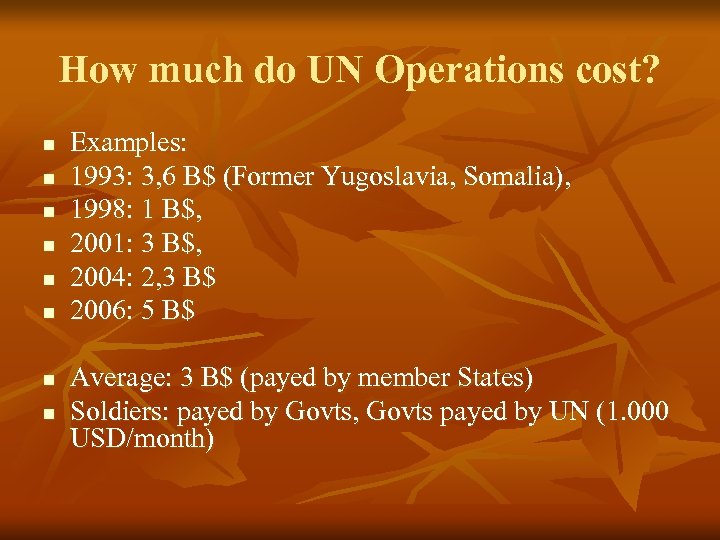 How much do UN Operations cost? n n n n Examples: 1993: 3, 6 B$ (Former Yugoslavia, Somalia), 1998: 1 B$, 2001: 3 B$, 2004: 2, 3 B$ 2006: 5 B$ Average: 3 B$ (payed by member States) Soldiers: payed by Govts, Govts payed by UN (1. 000 USD/month)
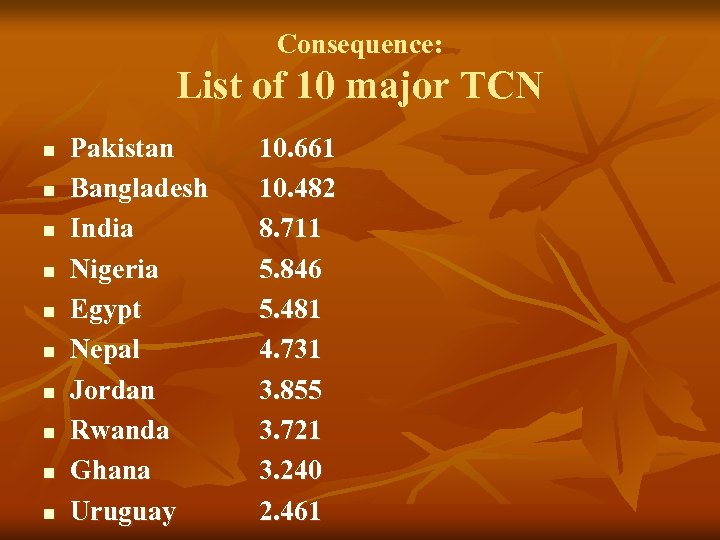 Consequence: List of 10 major TCN n n n n n Pakistan Bangladesh India Nigeria Egypt Nepal Jordan Rwanda Ghana Uruguay 10. 661 10. 482 8. 711 5. 846 5. 481 4. 731 3. 855 3. 721 3. 240 2. 461
 a collateral problem: UN SC REFORM
 European Union DECISION MAKING PROCESS: VARIABLE GEOMETRY www. europa. eu
 European Union n Doctrine: n n n Decisional body: n n European Treaties Solana Paper European Council Enforcement: n 5 HQ, 15 Battle Groups
 OPERATIONS: 2003: - EUPM, Bosnia-Herzegovina - “Concordia”, Macedonia - “Proxima” Macedonia - “Artemis”, Congo - Euromarfor (GWOT Indian Ocean) 2004: - substitution of NATO in Bosnia-Herzegovina (“Althea”) - EUSEC, Congo - EUJUST “Themis”, Georgia
 OPERATIONS: 2005: - EUPOL KINSHASA, Congo - AMIS EU Supporting Group, Darfur – Sudan - EUJUST “Lex”, Iraq - Aceh Monitoring Mission, Indonesia - EU Border Assistance Management, RAFAH, Palestina - EU BAM, Ucraina-Moldova 2006: - EUCOPPS, Palestina - EUFOR DR Congo
 OPERATIONS: 2007: - EUPOL, Afghanistan - Chad 2008: - Georgia - RD Congo 2009, 2010, 2011, 2012, 2013, 2014…. ? ? ? problem: “deployability” problem (2 million soldiers, but…)
 EU, European Union Never done ESDP missions: NEO (Non-combatant Evacuation Operations) Foreseen by Petersberg Tasks (1996, former WEU)
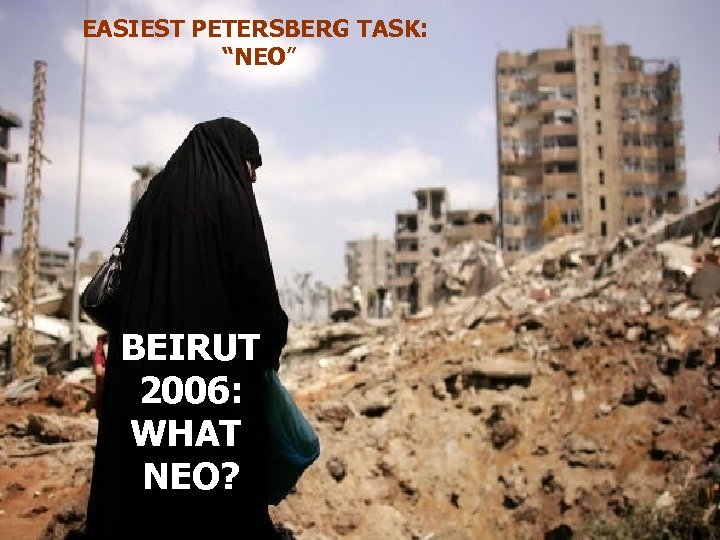 EASIEST PETERSBERG TASK: “NEO” BEIRUT 2006: WHAT NEO?
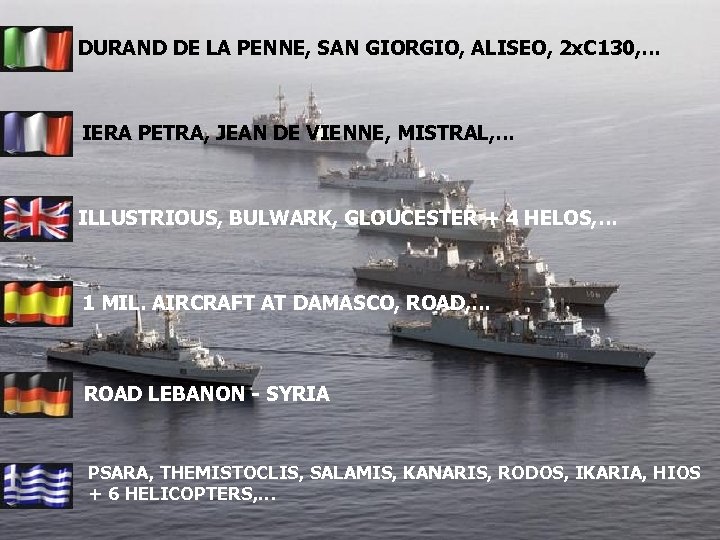 DURAND DE LA PENNE, SAN GIORGIO, ALISEO, 2 x. C 130, … IERA PETRA, JEAN DE VIENNE, MISTRAL, … ILLUSTRIOUS, BULWARK, GLOUCESTER + 4 HELOS, … 1 MIL. AIRCRAFT AT DAMASCO, ROAD, … ROAD LEBANON - SYRIA PSARA, THEMISTOCLIS, SALAMIS, KANARIS, RODOS, IKARIA, HIOS + 6 HELICOPTERS, …
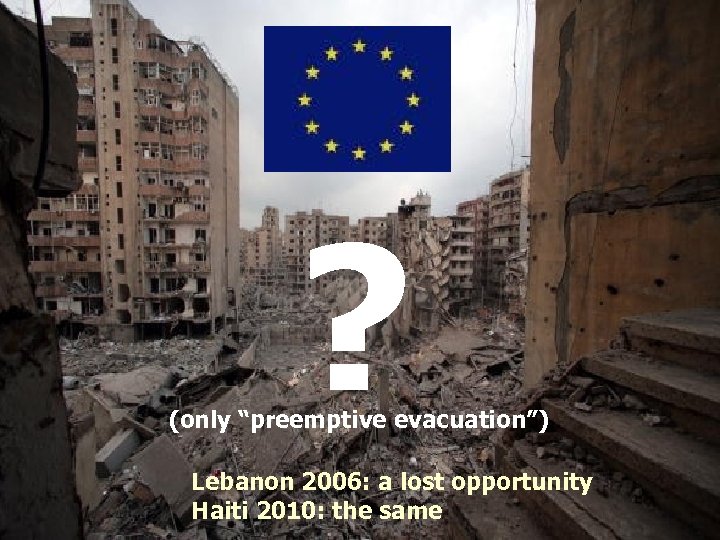 ? (only “preemptive evacuation”) Lebanon 2006: a lost opportunity Haiti 2010: the same
 NATO DECISION MAKING PROCESS: CONSENSUS www. nato. int
 NATO n Doctrine: n n n Decisional body: n n Washington Treaty (Art. 5) NATO Strategic Concept (last: Dec 2010) NAC, North Atlantic Council Enforcement: n n SHAPE, Regional Commands, troops provided by Member Countries NRF
 NATO n EADRCC, Euro-Atlantic Disaster Response Coordination Center (est. 1998) www. nato. int/eadrcc/
 Last requests for assistance: n n n 6 June 2010: floods in Hungary, 21 May 2010: floods in southern Poland, 21 May: earthquake, heavy rainfalls in Tajikistan, 7 January 2010: floods in Albania, Spring 2014: floods in Croatia, Bosnia-H, Serbia
 Consequence management exercises: 11 -17 September 2010, Armenia
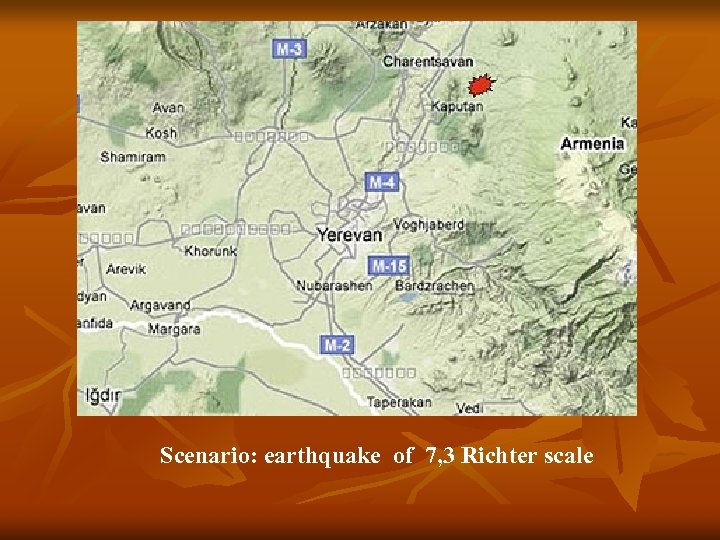 Scenario: earthquake of 7, 3 Richter scale
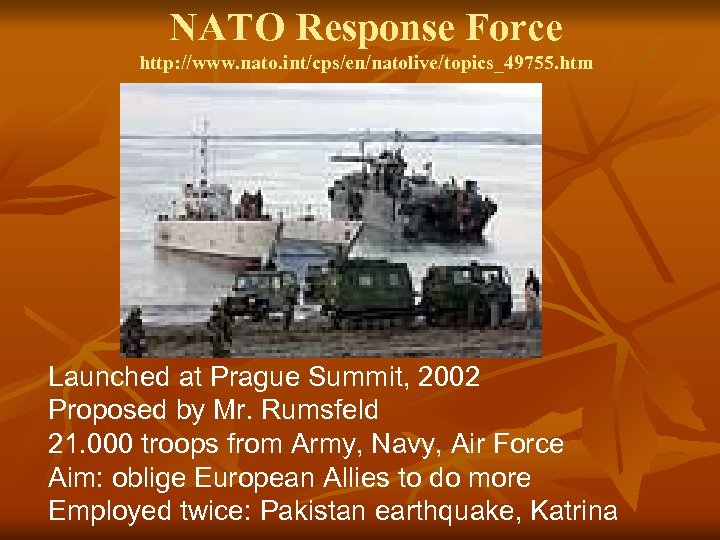 NATO Response Force http: //www. nato. int/cps/en/natolive/topics_49755. htm Launched at Prague Summit, 2002 Proposed by Mr. Rumsfeld 21. 000 troops from Army, Navy, Air Force Aim: oblige European Allies to do more Employed twice: Pakistan earthquake, Katrina
 NATO n PRTs, Provincial Reconstruction Teams
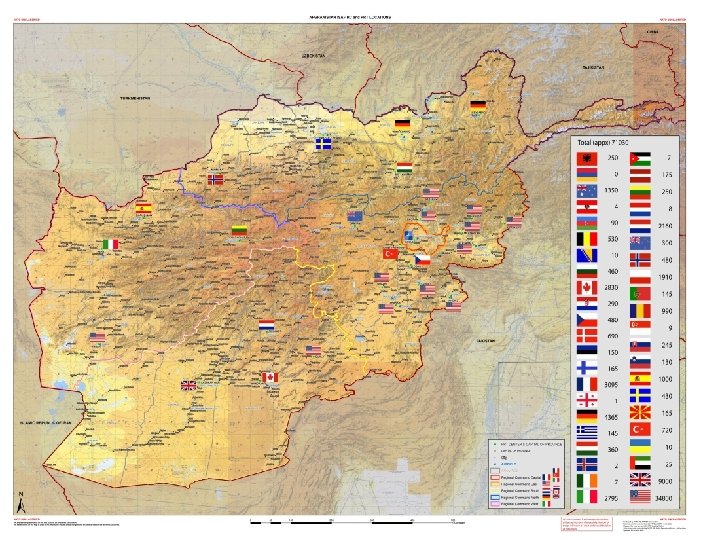
 PRTs: space for improvement n n n National lead: wrong, PRTs should be MN, at UN/NATO level, established since peacetime, ready to be completed/deployed, Turkey: civilian PRT, excellent example
 OSCE n The Organization for Security and Co-operation in Europe is the primary instrument for early warning, conflict prevention, crisis management. . . www. osce. org
 n Politico-military dimension: n n n Arms control Border management Combating terrorism Conflict prevention Military reform DECISION MAKING PROCESS: policing CONSENSUS, -1, -2
 Basic OSCE Documents: n n The Helsinki Chart (1975) The OSCE Concept of Comprehensive and Co-operative Security Compendium of OSCE Mechanisms and Procedures Summary of OSCE Mechanisms and Procedures
 SCO, Shanghai Cooperation Organization www. sectsco. org
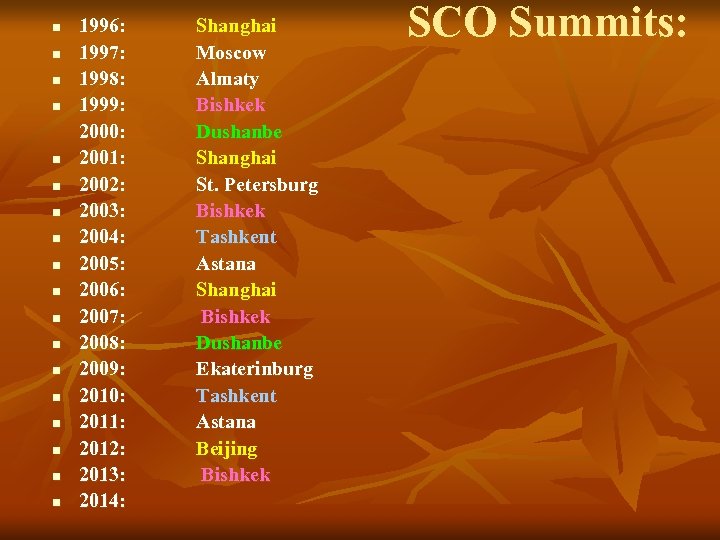 n n n n n 1996: 1997: 1998: 1999: 2000: 2001: 2002: 2003: 2004: 2005: 2006: 2007: 2008: 2009: 2010: 2011: 2012: 2013: 2014: Shanghai Moscow Almaty Bishkek Dushanbe Shanghai St. Petersburg Bishkek Tashkent Astana Shanghai Bishkek Dushanbe Ekaterinburg Tashkent Astana Beijing Bishkek SCO Summits:
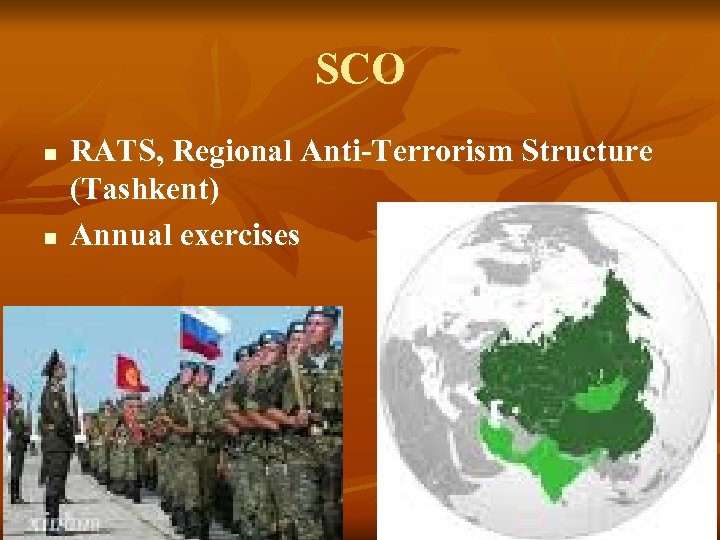 SCO n n RATS, Regional Anti-Terrorism Structure (Tashkent) Annual exercises
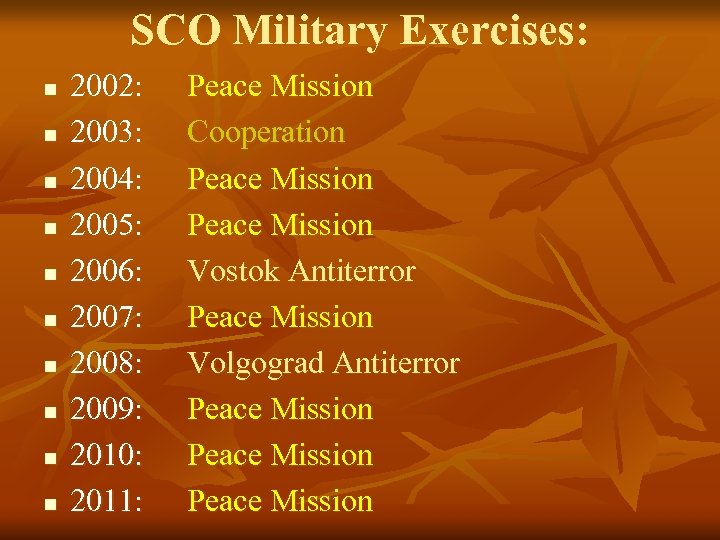 SCO Military Exercises: n n n n n 2002: 2003: 2004: 2005: 2006: 2007: 2008: 2009: 2010: 2011: Peace Mission Cooperation Peace Mission Vostok Antiterror Peace Mission Volgograd Antiterror Peace Mission
 Conclusion: n n n Decreasing importance of National States, Increasing importance of International Organizations Future: division of labour: States will manage Emergencies, I. O. s will manage Crises
 Conclusion: n n n Decreasing importance of National States, Increasing importance of International Organizations Future: division of labour: States will manage Emergencies, I. O. s will manage Crises IOs don’t “invent” casus belli!
 Suggestion for a Thesis: n n Crises determined by oil spill: comparing different cases (Kuwait, Alaska, Gulf of Mexico…) NATO-Russia Council, a tool of crisis Management
 Crisis Management and Prevention (Management of Human-made Crises, behaviour of National States and IOs) Giovanni Marizza gianni. marizza@yahoo. it 19 May 2014, 15. 00 – 19. 00