


 Скачать презентацию Creating forest sector solutions www fpinnovations ca Erosion
3b6eb2c3b261fcea406f50d2c0fb904a.ppt
- Количество слайдов: 63
 Creating forest sector solutions www. fpinnovations. ca Erosion and sediment control: Handbook introduction One vision Global competitiveness Clayton Gillies RPF, RPBio Senior Researcher Forest Road Engineering
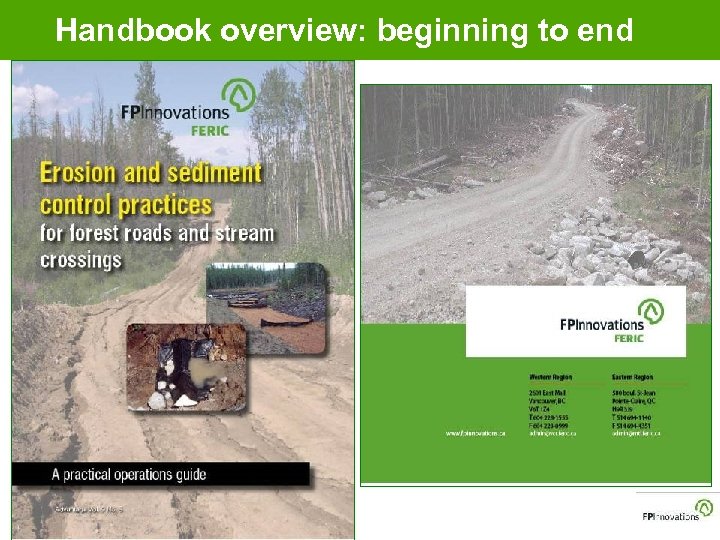 Handbook overview: beginning to end
 Funding contribution
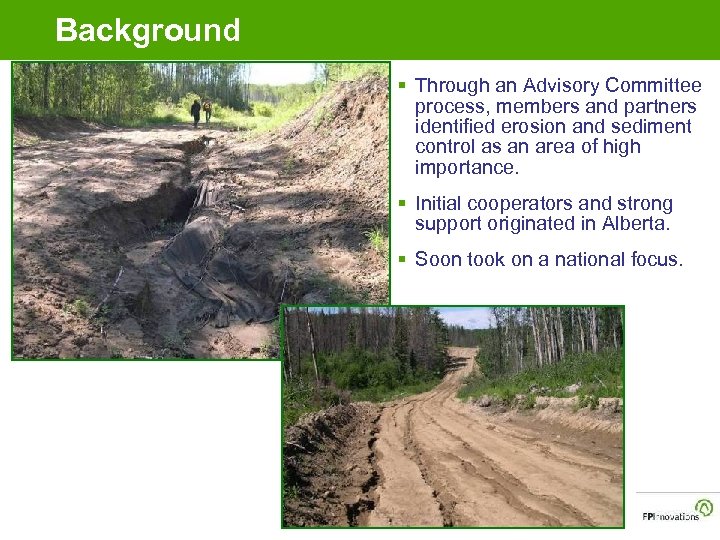 Background § Through an Advisory Committee process, members and partners identified erosion and sediment control as an area of high importance. § Initial cooperators and strong support originated in Alberta. § Soon took on a national focus.
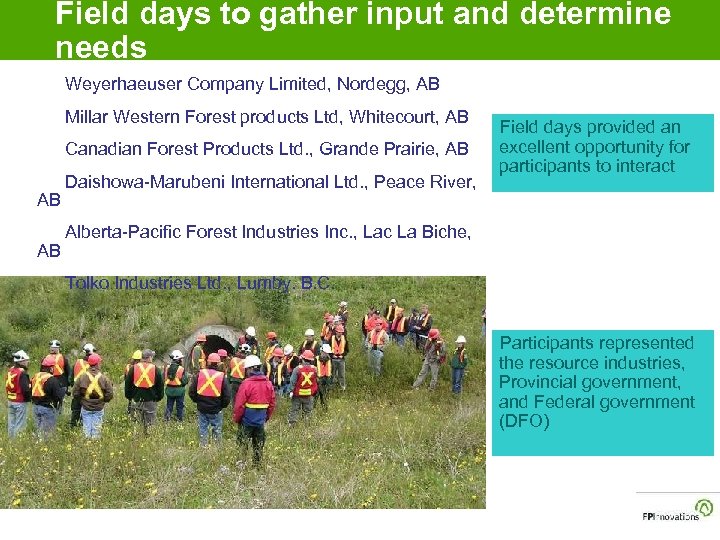 Field days to gather input and determine needs Weyerhaeuser Company Limited, Nordegg, AB Millar Western Forest products Ltd, Whitecourt, AB Canadian Forest Products Ltd. , Grande Prairie, AB AB AB Daishowa-Marubeni International Ltd. , Peace River, Field days provided an excellent opportunity for participants to interact Alberta-Pacific Forest Industries Inc. , Lac La Biche, Tolko Industries Ltd. , Lumby. B. C. Participants represented the resource industries, Provincial government, and Federal government (DFO)
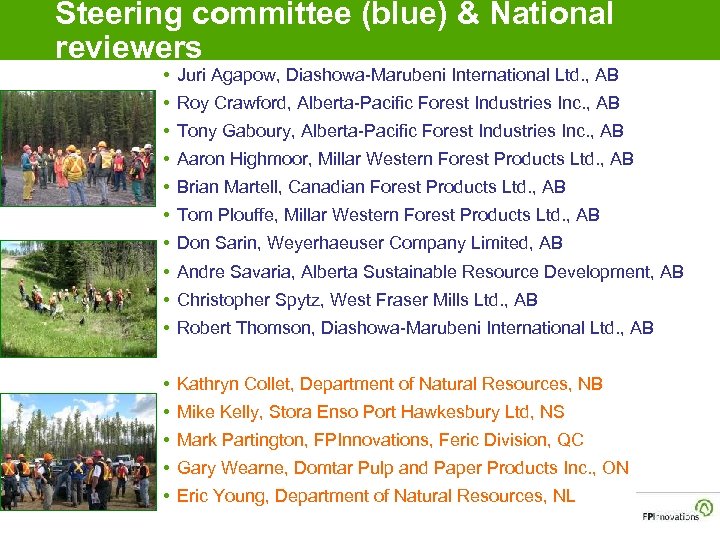 Steering committee (blue) & National reviewers • Juri Agapow, Diashowa-Marubeni International Ltd. , AB • Roy Crawford, Alberta-Pacific Forest Industries Inc. , AB • Tony Gaboury, Alberta-Pacific Forest Industries Inc. , AB • Aaron Highmoor, Millar Western Forest Products Ltd. , AB • Brian Martell, Canadian Forest Products Ltd. , AB • Tom Plouffe, Millar Western Forest Products Ltd. , AB • Don Sarin, Weyerhaeuser Company Limited, AB • Andre Savaria, Alberta Sustainable Resource Development, AB • Christopher Spytz, West Fraser Mills Ltd. , AB • Robert Thomson, Diashowa-Marubeni International Ltd. , AB • Kathryn Collet, Department of Natural Resources, NB • Mike Kelly, Stora Enso Port Hawkesbury Ltd, NS • Mark Partington, FPInnovations, Feric Division, QC • Gary Wearne, Domtar Pulp and Paper Products Inc. , ON • Eric Young, Department of Natural Resources, NL
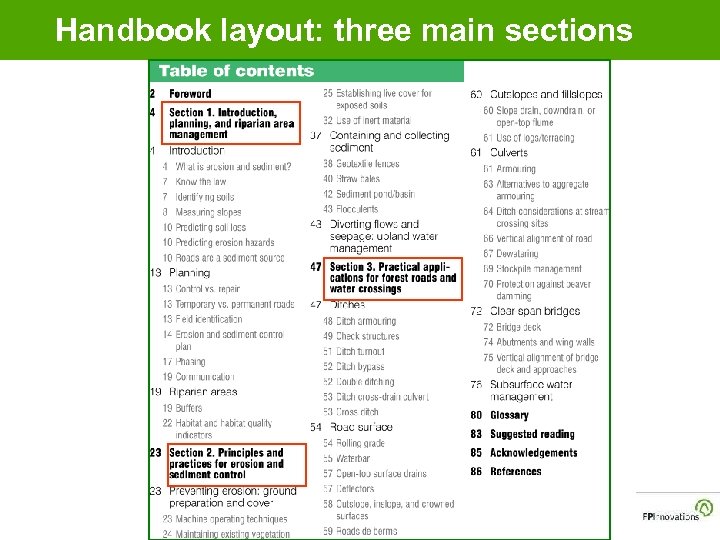 Handbook layout: three main sections
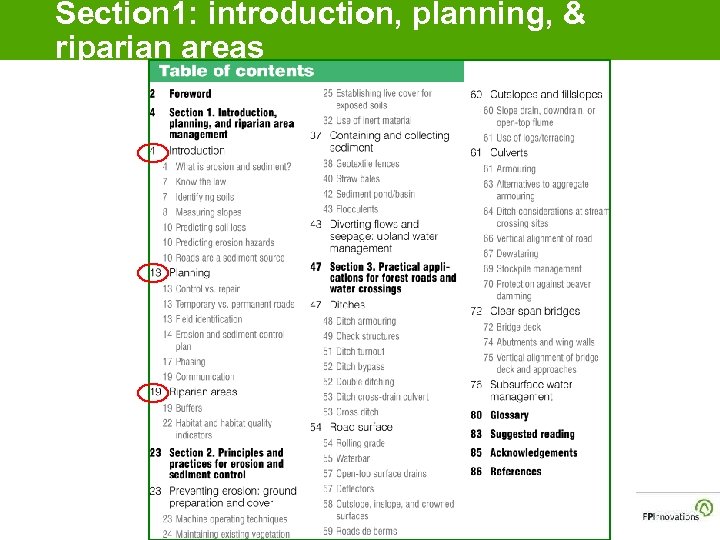 Section 1: introduction, planning, & riparian areas
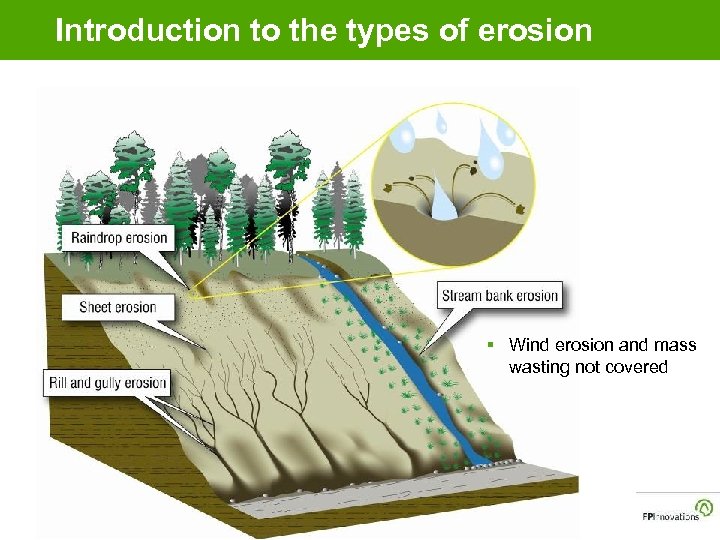 Introduction to the types of erosion § Wind erosion and mass wasting not covered
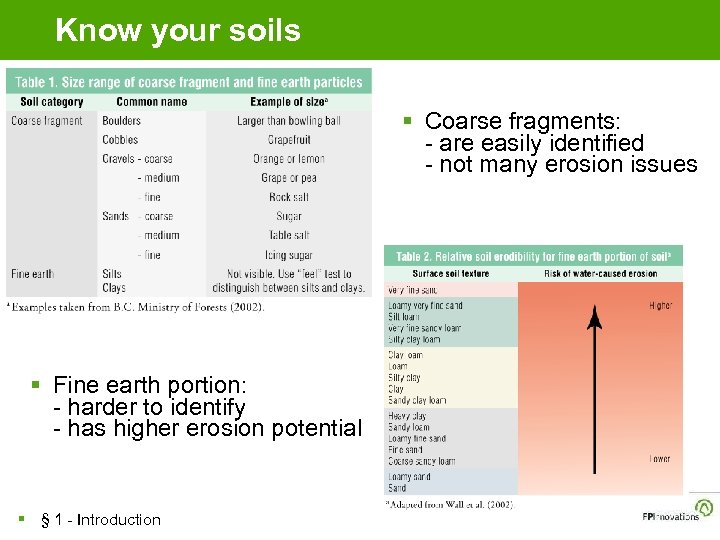 Know your soils § Coarse fragments: - are easily identified - not many erosion issues § Fine earth portion: - harder to identify - has higher erosion potential § § 1 - Introduction
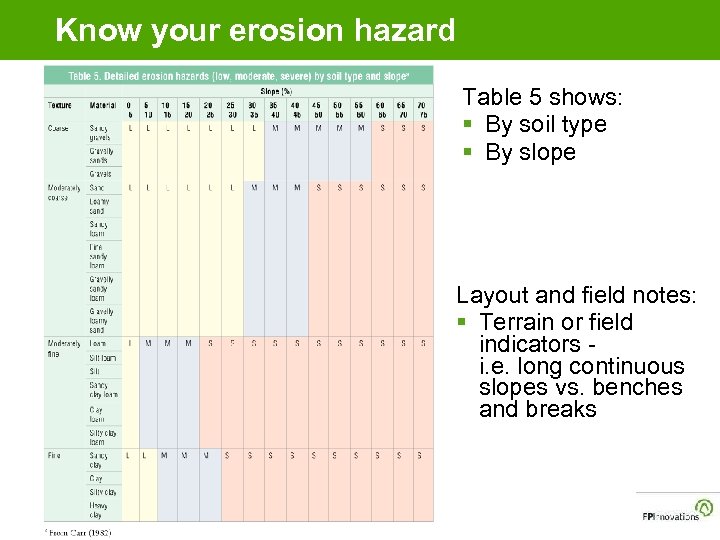 Know your erosion hazard Table 5 shows: § By soil type § By slope Layout and field notes: § Terrain or field indicators i. e. long continuous slopes vs. benches and breaks
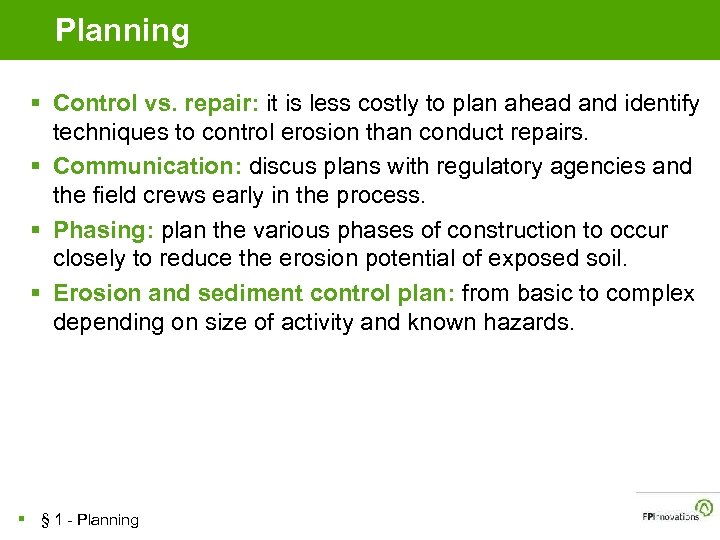 Planning § Control vs. repair: it is less costly to plan ahead and identify techniques to control erosion than conduct repairs. § Communication: discus plans with regulatory agencies and the field crews early in the process. § Phasing: plan the various phases of construction to occur closely to reduce the erosion potential of exposed soil. § Erosion and sediment control plan: from basic to complex depending on size of activity and known hazards. § § 1 - Planning
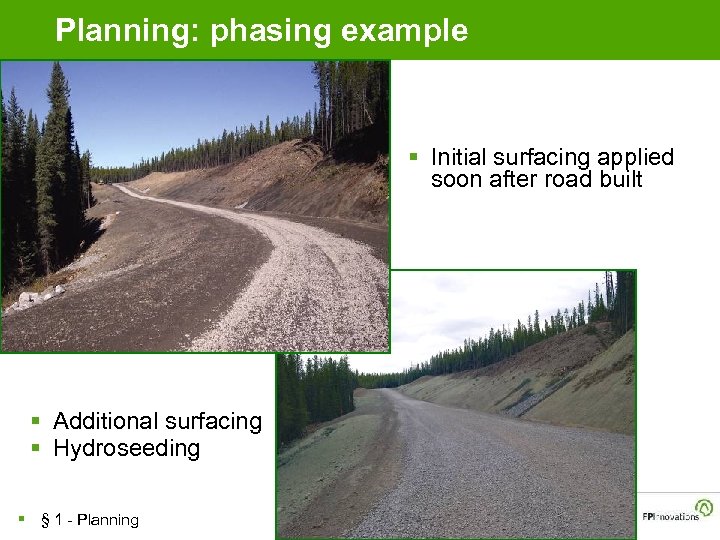 Planning: phasing example § Initial surfacing applied soon after road built § Additional surfacing § Hydroseeding § § 1 - Planning
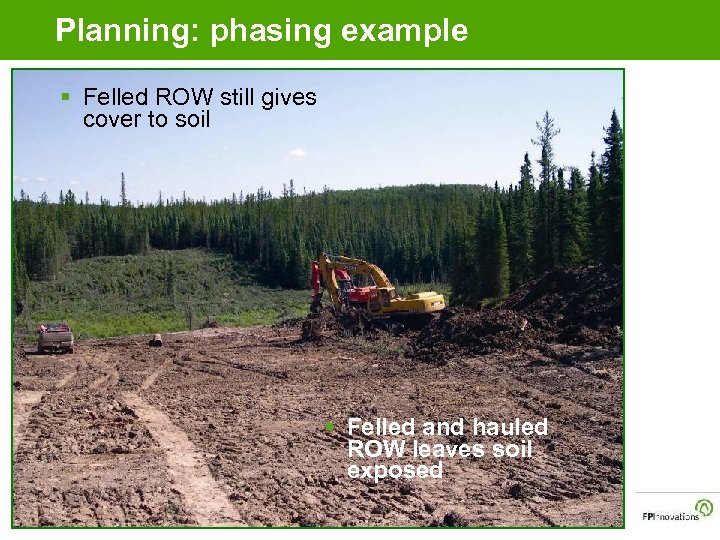 Planning: phasing example § Felled ROW still gives cover to soil § Felled and hauled ROW leaves soil exposed
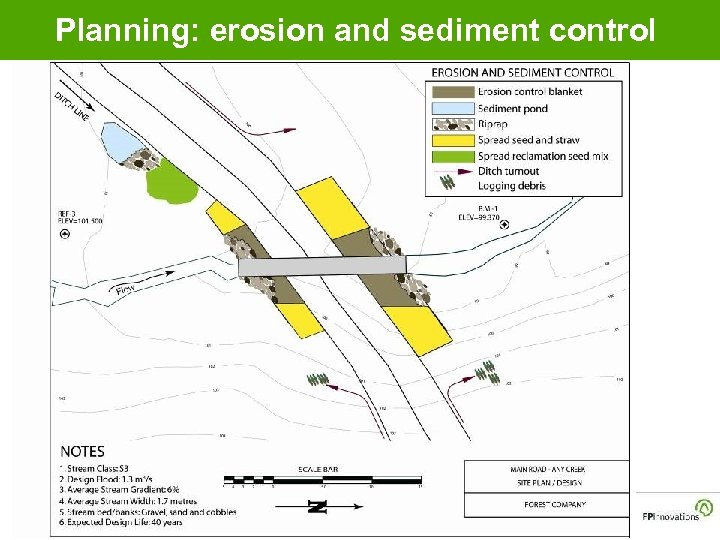 Planning: erosion and sediment control
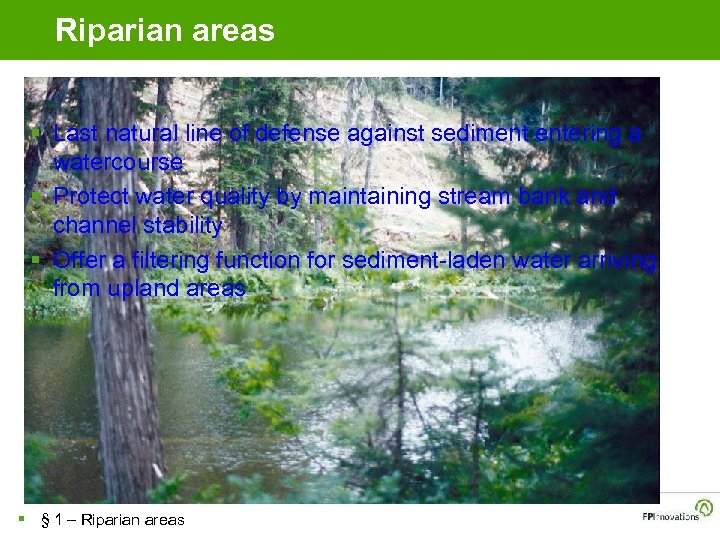 Riparian areas § Last natural line of defense against sediment entering a watercourse § Protect water quality by maintaining stream bank and channel stability § Offer a filtering function for sediment-laden water arriving from upland areas § § 1 – Riparian areas
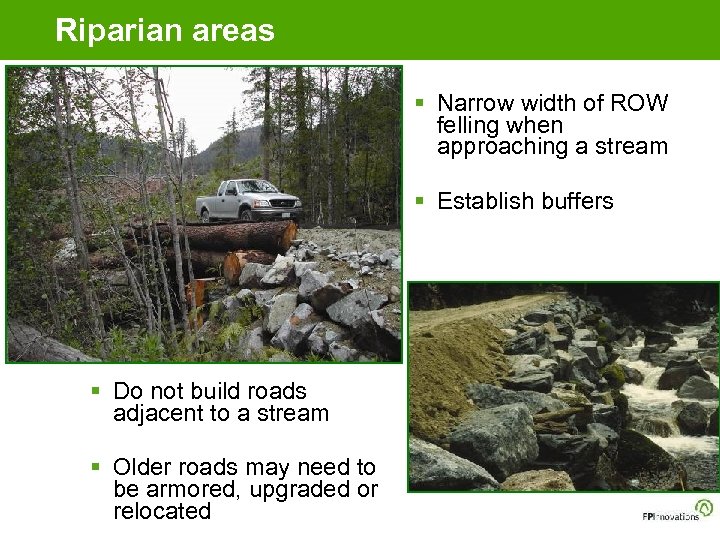 Riparian areas § Narrow width of ROW felling when approaching a stream § Establish buffers § Do not build roads adjacent to a stream § Older roads may need to be armored, upgraded or relocated
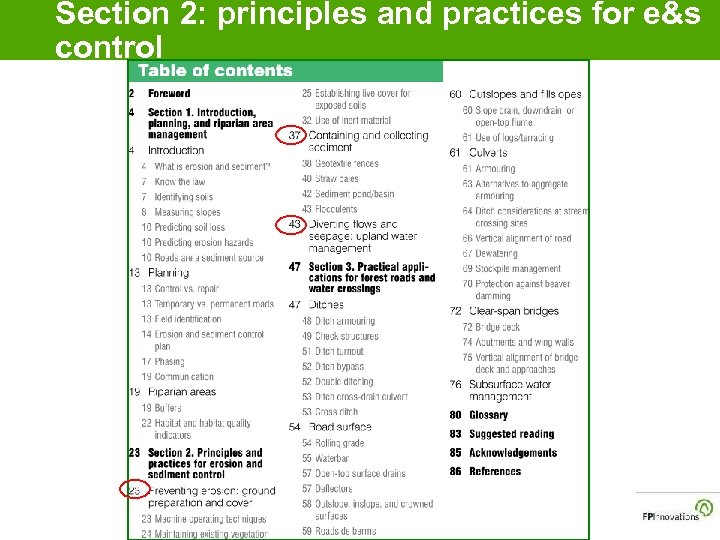 Section 2: principles and practices for e&s control
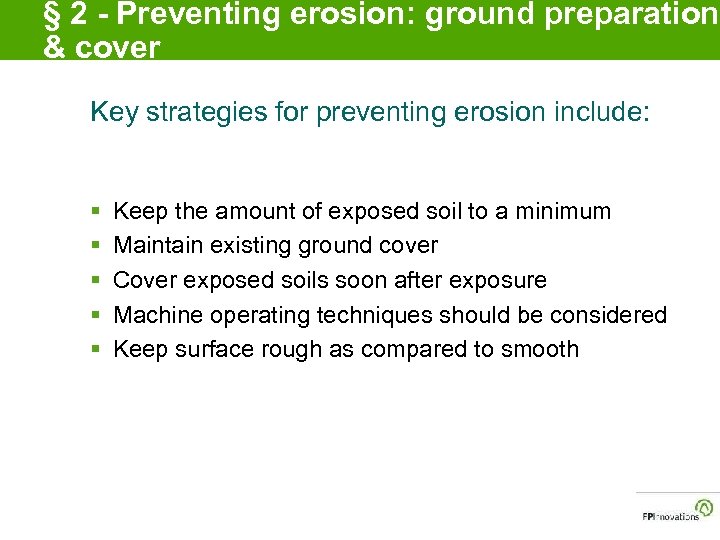 § 2 - Preventing erosion: ground preparation & cover Key strategies for preventing erosion include: § § § Keep the amount of exposed soil to a minimum Maintain existing ground cover Cover exposed soils soon after exposure Machine operating techniques should be considered Keep surface rough as compared to smooth
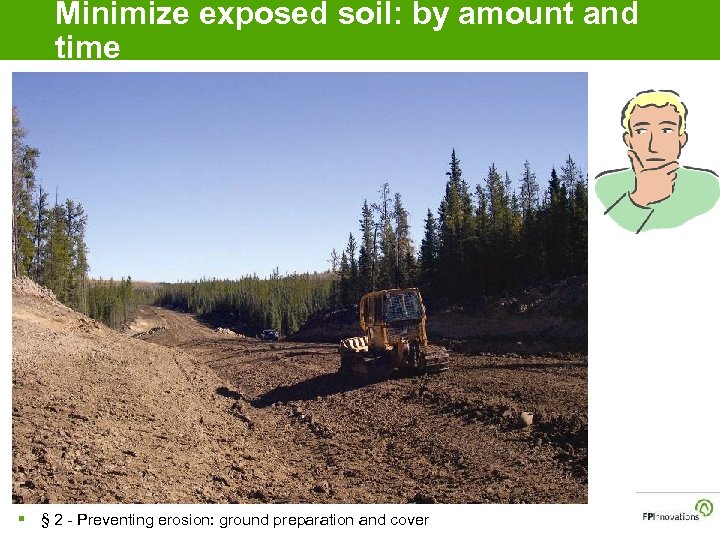 Minimize exposed soil: by amount and time § § 2 - Preventing erosion: ground preparation and cover
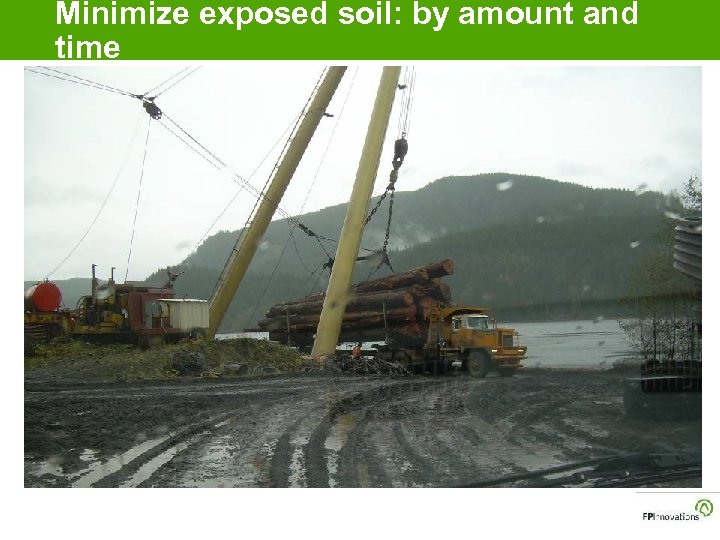 Minimize exposed soil: by amount and time
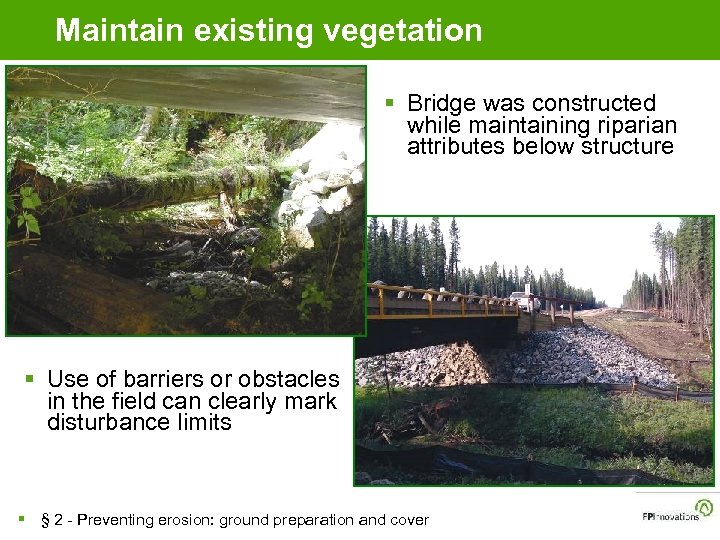 Maintain existing vegetation § Bridge was constructed while maintaining riparian attributes below structure § Use of barriers or obstacles in the field can clearly mark disturbance limits § § 2 - Preventing erosion: ground preparation and cover
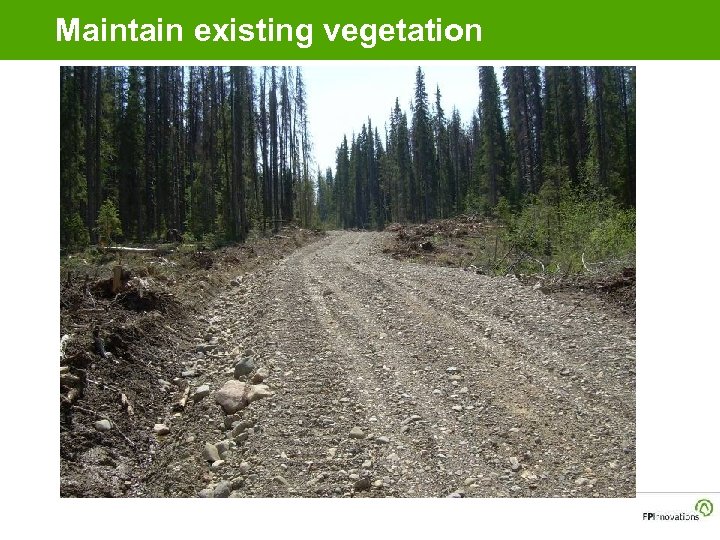 Maintain existing vegetation
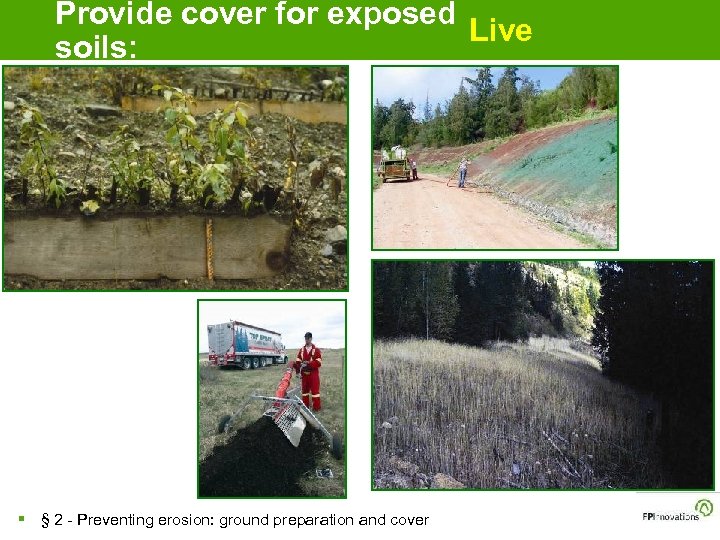 Provide cover for exposed Live soils: § § 2 - Preventing erosion: ground preparation and cover
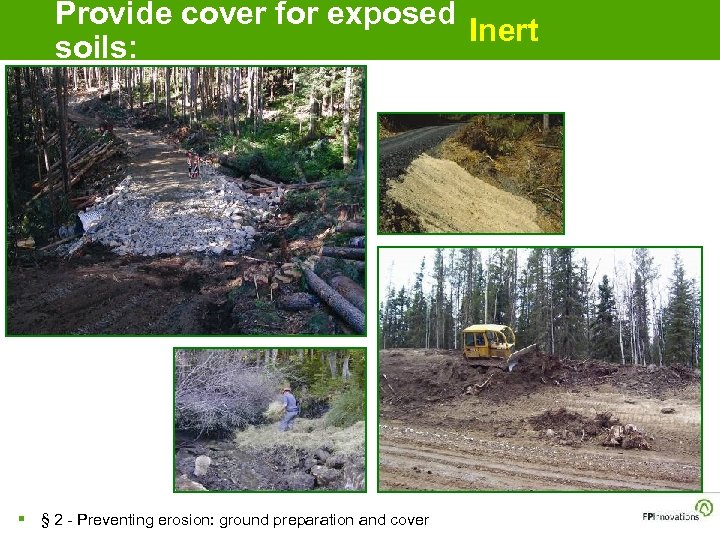 Provide cover for exposed Inert soils: § § 2 - Preventing erosion: ground preparation and cover
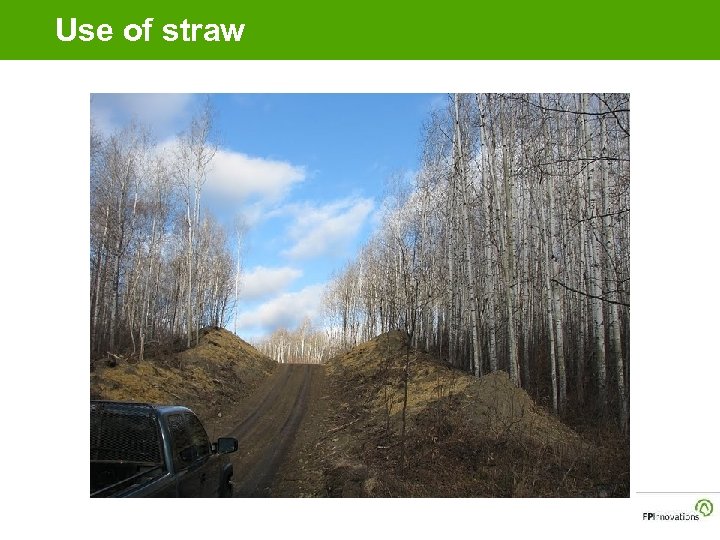 Use of straw
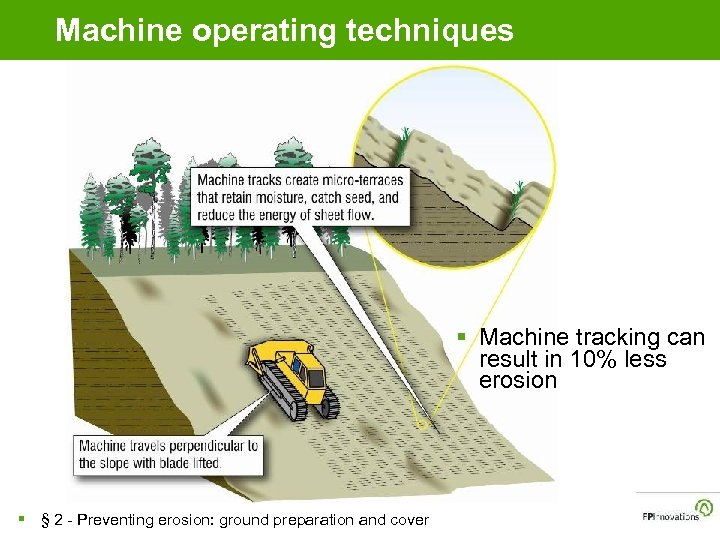 Machine operating techniques § Machine tracking can result in 10% less erosion § § 2 - Preventing erosion: ground preparation and cover
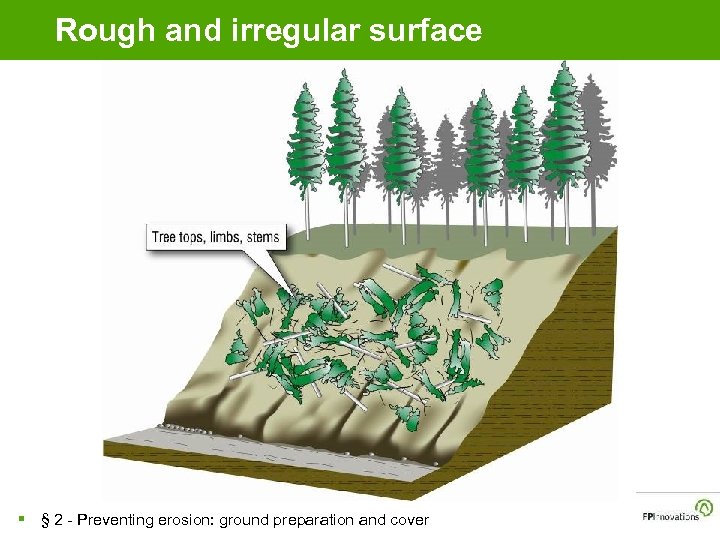 Rough and irregular surface § § 2 - Preventing erosion: ground preparation and cover
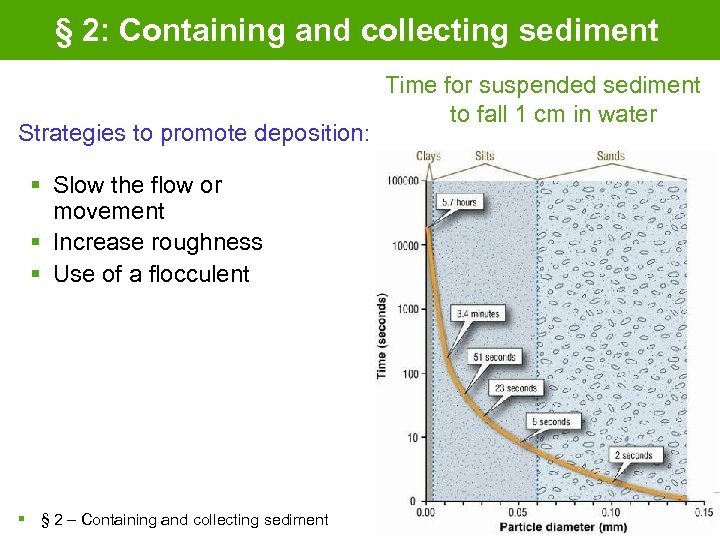 § 2: Containing and collecting sediment Strategies to promote deposition: § Slow the flow or movement § Increase roughness § Use of a flocculent § § 2 – Containing and collecting sediment Time for suspended sediment to fall 1 cm in water
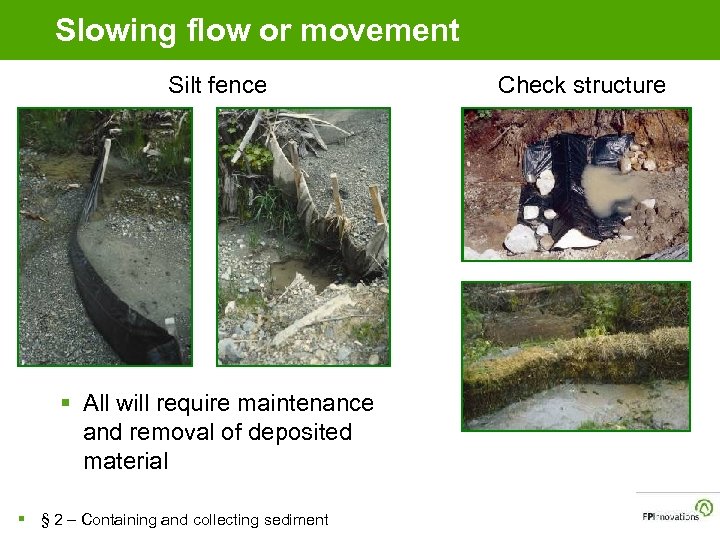 Slowing flow or movement Silt fence § All will require maintenance and removal of deposited material § § 2 – Containing and collecting sediment Check structure
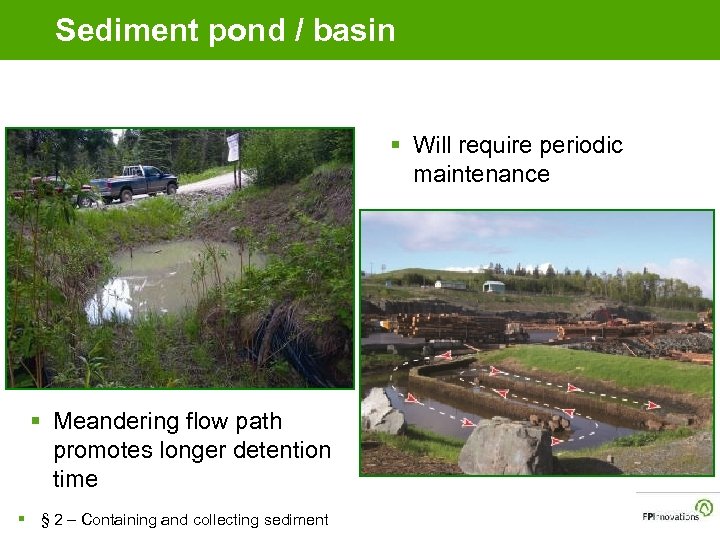 Sediment pond / basin § Will require periodic maintenance § Meandering flow path promotes longer detention time § § 2 – Containing and collecting sediment
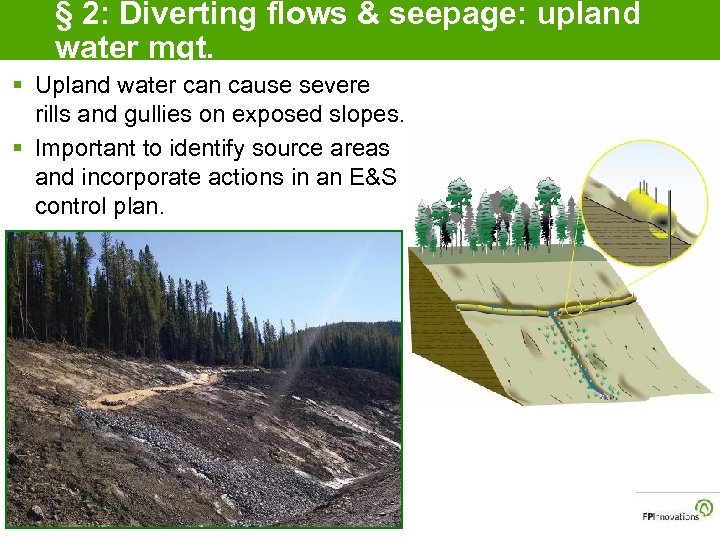 § 2: Diverting flows & seepage: upland water mgt. § Upland water can cause severe rills and gullies on exposed slopes. § Important to identify source areas and incorporate actions in an E&S control plan.
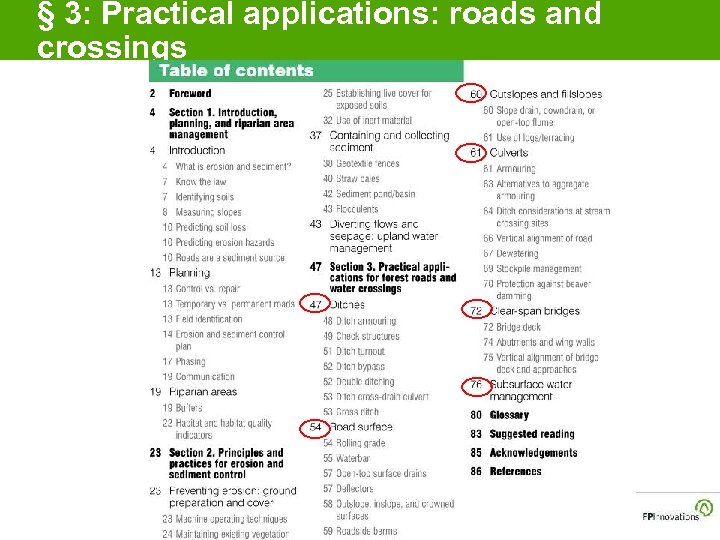 § 3: Practical applications: roads and crossings
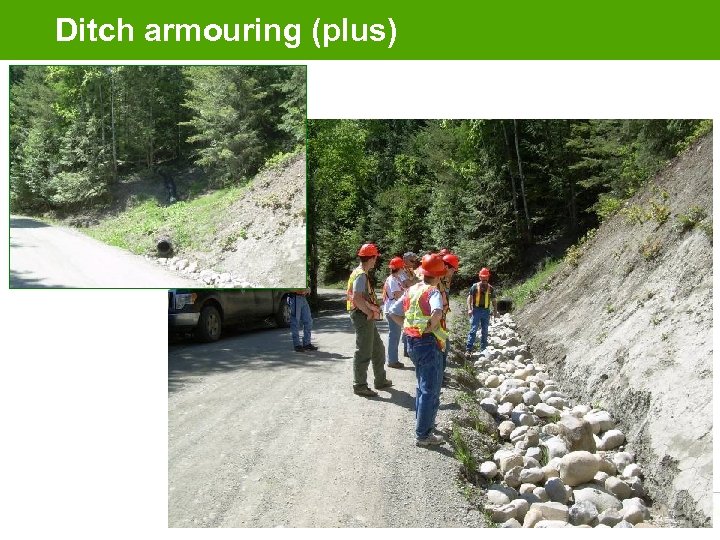
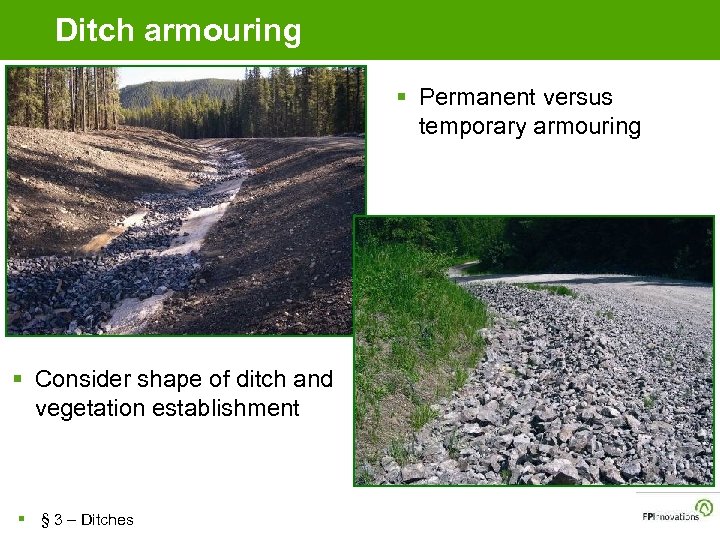 Ditch armouring § Permanent versus temporary armouring § Consider shape of ditch and vegetation establishment § § 3 – Ditches
 Ditch armouring (plus)
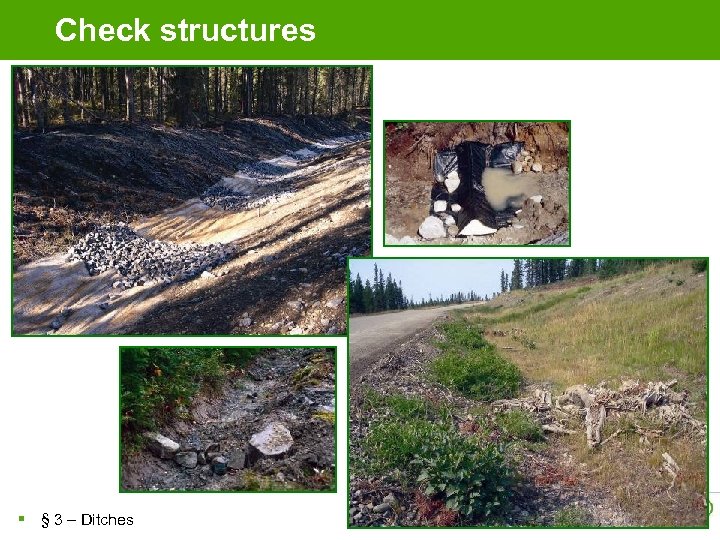 Check structures § § 3 – Ditches
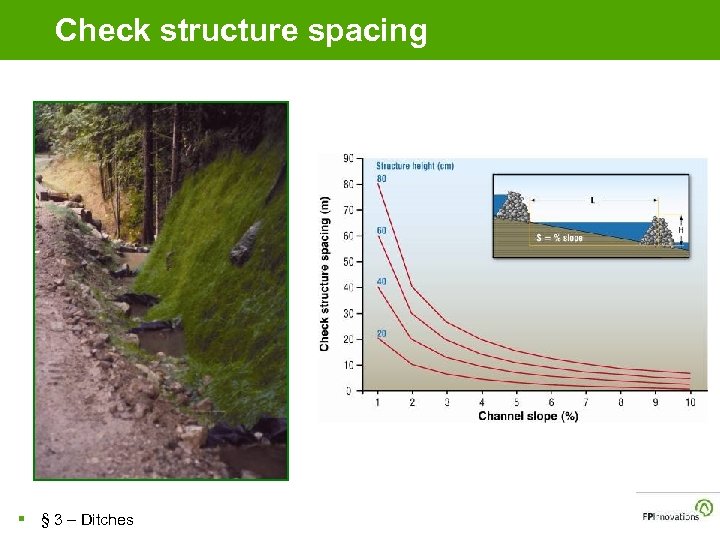 Check structure spacing § § 3 – Ditches
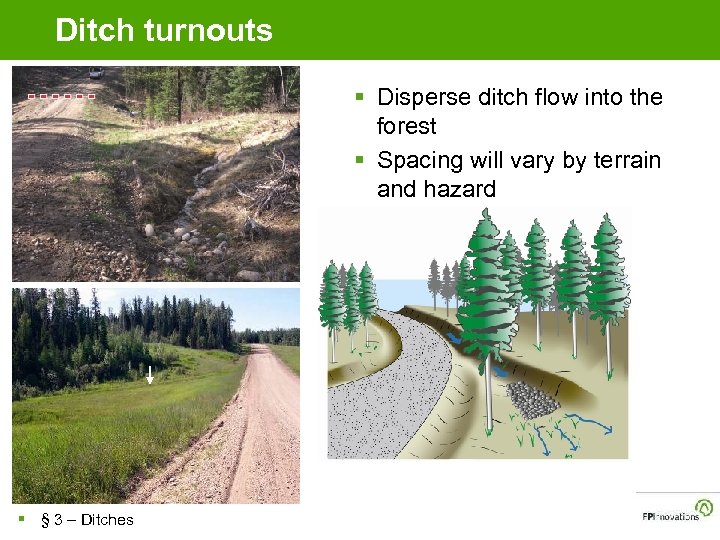 Ditch turnouts § Disperse ditch flow into the forest § Spacing will vary by terrain and hazard § § 3 – Ditches
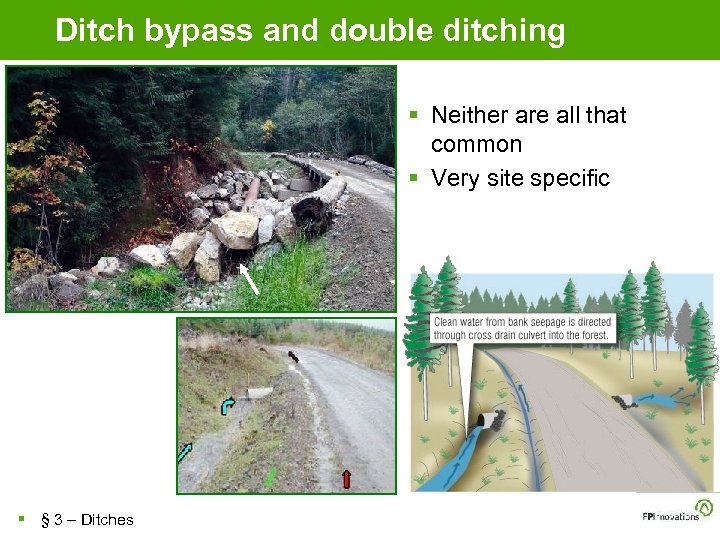 Ditch bypass and double ditching § Neither are all that common § Very site specific § § 3 – Ditches
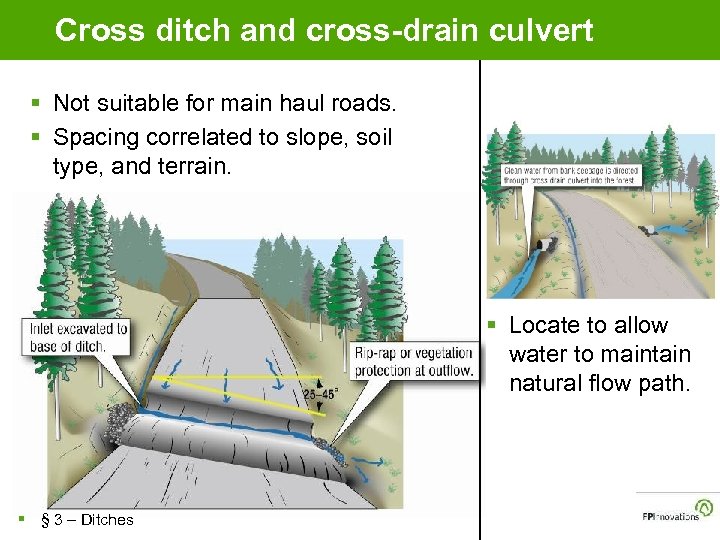 Cross ditch and cross-drain culvert § Not suitable for main haul roads. § Spacing correlated to slope, soil type, and terrain. § Locate to allow water to maintain natural flow path. § § 3 – Ditches
 Road surfaces § § § Rolling grade Waterbar Open-top surface drains Deflectors Outslope, inslope and crowned Roadside berms
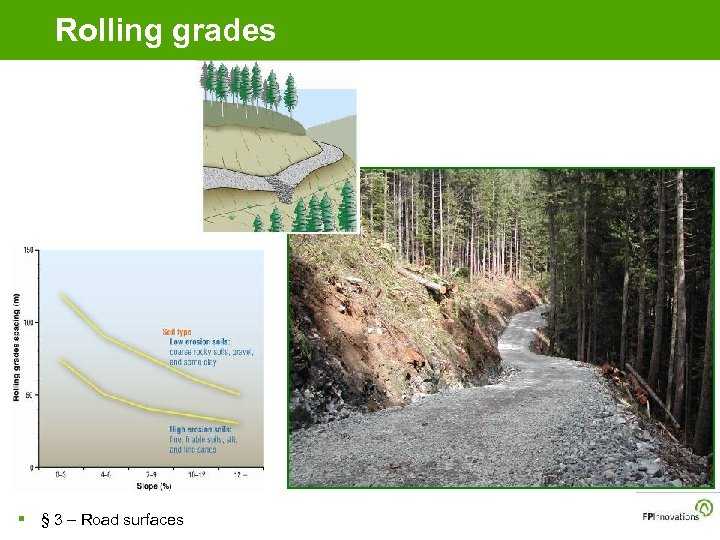 Rolling grades § § 3 – Road surfaces
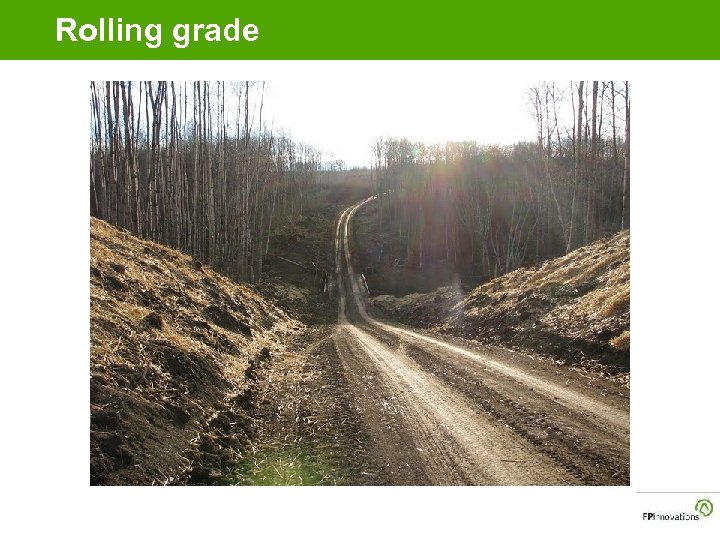 Rolling grade
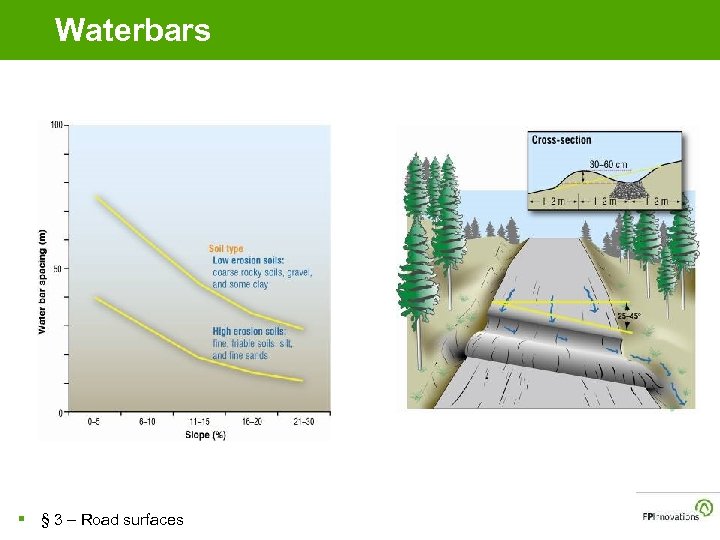 Waterbars § § 3 – Road surfaces
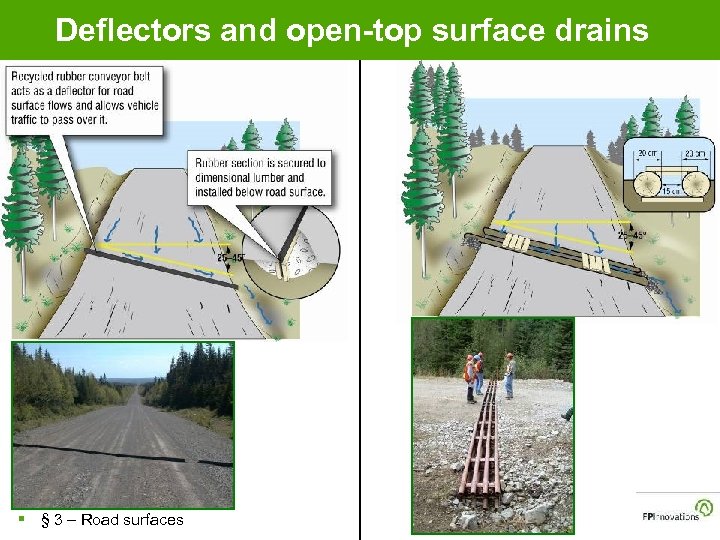 Deflectors and open-top surface drains § § 3 – Road surfaces
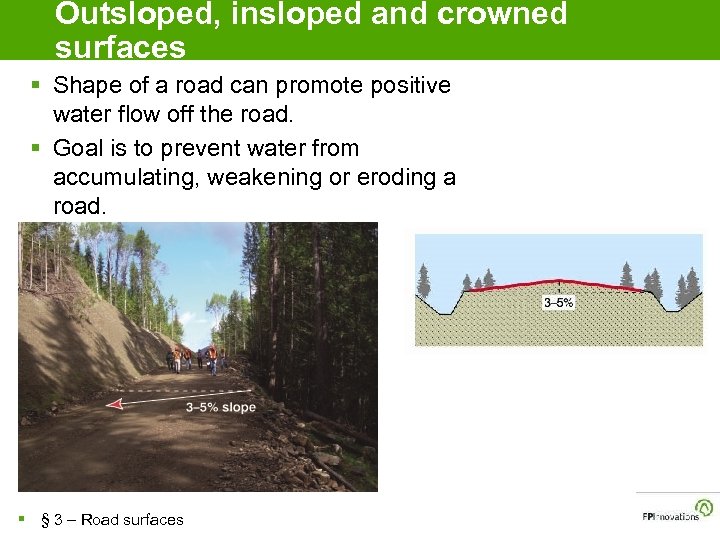 Outsloped, insloped and crowned surfaces § Shape of a road can promote positive water flow off the road. § Goal is to prevent water from accumulating, weakening or eroding a road. § § 3 – Road surfaces
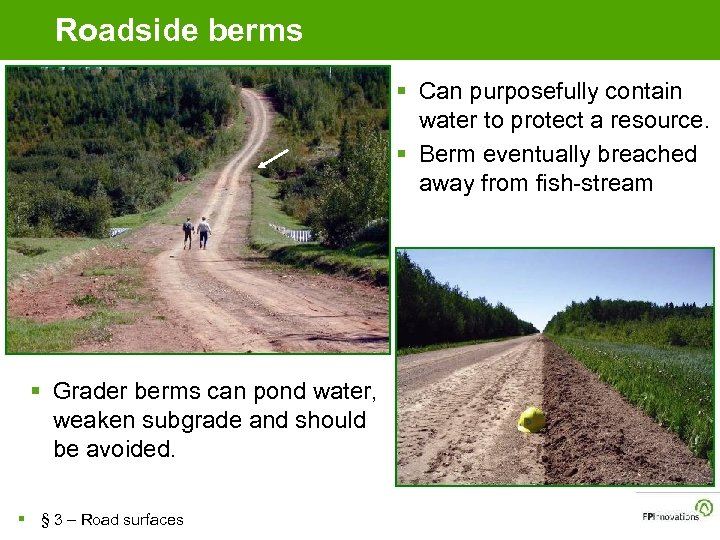 Roadside berms § Can purposefully contain water to protect a resource. § Berm eventually breached away from fish-stream § Grader berms can pond water, weaken subgrade and should be avoided. § § 3 – Road surfaces
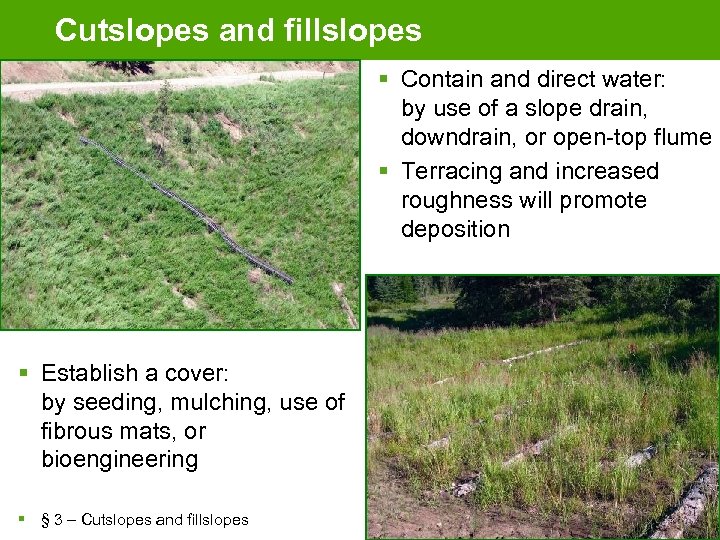 Cutslopes and fillslopes § Contain and direct water: by use of a slope drain, downdrain, or open-top flume § Terracing and increased roughness will promote deposition § Establish a cover: by seeding, mulching, use of fibrous mats, or bioengineering § § 3 – Cutslopes and fillslopes
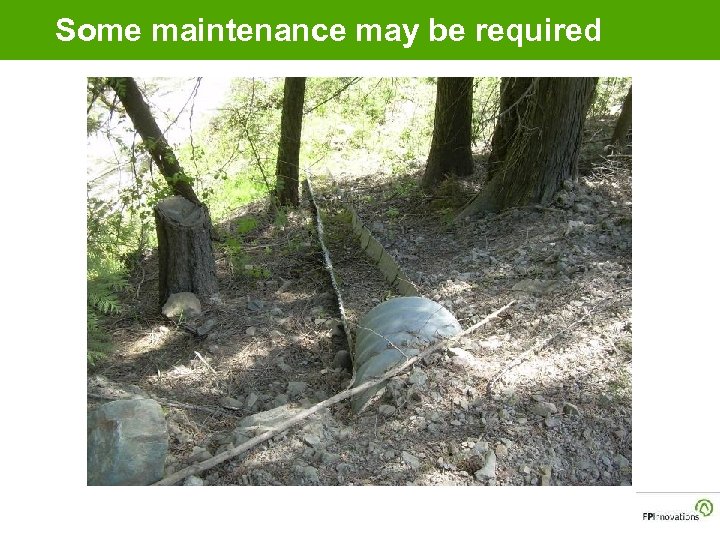 Some maintenance may be required
 Culverts § § § § Armouring Alternatives to aggregate armouring Ditch considerations at stream crossings Vertical alignment of road Dewatering (during construction) Stockpile management (during construction) Protection against beaver damming
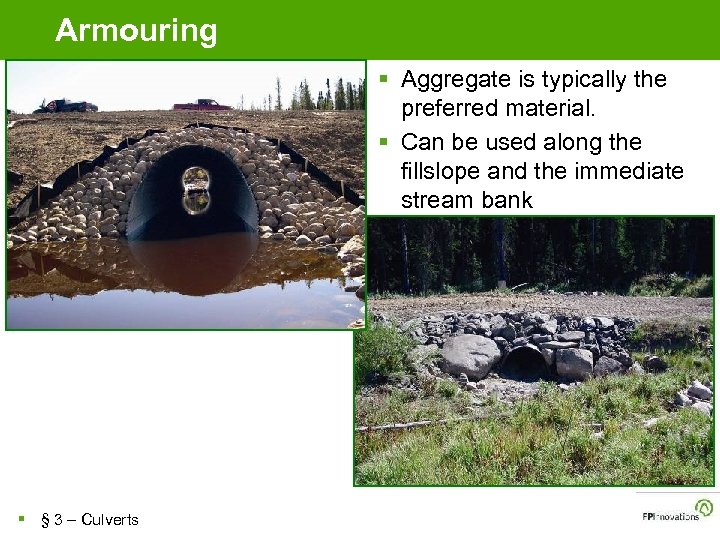 Armouring § Aggregate is typically the preferred material. § Can be used along the fillslope and the immediate stream bank § § 3 – Culverts
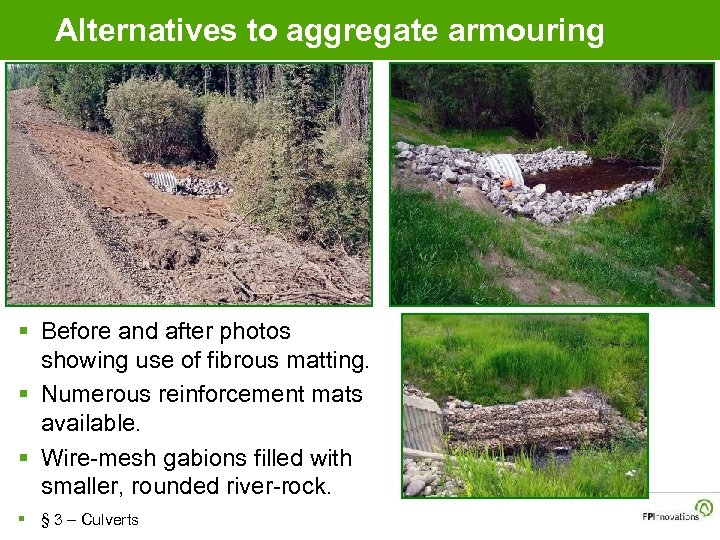 Alternatives to aggregate armouring § Before and after photos showing use of fibrous matting. § Numerous reinforcement mats available. § Wire-mesh gabions filled with smaller, rounded river-rock. § § 3 – Culverts
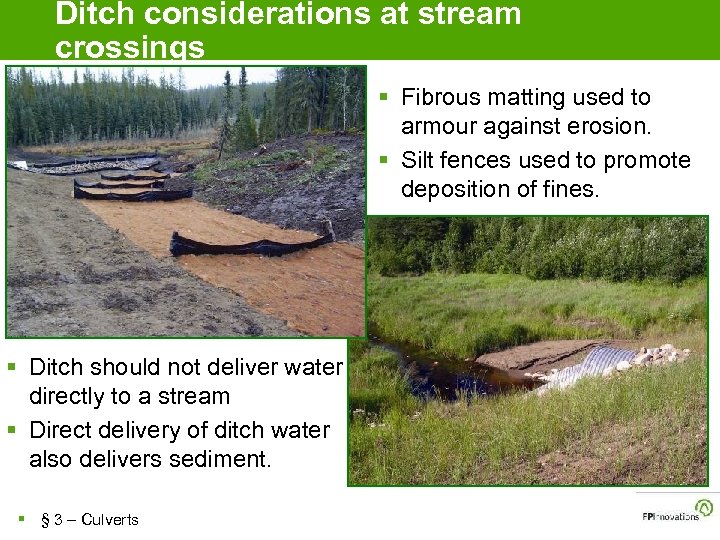 Ditch considerations at stream crossings § Fibrous matting used to armour against erosion. § Silt fences used to promote deposition of fines. § Ditch should not deliver water directly to a stream § Direct delivery of ditch water also delivers sediment. § § 3 – Culverts
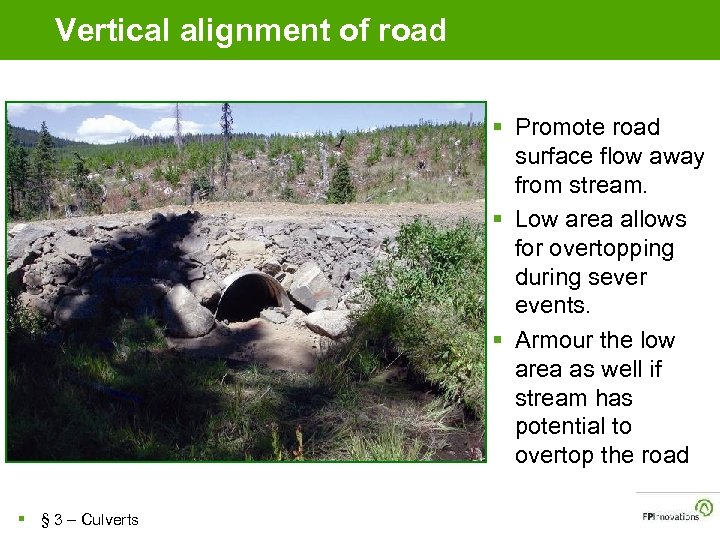 Vertical alignment of road § Promote road surface flow away from stream. § Low area allows for overtopping during sever events. § Armour the low area as well if stream has potential to overtop the road § § 3 – Culverts
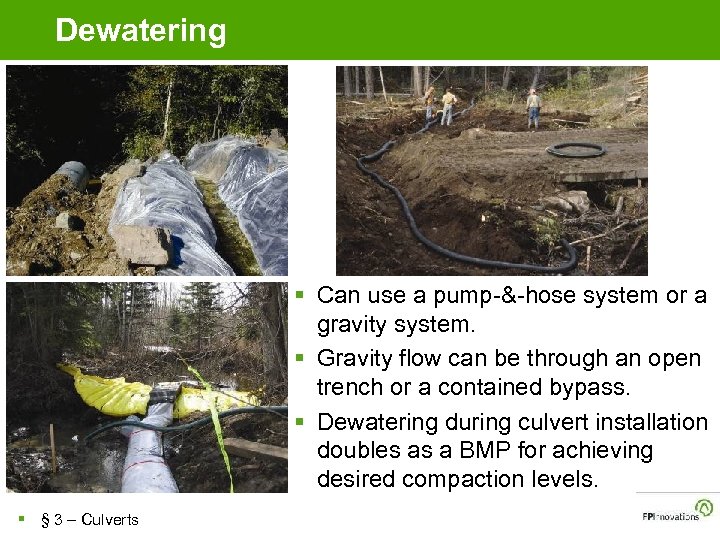 Dewatering § Can use a pump-&-hose system or a gravity system. § Gravity flow can be through an open trench or a contained bypass. § Dewatering during culvert installation doubles as a BMP for achieving desired compaction levels. § § 3 – Culverts
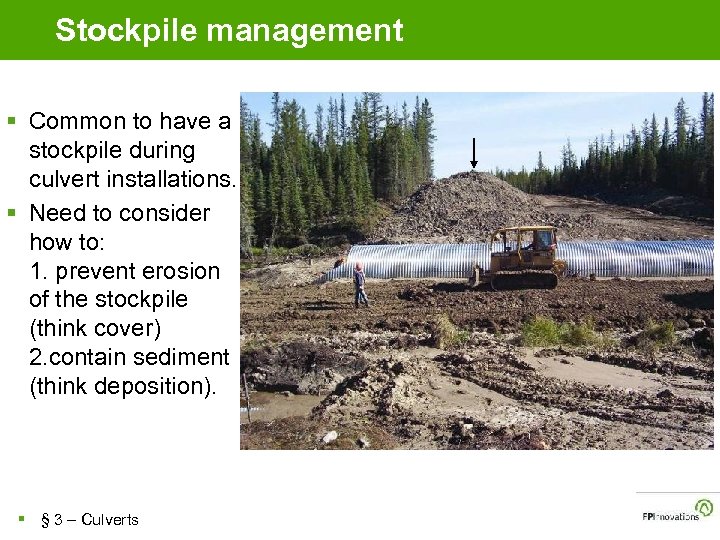 Stockpile management § Common to have a stockpile during culvert installations. § Need to consider how to: 1. prevent erosion of the stockpile (think cover) 2. contain sediment (think deposition). § § 3 – Culverts
 Bridges § Bridge deck § Abutments and wing walls § Vertical alignment of bridge deck with the approaches
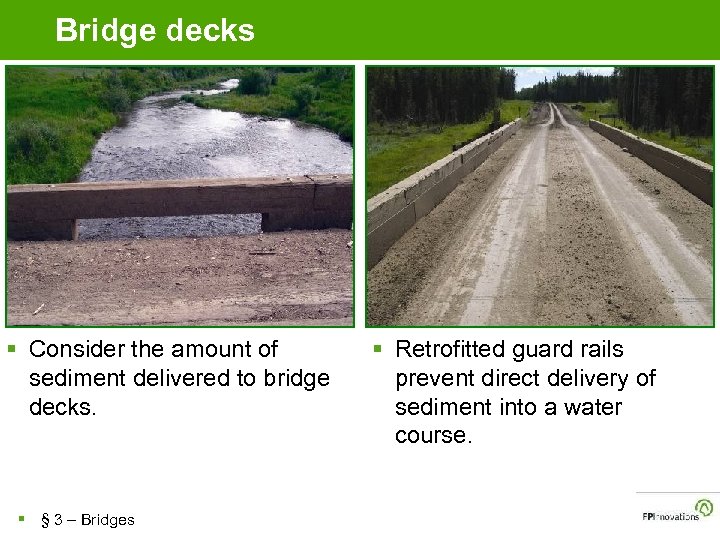 Bridge decks § Consider the amount of sediment delivered to bridge decks. § § 3 – Bridges § Retrofitted guard rails prevent direct delivery of sediment into a water course.
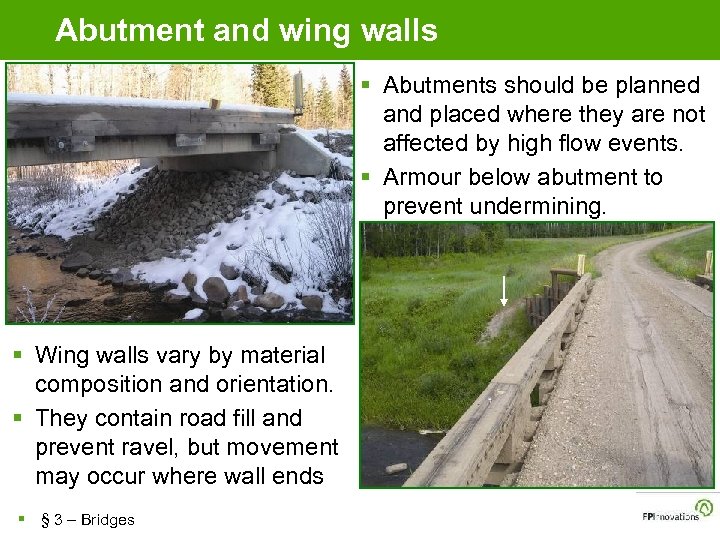 Abutment and wing walls § Abutments should be planned and placed where they are not affected by high flow events. § Armour below abutment to prevent undermining. § Wing walls vary by material composition and orientation. § They contain road fill and prevent ravel, but movement may occur where wall ends § § 3 – Bridges
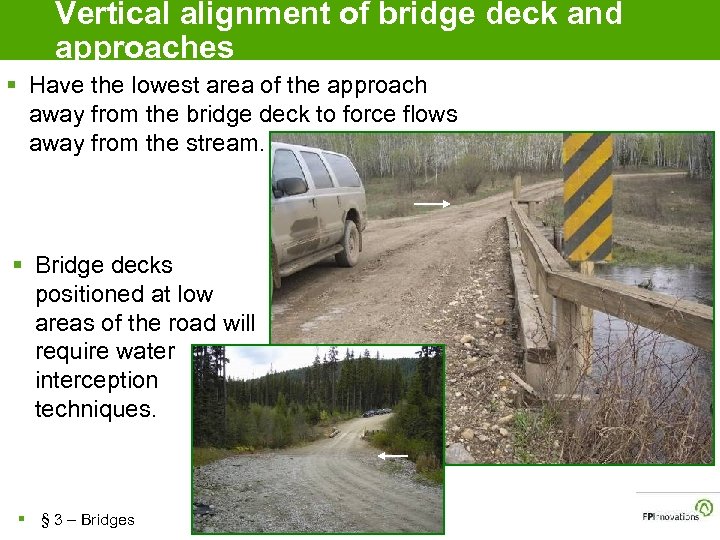 Vertical alignment of bridge deck and approaches § Have the lowest area of the approach away from the bridge deck to force flows away from the stream. § Bridge decks positioned at low areas of the road will require water interception techniques. § § 3 – Bridges
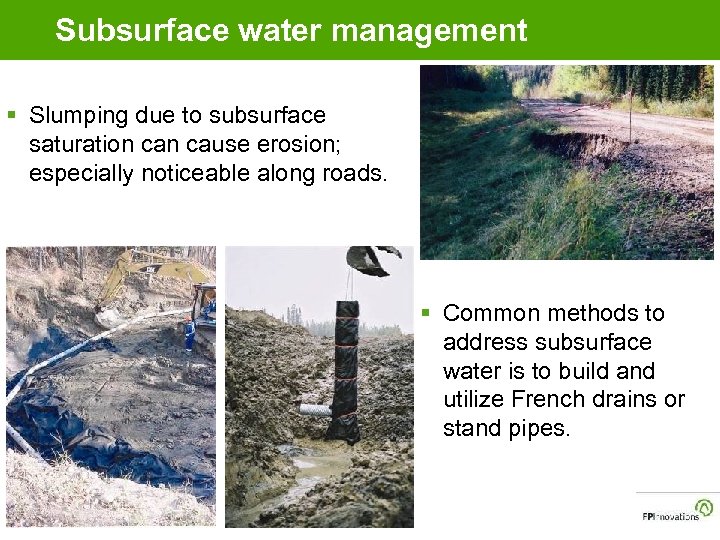 Subsurface water management § Slumping due to subsurface saturation cause erosion; especially noticeable along roads. § Common methods to address subsurface water is to build and utilize French drains or stand pipes.
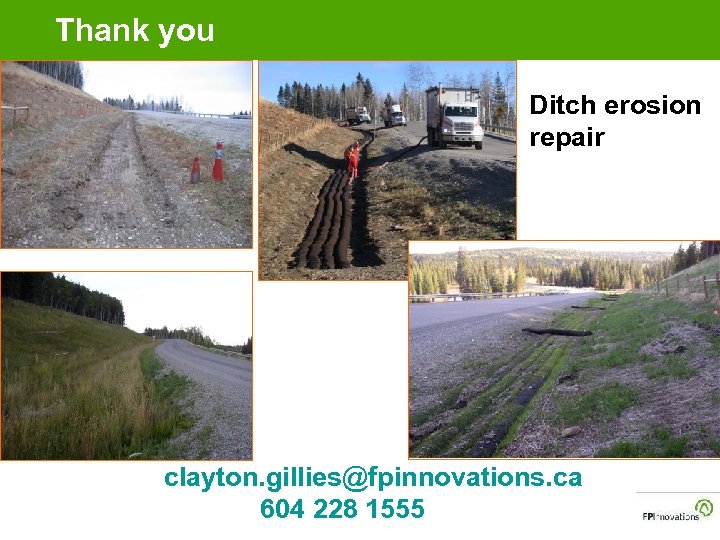 Thank you Ditch erosion repair clayton. gillies@fpinnovations. ca 604 228 1555
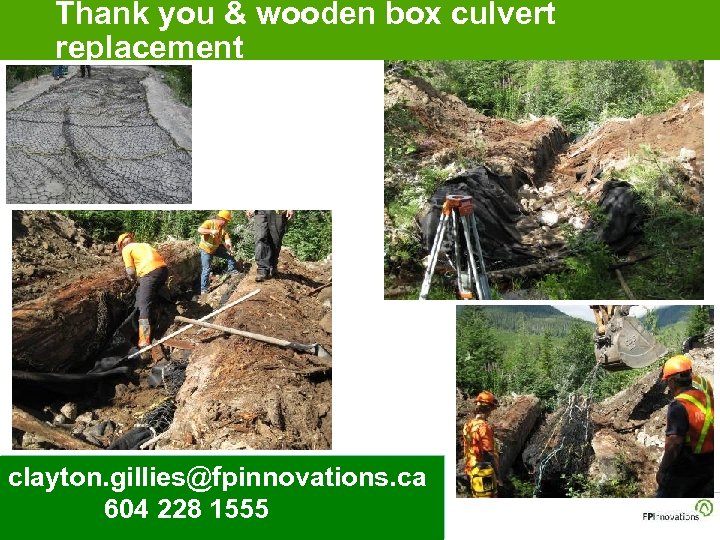 Thank you & wooden box culvert replacement clayton. gillies@fpinnovations. ca 604 228 1555