


 Скачать презентацию CRAVENS PIERCY 8 e Mc Graw-Hill Irwin 2006 The
850c47df6f19f9e9b4dc0f2fe06cffc1.ppt
- Количество слайдов: 22
 CRAVENS PIERCY 8/e Mc. Graw-Hill/Irwin © 2006 The Mc. Graw-Hill Companies, Inc. , All Rights Reserved.
 15 -2 Chapter Fifteen Marketing Strategy Implementation and Control Mc. Graw-Hill/Irwin © 2006 The Mc. Graw-Hill Companies, Inc. , All Rights Reserved.
 15 -3 Marketing Strategy Implementation and Control 4 The marketing plan 4 Implementing the plan 4 Strategic evaluation and control 4 Performance criteria and information needs 4 Performance assessment and action
 15 -4 The Marketing Plan How the marketing plan guides implementation Contents of the marketing plan Managing the planning process
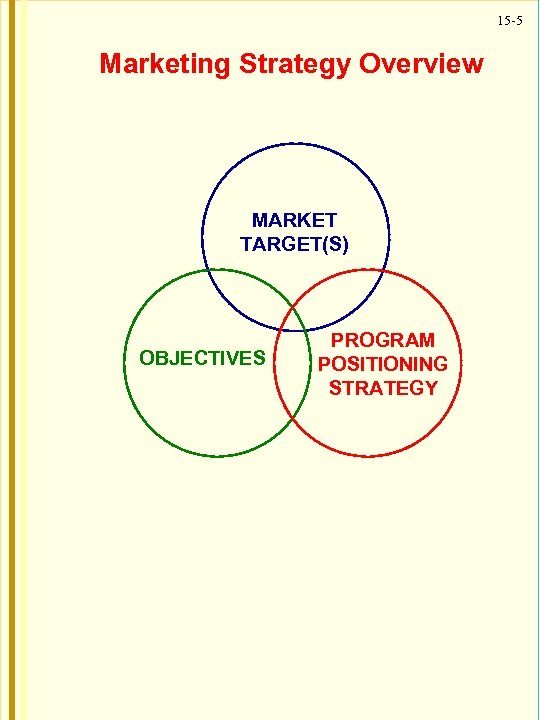 15 -5 Marketing Strategy Overview MARKET TARGET(S) OBJECTIVES PROGRAM POSITIONING STRATEGY
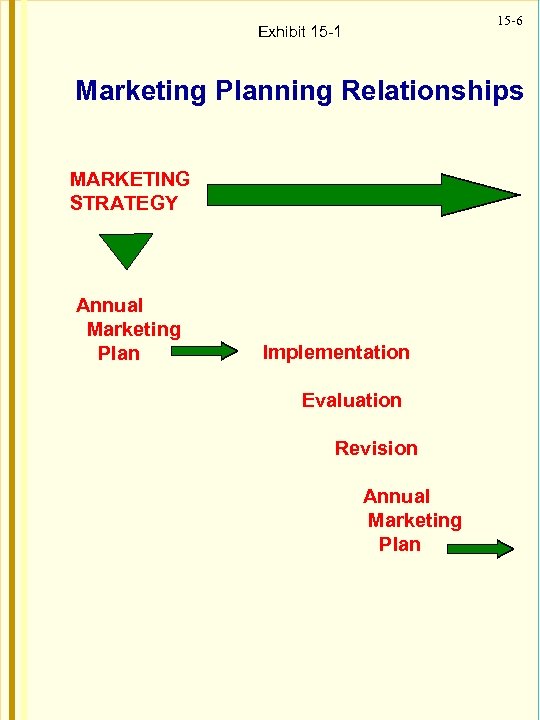 15 -6 Exhibit 15 -1 Marketing Planning Relationships MARKETING STRATEGY Annual Marketing Plan Implementation Evaluation Revision Annual Marketing Plan
 15 -7 Contents of the Marketing Plan (Sonesta Hotels Example) I Introduction II Marketing Position III The Product IV Marketplace Overview V The Competition VI Marketing Data VII Strategy by Market Segment VIII Advertising IX Public Relations X Summary
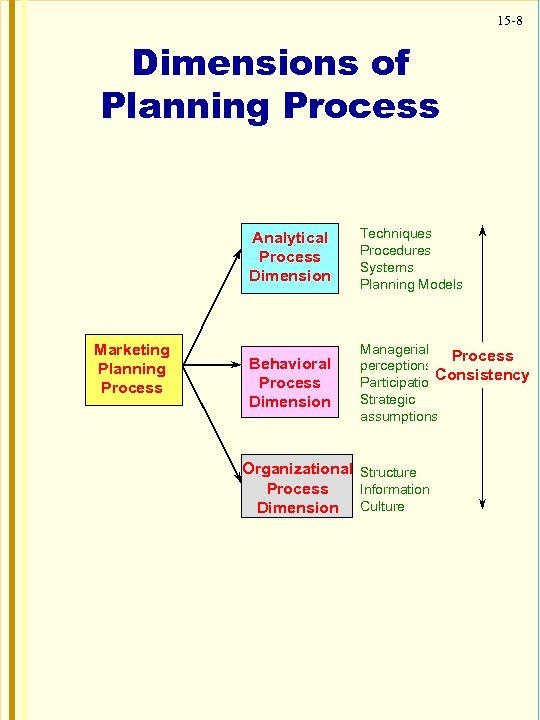 15 -8 Dimensions of Planning Process Analytical Process Dimension Marketing Planning Process Techniques Procedures Systems Planning Models Behavioral Process Dimension Managerial Process perceptions Participation. Consistency Strategic assumptions Organizational Structure Process Information Dimension Culture
 15 -9 Implementing the Plan Implementation process Improving implementation Internal marketing A comprehensive approach to improving implementation Internal strategy-structure Fit Developing a market orientation The role of external organization
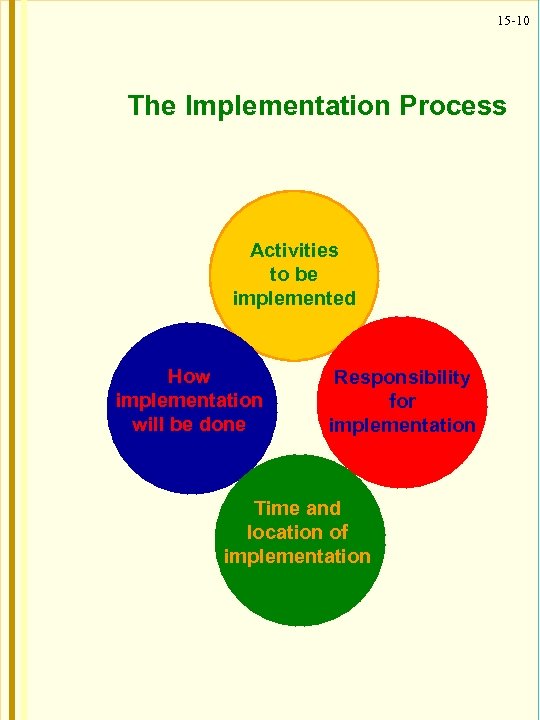 15 -10 The Implementation Process Activities to be implemented How implementation will be done Responsibility for implementation Time and location of implementation
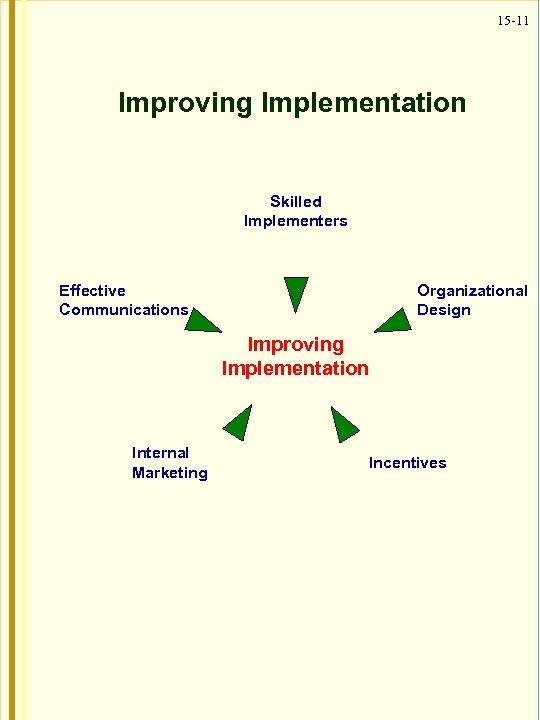 15 -11 Improving Implementation Skilled Implementers Effective Communications Organizational Design Improving Implementation Internal Marketing Incentives
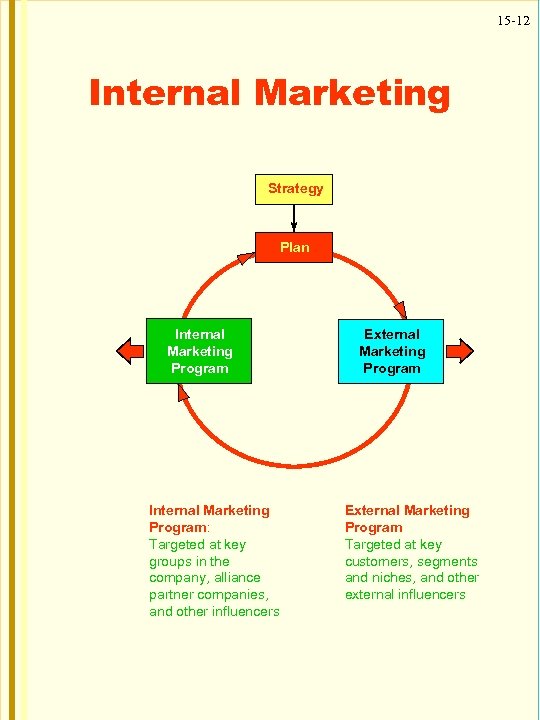 15 -12 Internal Marketing Strategy Plan Internal Marketing Program: Targeted at key groups in the company, alliance partner companies, and other influencers External Marketing Program Targeted at key customers, segments and niches, and other external influencers
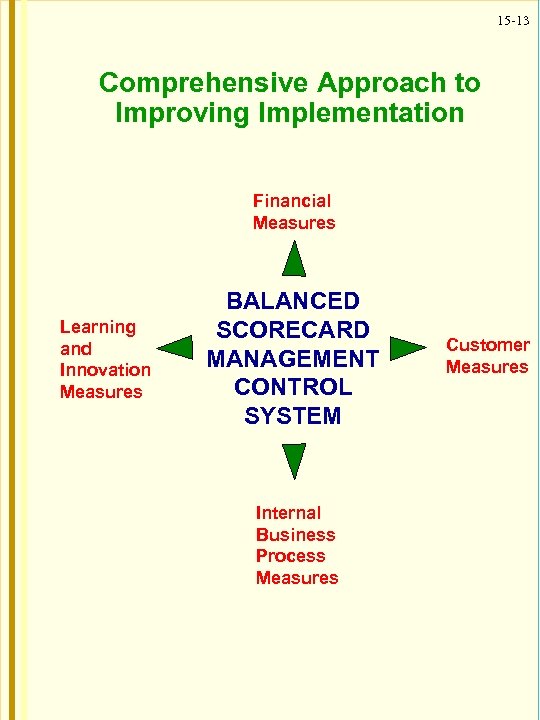 15 -13 Comprehensive Approach to Improving Implementation Financial Measures Learning and Innovation Measures BALANCED SCORECARD MANAGEMENT CONTROL SYSTEM Internal Business Process Measures Customer Measures
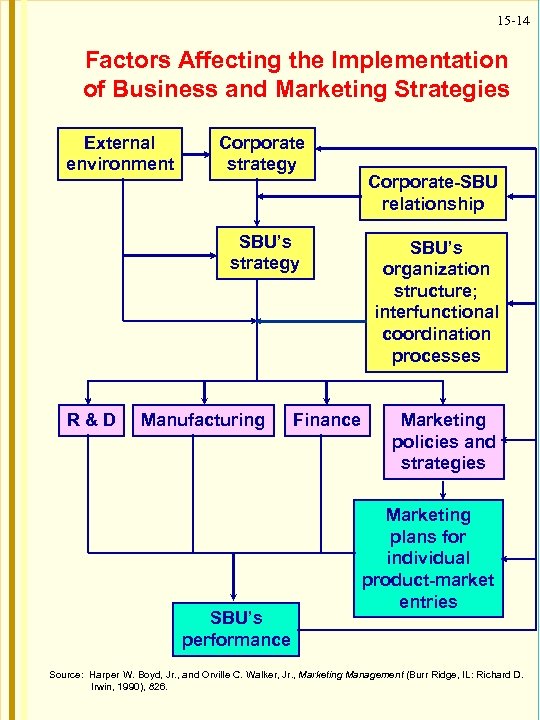 15 -14 Factors Affecting the Implementation of Business and Marketing Strategies External environment Corporate strategy SBU’s strategy R&D Manufacturing SBU’s performance Finance Corporate-SBU relationship SBU’s organization structure; interfunctional coordination processes Marketing policies and strategies Marketing plans for individual product-market entries Source: Harper W. Boyd, Jr. , and Orville C. Walker, Jr. , Marketing Management (Burr Ridge, IL: Richard D. Irwin, 1990), 826.
 15 -15 Strategic Evaluation and Control Customer relationship management (CRM) Overview of evaluation activities The strategic marketing audit
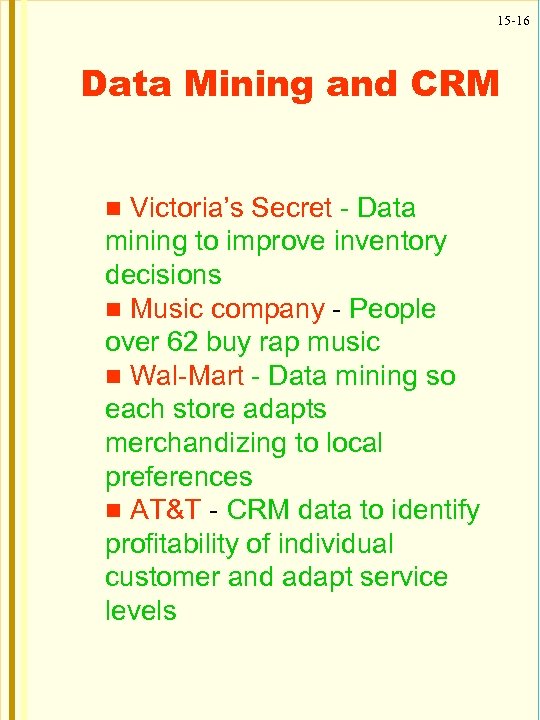 15 -16 Data Mining and CRM Victoria’s Secret - Data mining to improve inventory decisions g Music company - People over 62 buy rap music g Wal-Mart - Data mining so each store adapts merchandizing to local preferences g AT&T - CRM data to identify profitability of individual customer and adapt service levels g
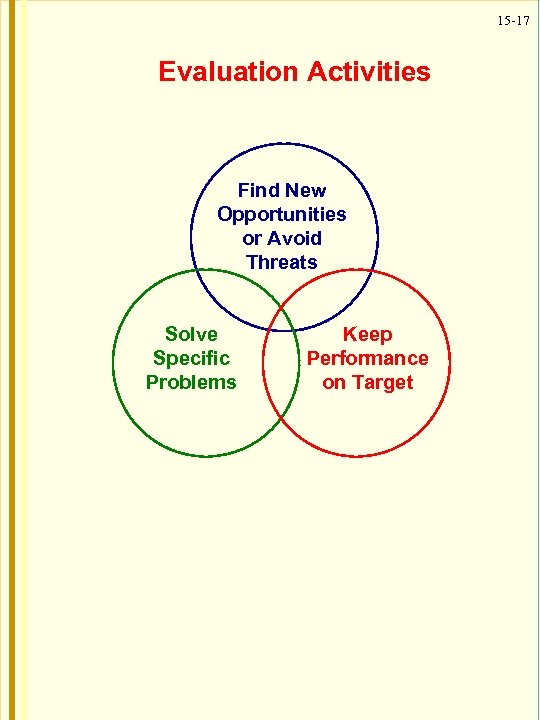 15 -17 Evaluation Activities Find New Opportunities or Avoid Threats Solve Specific Problems Keep Performance on Target
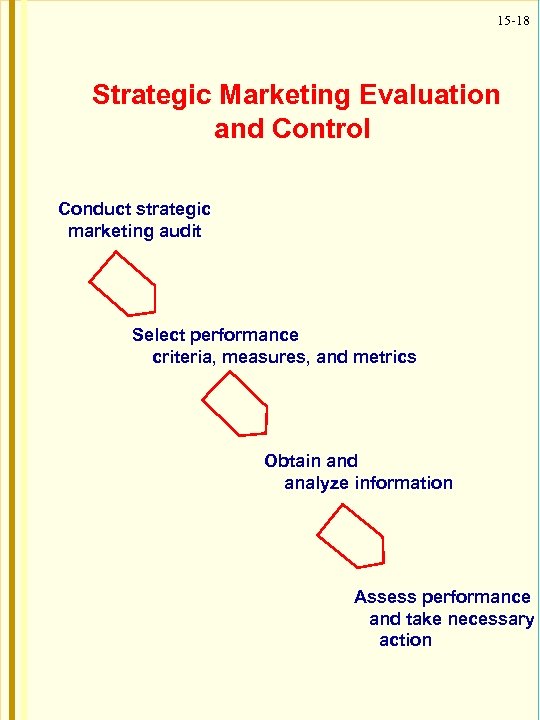 15 -18 Strategic Marketing Evaluation and Control Conduct strategic marketing audit Select performance criteria, measures, and metrics Obtain and analyze information Assess performance and take necessary action
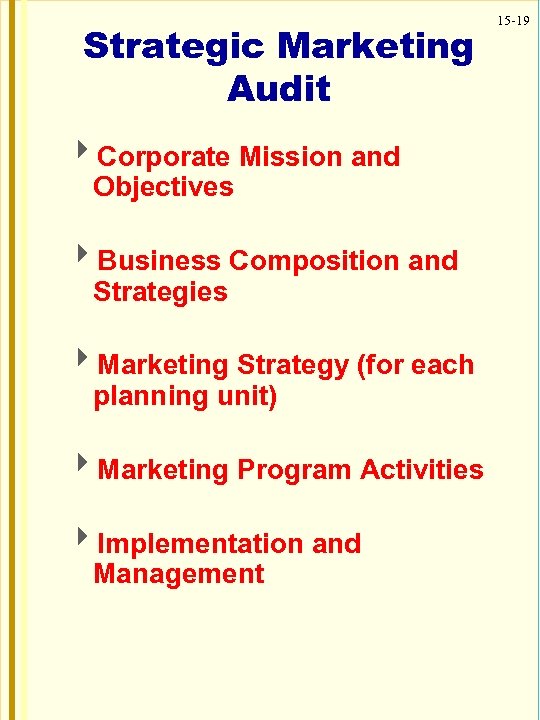 Strategic Marketing Audit 4 Corporate Mission and Objectives 4 Business Composition and Strategies 4 Marketing Strategy (for each planning unit) 4 Marketing Program Activities 4 Implementation and Management 15 -19
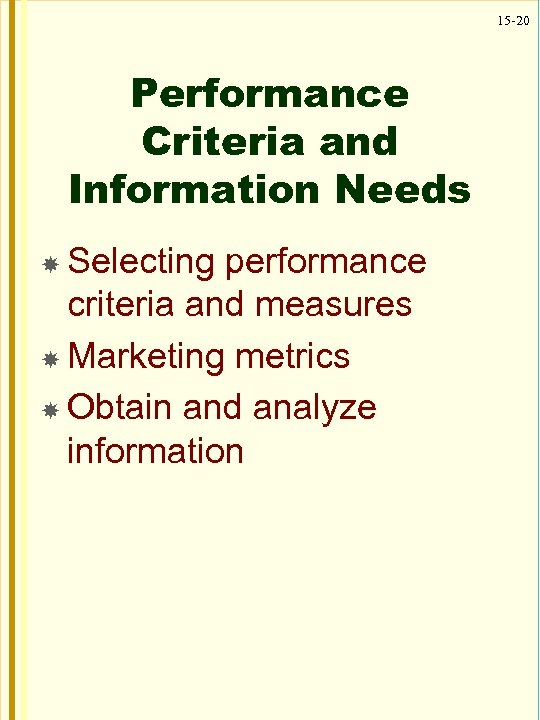 15 -20 Performance Criteria and Information Needs Selecting performance criteria and measures Marketing metrics Obtain and analyze information
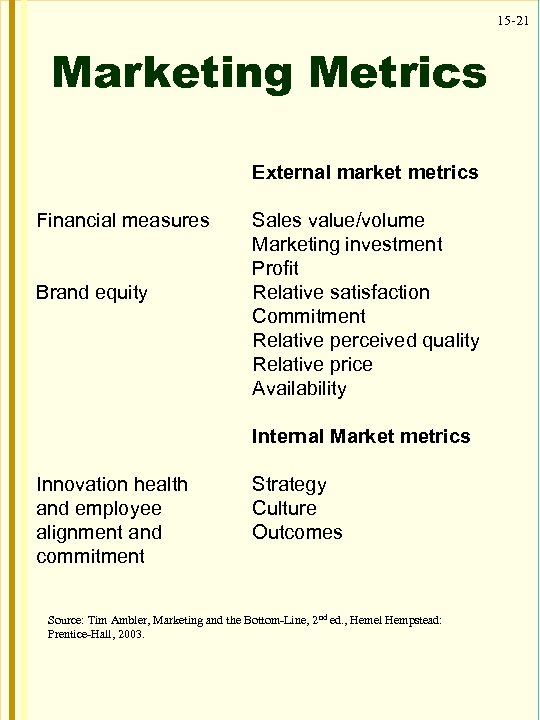 15 -21 Marketing Metrics External market metrics Financial measures Brand equity Sales value/volume Marketing investment Profit Relative satisfaction Commitment Relative perceived quality Relative price Availability Internal Market metrics Innovation health and employee alignment and commitment Strategy Culture Outcomes Source: Tim Ambler, Marketing and the Bottom-Line, 2 nd ed. , Hemel Hempstead: Prentice-Hall, 2003.
 15 -22 Performance Assessment and Action Opportunities and performance gaps Determining normal and abnormal variability Deciding what actions to take