

Coвременные подходы к обучению грамматике (практикум)

Coвременные подходы к обучению грамматике (практикум) Чекчурина Ольга Юрьевна Заместитель директора по методической работе Лаборатория Иностранных Языков Новосибирск
Темы практикума 3 approaches to teaching grammar Grammar for Exam classes Problem-solving
3 approaches to teaching grammar Text-based approach Test-teach-test approach Context build approach
Text-based approach 1. Ls read or listen to the text 2. Ls answer comprehension questions about the text 3. The T sets questions that allows Ls to discover the target Language. The T writes the examples on the board 4. The T checks the meaning by asking questions 5. The T highlights the forms of the language 6. The Ls do a controlled practice task to check their understanding of the form and meaning
Test-teach-test 1. Ls do a free oral practice task that encourages the use of the target language the T wants to focus on 2. The T listens to Ls and notes down any errors the make in using the target language 3. The T writes up a list of errors associated with the target language and elicits corrections 4. The T uses oral concept checking questions to check the meaning of the correct language on the board 5. The T checks the form of the language at the board 6. The T asks learners to redo the original task or another similar one
Context –built approach 1. The T uses visuals and word prompts to build up a context that will generate examples of the target language 2. The T elicits (or gives) an example sentence of the target language (the board) 3. The T uses oral concept checking questions to check the meaning of the target language 4. Having checked…the T highlights the form and then rubs the example sentence off 5. The T writs up key words (prompts) on the board that are clearly connected to the context 6. The T elicits an example of the target language on to the board for the second time and highlights aspects of pronunciation that have just been practised
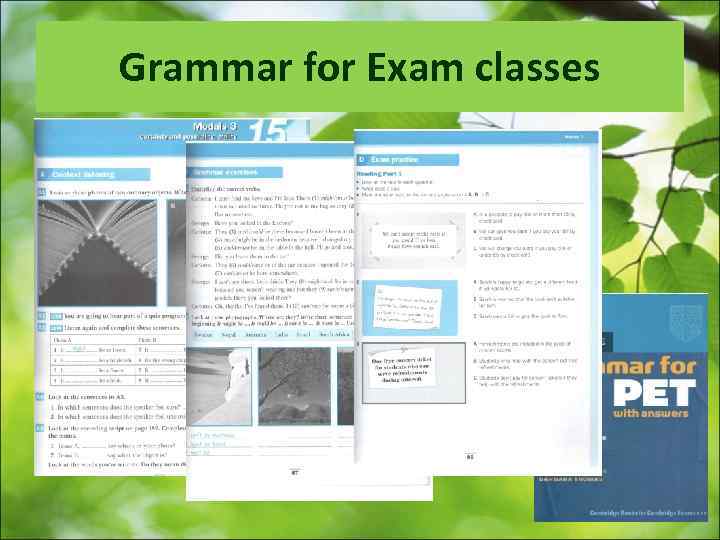
Grammar for Exam classes

Modal verbs –one of the biggest troubleshooters in exams: Can/might ? must/should/have to ?
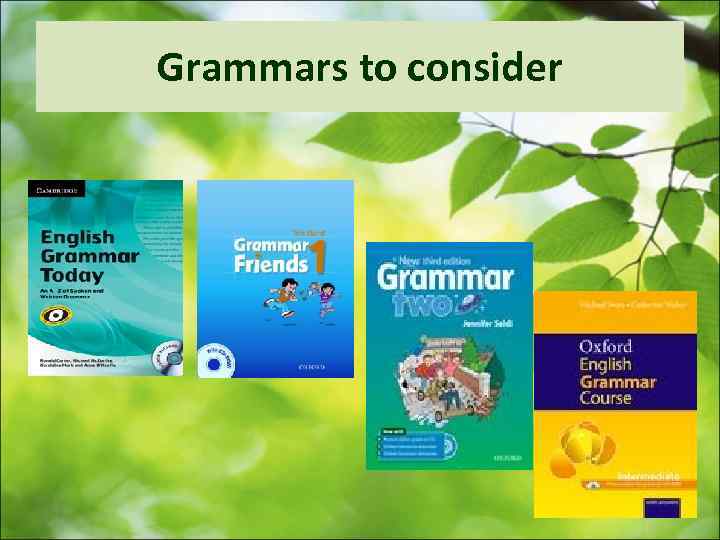
Grammars to consider
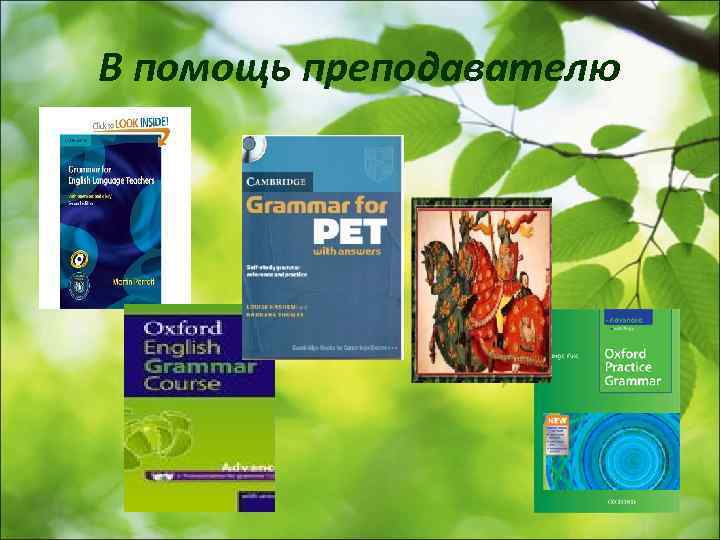
В помощь преподавателю
Language Grammar games
Деятельностный подход в педагогике П. Я. Гальперин в своих исследовании поставил вопрос: для чего человек учится? И ответил: для того, чтобы научиться что- либо делать, а для этого – узнать, как это надо делать. Т. е. цель обучения – дать человеку умение действовать, а знания должны стать основой и средством обучения действиям.
Младший школьный возраст: сочетание учебной и игровой деятельности игровая учебная деятельность Очень весело и Очень серьёзно и медленно скучно
Йохан Хёйзинга, нидерландский философ и историк культуры Человек = Homo Ludens=человек играющий 1. Игра -свободная деятельность, «излишество» 2. Игра-выход во «временное пространство, понарошку» 3. Игра имеет определённые рамки, традиции и правила 4. Игра – повторяется 5. Восторг, увлечённость, одержимость игрой
«Аффективный» фильтр – Affective filter – mental block, caused by affective factors. . . that prevents input from reaching the language acquisition device‘ Krashen, 1985 "The best methods are therefore those that supply 'comprehensible input' in low anxiety situations, containing messages that students really want to hear. » Stephen Krashen motivation, self-confidence, and anxiety all play a prominent role in language acquisition

Photocopiable activities for young learners

Как это поможет при подготовке к ГИА и ЕГЭ? ü Активизация навыков и умений ü Формирование беглости речи ü Дополнительная практика аудирования ü Расширение словарного запаса ü Активное использование средств логической связи ü Личностно-ориентированное оформление заданий (foragainst essay и personal letter)
 Скачать презентацию Coвременные подходы к обучению грамматике (практикум)
лекция 5.2 обучение грамматике.ppt
- Количество слайдов: 17