


 Скачать презентацию Course SOCIOLOGY Lecture FAMILY Instructor Prof Jarosław Rokicki
Family.pptx
- Количество слайдов: 30
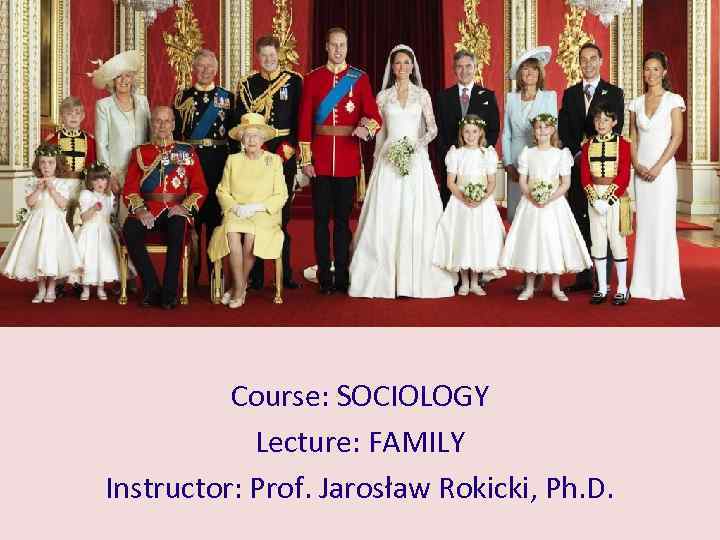 Course: SOCIOLOGY Lecture: FAMILY Instructor: Prof. Jarosław Rokicki, Ph. D.
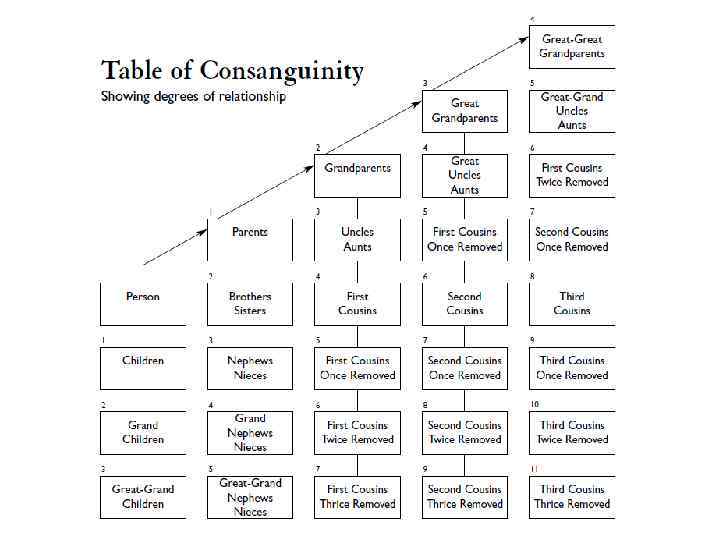
 The Family: Basic concepts: • „…a social institution, found in all societies, that unites individuals into cooperative groups that oversee the bearing and raising of children” • a group of people affiliated by consanguinity (by recognized birth), affinity (by marriage), or co-residence/shared consumption (Nurture kinship). [family and houshold] • Members of the immediate family (nuclear) may include a spouse, parent, brother and sister, and son and daughter. Members of the extended family may include grandparent, aunt, uncle, cousin, nephew and niece, or sibling-in-law. • In most societies the family is the principal institution for the socialization of children. • A family unit: regarded as „a social group of two or more people, related by blood, marriage, or adoption, that joins individuals into families”
 Origins of family: The incest taboo Incest is sexual activity between family members or close relatives. This typically includes sexual activity between people in a consanguineous relationship (blood relations), and sometimes those related by affinity, such as members of the same household, step relatives, those related by adoption or marriage, or members of the same clan or lineage The incest taboo is and has been one of the most widespread of all cultural taboos, both in present and in many past societies. Most modern societies have laws regarding incest or social restrictions on closely consanguineous marriages. In societies where it is illegal, consensual adult incest is seen by some as a victimless crime The children of incestuous relationships were regarded as illegitimate, and are still so regarded in some societies today. In most cases, the parents did not have the option to marry to remove that status, as incestuous marriages were and are normally also prohibited. The incest taboo is culturally universal tool which constrains humans’ exogamy
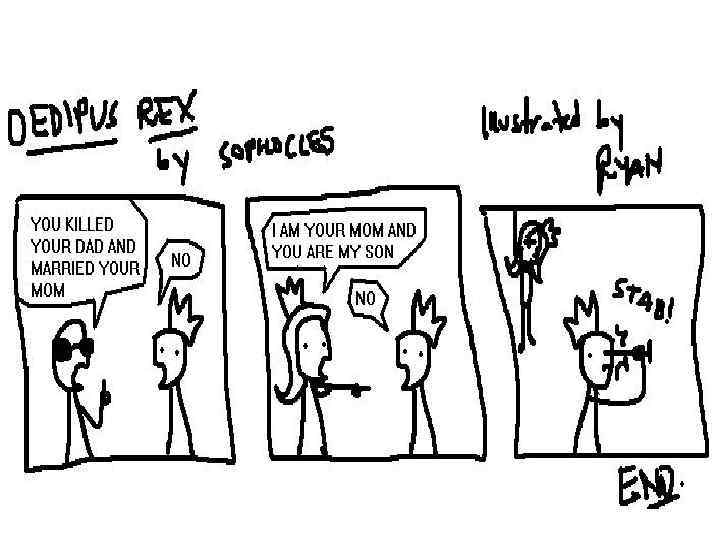
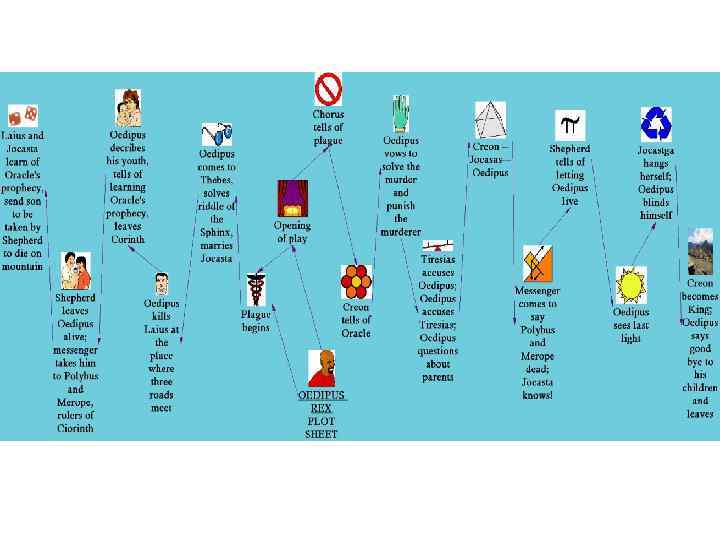
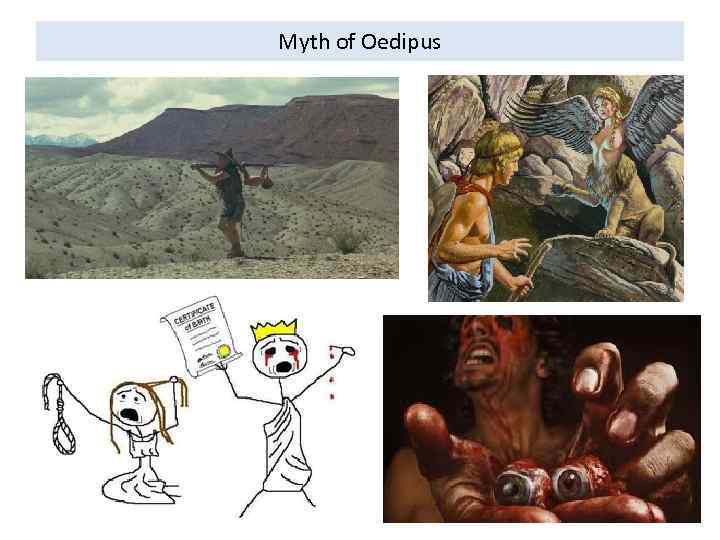 Myth of Oedipus
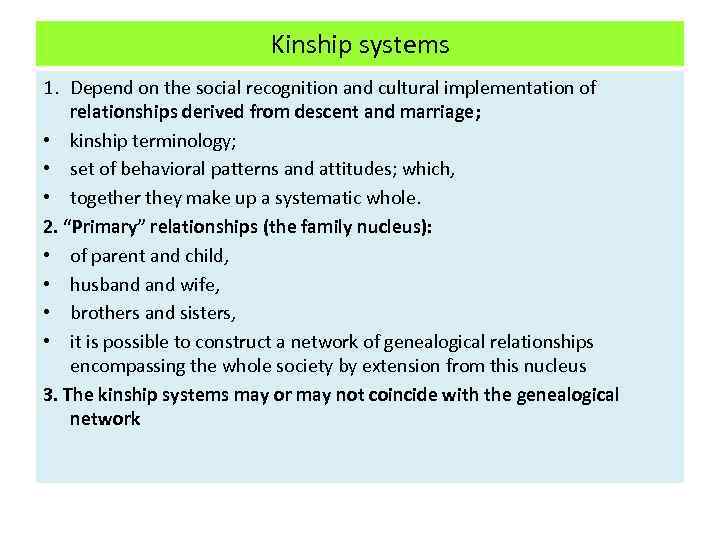 Kinship systems 1. Depend on the social recognition and cultural implementation of relationships derived from descent and marriage; • kinship terminology; • set of behavioral patterns and attitudes; which, • together they make up a systematic whole. 2. “Primary” relationships (the family nucleus): • of parent and child, • husband wife, • brothers and sisters, • it is possible to construct a network of genealogical relationships encompassing the whole society by extension from this nucleus 3. The kinship systems may or may not coincide with the genealogical network
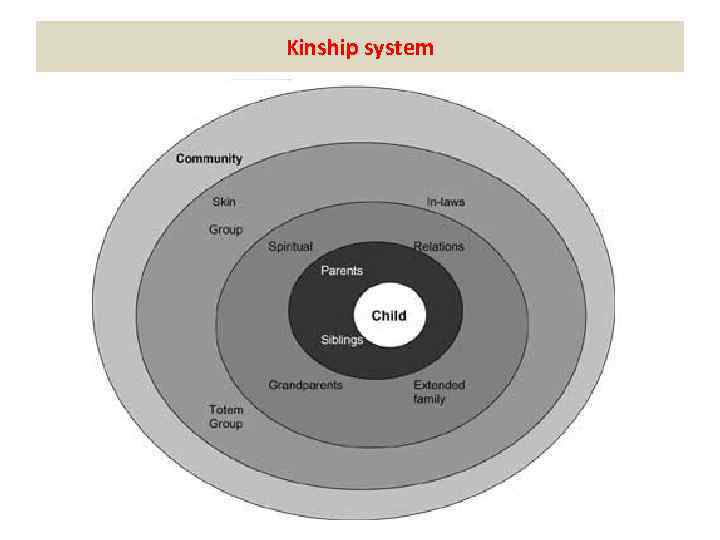 Kinship system
 Marriage • Families form around marriage • Marriage: „a legally sanctioned relationship, involving economic cooperation as well as normative sexual activity and childbearing, that people expect to be enduring”. - Traditional cultural belief that marriage is the appropriate context for procreation. - Children born out of wedlock have been labelled as illegitimate - Matrimony (Latin): „the condition of motherhood”
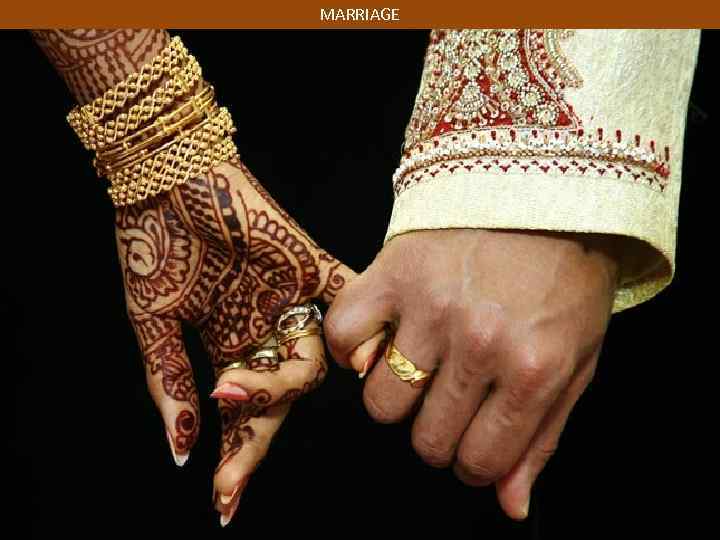 MARRIAGE
 Marriage • “Homogamy” refers to the marriage of persons of similar characteristics; • heterogamy” is the marriage of persons of different characteristics; • “hyper-gamy” is a marriage in which the husband is of higher social status than the wife. • “endogamy” refers to marriage between persons belonging to the same social group, • “exogamy”: the partners come from different groups.
 Marriage A culturally approved relationship of: • one man and one woman (monogamy), • of one man and two or more women (polygyny), • or of one woman and two or more men (polyandry), in which there is cultural endorsement of sexual intercourse between the marital partners of opposite sex and, generally, the expectation that children will be born of the relationship • (“polygamy” is the term that subsumes both polygyny and polyandry).
 Descent groups A series of social groups that: • dominate the domestic organization and the process of socialization, • control the use and transfer of property, • decide on the settlement of disputes, religious activities such as ancestors’ worship, and certain political relationships. Attributes of descent groups: • inheritance, the transmission of property (refers to transmission after death between holder and heirs but not necessarily between generations) • succession, the transmission of office (or power) not necessarily between generations; • and descent, the transmission of kin-group membership (necessarily handed down from generation to generation).
 The modes of the intergenerational transmission process. Patterns of descent Description from the standpoint of the junior generation (1) agnatic trans-mission (patrilinear descent), deriving exclusively from paternal kin; (2) uterine transmission (matrilinear descent), deriving exclusively from maternal kin; (3) Bilateral [two sided descent] (ambilateral) inclusive transmission, deriving from both paternal and maternal sources; (4) Bilateral [two sided descent] (utrolateral) exclusive transmission, deriving from either the paternal or maternal kin, depending on extraneous factors such as residence.
 Unilineal descent groups (UDGs) William H. R. Rivers „…Kin groups whose members are recruited unilineally (or “unilaterally, ” to use his own term); that is to say, groups such as clans, which are recruited either through male (agnatic) or through female (uterine) links”. • UDGs are usually segments of the society, (in the sense that they are exclusive and exhaustive parts), • they are rarely monolithic. • Clans are often divided into smaller units (subclans) and into genealogically based units of at least five generations. • In a patrilineal society, this basic lineage usually consists of a man’s father, grandfather, son, and grandson—that is, the forebears and descendants whom he actually encounters during his lifetime; • It is this five-generation unit around which most systems of kinship terminology are constructed.
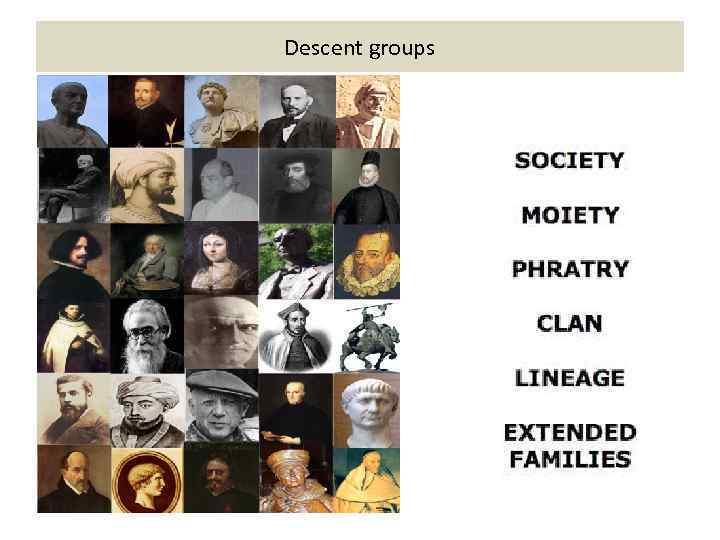 Descent groups
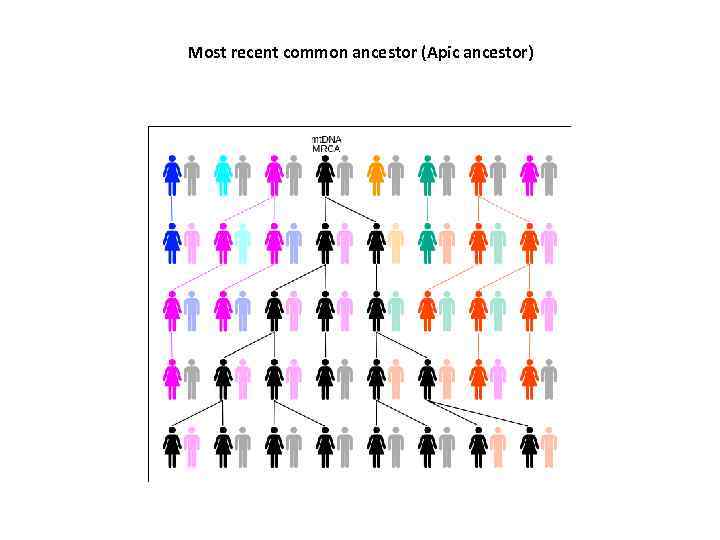 Most recent common ancestor (Apic ancestor)
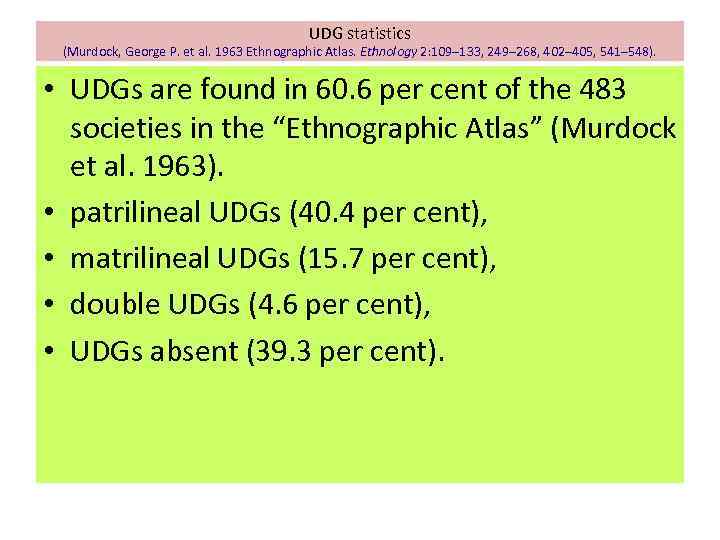 UDG statistics (Murdock, George P. et al. 1963 Ethnographic Atlas. Ethnology 2: 109– 133, 249– 268, 402– 405, 541– 548). • UDGs are found in 60. 6 per cent of the 483 societies in the “Ethnographic Atlas” (Murdock et al. 1963). • patrilineal UDGs (40. 4 per cent), • matrilineal UDGs (15. 7 per cent), • double UDGs (4. 6 per cent), • UDGs absent (39. 3 per cent).
 Affinity The relationship that a person has to the blood relatives of a spouse by virtue of the marriage. There are three types of affinity: Direct affinity exists between the husband his wife's relations by blood, or between the wife and the husband's relations by blood. Secondary affinity is between a spouse and the other spouse's relatives by marriage. Collateral affinity exists between a spouse and the relatives of the other spouse's relatives. The determination of affinity is important in various legal matters, such as deciding whether to prosecute a person for incest or whether to disqualify a juror for bias.
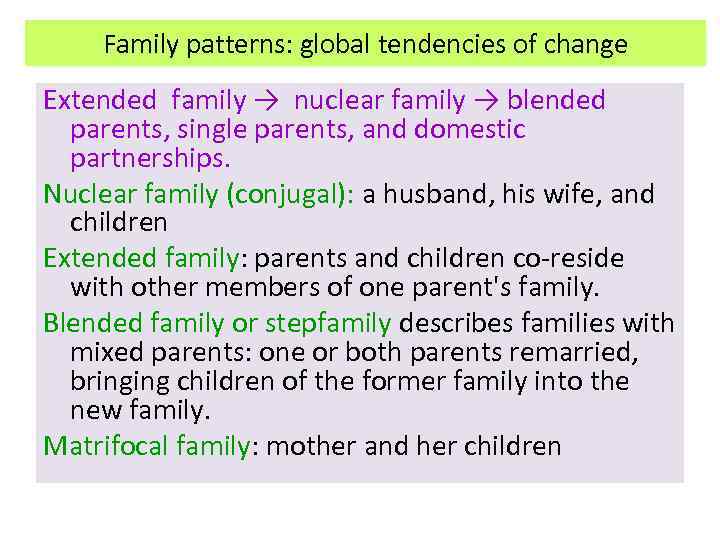 Family patterns: global tendencies of change Extended family → nuclear family → blended parents, single parents, and domestic partnerships. Nuclear family (conjugal): a husband, his wife, and children Extended family: parents and children co-reside with other members of one parent's family. Blended family or stepfamily describes families with mixed parents: one or both parents remarried, bringing children of the former family into the new family. Matrifocal family: mother and her children
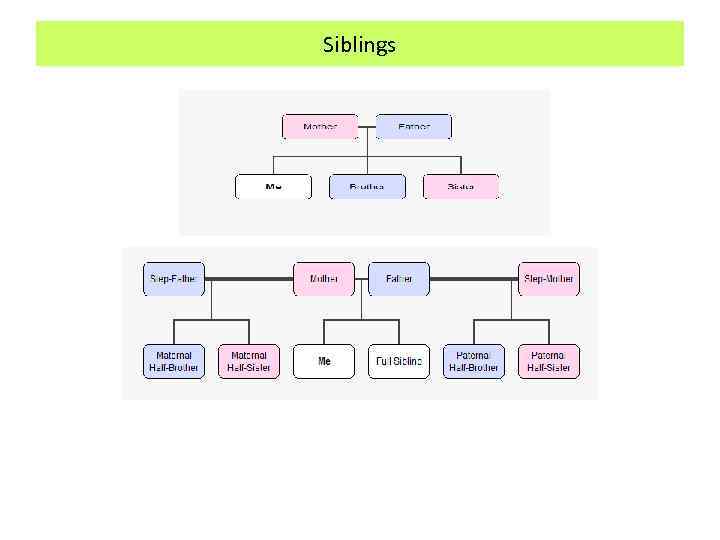 Siblings
 Siblings-in-law • Sibling-in-law is a gender-neutral term to refer to a brother-in-law or sister-in-law. • A brother-in-law is the brother of one's spouse or the husband of one's sibling. • A sister-in-law (plural sisters-in-law) is the sister of one's spouse or the wife of one's sibling. Relative to a woman, the latter case (typically her husband's brother's wife; that is, the two women have married brothers) is occasionally called a 'co -sister-in-law', as they are each the sister-in-law of the other's husband.
 Functions of the family 1. Socialization (mutual exchnage between parents and children) 2. Regulation of sexual activity (incest taboo) 3. Social placement (ascribed social identity, legitimate birth) 4. Material security (acommodation, maintenance, financial assistance) 5. Emotional security (emotional support, „heaven in a heartless world”)
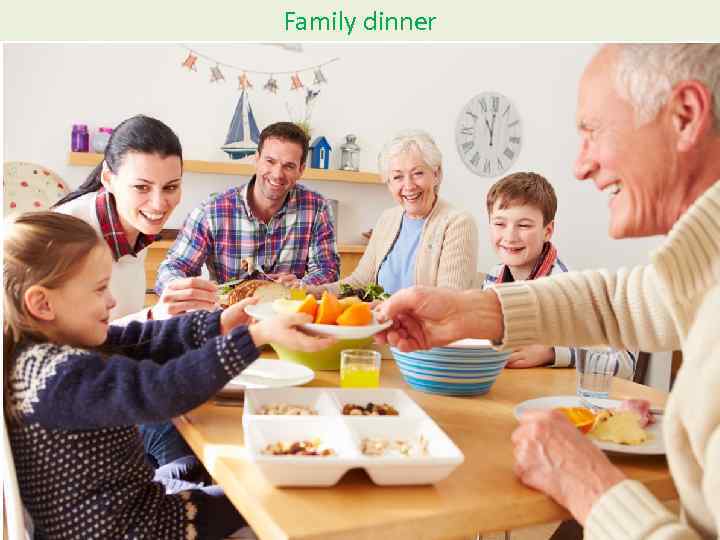 Family dinner
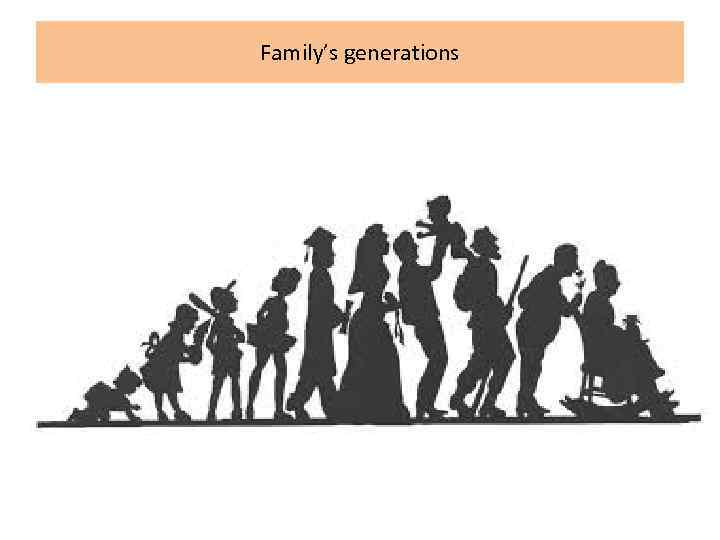 Family’s generations
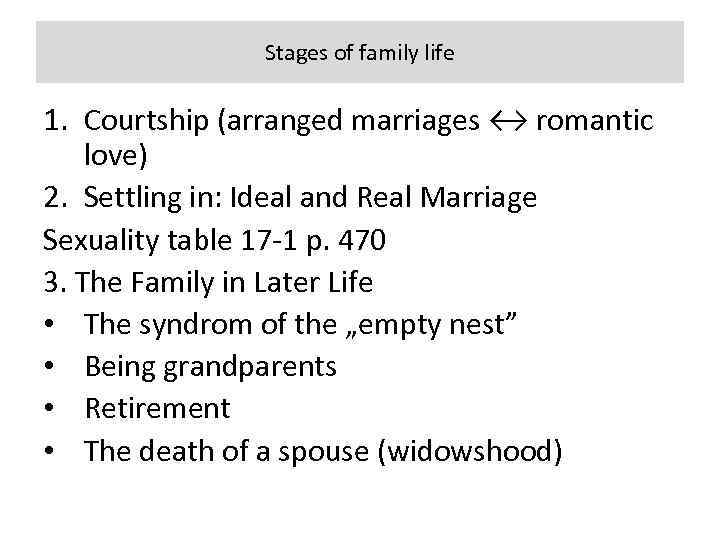 Stages of family life 1. Courtship (arranged marriages ↔ romantic love) 2. Settling in: Ideal and Real Marriage Sexuality table 17 -1 p. 470 3. The Family in Later Life • The syndrom of the „empty nest” • Being grandparents • Retirement • The death of a spouse (widowshood)
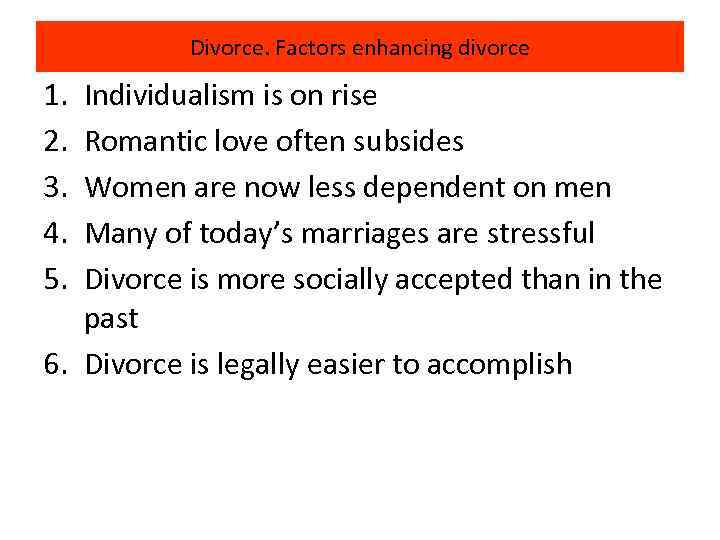 Divorce. Factors enhancing divorce 1. 2. 3. 4. 5. Individualism is on rise Romantic love often subsides Women are now less dependent on men Many of today’s marriages are stressful Divorce is more socially accepted than in the past 6. Divorce is legally easier to accomplish

 Basic bibliography http: //www. encyclopedia. com/topic/marriage. aspx#1 -1 G 2: 3045000773 -full http: //www. encyclopedia. com/topic/kinship. aspx http: //www. encyclopedia. com/topic/family. aspx#1 -1 G 2: 3045000392 -full Main source: International Encyclopedia of the Social Sciences | 1968 | Copyright