


 Скачать презентацию Course Introduction to Philosophy of Education Theme Not
320f725d751b0580b264cc2021a7c889.ppt
- Количество слайдов: 48
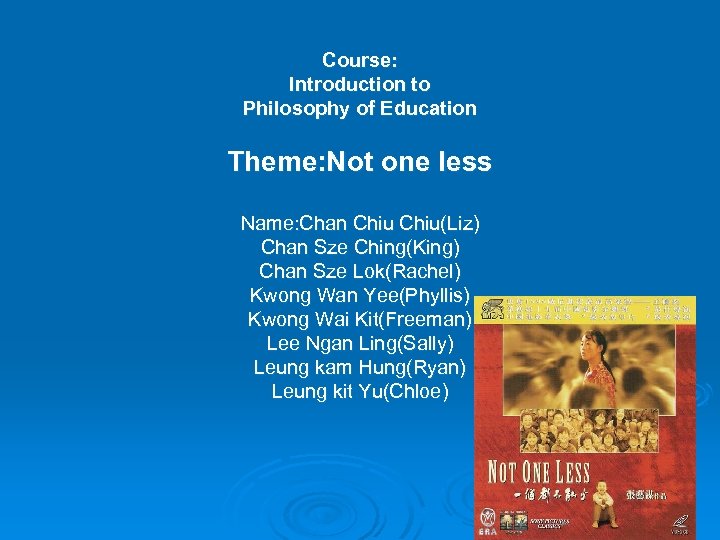 Course: Introduction to Philosophy of Education Theme: Not one less Name: Chan Chiu(Liz) Chan Sze Ching(King) Chan Sze Lok(Rachel) Kwong Wan Yee(Phyllis) Kwong Wai Kit(Freeman) Lee Ngan Ling(Sally) Leung kam Hung(Ryan) Leung kit Yu(Chloe)
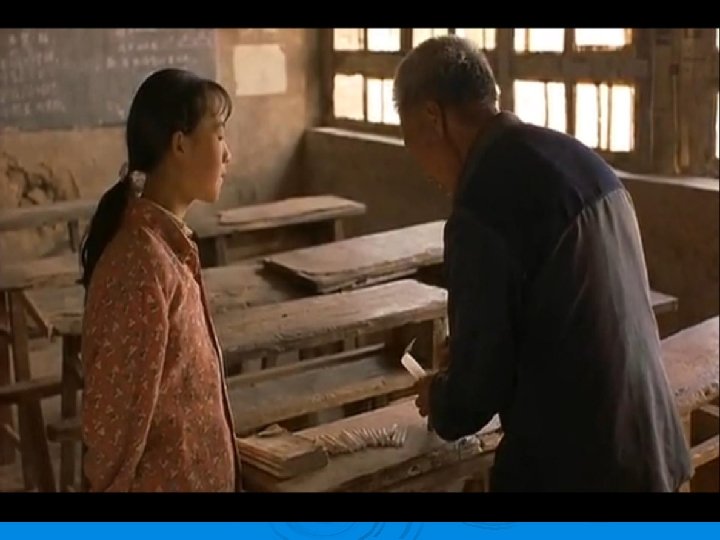
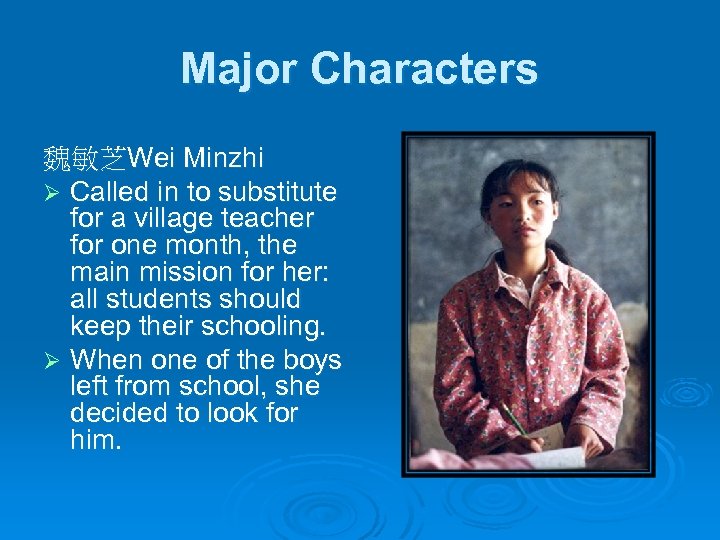 Major Characters 魏敏芝Wei Minzhi Ø Called in to substitute for a village teacher for one month, the main mission for her: all students should keep their schooling. Ø When one of the boys left from school, she decided to look for him.
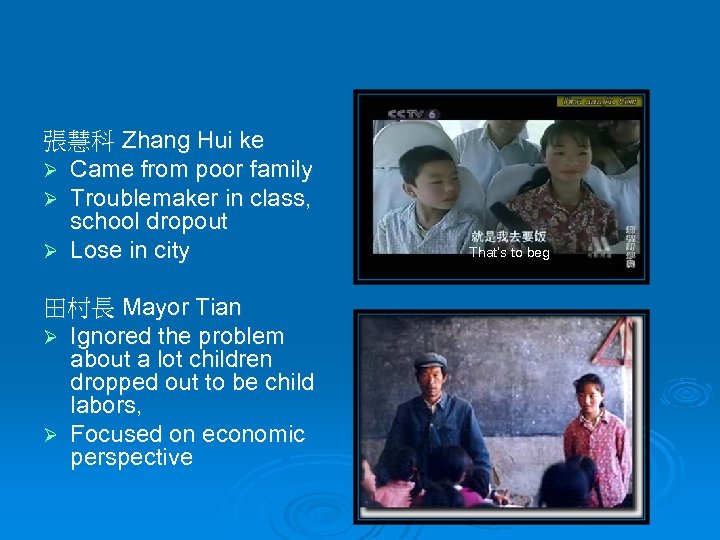 張慧科 Zhang Hui ke Ø Came from poor family Ø Troublemaker in class, school dropout Ø Lose in city 田村長 Mayor Tian Ø Ignored the problem about a lot children dropped out to be child labors, Ø Focused on economic perspective That’s to beg
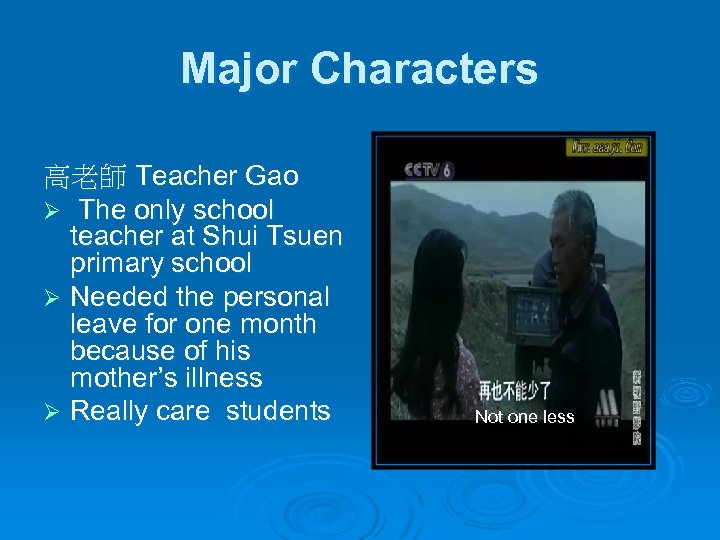 Major Characters 高老師 Teacher Gao Ø The only school teacher at Shui Tsuen primary school Ø Needed the personal leave for one month because of his mother’s illness Ø Really care students Not one less
 Trailer Ø http: //www. youtube. com/watch? v=llevt. AQ Uh. HQ&feature=related
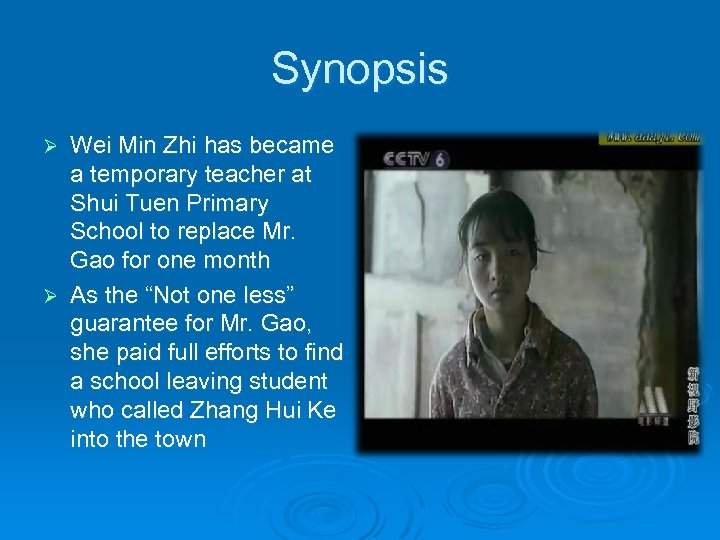 Synopsis Wei Min Zhi has became a temporary teacher at Shui Tuen Primary School to replace Mr. Gao for one month Ø As the “Not one less” guarantee for Mr. Gao, she paid full efforts to find a school leaving student who called Zhang Hui Ke into the town Ø
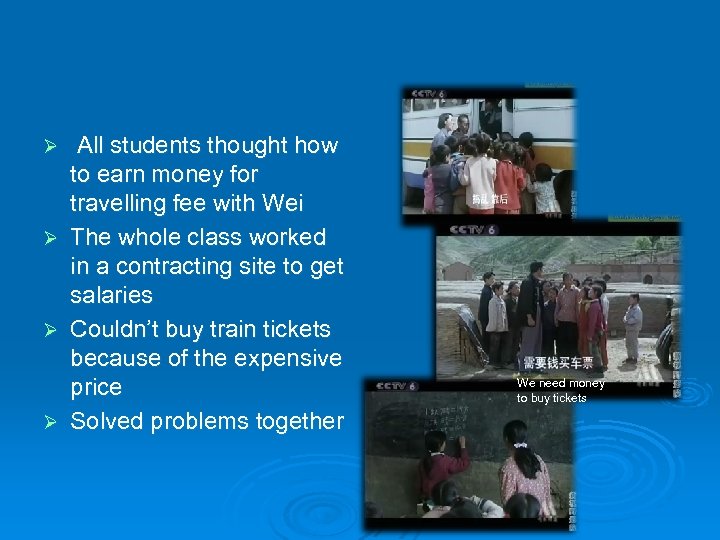 All students thought how to earn money for travelling fee with Wei Ø The whole class worked in a contracting site to get salaries Ø Couldn’t buy train tickets because of the expensive price Ø Solved problems together Ø We need money to buy tickets
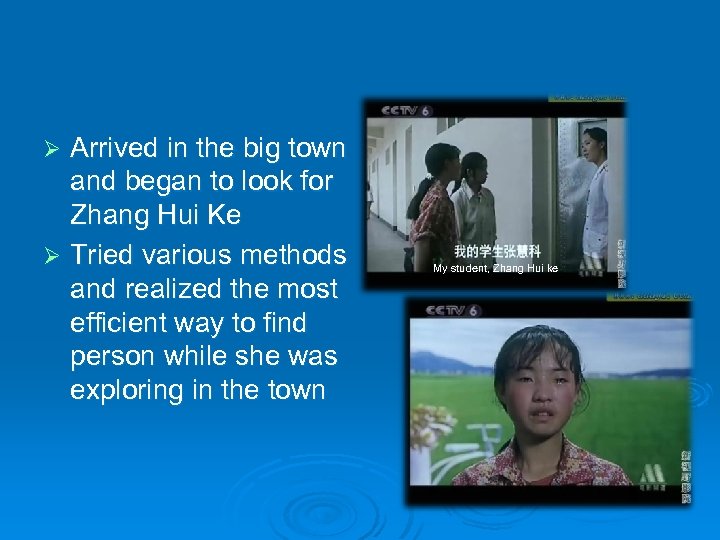 Arrived in the big town and began to look for Zhang Hui Ke Ø Tried various methods and realized the most efficient way to find person while she was exploring in the town Ø My student, Zhang Hui ke
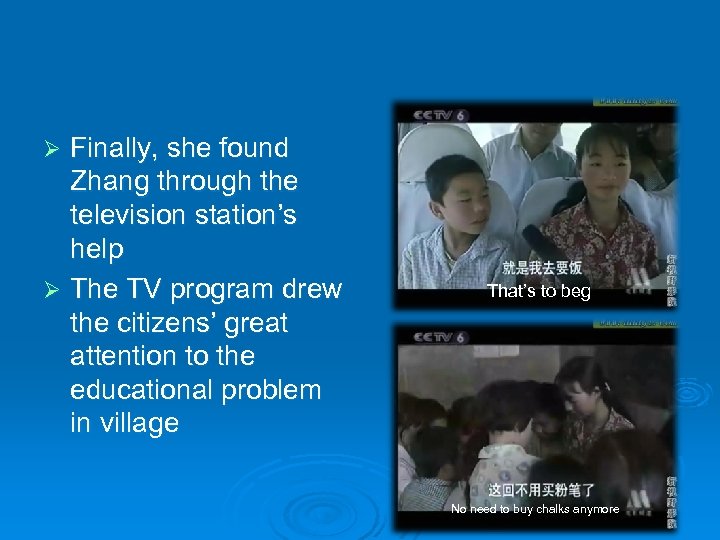 Finally, she found Zhang through the television station’s help Ø The TV program drew the citizens’ great attention to the educational problem in village Ø That’s to beg No need to buy chalks anymore
 Major Characters Ø 魏敏芝Wei Minzhi Ø 張慧科 Zhang Hui ke Ø 田村長 Mayor Tian Ø 高老師 Teacher Gao
 Method of teaching Ø beginning copy textbook later real life calculation (deal with difficulties) Ø Emphasis on attitude (treasure the chalks) Ø About classroom management Ø About students’ backgrounds
 Philosophical View of Film is. . . PRAGMATISM
 Philosophical View of Education Philosophical View of Ø - Goal of education: continuous growth. Ø - A problem-solving process during which society moves forward. Ø - Learning more effective, meaningful and satisfying ways of living.
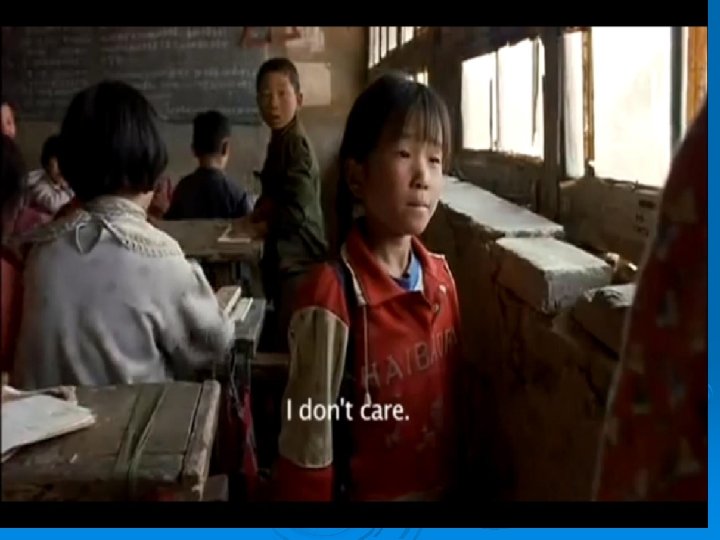
 I don’t care? Ø Then , what should you do next? Ø A problem-solving process is practical?
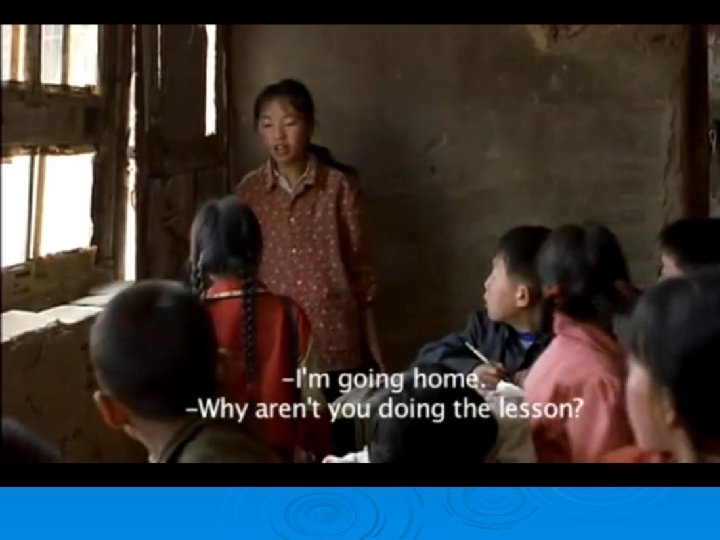
 Think about it Ø When the student ask for going home, Ø How do you response? Ø For her, she asked for a reason why she wants to leave. Ø What is the outcome?
 Philosophical View of School Philosophical View of Ø A multi-purpose social institution linked to society. Ø A specialized environment where experiences are simplified, purified & balanced. Ø A miniature democratic society. Ø Teaching Ss to be a responsible citizen in a democratic society.
 Philosophical View of Teachers Philosophical View of Ø Learn with Ss together Ø T does not know everything Ø Facilitates Ss’ learning
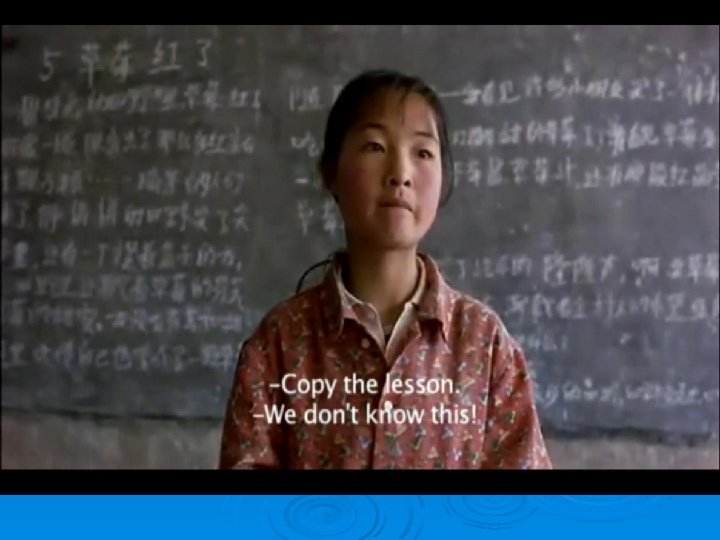
 Discussion Ø Copy the lesson, we don’t know this~ Ø What is your response?
 Philosophical View of Students Philosophical View of Ø Learn by discovery and experimenting
 Curriculum Ø Unity of knowledge: knowing is closely related to & connected to doing. Ø Based on Ss’ experiences – Their interests, needs & problems. Ø Experiential learning
 Ø Process-oriented, problem-solving instruction. Ø Group-centred. Ø Interdisciplinary.
 Ø How far do you like to work in a group? Ø Advantages?
 Aims of Education & Curriculum Ø Providing nine-year compulsory education Ø Illiteracy problem in China Ø Not for further studies Ø Just for their basic needs
 Difference between Urban and Rural Ø Gap between urban and rural schools 1. Funding is far more in urban schools 2. Teacher quality is better in urban schools
 Rural school (in the movie) Teacher quality ØTeachers do not have a high school education and have no special talents ØJust copy texts onto the board
 Rural school(in the movie) Lack of resource Ønot to use more than one piece of chalk per day Øbecause the village is too poor to afford more ØWei sleeps in the school building, sharing a bed with several female students
 Discussion Q 1: Do you agree that the problem of so called “Hong Kids” can be solved by the ideology of pragmatism? → the kids who are spoiled by their parents and therefore cannot take good care of themselves , although they have good academic performance ) •
 Possible answers(version 1) Yes, I agree Ø Pragmatists (e. g. John Dewey)are wary of educational goals and purposes that are external to the child(e. g. parental expectation for a child’s future career in the case of “Hong Kids”) • Ø Pragmatists claim that genuine education goals should come the person. from within The sole goal of education is growth Ø To grow means to have more activity more problems more resolutions to problems To fulfill the need of growth, the kids are required to learn all kind of basic living skills, in order to deal with a changing reality. That means the child needs to learn how to lead a meaningful live, not only has a good academic performance in school. Ø
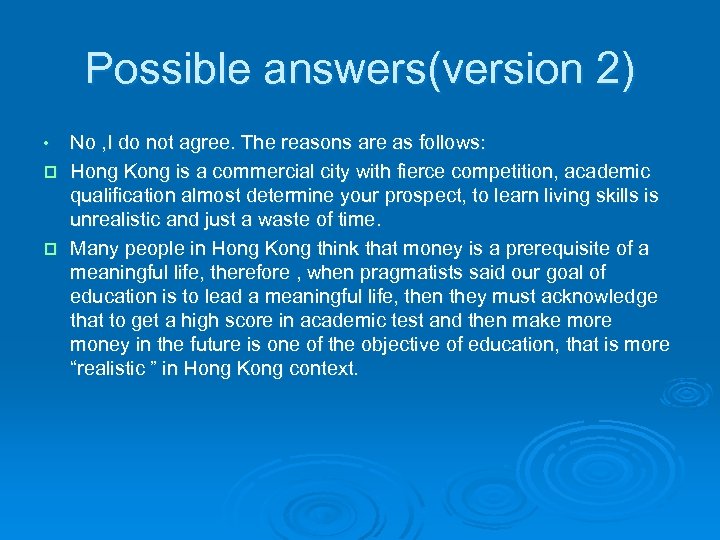 Possible answers(version 2) No , I do not agree. The reasons are as follows: p Hong Kong is a commercial city with fierce competition, academic qualification almost determine your prospect, to learn living skills is unrealistic and just a waste of time. p Many people in Hong Kong think that money is a prerequisite of a meaningful life, therefore , when pragmatists said our goal of education is to lead a meaningful life, then they must acknowledge that to get a high score in academic test and then make more money in the future is one of the objective of education, that is more “realistic ” in Hong Kong context. •
 Q 2 Ø If you are Weiminzhi, the main character in the movie, which philosophies of education will you take to teach the children living in remote areas(apart from pragmatism)?
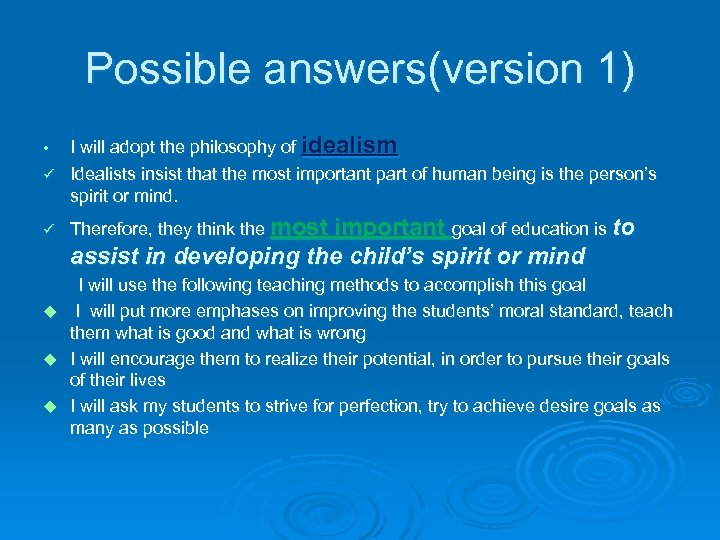 Possible answers(version 1) I will adopt the philosophy of idealism ü Idealists insist that the most important part of human being is the person’s spirit or mind. • ü Therefore, they think the most important goal of education is to assist in developing the child’s spirit or mind I will use the following teaching methods to accomplish this goal u I will put more emphases on improving the students’ moral standard, teach them what is good and what is wrong u I will encourage them to realize their potential, in order to pursue their goals of their lives u I will ask my students to strive for perfection, try to achieve desire goals as many as possible
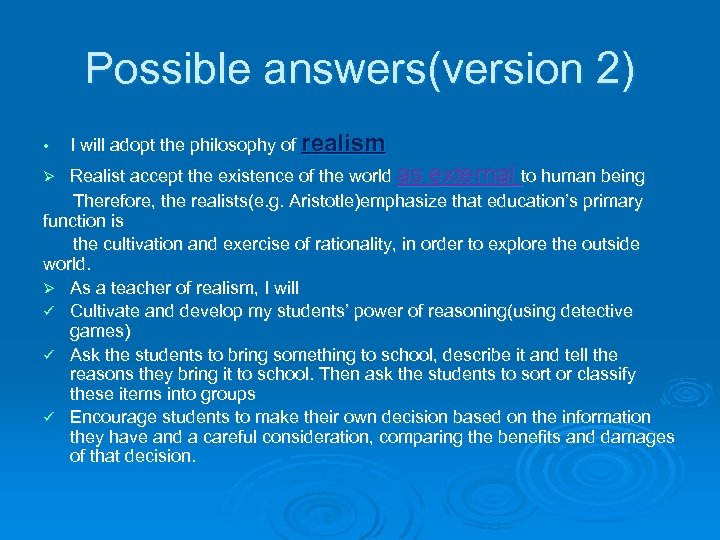 Possible answers(version 2) • I will adopt the philosophy of realism Realist accept the existence of the world as external to human being Therefore, the realists(e. g. Aristotle)emphasize that education’s primary function is the cultivation and exercise of rationality, in order to explore the outside world. Ø As a teacher of realism, I will ü Cultivate and develop my students’ power of reasoning(using detective games) ü Ask the students to bring something to school, describe it and tell the reasons they bring it to school. Then ask the students to sort or classify these items into groups ü Encourage students to make their own decision based on the information they have and a careful consideration, comparing the benefits and damages of that decision. Ø
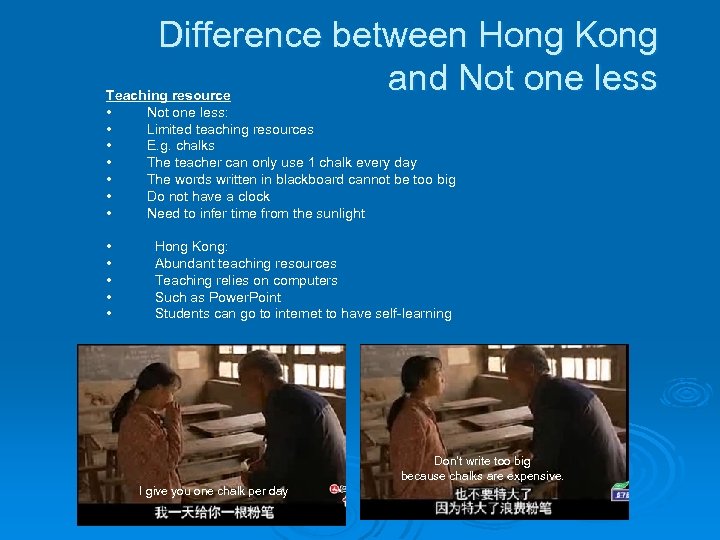 Difference between Hong Kong and Not one less Teaching resource • Not one less: • Limited teaching resources • E. g. chalks • The teacher can only use 1 chalk every day • The words written in blackboard cannot be too big • Do not have a clock • Need to infer time from the sunlight • • • Hong Kong: Abundant teaching resources Teaching relies on computers Such as Power. Point Students can go to internet to have self-learning Don’t write too big because chalks are expensive. I give you one chalk per day
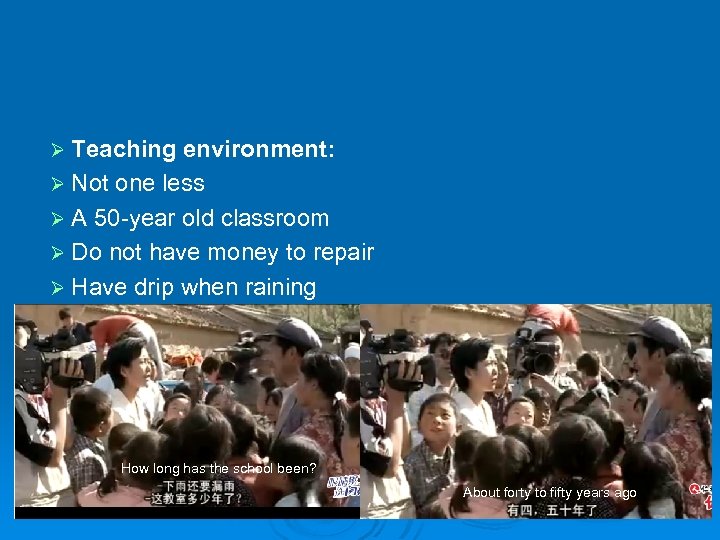 Ø Teaching environment: Ø Not one less Ø A 50 -year old classroom Ø Do not have money to repair Ø Have drip when raining Ø Hong Kong Ø a comfortable classroom Ø air- conditioned Ø bright How long has the school been? About forty to fifty years ago
 Ø Teachers’ quality: Ø Not one less Ø A thirteen -year old temporary teacher, not well qualified Ø Didn’t go to high school Ø Unfamiliar with the subjects Ø Forget the lyrics of the songs in the Music lesson Ø Copy text in the blackboard from the book that Mr. Ko gave him Ø Only can teach some simple subjects: Music, Chinese, Maths
 Ø Hong Kong: Ø Qualified teacher Ø Having a degree or diploma in education Ø English teacher needs to pass the English benchmark test Ø Have specialized knowledge about the subject they teach Ø Quality was guaranteed
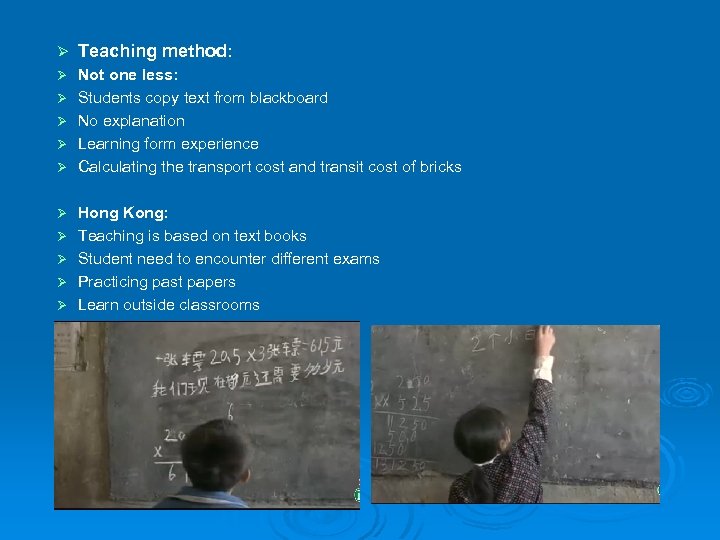 Ø Teaching method: Ø Not one less: Students copy text from blackboard No explanation Learning form experience Calculating the transport cost and transit cost of bricks Ø Ø Ø Hong Kong: Teaching is based on text books Student need to encounter different exams Practicing past papers Learn outside classrooms Go to study tour However, the opportunity is rare
 Curriculum & School experience Ø Do all students in the school experience the same curriculum or do individuals with different interests and abilities and affinities for learning pursue curricula that is suitable to them? Dewey Ø Each student was an individual Ø Could travel on his or her unique path of growth Ø Teacher was there to guide and facilitate this growth Ø
 The term “curriculum” to mean “the funded wisdom of the human race” Ø Teacher has the task of helping the student to make contact with this repertoire—but helping by facilitating rather than by imposing. Ø Ø (Dewey, J. , 1916, Democracy and Education: An Introduction to the Philosophy of Education, New York: Macmillan) In the movie. . . Rural schools do not have regulations on curriculum Ø Only a primary school graduate Ø No particular/ regular subjects Ø Depends on the teacher Ø Ø
 Ø Living in rural does not require to know academically as much as living in urban Ø Just the basic necessity eg Chinese, Maths etc Ø The same curriculum (like copying) Ø Lack of resources
 School Experience Ø Are students engaged Ø Beginning: absorb knowledge directly in worthwhile relevant from book (Like experiences or are copying) they encouraged to Ø In the middle: absorb knowledge engaged in worthwhile directly? relevant experiences (Calculating) Ø Minzhi only taught academically Ø Not very practical
 Cannot apply much into daily life Ø Rural kids not so much aim at going to higher education and elite roles Ø Ø Ø All they worried about if they could earn enough to survive till tomorrow While out to find Huike Learnt practical, lifetime skills Much more in school Realize the importance of learning in school
 Summary Ø There is no excuse to give up education Ø Focusing on Pragmatism rather than realism →in real situation but based on discovery and experimenting Ø Teachers are important role models for students
 Summary Ø Teaching merged with Practical application of knowledge and experience → provoke intrinsic motivation Ø Hong Kong students need (at certain extent → Problem solving skill ∵ “Hong Kids”