


 Скачать презентацию COURSE CONTENT ANNA N KONDAKOVA HIGHER SCHOOL OF
Course content and mind maps.pptx
- Количество слайдов: 23
 COURSE CONTENT ANNA N. KONDAKOVA, HIGHER SCHOOL OF SOCIAL SCIENCES, HUMANITIES AND INTERNATIONAL COMMUNICATION
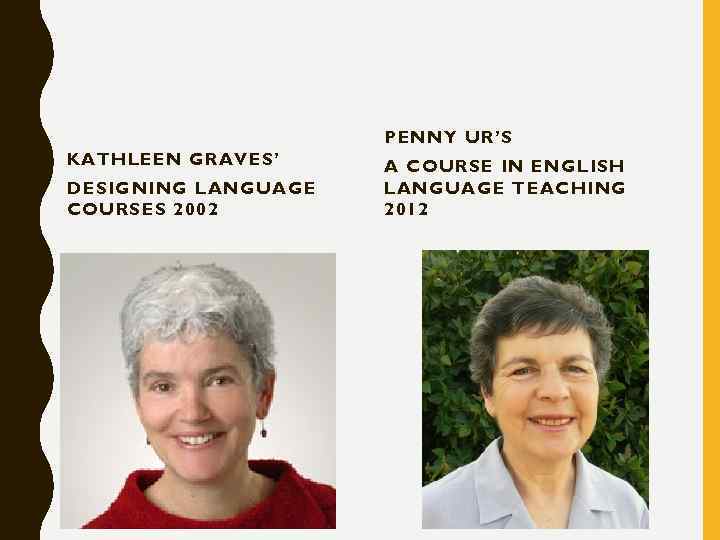 PENNY UR’S KATHLEEN GRAVES’ DESIGNING LANGUAGE COURSES 2002 A COURSE IN ENGLISH LANGUAGE TEACHING 2012
 LECTURE OUTLINE • Linguistic content of the course • Conceptualizing the content for your course • Non-linguistic content • Cultural component • Literature • Hidden messages
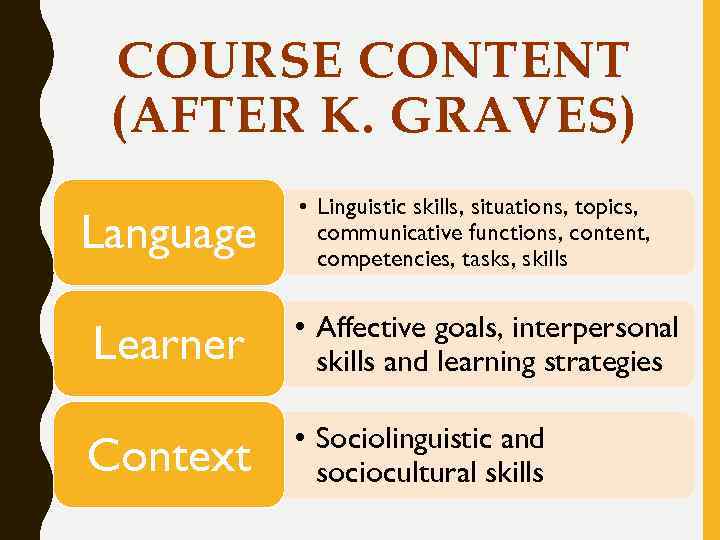 COURSE CONTENT (AFTER K. GRAVES) Language • Linguistic skills, situations, topics, communicative functions, content, competencies, tasks, skills Learner • Affective goals, interpersonal skills and learning strategies Context • Sociolinguistic and sociocultural skills
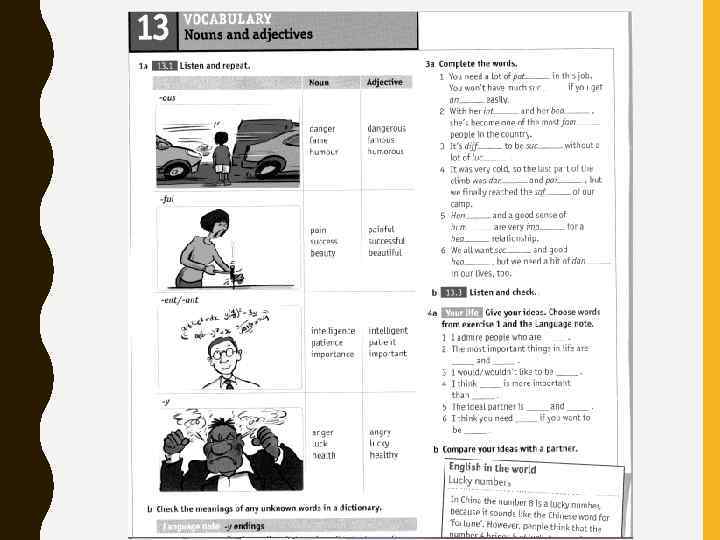
 FOCUS ON LANGUAGE: LINGUISTIC SKILLS Phonology: Individual sounds, words, stress, rhythm and intonation Grammar: Classifications and functions of words, how words form phrases and sentences Vocabulary: Content words, word formation, inflections, meanings of prefixes and suffixes Formal or structural syllabus
 FOCUS ON COMMUNICATION: SITUATIONS AND FUNCTIONS • Situations are the contexts in which one uses language. – Typically include places where one transacts business, such as the supermarket, or the travel, or places where one interacts with others such as at a party • Communicative functions cover the types of transactions that will occur in the situation: – Suggesting, promising, apologizing, greeting, inviting, requesting, etc.
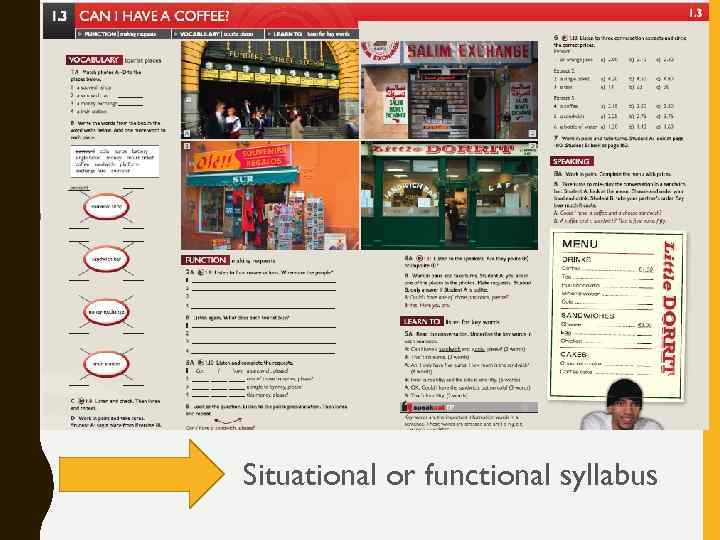 Situational or functional syllabus
 TOPICS AND THEMES • What the language is used to talk or write about – Personal: family, food, hobbies – Professional or academic: employment, office etc. – Sociocultural: education, political systems, elections, cultural customs etc. Topical or thematical syllabus
 COMPETENCIES Situations + linguistic skills + functions • A competency attempts to specify and teach the language and behavior needed to perform in a given situation – How to perform a job interview – How to book a flight – How to examine a patient – How to open a bank account • To perform in target language in the dominant culture
 SKILLS • Speaking: Inferring attitude, feeling, mood; using interactive strategies; summarizing; paraphrasing. • Listening: Listening for detail, for gist, for global understanding, inferring attitude, feeling, mood, listening for invitation to take turns. • Reading: Predicting content, understanding the main idea, reading for detail, deducing meaning from context, note-taking, skimming etc. • Writing: Proofreading, editing, summarizing, paraphrasing, adjusting the writing to a specific audience or purpose etc.
 TASKS • Interactions whose purpose is to get something done • Task can be for work purposes, for academic purposes, for daily life • Tasks can be an end in themselves or a means to practice skills, perform functions, discuss topics • Some are real-life and some only have classroom application
 CONTENT Ø Subject matter other than language itself Ø Two approaches: Ø For ESL: content-based syllabus will be based on the content of other disciplines, like math, history, computer science, using English as a medium of instruction Ø For EFL, all types of non-linguistic content (see Penny Ur, 2012)
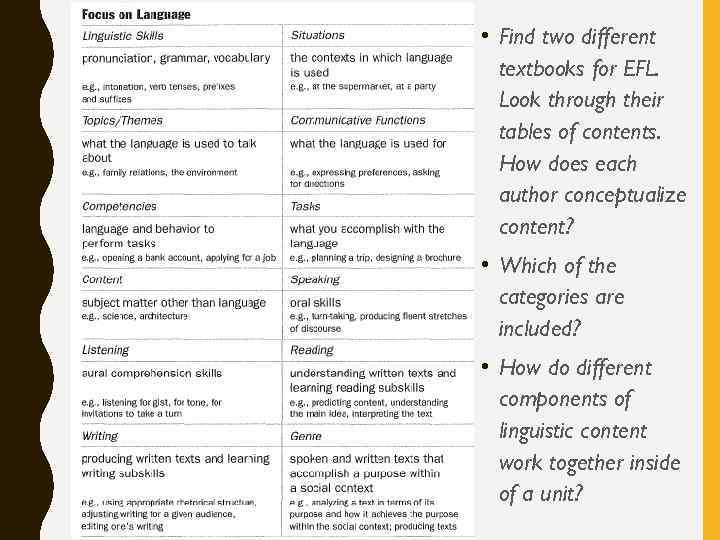 • Find two different textbooks for EFL. Look through their tables of contents. How does each author conceptualize content? • Which of the categories are included? • How do different components of linguistic content work together inside of a unit?
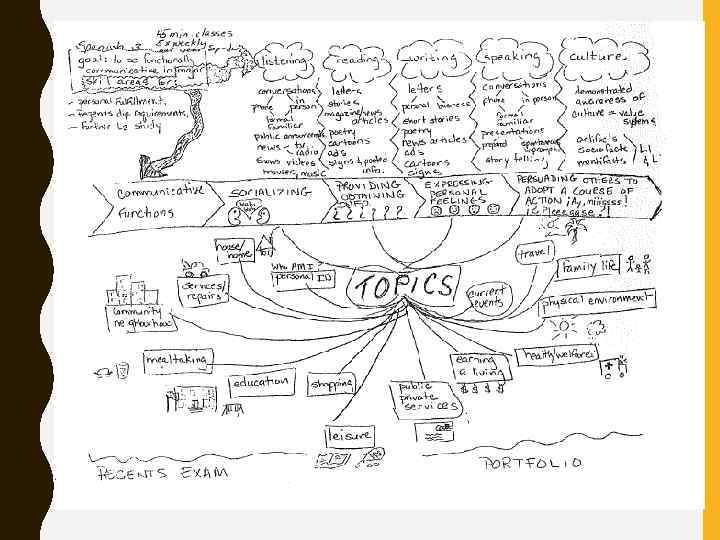
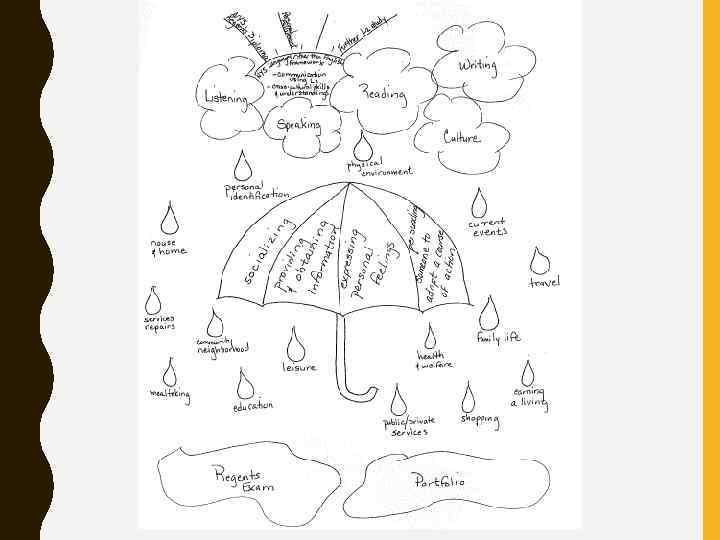
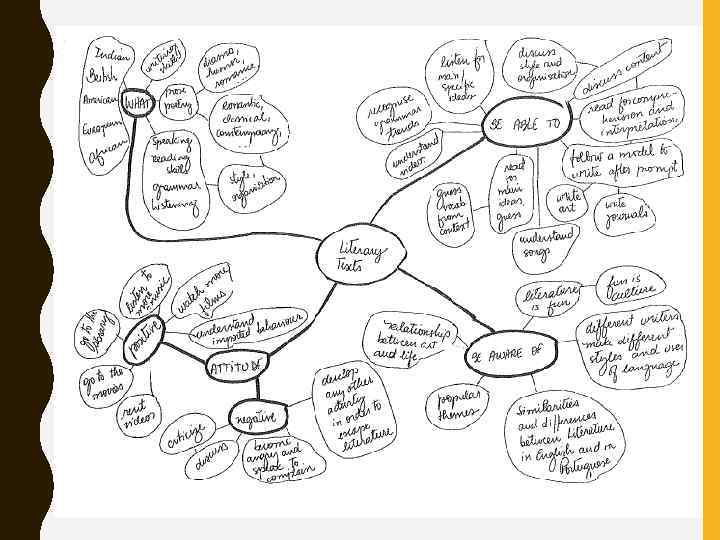
 HOW TO CONCEPTUALIZE THE COURSE • If you are developing a course from scratch, or for very specific learner needs, you can use – Tables and grids – Mind-maps – Flow charts
 NON-LINGUISTIC CONTENT • Subject matter other than language itself – Study the list of non-linguistic content and discuss which types are more or less relevant for a language course in general, for the course that you are developing in particular.
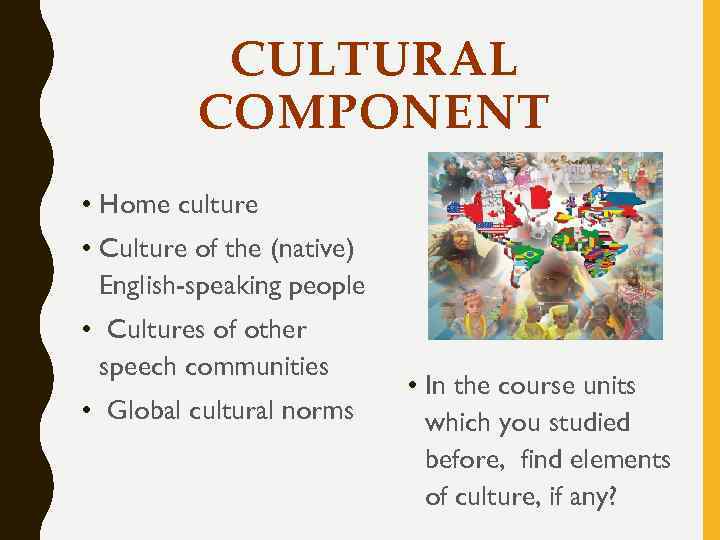 CULTURAL COMPONENT • Home culture • Culture of the (native) English-speaking people • Cultures of other speech communities • Global cultural norms • In the course units which you studied before, find elements of culture, if any?
 SHOULD LITERATURE BE PART OF YOUR COURSE? • Wide range of authors and texts • But are they essential, or desirable components of your course? • What are the advantages and disadvantages of teaching literature as part of your language course?
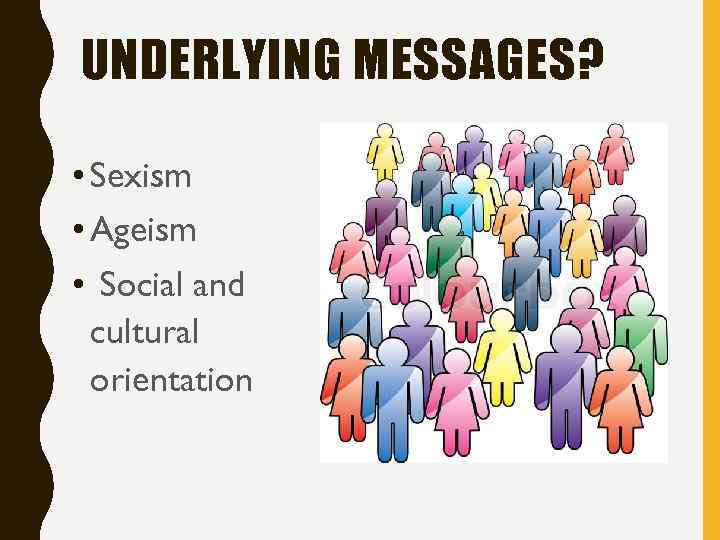 UNDERLYING MESSAGES? • Sexism • Ageism • Social and cultural orientation
 HOMEWORK • Reading – for Thursday – Tessa Woodward “Planning lessons and courses” (Chapter on What can go into a lesson? ) – Penny Ur “A Course in English Language teaching” (Units 15. 2, 15. 4, 15. 5) • Writing – for Monday – Conceptualize your course content (either as a chart or as a mind map) + describe your goals and objectives